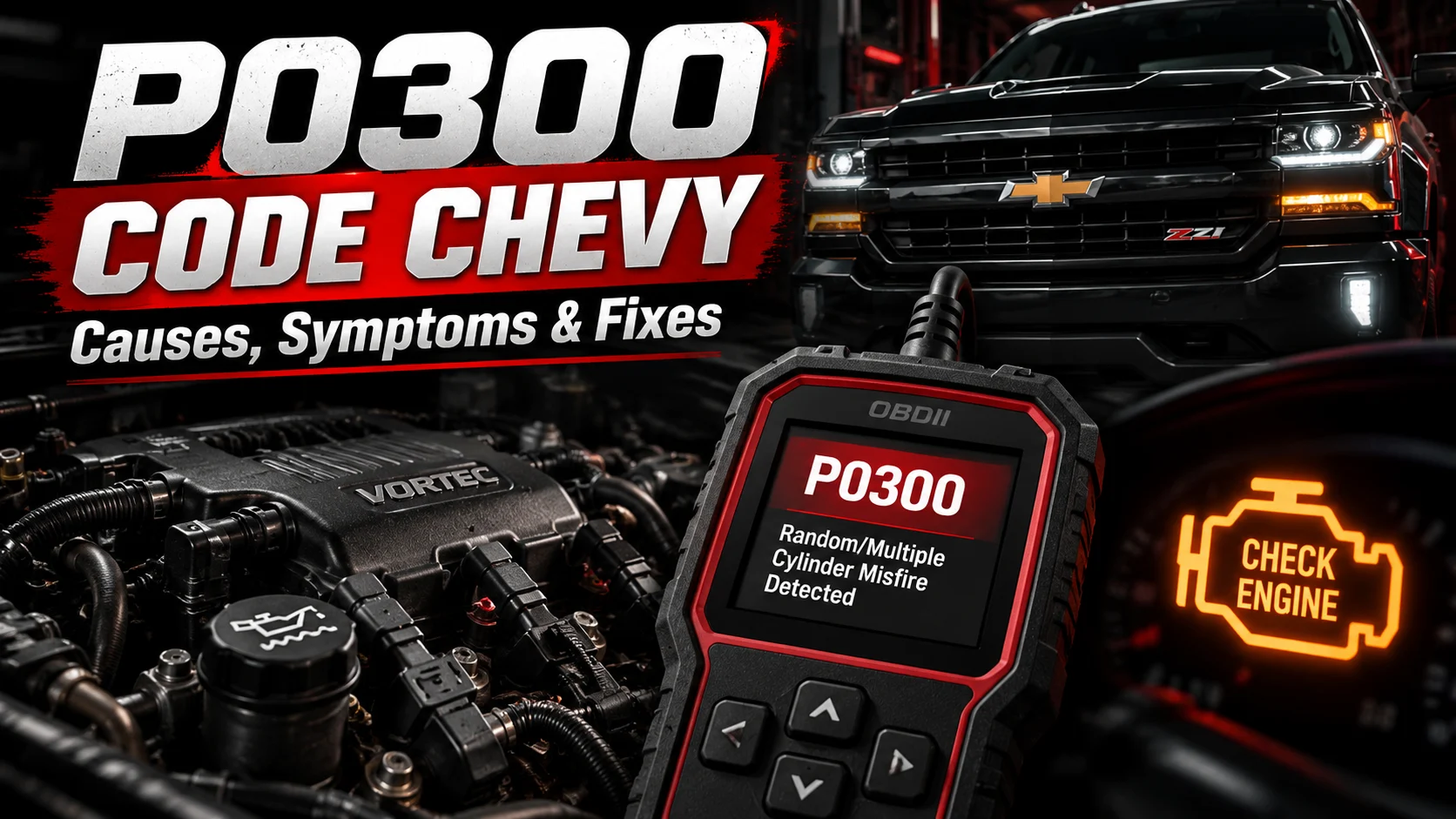
Seeing a P0300 code on your Chevy can be worrying, especially when your Silverado, Equinox, Malibu, Tahoe, or Traverse starts shaking, idling roughly, or losing power. P0300 means the engine computer detected a random or multiple-cylinder misfire; it does not automatically mean major engine damage.
This guide covers the meaning, severity, symptoms, possible causes, diagnosis, repairs and estimated costs to help you make an informed decision.
P0300 Code Chevy: Quick Answer
Meaning: Random/Multiple Cylinder Misfire Detected.
Possible causes: Ignition faults, fuel-delivery problems, vacuum leaks or mechanical engine issues.
Severity: Potentially serious, especially with a flashing check engine light.
Next step: Record codes and available scan data before replacing components.
Driving advice: If the check engine light flashes, stop as soon as safely possible and arrange assistance.
What Does P0300 Mean on a Chevy?
The P0300 code Chevy owners encounter means the engine control system has detected random or multiple-cylinder misfires. A misfire happens when combustion in one or more cylinders does not occur as expected.
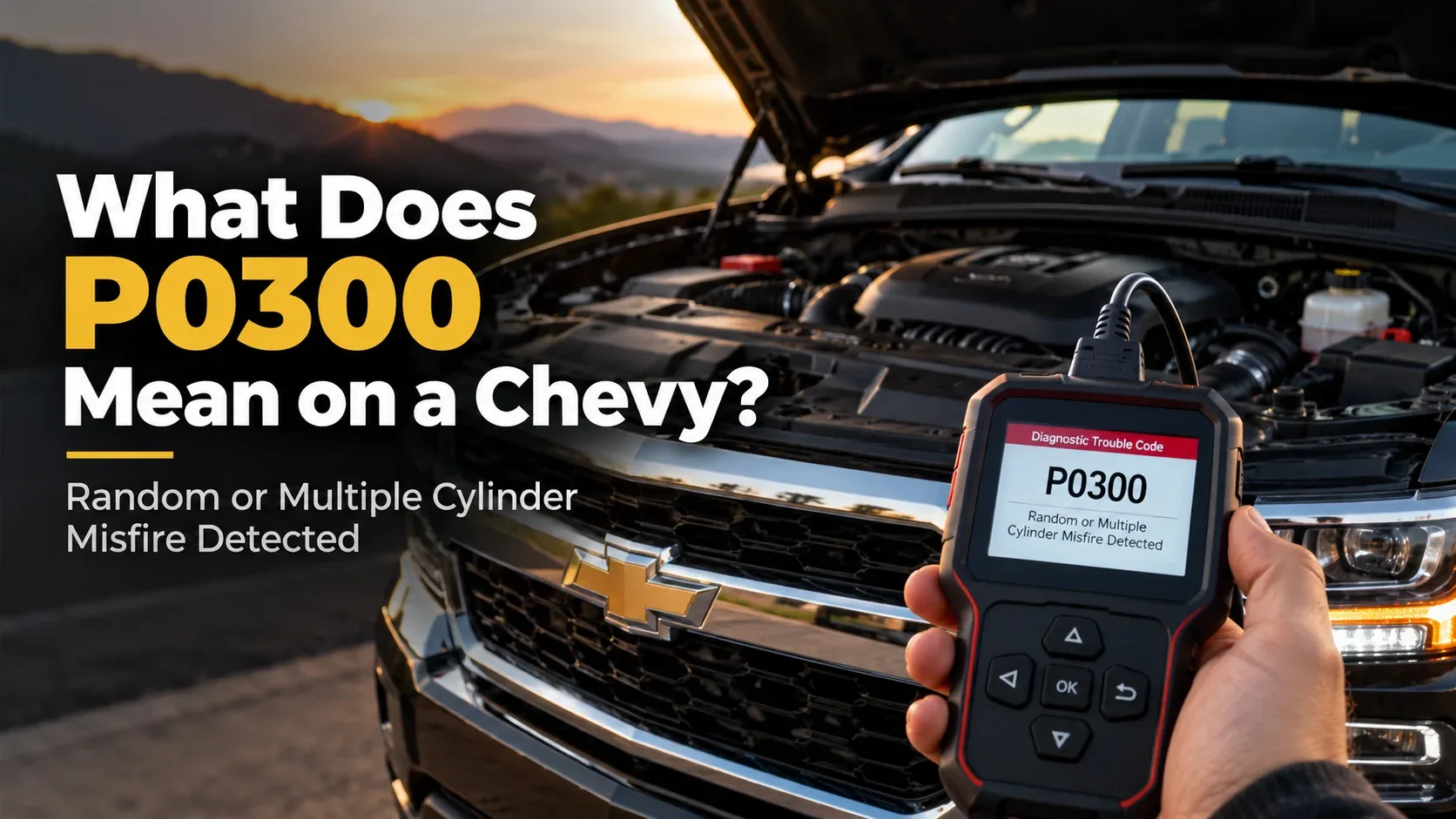
On applicable gasoline engines, a spark ignites the air-fuel mixture. The engine computer monitors crankshaft speed changes to help recognize misfires. P0300 alone does not identify a failed part.
P0300 vs. P0301–P0308
P0300 describes random or multiple-cylinder misfires; P0301 through P0308 identify their corresponding cylinders where applicable. Additional codes and misfire data can narrow the investigation.
| Code | Description |
|---|---|
| P0300 | Random/multiple-cylinder misfire |
| P0301 | Cylinder 1 misfire |
| P0302 | Cylinder 2 misfire |
| P0303–P0308 | Corresponding cylinder misfire, where applicable |
How Serious Is the P0300 Code on a Chevy?
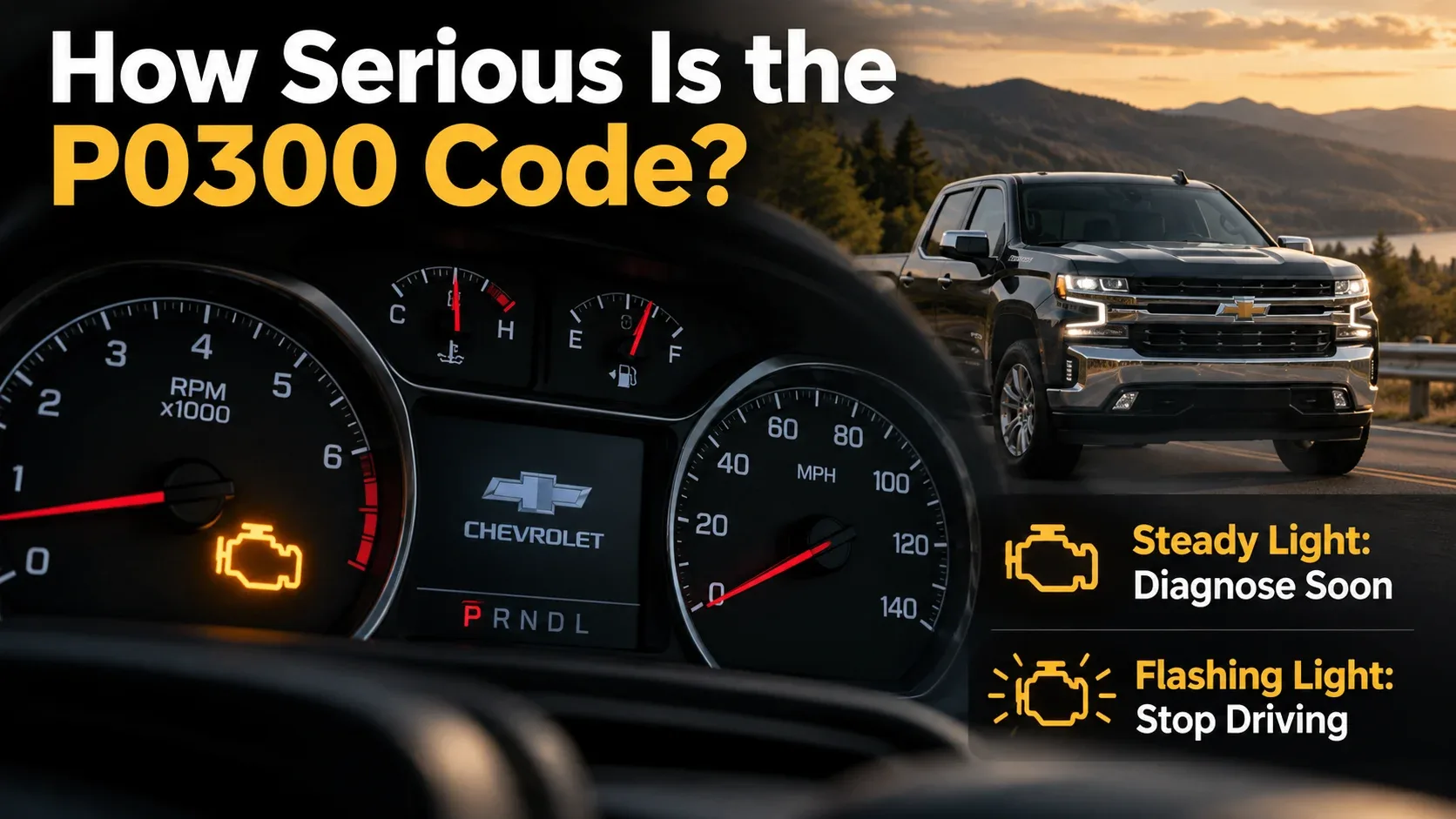
The severity depends on symptoms and warning-light behavior. Persistent misfires can harm emissions components or create unsafe driving conditions.
| Condition | Action |
|---|---|
| Steady check engine light | Arrange prompt diagnosis and avoid unnecessary driving. |
| Flashing check engine light | Stop as soon as safely possible and arrange assistance. |
| Severe shaking or power loss | Stop safely and consider towing. |
Safety warning: A flashing check engine light may signal a catalyst-damaging misfire. Do not keep driving to see whether it disappears.
Common Symptoms of P0300 on Chevrolet Vehicles
Some owners notice the light before performance changes; others experience rough idle or hesitation.
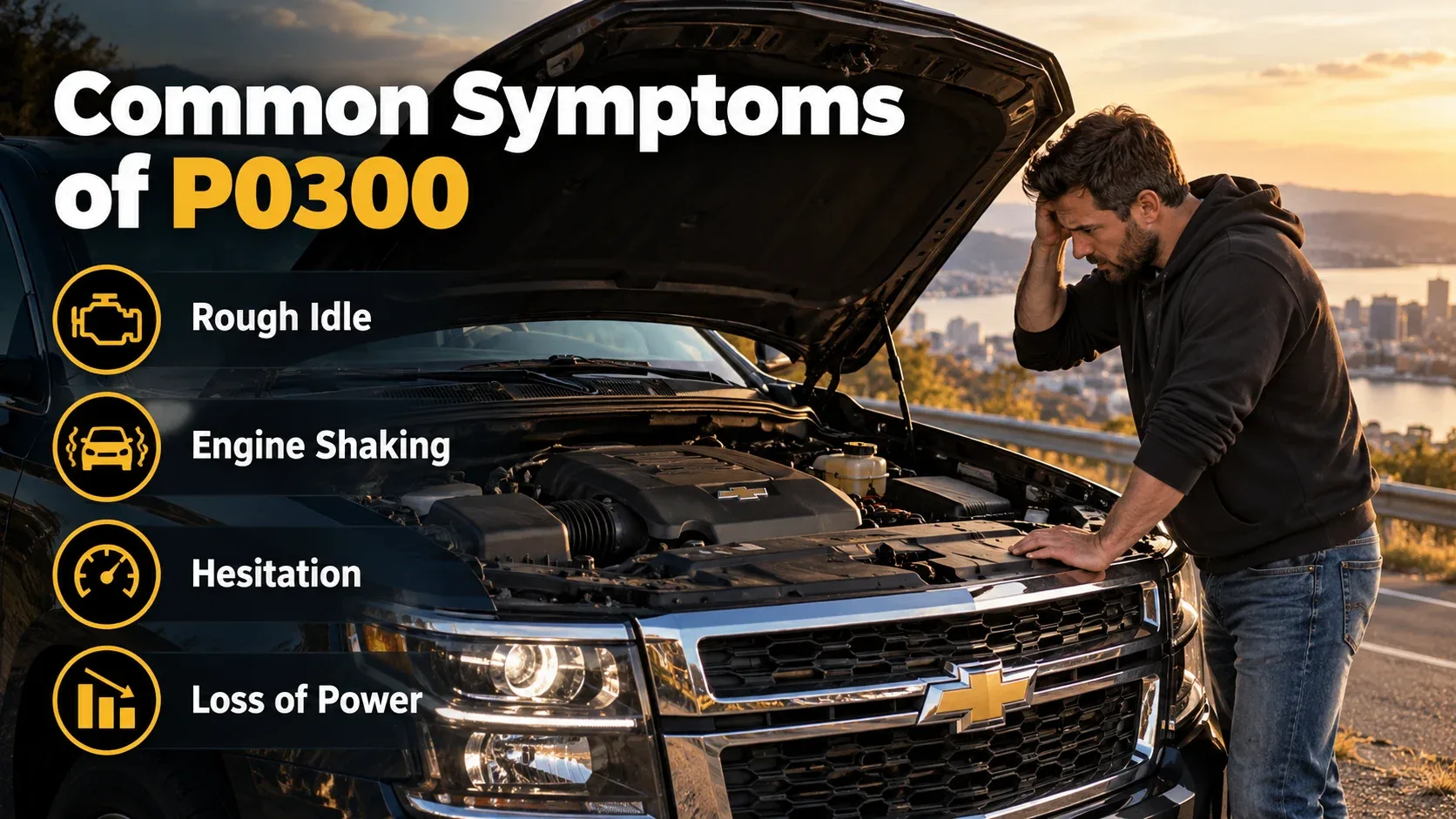
Rough Idle or Engine Shaking
Uneven combustion may make the vehicle vibrate while stopped.
Hesitation During Acceleration
Misfires can interrupt smooth engine power, especially under load.
Reduced Performance
Repeated misfires can cause sluggishness or power reduction.
Poor Fuel Economy
Inefficient combustion may increase fuel consumption, although economy alone does not prove a misfire.
Stalling and Odors
Severe problems may contribute to stalling or unusual exhaust odors. A strong raw-fuel odor can also indicate a fuel leak and demands caution.
What Causes the P0300 Code on a Chevy?
There are several possible reasons for random misfires. The underlying fault must be confirmed using the vehicle’s symptoms and test data.
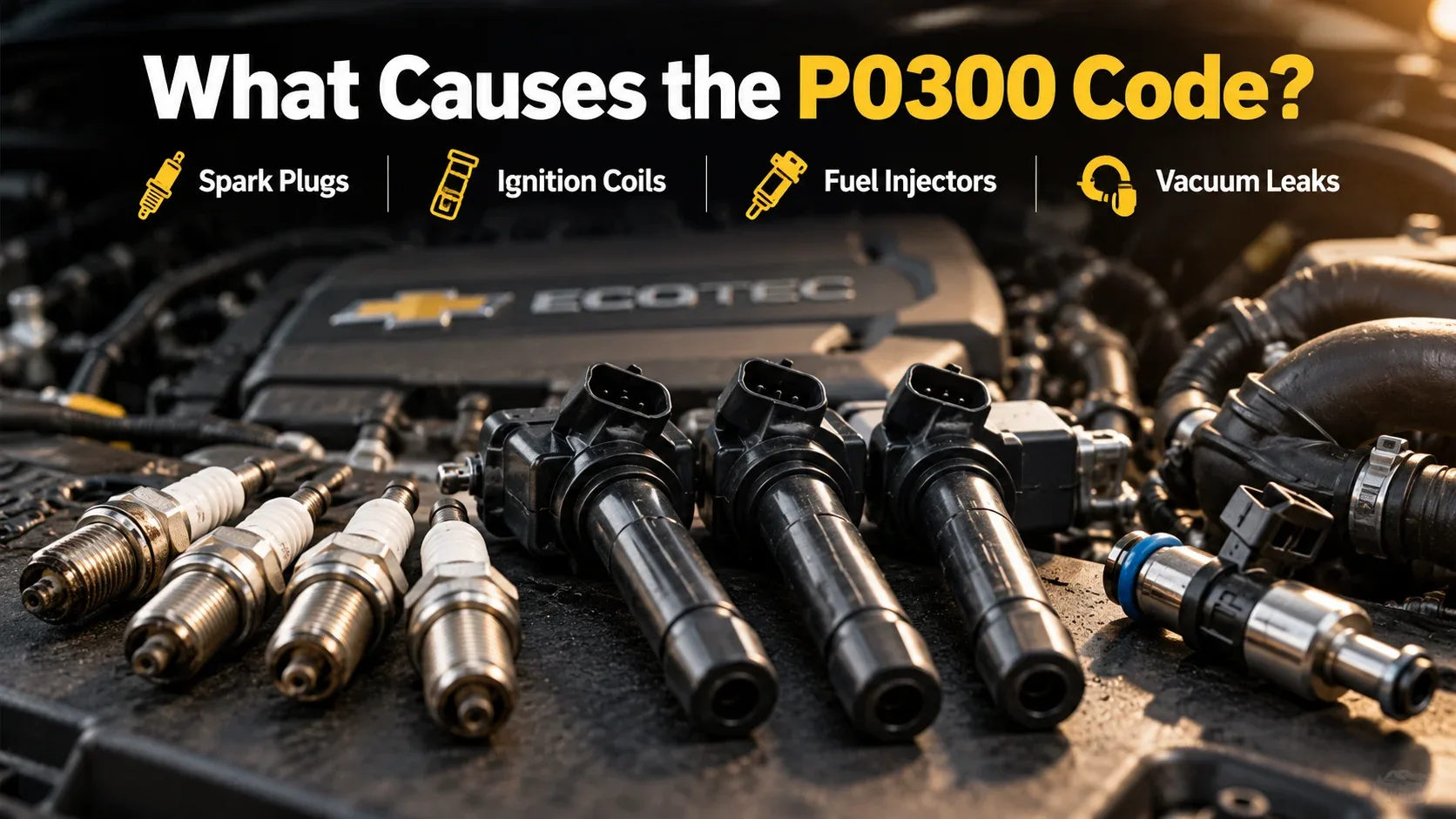
Worn Spark Plugs
Worn, contaminated or improperly specified plugs may interfere with combustion in gasoline engines.
Faulty Ignition Coils or Wiring
Coils, boots, plug wires where fitted, or electrical connectors may malfunction intermittently.
Fuel Injectors or Fuel Pressure
Incorrect or inadequate fuel delivery can affect one or more cylinders.
Vacuum or Intake Leaks
Unmetered air can upset the air-fuel ratio and contribute to misfires.
Mechanical Engine Problems
Compression loss, valve-related problems and timing faults can prevent normal combustion.
Sensor or Control Faults
Sensor information or wiring may contribute to improper running; components must be tested before replacement.
Key point: P0300 is not a command to replace spark plugs or coils. Testing comes first.
How to Diagnose P0300 on a Chevy: Step by Step
Begin with evidence rather than guesswork. If the light is flashing or the engine is severely rough, stop driving and seek professional assistance.
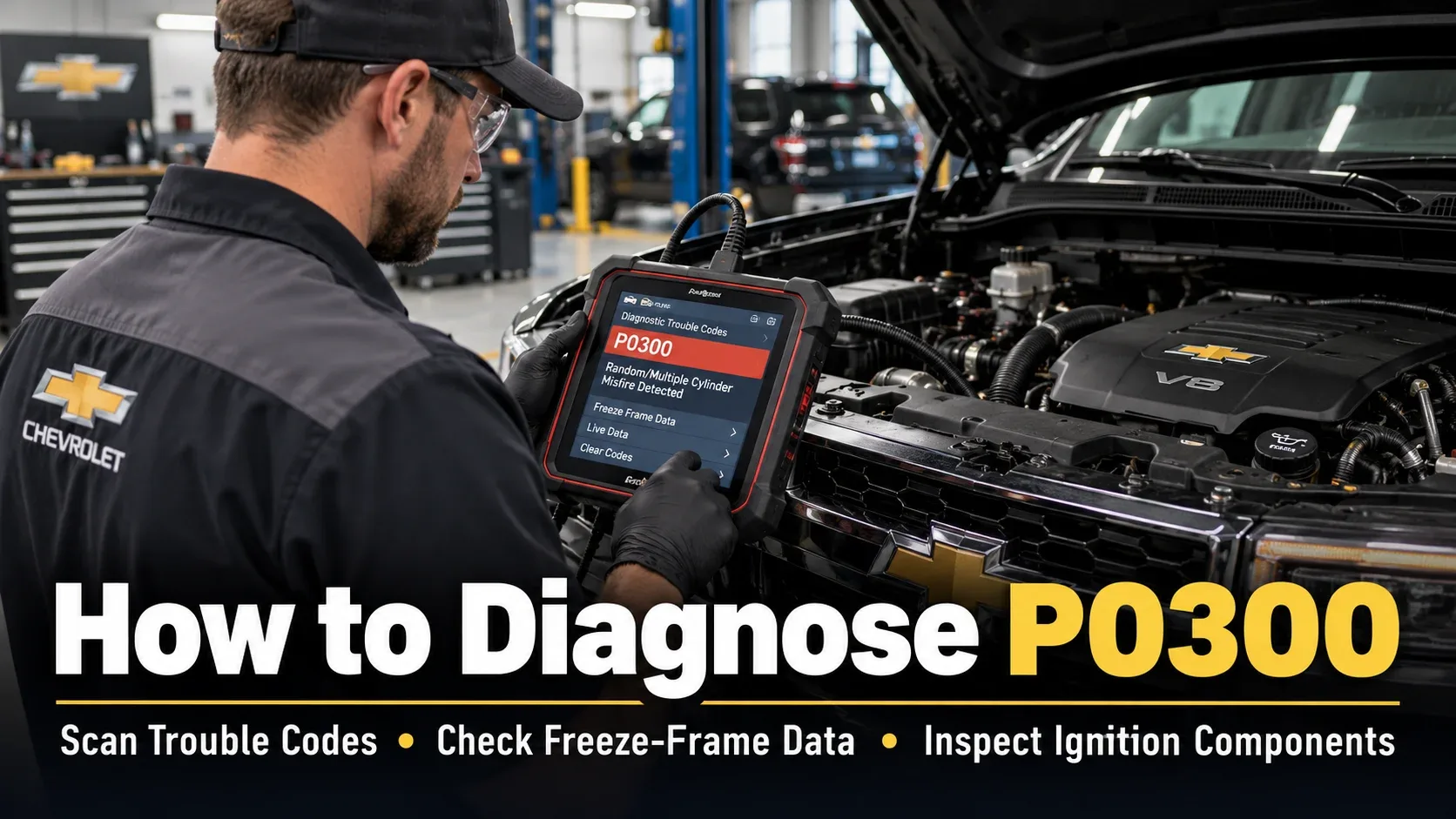
Step 1: Record All Codes
Scan for stored, pending, and permanent codes where available. Do not erase information before recording it.
Step 2: Check Freeze-Frame Data
Review available engine load, RPM, temperature, speed and fuel-trim readings to understand when the fault occurred.
Step 3: Examine Misfire Counters
If the scan tool supports cylinder-specific counters, use them to locate concentrated or widespread misfire activity.
Step 4: Visually Inspect
With the engine off and cool, inspect accessible hoses, connections, and wiring.
Step 5: Test Suspect Ignition Parts
Examine coils, plugs and related parts as applicable. Replace only confirmed defective components.
Step 6: Investigate Air and Fuel Systems
Check fuel trims, suspected intake leaks, and fuel-delivery operation. High-pressure fuel-system tests require professional equipment and training.
Step 7: Consider Mechanical Testing
Appropriate compression, leak-down or valvetrain testing may be needed if simpler causes are excluded.
Step 8: Verify the Fix
After correction, check running quality and relevant misfire data. Merely clearing a code does not establish that the fault is fixed.
P0300 Chevy Code by Model
P0300 has the same broad meaning across Chevy models, but the appropriate tests depend on year and engine.

Silverado
Consider the gasoline engine’s ignition, intake, fuel and mechanical systems; certain V8s have engine-specific valvetrain considerations. Diesel engines require different procedures.
Equinox
Turbocharged and naturally aspirated versions have distinct engine arrangements and diagnostic requirements.
Malibu
Review the exact powertrain and associated ignition and air-fuel control systems.
Tahoe
Some V8 engines include fuel-management and valvetrain systems that warrant investigation when supported by test results.
Traverse
Follow engine- and model-year-specific ignition, fueling, timing and mechanical diagnostic information.
Check the exact year, engine, mileage, other codes and applicable Chevrolet service information before choosing a repair.
How to Fix P0300 on a Chevy
The appropriate repair addresses the confirmed source of misfires, not simply the trouble code.
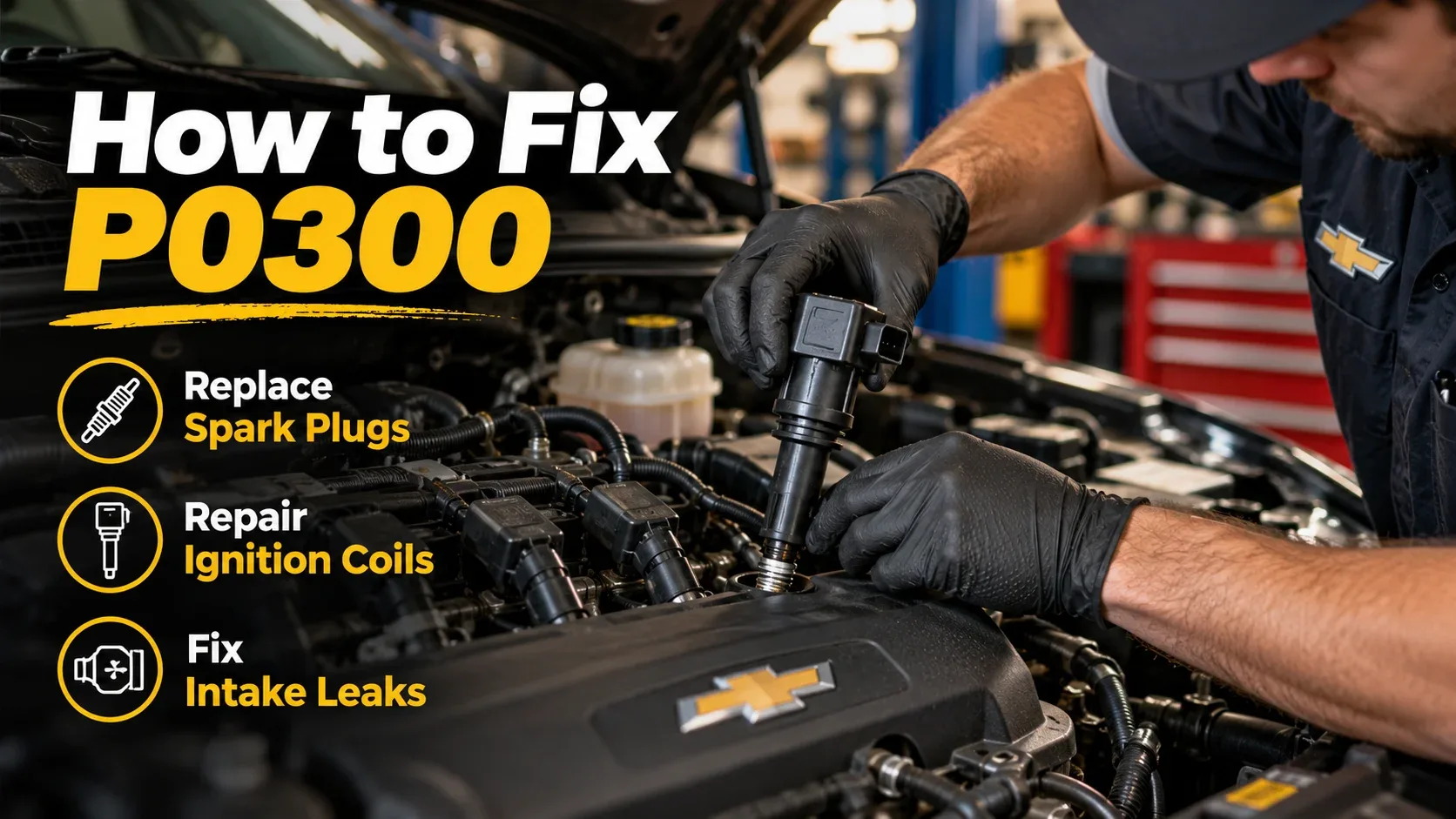
Replace Defective Spark Plugs
Use the manufacturer’s correct type and installation procedure when inspection confirms a plug problem.
Repair Faulty Ignition Components
Replace a coil or repair ignition wiring only when tests identify a fault.
Correct Intake Leaks
Repair confirmed hose or gasket problems and verify intake operation afterward.
Repair Fuel Delivery
Confirmed injectors, fuel pumps or pressure problems may require specialized service.
Address Mechanical Faults
Major mechanical repairs should follow conclusive diagnosis and a written estimate.
DIY or professional? Basic scanning and visual inspections can be reasonable for careful beginners. High-pressure fueling, advanced electrical diagnosis and internal engine repairs should be handled by qualified professionals.
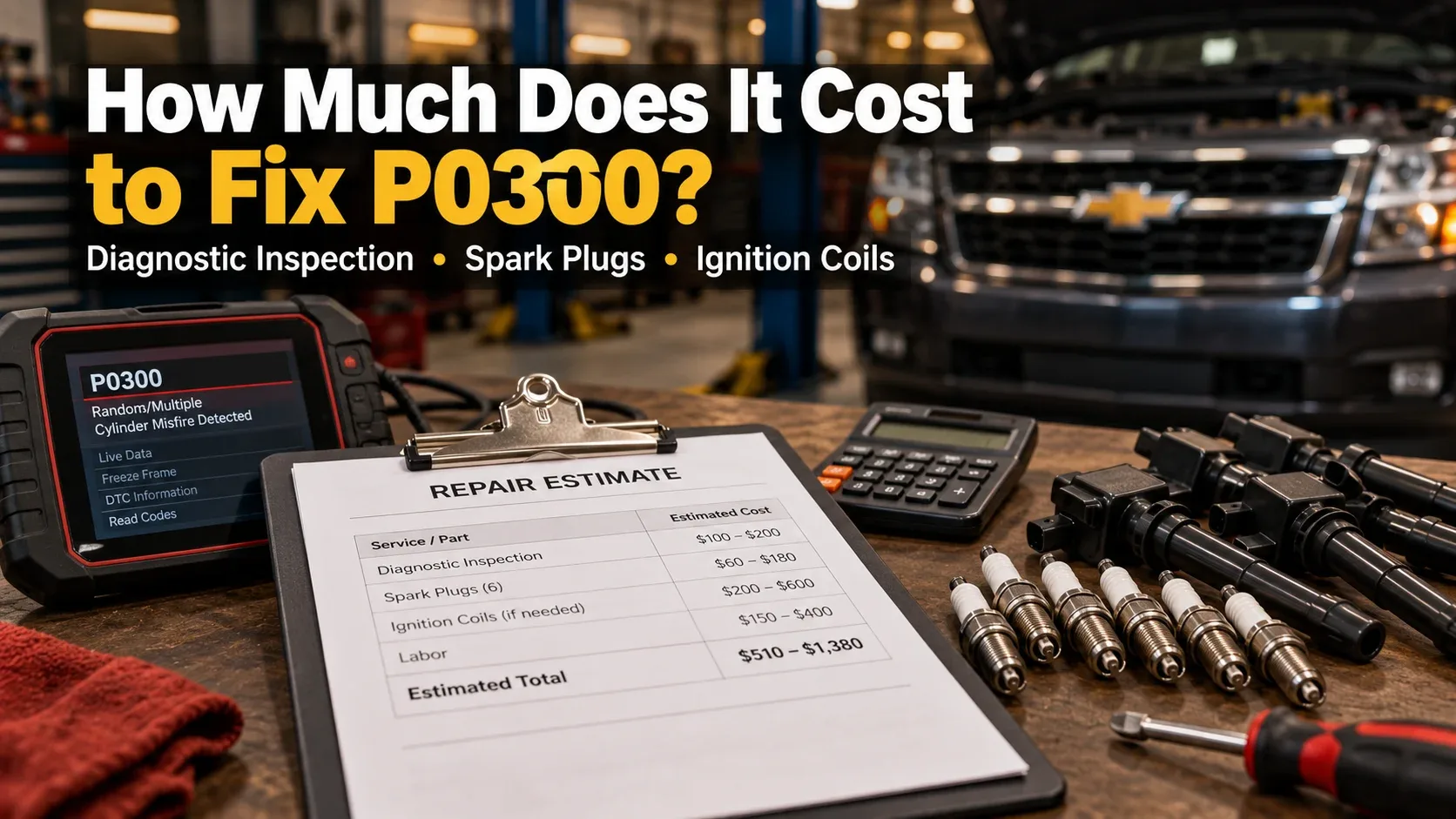
How Much Does It Cost to Fix P0300 on a Chevy?
There is no fixed repair price because P0300 identifies a misfire pattern, not a specific failed part. The following are broad illustrative U.S. budgets, not verified live quotes.
| Service | Illustrative U.S. budget |
|---|---|
| Diagnosis | $100–$250+ |
| Spark plug replacement | $150–$500+ |
| One ignition coil replacement | $150–$450+ |
| Intake/vacuum leak | $100–$600+ |
| Fuel injector repair | $250–$1,000+ |
| Major engine repair | $1,000 to several thousand dollars or more |
Actual prices vary by engine, location, labor rate, required parts and confirmed cause. Request diagnostic evidence and a detailed written estimate for expensive work.
Common Mistakes to Avoid When Diagnosing P0300
Guessing can result in unnecessary parts and missed defects.
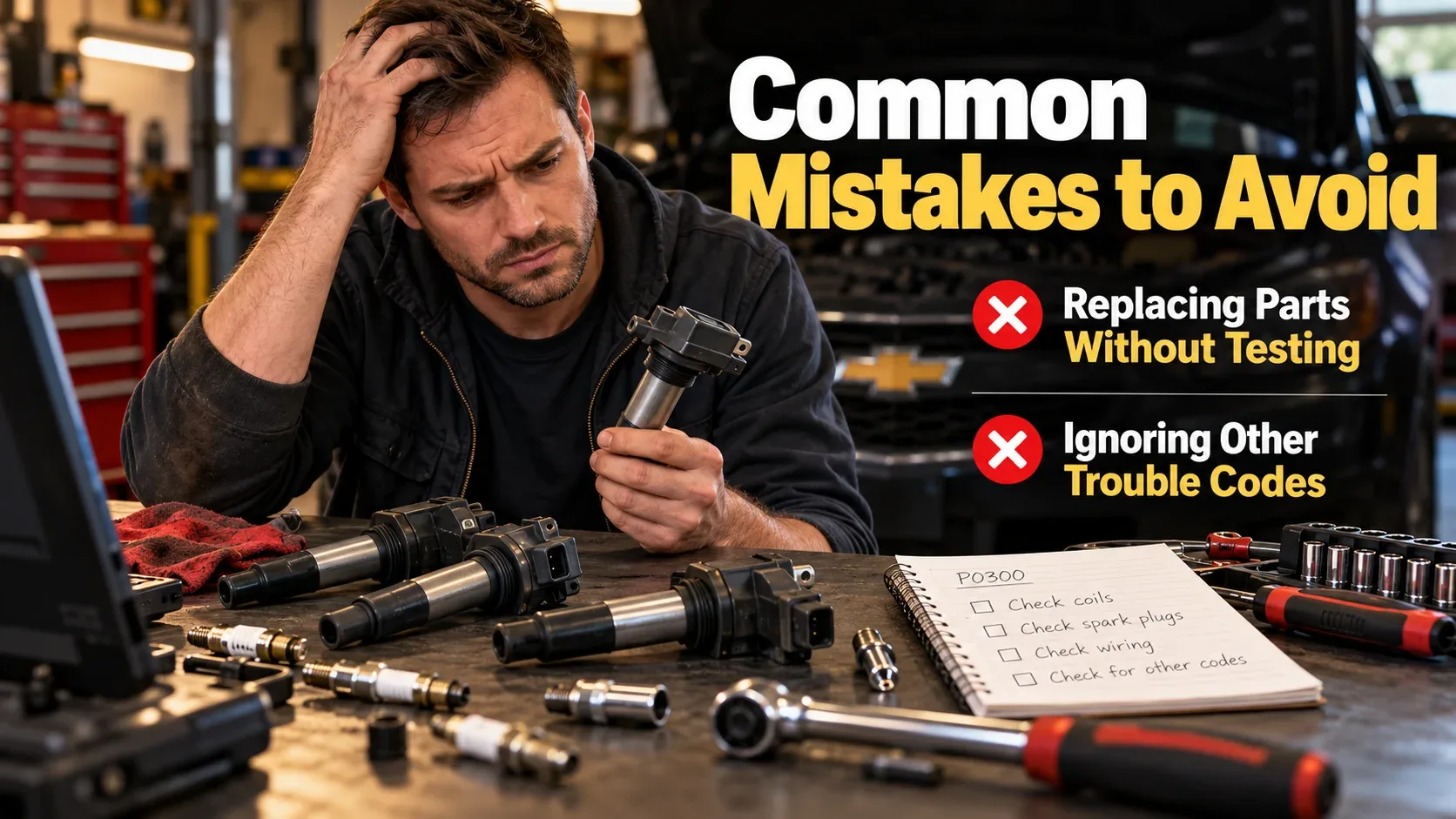
Replacing Parts Without Testing
Installing plugs, coils or sensors at random can waste money while the fault remains.
Ignoring Related Codes
Other misfire, mixture or sensor codes may point toward useful tests.
Clearing Codes Too Early
Erasing codes can remove freeze-frame clues and reset readiness monitors.
Using the Wrong Engine Advice
Confirm the model year and powertrain before following model-specific instructions.
Ignoring Flashing Warnings
A flashing check engine light warrants stopping safely and seeking help.
How to Reduce the Risk of Future Chevy Misfires
Good upkeep can reduce some preventable misfire causes, although it cannot prevent every fault.
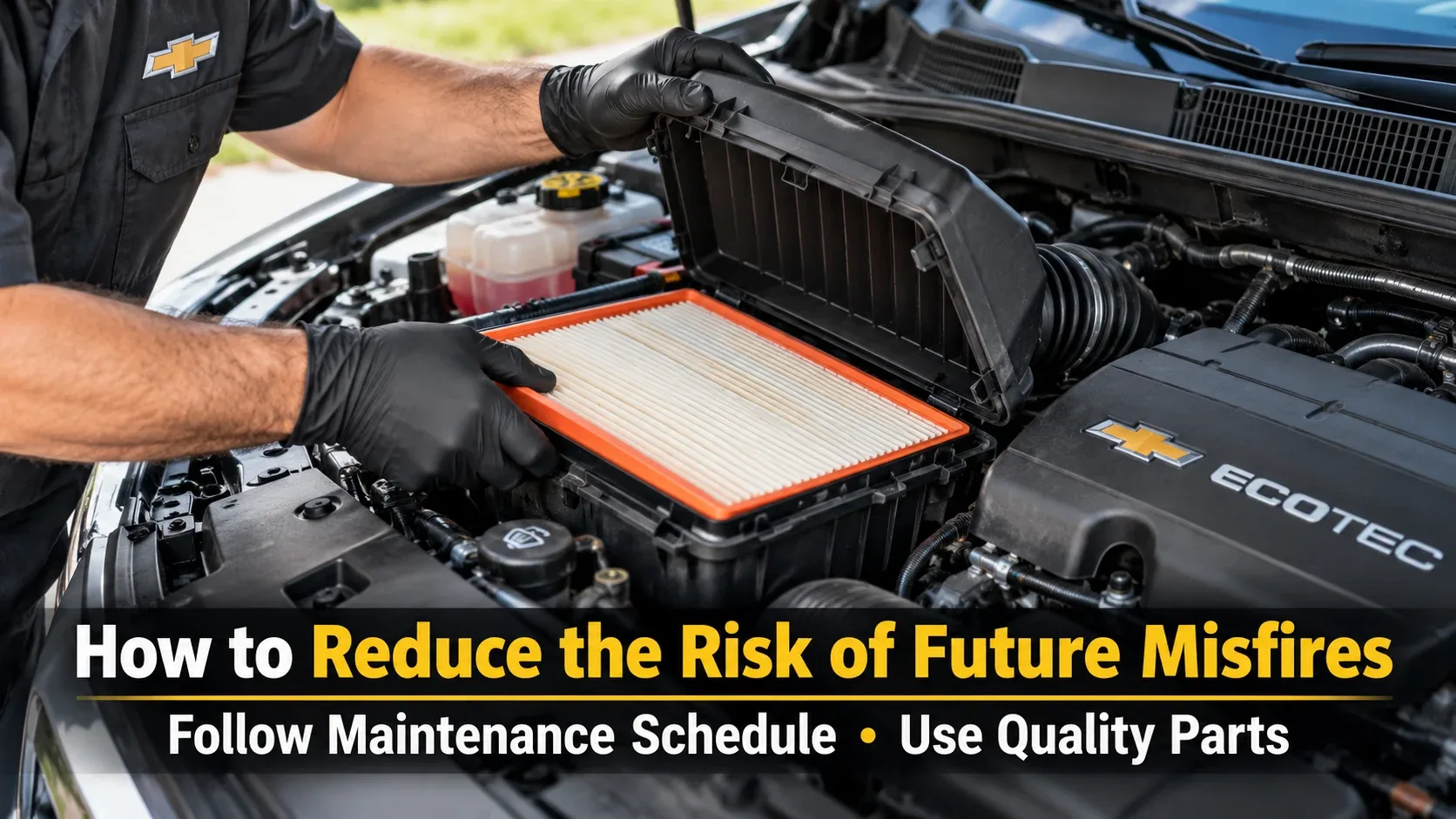
- Follow the Chevrolet service schedule.
- Use the correct spark plugs and compatible replacement parts.
- Investigate recurring rough idle or hesitation.
- Repair confirmed intake and wiring faults.
- Respond promptly to engine warnings.
- Follow procedures for your specific model and engine.
Frequently Asked Questions About Chevy P0300
Can I drive my Chevy with a P0300 code?
Arrange prompt diagnosis. If the check engine light flashes, the engine shakes severely or power falls significantly, stop safely and seek assistance.
Can bad spark plugs cause P0300?
Yes, but the code does not confirm defective plugs without inspection and testing.
Will P0300 clear itself?
The warning light can turn off if faults are not detected during required monitoring, but that does not prove permanent repair.
Can a vacuum leak cause P0300?
Yes. An intake leak can affect the air-fuel mixture and contribute to misfires.
Why does P0300 remain after replacing ignition coils?
Other faults involving plugs, wiring, fueling, intake or mechanical condition may remain. Further testing is required.
Is P0300 always an expensive repair?
No. The cost depends on the actual fault, ranging from simpler fixes to major mechanical work.
Can low fuel pressure trigger P0300?
Yes. Insufficient fuel delivery may cause poor combustion across cylinders.
Why does my Chevy misfire only at idle?
Idle-sensitive intake, ignition, injector or mechanical faults may be involved. Review fuel trims and misfire data to narrow the cause.
Final Thoughts on the P0300 Chevy Code
P0300 code Chevy means random or multiple-cylinder misfires were detected, but it does not identify a particular failed component. Start with the warning-light severity, record diagnostic data, test relevant systems and correct verified faults.
Do not replace parts based on guesses. A flashing check engine light or severe performance problem requires urgent attention.