Choose the right pipe wrench for the job, get a secure grip, and avoid turning a simple repair into damaged pipe or chewed-up fittings.
A pipe wrench, also called a plumber’s wrench, plumbing wrench, or Stillson-style wrench, is an adjustable, toothed tool for gripping and turning round steel, iron, and other tough pipe fittings. It is not the right choice for finished, chrome-plated, copper, PVC, or delicate surfaces.
What is a pipe wrench, and why does it grip so hard?
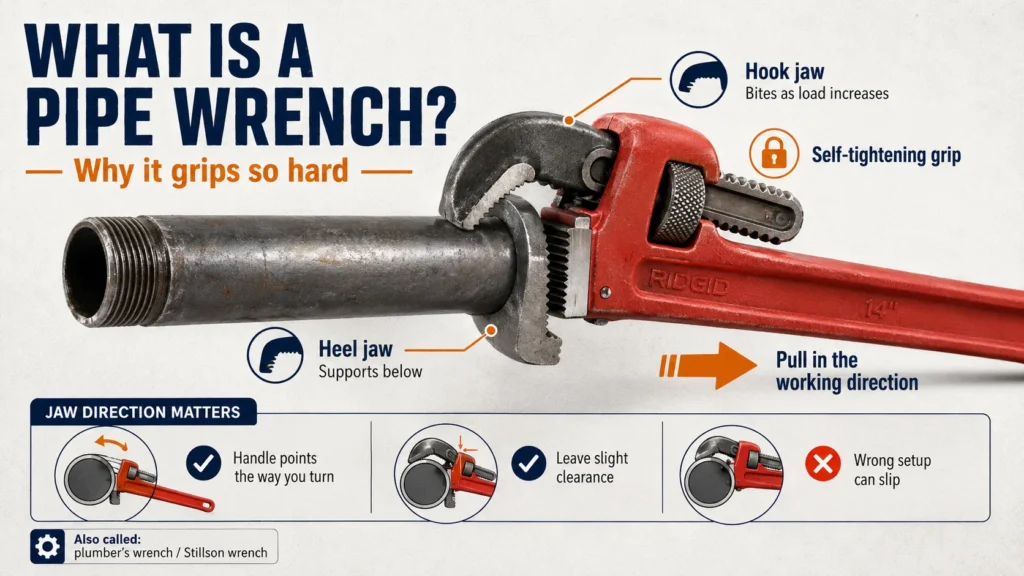
The familiar red, heavy-handled pipe wrench is a self-tightening tool. Its serrated hook jaw sits above the pipe while the heel jaw supports below. As you pull the handle in the working direction, the hook jaw pivots and bites harder into the pipe. That is why a properly positioned plumber wrench feels more secure as load increases.
Stillson wrench is the traditional name for this style, after the original patented design. Today, terms such as pipe wrench, plumber’s wrench, and plumbing wrench usually describe the same broad category. A Ridgid pipe wrench is a manufacturer-specific example of the Stillson-style design, rather than a completely different kind of tool.
The jaw direction matters
Set the wrench so the handle points in the direction you want to turn. Leave a small clearance between the back of the hook jaw and the pipe. If both jaws are clamped flat and the hook cannot pivot, the wrench can slip instead of camming into a secure grip.
The pipe wrench types you will actually encounter
The best wrench is not always the biggest one. Pipe diameter, available swing room, pipe condition, and whether you can grip from the outside or inside determine which pattern will work safely.
Straight pipe wrench
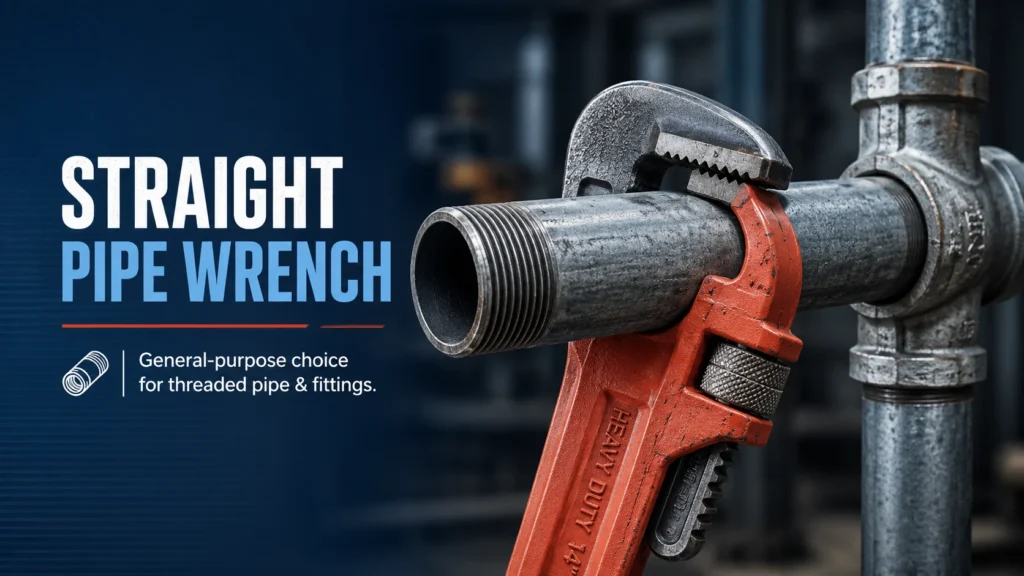
The general-purpose choice for threaded steel or galvanized pipe, fittings, and nipples. Most homeowners only need this pattern in a sensible size.
Offset pipe wrench
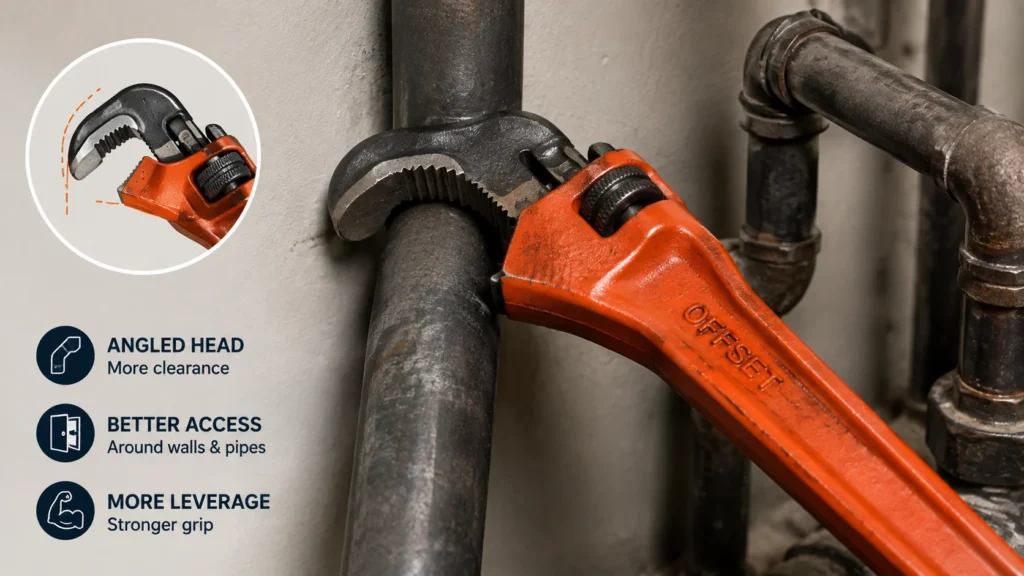
The angled head gives knuckle clearance and better access around walls or parallel pipes. Useful when a straight handle cannot swing freely.
End pipe wrench
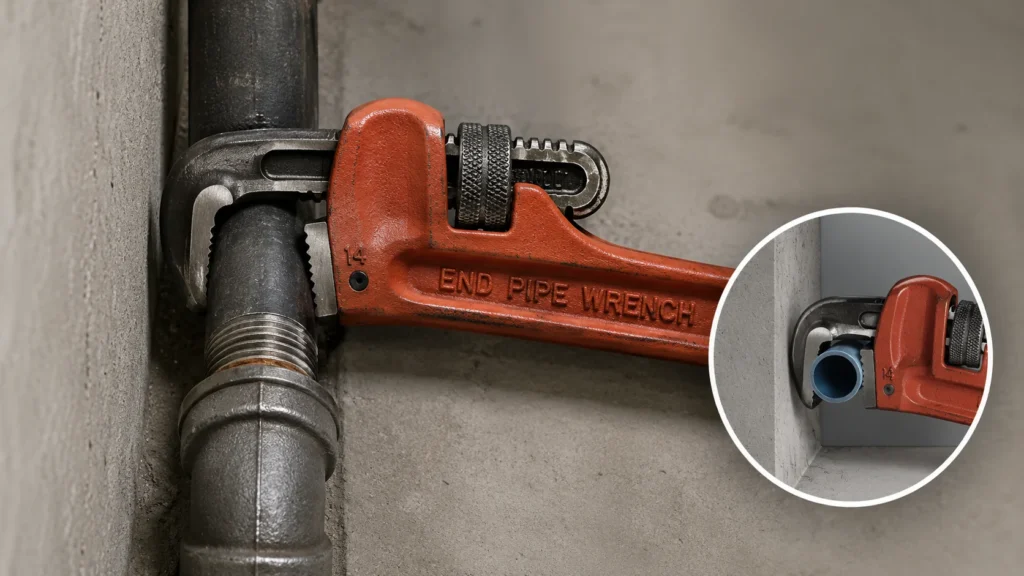
Designed to work close to a wall, in a narrow pit, or near the end of a pipe run. It is a specialist access tool, not a first purchase.
Chain and internal wrenches
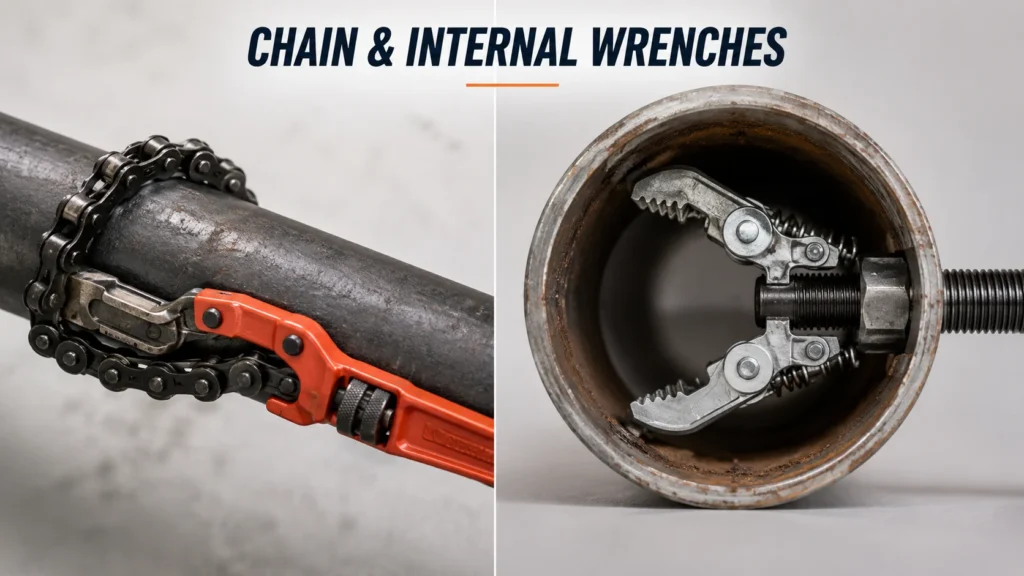
A chain wrench wraps around large, awkward pipe. An internal pipe wrench expands inside a fitting or broken nipple when there is no outside surface left to grip.
Pipe wrench size chart: match capacity, not just handle length
Wrench length gives you leverage, but maximum jaw capacity tells you the largest nominal pipe diameter the wrench is designed to grip. Ratings vary slightly by manufacturer, so check the marking or product specification before buying.
| Wrench length | Typical max. capacity | Practical use |
|---|---|---|
| 10 in. | About 1½ in. | Tight household repairs and small fittings |
| 14 in. | About 2 in. | Best all-round DIY and maintenance size |
| 18 in. | About 2½ in. | Larger residential pipe and stubborn fittings |
| 24 in. | About 3 in. | Utility rooms, plant work, larger steel pipe |
| 36 in. and larger | 4 in. and above | Industrial work where clearance and support allow |
Which wrench should you reach for?
Exposed threaded steel pipe
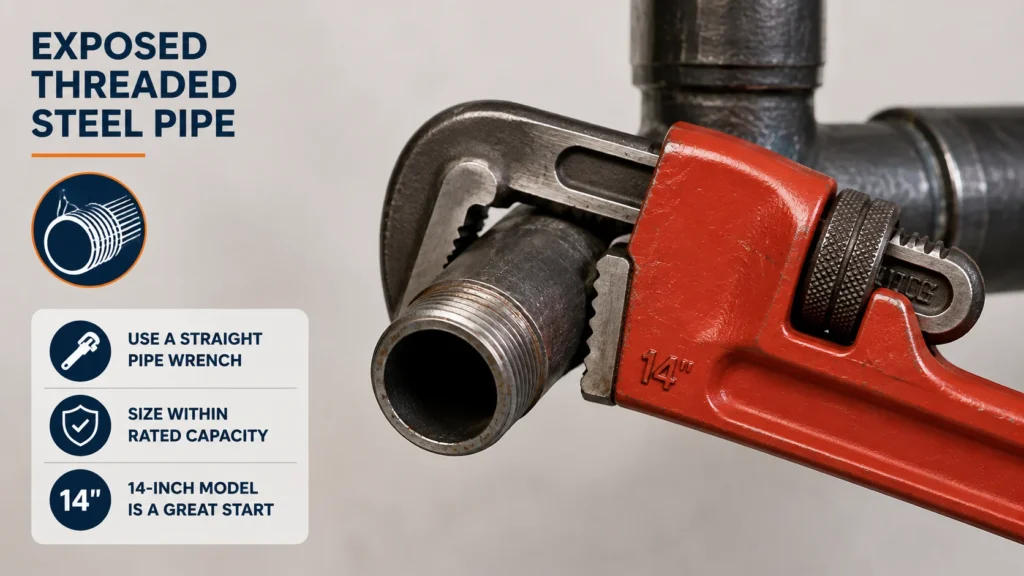
Use a straight pipe wrench sized within its rated capacity. A 14-inch model is often the practical starting point.
Tight clearance near a wall
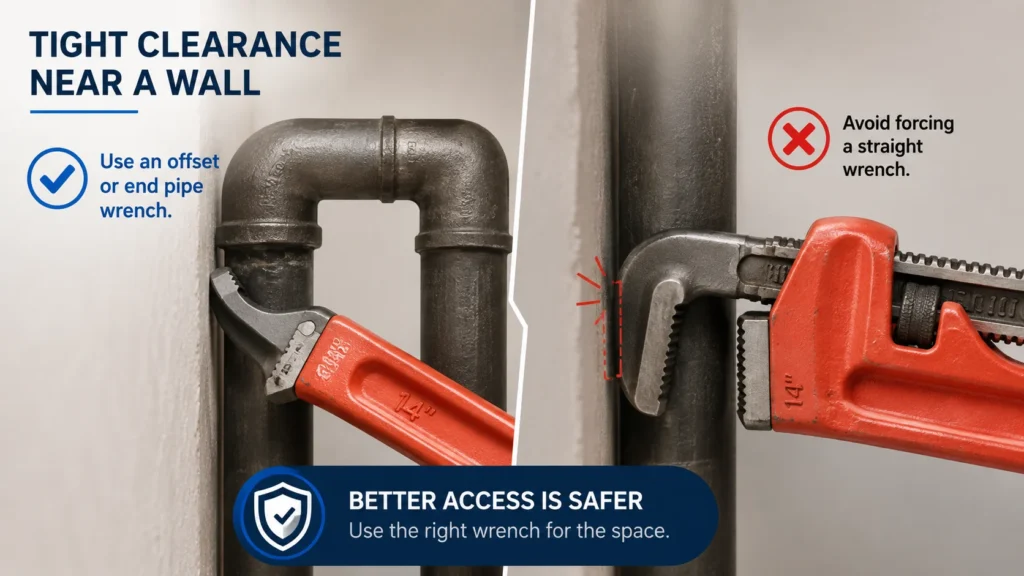
Try an offset or end pipe wrench. Better access is safer than forcing a larger straight wrench into a poor angle.
Broken threaded nipple
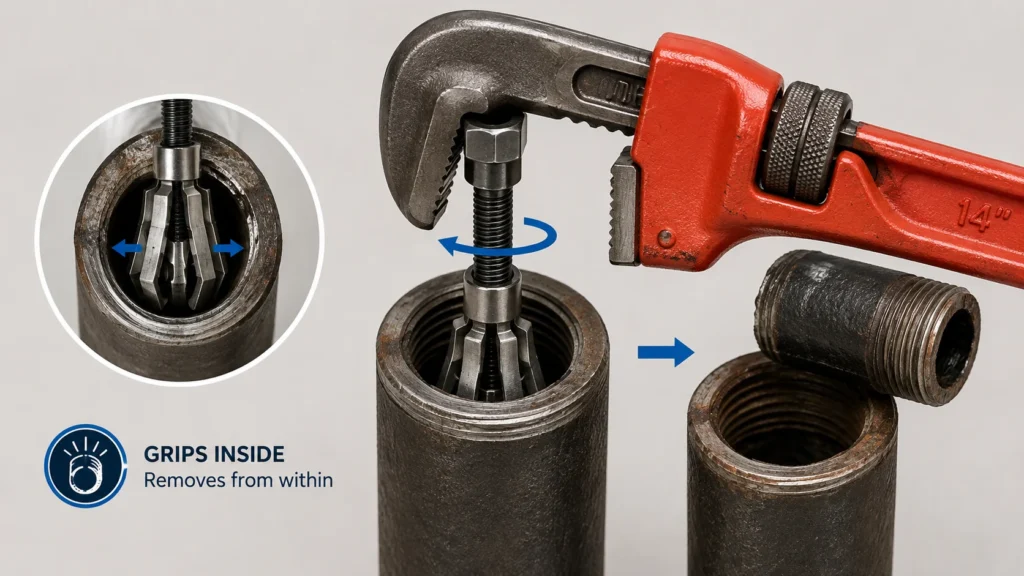
Use the correctly sized internal pipe wrench or extractor. It grips inside the bore instead of crushing what remains outside.
When an internal pipe wrench is the right answer
An internal pipe wrench is for fittings you cannot grab from the outside—most commonly a snapped threaded nipple sitting flush in a tee, elbow, or wall fitting. It is inserted into the opening and turned with a compatible wrench, ratchet, or handle. Its gripping surface expands or cams against the inside wall as torque is applied.
An internal pipe wrench set is worthwhile if you regularly work on multiple threaded pipe sizes. For a one-off repair, identify the fitting’s nominal size before purchasing a single tool. Avoid using one that is undersized, because it may spin and scar the inside threads.
- Clean loose corrosion and debris from the opening before insertion.
- Use penetrating oil and controlled force on seized steel fittings.
- Stop if the surrounding fitting begins to crack, distort, or move in the wall.
How to use a pipe wrench without damaging the work
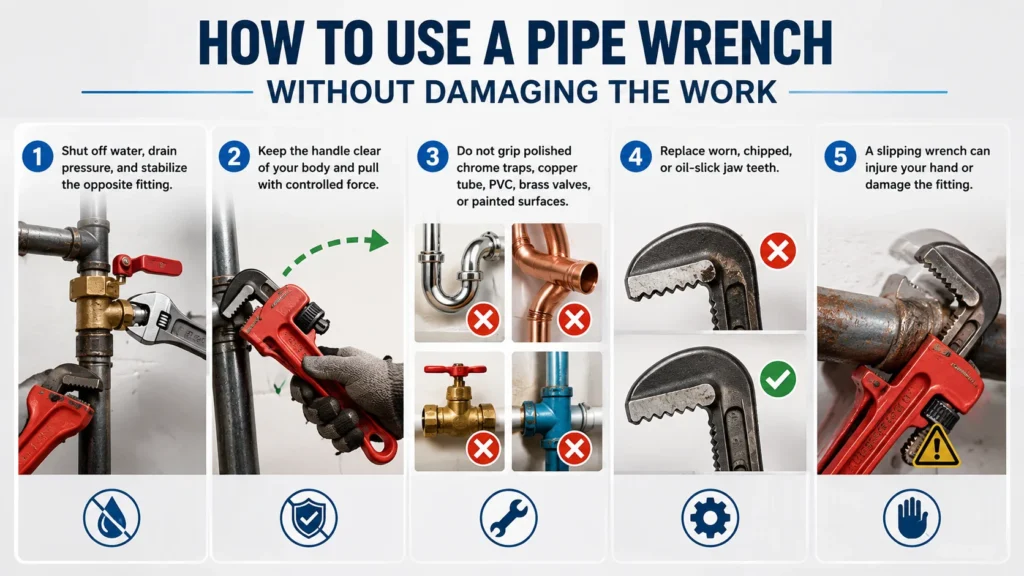
A pipe wrench earns its grip by leaving tooth marks. Treat it as a tool for rough pipe and fittings, not every round object in a plumbing system.
- Shut off water, drain pressure, and stabilize the opposite fitting with a second wrench when loosening threaded joints.
- Keep the handle clear of your body and pull with controlled force. Do not add a cheater bar unless the manufacturer explicitly permits it.
- Do not grip polished chrome traps, copper tube, PVC, brass valves, or painted surfaces with serrated jaws. Use strap wrenches, padded tools, or the correct fitting wrench instead.
- Replace worn, chipped, or oil-slick jaw teeth. A slipping wrench is more likely to injure your hand or damage the fitting than a stubborn joint is to yield.
Pipe wrench FAQs
Is a plumber wrench the same as a pipe wrench?
Usually, yes. Plumber wrench, plumbing wrench, and pipe wrench are commonly used for the same toothed, adjustable wrench style. However, plumbers also use many other specialized wrenches, so check the jaw design before buying.
Will a large pipe wrench grip better?
Not automatically. A large pipe wrench gives more leverage, but it can overload smaller fittings and needs more room to swing. Choose the smallest wrench that has adequate rated capacity and lets you apply steady control.
Can I use a pipe wrench on PVC pipe?
Avoid it. Serrated teeth can gouge or crush plastic pipe and fittings. For plastic plumbing, use the manufacturer-recommended tool, a strap wrench, or hand-tightening methods as appropriate for the fitting.