
MRO is the practical system of products, parts, tools, and services that keeps equipment, facilities, people, and daily business operations working reliably.
MRO stands for maintenance, repair, and operations. It includes the indirect products and services a business uses to maintain assets, restore equipment after failure, protect workers, and support everyday work—even though those items usually do not become part of the finished product.
What does MRO mean?
The full form of MRO is maintenance, repair, and operations. In manufacturing, logistics, facilities, construction, healthcare, and commercial property management, the term groups the supplies and support services needed to keep work moving safely and efficiently.
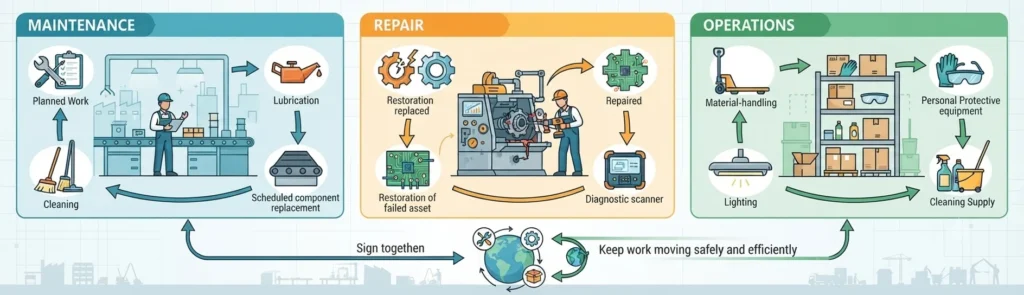
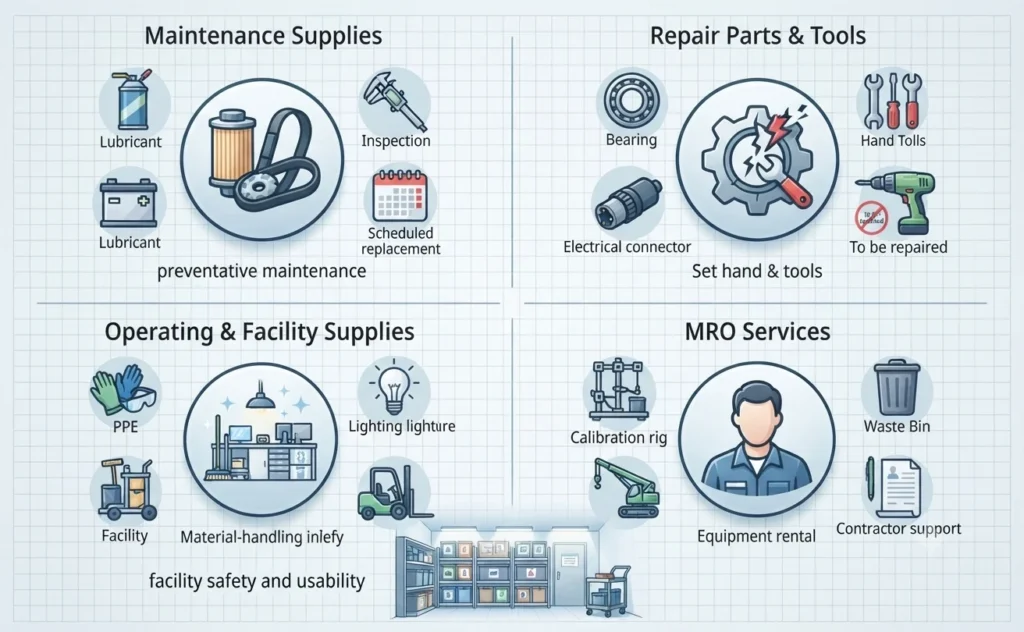
Maintenance includes planned work such as inspections, lubrication, cleaning, and scheduled component replacement. Repair restores damaged or failed assets. Operations covers everyday workplace supplies, from personal protective equipment and lighting to cleaning products and material-handling items.
MRO classification is practical, not always identical
Most MRO items are indirect materials, but classification can vary by company policy, accounting practice, and how an item is used. A spare part may be treated differently when it is a critical, high-value component rather than a routinely consumed item. Confirm local purchasing and finance rules before changing classifications.
Common maintenance, repair and operations MRO products
MRO products are broad because they support many assets and departments. The easiest way to understand them is by the job they help a team perform.
Maintenance supplies
Lubricants, filters, belts, cleaning chemicals, inspection tools, calibration equipment, batteries, and scheduled replacement kits help prevent avoidable equipment failure.
Repair parts and tools
Bearings, seals, fasteners, electrical components, hoses, fittings, hand tools, power tools, and replacement parts are used to return an asset to acceptable working condition.
Operating and facility supplies
PPE, janitorial products, lighting, packaging support items, plumbing and HVAC components, signage, and material-handling supplies keep workplaces safe, clean, and usable.
MRO services
Examples include equipment inspection, calibration, planned maintenance, waste handling, equipment rental, specialist repairs, and contractor support for facilities or production assets.
Organized MRO storage makes it easier for maintenance teams to identify the correct part, reduce duplicate purchasing, and respond quickly when work is urgent.
MRO products versus direct materials and capital equipment
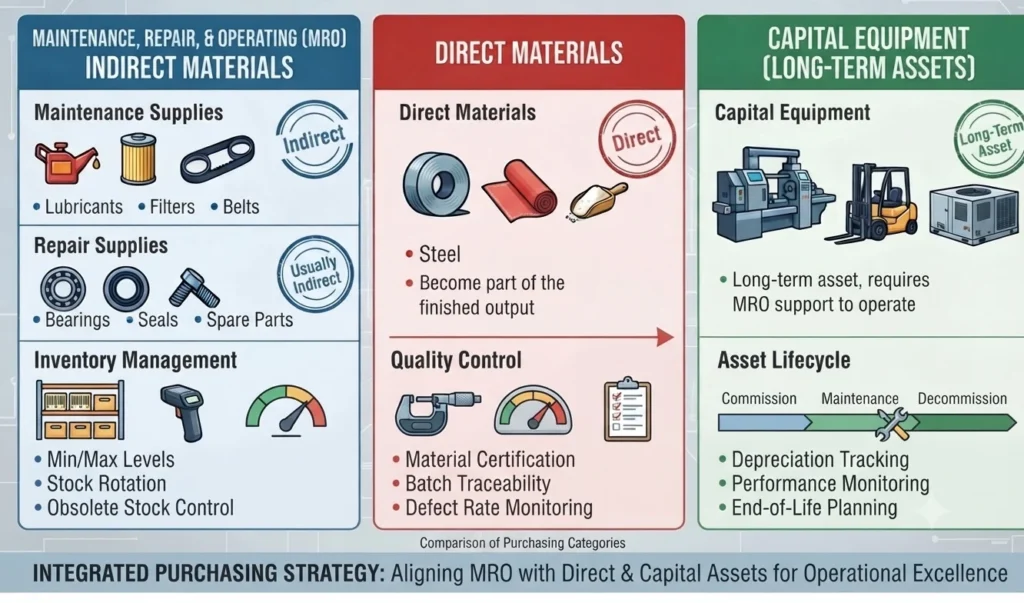
A key distinction is whether a purchase becomes part of what the company sells. MRO supports the process; direct materials normally become part of the finished output.
| Category | Examples | Business purpose | Direct or indirect |
|---|---|---|---|
| Maintenance supplies | Lubricants, filters, belts | Prevent equipment failure | Indirect |
| Repair supplies | Bearings, seals, spare parts | Restore failed equipment | Usually indirect |
| Operating supplies | PPE, cleaning products, lighting | Support daily operations | Indirect |
| Direct materials | Steel, fabric, ingredients | Become part of the finished product | Direct |
Capital equipment is different again: a production machine, forklift, or HVAC installation is usually a long-term asset. The consumables, spare parts, and service support needed to keep that asset operating are typically considered MRO.
Why MRO is important to business operations
MRO may look like a large collection of low-value purchases, but its operational impact can be high. A missing filter, bearing, safety glove, battery, or electrical contact can delay work, create safety issues, or extend equipment downtime.
Strong MRO control helps maintenance, procurement, operations, and finance make better trade-offs. It reduces emergency buying, improves stock visibility, supports preventive maintenance, and limits the cost of holding unnecessary inventory.
Numbered locations, accurate descriptions, and practical minimum and maximum levels make MRO stock easier to find and replenish.
What is MRO procurement and how should you manage it?
MRO procurement is the process of sourcing, approving, buying, receiving, storing, and replenishing the supplies that support maintenance and daily operations. The objective is not simply to buy at the lowest unit price; it is to keep the right items available at an acceptable total cost and risk level.
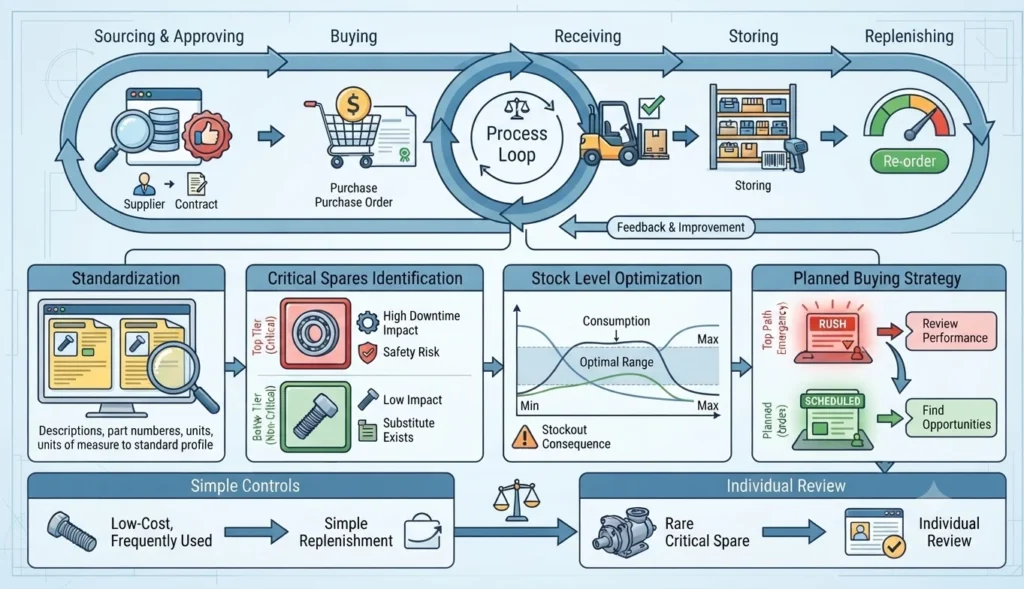
- Standardize descriptions, part numbers, units of measure, and approved alternatives so duplicate items are easier to spot.
- Identify critical spares by considering safety, downtime impact, supplier lead time, usage history, and whether a substitute exists.
- Set minimum and maximum stock levels using consumption, lead time, maintenance schedules, and the consequence of a stockout.
- Review emergency purchases and supplier performance to find recurring shortages, long lead times, and opportunities for planned buying.
A practical MRO management rule
Do not apply the same stock rule to every item. Low-cost, frequently used consumables may need simple replenishment controls, while rare critical spares need individual review. Maintenance planners and procurement teams should agree on risk, lead time, and ownership before reducing stock.
Frequently asked questions about MRO
Is safety equipment considered MRO?
In many organizations, yes. Personal protective equipment such as gloves, safety glasses, hard hats, hearing protection, and respiratory consumables supports safe daily operations without becoming part of the product sold. Classification should still follow your organization’s purchasing and accounting policy.
Are spare parts included in MRO inventory?
Often they are. Bearings, seals, motors, sensors, belts, and similar replacement components are common MRO items because they help restore equipment. High-value or long-life spares may receive separate asset, inventory, or financial treatment depending on company policy.
What is the difference between MRO and preventive maintenance?
Preventive maintenance is a planned maintenance strategy: inspections, servicing, and component changes performed before failure. MRO is the broader category of supplies, parts, tools, and services that can support preventive maintenance as well as repairs and everyday operations.