Everything you need to know about checking tire pressure, understanding your TPMS, and keeping your tires safe — written for everyday drivers.
What Is Tire Pressure?
Tire pressure refers to the amount of air inside your vehicle’s tires, measured in PSI (pounds per square inch). Maintaining the correct air pressure in your tires is one of the simplest yet most important aspects of vehicle maintenance.
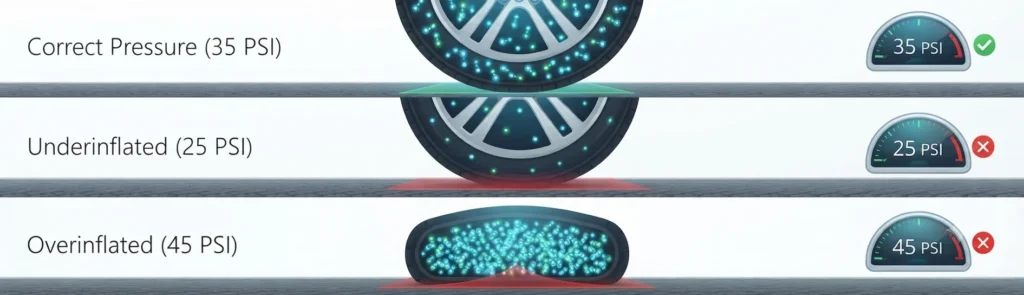
Every tire is designed to operate within a specific pressure range. When you check tire pressure regularly, you ensure optimal contact between the tire and road surface — directly impacting handling, braking distance, and fuel efficiency
Why You Should Check Tire Pressure Regularly
According to the NHTSA, underinflated tires contribute to approximately 11,000 accidents annually in the United States. Here’s why regular pressure checks matter:
- Improves fuel economy by up to 3% (saving $0.10–$0.15 per gallon)
- Extends tire lifespan by preventing uneven tread wear
- Reduces risk of blowouts — especially at highway speeds
- Ensures proper braking distance in wet and dry conditions
- Keeps your tire pressure light from illuminating unexpectedly
Tools You’ll Need to Check Tire Pressure
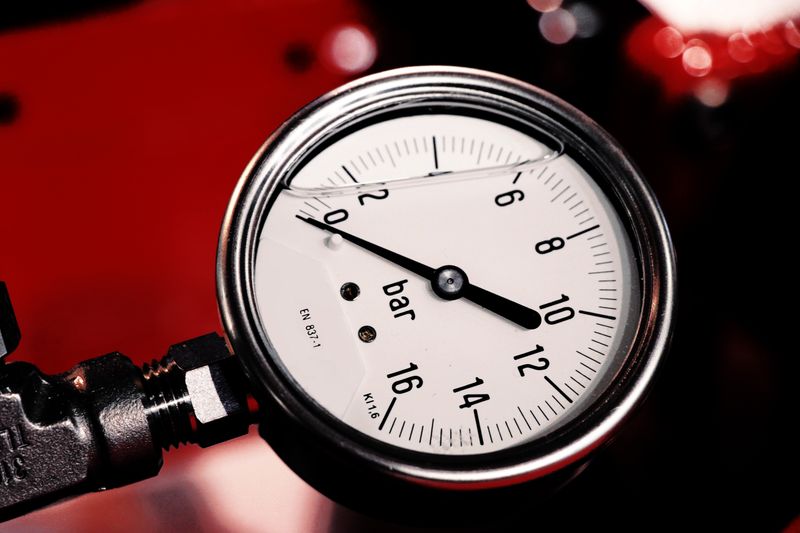
Before you learn how to check tire pressure, gather one essential tool: a tire pressure gauge. You have three main options — a pencil gauge ($3–$5), a dial gauge ($10–$15), or a digital gauge ($15–$30). For most drivers, a digital gauge offers the best balance of accuracy and ease of use.
Optional but recommended: a portable car tire air pump (also called a portable air compressor). These plug into your vehicle’s 12V outlet and let you inflate tires anywhere — no gas station required. Most quality pumps cost $30–$60 and include a built-in digital gauge.
How to Check Tire Pressure: Step-by-Step
Here’s exactly how to check tire pressure at home or at a gas station. This process takes less than 5 minutes and requires no mechanical experience.
1. Check tires when cold
Park your vehicle and wait at least 3 hours after driving, or check first thing in the morning. Driving heats tires and temporarily increases pressure readings by 2–5 PSI.
2. Find your recommended PSI
Open the driver’s door and look for the tire information placard on the door jamb. This sticker shows the manufacturer’s recommended tire pressure — typically between 30–35 PSI for passenger vehicles.
3. Remove the valve cap
Locate the valve stem on your tire (a small rubber or metal protrusion). Unscrew the cap counterclockwise and keep it in your pocket so you don’t lose it.
4. Press the gauge onto the valve stem
Push the gauge firmly and straight onto the valve. You may hear a brief hiss of air — that’s normal. Hold steady until you get a reading.
5. Read the measurement
Compare your reading to the recommended PSI from Step 2. If the reading is lower, you need to add air. If it’s higher, press the center pin on the valve to release air in small bursts.
6. Replace the valve cap
Screw it back on finger-tight. Repeat for all four tires — and don’t forget the spare if your vehicle has one.
⚠️ Safety Warning
Never inflate a tire beyond the maximum PSI printed on the tire sidewall. Overinflation reduces your contact patch with the road, causes center-tread wear, and increases blowout risk — especially in hot weather. Always follow the vehicle manufacturer’s recommended PSI, not the tire’s maximum rating.
Finding the Correct PSI for Your Vehicle
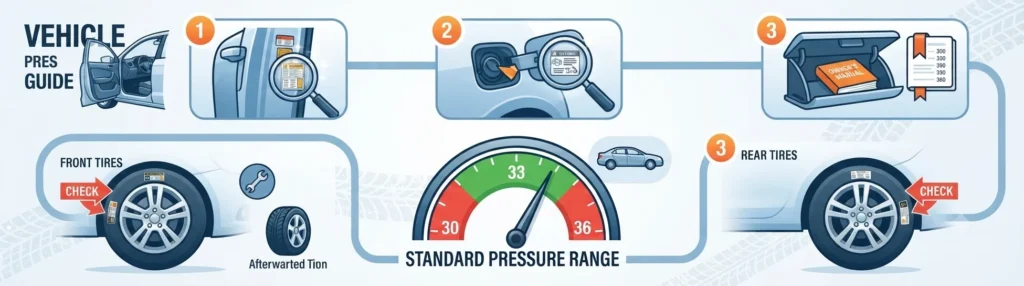
The correct tire pressure for your vehicle is set by the manufacturer — not the tire company. You’ll find it in three places: the driver’s door jamb sticker, the fuel filler door, or your owner’s manual. Most passenger cars recommend between 30–36 PSI.
Important: front and rear tires may have different recommended pressures. Always check both values on the placard. If you’ve changed tire sizes from the original equipment, consult a tire professional to determine the appropriate PSI for your new size.
Understanding Tire Sizes Like 205/55R16
If you have 205 55R16 tires, here’s what those numbers mean: 205 is the tire width in millimeters, 55 is the aspect ratio (sidewall height as a percentage of width), R means radial construction, and 16 is the wheel diameter in inches.
Does tire size affect recommended PSI? Not directly — the correct pressure is determined by your vehicle’s weight and handling characteristics, not the tire size alone. However, if you switch to a significantly different tire size, the load capacity changes, and a technician may recommend a different inflation pressure to compensate.
Tire Pressure Light & TPMS Explained
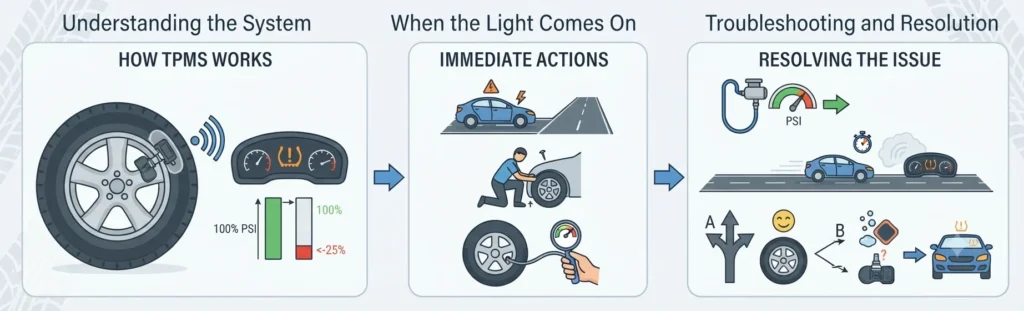
The tire pressure light on your dashboard (shaped like a cross-section of a tire with an exclamation mark) is part of your Tire Pressure Monitoring System (TPMS). When this light illuminates, it means at least one tire is 25% or more below the recommended PSI.
When your tire pressure light comes on: pull over safely, check all four tires visually for obvious flats, then use your gauge to measure each tire. Inflate any low tires to the recommended PSI. The light should turn off after driving a few miles. If it doesn’t, there may be a slow leak or a faulty TPMS sensor.
What Does a Blinking Tire Pressure Light Mean?
A blinking tire pressure light is different from a steady one. A blinking or flashing TPMS light typically indicates a malfunction in the monitoring system itself — not necessarily low tire pressure. This could mean a dead sensor battery, a sensor damaged during tire service, or a communication error between sensors and the vehicle’s computer.
If your tire pressure light blinks for 60–90 seconds and then stays solid, check your tire pressures first. If all tires are properly inflated and the light persists, schedule a visit to your dealer or tire shop for TPMS diagnostics. Sensor replacement typically costs $50–$150 per wheel.
Using a Car Tire Air Pump
A portable car tire air pump is one of the best investments for any vehicle owner. These compact compressors plug into your car’s 12V power outlet (cigarette lighter) and can inflate a tire from 20 PSI to 35 PSI in about 3–5 minutes.
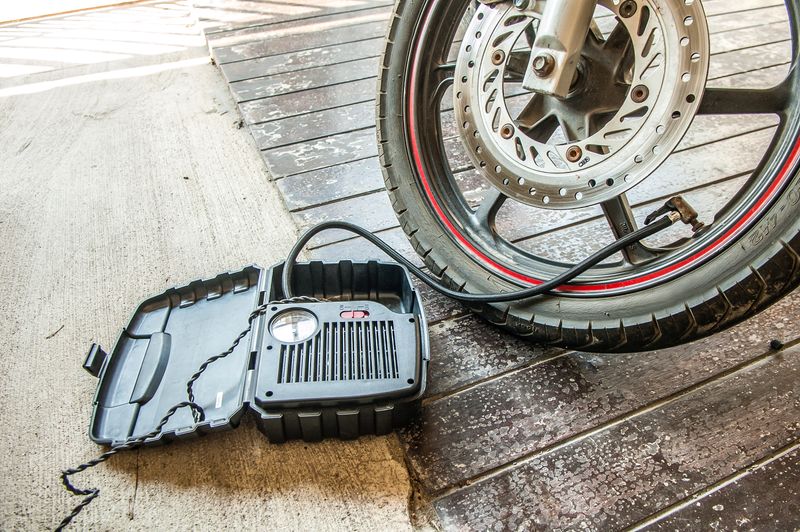
To use a car tire air pump: connect the hose to the valve stem, set your target PSI on the digital display, turn it on, and wait for it to auto-shutoff. Most modern pumps stop automatically when the set pressure is reached. Keep one in your trunk for emergencies — especially during cold months when tire pressure drops approximately 1 PSI for every 10°F temperature decrease.
💡 Pro Tip: Seasonal Pressure Checks
Check tire pressure at least once a month and before any long road trip. During seasonal temperature swings, check weekly. Tires lose about 1 PSI per month naturally, and cold weather accelerates this loss. A 30-second check each morning can prevent thousands in tire damage and keep your family safe.
Frequently Asked Questions
How often should I check tire pressure?
Check tire pressure at least once per month and before long trips. During major temperature changes (fall and spring), check weekly. The NHTSA recommends checking cold tire pressure as part of your regular vehicle maintenance routine.
Can I check tire pressure without a gauge?
While you can visually inspect tires for obvious deflation, you cannot accurately determine PSI without a gauge. Tires can be 10+ PSI low and still appear normal. A basic pencil gauge costs under $5 and provides reliable readings.
Should I check tire pressure when tires are hot or cold?
Always check when tires are cold — meaning the car hasn’t been driven for at least 3 hours or has traveled less than 1 mile. Hot tires read 2–5 PSI higher than actual cold pressure, which can lead to underinflation if you adjust based on a hot reading.
Why is my tire pressure light on even after filling tires?
The TPMS light may take 10–20 minutes of driving to reset after inflation. If it stays on, recheck all four tires plus the spare. Some vehicles require a manual TPMS reset (check your owner’s manual). A persistent light after correct inflation often indicates a slow leak or faulty sensor.
Does weather affect tire pressure?
Yes — significantly. Tire pressure drops approximately 1 PSI for every 10°F (5.5°C) decrease in ambient temperature. This means a tire at 35 PSI in summer could drop to 29 PSI on a cold winter morning, triggering your tire pressure light.
Is the PSI on the tire sidewall the correct pressure?
No. The number on the tire sidewall is the MAXIMUM pressure the tire can safely hold — not the recommended operating pressure. Always use the PSI listed on your vehicle’s door jamb sticker or owner’s manual. The sidewall maximum is typically 44–51 PSI, while recommended pressure is usually 30–36 PSI.