Engine components · Diagnosis · Maintenance
You pull into your driveway after a long day. As you step out of the car, something smells hot—almost like burning oil. Under the hood, you spot a damp, dark line around the top of the engine. Is this a major engine failure or a smaller leak that can be fixed?
One possible culprit is the valve cover gasket. It’s a relatively inexpensive seal, but reaching it can take time, and a neglected leak can create real problems. Here’s how to understand the signs, confirm the source, and make a sensible repair decision without paying for work you don’t need.
Quick answer: What does a valve cover gasket do?
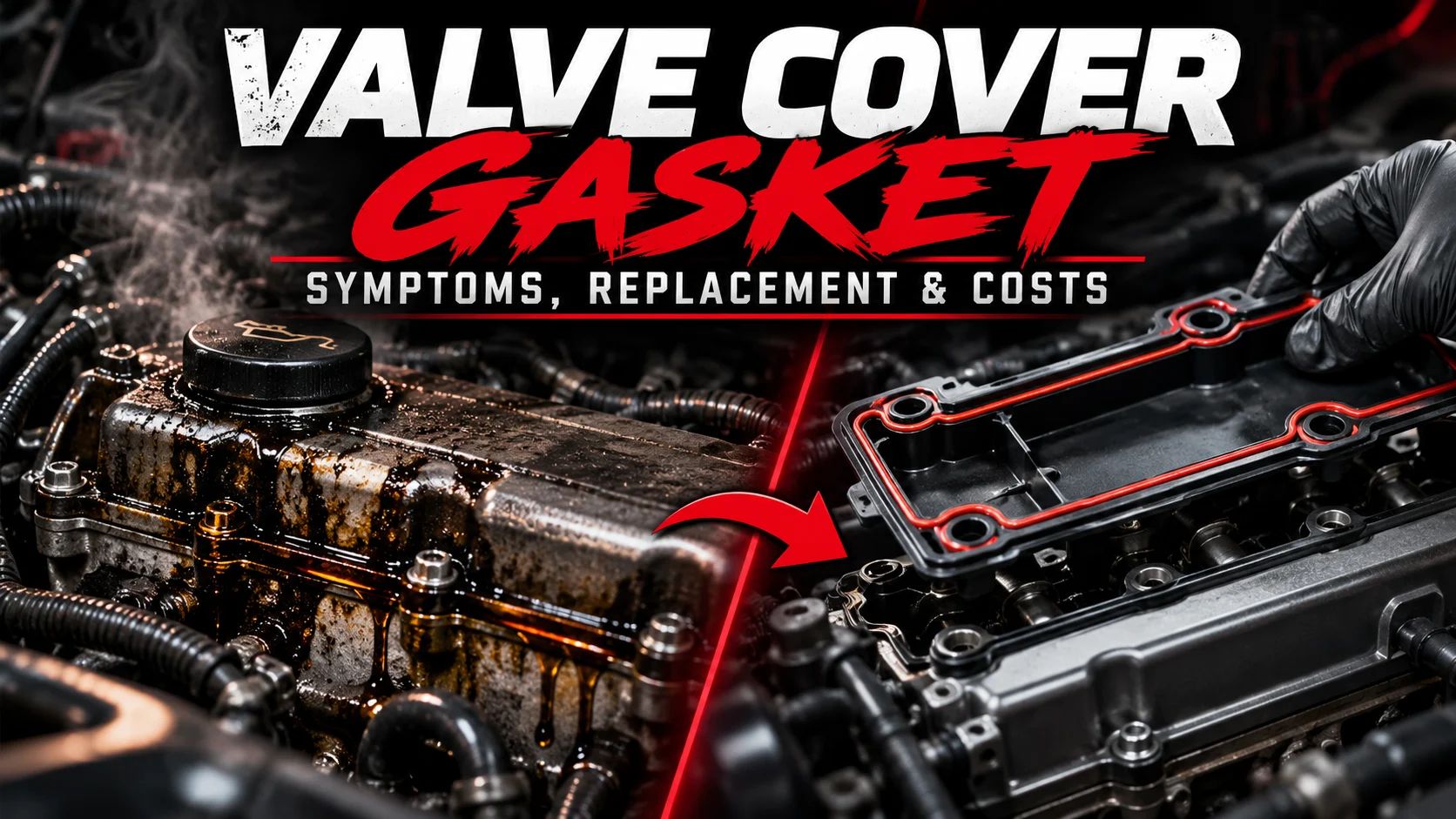
A valve cover gasket seals the gap between the valve cover and the cylinder head, helping keep lubricating oil inside the engine. A worn gasket may allow oil to seep out, leaving residue near the top of the engine or creating a burning smell if oil contacts hot parts. The cure is usually gasket replacement—but first, confirm where the oil is actually coming from.
*RepairPal national estimate, updated Sept. 3, 2026; excludes taxes, fees and location-specific differences. See current cost methodology.
What Is a Valve Cover Gasket?
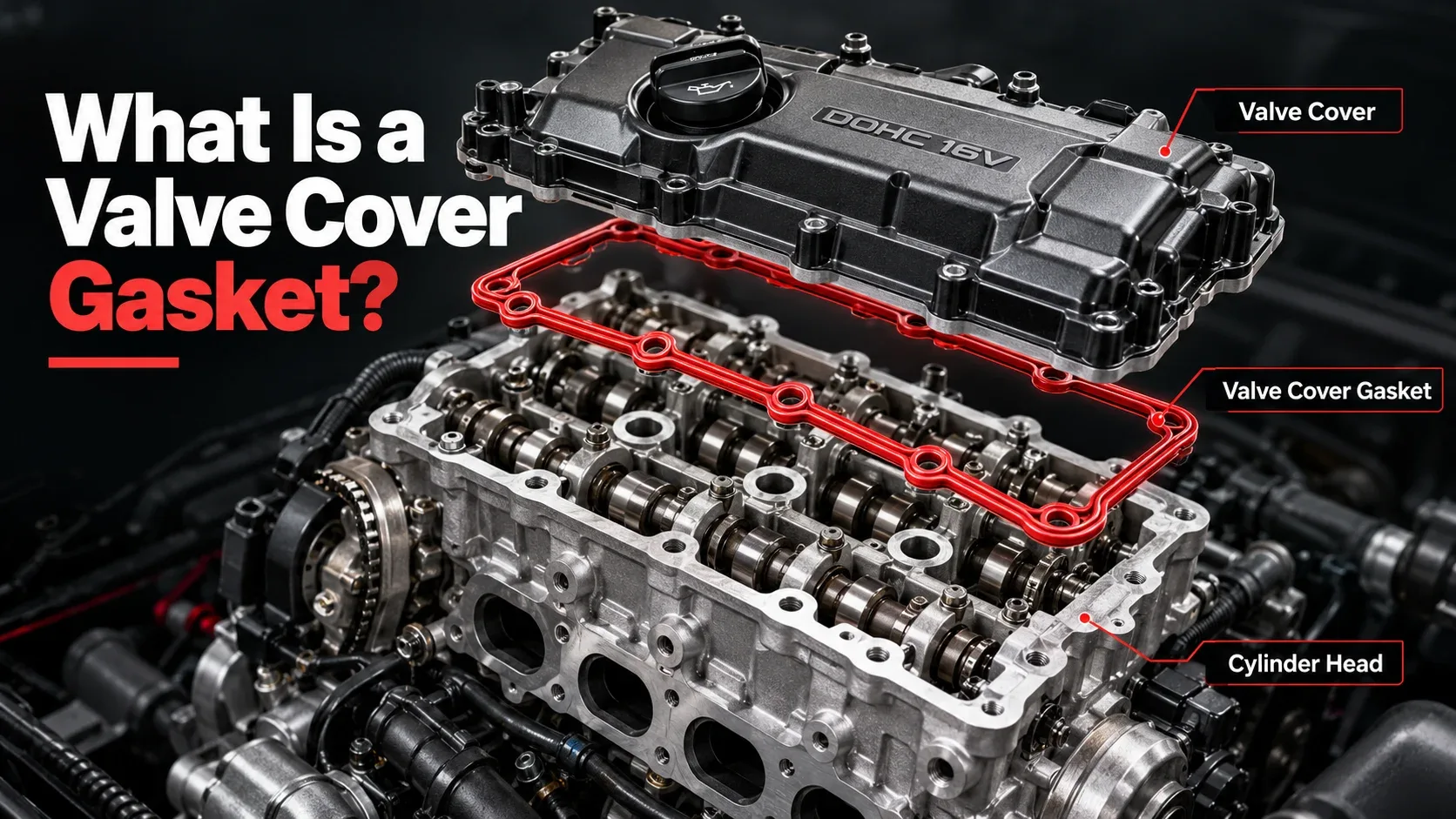
Imagine putting a lid on a container of liquid. If the lid and container surfaces aren’t perfectly matched, liquid may find a way through the joint. A gasket creates a compressible seal between those surfaces.
Inside your engine, oil is continuously moving around components such as camshafts and valves. The valve cover encloses the upper part of this area. The valve cover gasket sits along the cover’s sealing edge and helps prevent oil from escaping.
Simplified diagram for orientation only; actual engine shapes and gasket placement vary.
Modern engines often use molded rubber or other engineered gasket materials. The cover and gasket are separate pieces, and a valve cover gasket is not the same as a head gasket. A head gasket seals the joint between the engine block and cylinder head and serves a very different, more demanding purpose.
Where Is the Valve Cover Gasket Located?
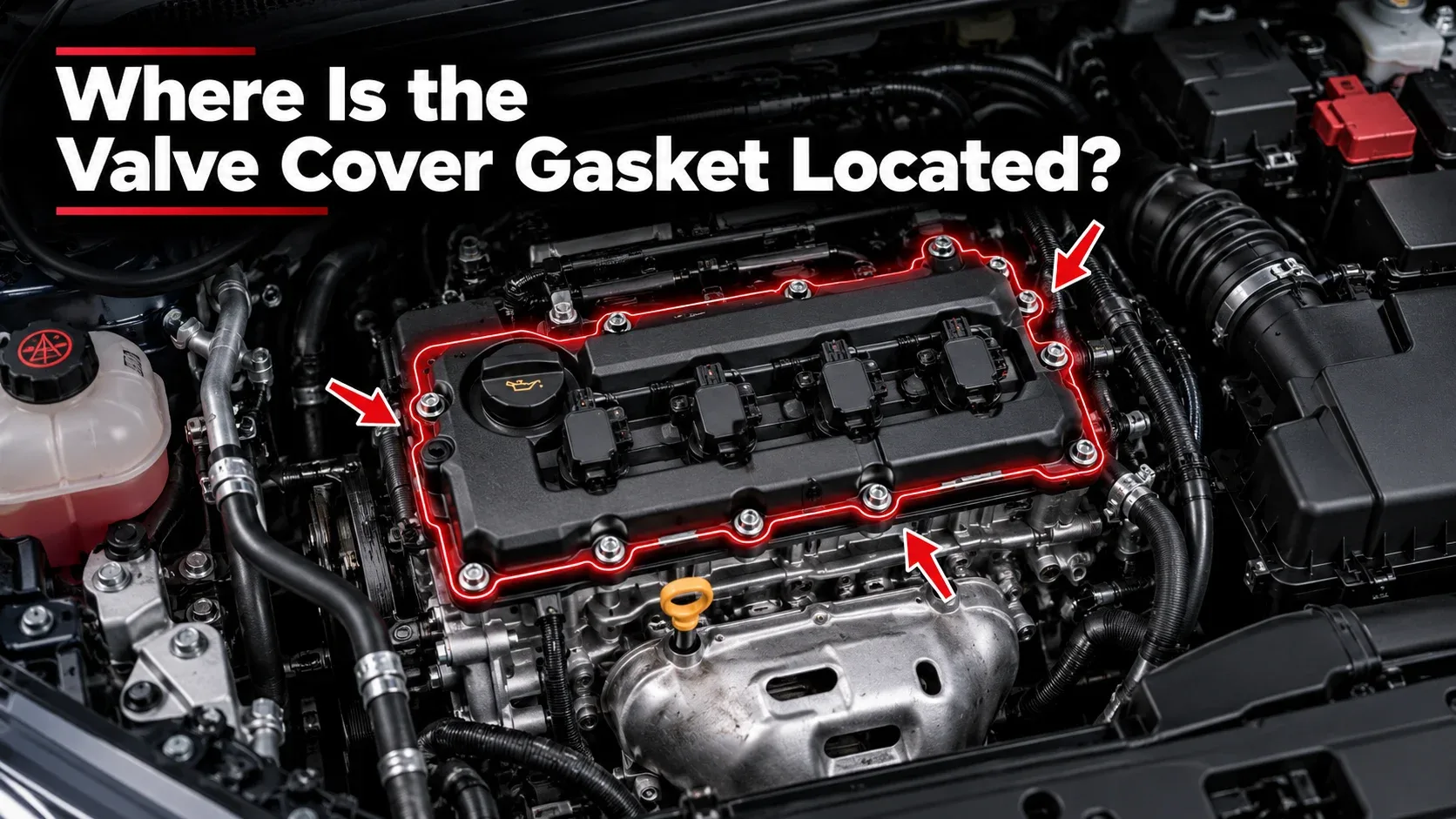
Look toward the upper part of a typical gasoline engine. The valve cover sits above the cylinder head; the gasket is tucked underneath its perimeter, so you usually cannot see the entire seal without removing the cover.
An inline-four engine generally has one valve cover. V-shaped engines commonly have a cover on each cylinder bank. Decorative plastic engine covers may hide them, and some designs make the gaskets harder to access than others.
The clues to look for
7 Symptoms of a Bad Valve Cover Gasket
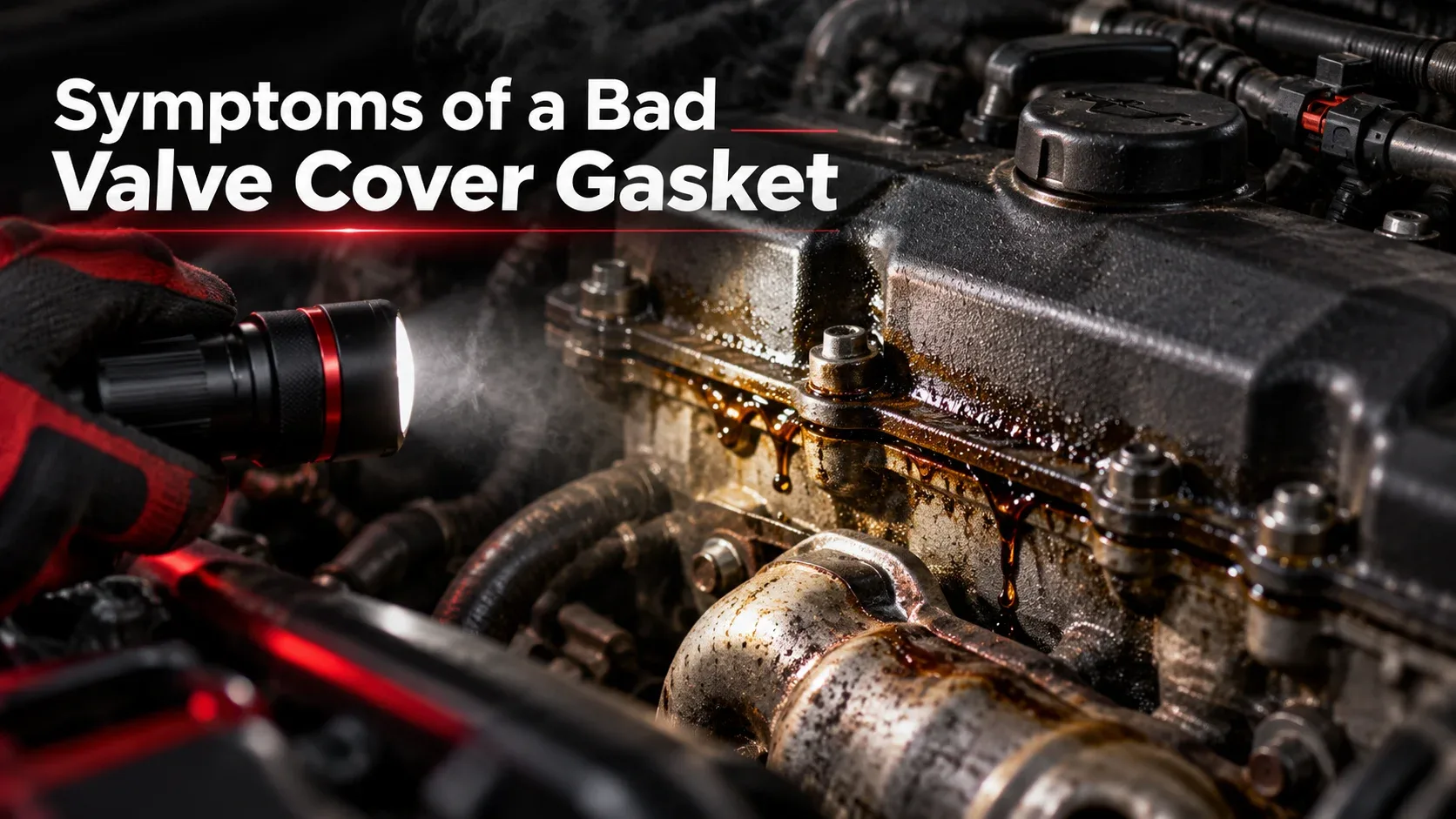
Here’s the important part: none of these symptoms is a stand-alone diagnosis. Think of them as clues that tell you where to investigate next.
1. Fresh oil around the valve cover edge
The most direct sign is wet or sticky oil following the seam between the valve cover and the cylinder head. Old grime alone doesn’t prove an active leak; fresh oil returning after careful cleaning is more telling.
2. A burning-oil smell
Escaping oil can reach hot engine or exhaust components and create a sharp, unpleasant smell. Other leaks or spills can do this too, so the source still needs checking.
3. Smoke from the engine compartment
Oil on very hot surfaces may smoke. Do not dismiss active smoke; pull over safely and shut off the engine. Avoid opening a hot system or touching hot components, and get professional assistance.
4. Oil in a spark plug well
Some engine designs use seals around the spark plug tubes. Failed seals may allow oil to collect around ignition coils or plugs and can contribute to misfires. A valve cover gasket kit may include these separate seals.
5. A falling oil level
A larger leak may lower engine oil over time. Follow your owner’s manual for the proper dipstick or electronic-level procedure. Never assume all oil loss comes from the valve cover; consumption and other leaks are possible.
6. Rough running or misfires
If oil enters spark plug wells and affects ignition components, the engine might hesitate or misfire. These symptoms have many possible causes and need diagnosis rather than guesswork.
7. Oil stains beneath the vehicle
Oil can run down the engine before dripping onto the ground, making a high-mounted leak look like one from the bottom of the engine. Trace the trail upward before replacing parts.
| What you notice | What it may suggest | Your next move |
|---|---|---|
| Fresh oil at cover seam | Possible gasket seepage | Clean and recheck the source |
| Burning oil odor | Oil contacting hot components | Arrange an inspection promptly |
| Smoke under hood | Potential oil-on-hot-surface hazard | Stop safely and seek assistance |
| Oil around spark plugs | Possible tube seal failure | Check seals and ignition parts |
| Low oil level | Leak, oil consumption or both | Check the level correctly and diagnose |
Why Does a Valve Cover Gasket Start Leaking?
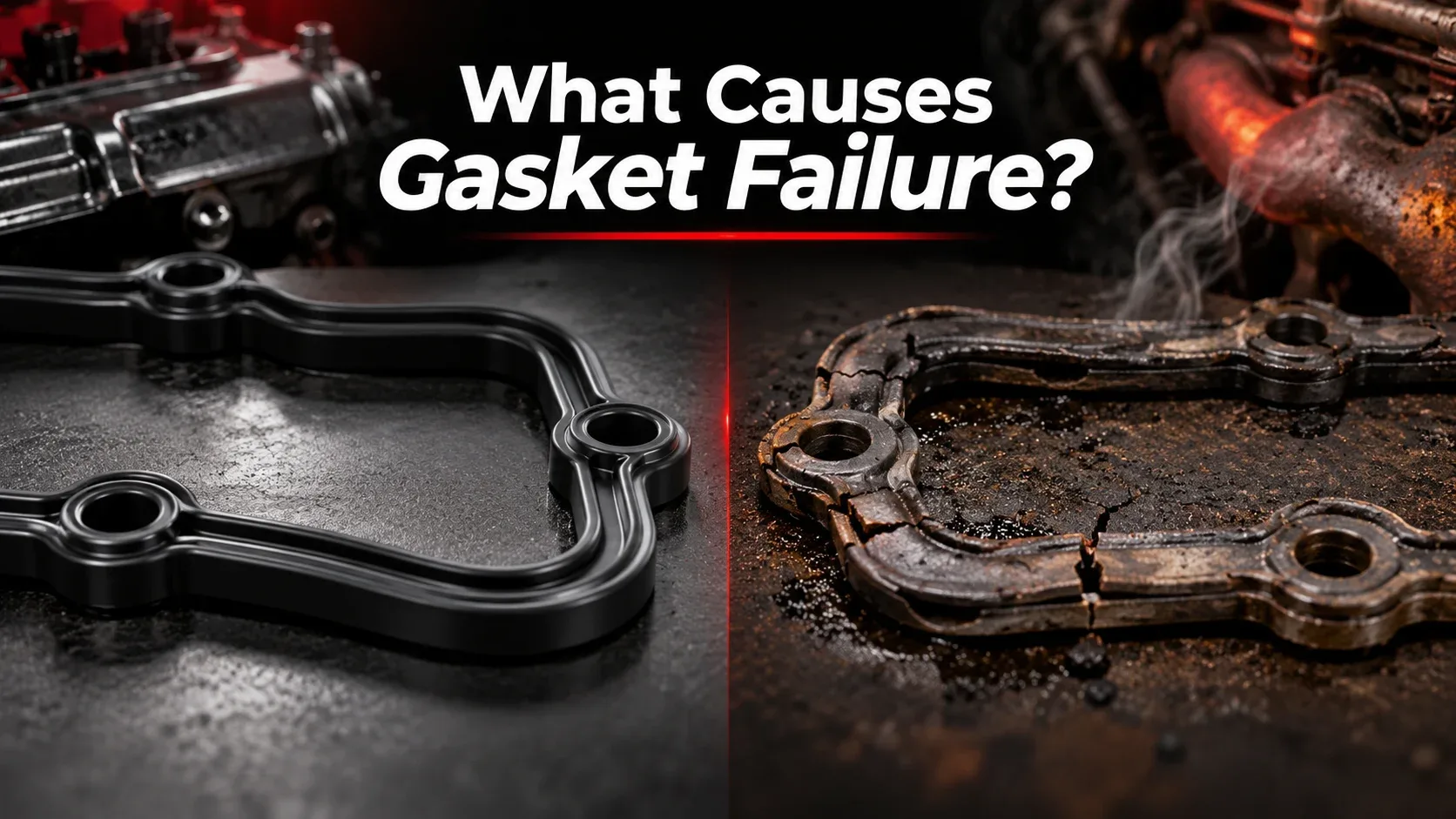
Picture the gasket experiencing thousands of engine heat cycles. Over time, material can flatten, harden or lose elasticity. That weakens the seal, especially around corners and uneven surfaces.
- Age and temperature cycles: gasket material deteriorates over time.
- Incorrect installation: a pinched seal or wrong tightening sequence can prevent proper seating.
- Damaged valve cover: a cracked plastic cover or distorted metal flange may not seal correctly.
- Crankcase ventilation problems: abnormal crankcase pressure can aggravate existing weak points.
- Old bolt grommets or tube seals: related seals may leak even when the perimeter gasket is new.
Replacing the gasket fixes a worn gasket. It won’t fix a cracked cover, an incorrectly seated component or an unresolved pressure problem.
Can You Drive With a Leaking Valve Cover Gasket?
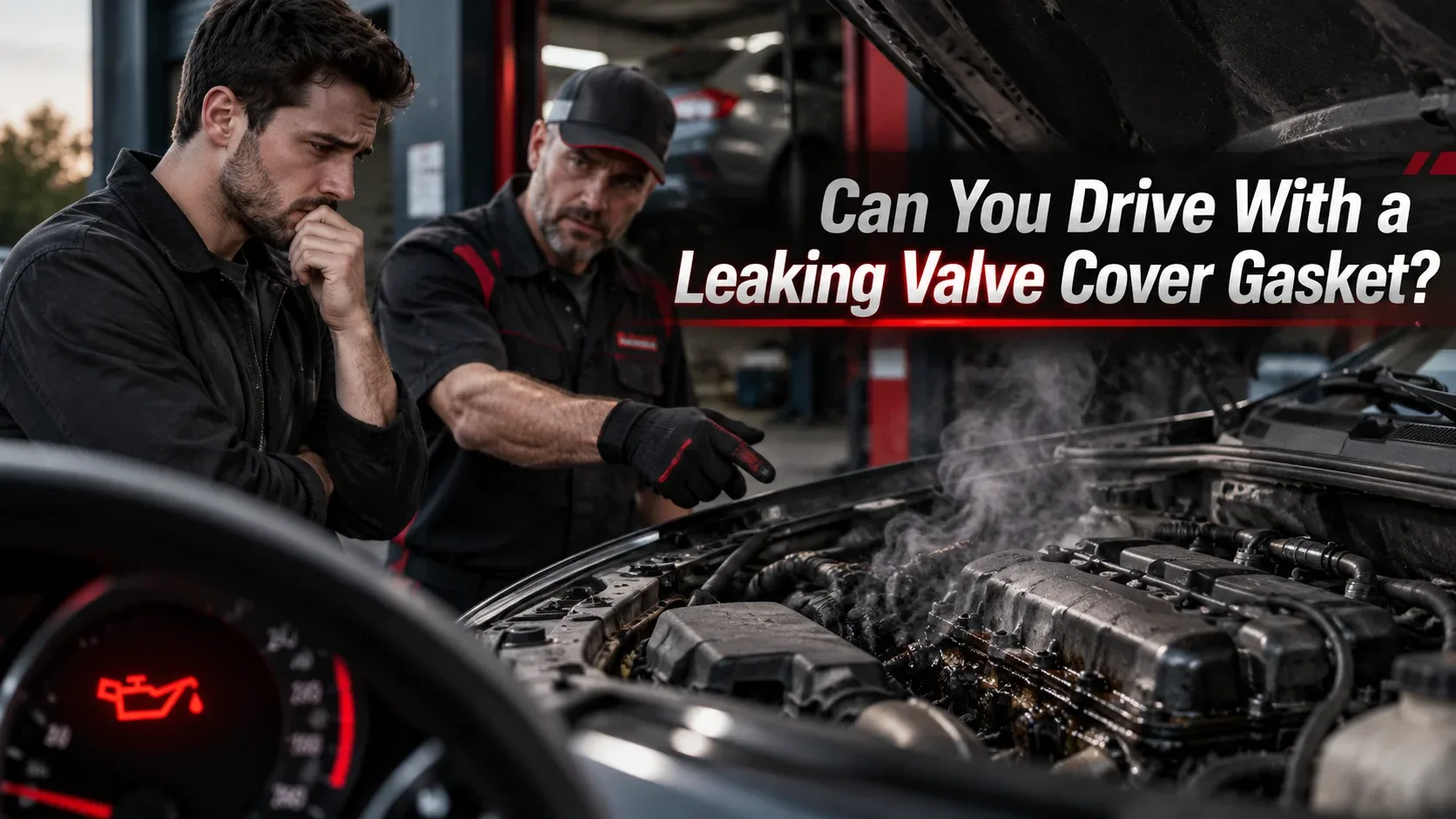
It depends on the leak’s severity—not simply on the fact that a gasket may be leaking. A small seep with a stable oil level is different from active dripping onto the exhaust or significant oil loss. No one can confirm safe driving without examining the vehicle.
| Situation | Safer response |
|---|---|
| Light seepage; no smoke; normal oil level | Schedule an inspection soon; monitor oil following the owner’s manual. |
| Burning smell, clear dripping or worsening leak | Arrange prompt professional assessment; avoid unnecessary driving. |
| Active smoke, major leak or oil-pressure warning | Pull over safely, stop the engine and seek roadside help. Do not continue driving with an oil-pressure warning. |
How to Diagnose a Valve Cover Gasket Leak
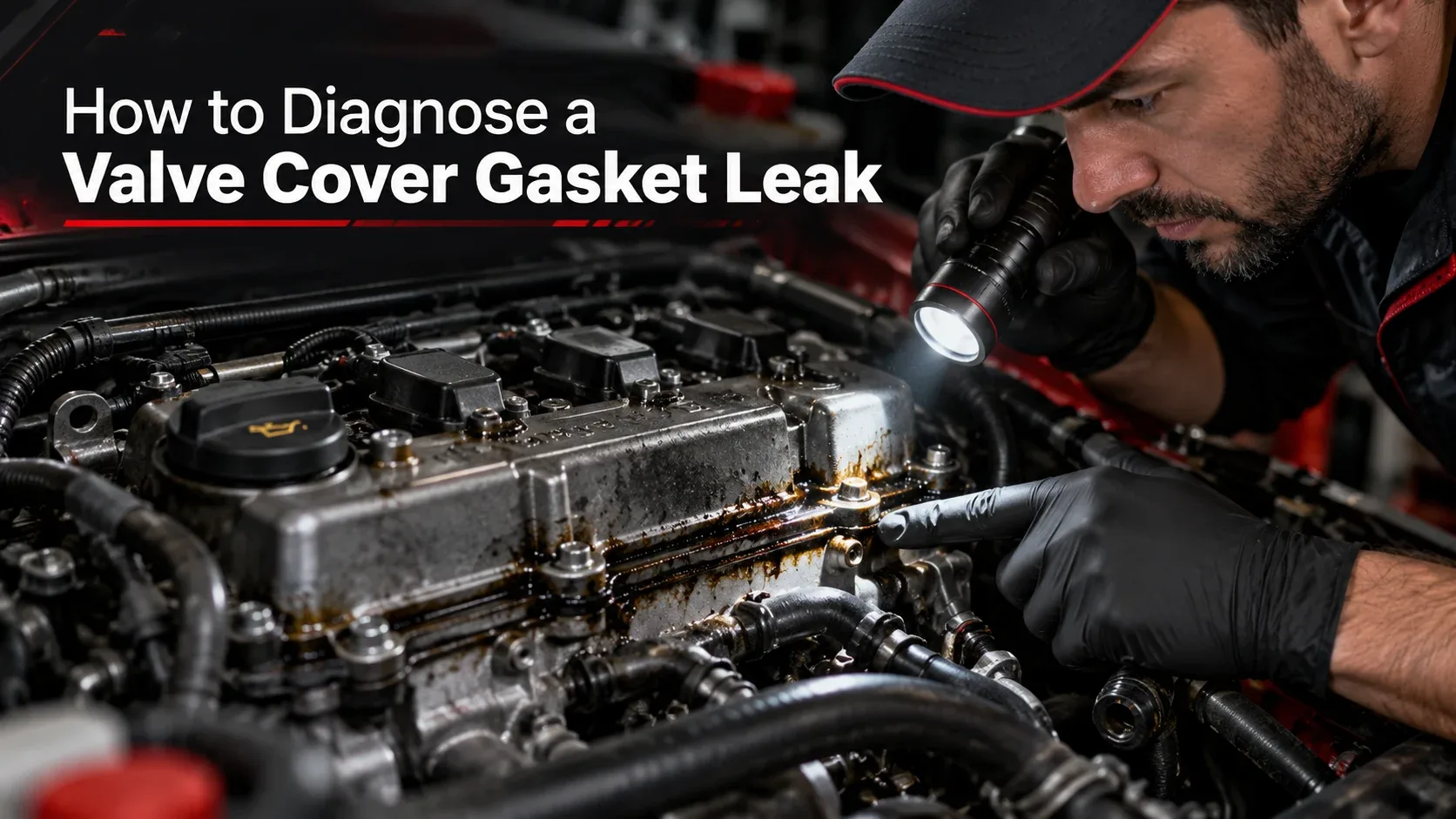
Before ordering parts, imagine following a trail of water on a wall: the wet spot near the floor doesn’t necessarily show where the water entered. Engine oil behaves similarly—it travels downward and collects in misleading places.
- Start with a cool, parked engine. Work on level ground and use suitable lighting. Follow vehicle safety procedures.
- Inspect the upper engine. Look along the valve cover perimeter, oil filler cap area, nearby sensors and other possible leak sources.
- Check for fresh oil. Note where wetness begins rather than assuming the lowest oily point is the source.
- Inspect plug wells if applicable. Oil around ignition coils may indicate a tube seal issue.
- Confirm rather than guess. A technician may clean the area and recheck it or use approved UV dye to pinpoint difficult leaks.
Photograph the leak before cleaning, if practical. That picture can help you explain the problem to a mechanic and compare it after the repair.
Know the numbers before approving the job
Valve Cover Gasket Replacement Cost: What Should You Expect?
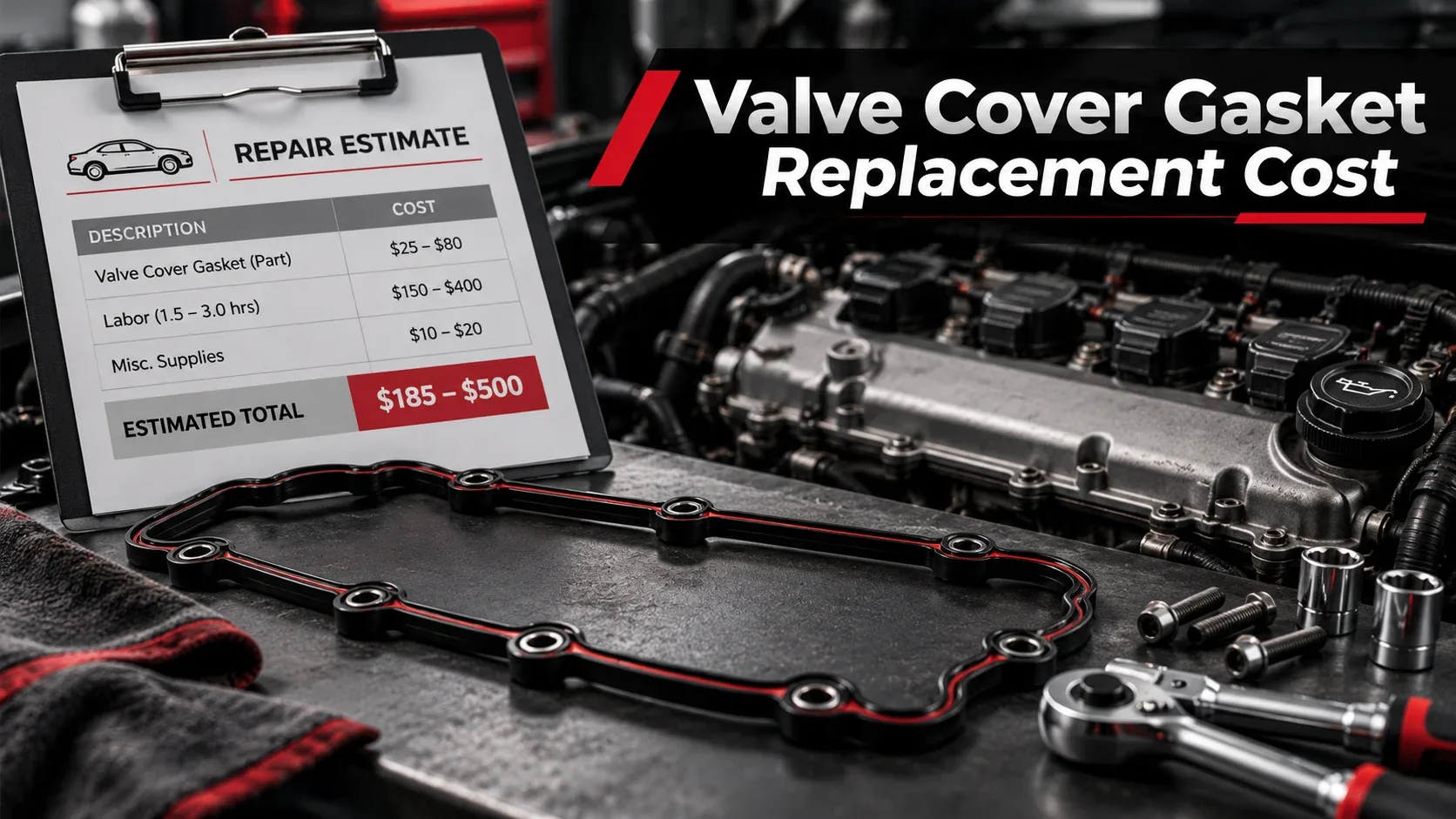
On the surface, replacing a rubber seal sounds cheap. The labor is often the bigger part of the bill because a mechanic may need to remove engine covers, hoses, ignition components or other equipment to reach it.
According to RepairPal’s U.S. estimate updated September 3, 2026, the national average is $375–$514. Your quote can be lower or substantially higher depending on your engine and location.
| Cost component | Published estimate | Why it changes |
|---|---|---|
| Parts | $87–$91 | Gasket design, related seals and vehicle fitment |
| Labor | $288–$423 | Access, engine layout and local labor rates |
| Total | $375–$514 | Excludes taxes, fees and potentially related repairs |
For example, an easily accessible four-cylinder engine may take less work than an engine whose intake components must be removed first. Replacing a cracked valve cover or additional seals also changes the total.
What to ask before approving a repair quote
- Have you confirmed the gasket is the source of the leak?
- Does the estimate include labor, gasket, tube seals and bolt grommets where required?
- Is the valve cover itself damaged?
- Will related problems be inspected, such as crankcase ventilation?
- What warranty applies to parts and labor?
Understand what happens in the workshop
Valve Cover Gasket Replacement: Step-by-Step Overview
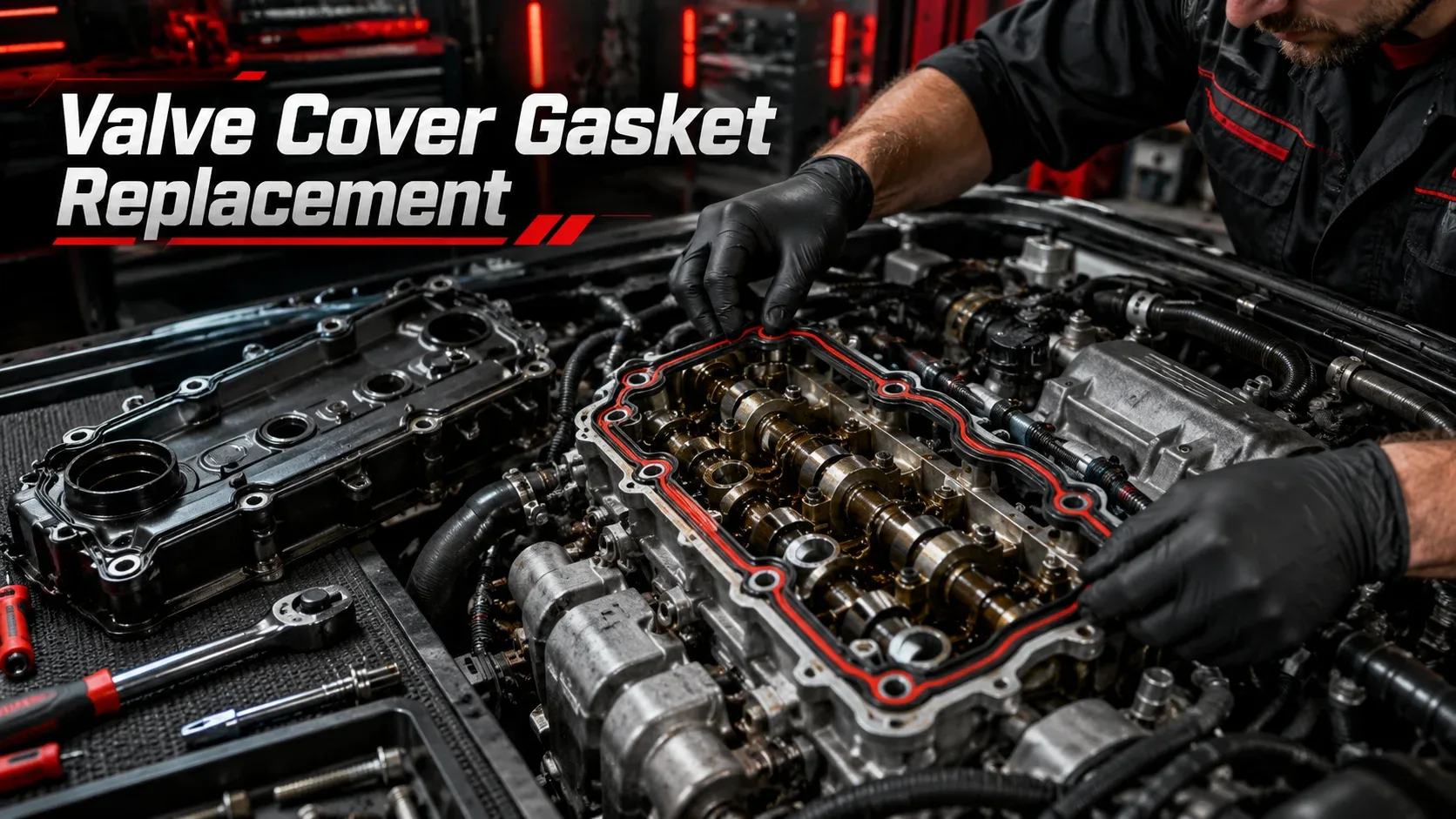
You may be able to handle a straightforward gasket replacement at home, but on some vehicles it requires major disassembly. This is a general overview, not a substitute for your vehicle’s service manual. Follow the exact specifications for your model and engine.
- Confirm diagnosis and parts. Match your engine, order the correct gasket set, and obtain the official procedure and torque specifications.
- Prepare the vehicle safely. Let the engine cool and follow the service manual’s battery and electrical precautions.
- Remove obstructing components. Depending on design, this may involve decorative covers, coils, hoses or other accessible parts.
- Remove the valve cover carefully. Unfasten it as instructed and protect surrounding wiring and exposed engine openings.
- Remove the old gasket and inspect the cover. Check for cracks, warping, old sealant, damaged grommets and worn spark plug tube seals.
- Clean the sealing surfaces. Use approved materials without gouging surfaces or allowing debris to fall into the engine.
- Fit the new gasket and required related seals. Seat them fully. Apply RTV only where the vehicle/gasket instructions specifically call for it.
- Reinstall and torque correctly. Use the specified sequence and torque values; over-tightening can damage parts or distort the seal.
- Reassemble and verify. Check connections, oil level and evidence of leaks following the manufacturer’s inspection procedure.
Valve Cover Gasket Repair vs. Replacement: Which Is Better?
If the gasket has hardened, torn or flattened, replacing it is normally the appropriate repair. Smearing sealant around the outside of an installed, leaking gasket is not a reliable substitute for restoring the sealing surfaces.
| Problem found | Likely approach |
|---|---|
| Worn perimeter gasket; good cover | Replace the gasket using correct procedure. |
| Leaking spark plug tube seals or bolt grommets | Replace the affected seals as specified for the engine. |
| Cracked or distorted valve cover | Repair or replace the cover according to manufacturer guidance, plus required gasket/seals. |
| High crankcase pressure or other contributing fault | Diagnose and fix the underlying issue to prevent repeat leakage. |
How to Choose a Valve Cover Gasket Replacement Kit
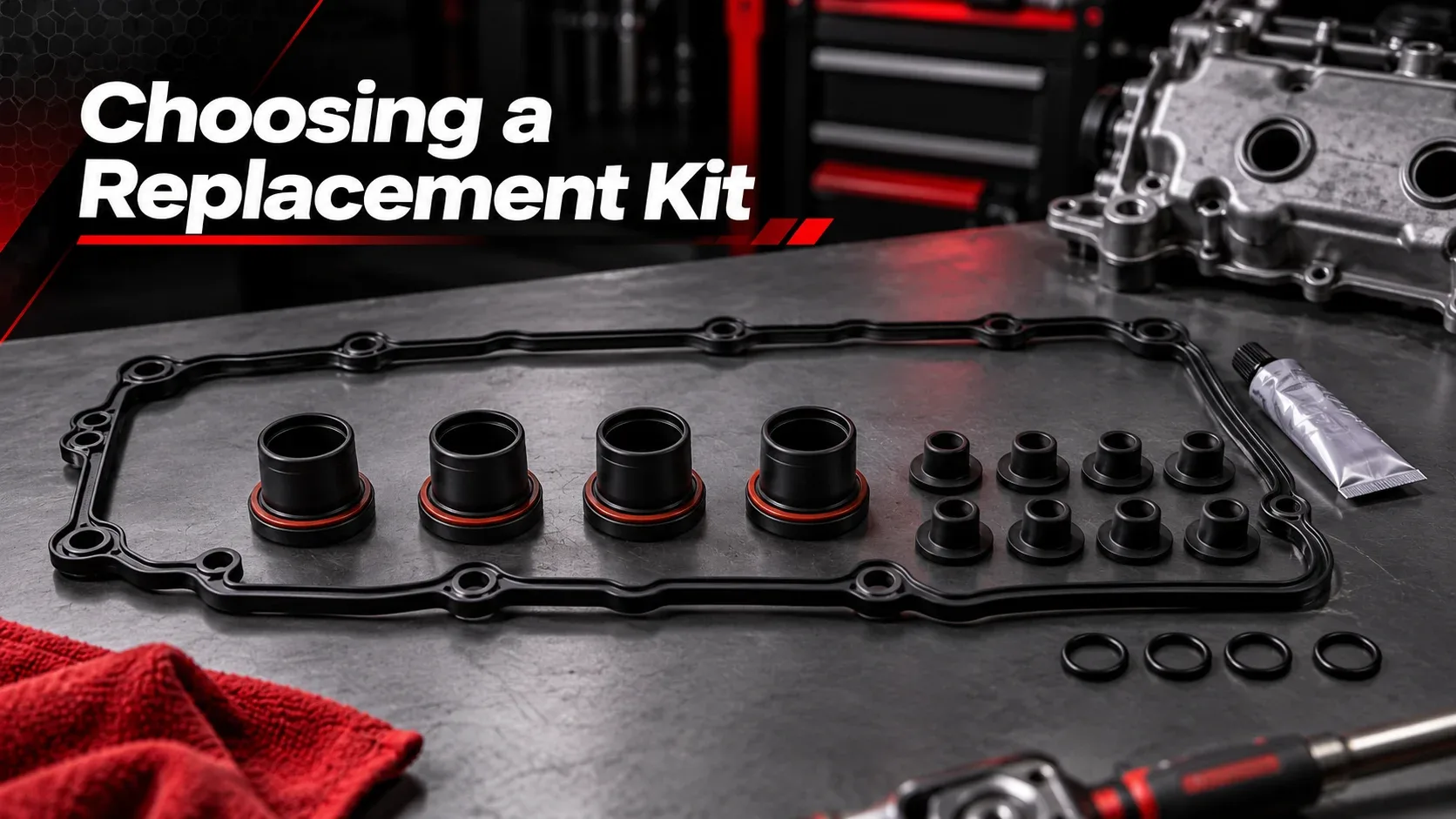
Here’s where buying the cheapest listing can backfire. Two vehicles with similar names—or even different engine options in the same model year—may require different gasket designs.
A valve cover gasket replacement kit may include a perimeter gasket, spark plug tube seals and bolt grommets. Contents are not universal, so check the exact parts listing.
Before you click “buy”
- Confirm year, make, model and exact engine configuration.
- Check vehicle identification or OEM part numbers when applicable.
- Verify whether the engine has one valve cover or two.
- Check if tube seals and grommets are included or sold separately.
- Choose reputable, application-specific parts with clear fitment details.
- Review the manufacturer’s installation notes before starting.
A kit isn’t automatically a better value just because it contains more items. The right kit is the one that fits the engine and includes the seals actually required for the repair.
6 Common Valve Cover Gasket Replacement Mistakes
| Mistake | Better practice |
|---|---|
| Guessing where the oil originates | Confirm the leak before ordering parts. |
| Over-tightening valve cover bolts | Use the specified torque and tightening sequence. |
| Adding RTV to the entire seal | Use sealant only where explicitly directed. |
| Leaving old residue on sealing surfaces | Clean carefully using approved methods. |
| Reusing worn seals or grommets | Replace related components when required. |
| Ignoring cover damage or pressure issues | Inspect the full sealing system, not just the gasket. |
These details might seem minor, but proper seating and clamp load matter just as much as the gasket material itself.
How to Help Prevent Another Leak
There is no magic oil additive or guaranteed mileage at which every gasket needs replacement. Instead, stick with your vehicle’s maintenance schedule, watch for fresh residue during routine checks, and address abnormal crankcase ventilation issues if diagnosed.
Most importantly, insist on correct installation. A quality gasket placed onto a damaged cover or tightened incorrectly can leak again quickly.
Frequently Asked Questions
Is a valve cover gasket leak serious?
A small seep may not mean immediate engine damage, but any leak should be diagnosed. Significant oil loss, oil reaching hot exhaust parts or active smoke can become serious and needs prompt attention.
How long does a valve cover gasket last?
There is no universal replacement interval. Lifespan depends on the engine, material, heat exposure and operating conditions. Most owners replace it when a confirmed leak or other service need develops.
How long does valve cover gasket replacement take?
Repair time varies greatly by vehicle. Some engines offer straightforward access, while others require removing several surrounding components. Ask for a vehicle-specific labor estimate.
Can a bad valve cover gasket cause a misfire?
Sometimes indirectly. On designs with spark plug tube seals, leaked oil can contaminate ignition components and contribute to misfires. Many other faults can cause misfires too.
Can you replace a valve cover gasket yourself?
Potentially, if your engine offers reasonable access and you have the correct tools, torque specifications and mechanical experience. Complex engines and uncertain diagnoses are better handled by a qualified technician.
Do I need RTV sealant on a valve cover gasket?
Not necessarily. Many molded gaskets are designed to fit dry. Some engine designs require small dabs at specified junctions. Follow your vehicle and gasket manufacturer’s procedure.
Is a valve cover gasket the same as a head gasket?
No. The valve cover gasket seals the valve cover to the cylinder head. The head gasket seals the cylinder head to the engine block and has a separate role involving combustion, oil and coolant passages.
What comes in a valve cover gasket replacement kit?
Contents vary. Kits may include the main perimeter gasket, spark plug tube seals and valve cover bolt grommets. Confirm the product’s exact contents and compatibility.
Don’t Guess. Confirm the Leak, Then Fix the Cause.
You started with a strange smell and an oily engine. Now you know that a valve cover gasket may be responsible—but the smartest decision is still to verify the source before spending money.
- Check the oil level using your owner’s manual.
- Take pictures of any fresh oil at the top of the engine.
- Stop driving and seek help if you notice serious warning signs.
- Ask for a confirmed diagnosis and an itemized estimate.
- Use the correct gasket kit and vehicle-specific installation procedure.
Bottom line: A leaking valve cover gasket is often manageable when identified early and repaired correctly. The key isn’t just replacing rubber—it’s understanding why oil escaped in the first place.
Sources & Editorial Notes
Technical information and cost figures have been checked against the sources below. Repair cost figures are estimates, not quotes. This article is general automotive education and does not replace diagnosis or a vehicle-specific service manual.
- RepairPal — Valve Cover Gasket Replacement Cost Estimate (updated September 3, 2026)
- Fel-Pro — How to Avoid Common Valve Cover Gasket Installation Issues