A flywheel is a heavy rotating component that stores energy, smooths engine rotation and helps transfer power from an engine to a transmission. In a manual car, it also provides the working surface for the clutch.
Quick definition
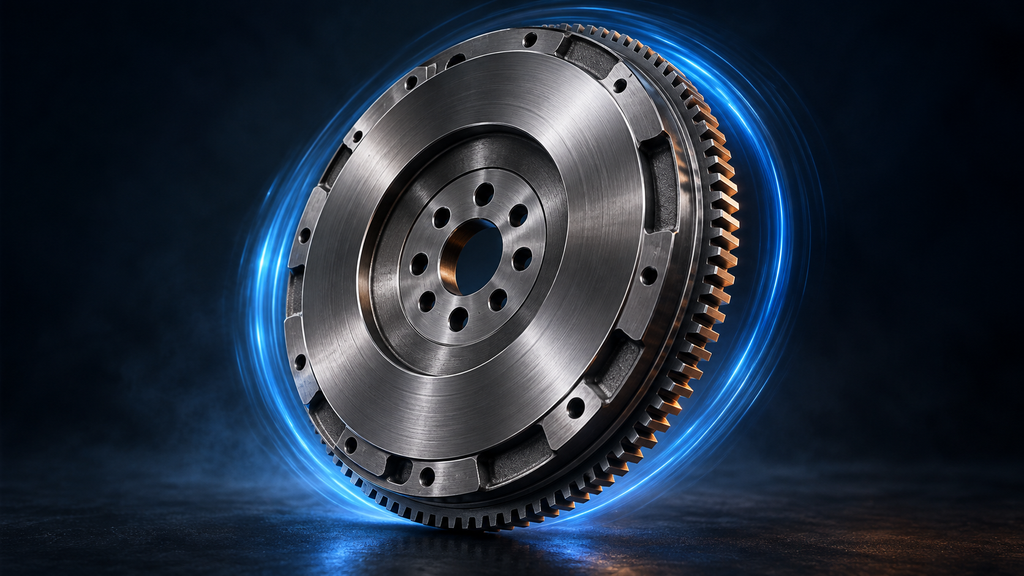
Flywheel meaning: a wheel or disc with substantial rotational mass that stores kinetic energy while spinning. In an automobile, it is normally attached to the engine crankshaft and helps keep the engine turning smoothly between combustion strokes.
In simple terms: the flywheel acts like a rotational energy reservoir. It absorbs energy when the engine produces more than is immediately needed and releases some of that energy as the crankshaft slows.
How does a flywheel work?
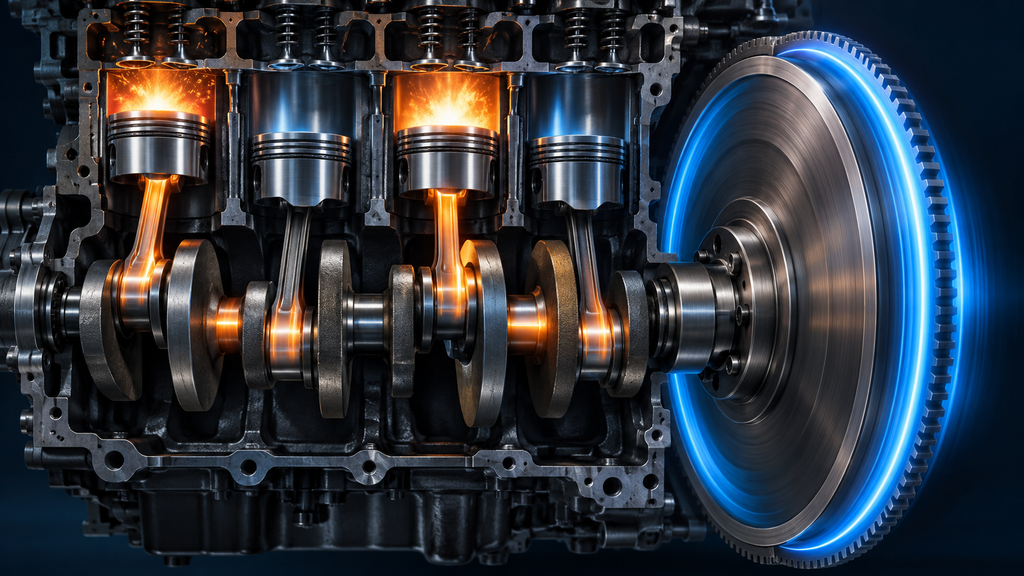
An internal-combustion engine does not produce perfectly continuous force. Each cylinder creates a strong pulse during its power stroke, while the crankshaft must continue rotating through the other strokes. The flywheel’s mass resists sudden changes in rotational speed, helping the crankshaft carry its momentum from one power pulse to the next.
As engine speed rises, the flywheel stores more kinetic energy. When the crankshaft begins to slow between combustion events, some of that stored energy helps maintain rotation. This does not create extra power; it evens out how the engine’s existing power is delivered.
The effect is similar to pushing a heavy playground roundabout. It takes effort to accelerate, but once moving, its momentum helps it continue turning. A vehicle flywheel uses the same basic principle at much higher speed and with far tighter tolerances.
Where is the flywheel in an automobile?
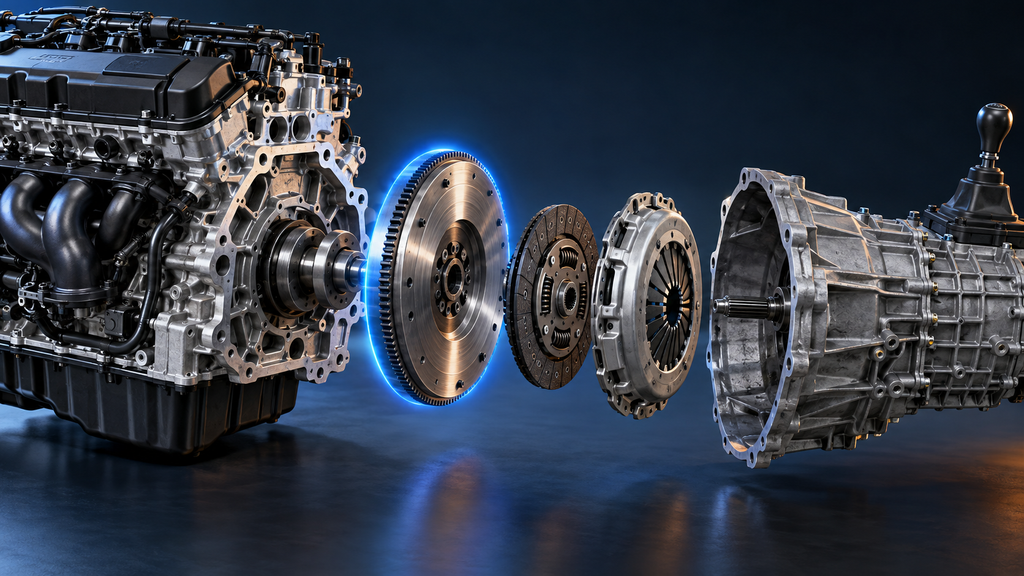
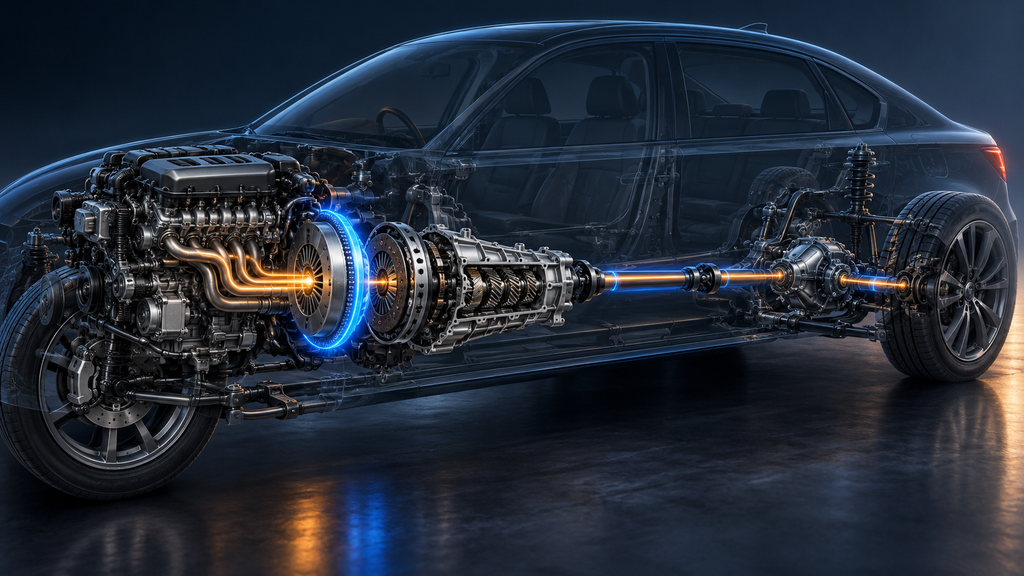
In most manual-transmission vehicles, the flywheel is bolted to the rear flange of the engine’s crankshaft. It sits inside the bellhousing, between the engine and transmission. The clutch disc is clamped between the flywheel and pressure plate.
Engine crankshaft → Flywheel → Clutch → Transmission
Teeth around the outer edge form the starter ring gear. When the driver starts the vehicle, the starter motor engages these teeth and turns the flywheel, which rotates the crankshaft so the engine can begin running.
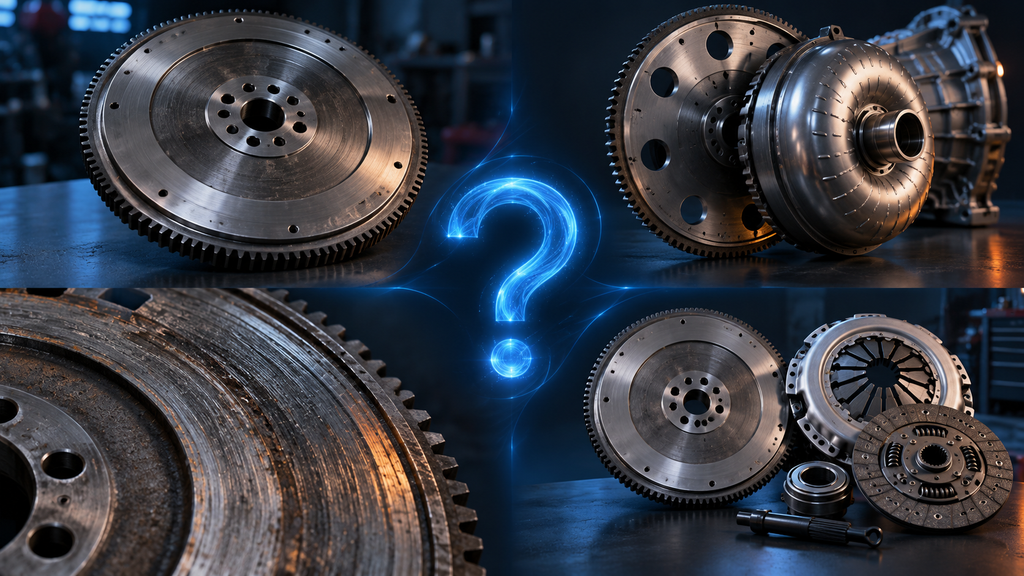
What about automatic cars? Conventional automatic transmissions generally use a thinner component called a flexplate to connect the crankshaft to the torque converter. People sometimes use “flywheel” as a general term, but a flexplate and a manual-transmission flywheel perform different jobs and are not interchangeable.
What does a flywheel do?
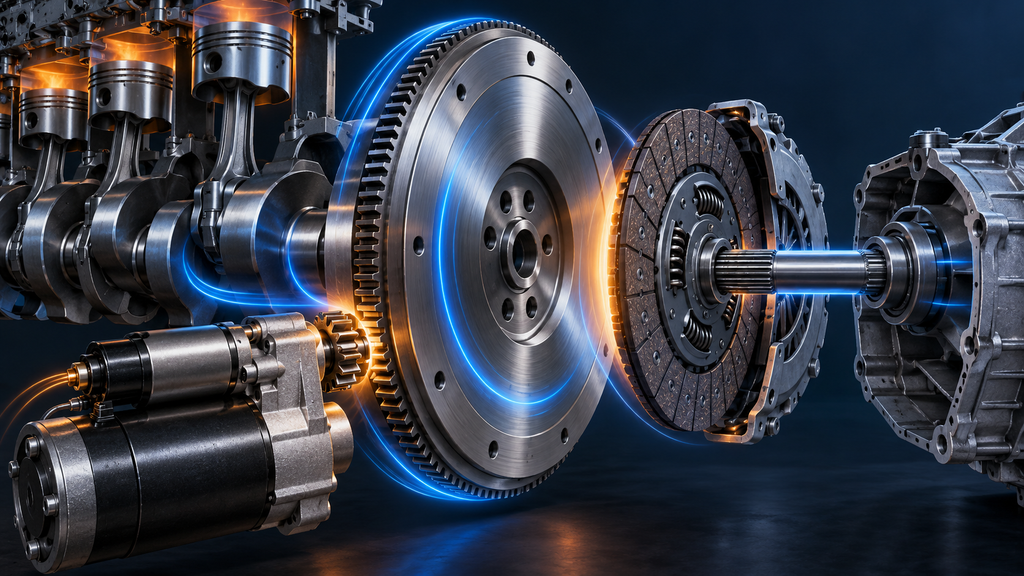
1. Smooths engine rotation
Its inertia reduces speed fluctuations between combustion strokes, helping the engine run and idle more evenly.
2. Stores rotational energy
It absorbs and releases kinetic energy as crankshaft speed changes during each engine cycle.
3. Transfers engine torque
In a manual drivetrain, the clutch grips the flywheel so engine torque can pass into the transmission.
4. Provides a clutch surface
Its machined face gives the clutch disc a flat friction surface for smooth engagement.
5. Helps start the engine
The starter motor turns the ring gear on the flywheel to crank the engine during startup.
6. Supports engine balance
On some engines, the flywheel contributes to the rotating assembly’s designed balance. Incorrect parts can therefore cause serious vibration.
Single-mass vs. dual-mass flywheels
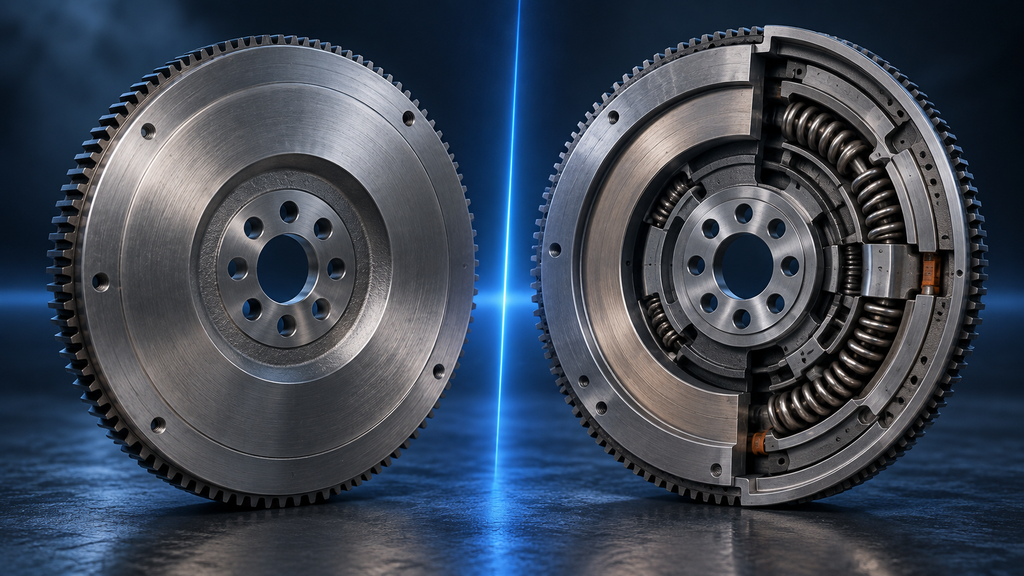
The two common designs in manual passenger vehicles are single-mass and dual-mass flywheels. The correct replacement depends on the vehicle’s original engineering, powertrain and intended use.
| Feature | Single-mass flywheel | Dual-mass flywheel |
|---|---|---|
| Construction | One solid rotating mass | Two masses linked by internal springs and damping components |
| Main advantage | Simple, durable design | Better isolation of engine vibration and gearbox noise |
| Typical trade-off | May transmit more vibration | More complex and often more expensive to replace |
| Resurfacing | Sometimes permitted within manufacturer limits | Often restricted or not recommended; follow manufacturer guidance |
Important: Converting from a dual-mass to a single-mass flywheel can change vibration, noise and drivetrain loading. Use only a properly engineered conversion approved for the specific vehicle.
Common signs of a failing flywheel
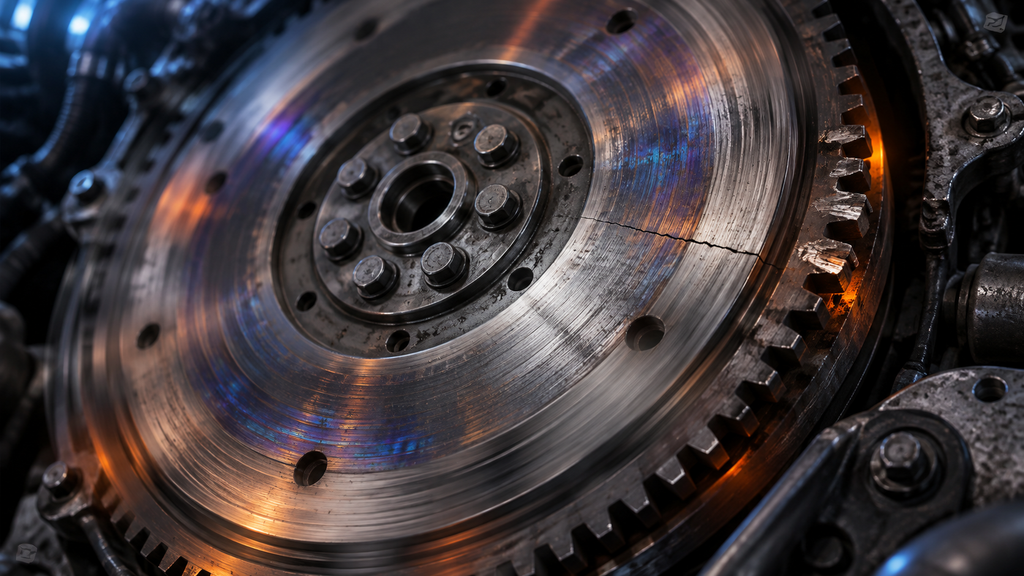
A damaged flywheel can feel similar to a worn clutch, faulty engine mount, starter problem or transmission fault. Treat the following as clues rather than proof.
| Warning sign | What it may indicate | What else should be checked |
|---|---|---|
| Shudder when moving off | Uneven or heat-damaged friction surface; excessive movement in a dual-mass unit | Clutch contamination, pressure plate, mounts and driving technique |
| Rattling at idle | Worn dual-mass springs or internal bearings | Release bearing, gearbox bearings, engine mounts and accessory drive |
| Clunk when starting or stopping | Excess rotational play in a dual-mass flywheel | Mounts, starter system and drivetrain backlash |
| Clutch slip or burning smell | Overheating or glazing on the flywheel face | Worn clutch disc, weak pressure plate, oil leak and clutch adjustment |
| Grinding during startup | Damaged or worn ring-gear teeth | Starter pinion, alignment, battery condition and electrical connections |
| Unusual vibration | Warping, imbalance, incorrect installation or internal dual-mass wear | Engine misfire, mounts, crank pulley and clutch assembly |
When should you stop driving?
Stop driving and arrange an inspection if vibration becomes severe, the transmission cannot be engaged safely, loud grinding or banging develops, or the starter repeatedly fails to engage. Continuing to drive with a badly damaged flywheel may harm the clutch, starter, bellhousing or transmission and could leave the vehicle unable to move.
What causes flywheel damage?
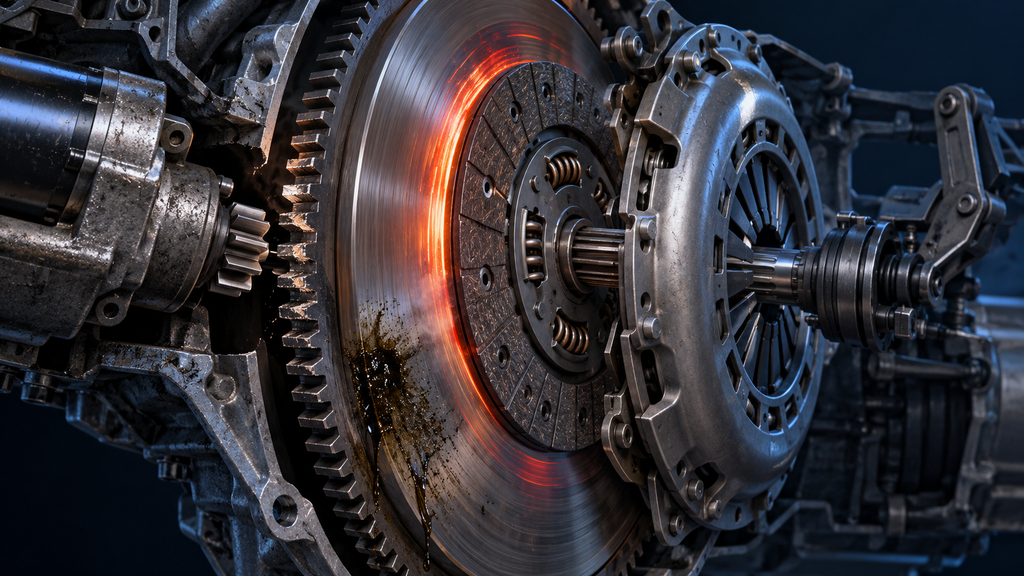
- Excess clutch heat: prolonged slipping, aggressive launches or towing beyond the vehicle’s limits can overheat the friction surface.
- A worn clutch: rivets or damaged friction material may score the flywheel face.
- Engine or transmission problems: misfires, rough running and worn mounts can increase vibration and shock loading.
- Repeated low-speed lugging: using a high gear at very low engine speed can place additional stress on a dual-mass flywheel.
- Starter faults: incorrect engagement can chip or wear the ring-gear teeth.
- Incorrect parts or installation: unsuitable bolts, wrong torque, contamination or mismatched components can cause vibration and premature failure.
- Normal wear: dual-mass internal springs and bearings can deteriorate after long service.
How mechanics diagnose a flywheel problem
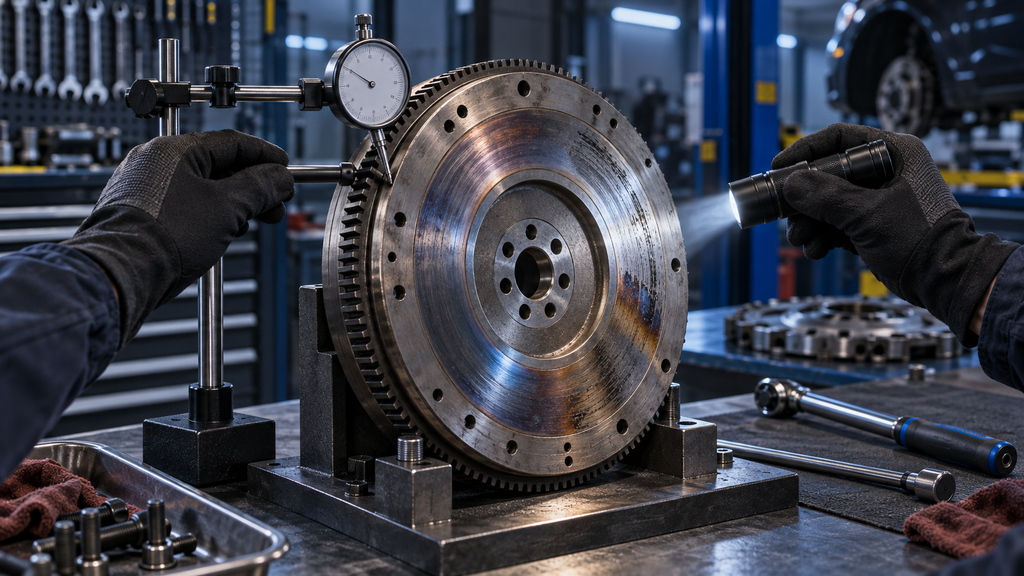
Diagnosis starts with the conditions under which the noise, vibration or clutch problem occurs. A technician may listen during startup and shutdown, compare behavior with the clutch pedal pressed and released, check engine and transmission mounts, inspect for fluid leaks and test clutch operation.
Confirming the condition often requires removing the transmission. The flywheel can then be inspected for cracks, hot spots, scoring, damaged teeth, warping and excessive movement. A dual-mass flywheel must be assessed using the vehicle or component manufacturer’s limits for rotational free play, rocking movement and condition.
Do not diagnose by sound alone. Release bearings, gearbox bearings, engine mounts and starter motors can create similar symptoms. A correct diagnosis can prevent an expensive but unnecessary replacement.
Can a flywheel be resurfaced?
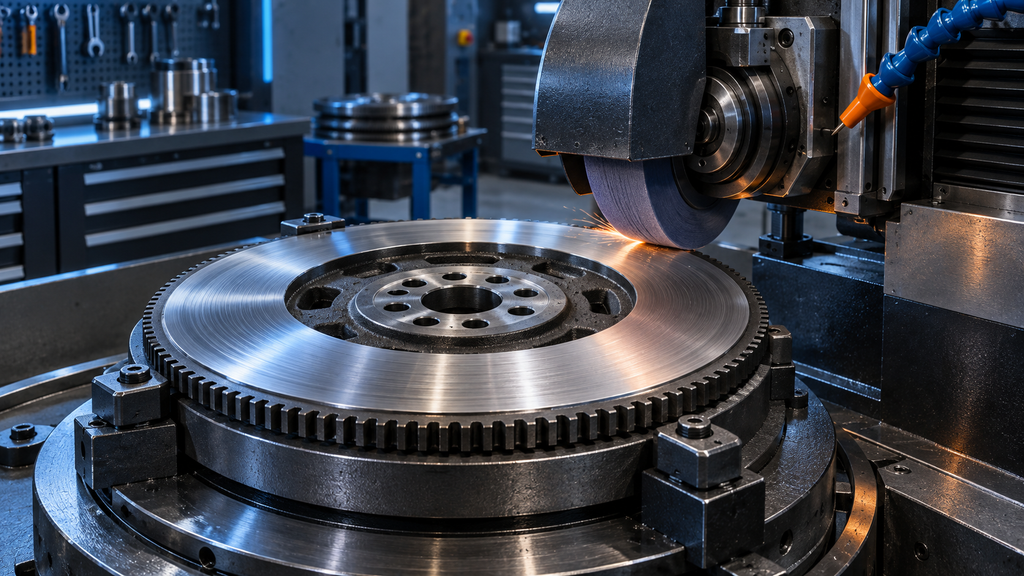
Some single-mass flywheels can be machined to restore a flat clutch surface, provided the finished dimensions, step height, surface finish and minimum thickness remain within specification. Cracks, severe heat damage, excessive material loss or ring-gear problems may make replacement necessary.
Dual-mass flywheels are different. Many manufacturers do not permit conventional resurfacing because machining can affect their geometry or because internal wear cannot be corrected by refinishing the face. Always follow the service information for the exact vehicle and flywheel.
Because transmission removal involves substantial labor, a workshop will commonly inspect the flywheel whenever the clutch is replaced. Reusing it, resurfacing it or replacing it should be based on measurements and manufacturer limits—not appearance alone.
Flywheel vs. clutch: what is the difference?
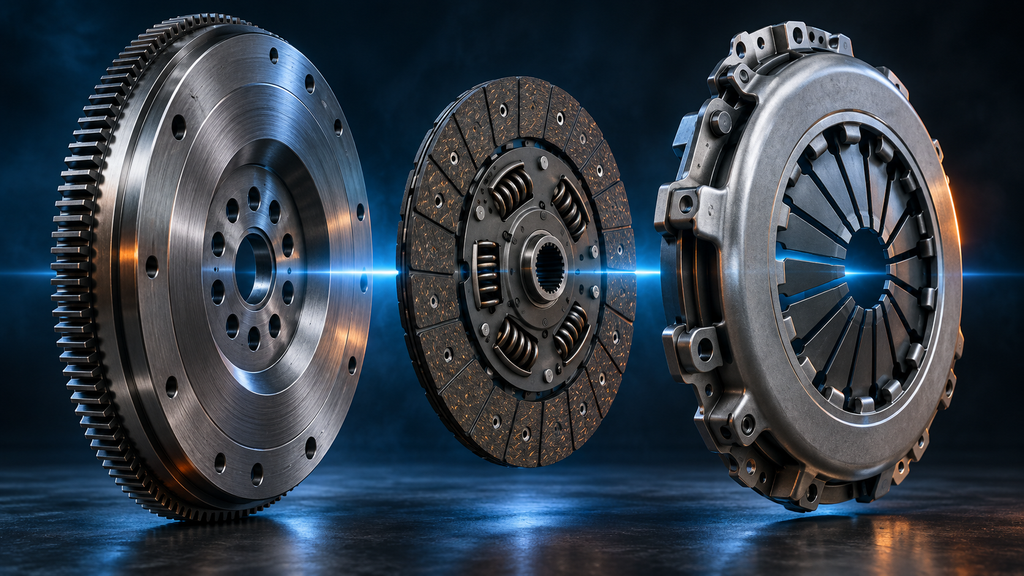
| Component | Main job | Typical wear or damage |
|---|---|---|
| Flywheel | Stores rotational energy, smooths engine speed and provides the clutch contact surface | Heat spots, scoring, cracks, worn ring gear or excessive dual-mass movement |
| Clutch disc | Connects or disconnects engine torque from the transmission | Worn friction lining, glazing, contamination or damaged springs |
| Pressure plate | Clamps the clutch disc against the flywheel | Weak clamping force, heat damage or distorted fingers |
Key takeaway
A flywheel is more than a heavy disc. It stabilizes crankshaft rotation, helps start the engine and forms a crucial link between the engine and manual transmission. Shuddering, rattling, startup grinding and unusual vibration deserve inspection, but none confirms flywheel failure by itself. Accurate testing—and, in many cases, inspection after transmission removal—is the safest basis for a repair decision.
Frequently asked questions
What is a flywheel in simple words?
A flywheel is a heavy rotating wheel or disc that stores movement energy and helps a machine continue turning smoothly. In a manual car, it connects to the crankshaft and provides a surface for the clutch.
Do all cars have a flywheel?
Manual-transmission vehicles normally use a flywheel. Conventional automatic vehicles usually use a flexplate connected to a torque converter. Hybrid, electric and automated transmission designs vary, so the exact component depends on the powertrain.
Can a bad flywheel damage a clutch?
Yes. A warped, cracked or heavily scored surface can cause poor clutch contact, heat and rapid wear. Excessive movement in a dual-mass flywheel can also affect clutch engagement and drivetrain behavior.
Does a flywheel increase engine power?
No. A flywheel stores and releases existing rotational energy; it does not create power. Its mass changes how quickly the engine gains or loses speed and how smoothly torque pulses are delivered.
How long does a flywheel last?
There is no universal replacement interval. Life depends on flywheel design, driving style, clutch condition, engine smoothness, vehicle load and installation quality. Some last through more than one clutch; others fail earlier because of heat or internal wear.
Should the flywheel be replaced with the clutch?
Not automatically in every vehicle. It should be inspected and measured whenever accessible. Replacement is appropriate when damage or wear exceeds specification; an eligible single-mass unit may sometimes be resurfaced instead.
Can I replace a flywheel myself?
Flywheel replacement normally requires transmission removal, safe vehicle support, correct alignment procedures and exact bolt-tightening specifications. The component is heavy and incorrect installation can cause serious damage, so this is generally a job for an experienced technician with suitable equipment.