
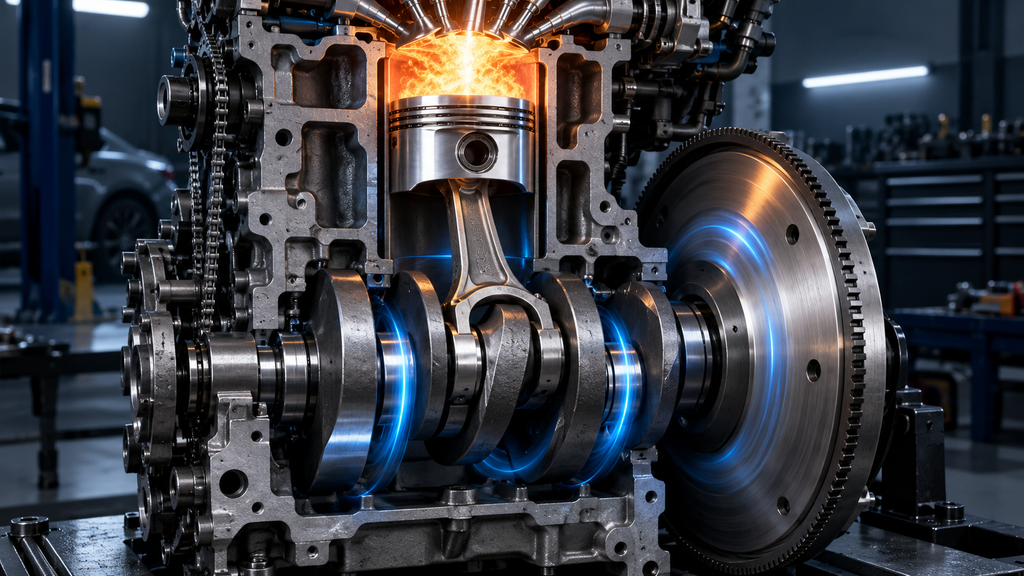
A piston is a cylindrical engine component that moves up and down inside a cylinder. Combustion pressure pushes it downward, and the piston transfers that force through the connecting rod to rotate the crankshaft.
Quick definition
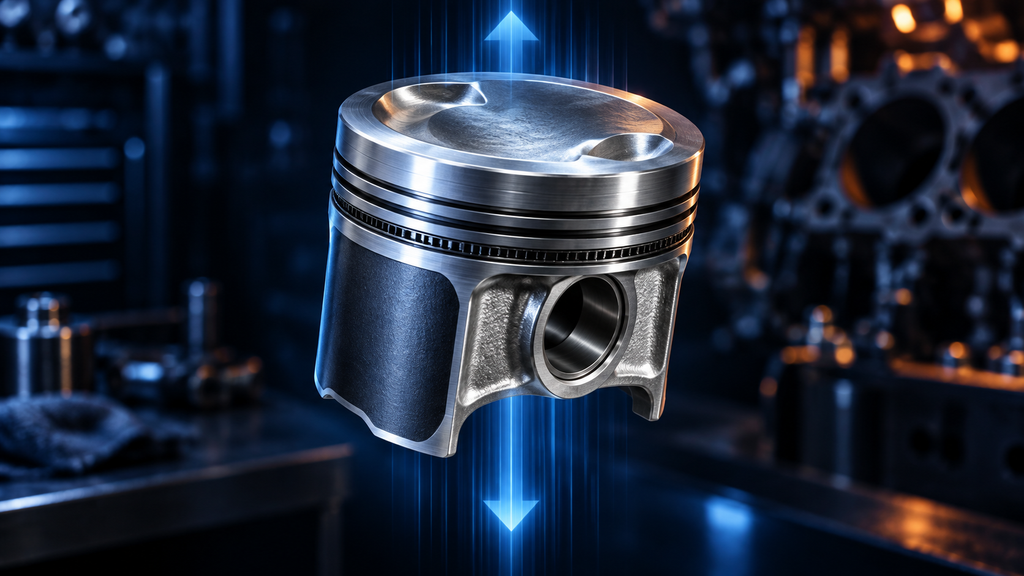
Piston meaning: a close-fitting moving component inside a cylinder that receives or applies pressure. In a vehicle engine, the piston turns the expanding force of combustion into mechanical movement.
In simple terms: fuel burns above the piston and forces it down. A connecting rod carries that movement to the crankshaft, which converts the piston’s up-and-down motion into rotation that can power the vehicle.
How does an engine piston work?
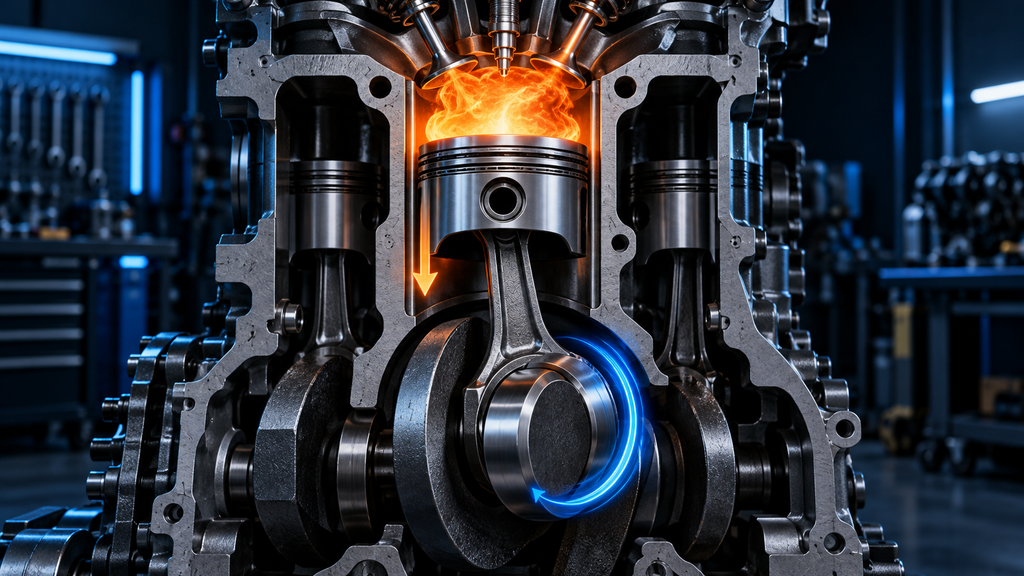
The piston moves inside a precisely machined cylinder bore. Its top surface faces the combustion chamber, while a wrist pin connects its lower section to a connecting rod. The other end of that rod attaches to the crankshaft.
When the air-fuel mixture burns, rapidly expanding gases create pressure above the piston. That pressure drives the piston downward. The connecting rod transfers the force to an offset journal on the crankshaft, converting linear motion into rotation.
The crankshaft and flywheel then help carry the piston back upward and through the remaining stages of the operating cycle. This sequence repeats hundreds or thousands of times per minute, which is why lubrication, cooling, correct clearances and accurate combustion are essential.
The piston in a four-stroke engine cycle
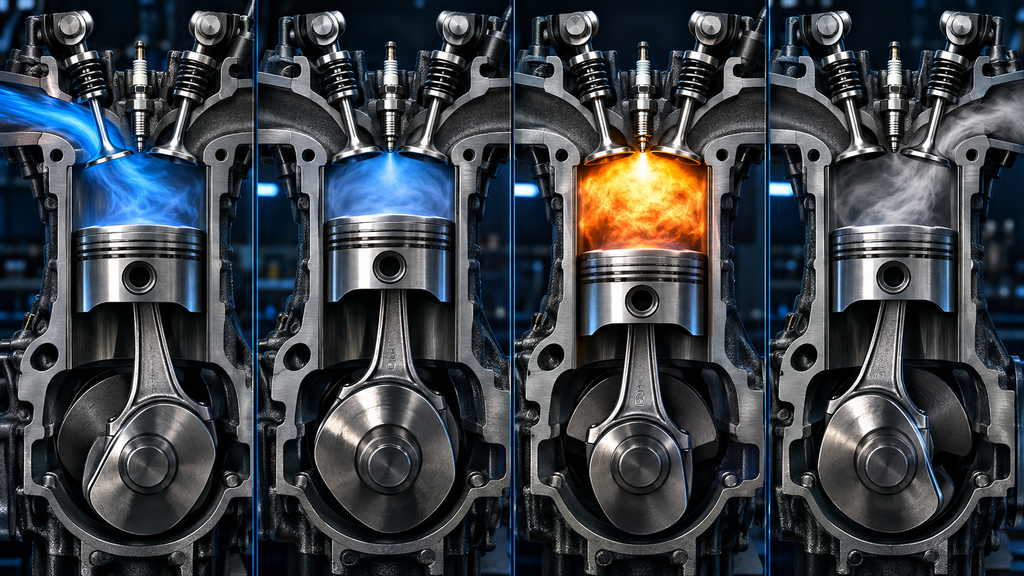
Stroke 1
Intake
The piston moves down while the intake valve opens, drawing air or an air-fuel mixture into the cylinder.
Stroke 2
Compression
Both valves close and the piston moves upward, compressing the cylinder’s contents into a smaller space.
Stroke 3
Power
Combustion raises pressure and forces the piston down, producing the stroke that supplies useful engine torque.
Stroke 4
Exhaust
The exhaust valve opens and the piston travels upward, pushing spent gases out of the cylinder.
Where are pistons located in an engine?
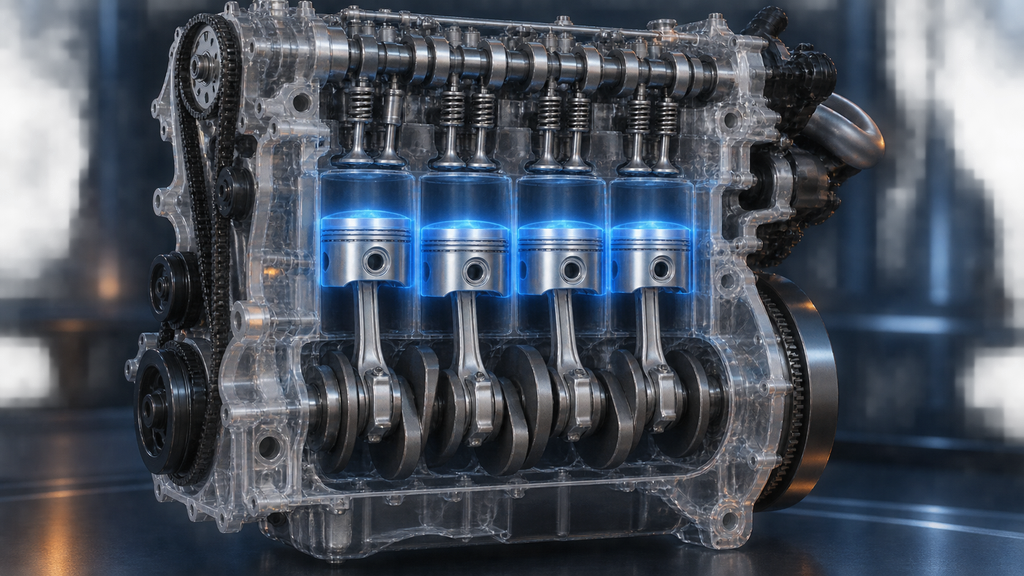
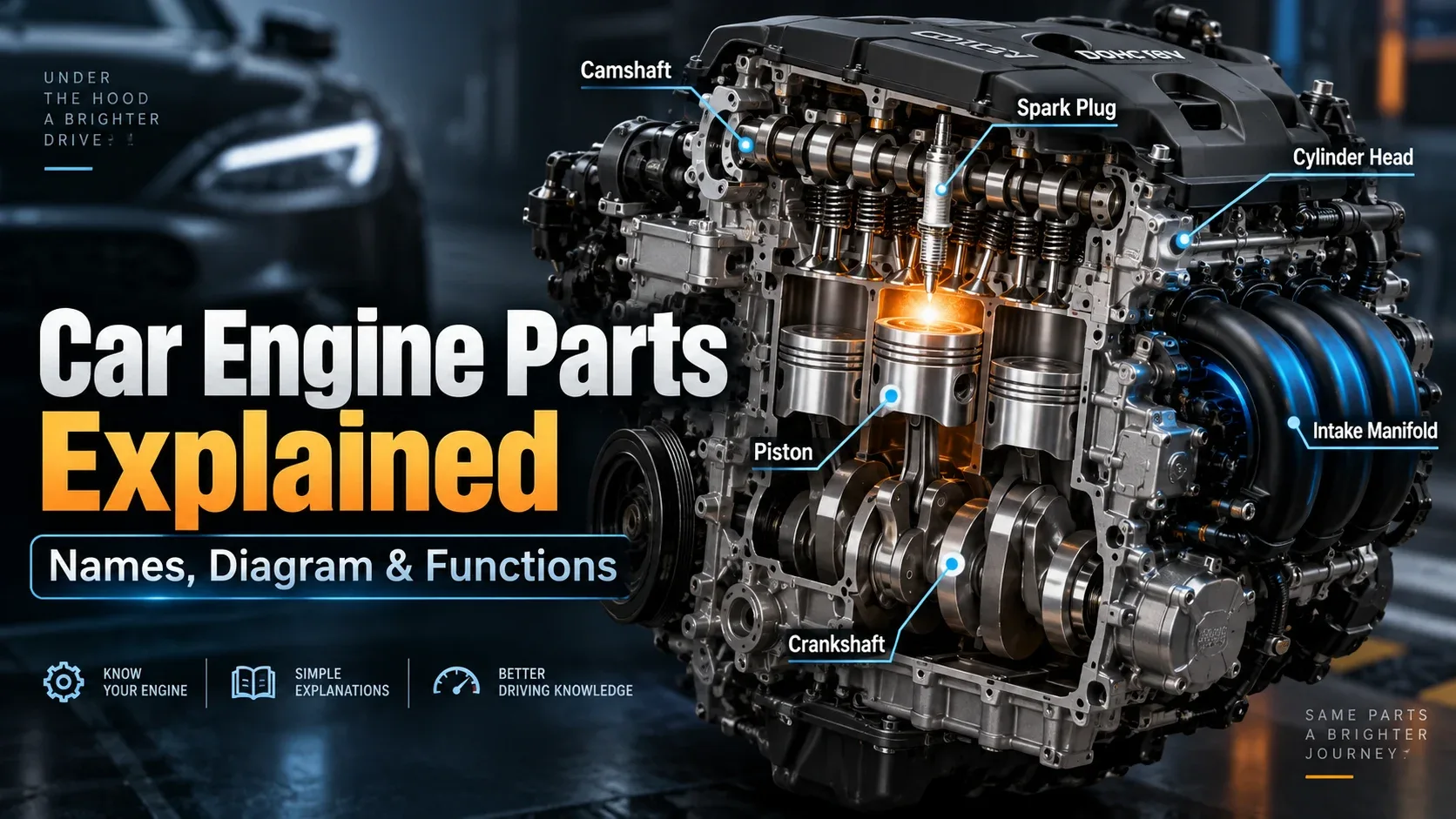
Pistons operate inside the cylinder bores in the engine block. The cylinder head and combustion chamber sit above them; the crankshaft and oil pan are below. Connecting rods link the pistons to the crankshaft.
Combustion chamber → Piston → Connecting rod → Crankshaft
An engine usually has one piston per cylinder. A three-cylinder engine generally has three pistons, an inline-four has four, and a V6 has six. Some unusual engine designs differ, but cylinder count normally indicates piston count in conventional reciprocating engines.
Pistons are not limited to gasoline engines. Diesel engines, compressors, hydraulic systems and many pumps also use pistons, although their materials, shapes and operating conditions differ.
Main parts of an engine piston
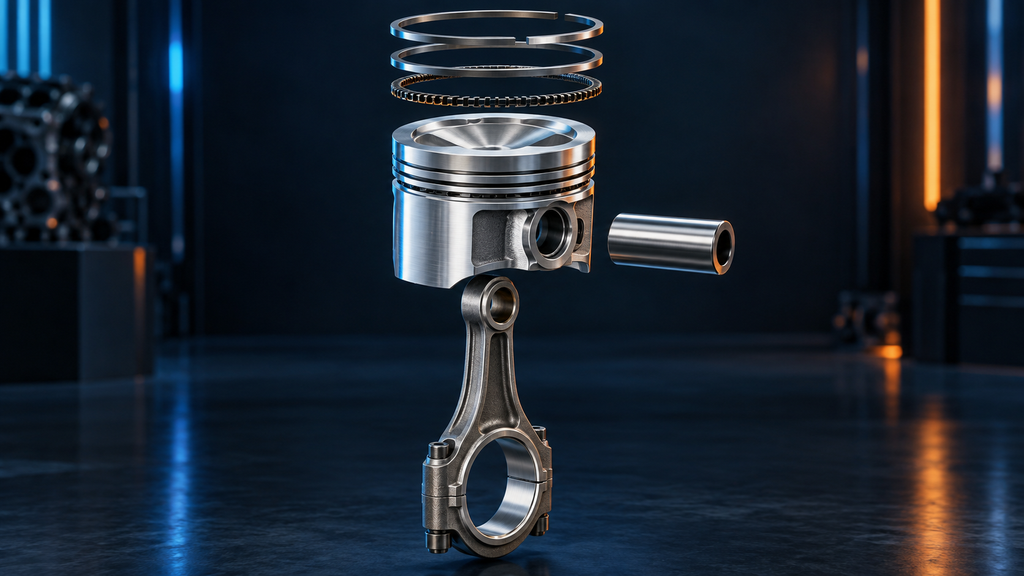
| Piston part | Function | Possible problems |
|---|---|---|
| Crown | The top surface exposed to combustion heat and pressure | Cracking, melting, impact marks and carbon buildup |
| Ring grooves and lands | Hold and support the piston rings | Wear, breakage, stuck rings and damaged lands |
| Skirt | Guides the piston in the bore and controls side movement | Scuffing, collapse, seizure and excessive clearance |
| Pin bosses | Reinforced areas that support the piston pin | Cracks, distortion and pin wear |
| Piston pin | Creates the pivoting connection between piston and connecting rod | Wear, poor lubrication and retaining-clip failure |
What are pistons made from?
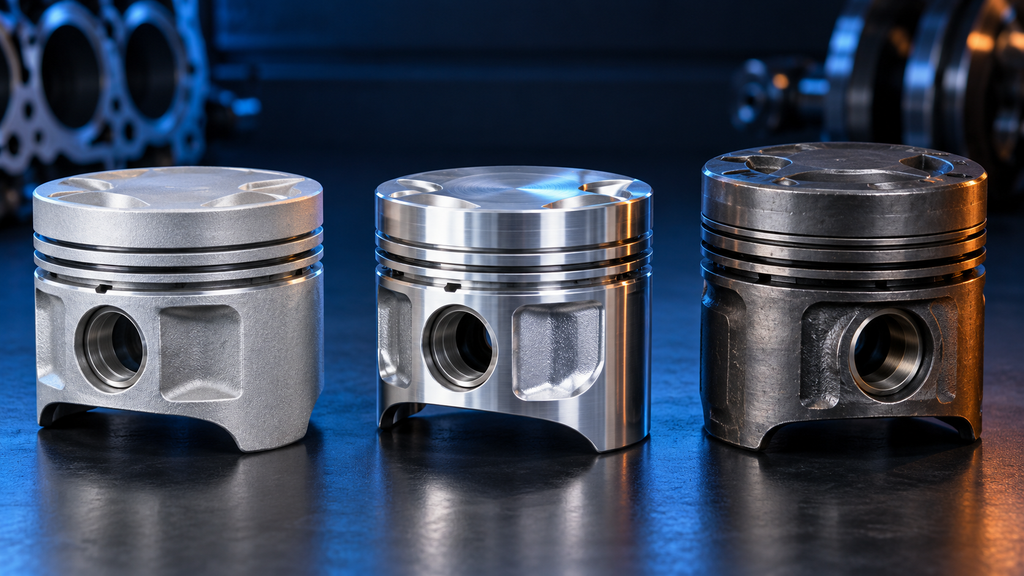
Most modern passenger-vehicle pistons are made from aluminum alloys. Aluminum is relatively light and transfers heat well, helping reduce reciprocating mass and move heat away from the crown. Because aluminum expands as it warms, the piston shape and cold clearance must account for operating temperature.
Some demanding diesel, racing and heavy-duty applications use reinforced aluminum designs, steel pistons or specialized coatings. Material choice depends on combustion pressure, temperature, engine speed, emissions requirements, durability targets and cost.
What do piston rings do?
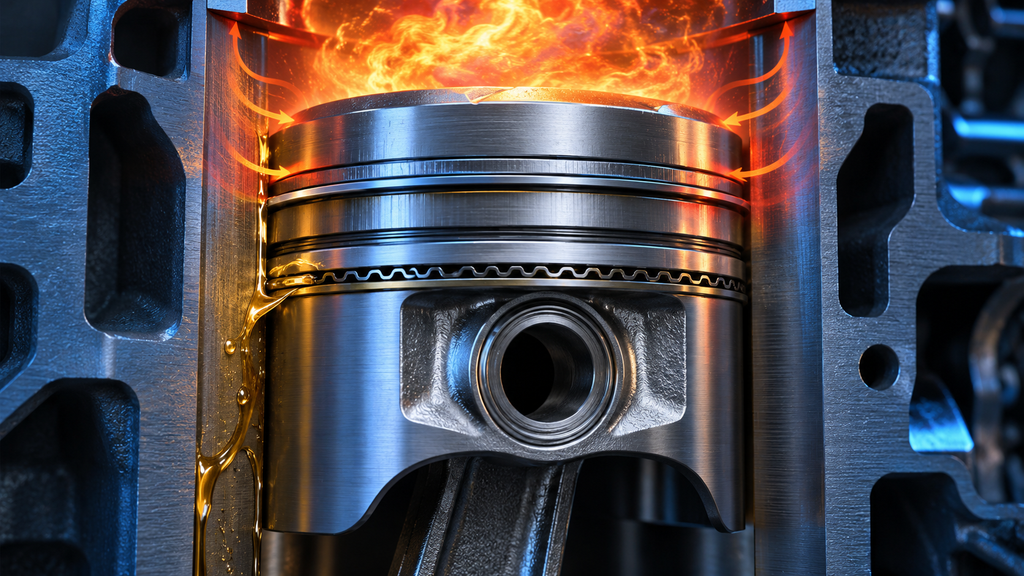
Piston rings sit in grooves near the top of the piston and maintain controlled contact with the cylinder wall. They must seal pressure while allowing a thin lubricating oil film to remain.
- Compression rings help contain combustion pressure and limit gases leaking into the crankcase.
- The oil-control ring meters oil on the cylinder wall and returns excess oil through drain passages.
- Heat transfer through the rings helps move some piston heat into the cylinder wall and cooling system.
Piston versus piston ring: the piston is the main moving body. The rings are separate spring-like sealing components fitted around it. Worn rings do not always mean the piston itself is damaged, but both must be inspected during an engine repair.
Common piston problems and what causes them
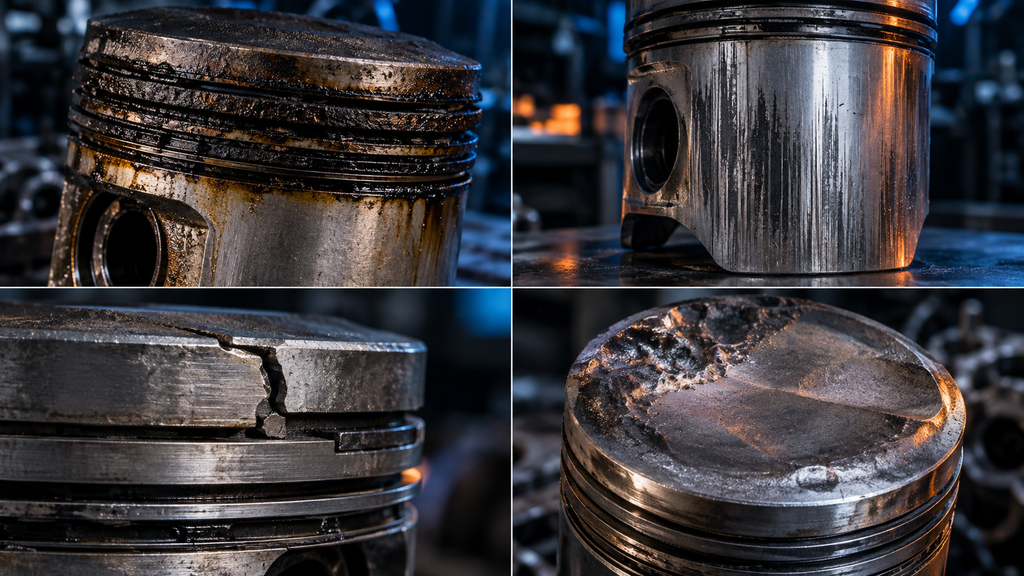
Piston-ring wear or sticking
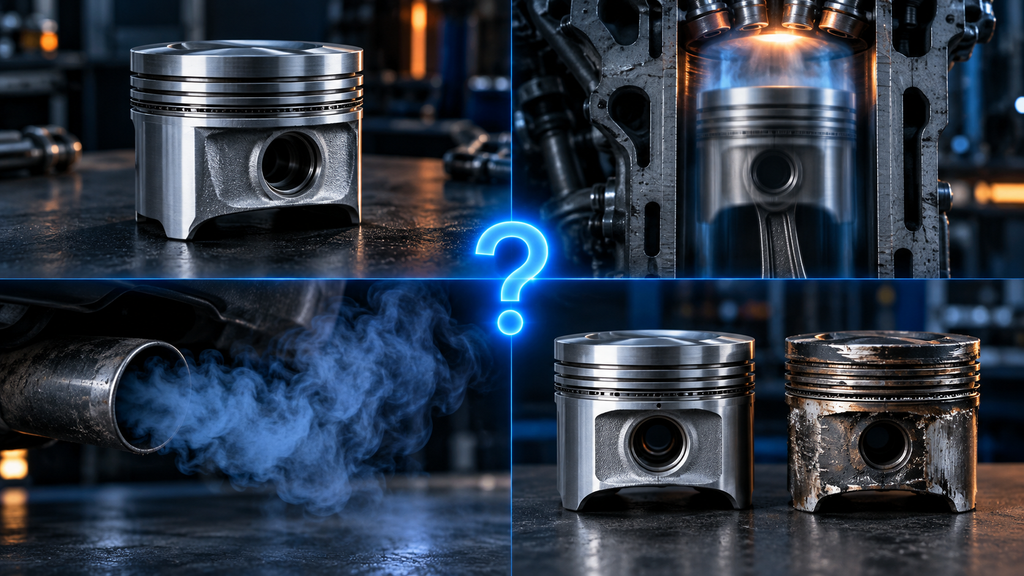
Rings can wear, break or become stuck by deposits. The result may be reduced compression, combustion gases entering the crankcase, increased oil consumption or blue exhaust smoke. Cylinder wear and valve-seal problems can produce overlapping symptoms.
Piston slap
Piston slap describes side-to-side piston movement caused by excessive clearance or wear. It may create a hollow tapping sound, often more noticeable when the engine is cold. Similar noises can come from valve-train, bearing or fuel-injection components, so sound alone is not enough for confirmation.
Scuffing and seizure
Insufficient lubrication, overheating, incorrect clearance or extreme load can break down the oil film between the piston skirt and cylinder. Metal surfaces may score, smear or bind together. A severe seizure can stop the engine suddenly and damage the bore, connecting rod or crankshaft.
Cracked or broken piston
Abnormal combustion, excessive cylinder pressure, overheating, incorrect installation or physical contact can crack the crown, skirt, pin boss or ring lands. Broken material can cause rapid and extensive internal damage.
Burned or melted piston crown
Extreme heat can erode or melt the crown. Possible contributors include detonation, pre-ignition, an injector fault, an incorrect air-fuel mixture, inadequate cooling or unsuitable calibration. The underlying cause must be corrected before a repaired engine returns to service.
Symptoms of a damaged piston or piston rings
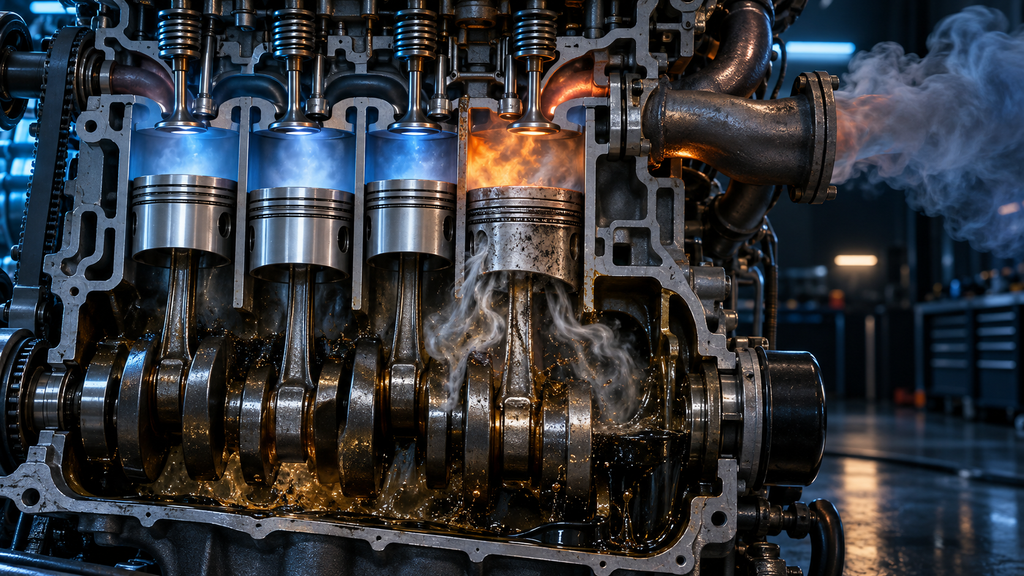
These warning signs can point toward piston, ring or cylinder trouble, but each has other possible causes. Use them as a reason to test the engine rather than as a final diagnosis.
| Symptom | Possible piston-related cause | Other checks |
|---|---|---|
| Blue exhaust smoke | Worn, broken or stuck oil-control rings | Valve seals, turbocharger, PCV system and oil level |
| Low compression | Damaged rings, piston or ring lands | Valves, head gasket, cylinder wall and test procedure |
| Heavy crankcase pressure | Combustion blow-by past worn rings | PCV restriction and normal engine-specific behavior |
| Knocking or tapping | Excessive piston clearance, pin wear or physical damage | Bearings, valve train, injectors and detonation |
| Misfire or power loss | Loss of cylinder sealing or piston damage | Ignition, fuel delivery, air leaks, valves and electronics |
| High oil consumption | Ring wear, stuck oil rings or worn cylinder bore | External leaks, valve seals, PCV system and turbo seals |
When should you stop driving?
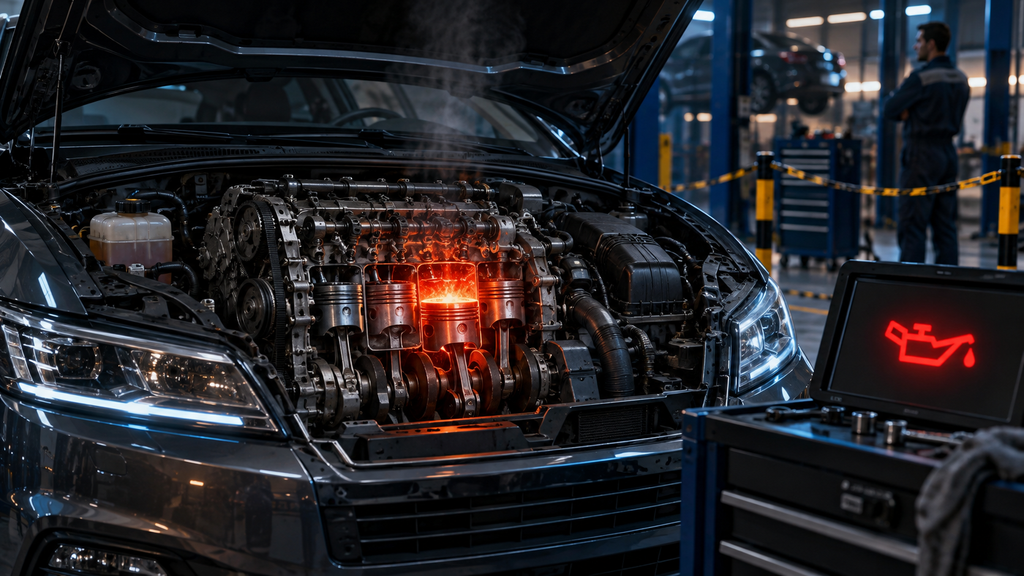
Shut the engine off and arrange professional inspection if it develops loud internal knocking, sudden major power loss, an oil-pressure warning, severe overheating, heavy smoke, metal in the oil or signs that it is beginning to seize. Continuing to run a badly damaged piston can turn a repairable fault into complete engine failure.
How piston problems are diagnosed
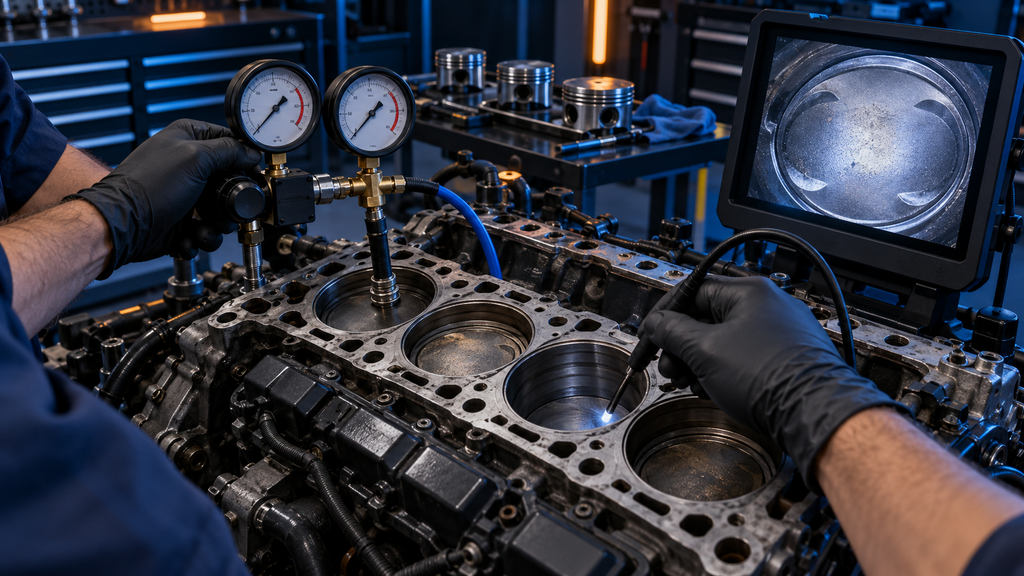
A technician should first confirm the symptoms and check basic causes such as oil level, cooling-system condition, fault codes, ignition, fuel delivery and crankcase ventilation. Useful engine tests may include:
- Compression testing to compare the sealing ability of the cylinders.
- Cylinder leak-down testing to identify where compressed air is escaping.
- Borescope inspection through the spark-plug or injector opening to examine the crown and cylinder wall.
- Oil and filter inspection for metallic debris or evidence of contamination.
- Crankcase-pressure assessment when excessive blow-by is suspected.
Compression results alone do not identify every fault. Low readings can come from valves, head-gasket leakage, test conditions or piston sealing. A leak-down test and borescope inspection provide additional evidence, but complete confirmation may require cylinder-head or engine removal.
Diagnostic principle: do not replace internal engine parts based on smoke or noise alone. Confirm where compression, oil or mechanical clearance is being lost before planning a repair.
Can a damaged piston be repaired?
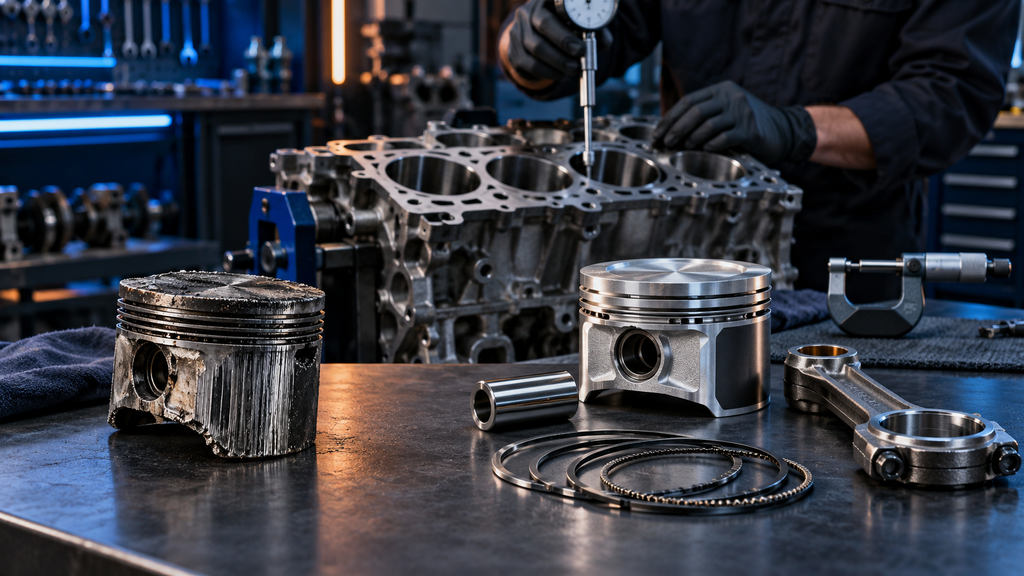
A cracked, melted, severely scuffed or structurally damaged piston is normally replaced rather than repaired. However, replacing the piston alone may not solve the problem. The cylinder bore, rings, connecting rod, pin, bearings, valves and combustion system must be inspected, and the original failure cause must be corrected.
Depending on the damage, the engine may need cylinder honing, machining, replacement rings, one or more pistons, or a full rebuild. Accurate measurements determine whether the cylinder can remain at standard size or requires machining and an appropriate oversize piston.
Piston replacement requires major engine disassembly, precision measurements and vehicle-specific tightening procedures. It is generally not a beginner repair. Incorrect piston orientation, ring installation, clearances or fastener torque can cause immediate engine damage.
How to reduce the risk of piston damage
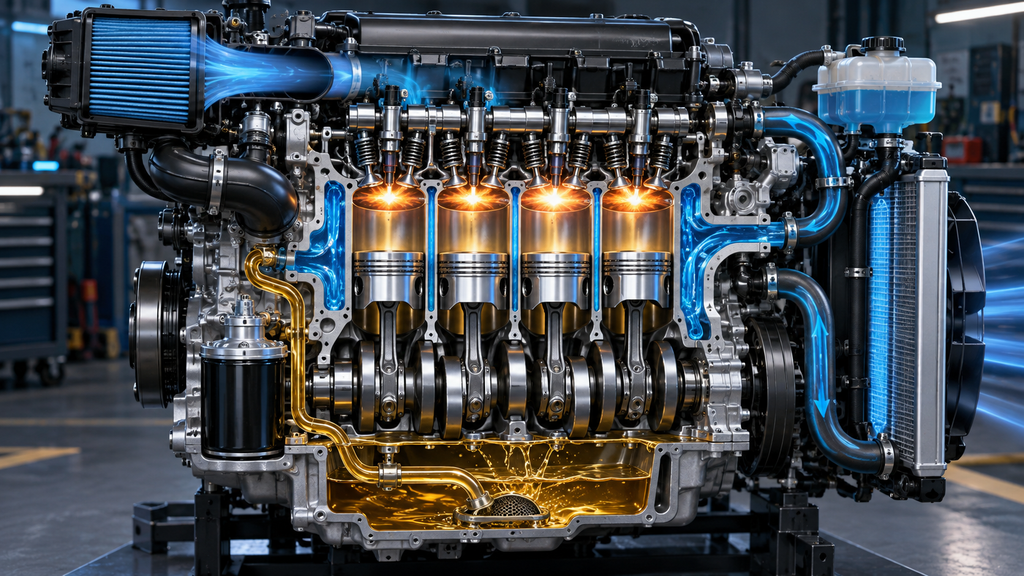
- Use the specified engine oil and maintain the correct oil level.
- Follow an appropriate oil and filter service schedule.
- Stop and investigate overheating instead of continuing to drive.
- Use fuel with the octane or cetane rating required by the manufacturer.
- Address misfires, detonation, injector faults and warning lights promptly.
- Avoid heavy engine load before the oil and engine reach operating temperature.
- Keep software changes and performance modifications within safe, proven limits.
- Use clean intake filtration to limit abrasive particles entering the cylinders.
Key takeaway
An engine piston receives combustion pressure and transfers it through the connecting rod to the crankshaft. Its crown, skirt, pin and rings must survive repeated heat, pressure and high-speed movement while maintaining a controlled seal inside the cylinder. Smoke, compression loss, oil consumption and knocking may indicate piston-related trouble, but proper testing is essential because many other engine faults create similar symptoms.
Frequently asked questions
What is a piston in simple words?
A piston is a moving metal component inside an engine cylinder. Combustion pushes it down, and it helps turn the crankshaft so the engine can produce usable power.
What is the difference between a piston and a cylinder?
The cylinder is the bore or chamber in which the piston moves. The piston is the close-fitting moving component inside that cylinder. Rings help seal the small controlled clearance between them.
How many pistons are in a car engine?
Most conventional car engines have one piston per cylinder. A four-cylinder engine normally has four pistons, a six-cylinder has six, and an eight-cylinder has eight.
Can an engine run with a damaged piston?
It may continue running with minor ring or piston damage, but operation can be rough, smoky or weak. Severe damage can cause sudden failure. Continued driving may damage the cylinder, head, rod, crankshaft, catalytic converter or complete engine.
Does blue smoke always mean bad piston rings?
No. Blue smoke usually means engine oil is entering the combustion process, but possible sources include piston rings, valve-stem seals, a turbocharger or crankcase-ventilation faults. Testing is required to locate the source.
What is piston slap?
Piston slap is unwanted side movement of a piston in its cylinder, often associated with excessive clearance or wear. It can create a hollow tapping sound, but similar noises must be ruled out before internal engine work is approved.
How long do engine pistons last?
Pistons have no universal replacement interval and are designed to last for much of the engine’s service life. Lubrication, cooling, combustion quality, maintenance, operating load and engine design all affect their durability.