A practical guide to gap insurance for drivers who want to avoid owing money on a car that has been totaled or stolen.
Gap insurance terms vary by insurer, lender, lease agreement, vehicle type, and state. Before buying, read the contract for the payout limit, deductible treatment, exclusions, cancellation rules, and any refund terms.
THE BASICS
What is gap insurance?
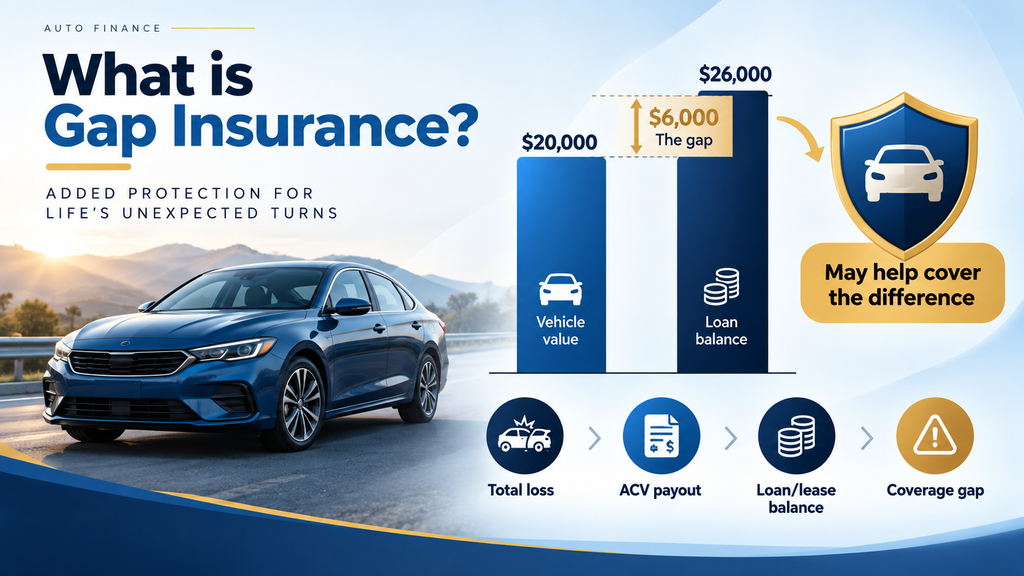
Gap insurance, short for guaranteed asset protection, may help pay the difference between a vehicle’s actual cash value after a covered total loss and the amount still owed on its loan or lease. It is designed for a situation where depreciation leaves the loan balance higher than the insurer’s settlement.
Collision or comprehensive insurance generally pays the vehicle’s market value, less any deductible, rather than the full loan payoff. Gap insurance on a car may reduce the remaining shortfall, but it does not automatically mean every amount added to a loan will be covered.
HOW GAP INSURANCE WORKS
A simple total-loss example
This illustration shows why a driver may consider gap coverage. It is not a quote or a guaranteed claim result.
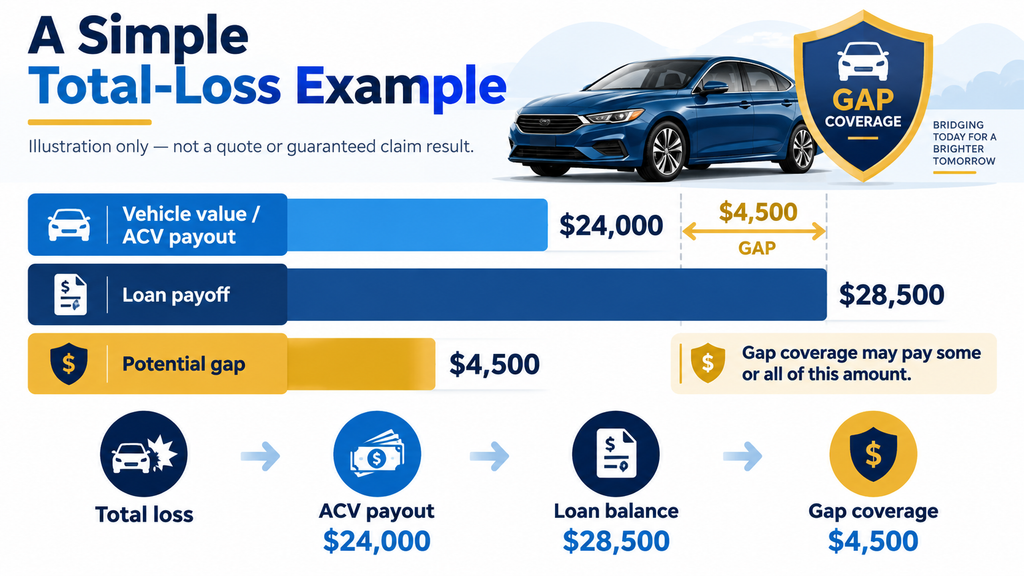
| After a covered total loss | Example amount | What it means |
|---|---|---|
| Actual cash value settlement | $24,000 | The primary auto insurer determines the vehicle’s value under its policy. |
| Remaining loan payoff | $28,500 | The lender reports what is still owed at the time of settlement. |
| Potential gap before policy limits | $4,500 | Gap coverage may pay some or all of this amount if the contract permits it. |
COVERAGE & EXCLUSIONS
What gap insurance typically covers — and what it may not
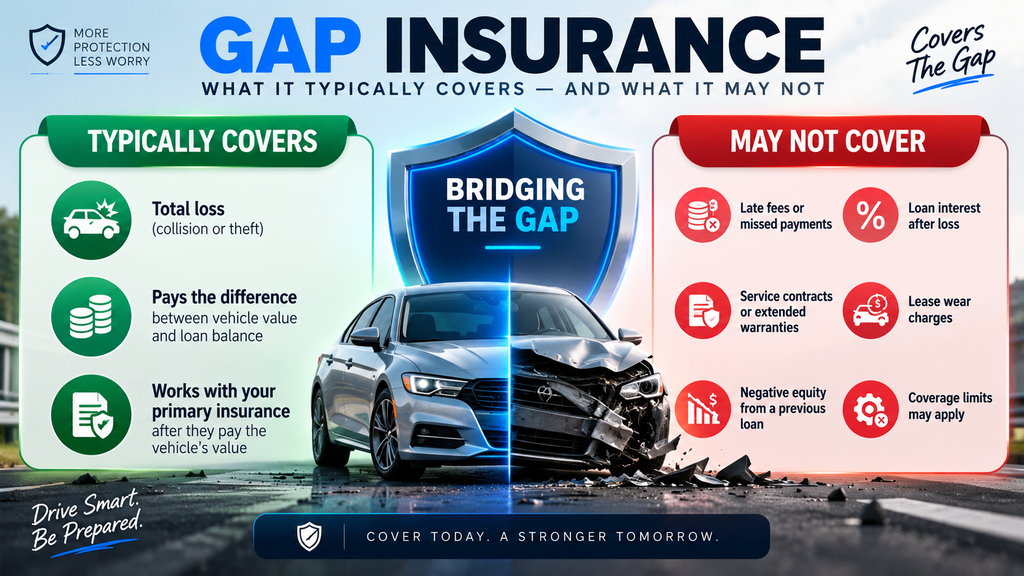
Gap coverage generally applies only after a covered comprehensive or collision claim results in a total loss, such as a qualifying theft or severe crash. The main auto insurer usually settles the vehicle-value portion first. The gap provider then evaluates the remaining eligible balance.
Common gap insurance exclusions can include late fees, skipped payments, loan interest after the loss date, service contracts, extended warranties, lease wear charges, and negative equity from a previous loan. Some policies cover a deductible; others do not. Coverage limits can also cap the payout as a percentage of vehicle value.
Ask for the full policy or waiver agreement before you buy. In particular, confirm whether the contract has a maximum benefit, whether your loan-to-value ratio is eligible, and whether it pays the deductible. Those details matter more than the product name alone.
GAP INSURANCE COST
How much does gap insurance cost?
Gap insurance cost depends on where you buy it, your vehicle, your financing terms, and the policy design. It may be offered as a low-cost endorsement to a qualifying auto insurance policy, as a lender or credit-union product, or as a dealership add-on rolled into the loan.
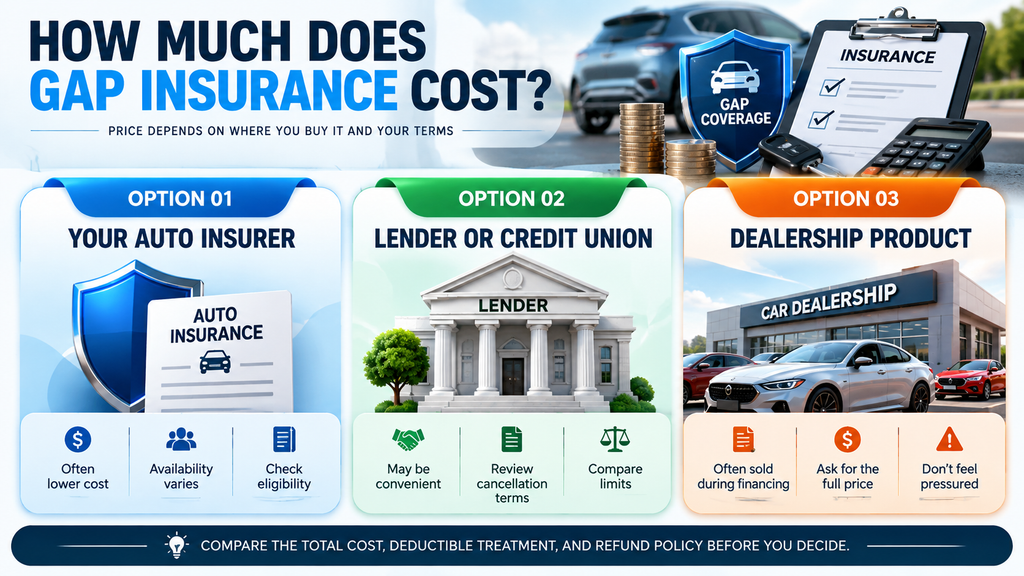
The lowest advertised price is not always the best value. Compare the total price, financing cost, maximum payout, deductible treatment, cancellation process, and refund policy. If a dealer product is financed, interest may increase the amount you pay over time.
OPTION 01
Your auto insurer
Often worth checking first. An endorsement may cost less than a dealer product, but availability and eligibility vary by insurer and state.
OPTION 02
Lender or credit union
May be convenient when financing. Read whether it is insurance or a debt-cancellation waiver, then compare its limits and cancellation terms.
OPTION 03
Dealership product
Can be sold during financing paperwork. Do not feel pressured to decide immediately; ask for the full price and whether the cost is added to the loan.
IS GAP INSURANCE WORTH IT?
Who may benefit most from gap insurance?
Gap insurance for financed cars may be most useful during the first years of a loan, when the balance can be high and a newer vehicle may depreciate quickly. It may be less useful if you made a large down payment, have a short loan term, or owe less than the vehicle’s current value.
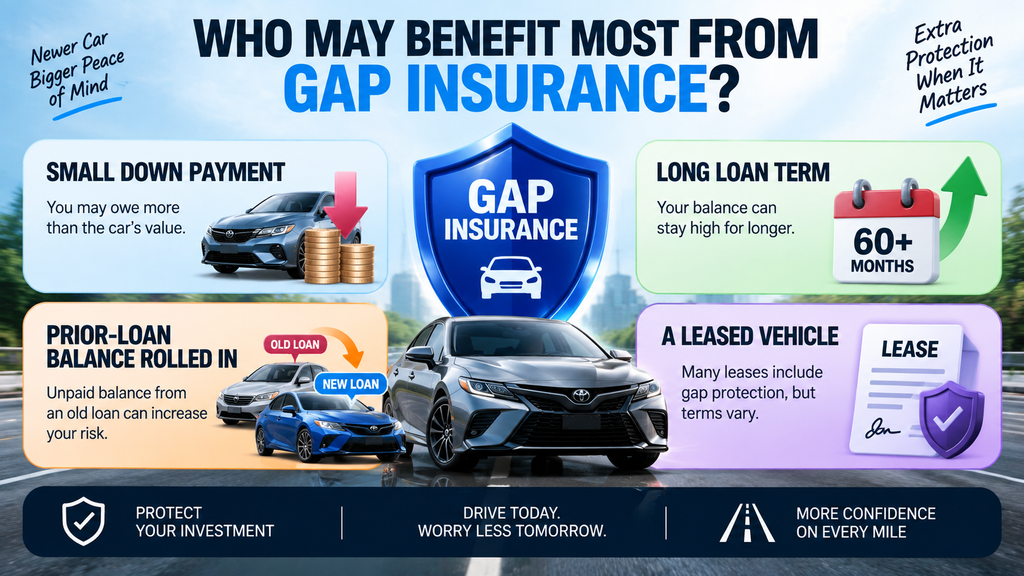
Small down payment
A low down payment can leave you owing close to the original purchase price while the vehicle’s market value falls.
Long loan term
Loans lasting 60 months or longer can keep the balance elevated for more time, especially early in repayment.
Prior-loan balance rolled in
Rolling unpaid balance from an old vehicle into a new loan raises the risk of a shortfall, though that amount may be excluded.
A leased vehicle
Many lease agreements include gap protection, but not all terms are the same. Check your lease before buying separate coverage.
WHEN TO CANCEL
Cancel gap coverage when the gap is gone
Review your loan balance against your vehicle’s estimated current value periodically. When you owe less than the car is worth, gap insurance may no longer provide meaningful value. Your lender payoff quote and a current market-value estimate can help you make that comparison.
If you pay off or refinance the loan early, sell the vehicle, or trade it in, ask whether the gap product can be canceled and whether you qualify for a prorated gap insurance refund. Keep your cancellation request and any payoff records in writing.
COMMON QUESTIONS
Gap insurance FAQs
Is gap insurance required?
Usually, no. A lender or lease agreement may require it in some situations, but many drivers choose it voluntarily. Review your financing and lease documents for the exact requirement.
Does gap insurance cover my deductible?
It may, but not always. Some contracts include deductible coverage up to a stated amount; others exclude it. Check the policy wording instead of assuming it is included.
Can I buy gap insurance after I buy a car?
Possibly. Some insurers allow eligible customers to add gap coverage after purchase, while others have vehicle-age, mileage, loan-to-value, or timing limits.
How does a gap insurance claim work?
Start with the primary auto-insurance claim. If the vehicle is declared a covered total loss, provide the gap provider with the settlement documents and lender payoff information it requests.