You reach for your good side cutters to trim a length of safety wire, feel the wire resist, and hear that faint tick as the edge takes a chip. Or you go to shorten a spring clip, snip a piece of music wire for a throttle-return fix, and the cutters skate off the wire instead of biting into it. Either way you end up with a notch in the jaw that will bother every soft-copper cut you make after it.
Hardened steel wire does that to a normal pair of cutters. Safety wire, spring steel, music wire, the wire in a spring clip: they are all tempered far harder than the copper and aluminum your cutters were ground for. Here is why that happens, what actually cuts hard wire cleanly, and how to pick a cutter that will not chip the first time it meets a piece of piano wire.
Why hard steel wire chips a standard side cutter
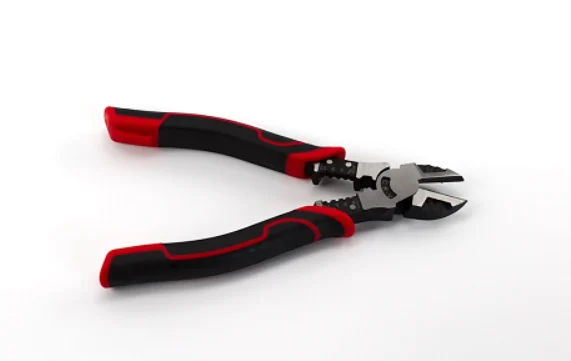
A standard pair of side cutters chips on hard wire because the edge is ground for soft metal, and the wire is harder than that edge can shear. Copper and aluminum are soft enough to slice, so the fine, low-angle bevel on a general cutter parts them cleanly. Hardened steel does not slice. It has to be forced apart at one point until it fails, a controlled fracture rather than a clean cut, and a thin bevel pressed into steel that hard loses tiny pieces of itself doing it. That lost metal is the chip you feel.
It is not a defect in your cutters. It is a material mismatch: the right tool for soft wire, asked to do a job it was never hardened for. Spring steel and music wire are also notch-sensitive, which is the property a proper hard-wire cutter puts to work. It concentrates force at the edge to start the fracture on purpose, so the wire parts cleanly at that point.
What actually cuts hardened wire
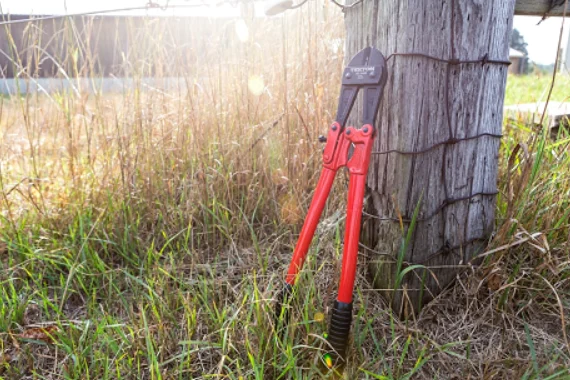
A cutter that handles hard wire has three things a general side cutter does not: cutting edges hardened for steel, a compound-lever action so the edge is not overloaded, and a jaw that holds the round wire so it cannot skid. Get all three and the end comes off clean and square. Miss any one and you are back to a chipped edge or a mangled, fishtailed end.
- Hardened cutting edges, with the number printed. The edge has to be harder than the wire, and the only way to know is a stated hardness. On the Rockwell scale, a cutting edge around HRC 62 to 65 holds up on hard wire, where a softer edge blunts within the first few cuts. A maker that prints the figure gives you something to check.
- A compound-lever action, so your hand is not the cutting force. Hard wire needs serious force right at the edge. A compound-lever cutter uses a double pivot to multiply your hand force several times over, so the mechanism parts the wire and the edge is not overloaded. You get the cut with far less effort, and the edge lasts longer for it.
- A V-slot jaw that holds the wire. Round hard wire skids off a flat edge under load, and that skid is where the fishtail and the crushed end come from. A V-slot seats the wire down the length of the jaw so it stays put while the edge closes on it, which is what gives you a square end rather than a smeared one.
Which cutters do you recommend?
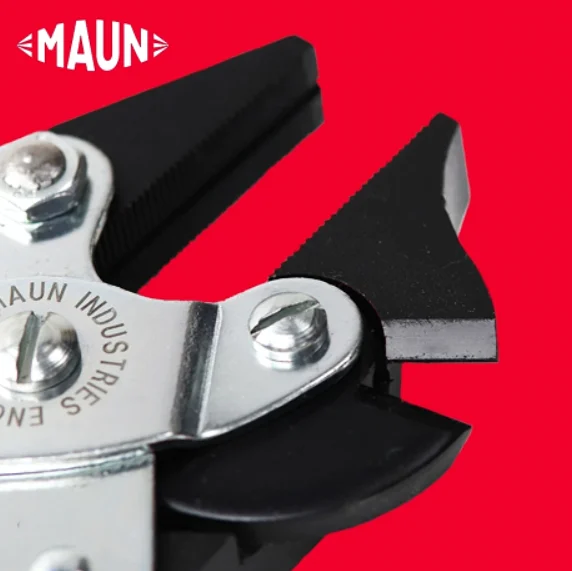
For cutting hard wire, the Maun Heavy Duty Wire Cutters are a good option. They multiply your hand force up to 25 times through a compound-lever action, so the tool does the cutting, and the 160 mm model is rated to cut 2.0 mm piano wire and 2.5 mm hard wire.
The catch is price. A hard-wire cutter costs more than a generic pair, and that is the trade-off. It still cuts everyday soft copper and aluminum cleanly, so it is not a single-job tool that sits in the drawer. You are paying more up front for edges and a mechanism built to survive the hard stuff.
Common questions about cutting steel wire
What can you use to cut steel wire?
A cutter with edges hardened for steel: a hard-wire or music-wire cutter for solid wire, or lineman’s pliers for softer, thicker steel. For very hard or very thick wire, a rotary tool with a cut-off wheel, or a hacksaw, will get through it. A standard side cutter is the wrong tool and will chip on anything genuinely hard.
How do you cut stainless steel cable without fraying?
Stranded stainless cable frays because the strands spring apart the moment they are freed. Bind the cut line first with a tight wrap of tape or a crimped ferrule, then shear through the whole bundle in one pass with a cable cutter, which scissors the strands instead of crushing them. A side cutter tends to splay the strands and leave a ragged end.
How do you cut steel wire without wire cutters?
Score and snap it. Nick the wire at the cut line with a file, then bend it back and forth at the notch until it fatigues and breaks. A rotary tool with a cut-off wheel works too. Both are slower and leave a rougher end than the right cutter, but they will get you through a hard-wire cut when you are stuck.
What is the best tool to cut hard steel with?
Match the tool to the hardness and the diameter. For wire and small stock, a cutter with hardened edges and a compound-lever action sized to the wire. For bar and thicker stock, an angle grinder or a hacksaw. Whatever you use on wire, check that it states the capacity it is rated for. A cutter with no stated capacity is a gamble on hard steel.
The short version
Standard cutters are built for soft copper, and hard steel wire chips them. Keep one cutter with hardened, published edges and a proper compound-lever action for the safety wire, spring clips and music wire, and keep your good general pair for the soft stuff. Matching the tool to the wire is what saves both the cut and the cutters.