
A calm, beginner-friendly guide to setting up a circular saw, making controlled cuts, cutting straight, and reducing kickback risk.
Before you cut, read your saw’s manual, inspect the blade and guard, wear eye and hearing protection, support the work so the kerf cannot pinch the blade, and keep both hands on the saw. Start the motor before the blade touches wood, guide it without forcing it, then wait for the blade to stop before setting the saw down.
What is a circular saw — and why setup matters
A circular saw is a handheld power saw with a toothed round blade. It can make fast, accurate cuts in sheet goods, framing lumber, decking, and many other materials when fitted with the correct blade and used according to its manual.
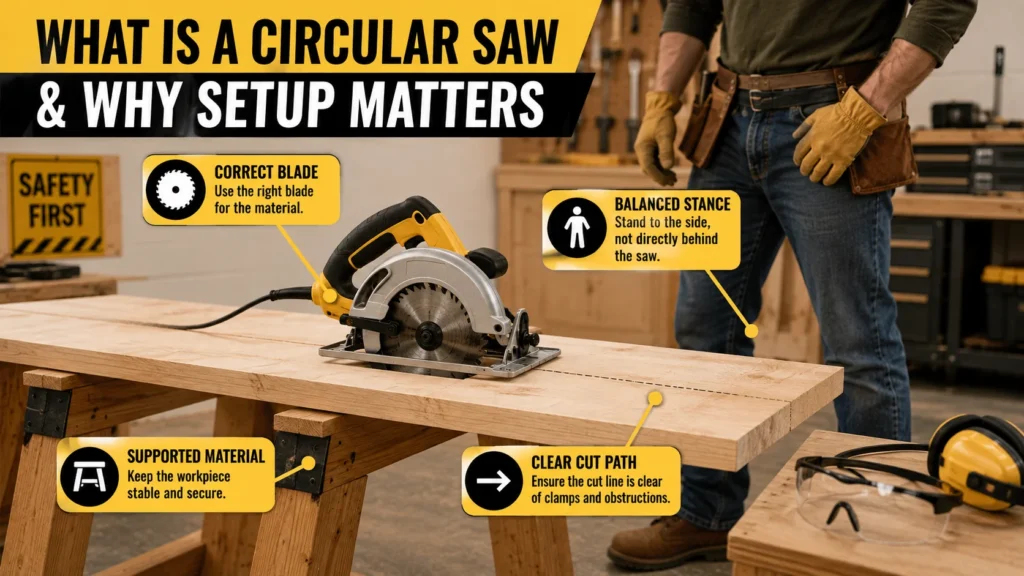
For a beginner, the safest cut is predictable: the material is supported, the cut path is clear, the blade can spin freely, and you are balanced beside—not directly behind—the saw. Take time to arrange these conditions before pulling the trigger.
Circular saw parts beginners should know
Control locations vary by model, so your manufacturer’s manual takes priority. These common terms make instructions easier to follow:
- Shoe or base plate: the flat plate that rests on the workpiece and guides the saw.
- Lower blade guard: the movable cover that should return freely to cover the blade after a cut.
- Depth adjustment: the control that sets how far the blade extends below the material.
- Bevel adjustment: the control that tilts the shoe for angled cuts; check that it is locked before cutting.
What you need before using a circular saw
Treat safety equipment and saw inspection as part of the setup, not an optional extra. If something is damaged, loose, or unclear, stop and check the manual before continuing.
Wear practical PPE
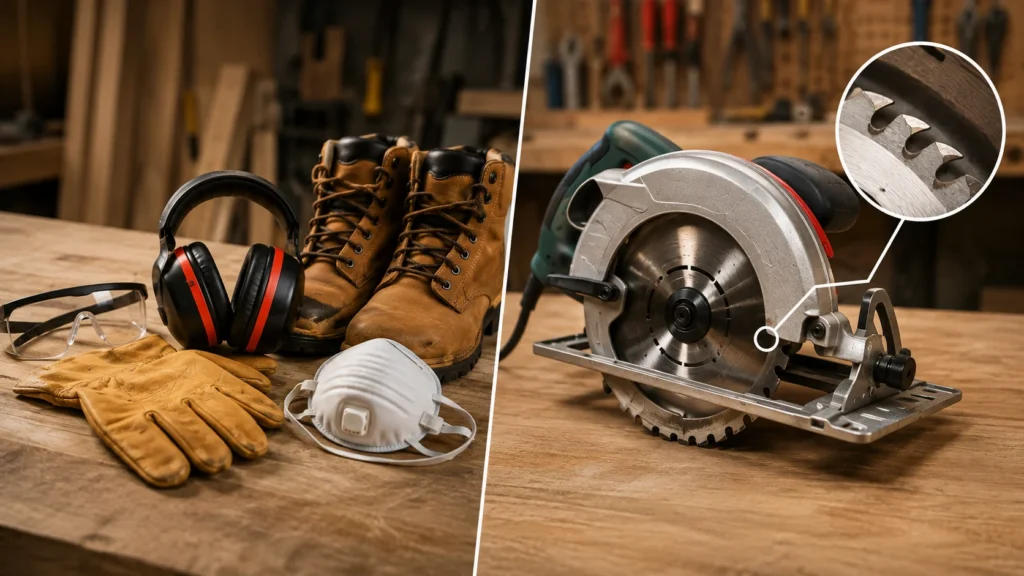
Use safety glasses and hearing protection. Wear sturdy, closed-toe footwear and fitted clothing without loose sleeves, jewelry, or cords near the blade. Use suitable dust control for the material you are cutting and follow the product guidance for any dust mask or respirator.
Inspect the saw and blade
With power disconnected or the battery removed, check that the blade is sharp, clean, correctly fitted, and rated for the saw. Confirm the lower guard moves and returns freely. Never use a blade that is cracked, damaged, or unsuitable for the material.
How to use a circular saw step by step
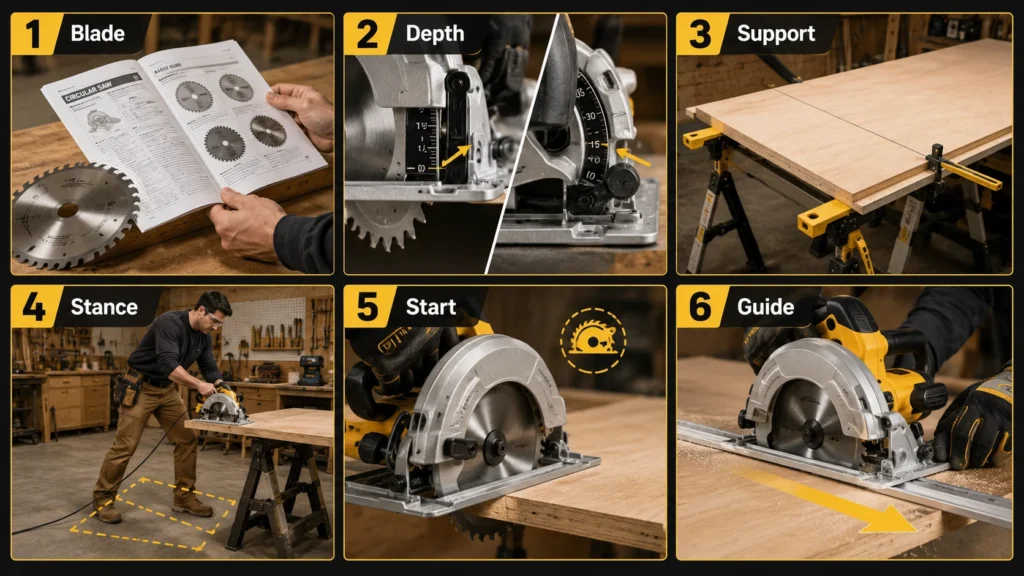
- Read the manual and choose the right blade
Follow the model-specific instructions for blade installation, guard operation, depth settings, and safe handling. Use a blade intended for the material and type of cut. - Set blade depth and bevel
Adjust the blade depth according to your saw manual and the material thickness. Avoid leaving the blade at maximum depth by default. Set the bevel to the required angle, or confirm it is locked at zero for a square cut. - Mark and support the workpiece
Mark the cut line clearly. Support both sides of the cut so the offcut can fall away without closing the kerf, shifting the board, or contacting the blade. Keep clamps and supports out of the cut path. - Take a balanced position
Stand comfortably to one side of the cutting path with firm footing. Keep the cord or battery clear, hold the main and auxiliary handles with both hands, and keep hands away from the underside of the work. - Start before entering the material
Place the front of the shoe on the workpiece without letting the blade touch it. Start the saw, allow it to reach operating speed, then ease the blade into the cut. - Guide the saw without forcing it
Keep the shoe flat and move steadily along the line or guide. Do not twist the saw, reach over the blade, or push harder if the motor slows. Release the trigger after the cut and wait for the blade to stop before setting the saw down.
What causes circular saw kickback?
Kickback is a sudden movement that can happen when the blade binds, stalls, or is forced out of a stable cutting path. Good setup lowers the risk, but it does not replace the precautions in your saw manual.
- Do not support a board so the cut closes and squeezes the blade.
- Keep the saw straight; twisting in the kerf can cause binding.
- If the blade stalls, release the trigger and hold the saw still until the blade stops. Do not pull it backward while it is spinning.
How to cut straight with a circular saw
For short cuts, the notch or guide mark on the saw shoe can help you follow a pencil line. For long cuts, most beginners get straighter and more repeatable results by guiding the saw against a straight reference.
Use a straightedge
Clamp a straight board, level, or purpose-made guide parallel to your cut line. Measure the offset from the blade to the edge of your saw shoe first, then place the guide at that offset.
Use a speed square for crosscuts
A speed square can guide short, square crosscuts across framing lumber. Keep it securely against the board edge and practice with the saw unplugged or battery removed before making the cut.
Consider a guide rail
A compatible guide rail can simplify long, accurate cuts in plywood and sheet goods. Check your saw and rail instructions for compatibility, clamping, anti-tip features, and blade clearance.
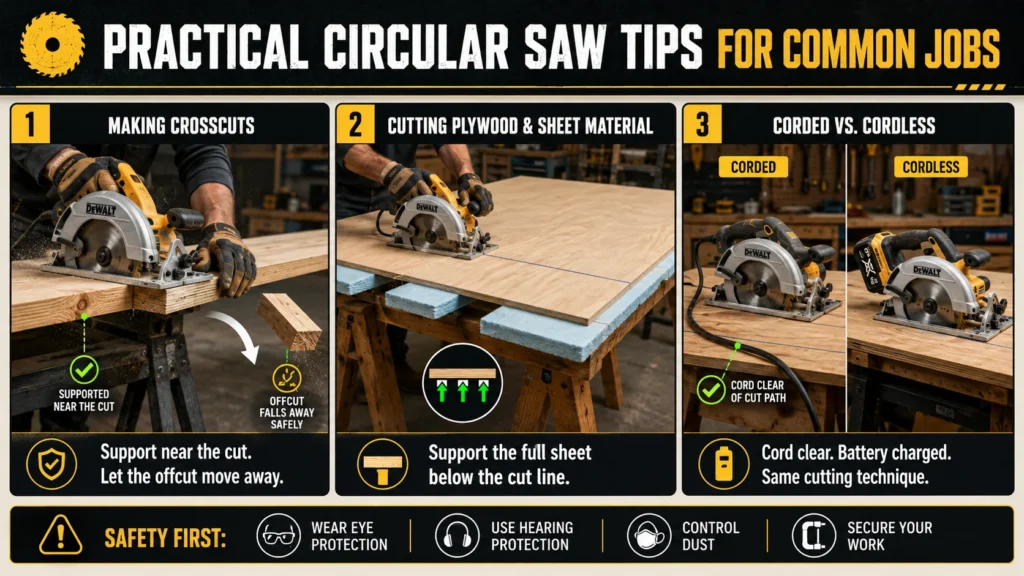
Practical circular saw tips for common jobs
Making crosscuts
A crosscut goes across the grain. Support the board close to the cut while leaving room for the offcut to move safely away. Never hold a short offcut by hand near the blade.
Cutting plywood and sheet material
Support the full sheet on foam insulation or multiple stable supports that sit below the cut line. This keeps both pieces supported and protects the blade from hitting the floor or bench.
Corded vs. cordless saw use
The core cutting technique is the same. With a corded saw, manage the cord so it cannot cross the cut path. With a cordless saw, use a charged, approved battery and stop if power feels inconsistent.
Circular saw safety FAQs
Which way should a circular saw blade face?
Follow the directional arrow on your saw and blade, plus the instructions in the manual. On many handheld circular saws, the teeth at the front edge of the blade point upward because the blade rotates upward through the work at that point. Never rely on a general rule alone when fitting a blade.
How deep should I set a circular saw blade?
Use your manufacturer’s depth-setting guidance for the saw and material. The goal is a controlled cut with no unnecessary blade exposure below the workpiece. Check the setting with the saw disconnected from power before you cut.
Can I use a circular saw without a guide?
You can follow a marked line for short cuts, but a straightedge, speed square, or compatible guide rail is often easier for beginners. A guide does not make an unsafe setup safe, so keep using correct support, hand position, and blade-stop procedures.