

Enter two tire sizes to instantly compare diameter, width, sidewall height, circumference, and speedometer difference. Make confident tire-buying decisions.
Thinking about switching to a different tire size? Whether you’re upgrading to larger wheels, fitting wider tires for better grip, or looking for a more affordable replacement, a tire size calculator helps you compare the exact dimensions before you buy. Understanding how tire width, aspect ratio, and wheel diameter work together prevents costly fitment mistakes.
This tire size comparison tool calculates sidewall height, overall diameter, circumference, revolutions per mile, and the effect on your speedometer reading. Enter your current and proposed tire sizes below to see a side-by-side breakdown — then read on for a complete guide to tire dimensions, fitment considerations, and what the numbers on your sidewall actually mean.
How to Check Your Tire Size — Reading the Sidewall
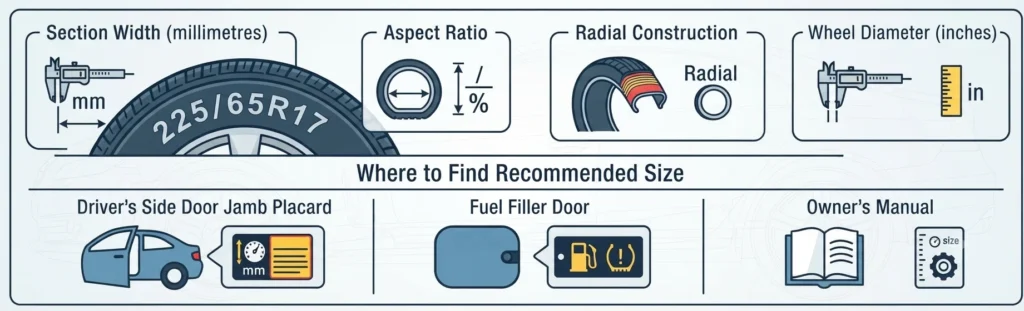
Every tire has its size stamped on the sidewall in a format like 225/65R17. Here’s what each number means: 225 is the section width in millimetres (the tire’s width from sidewall to sidewall when mounted). 65 is the aspect ratio — the sidewall height expressed as a percentage of the width. R means radial construction. 17 is the wheel diameter in inches that the tire fits.
You can find your vehicle’s recommended tire size on the driver’s side door jamb placard, inside the fuel filler door, or in your owner’s manual. The placard also lists the correct inflation pressure and load capacity for your specific vehicle.
How Tire Diameter Is Calculated — The Formula Explained
The tire size calculator uses straightforward maths to convert the metric-and-inch size code into actual dimensions. Because tire width is in millimetres and wheel diameter is in inches, the formula converts sidewall height to inches (dividing by 25.4) before adding it to the rim size. Two sidewalls (top and bottom) make up the total height added to the wheel.
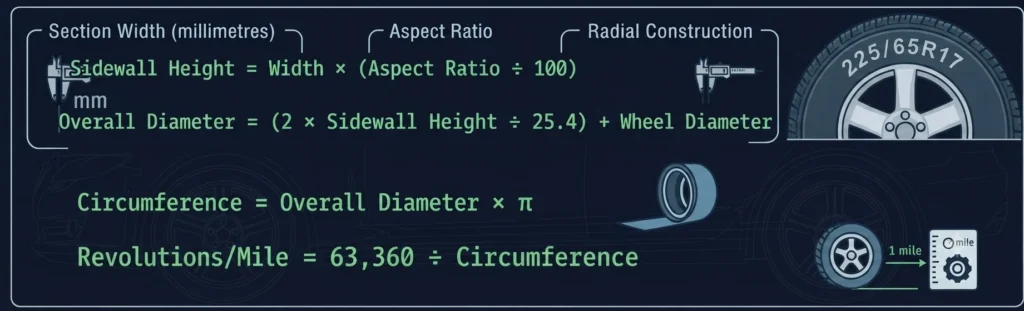
These are mathematical estimates based on the nominal size code. Actual measured dimensions can vary slightly between manufacturers and tire models — a 225/50R17 from one brand may measure 1–3 mm differently than another. Use the calculator for comparison purposes and confirm exact specifications with the tire manufacturer’s datasheet when precision matters.
Tire Fitment: Will They Fit Your Vehicle?
Comparing tire dimensions is essential, but matching diameters alone does not guarantee safe fitment. A tire that is mathematically similar in diameter may still rub against suspension components, fender liners, or brake callipers depending on its width, the wheel’s offset, and your vehicle’s specific clearances.
⚠️ Important: These dimensions are mathematical estimates. Confirm wheel compatibility, vehicle clearance, load rating, speed rating, and manufacturer requirements before installation. A qualified tire professional should verify uncertain combinations.
Most vehicle manufacturers recommend keeping overall tire diameter within 3% of the original equipment size. Going beyond this range can affect ABS calibration, traction control, stability systems, and transmission shift points on some vehicles. Always check your owner’s manual and consult a fitment specialist for non-standard combinations.
How Tire Size Affects Your Speedometer
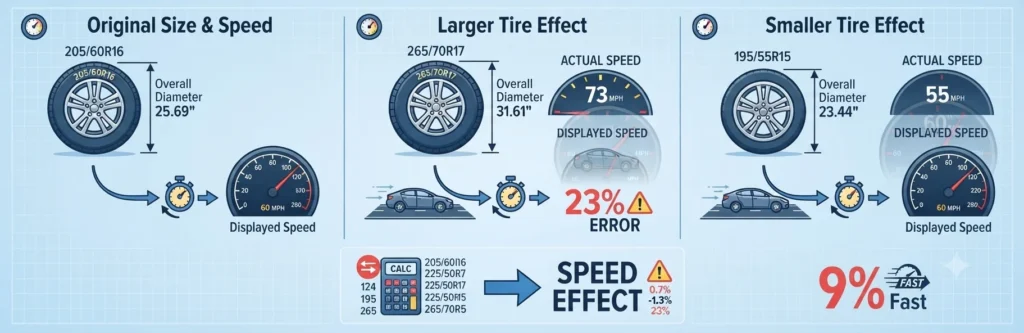
Your vehicle’s speedometer calculates speed based on wheel rotations per unit of time, calibrated to the original tire size. When you install a larger tire (greater overall diameter), each rotation covers more ground — your actual speed is higher than displayed. A smaller tire means your speedometer reads fast (you’re going slower than shown).
For example, switching from a 205/60R16 (overall diameter 25.69″) to a 225/50R17 (overall diameter 25.86″) creates only a 0.7% difference — negligible for most purposes. But jumping to a 265/70R17 (31.61″) would cause a 23% error, making your speedometer dangerously inaccurate. The calculator above shows the exact speedometer effect for any combination you enter.
“Will They Fit?” — Fitment Checklist Before You Buy
Before purchasing a different tire size, verify each of the following. A similar calculated diameter is necessary but not sufficient for safe installation:
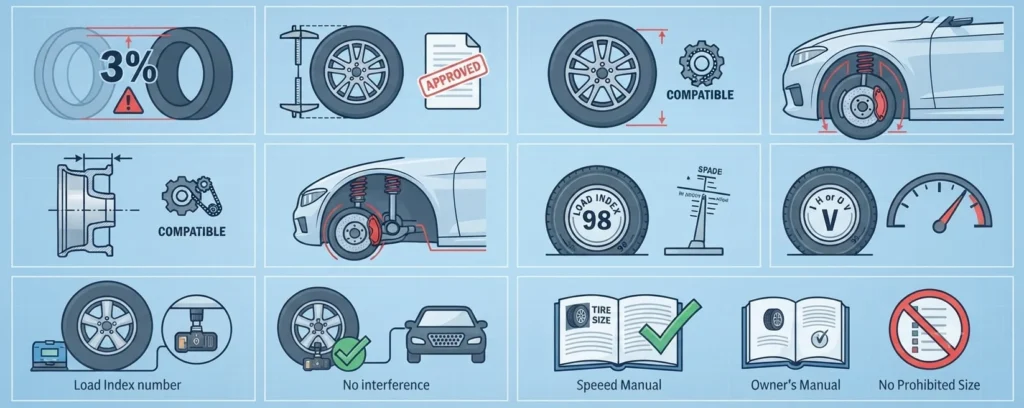
- ✓ Overall diameter within 3% of original equipment size
- ✓ Wheel width falls within the tire manufacturer’s approved range
- ✓ Wheel offset and backspacing are compatible with your vehicle
- ✓ Adequate clearance from suspension, brakes, and fender at full lock and full compression
- ✓ Load index meets or exceeds the vehicle manufacturer’s minimum requirement
- ✓ Speed rating meets or exceeds the vehicle manufacturer’s minimum requirement
- ✓ No interference with TPMS sensors or valve stems
- ✓ Vehicle manufacturer does not prohibit the proposed size in the owner’s manual
Common Tire Size Chart — Quick Reference
This tire size chart shows calculated dimensions for popular sizes. Use it as a quick reference when comparing different tire sizes for your vehicle:
| Tire Size | Diameter (in) | Width (in) | Sidewall (in) | Circumference (in) |
|---|---|---|---|---|
| 195/65R15 | 25.0 | 7.7 | 5.0 | 78.5 |
| 205/55R16 | 24.9 | 8.1 | 4.4 | 78.1 |
| 215/60R16 | 26.2 | 8.5 | 5.1 | 82.1 |
| 225/50R17 | 25.9 | 8.9 | 4.4 | 81.4 |
| 235/55R18 | 28.2 | 9.3 | 5.1 | 88.5 |
| 265/70R17 | 31.6 | 10.4 | 7.3 | 99.2 |
Frequently Asked Questions
How much tire diameter difference is acceptable?
Most manufacturers recommend staying within 3% of the original tire diameter. This keeps speedometer error minimal and avoids interference with ABS, traction control, and stability systems. Some vehicles are more sensitive than others — always check your owner’s manual.
Can I put a wider tire on my current wheels?
Possibly, but only within limits. Each tire size has an approved wheel width range (e.g., a 225mm tire typically fits 7–8.5 inch wheels). Going wider than the approved range causes poor handling, uneven wear, and potential bead unseating. Check the tire manufacturer’s fitment guide for approved wheel widths.
What’s the difference between wheel size and tire size?
Wheel size (e.g., 17 inches) is the diameter of the metal rim alone. Tire size (e.g., 225/50R17) describes the rubber tire that mounts onto that wheel. The overall diameter of the assembled wheel-and-tire combination is larger than the wheel alone because it includes two sidewalls of rubber.
Will changing tire size void my warranty?
Running non-approved tire sizes can void warranty coverage for related components (suspension, drivetrain, ABS) if the manufacturer determines the modification caused the failure. Staying within the sizes listed on your door placard or owner’s manual keeps your warranty intact.
How do I calculate revolutions per mile?
Divide 63,360 (inches in a mile) by the tire’s circumference in inches. Circumference equals overall diameter multiplied by π (3.14159). A smaller diameter tire has more revolutions per mile; a larger tire has fewer. This directly affects speedometer accuracy and odometer readings.
Do tire calculators account for tread wear?
No. Tire size calculators use the nominal new-tire dimensions from the size code. As tread wears, the overall diameter decreases slightly (typically 3–5mm over the tire’s life). This means a worn tire has a slightly smaller effective diameter than the calculated value.
Conclusion: Use the Tire Size Calculator Before You Buy
A tire size calculator is an essential first step when comparing different tire sizes for your vehicle. It reveals exactly how width, sidewall height, overall diameter, and speedometer readings will change — information you need before spending money on tires that might not work.
Remember: calculated dimensions are estimates for comparison. Always verify load index, speed rating, wheel width compatibility, and physical clearance before installation. When in doubt, consult a qualified tire and wheel fitment specialist who can assess your specific vehicle.