
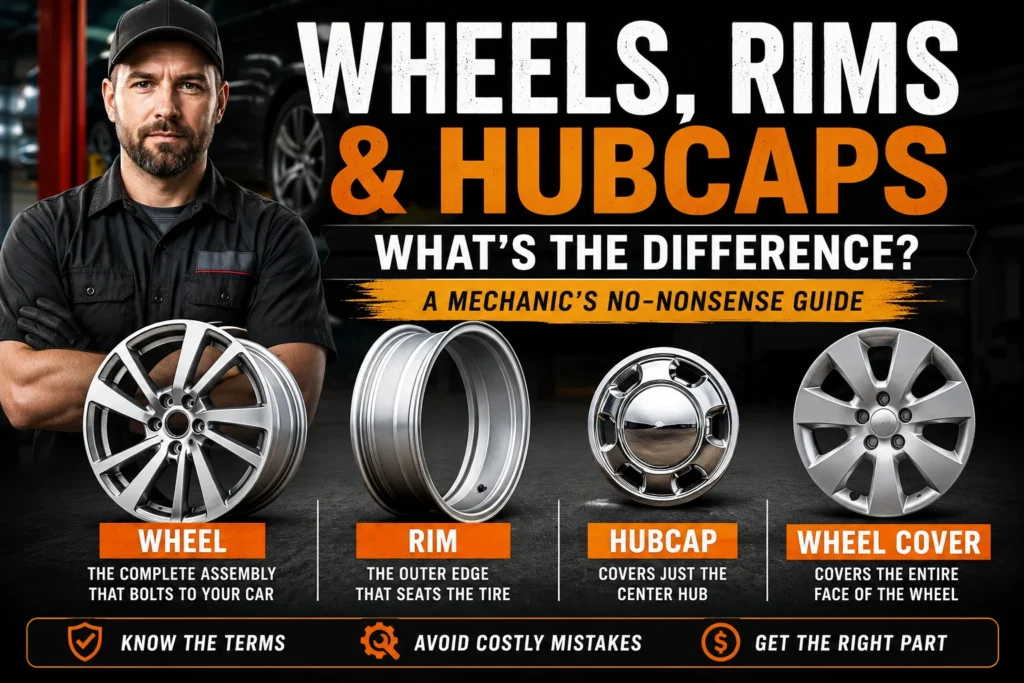
A mechanic’s no-nonsense breakdown of the terms everyone confuses at the tire shop.
Walk into any tire shop and you’ll hear customers use “rims,” “wheels,” and “hubcaps” interchangeably. After 17 years behind the counter and under the lift, I can tell you these terms mean very different things — and mixing them up can cost you money.
This guide breaks down exactly what each part is, how they differ, and which one you actually need when something goes wrong. No jargon walls, just straight answers from someone who’s done this work every day.
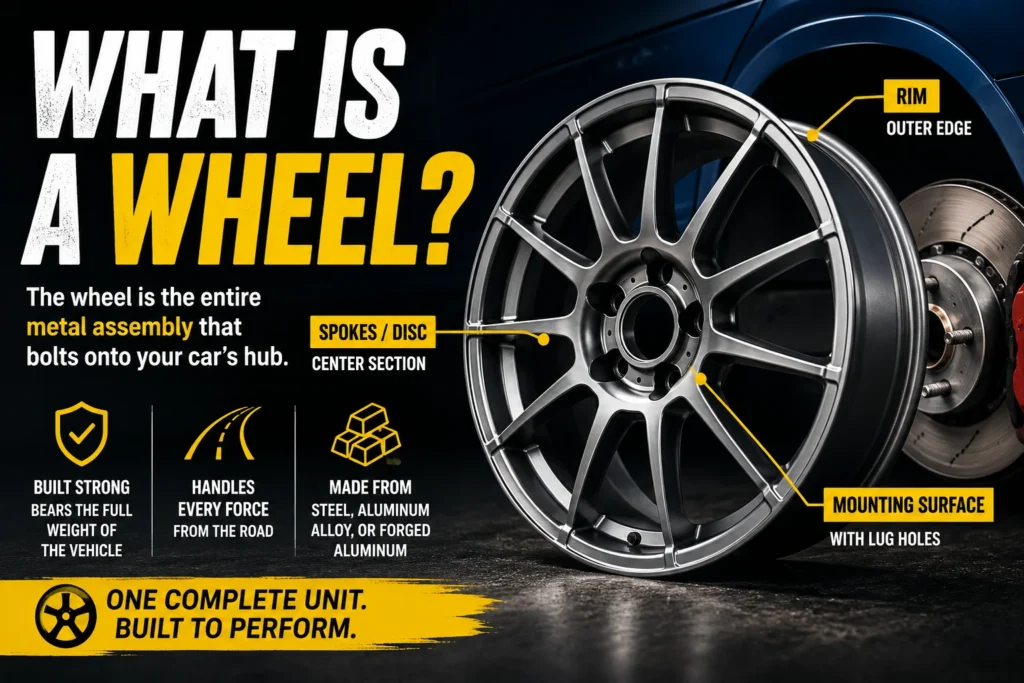
What Is a Wheel?
The wheel is the entire metal assembly that bolts onto your car’s hub. It includes the rim (outer edge), the disc or spokes (center section), and the mounting surface with lug holes. When you buy “new wheels,” you’re buying this complete unit. Wheels are structural — they bear the full weight of the vehicle and handle all road forces. They’re made from steel, aluminum alloy, or forged aluminum depending on price and performance needs.
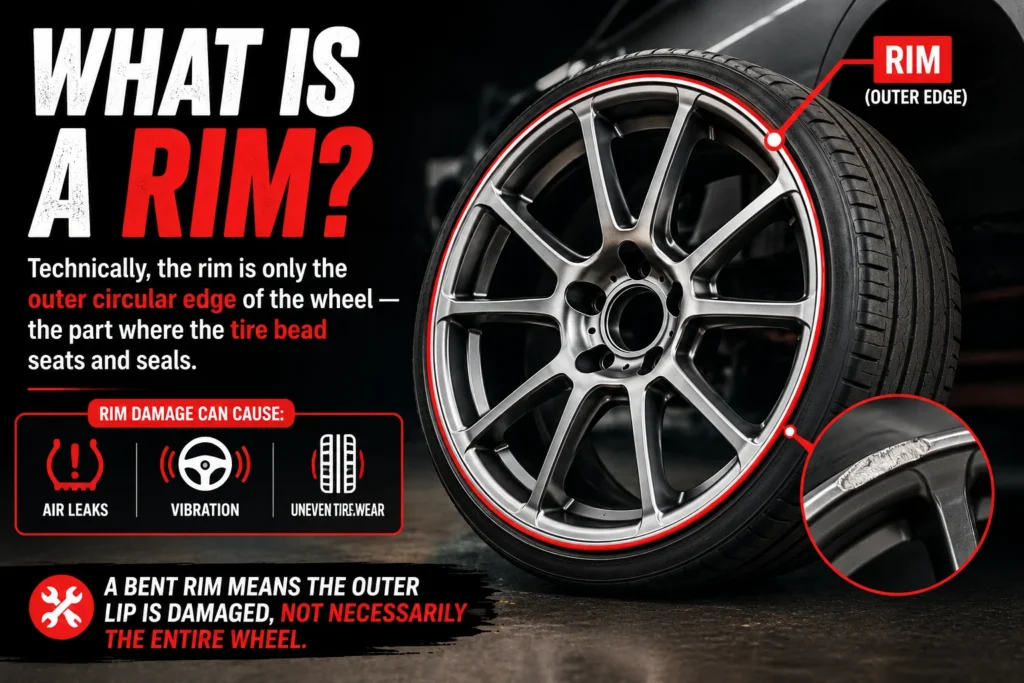
What Is a Rim?
Technically, the rim is only the outer circular edge of the wheel — the part where the tire bead seats and seals. In everyday language, people say “rims” when they mean the whole wheel (especially aftermarket alloy wheels). In the shop, we know the difference matters: a bent rim means the outer lip is damaged, not necessarily the entire wheel. Rim damage causes air leaks, vibration, and uneven tire wear.Aftermarket alloy wheels — often called “rims” in casual conversation.
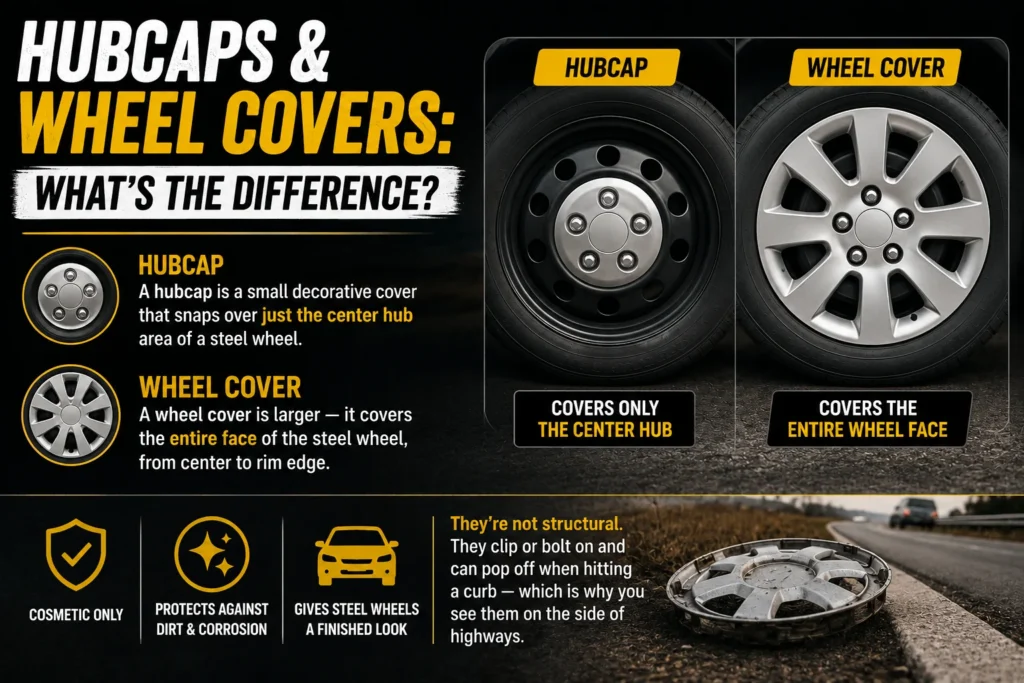
Hubcaps & Wheel Covers: What’s the Difference?
A hubcap is a small decorative cover that snaps over just the center hub area of a steel wheel. A wheel cover is larger — it covers the entire face of the steel wheel, from center to rim edge. Both are cosmetic. They protect against dirt and give plain steel wheels a finished look, but they’re not structural.
Modern cars increasingly use alloy wheels with no hubcaps needed. But if you drive a base-model sedan or fleet vehicle with steel wheels, you likely have full wheel covers. They clip or bolt on and can pop off when hitting a curb — which is why you see them on the side of highways.
A chrome hubcap covering the center hub area of a steel wheel.
Quick Comparison Table
Here’s how these parts stack up side by side:
| Feature | Wheel | Rim | Hubcap / Wheel Cover |
|---|---|---|---|
| Function | Structural — supports vehicle | Part of wheel — seats the tire | Cosmetic — covers steel wheel |
| Material | Steel or aluminum alloy | Same as wheel (it’s the outer edge) | Plastic, chrome-plated steel |
| Replaceable separately? | Yes — sold as complete unit | No — part of the wheel | Yes — snaps or bolts on/off |
Key Takeaway
“Wheel” is the whole assembly. “Rim” is technically just the outer edge (but people use it to mean the whole wheel). “Hubcap” covers the center; “wheel cover” covers the full face. If you need to buy a replacement, knowing the correct term saves you time and money at the shop.
Frequently Asked Questions
Are hubcaps and wheel covers the same thing?
Not exactly. A hubcap covers only the center hub, while a wheel cover spans the entire face of the wheel. In practice, many people use both terms interchangeably, but full wheel covers are more common on modern vehicles.
Can I replace hubcaps with alloy wheels?
Yes. You’d remove the steel wheel + hubcap entirely and bolt on an alloy wheel in its place. Make sure the bolt pattern, offset, and diameter match your vehicle specs. A tire shop can confirm fitment.
Why do people call wheels “rims”?
It’s casual slang that stuck. When aftermarket alloy wheels became popular in car culture, people started calling them “rims” because the flashy outer lip was the most visible feature. Technically incorrect, but universally understood.