
Learn how to read tire sidewall numbers, understand wheel sizes like 15×7 and 16×7, and choose the right rims and tires for your vehicle — from black rims to chrome rims.
🔍 Quick Answer: What Does Tire Size Mean?
A tire size like P205/55R16 means: 205mm wide, sidewall height is 55% of width, radial construction, fits a 16-inch rim. A wheel size like 16×7 means 16-inch diameter and 7-inch width. The tire’s rim-diameter number must exactly match the wheel diameter for safe fitment.
What Does Tire Size Mean?
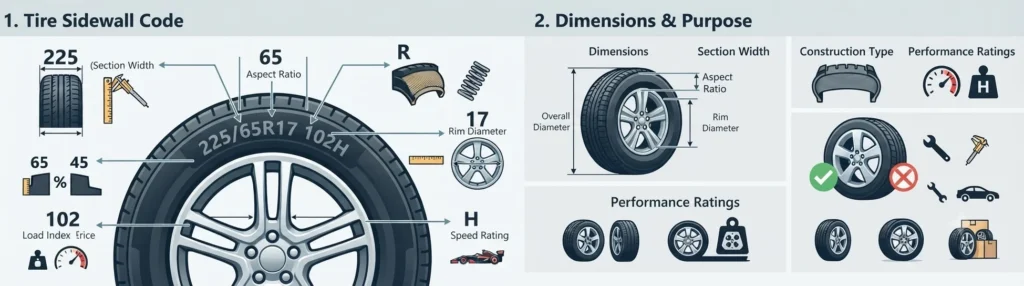
Tire size meaning refers to the standardized code printed on every tire sidewall that describes the tire’s dimensions, construction type, and performance ratings. Understanding tire size meaning is essential before purchasing replacement tires, upgrading to larger car wheels, or shopping for rims and tires packages online.
The tire size code tells you the section width, aspect ratio (sidewall height), construction type, rim diameter, load capacity, and speed rating. Combined with wheel size specifications, these numbers determine whether a particular tire and rim combination will fit your vehicle safely.
Where to Find Your Correct Tire Size
Before shopping for tires or car rims, locate your vehicle’s recommended tire size in one of these places:
- Driver-side door jamb placard — the sticker lists the original equipment tire size, recommended inflation pressure, and load rating
- Owner’s manual — typically in the specifications or maintenance section
- Current tire sidewall — if the installed tires match original equipment specifications
Always cross-reference the door placard with your current tires. Previous owners may have installed a different size. The placard reflects the manufacturer’s tested and approved tire dimensions for your specific vehicle.
How to Read Tire Size Numbers
A typical metric tire size reads P205/55R16 91H. Each segment conveys specific dimensions of tire sizes:
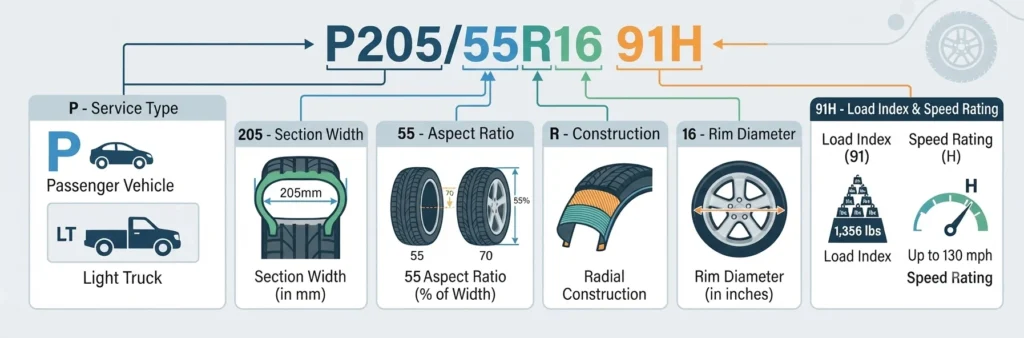
- P — Passenger vehicle tire (LT = Light Truck)
- 205 — Section width in millimeters (the tire’s width from sidewall to sidewall when properly mounted)
- 55 — Aspect ratio: sidewall height is 55% of the section width (205 × 0.55 = 112.75mm sidewall height)
- R — Radial construction (virtually all modern passenger tires are radial)
- 16 — Rim diameter in inches: this tire fits a 16-inch wheel (the tire rim must be exactly 16 inches)
- 91H — Load index (91 = 1,356 lbs per tire) and speed rating (H = up to 130 mph)
Tire Size Example: P205/55R16 91H Breakdown
Let’s calculate the overall tire diameter for a P205/55R16 — this is your tire diameter guide in action:
Section width: 205mm Aspect ratio: 55% → Sidewall height: 205 × 0.55 = 112.75mm Convert to inches: 112.75 ÷ 25.4 = 4.44 inches Rim diameter: 16 inches Overall diameter: 16 + (4.44 × 2) = 24.88 inches ≈ 24.9″
This calculation shows why a 16-inch tire doesn’t have an overall diameter of 16 inches — that number refers only to the wheel diameter at the bead seat. The total tire diameter includes both sidewalls plus the rim diameter. This distinction is critical when comparing tire sizes or plus-sizing to larger car wheels.
What Does 15×7 Mean on a Wheel?
Wheel sizes follow the format Diameter × Width. A 15×7 wheel means 15-inch diameter and 7-inch width measured between the inner bead seats. Similarly, a 16×7 wheel is 16 inches in diameter and 7 inches wide. Discount Tire explains that wheel fitment depends on diameter, width, bolt pattern, and offset.
A full wheel specification like 16×7 4-100 +40 tells you: 16-inch diameter, 7-inch width, 4-lug bolt pattern on a 100mm circle, and +40mm offset. All four measurements must match your vehicle for safe installation.
The wheel width determines which tire widths can be safely mounted. A 7-inch-wide wheel typically accommodates tire section widths from 195mm to 225mm, depending on the specific tire model. Always check the tire manufacturer’s approved rim width range.
Is 7×16 the Same as 16×7?
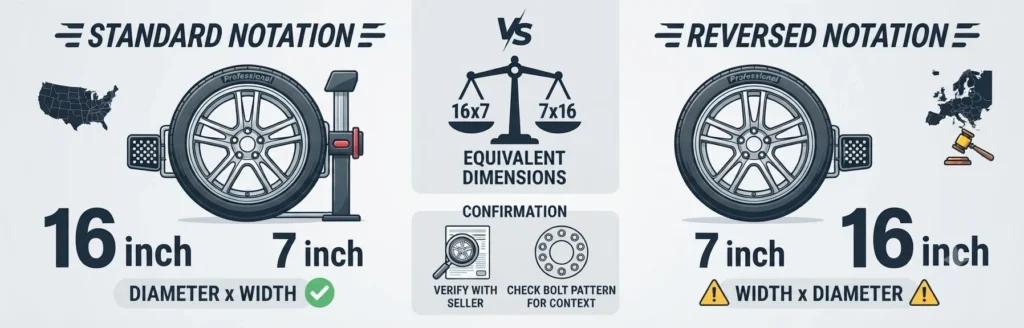
The standard convention lists diameter first: 16×7 means a 16-inch diameter, 7-inch wide wheel. However, some sellers — particularly in European markets or auction listings — reverse the order and write 7×16 (width × diameter). Both notations describe the same wheel dimensions.
To avoid confusion, always verify with the seller or manufacturer which number represents diameter and which represents width. If a listing says 7×16, confirm whether it means 7-inch width on a 16-inch wheel (most likely) or something else entirely. When in doubt, look for additional specs like bolt pattern — that context usually clarifies the format.
What Does a 17-Inch Rim Mean?
A 17-inch rim (or 17 inch rims) means the wheel has a 17-inch diameter at the bead seat where the tire mounts. This is one of the most popular rim sizes for sedans, crossovers, and SUVs. Any tire mounted on 17 inch rims must have ‘R17’ in its size code.
You cannot mount a tire marked R16 on a 17-inch wheel, or vice versa. The rim diameter and tire bead diameter must match exactly. Attempting to force a mismatch risks catastrophic tire failure, bead separation, and loss of vehicle control.
Tire Diameter vs. Rim Diameter: Key Difference
This is one of the most common points of confusion in tire size meaning. The rim diameter (e.g., 16 inches) is only one component of the tire’s total outside diameter. The overall tire diameter includes the rim plus both sidewalls.
For example, a 205/55R16 tire has an overall diameter of approximately 24.9 inches — nearly 9 inches more than the 16-inch rim it sits on. The extra height comes from the two sidewalls (each about 4.4 inches tall).
When upgrading to larger rims (plus-sizing), you must reduce the sidewall height to maintain roughly the same overall tire diameter. This keeps your speedometer accurate, preserves ABS calibration, and prevents fender rubbing. A tire diameter guide or online calculator helps you find equivalent sizes.
Bolt Pattern & Wheel Offset Explained
Beyond diameter and width, two additional measurements determine whether a wheel fits your vehicle:
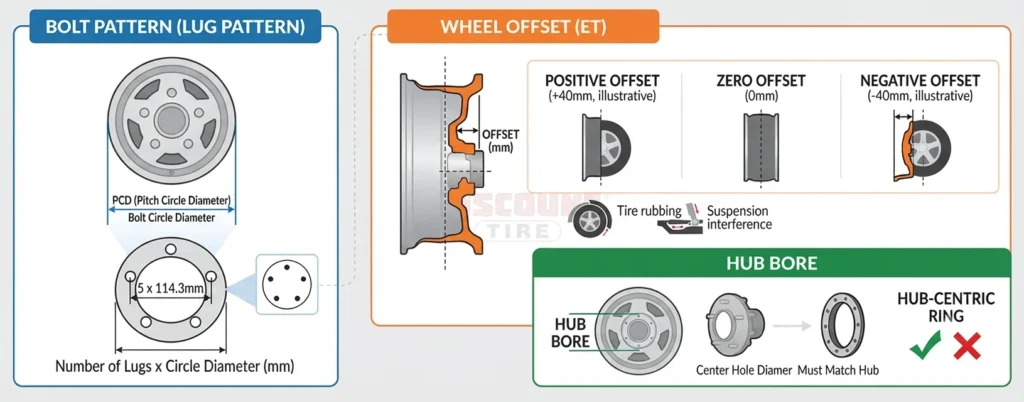
- Bolt pattern (lug pattern) — The number of lug holes and the diameter of the circle they form. Example: 5-114.3 means 5 lugs on a 114.3mm circle. This must match your vehicle exactly — there is no tolerance.
- Offset — The distance in millimeters from the wheel’s centerline to the mounting surface. Positive offset (+40) means the mounting face is toward the outside; negative offset means it’s toward the inside. Incorrect offset causes tire rubbing or suspension interference.
- Hub bore — The center hole diameter. It must equal or exceed your vehicle’s hub diameter. Wheels with larger hub bores require hub-centric rings for vibration-free operation.
When shopping for wheels for sale online, always filter by your exact bolt pattern first. A wheel that looks perfect but has the wrong bolt pattern simply cannot be installed on your vehicle.
How to Match Tires and Rims Correctly
Follow these rules when pairing rims and tires for safe fitment:
- The tire’s rim-diameter number (R15, R16, R17) must exactly match the wheel diameter — no exceptions
- The tire section width must fall within the wheel’s approved width range (check manufacturer spec)
- Maintain overall tire diameter within 3% of original to preserve speedometer accuracy and ABS function
- Never go below the vehicle manufacturer’s minimum load index or speed rating
- Verify brake caliper clearance — larger rims don’t always clear performance brake packages
Tire Size Chart: Common Sizes & Dimensions
This tire size chart shows popular tire sizes, their matching rim diameter, approximate overall diameter, and recommended rim widths:
| Tire Size | Rim Diameter | Overall Diameter | Recommended Rim Width |
|---|---|---|---|
| 195/65R15 | 15″ | 25.0″ | 6.0–7.0″ |
| 205/55R16 | 16″ | 24.9″ | 6.5–7.5″ |
| 215/50R17 | 17″ | 25.5″ | 7.0–7.5″ |
| 225/45R17 | 17″ | 25.0″ | 7.0–8.0″ |
| 235/55R18 | 18″ | 28.2″ | 7.0–8.5″ |
| 265/70R17 | 17″ | 31.6″ | 7.5–9.0″ |
Note: Actual tire measurements vary slightly by manufacturer, model, inflation pressure, and the rim width on which the tire is mounted. Always consult the specific tire’s data sheet for precise dimensions of tire sizes.
How Larger Rims Affect Ride & Handling
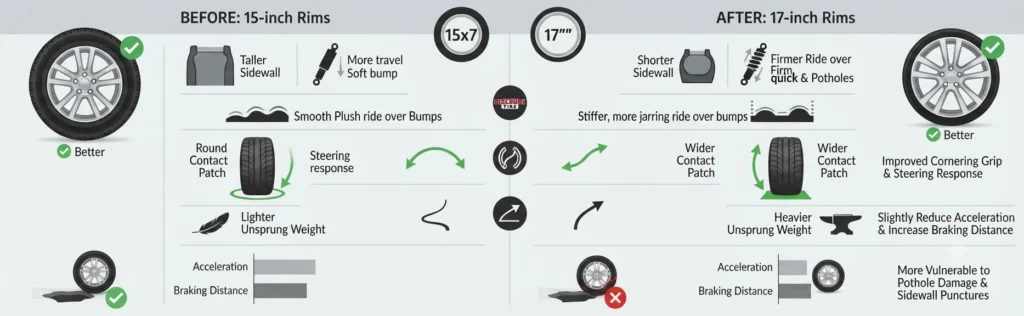
Upgrading from 15×7 wheels to 17 inch rims (plus-sizing) changes your driving experience:
- Shorter sidewalls mean less cushioning — expect a firmer ride over bumps and potholes
- Wider contact patches and stiffer sidewalls can improve cornering grip and steering response
- Larger rims are heavier (unsprung weight) — this can slightly reduce acceleration and increase braking distance
- Low-profile tires are more vulnerable to pothole damage and sidewall punctures
Black Rims vs. Chrome Rims: Which Should You Choose?
When shopping for car wheels, black rims and chrome rims are the two most popular finishes. Both are available across all common sizes — 15×7, 16×7, 17-inch, and larger. The choice is primarily aesthetic, but maintenance and durability differ:
| Feature | Black Rims | Chrome Rims |
|---|---|---|
| Maintenance | Low — hides brake dust | High — shows every spot |
| Winter Use | Excellent — resists road salt | Poor — salt causes pitting |
| Cost | $100–$300 per wheel | $150–$500 per wheel |
| Style | Modern, aggressive | Classic, luxurious |
For daily drivers and winter vehicles, black rims are the practical choice. For show cars and fair-weather cruisers, chrome rims deliver an unmistakable shine. Remember: finish is secondary to safe fitment — always confirm diameter, width, bolt pattern, and offset before choosing a style.
How to Buy Rims and Tires Safely Online
Whether you’re buying car rims, a rims and tires package, or just replacement tires, follow these steps to avoid costly mistakes:
- Know your exact year, make, model, and trim — these determine bolt pattern, offset range, and hub bore
- Use the retailer’s fitment tool — reputable sellers (Discount Tire, Tire Rack, etc.) filter wheels for sale by vehicle compatibility
- Verify that the TPMS sensors are compatible or included — newer vehicles require tire pressure monitoring
- Ask about lug nuts — aftermarket wheels often require different seat types (conical vs. ball seat)
- Buy rims and tires as a mounted-and-balanced package when possible — this saves installation cost and ensures compatibility
Common Tire and Wheel Sizing Mistakes
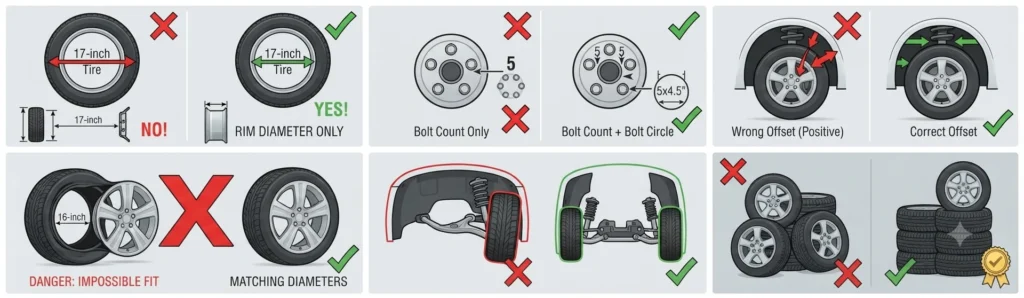
- Assuming a “17-inch tire” has a 17-inch overall diameter — the 17 is rim diameter only, not total tire height
- Buying wheels based on bolt count alone — both the number of lugs AND the bolt circle diameter must match
- Ignoring offset — a wheel that bolts on can still rub fenders or hit suspension if offset is wrong
- Mounting a 16-inch tire on a 17-inch rim (or any diameter mismatch) — this is physically impossible and dangerous to attempt
- Choosing wider tires without checking fender and suspension clearance at full steering lock
Frequently Asked Questions: Tire Size Meaning
What do the numbers on a tire mean?
The numbers represent section width (mm), aspect ratio (sidewall height as % of width), construction type (R = radial), rim diameter (inches), load index, and speed rating. For example, 205/55R16 91H means 205mm wide, 55% aspect ratio, radial, fits 16-inch rims, 1,356 lb load capacity, rated to 130 mph.
Can I put any tire on a 7-inch wide rim?
No. A 7-inch rim typically accepts tire widths from 195mm to 225mm, but the exact range depends on the tire model. Always check the tire manufacturer’s approved rim width range in their specifications. Mounting a tire that’s too narrow or too wide for the rim creates unsafe bead seating.
Is 7×16 the same as 16×7?
Usually yes — both describe a wheel that is 16 inches in diameter and 7 inches wide. The standard convention lists diameter first (16×7), but some sellers reverse the order (7×16). Always verify with the manufacturer or seller which number is diameter and which is width.
Can I install 17-inch rims on a car that came with 15-inch wheels?
Possibly, but you must ensure the bolt pattern matches, the offset is within your vehicle’s safe range, and the brake calipers clear the new rim diameter. You’ll also need lower-profile tires to maintain approximately the same overall tire diameter. Consult a fitment specialist or use an online fitment tool before purchasing.
Does changing tire size affect my speedometer?
Yes. Your speedometer is calibrated to the original tire’s circumference. If you change overall tire diameter by more than 3%, your speedometer will read inaccurately, and ABS/traction control systems may malfunction. Keep overall diameter within 3% of stock when changing tire sizes.
Are black rims harder to maintain than chrome?
No — black rims are actually easier to maintain. They hide brake dust and minor scratches