Noticed one side of your tire wearing faster than the other? This technician-reviewed guide helps you identify the wear pattern, understand the root cause, and decide whether you need alignment, rotation, suspension repair, or new tires.
Uneven tire wear happens when different areas of the tire tread wear at different rates — often caused by improper inflation, wheel misalignment, skipped rotations, or worn suspension components.
This guide walks you through how to identify what your tire wear pattern means, whether the problem is with your tires or your vehicle, and exactly what steps to take — so you spend money only on what actually needs fixing.
What Is Uneven Tire Wear?
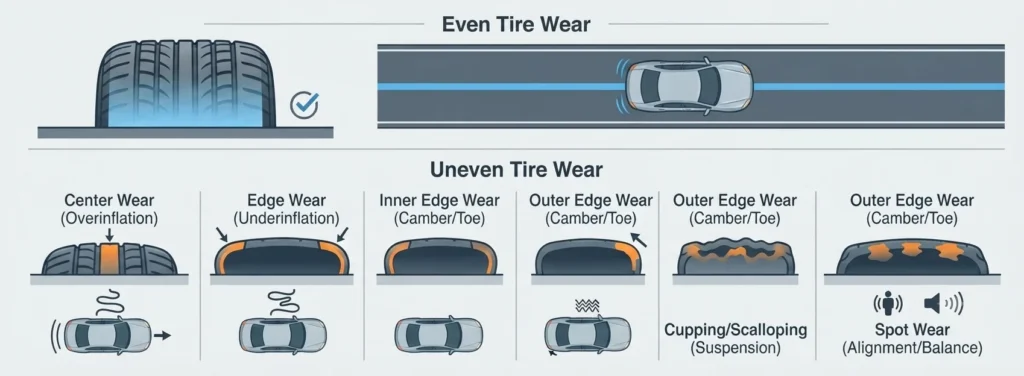
When tires wear evenly, the entire tread surface contacts the road uniformly, distributing load and friction equally across the width of the tire. This produces predictable handling, maximum grip, and the longest possible tire life.
Uneven tire wear means certain areas of the tread are wearing faster than others. This creates an imbalance in road contact, leading to reduced traction, increased stopping distances, road noise, vibration, and premature tire failure.
The pattern of the uneven wear is the key diagnostic clue. Different patterns point to different root causes — and understanding which pattern you have is the first step toward fixing the problem instead of just replacing tires that will wear unevenly again.
Common Tire Wear Patterns and What They Mean
Use this table to match what you see on your tires to the most likely cause. A tire technician can confirm the diagnosis with precise measurements.
| Wear Pattern | Most Likely Cause |
|---|---|
| Inside edge wear | Excessive negative camber or worn suspension components |
| Outside edge wear | Underinflation or positive camber misalignment |
| Center tread wear | Overinflation — too much air pressure |
| Both shoulders worn | Underinflation — not enough air pressure |
| Cupping / scalloping | Worn shocks/struts, wheel imbalance, or bent components |
| Feathering (diagonal wear) | Incorrect toe alignment setting |
What Causes Uneven Tire Wear?
Uneven wear is a symptom, not a standalone problem. These are the most common root causes — addressing them prevents the same wear pattern from returning on new tires.
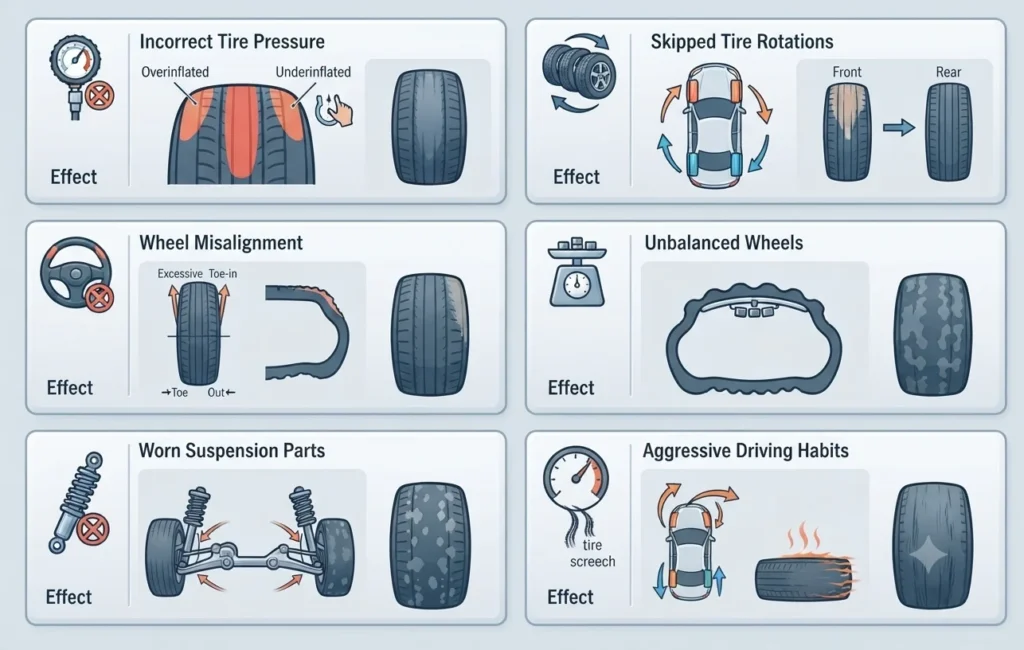
Incorrect Tire Pressure
Overinflated tires wear in the center. Underinflated tires wear on both shoulders. Tire pressure changes approximately 1 PSI for every 10°F temperature shift — check monthly and before long trips.
Skipped Tire Rotations
Front tires wear differently from rear tires due to steering and weight distribution. Without regular rotation (every 5,000–7,500 miles), one pair wears significantly faster than the other.
Wheel Misalignment
Misaligned camber causes one-sided edge wear. Incorrect toe produces feathering. Hitting a pothole or curb can knock alignment out of spec. Signs include the vehicle pulling to one side.
Unbalanced Wheels
Imbalanced wheels create vibration that causes cupping or scalloping — irregular dips around the tread. Balancing adds small weights to the rim to distribute mass evenly.
Worn Suspension Parts
Worn shocks, struts, ball joints, or control arm bushings allow the wheel to bounce or shift during driving. This creates cupping patterns and accelerates uneven wear across the tread.
Aggressive Driving Habits
Hard braking, fast cornering, and rapid acceleration scrub tread unevenly. Spirited driving wears the outer shoulders faster and shortens overall tire life significantly.
Can Uneven Tire Wear Be Fixed?
It depends on the severity. In many cases, fixing the root cause stops further damage and extends your remaining tire life. Severely worn tires need replacement.
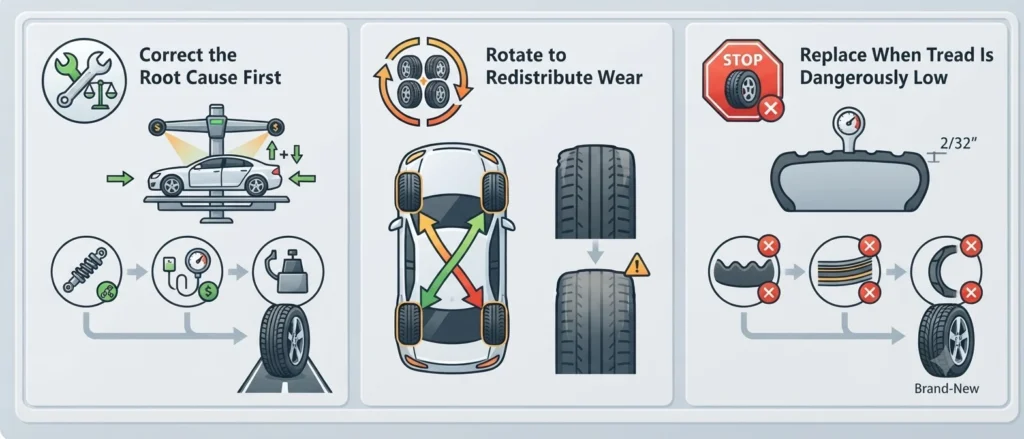
Correct the Root Cause First
Get a wheel alignment, fix tire pressure, replace worn suspension parts, or rebalance wheels. If you install new tires without addressing the cause, the same uneven wear will return.
Rotate to Redistribute Wear
For early-stage uneven wear, a tire rotation can help redistribute the pattern across all four tires. This buys time while you address the underlying issue — but it won’t reverse existing damage.
Replace When Tread Is Dangerously Low
If any portion of the tread is at or below 2/32″, the tire is legally worn out and cannot be repaired. Tires with significant cupping, belt separation, or sidewall damage must also be replaced immediately.
How to Prevent Uneven Tire Wear
Consistent maintenance is the most effective way to get maximum mileage from your tires and avoid premature replacement costs.
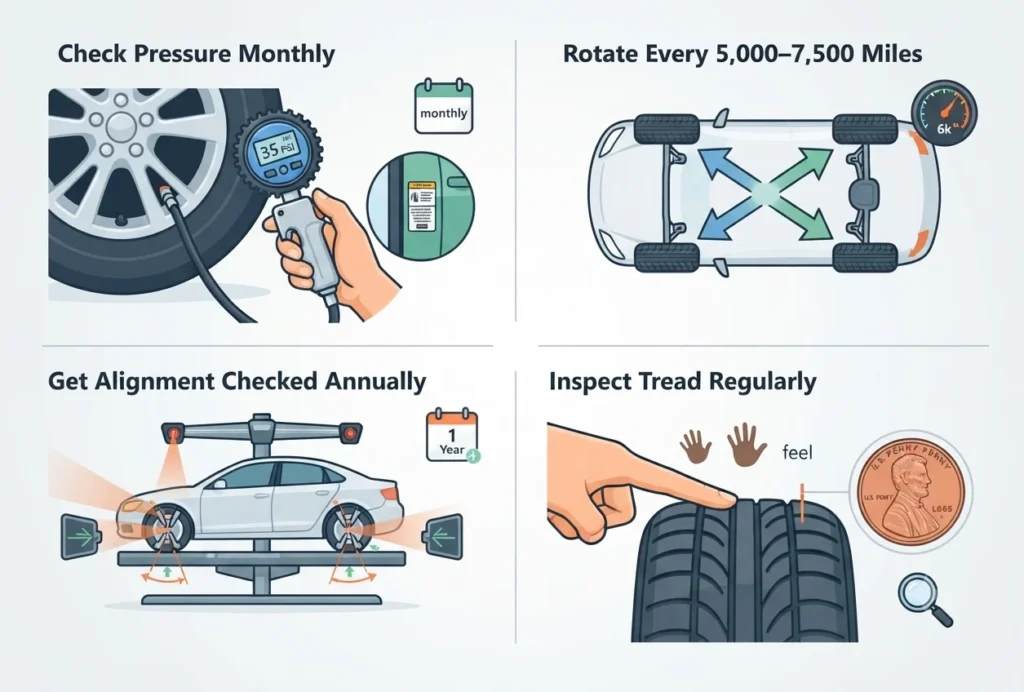
Check Pressure Monthly
Use a quality gauge to check all four tires when cold. Inflate to the pressure on the driver’s door placard — not the maximum listed on the tire sidewall.
Rotate Every 5,000–7,500 Miles
Follow the rotation pattern recommended in your owner’s manual. Many shops include free rotation with tire purchases. Do it at every oil change as an easy reminder.
Get Alignment Checked Annually
Schedule an alignment check at least once a year — and immediately after hitting a major pothole or curb. Proper camber, caster, and toe keep tread contact uniform.
Inspect Tread Regularly
Run your hand across the tread every month to feel for cupping or feathering. Use the penny test in multiple spots — inner, center, and outer — to catch uneven depth early.
Replace Worn Suspension Parts
If your vehicle has over 75,000 miles, have shocks, struts, and bushings inspected. Worn components cause bouncing that accelerates cupping and patchy wear patterns.
Is Your Uneven Tire Wear Dangerous?
If you notice uneven wear combined with vibration, pulling, or tread below 4/32″, have a certified tire technician inspect your vehicle before driving further. Most tire shops offer free inspections — and a professional opinion costs far less than a blowout at highway speed.
Frequently Asked Questions About Uneven Tire Wear
Is uneven tire wear dangerous?
Yes, it can be. Uneven wear reduces traction, increases stopping distances, and raises the risk of hydroplaning or a blowout. If any section of tread is below 2/32″ or you notice cupping and vibration, have the tires inspected immediately.
Can a wheel alignment fix uneven tire wear?
An alignment corrects the vehicle geometry that caused the wear — but it cannot reverse tread already lost. After alignment, a tire rotation may help even out mild wear. Severely worn tires will still need replacement.
How do I check for uneven tire wear at home?
Run your hand across the tread from inside to outside edge. Feel for high and low spots (cupping) or sharp edges (feathering). Use a penny in multiple grooves — if Lincoln’s head is visible anywhere, that section is critically worn.
Do I need to replace all 4 tires if only one has uneven wear?
Not necessarily. On 2WD vehicles, you may replace just the affected tire if the others have matching tread depth. On AWD/4WD vehicles, mismatched tread can damage the drivetrain — most manufacturers require all four be within 2/32″ of each other.
How much does a wheel alignment cost?
A standard four-wheel alignment typically costs $75–$150 at most tire and auto shops. Given that a single tire costs $100–$200+, an alignment is far cheaper than replacing tires prematurely due to ongoing misalignment wear.
What does tire cupping look and feel like?
Cupping appears as a series of scalloped dips or high-low spots around the circumference of the tread. You’ll often feel it as a rhythmic rumbling or helicopter-like noise at highway speeds. It’s usually caused by worn shocks, struts, or wheel imbalance.