
Found milky oil, a bubbling coolant reservoir, or oil in the antifreeze tank? Here’s a calm, plain-English guide to the causes, the risks, and your safest next move.
The short answer: finding coolant in oil almost always means two fluids that should stay completely separate are mixing inside your engine. It’s usually serious — often a blown head gasket, a cracked block, or a failed oil cooler — so it’s worth understanding before you drive anywhere.
If you searched “coolant in oil” after spotting milky oil, brown sludge under the oil cap, oil in the coolant reservoir, or coolant dropping with no visible leak, you want clear answers fast. This guide explains what coolant in oil means, the difference between oil in coolant and coolant in oil, the most common causes, the warning signs to watch for, whether your car is safe to drive, and exactly what to check before you head to a mechanic.
What Does Coolant in Oil Actually Mean?
Oil lubricates your engine’s moving parts; coolant (antifreeze) keeps it from overheating. They run in separate sealed passages and are never meant to touch. When they mix, it points to a breach somewhere inside the engine — and that’s why it matters.
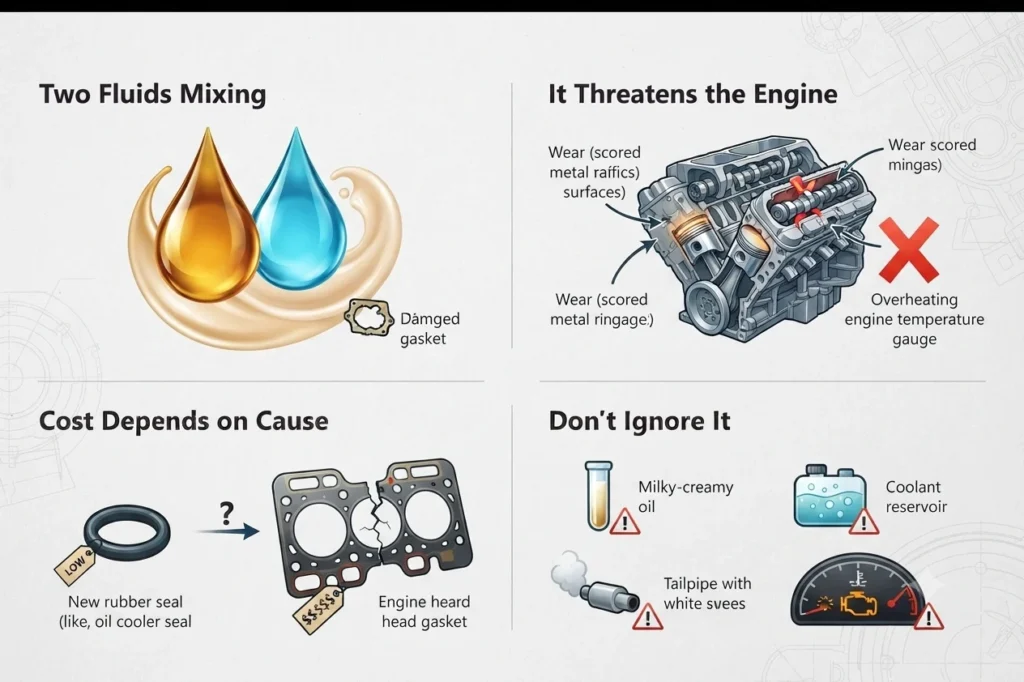
Two Fluids Mixing
Coolant leaking into the oil turns it milky and creamy. It’s a clear sign a seal or gasket that keeps the two apart has failed somewhere inside the engine.
It Threatens the Engine
Contaminated oil can’t lubricate properly, so metal parts wear fast and overheat. Left unchecked, this can lead to major, costly engine damage.
Cost Depends on Cause
A simple oil-cooler seal is far cheaper than a blown head gasket or cracked block. Catching it early gives you the best shot at the lower-cost repair.
Don’t Ignore It
Milky oil, a bubbling coolant reservoir, white exhaust smoke or overheating are all urgent signs. The longer you drive, the worse the damage gets.
Oil in Coolant vs Coolant in Oil: What’s the Difference?
People search for this both ways, and the direction matters. Coolant in oil means antifreeze is getting into the oil system — you’ll see milky, creamy, or coffee-colored oil on the dipstick or under the oil cap. Oil in coolant (sometimes called oil in water coolant) is the reverse: engine oil pushing into the cooling system, so you spot oil floating in the coolant reservoir or oil in the antifreeze tank. Often both happen together. Either way, the two fluids are mixing where they shouldn’t — and the underlying causes (head gasket, oil cooler, cracked block) are largely the same.
Common Causes of Coolant in Oil
Three problems account for most cases. A quick look at each helps you understand what your mechanic will likely check first.
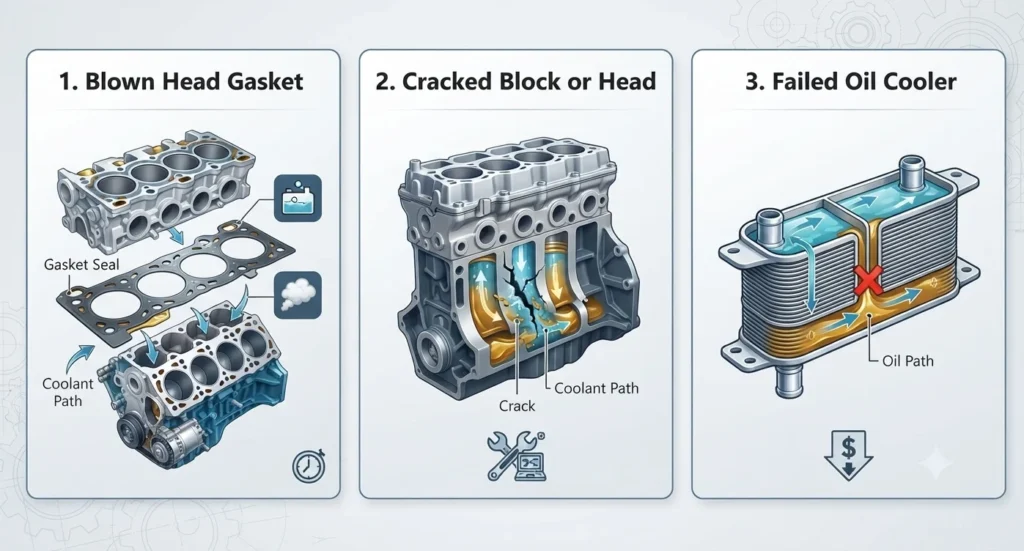
1. Blown Head Gasket
The most common cause. The head gasket seals the coolant and oil passages between the block and cylinder head. When it fails, the two fluids mix — often with overheating, white exhaust smoke, and coolant reservoir bubbling.
2. Cracked Block or Head
Severe overheating can crack the engine block or cylinder head, opening a path between oil and coolant channels. This is a bigger repair and usually needs professional diagnosis.
3. Failed Oil Cooler
Many engines use an oil cooler where oil and coolant run close together. A leaking cooler or seal lets them mix — often the least expensive of the three to fix if caught early.
Warning Signs to Watch For
The Symptoms That Point to Mixing Fluids
Look for milky or creamy oil, brown sludge under the oil cap, and oil floating in the coolant reservoir. Other tell-tale signs: the coolant level dropping with no visible leak, coolant reservoir bubbling, white smoke from the exhaust, the engine overheating, or a strange sweet smell from the engine bay. Spotting more than one of these together strongly suggests coolant and oil are mixing inside the engine.
What Does Oil in the Coolant Reservoir Look Like?
Pop the cap on the coolant reservoir (only when the engine is cold) and look closely. Here’s how to tell healthy coolant from contaminated coolant.
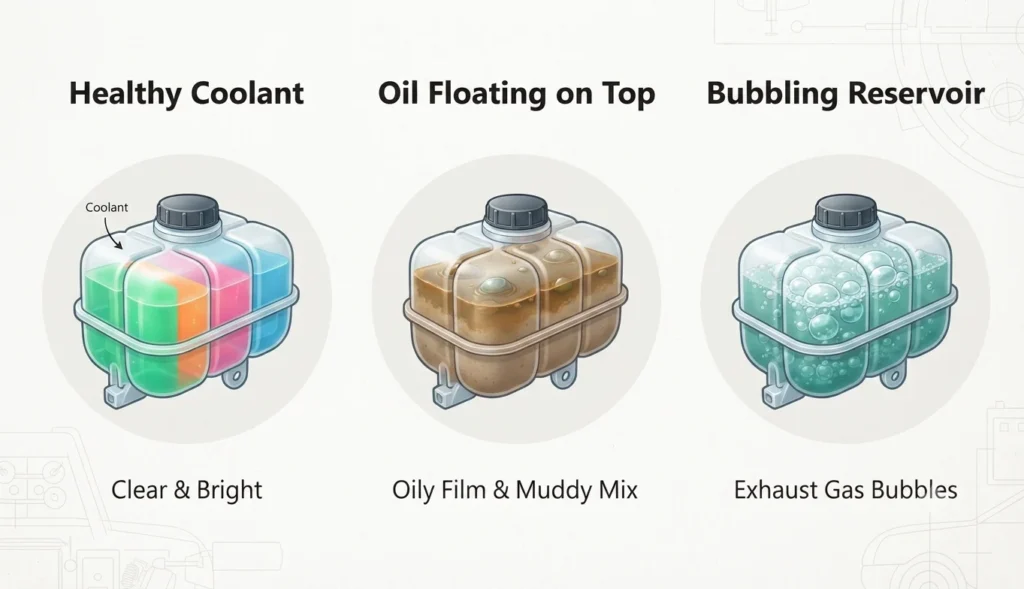
Healthy Coolant
Clean coolant is a clear, bright color — usually green, orange, pink, or blue — with no film on top. This is exactly what you want to see.
Oil Floating on Top
A brown, oily film or globs on the surface means oil in the coolant reservoir. A muddy, milkshake-like mix in the antifreeze tank is a strong sign the fluids are mixing.
Bubbling Reservoir
Coolant reservoir bubbling as the engine runs can mean exhaust gases are leaking into the cooling system — often another symptom of a failing head gasket.
Can You Still Drive With Coolant in Oil?
In most cases, no — and it’s the question people most want answered. Driving with coolant in oil means your engine isn’t being properly lubricated or cooled, so continuing can quickly turn a repairable problem into a wrecked engine. If you see milky oil, heavy white smoke, or the temperature gauge climbing, stop driving and have the car towed or inspected. The safest move is to treat it as urgent: park it, check the fluids, and get a professional diagnosis before you drive again.
What to Check Before You See a Mechanic
You don’t need to be a mechanic to gather useful clues. With the engine off and cool, pull the dipstick and look for milky, creamy, or coffee-colored oil, then check under the oil filler cap for the same pale sludge. Next, open the coolant reservoir (only when cold) and look for an oily film, brown gunk, or a muddy mix — that’s oil in the coolant reservoir or antifreeze tank.
Note whether the coolant level keeps dropping without a puddle underneath, whether the reservoir bubbles when the engine runs, and whether you’re seeing white exhaust smoke, overheating, or a sweet smell. Take a few photos and jot down what you find — this helps your mechanic diagnose the cause faster and can save you money. Don’t add random additives or keep driving to “test” it; that usually makes things worse.
Repair Urgency & Your Next Steps
Coolant in oil is time-sensitive. The sooner it’s diagnosed, the more likely it’s the cheaper repair — and the less chance of catastrophic engine damage. Here’s a simple plan to follow from the moment you spot it.
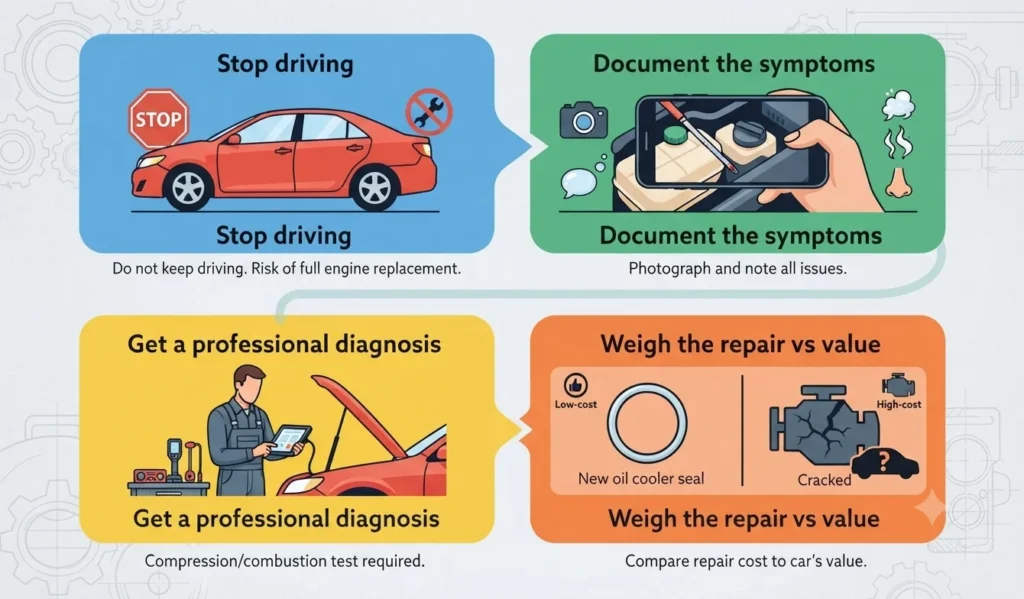
Stop driving
If you confirm milky oil or oil in the coolant, don’t keep driving. Continuing risks turning a fixable issue into a full engine replacement.
Document the symptoms
Photograph the dipstick, oil cap, and coolant reservoir. Note overheating, bubbling, white smoke, or a sweet smell to share with your mechanic.
Get a professional diagnosis
A mechanic can run a compression or combustion-gas test to confirm whether it’s the head gasket, oil cooler, or a cracked block before quoting a repair.
Weigh the repair vs value
Once you know the cause and cost, compare it to the car’s value. An oil-cooler seal is often worth fixing; a cracked block on an older car may not be.
FAQs: Coolant in Oil
Is coolant in oil always a blown head gasket?
Not always, but it’s the most common cause. It can also come from a failed oil cooler or a cracked engine block. A mechanic’s test will confirm which one, so don’t assume the worst until it’s diagnosed.
Why is there oil in my coolant reservoir?
Oil in the coolant reservoir means engine oil is being pushed into the cooling system, usually through the same breach that causes coolant in oil — a head gasket, oil cooler, or cracked component. You’ll often see a brown, oily film in the antifreeze tank.
What does coolant reservoir bubbling mean?
Bubbling while the engine runs often means combustion gases are leaking into the cooling system — a classic head gasket symptom. Combined with milky oil or oil in the coolant, it’s a strong sign the fluids are mixing.
Can I still drive with coolant in oil?
It’s not safe. Contaminated oil can’t lubricate or cool properly, so driving risks rapid, expensive engine damage. Stop driving, check the fluids, and get it inspected before using the car again.
How much does it cost to fix?
It depends entirely on the cause. A leaking oil cooler or seal is often the least expensive; a head gasket is a bigger labor job; a cracked block can be the most costly of all. Get a diagnosis and quote before deciding.
What’s the difference between oil in coolant and coolant in oil?
Coolant in oil turns the oil milky and creamy; oil in water coolant shows up as an oily film in the coolant reservoir. They’re the same problem from opposite sides — fluids mixing internally — and usually share the same causes.
Act Early, Save Your Engine
Now you know what coolant in oil means, why it happens, the warning signs, and how to tell oil in coolant from coolant in oil. The key takeaway: don’t ignore it, don’t keep driving, and get a proper diagnosis quickly.
🛑 Stop driving right away🔧 Get a professional diagnosis
Also read car fluid leak guides
Also read choosing the right coolant for your car
Also read serious engine problem warning signs