

A chainsaw that pulls left or right is usually telling you something specific. Work through this practical inspection sequence to find the cause, correct the safe DIY fixes, and know when a worn part needs professional attention.
The short answer: your chain is probably cutting unevenly
When a chainsaw consistently veers to one side, the most common cause is that the left and right cutters are no longer removing the same amount of wood. One side may be sharper, longer, filed at a different angle, or paired with a depth gauge that sits too low. A worn guide bar can create the same symptom by letting the chain lean in its groove. Start with the chain because it is the quickest and least expensive thing to verify.
Before you touch the chain
Shut the saw off and let it cool. Engage the chain brake, disconnect the spark-plug lead on a petrol saw or remove the battery on a cordless saw, then wear cut-resistant gloves. Never inspect cutters or bar rails with the saw able to start.
A simple crooked-cut diagnosis sequence
Follow these checks in order. Make only one correction at a time, then test the saw in a clean, supported log. That makes it much easier to identify what solved the problem.
- Check that the chain is correctly fitted, undamaged, and properly tensioned.
- Compare the left- and right-hand cutter lengths and cutting edges.
- Verify that the sharpening angles match on both sides.
- Check depth gauges, also called rakers, with the correct gauge tool.
- Inspect guide-bar rails and the groove for uneven wear or damage.
- Confirm that oil is reaching the bar and chain during use.
- Make a controlled test cut and stop if the saw still forces itself sideways.
1. Inspect the cutters before blaming the bar
Uneven sharpening, angles, or cutter lengths
Look down the chain and compare alternating cutters. A noticeably shorter cutter on one side takes a smaller bite, so the longer or sharper side pulls the chain toward it. This often happens after hand filing when more strokes are used on one side, or after one cutter has been repaired following a rock strike. Use a file guide and count equal strokes. If cutters are badly mismatched, have the chain professionally ground to an even length—or replace it if it is near its wear limit.
Uneven depth gauges can steer a saw too
Depth gauges control how much wood each cutter can take. If rakers are filed unevenly, the aggressive side can pull the saw off line; if they are too high, the chain may cut slowly even though cutters look sharp. Do not guess with a flat file alone. Use the depth-gauge tool specified for your chain pitch, and file only the amount the gauge reveals.
2. Look for guide-bar wear that lets the chain lean
A guide bar is not just a support rail. Its groove holds the drive links upright, and its rails keep the cutters aligned. Heavy use on one side, poor lubrication, a loose chain, or cutting in abrasive dirt can wear one rail lower than the other. The chain then tilts under load and produces a curved or angled kerf. Clean the groove before judging it: packed sawdust and oil residue can hide the real condition.
A practical bar check
With power disconnected, remove the bar and chain. Run a thin bar-groove cleaner or suitable non-sharp tool through the groove, then inspect both rails in good light. Look for a flared groove, a rolled-over rail, cracks, blue heat discoloration, or one rail visibly lower. Reversible bars should be flipped at regular intervals to spread wear. Replace a bar with damaged rails or a groove that no longer supports the drive links securely.
3. Rule out tension, damage, lubrication, and mismatched parts
A chain that is too loose can wander and damage the bar groove; one that is too tight can overheat and wear quickly. Set tension only after the saw has cooled, with the bar nose lifted as instructed by your saw manufacturer. The chain should sit fully in the groove while still pulling around by hand with gloves on. Also check for bent drive links, cracked cutters, stiff links, and the correct pitch, gauge, and drive-link count for your bar and sprocket. Finally, verify bar oil delivery according to your manual. A dry chain creates heat, rapid rail wear, and unreliable cutting.
What you can fix yourself—and when to stop
Usually suitable for careful DIY maintenance
Cleaning the bar groove and oil hole, setting tension, checking oil level, lightly dressing a minor burr, and sharpening a chain with the correct guide are reasonable jobs when you have the manufacturer’s specifications.
Get a technician or replace the part when
The bar rails are uneven or cracked, cutters are severely mismatched, the chain has broken or bent links, oil delivery is uncertain, or the saw still cuts crooked after a correctly sharpened replacement chain is fitted.
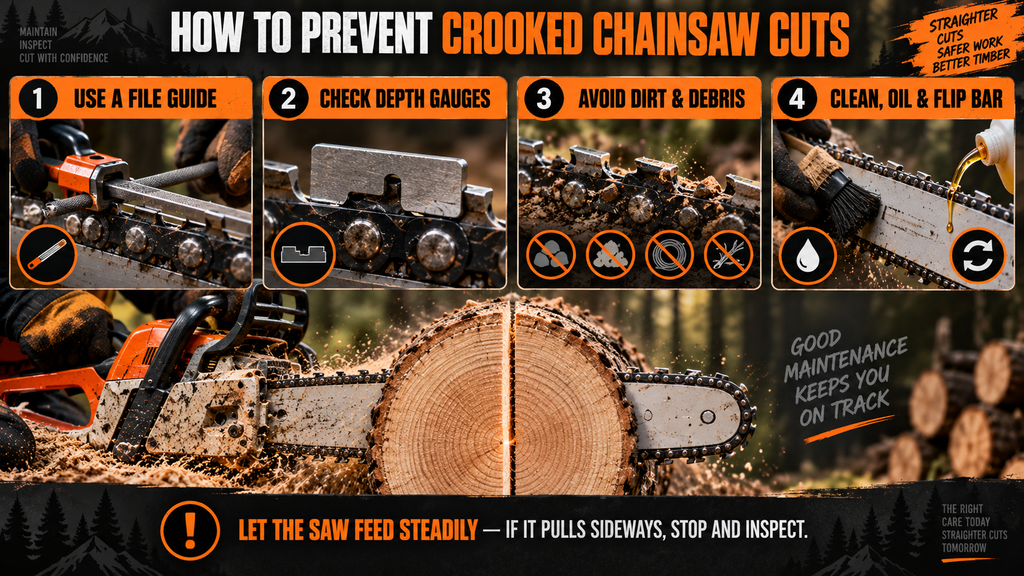
How to prevent crooked chainsaw cuts
- Use a file guide and the same number of strokes on matching left and right cutters.
- Check depth gauges with the correct tool every time the cutters have been sharpened several times.
- Keep the chain out of soil, gravel, wire, and other debris that quickly damages one side of the cutting edge.
- Clean and inspect the bar regularly, maintain chain oil, and flip a reversible bar according to the maintenance schedule in your manual.
A chainsaw should feed through sound wood with steady, controlled pressure—not force you to steer it. If it pulls sideways, stop cutting and inspect it. A careful chain-and-bar check is cheaper than damaged parts, wasted timber, or trying to control an unsafe cut.
Frequently asked questions
Can a new chain still cut crooked?
Yes. A new chain can still pull if it is filed unevenly, installed with the wrong pitch or gauge, tensioned incorrectly, or paired with a worn guide bar. Confirm the chain and bar specifications in your owner manual before cutting.
How often should I sharpen the chain?
Sharpen whenever the saw produces fine dust instead of larger chips, needs extra pressure, or begins to wander. The correct interval depends on the wood and debris encountered, so inspect the cutters regularly rather than relying only on a schedule.
Should I replace the chain or the guide bar first?
Start with the simplest confirmed fault. If the cutters are badly mismatched or damaged, fit a correctly specified replacement chain and test it. If the replacement chain still leans, inspect the bar rails and groove for wear or damage.
When is a crooked cut unsafe to continue?
Stop immediately if the saw forces you to steer, vibrates unusually, throws the chain, shows damaged rails or links, or fails to oil correctly. Shut it down safely and have the relevant part inspected before using it again.