A flat on a trailer is one of those problems that arrives at the worst possible moment: loaded down, on a shoulder, miles from the shop. The fix is a good spare, a jack that reaches the axle and a place to carry the tire that does not rattle loose on the first rough road. This guide covers the last part: how spare tire racks for trailers work, what to look for and how to keep the spare ready to use.
Why does a trailer need a dedicated spare tire carrier?
Trailer tires are often a different size and load rating from the tow vehicle’s tires, so the spare in your truck will not necessarily fit. A tire thrown loose in the trailer bed scuffs, slides and can damage whatever it lands against. A rack or carrier gives it a fixed position, keeps it out of the way and, importantly, keeps it accessible when you need it.
There is also a maintenance angle. A spare that lives in a visible, reachable spot gets looked at. One buried under tools does not, and an unchecked spare is the one most likely to be flat when you finally reach for it.
What types of spare tire racks are available?
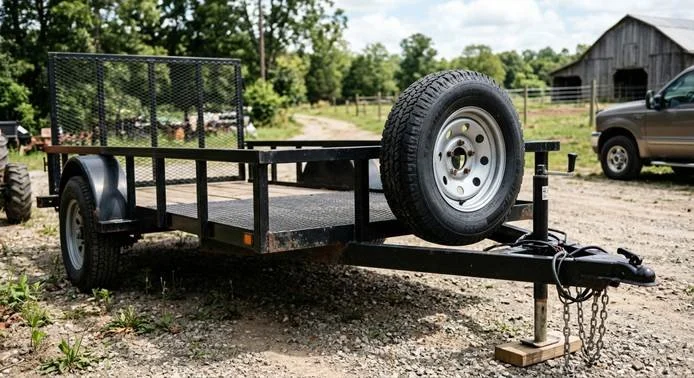
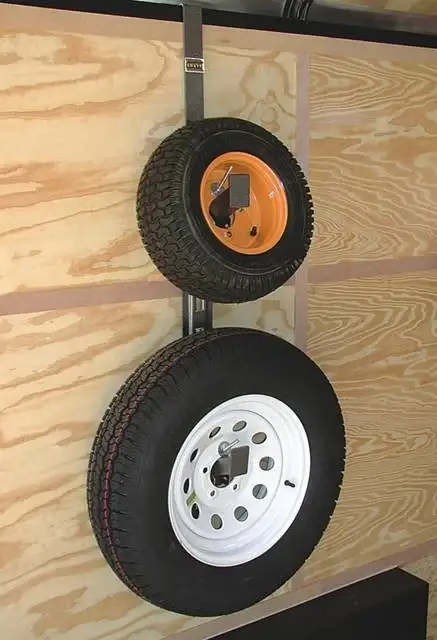
Most options fall into a few families. Tongue or frame mounted carriers hold the tire upright near the front of an open trailer. Side mounted brackets bolt to a rail or frame member and hold the tire against the trailer’s side. Enclosed trailer mounts attach to a wall or the front of the box, either inside or outside. Each has a different weight and reach profile, so think about how you will lift the tire when you need to change it.
If you want to compare options built for work trailers in one place, you can shop Rack’em MFG trailer racks for spare tires alongside the company’s other trailer racks for tools, ladders and equipment. Rack’em MFG focuses on accessories for people who haul gear to job sites, so its catalog suits contractors and landscapers as well as weekend haulers.
How do you choose the right carrier for your trailer?
Begin with the tire. Check the size printed on the sidewall, because the carrier has to match both the diameter and the width. Then think about the mounting surface: is it a round tongue, a flat rail, a steel wall or a thin sheet metal panel? The mount must attach to something strong enough to carry the tire’s weight through bumps and braking.
A few more questions help:
- How heavy is the tire and wheel together, and can you lift it comfortably at the mounting height?
- Will the carrier block lights, the license plate or the coupler?
- Is the carrier made from steel or another durable material with a protective finish?
- Can it be secured so the tire cannot be removed by a passerby?
How do you mount a spare so it stays put?
Two principles apply to any carrier. First, fasteners should be sized and tightened to the manufacturer’s instructions, ideally with lock washers or lock nuts so vibration does not back them out. Second, the tire should be held at more than one point so it cannot rock. After installing, give the tire a firm shake. Any movement means the setup needs another look. Check again after the first few hundred miles, when things tend to settle.
How often should you check the spare?
This is where many drivers slip. The National Highway Traffic Safety Administration says all tires, including the spare, should be checked for pressure at least once a month when cold, meaning the vehicle has not been driven for at least three hours. Its tire safety guidance also recommends checking tread monthly using the built in treadwear indicators and replacing tires when the tread wears down level with them. For the correct inflation pressure, NHTSA points to the owner’s manual and the vehicle’s Tire and Loading Information Label. For trailer tires, use the trailer manufacturer’s information and the pressure and load details molded into the tire sidewall, since the tow vehicle’s label does not apply.
Because a spare lives outdoors, sun and weather age it even if it never touches pavement. Look for cracking on the sidewall, rust on the wheel and a flat or soft feel when you press on it. A spare that looks tired should be replaced, not trusted.
What tools should travel with the spare?
A spare is only half a solution. Carry a jack rated for the trailer’s weight, a lug wrench that matches the trailer’s lug nuts and a pair of wheel chocks. A small gauge and a portable inflator let you confirm pressure before you roll. Keep them together in a bag near the tire, so the whole kit is one grab away.
Is it worth carrying a spare on a short haul trailer?
Short trips tempt people to skip the spare, but flats do not care about distance. A blowout a few miles from home can still leave a loaded trailer on a narrow shoulder with no safe place to wait for help. Carrying the spare also means you can finish the job instead of unloading equipment to be towed. If weight is the concern, a lighter wheel and tire combination is a better answer than leaving the spare behind, and a well placed carrier keeps that weight low and centered.
Common mistakes with trailer spares
Drivers often make the same errors. They mount the carrier on thin sheet metal that flexes. They forget to check pressure until the spare is needed. They use a spare with a different bolt pattern than the trailer wheels. And they leave the carrier unsecured, which can lead to a lost tire on the highway. A five minute inspection before every trip catches most of these issues.
Putting a spare tire plan together for 2026
Thinking it through, the best spare tire setup is the one you will actually maintain. Choose a carrier that matches your tire and trailer, mount it solidly, check the tire monthly and keep the tools in one place. For work trailers in particular, Rack’em MFG is a practical reference point when you are comparing carriers and thinking about how the rest of the trailer is organized. With a well mounted, well maintained spare, a flat becomes a half hour inconvenience instead of a roadside emergency.