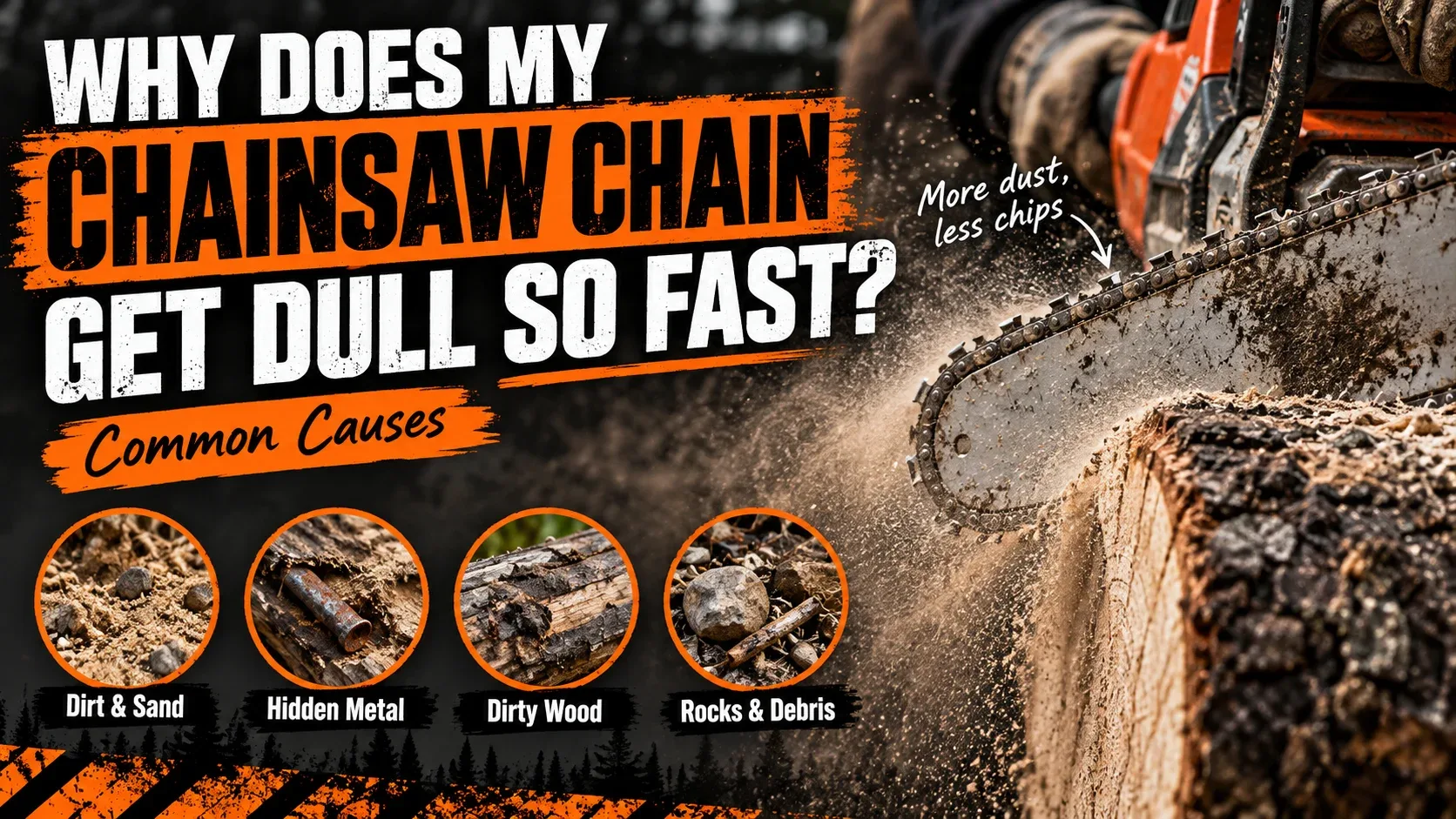

A chainsaw chain that goes blunt after only a few cuts is usually being damaged, overheated, or sharpened with the wrong geometry. Use this practical sequence to find the cause before buying another chain.
Fast chain dulling is most often caused by grit, soil, hidden metal, poor oil flow, incorrect tension, or inaccurate sharpening—not normal wear alone.
A sharp chain does not suddenly wear out—it is usually being damaged
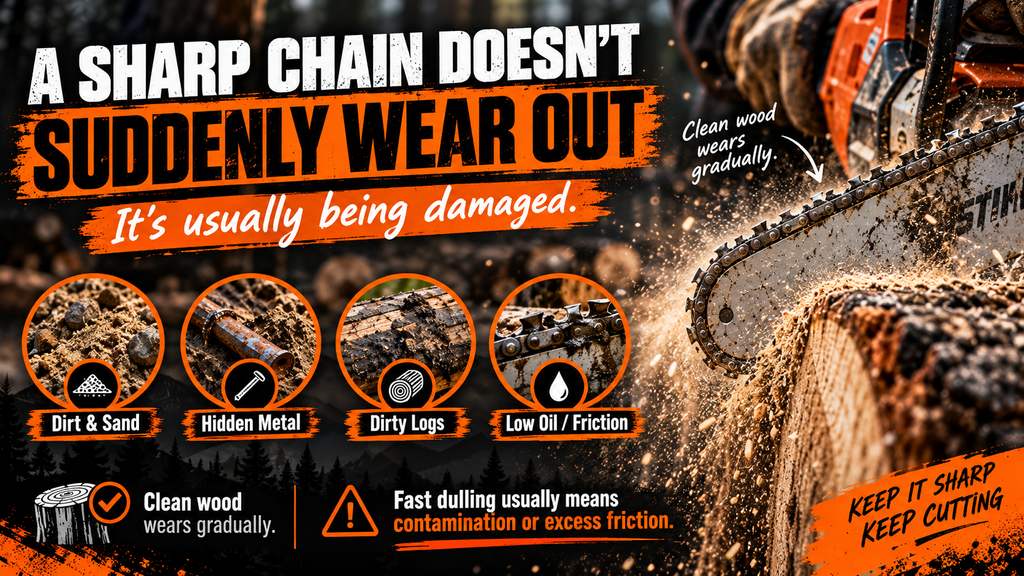
A chainsaw cutter is a small steel edge working at high speed. Clean wood will gradually wear it, especially hardwood, but a sharp chain should not become useless after a handful of ordinary cuts. Abrasive contamination and excess friction are the usual reasons it does.
Before blaming the chain, think about what the cutters touched. Logs stored on the ground can carry sand in their bark, reclaimed timber can hide hardware, and a bar that is starved of oil can overheat both the chain and its cutting edges.
Most common cause
Soil, sand, and dirty bark

One brief touch in dirt can round over every cutter. Roll ground-contact logs clear, brush away muddy bark, and keep the bar nose out of soil, gravel, and old landscaping debris.
Damage you may not see
Nails, wire, and fence staples
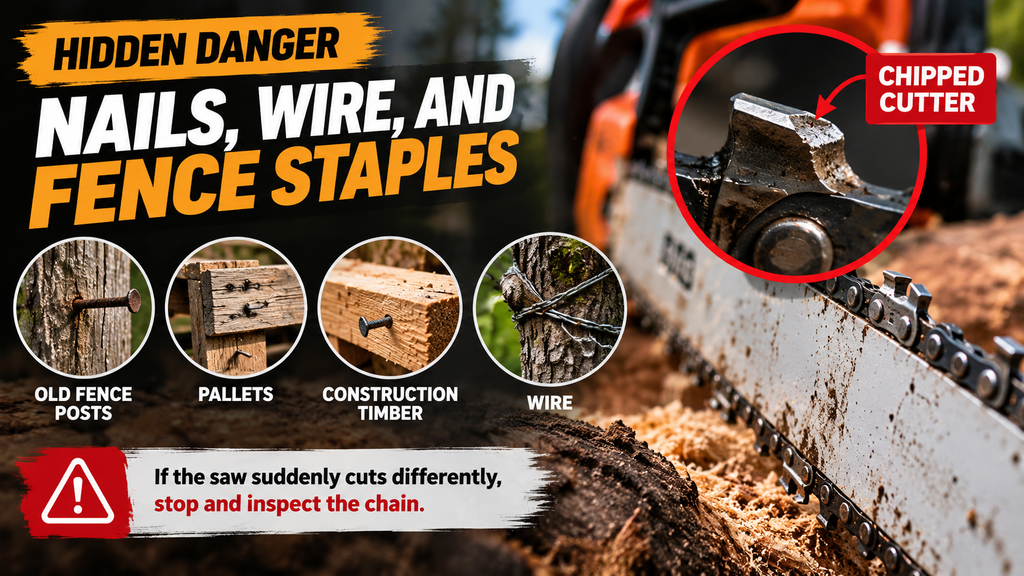
Old fence posts, pallets, construction timber, and storm-damaged trees can contain metal. Stop after a sudden change in cutting feel and inspect the cutter corners for chips or bright impact marks.
Friction problem
Low bar-and-chain oil flow
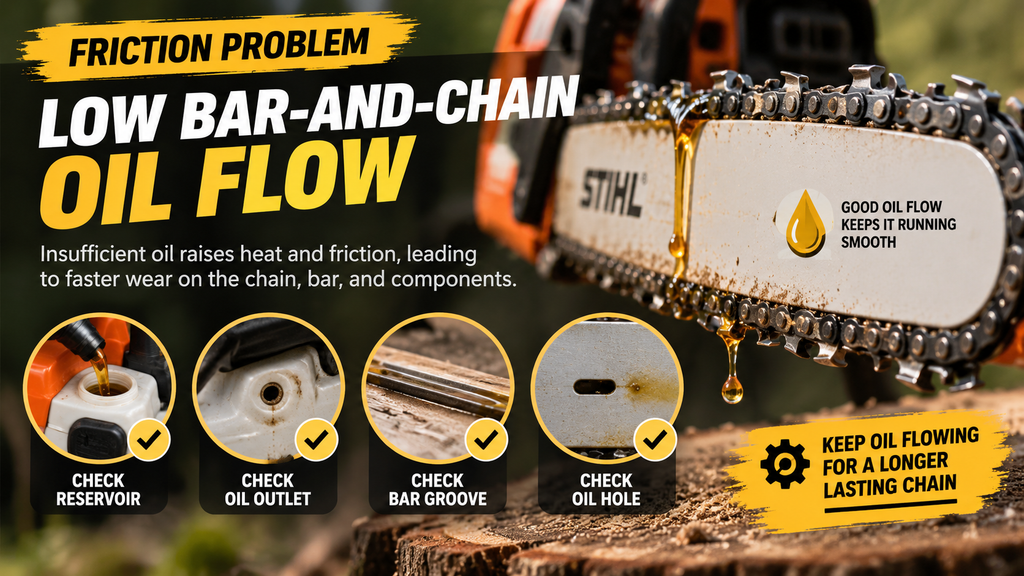
Insufficient oil raises heat and friction, accelerating wear on the chain, guide bar, and drive components. Check the reservoir, oil outlet, bar groove, and oil hole before the next cut.
Operator habit
Forcing or twisting the saw

Let the cutters pull the saw through clean wood. Heavy feed pressure, a twisted bar, or a loose chain increases heat and uneven wear. Frozen, very hard, or contaminated timber also shortens edge life.
Use what the saw is telling you
Four symptoms that narrow down the problem
Watch the chips, feel the cut, and inspect the chain only with the saw safely shut down. These clues help separate a blunt edge from a tension, lubrication, bar, or depth-gauge issue.
| What you notice | Likely cause | What to check next |
|---|---|---|
| Fine dust instead of coarse chips | Blunt cutters or depth gauges that are too high. | Inspect each cutting edge for a shiny reflected line; check rakers with the correct chain-specific gauge. |
| Smoke or hot, blue-looking metal | Friction from low oil, excess tension, or forcing the cut. | Confirm oil delivery and cool-chain tension; clean the bar groove and oil port. |
| The saw pulls to one side | Unequal cutter lengths or angles, or a worn guide bar. | Compare left and right cutters, inspect bar rails for uneven wear, and remove any burrs. |
| The chain grabs and vibrates | Depth gauges may be too low, or the chain may be damaged. | Use a depth-gauge tool for the chain pitch; do not lower rakers by eye. |
Maintenance that keeps edges alive
Sharpening errors can make a new chain feel dull
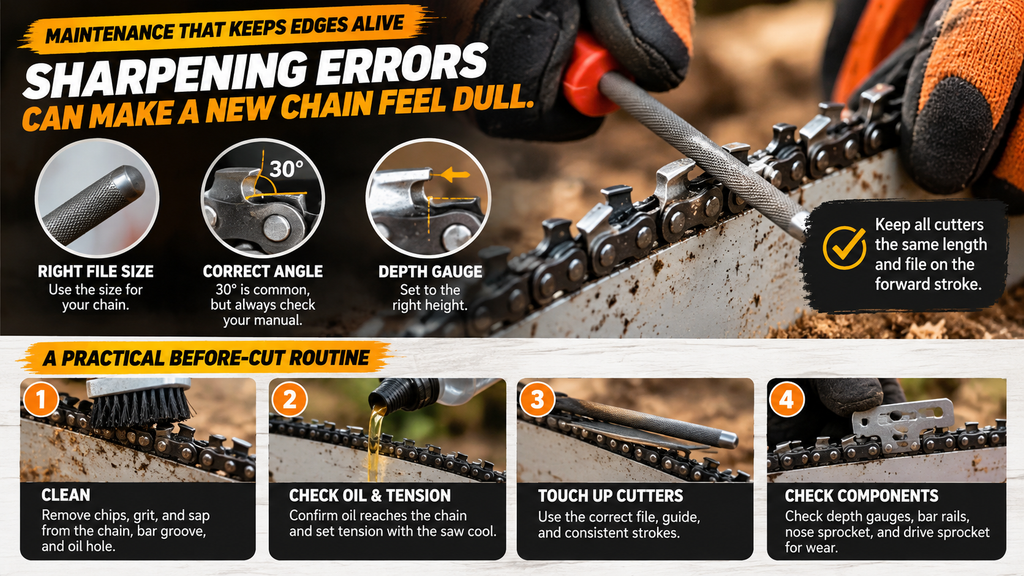
Use the file diameter, top-plate angle, and depth-gauge setting specified for your exact chain. A 30° filing angle is common on many chains, but it is not universal. The saw manual or chain maker’s documentation is the authority for your model.
Keep every cutter the same length and file from the inside of the cutter outward on the forward stroke. A bright line at the cutting edge means the edge is still blunt. Powered grinding can also ruin temper if it overheats the cutter.
A practical before-cut routine
- Clean chips, grit, and sap from the chain, bar groove, and oil hole.
- Confirm bar oil reaches the chain and set tension with the saw cool.
- Touch up the cutters early using the correct file, guide, and consistent strokes.
- Check depth gauges with the correct gauge and inspect the bar rails, nose sprocket, and drive sprocket for wear.
Know when filing is no longer enough
Sharpen a serviceable chain. Retire a damaged one

Frequent touch-ups are normal chainsaw care. Replacement is the safer choice when a chain cannot be returned to even, sound cutters or when it remains erratic after the chain and guide bar have both been properly inspected.
Usually worth sharpening
Touch it up and inspect the system
- Cutters are intact, with only a dull or lightly nicked edge.
- All cutters can still be brought back to a similar length.
- The chain cuts straight once the bar, tension, oil flow, and sharpening are corrected.
Replace rather than risk it
Damage and wear have reached the limit
- Cutters are cracked, missing, severely chipped, or near their wear marks.
- The chain cannot be restored to even cutter lengths or keeps cutting crooked after a bar inspection.
- The cutters are extremely short; consult your chain manufacturer for the model-specific replacement limit.
Safety first
Before inspecting, tensioning, cleaning, or sharpening a chainsaw: stop the engine or motor, let the saw cool, engage the chain brake, and disconnect the spark plug lead, battery, or power source as your manufacturer directs. Wear gloves when handling the chain.
How this guide was prepared

Practical guidance checked against manufacturer maintenance advice
This article is written for everyday chainsaw owners and based on published Husqvarna and STIHL guidance about chain filing, depth gauges, lubrication, and guide-bar care. Specifications vary by chain family, so the instructions supplied with your own saw and chain take priority over general advice.
Common chainsaw questions
Chainsaw chain dulling FAQ
Can hitting dirt ruin a chainsaw chain?
Yes. Soil, sand, and gravel are highly abrasive and can blunt a chain almost immediately. Dirt can also be embedded in bark, particularly on logs that have been stored on the ground. Move or clean the log before cutting whenever possible.
How long should a chainsaw chain stay sharp?
There is no reliable cut-count because wood species, cleanliness, frozen conditions, operator technique, and chain type all matter. In clean wood, a chain should stay useful for substantially longer than a few cuts. Sharpen when chip size falls, feed pressure rises, or the cut begins to wander.
Can a chain feel dull even after sharpening?
Yes. Common reasons include the wrong file size, inconsistent angles, cutters of different lengths, depth gauges that are too high, or a worn bar that makes the saw pull sideways. Confirm the chain specification and inspect the complete cutting system before filing again.