Tire buying and pricing guide
Replacing worn tires can be expensive, especially when the advertised price does not include mounting, balancing, taxes, or other charges. If you are wondering how much are tires, this guide explains realistic U.S. costs, what affects the price, and how to compare local shops with online tire sellers before you buy.
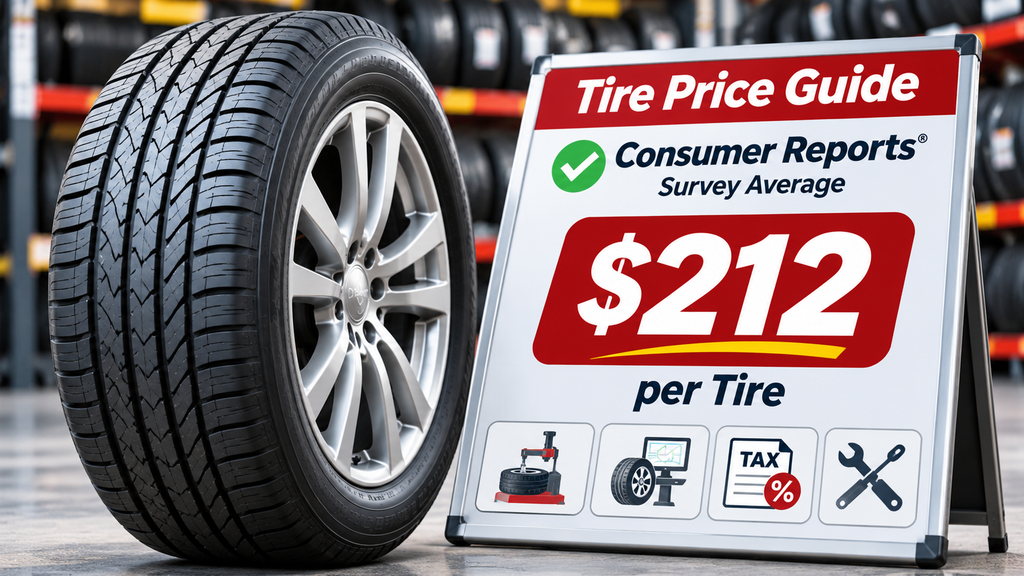
Quick Answer: How Much Do New Tires Cost?
In a Consumer Reports tire-buying survey reported in September 2026, members paid $212 on average for their last tire. That would equal $848 for four tires at the same average purchase price, before any extra charges. Among members who paid separately for installation, the median installation charge was $31 per tire. Your actual quote can be much lower or higher depending on tire size, vehicle, performance category, retailer, and location.
For an individual purchase, always compare the total out-the-door price, including any installation, disposal, shipping, and taxes. Source: Consumer Reports, updated September 21, 2026.
How Much Are Tires by Type?
There is no universal price for a car tire. A smaller standard all-season tire generally costs less than a large all-terrain, winter, or specialty performance tire. The following figures are published category averages from a May 2026 price comparison, not live quotes for your vehicle.
| Tire category | Published average per tire | Four tires at that average |
|---|---|---|
| Standard all-season | $151.05 | $604.20 |
| SUV all-season | $245.49 | $981.96 |
| Truck all-season | $195.68 | $782.72 |
| All-terrain truck | $281.05 | $1,124.20 |
| Winter/snow | $142.80 | $571.20 |
| EV tires | $242.80 | $971.20 |
Source: Clark.com, May 2026 comparison of selected Consumer Reports-recommended tire models. Categories represent different tire selections and sizes; four-tire totals are arithmetic illustrations, not checkout prices. Installation, taxes, and fees are excluded.
These averages help you set a rough budget, but they should not replace a quote for your exact tire size. Two tires in the same category can vary considerably in wet braking, expected tread life, ride comfort, and warranty coverage.
Budget vs. Mid-Range vs. Premium Tires
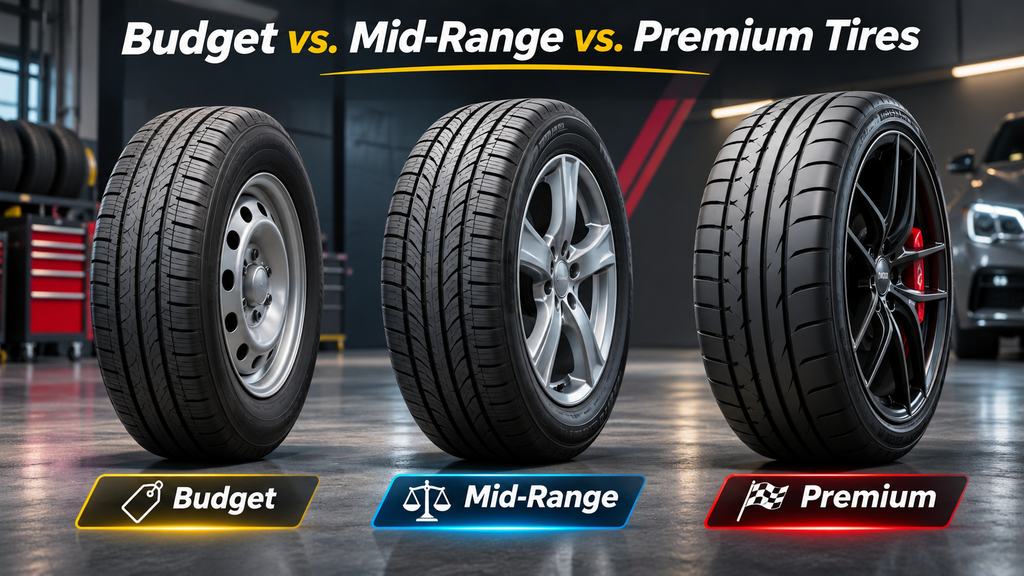
Budget tires
May lower the upfront purchase price, but check independent test results, wet-weather traction, warranty terms, and expected tread life.
Mid-range tires
Often worth comparing for commuting and mixed driving. Look for an appropriate balance of price, comfort, tread life, and road conditions.
Premium tires
Can offer specialized handling, noise, or weather performance. Higher cost does not guarantee the best tire for every vehicle.
Comparisons only make sense when the tires share the correct size, load requirements, seasonal suitability, and intended use. A cheaper tire that is unsuitable for your vehicle is not a good deal.
How Much Does a Set of Four Tires Cost?
Start with the tire-only subtotal, then add everything required to drive away. For example, four tires priced at $200 each would cost $800 before installation. If a shop separately charged $30 per tire for mounting and balancing, that would add $120, creating a $920 subtotal before tax and other applicable charges.
This is a hypothetical budgeting example, not a price quote. Some retailers bundle installation or include services such as rotation and rebalancing. Others itemize those charges separately.
What Makes Tires More or Less Expensive?
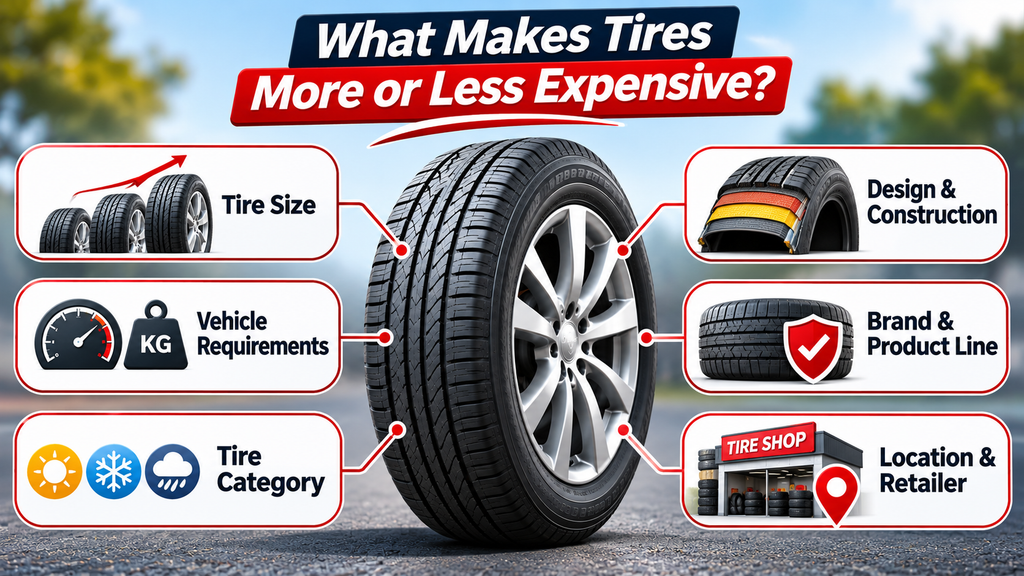
- Tire size: Larger rim diameters, wider sizes, and less common fitments may cost more.
- Vehicle requirements: Load index, speed rating, load range, and manufacturer-specific specifications affect the available options.
- Tire category: All-season, dedicated winter, summer-performance, touring, and all-terrain tires serve different purposes.
- Design and construction: Tread compounds, reinforced construction, run-flat capability, and noise-reduction features can affect pricing.
- Brand and product line: Warranty terms, performance testing, and availability vary by model.
- Location and retailer: Local inventory, installation packages, sales tax, and promotions affect the final bill.
Are Online Tires Cheaper Than Buying Locally?
Buying online tires may help you compare more brands, sizes, specifications, and advertised deals. But a lower online price does not automatically mean a lower installed cost. You may need to pay for shipping, coordinate delivery to a shop, and pay a third-party installer that did not sell you the tires.
| Factor | Ordering online | Buying at a local tire shop |
|---|---|---|
| Model selection | May offer a wide searchable catalog | May have limited in-stock selection |
| Price comparison | Easy to compare multiple listings | Compare written quotes from nearby shops |
| Installation | May require choosing a partner installer | Often handled at purchase location |
| Shipping | Check delivery cost and destination | Often no separate consumer shipping fee |
| Returns and warranty | Review return shipping and claim process | May offer convenient in-person service |
| Best comparison | Total installed price for the exact same tire model and size | |
For example, Discount Tire’s installation policy describes mounting, balancing, TPMS service components where applicable, disposal, and maintenance services as part of its installation offering. Package details differ by retailer and location, so verify the actual quote.
How to Shop Tires Online Without Ordering the Wrong Size
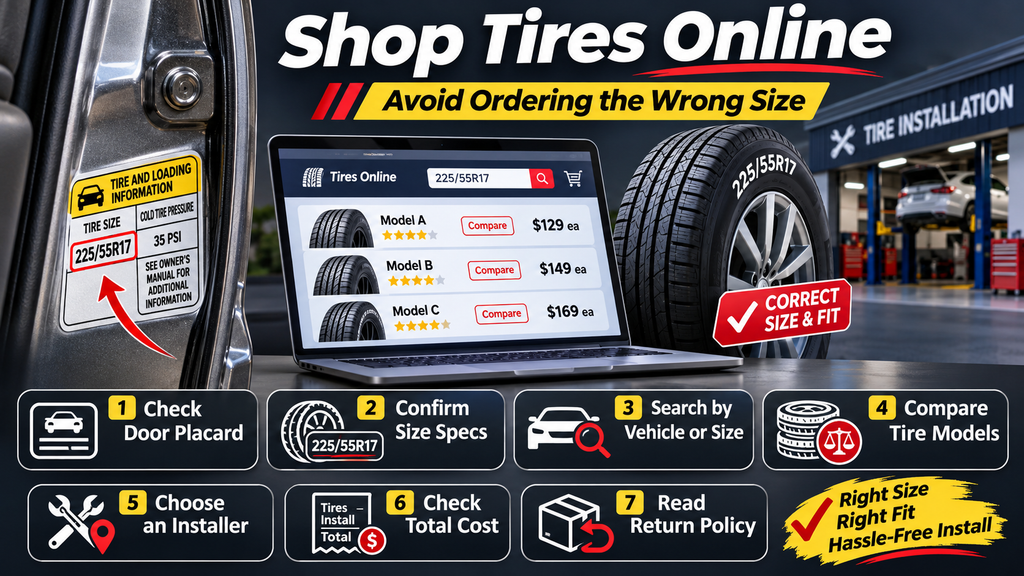
When you shop tires online, start with the vehicle’s approved specifications rather than simply copying the tire currently mounted on the wheel. A previous owner may have fitted a nonstandard size.
- Find your manufacturer-approved tire size. Check the driver-side door placard or owner’s manual. Some vehicles use different front and rear sizes.
- Confirm the complete specifications. Match appropriate load index, speed rating, load range, and seasonal use. Ask a qualified tire professional when uncertain.
- Search by vehicle or confirmed size. Cross-check any automatic fitment recommendations against the manufacturer’s information.
- Compare the same tire model. Check product line, specifications, warranty details, price per tire, and current availability.
- Choose installation arrangements. See whether the seller can send tires directly to an approved installer and whether that installer accepts outside purchases.
- Review the total. Add shipping, mounting, balancing, applicable TPMS service, disposal, taxes, and any optional coverage.
- Read return and warranty policies. Confirm what happens if the wrong tire arrives or the shipment is delayed.
Before you order tires online, get confirmation of the installation appointment and final expected charges. Do not assume an installer will accept direct shipments without prior arrangement.
Extra Tire Costs: Installation, Balancing, and Other Fees
Common additional charges include:
- Mounting: Fitting the new tires to the wheels.
- Balancing: Adjusting wheel-and-tire balance to reduce vibration.
- Valve stems or TPMS service: Some packages include service kits; replacement sensors or extra repairs may cost more.
- Disposal and recycling: Some stores include used-tire disposal, while others charge separately.
- Shipping: Particularly relevant if the online retailer does not ship to an installation partner for free.
- Taxes and state fees: Depend on location and applicable rules.
- Wheel alignment: A separate service that may be advised for uneven wear, pulling, or alignment concerns, but is not automatically required with every tire replacement.
- Optional road-hazard protection: Review coverage, exclusions, claim process, and total price before agreeing.
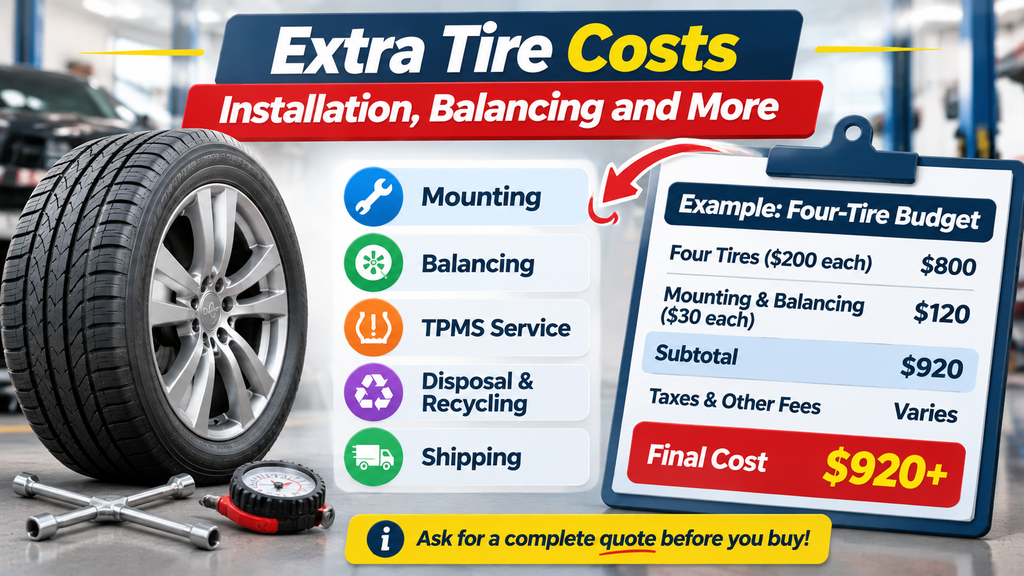
Example: Four-Tire Installed Budget
| Line item | Illustrative cost |
|---|---|
| Four tires ($200 each) | $800 |
| Mounting and balancing ($30 each) | $120 |
| Subtotal before other charges | $920 |
| Taxes, disposal, shipping, other applicable costs | Varies |
Formula: Tire subtotal + installation + shipping + applicable fees + tax + selected optional services = final out-the-door cost.
Do not double-count mounting, balancing, or disposal if the retailer already includes them in an installation bundle. Consumer Reports’ 2026 survey found a $31 median installation charge among respondents who paid separately, while more than half reported free installation. Read the survey discussion.
Check Tire Size and Safety Before You Buy
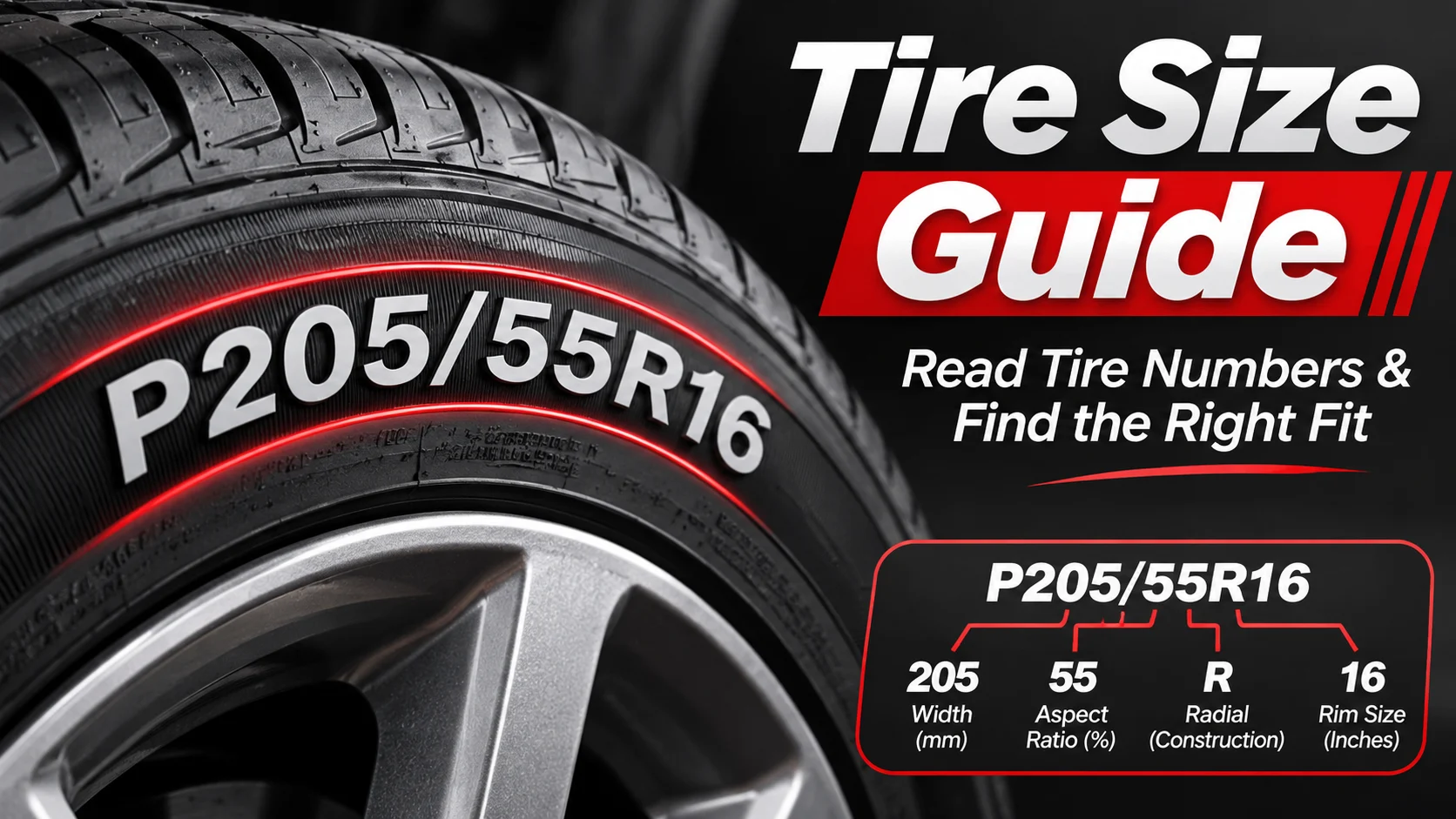
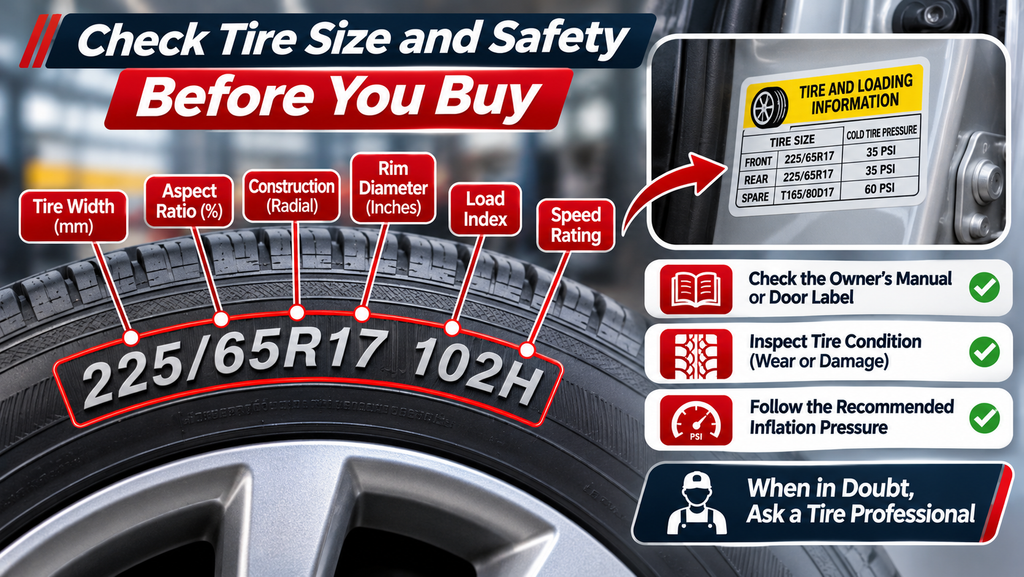
In the example 225/65R17 102H, the size information and service description identify important fitment characteristics. But the correct replacement for your vehicle depends on the vehicle manufacturer and its approved specifications—not this sample marking.
The National Highway Traffic Safety Administration (NHTSA) recommends checking the owner’s manual or Tire and Loading Information Label on the driver-side door edge or post to establish the correct tire size. Inspect tires for wear or damage and follow the vehicle’s specified inflation pressure. If you’re unsure whether a replacement is suitable, ask a qualified tire professional before purchase.
Ways to Save on New Tires Without Sacrificing Safety
- Compare exact matches: Request two or three installed quotes for the same tire model and size.
- Look for verified rebates: Check manufacturer offers, eligible models, dates, and redemption requirements.
- Check package inclusions: Free rotations or rebalancing may add long-term value.
- Shop before replacement becomes urgent: Allow time to compare suitable products and appointment dates.
- Evaluate tire performance: Wet traction, climate suitability, and braking matter more than saving a small amount upfront.
- Maintain your tires: Correct inflation, regular inspections, and manufacturer-recommended rotation can help avoid unnecessary wear.
Buyer checklist: Before paying, confirm vehicle-approved size, load and speed requirements, exact tire model, production-date and condition questions when appropriate, quantity, delivery or pickup, installation appointment, complete fees, written warranty terms, and the final out-the-door total.
Frequently Asked Questions About Tire Prices
How much should four new tires cost?
Costs vary substantially by size and category. As a survey reference, Consumer Reports reported a $212 average purchase price per tire in September 2026, equivalent to $848 for four at that average, before extra charges. Your actual total depends on the tires and installation quote.
Is it cheaper to buy tires online?
Sometimes. Compare the full installed cost for the same tire model and size. Shipping, installer fees, taxes, or bundled maintenance services can change which option offers better value.
How much does tire installation cost?
Consumer Reports’ 2026 survey reported a median $31 per tire among respondents who paid for installation. Some buyers had installation included at no separate charge. Request a written local quote to know your cost.
Can I order tires online and have them shipped to a tire shop?
Many retailers offer installer delivery or partner installation, but availability varies. Confirm the installer accepts the shipment, the tires are compatible, and an appointment is available before ordering.
Do I need a wheel alignment when replacing tires?
Not always. Uneven tire wear, steering pull, or alignment-related concerns may justify an inspection. Alignment is distinct from mounting and balancing; ask the technician whether it is needed for your vehicle.
Is the cheapest tire a good choice?
Not necessarily. Make sure it meets the manufacturer’s requirements and offers suitable performance for your roads and climate. Tire quality, wet braking, load requirements, and warranty terms all matter.
Bottom Line
The best tire deal is the one that combines correct fitment, dependable performance, and a transparent installed price. Use published averages as a budgeting guide, but obtain exact quotes for your vehicle. Whether you buy locally or online, compare the same tire models and include every required charge before deciding.