Steel is one of the most widely used engineering materials in the world. It is found in cars, buildings, bridges, tools, machinery, appliances and countless industrial products. But what is steel made of, and why do different types of steel have different properties?
The answer begins with iron and carbon, but modern steel can also contain several other carefully controlled elements that change its strength, hardness, toughness, corrosion resistance and overall performance.
Quick Answer
Steel is primarily made of iron and carbon. Depending on the grade, it may also contain manganese, chromium, nickel, molybdenum, silicon, vanadium and other alloying elements. These elements allow steel manufacturers to create materials with different levels of strength, hardness, toughness and corrosion resistance.
What Is Steel? Simple Steel Definition
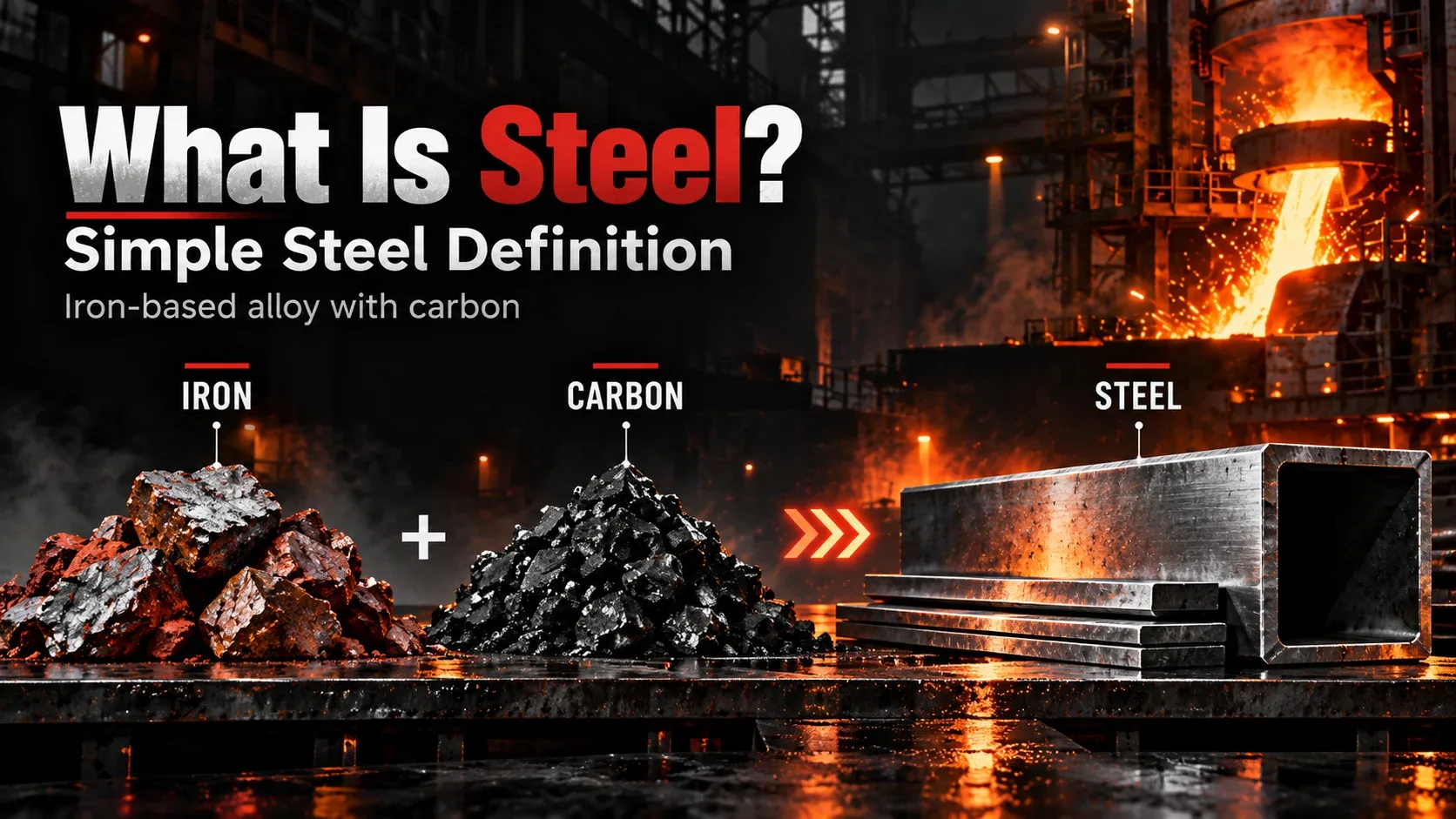
A simple steel definition is that steel is an iron-based alloy containing carbon and, in many grades, additional alloying elements. It is manufactured by controlling its chemical composition and processing conditions to produce specific mechanical properties.
Steel is not a pure chemical element. Iron is an element, while steel is an alloy. This means steel is created by combining iron with controlled amounts of other elements.
Iron
Iron is the primary base metal in steel and normally makes up most of its total composition.
Steel
Steel combines iron with carbon and sometimes other elements to produce a stronger and more versatile engineering material.
What Is Steel Made Of?
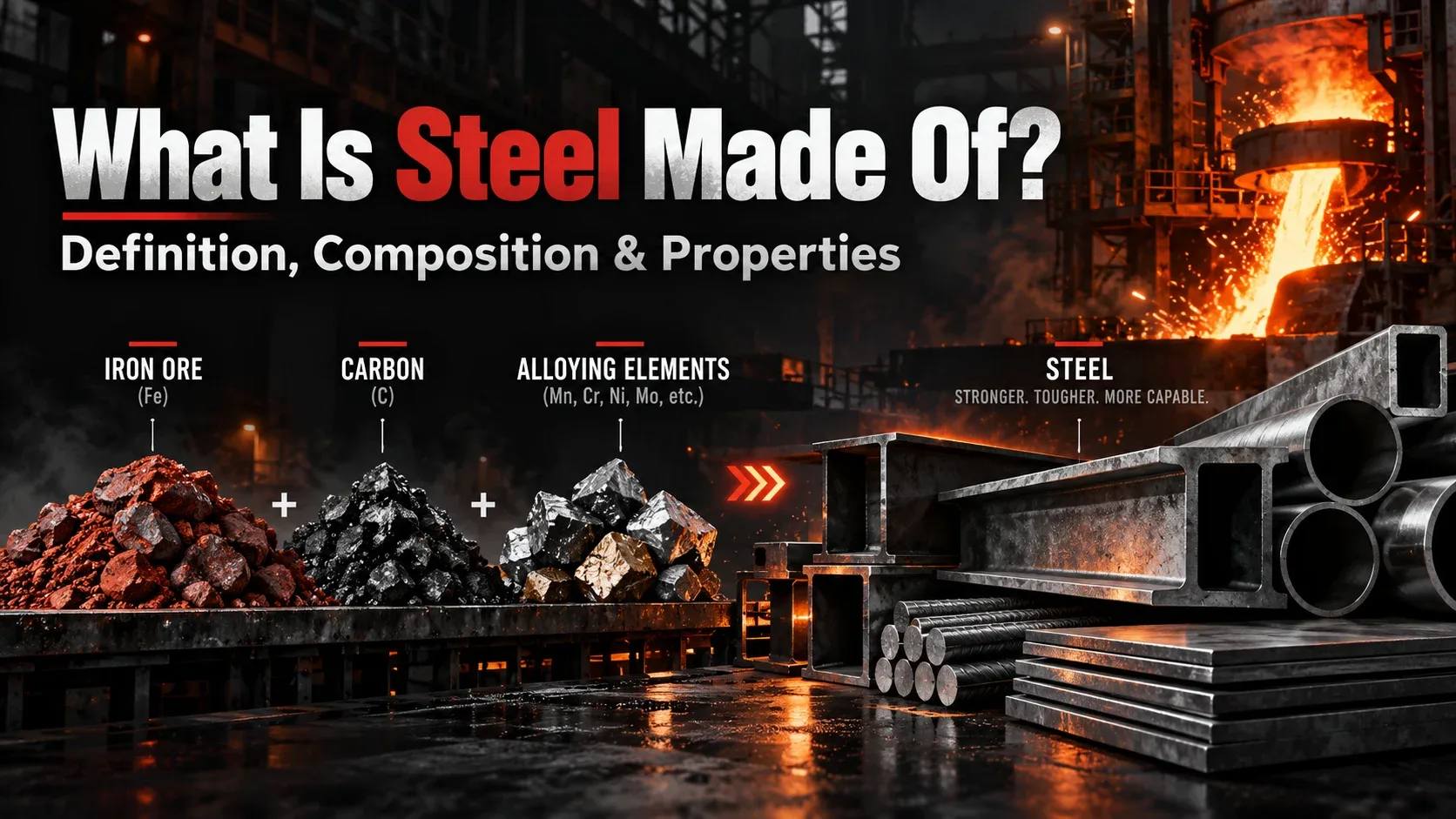
The basic answer to what is steel made of is iron and carbon. Iron forms the main metallic structure, while carbon plays a major role in determining the material’s strength, hardness and other mechanical properties.
However, steel is not always made from only these two elements. Different steel grades can also contain chromium, nickel, manganese, molybdenum, silicon, vanadium and several other elements.
Iron: The Base Metal
Iron forms the majority of steel. Relatively pure iron is softer and less suitable for many demanding engineering applications than properly designed steel alloys.
Carbon: The Key Addition
Carbon is present in much smaller quantities than iron, but it has a significant effect on hardness, strength, ductility, heat-treatment response and weldability.
Chemical Composition of Steel
The composition of a steel material can contain several elements besides iron and carbon. Each element may be added for a specific reason.
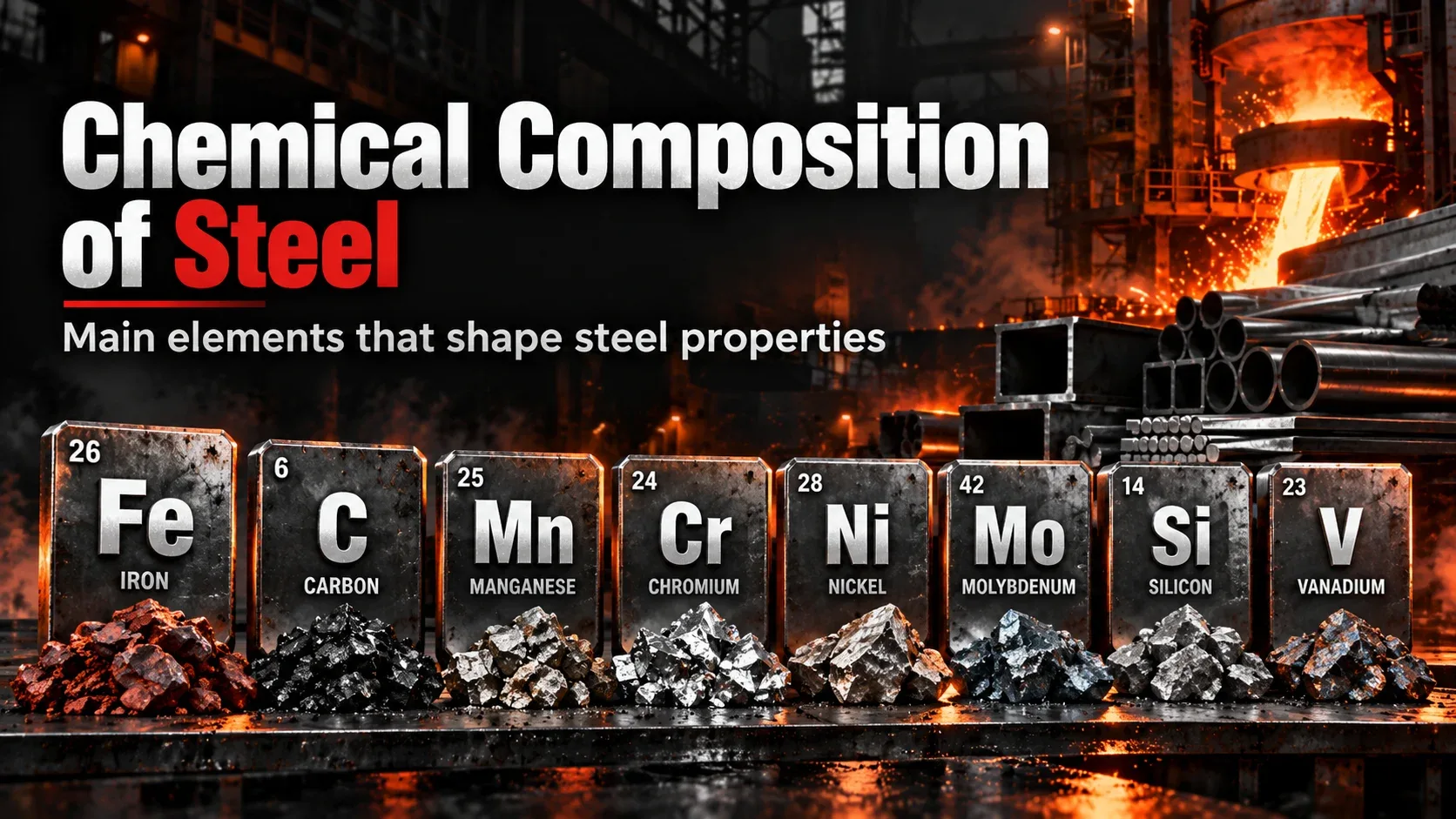
| Element | Role in Steel | Typical Effect |
|---|---|---|
| Iron | Main base metal | Forms the basic metallic structure |
| Carbon | Strengthening element | Can increase strength and hardness |
| Manganese | Alloying and processing element | Can improve strength and toughness |
| Chromium | Corrosion and wear resistance | Important in stainless and wear-resistant steels |
| Nickel | Toughness and corrosion resistance | Can improve toughness and performance in harsh environments |
| Molybdenum | Strength and heat resistance | Can improve performance at elevated temperatures |
| Silicon | Strengthening and deoxidation | Used in various structural and electrical steels |
| Vanadium | Grain refinement and strengthening | Can improve hardness, strength and wear resistance |
Why Is Carbon Added to Iron?
Carbon is one of the most important elements in steel because relatively small changes in carbon content can significantly influence the properties of the finished material.
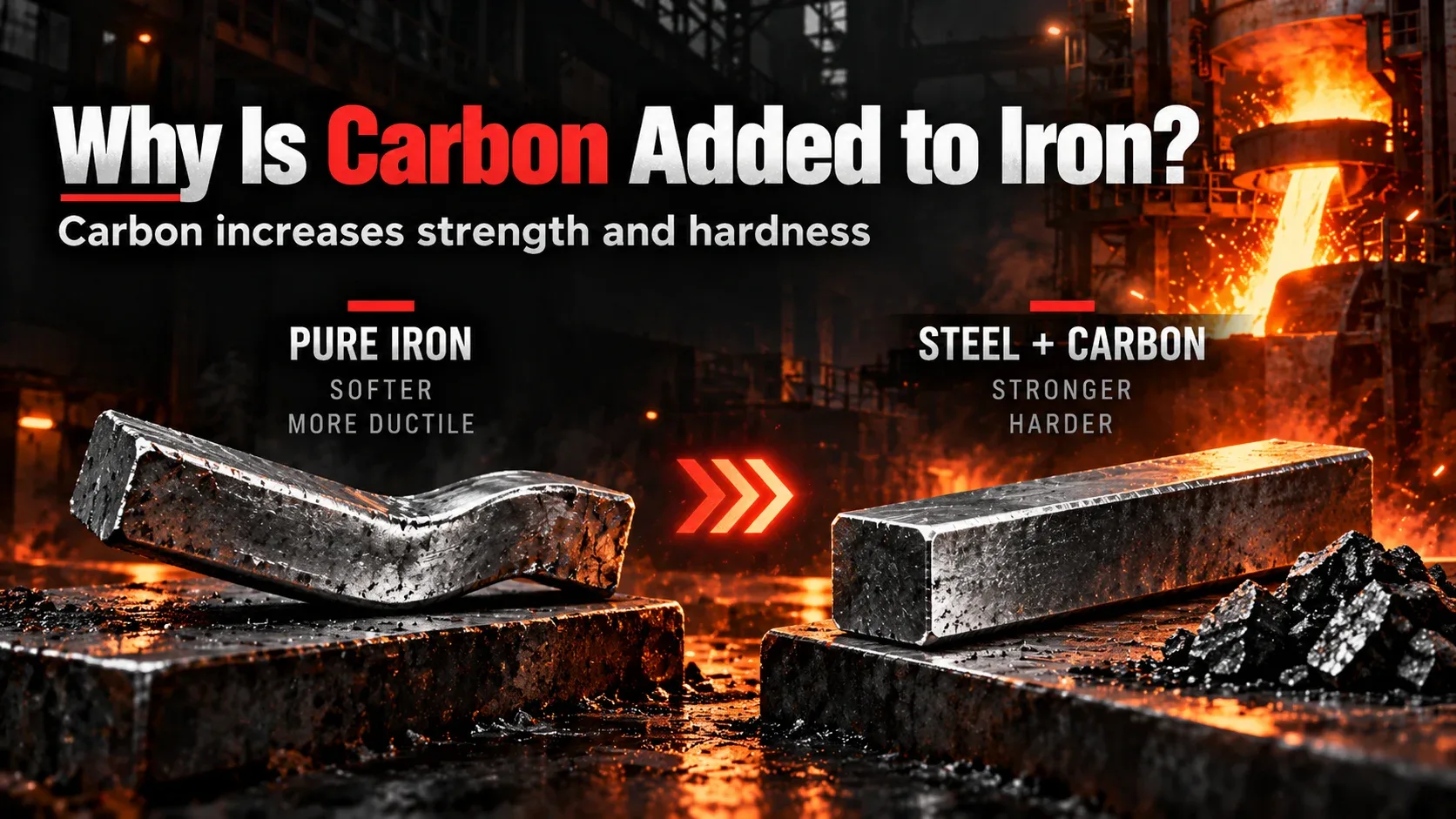
Adding carbon can increase hardness and strength, but there is a trade-off. As carbon content increases, ductility and weldability may decrease.
- Carbon can increase steel hardness.
- It can improve tensile strength.
- Higher levels can reduce ductility.
- Increasing carbon can make welding more difficult.
- Carbon strongly influences heat-treatment behavior.
How Carbon Content Affects Steel Properties
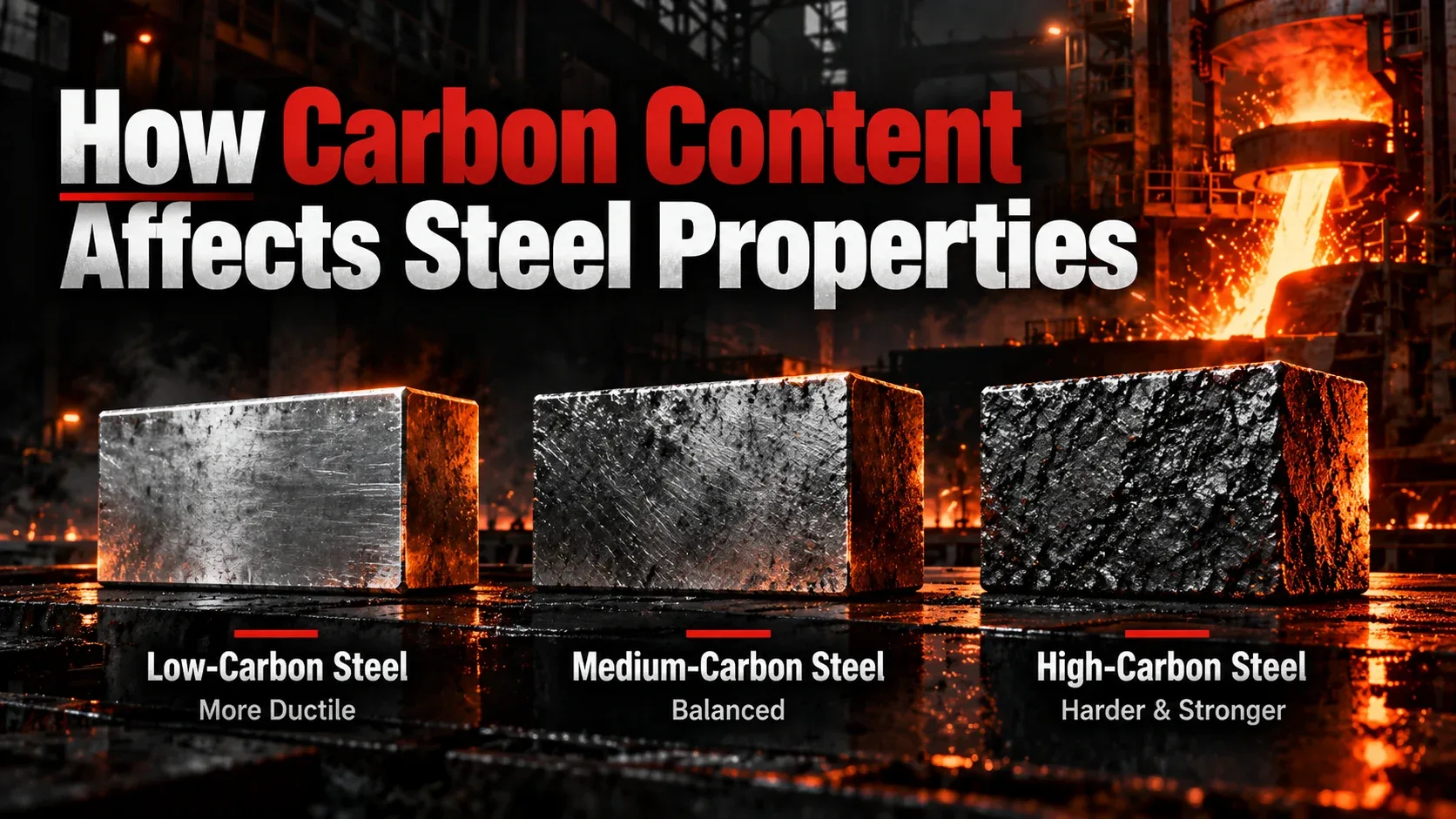
Low-Carbon Steel
Low-carbon steels are generally easy to form and weld. They are commonly used where good ductility and economical manufacturing are important.
Common uses: automotive body panels, structural sections, sheet metal and tubing.
Medium-Carbon Steel
Medium-carbon steel usually provides a balance between strength, toughness and hardness.
Common uses: gears, shafts, rails and mechanical components.
High-Carbon Steel
High-carbon steels can provide greater hardness and wear resistance but are generally less ductile than lower-carbon grades.
Common uses: springs, cutting tools and wear-resistant components.
Why Carbon Balance Matters
Engineers select carbon levels according to the required combination of hardness, strength, toughness, weldability, formability and cost.
What Is Steel Material?
For readers asking what is steel material, steel can be described as a highly adaptable engineering alloy whose chemistry, microstructure and processing can be modified to achieve different performance characteristics.
This ability to tailor the material is one of the main reasons steel is used in such a wide range of industries.
- High strength potential
- Good toughness in suitable grades
- Wide range of hardness levels
- Good formability in appropriate grades
- Good weldability in suitable compositions
- Established manufacturing processes
- High recyclability
What Are the Four Main Types of Steel?
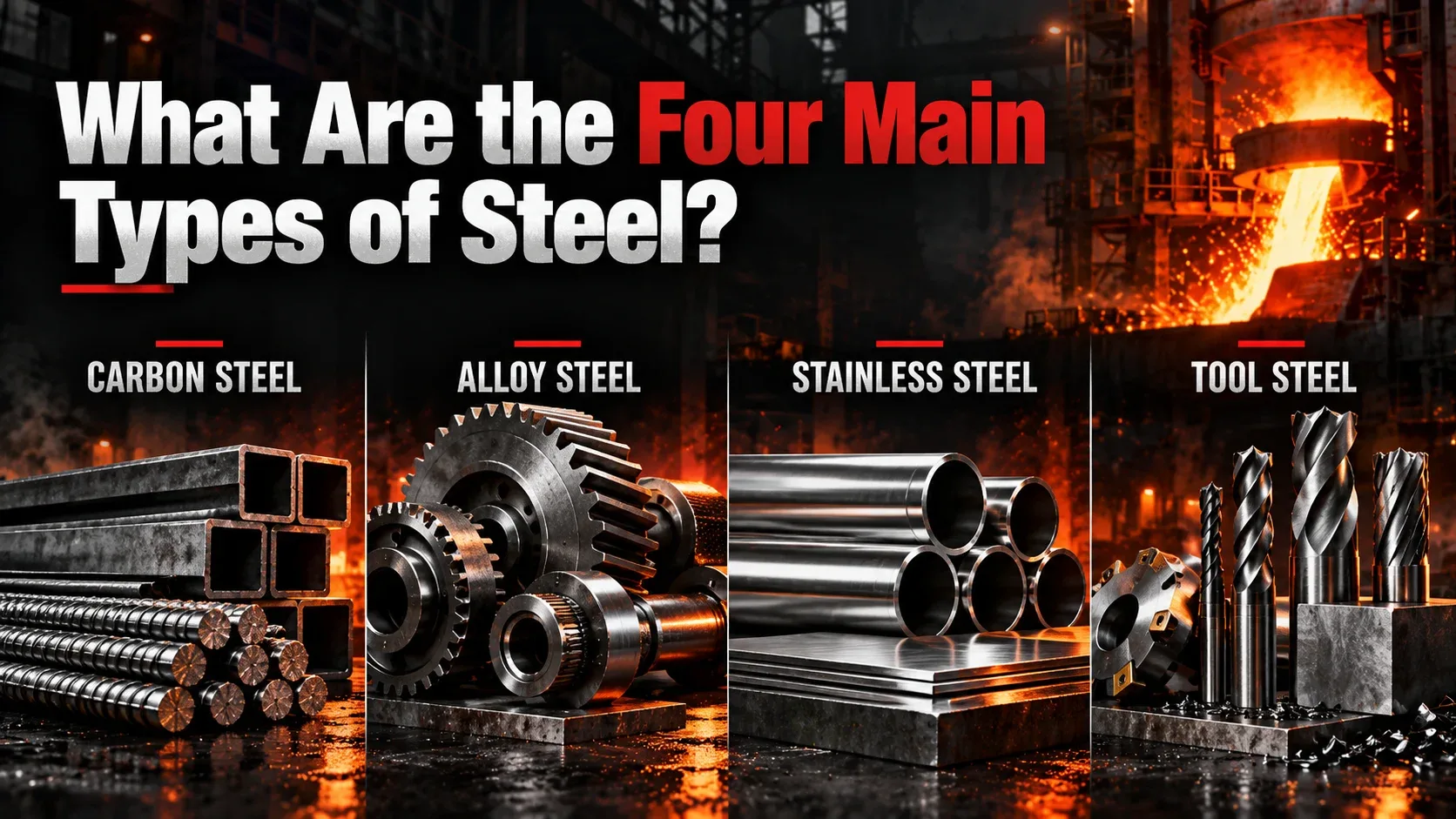
1. Carbon Steel
Carbon steel is primarily made from iron and carbon, with relatively limited quantities of deliberately added alloying elements.
2. Alloy Steel
Alloy steel contains additional elements such as chromium, nickel, molybdenum, manganese or vanadium to provide particular properties.
3. Stainless Steel
Stainless steel contains chromium at levels sufficient to produce a protective passive surface layer that improves corrosion resistance.
4. Tool Steel
Tool steels are designed for high hardness, wear resistance, cutting performance and resistance to deformation.
Composition of Different Types of Steel
| Steel Type | Basic Composition | Main Characteristic | Common Uses |
|---|---|---|---|
| Carbon Steel | Iron + carbon | Strength and affordability | Buildings, pipes and automotive components |
| Alloy Steel | Iron + carbon + alloying elements | Specialized mechanical properties | Gears, shafts and machinery |
| Stainless Steel | Iron + carbon + chromium | Corrosion resistance | Cookware, medical tools and food equipment |
| Tool Steel | Iron + carbon + selected alloying elements | Hardness and wear resistance | Drills, cutters, dies and punches |
How Is Steel Made?
Steel can be produced using different industrial processes, but the basic goal is to create molten metal, control impurities, adjust the chemical composition and then form the material into useful products.
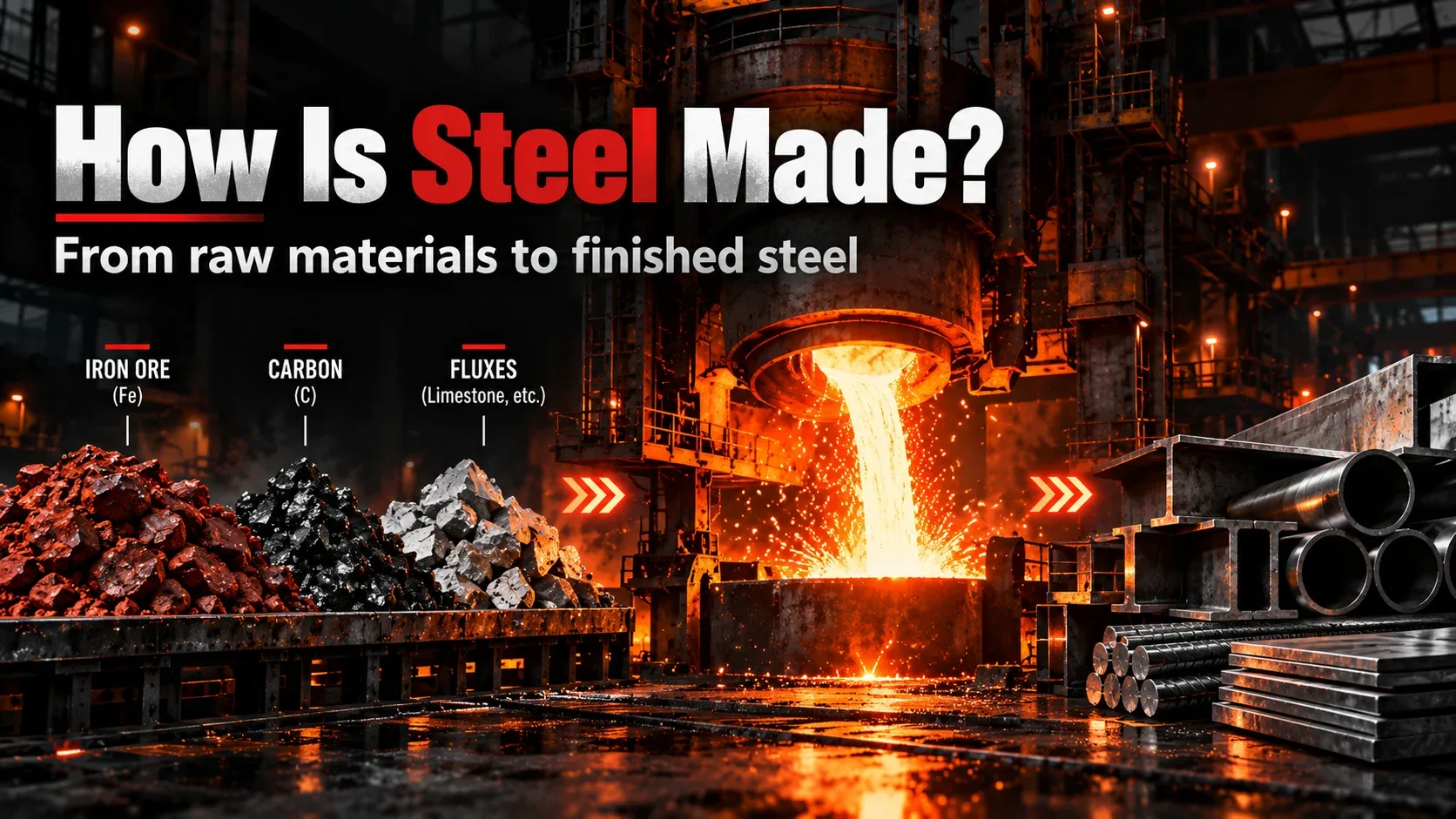
Raw Materials Are Prepared
Steelmaking may use iron ore, recycled steel scrap, carbon sources, fluxes and alloying materials.
Iron Is Produced or Scrap Is Melted
Integrated steel plants may use blast furnaces, while electric arc furnaces commonly melt recycled steel and other metallic feedstock.
The Molten Metal Is Refined
Unwanted elements are controlled and the chemistry is adjusted to meet the required specification.
Alloying Elements Are Added
Chromium, nickel, manganese, molybdenum, vanadium and other elements can be introduced depending on the grade.
The Steel Is Cast
Molten steel is solidified into forms such as slabs, billets or blooms.
The Material Is Formed and Finished
The steel may then be rolled, forged, drawn, machined, heat-treated, coated or otherwise processed for its final application.
Important Properties of Steel
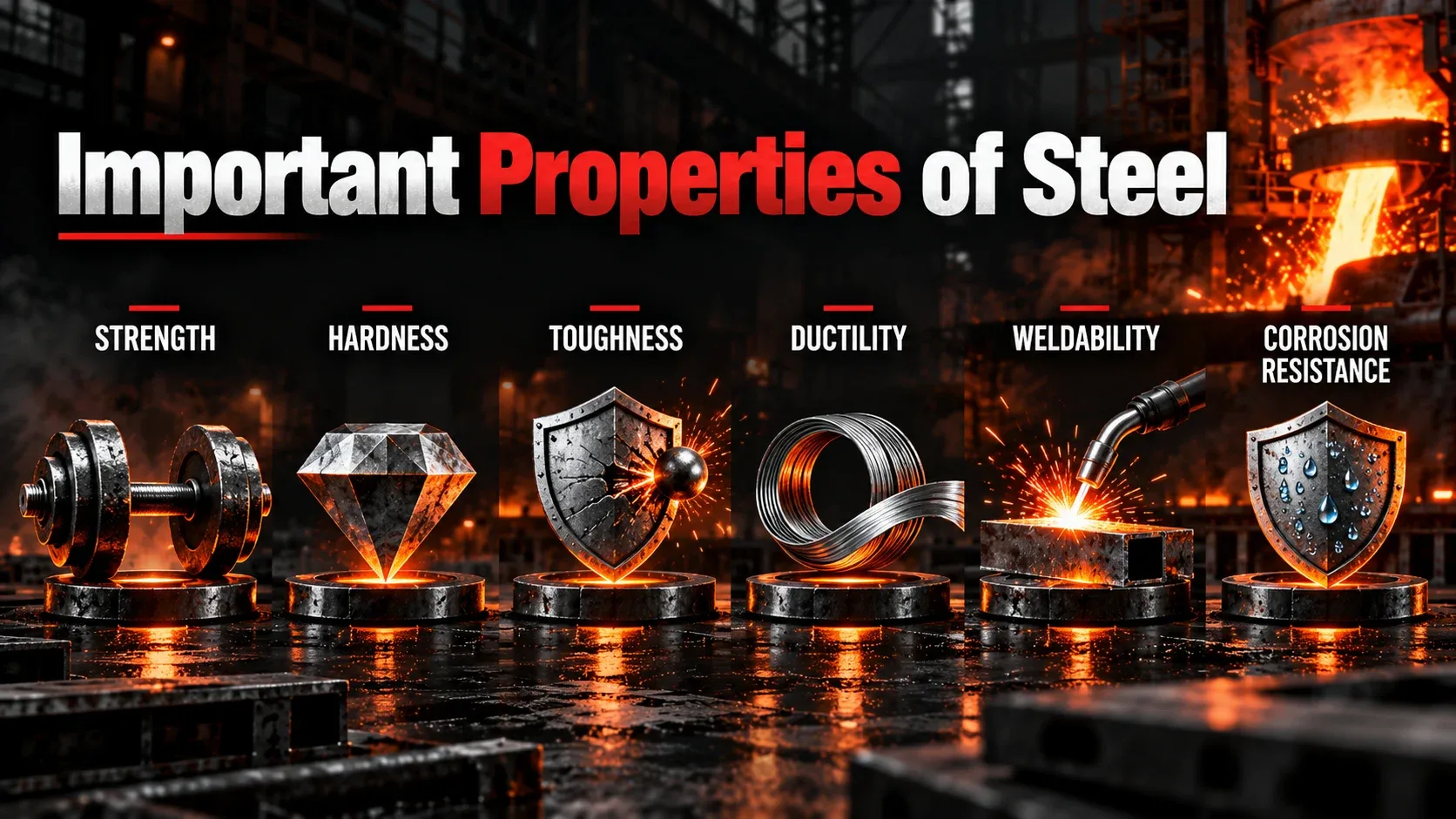
Strength
Strength describes steel’s ability to withstand applied forces without unacceptable deformation or failure.
Hardness
Hardness describes resistance to indentation, scratching and wear.
Toughness
Toughness is the ability of a material to absorb energy before fracturing.
Ductility
Ductility describes how much a steel can plastically deform before it breaks.
Weldability
Some steel grades are easy to weld, while others require specialized procedures, preheating or controlled cooling.
Corrosion Resistance
Resistance to corrosion depends on chemical composition, environment, surface treatment and protective coatings.
Why Do Different Steel Grades Have Different Properties?
Steel is not a single material with one fixed set of characteristics. Two steel grades may share similar base ingredients yet behave very differently.
Steel properties can be influenced by:
- Carbon content
- Alloying elements
- Heat treatment
- Cooling rate
- Grain structure
- Microstructure
- Hot or cold working
- Manufacturing process
For example, steel used for a car body must be suitable for forming and high-volume manufacturing, while steel used for a cutting tool must prioritize hardness and wear resistance.
Iron vs Steel: What Is the Difference?
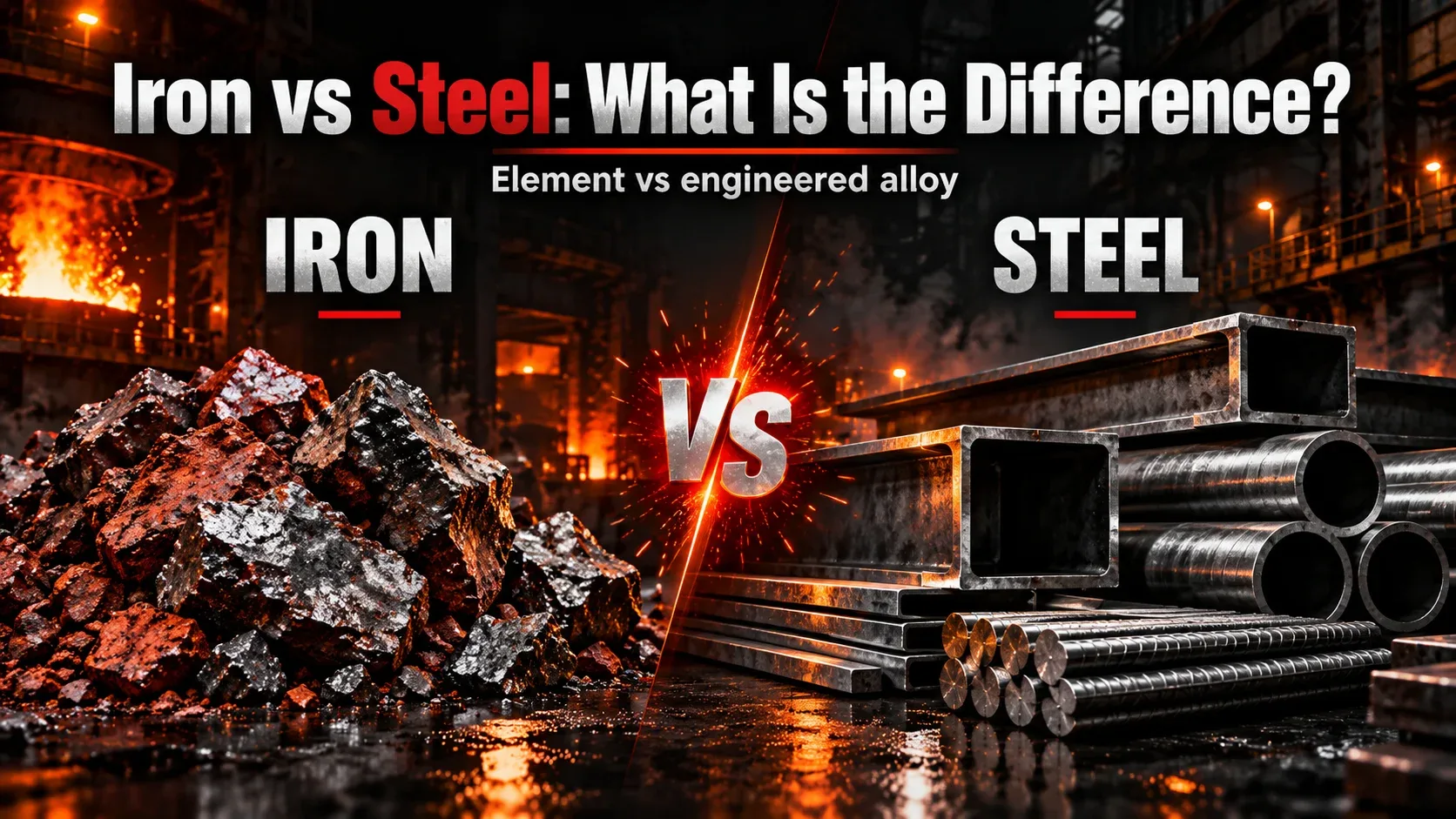
| Feature | Iron | Steel |
|---|---|---|
| Material Type | Chemical element | Iron-based alloy |
| Composition | Mainly iron | Iron, carbon and possible alloying elements |
| Property Control | More limited | Highly customizable |
| Strength | Depends on form and purity | Can be engineered for very high strength |
| Common Uses | Raw material and cast products | Vehicles, buildings, machinery and tools |
Is Steel the Same as Stainless Steel?
No. Stainless steel is a type of steel. It is still primarily iron-based, but it contains chromium and may contain nickel, molybdenum and other alloying elements.
Chromium allows stainless steel to develop a thin passive surface film that provides much better corrosion resistance than many ordinary carbon steels.
Carbon Steel
Carbon steel can provide excellent strength and affordability but often requires paint, coatings or other corrosion protection.
Stainless Steel
Stainless steel offers greater corrosion resistance and is widely used in food, medical, chemical, architectural and household applications.
What Is Steel Used For?
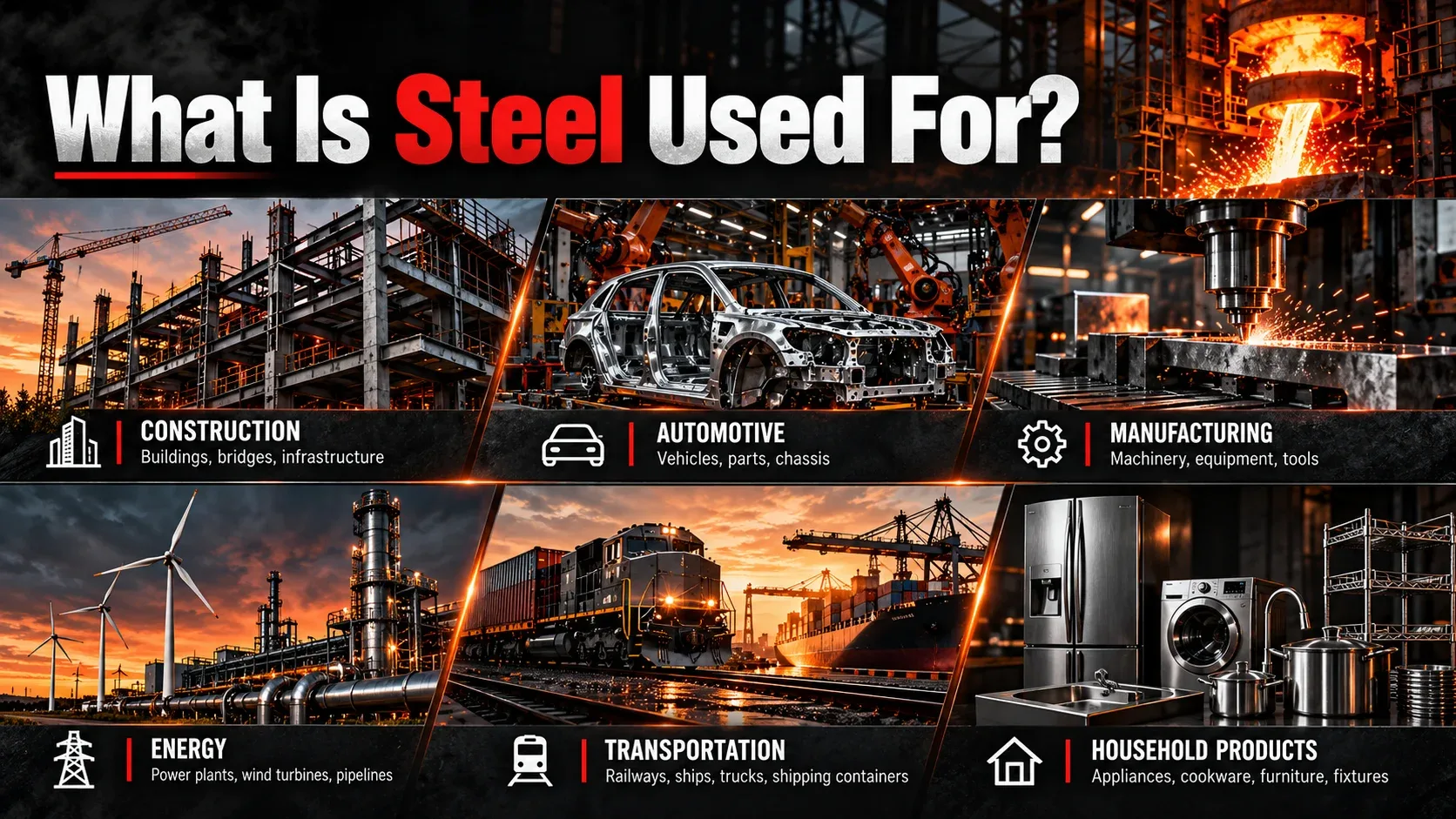
Construction
Steel is used in beams, columns, reinforcement, bridges, warehouses and industrial structures.
Automotive
Cars use steel in body structures, chassis components, gears, shafts, suspension parts and fasteners.
Manufacturing
Steel is used to make machines, tools, dies, molds, conveyors and factory equipment.
Household Products
Common applications include appliances, cookware, furniture, shelving, cutlery and hardware.
Energy
Steel is used in pipelines, turbines, wind towers, drilling equipment and power-generation systems.
Transportation
Railways, ships, trucks, trailers and transport infrastructure all rely heavily on steel.
Why Is Steel So Widely Used?
Steel is widely used because its properties can be modified for thousands of different applications.
- High strength
- Good durability
- Wide range of grades
- Established manufacturing methods
- Can be rolled, forged, welded and machined
- Properties can be modified by heat treatment
- High recyclability
- Competitive cost for many applications
Does Steel Have Any Disadvantages?
Steel has many advantages, but it is not ideal for every situation.
- Many steel grades can rust without protection.
- Steel is heavier than aluminum and some other engineering materials.
- Highly alloyed steels can be expensive.
- Some grades are difficult to weld.
- Very hard steels can have lower ductility.
- Certain grades can be difficult to machine.
The correct material should always be selected according to loading, temperature, environment, manufacturing requirements and expected service life.
Quick Facts About Steel
Steel Is an Alloy
Steel is not a pure element. It is primarily an iron-based alloy.
Carbon Has a Major Effect
Small changes in carbon content can significantly affect steel properties.
Thousands of Grades Exist
Different grades are developed for different engineering requirements.
Stainless Steel Is Steel
Stainless steel is an iron-based alloy containing chromium.
Heat Treatment Matters
Controlled heating and cooling can significantly change steel properties.
Steel Is Recyclable
Steel scrap can be remelted and used to manufacture new products.
Frequently Asked Questions About Steel
What is steel mainly made of?
Steel is mainly made from iron and carbon. Depending on the grade, it may also contain chromium, nickel, manganese, molybdenum, silicon, vanadium and other elements.
Is steel 100% iron?
No. Steel contains iron together with carbon and potentially other alloying or residual elements.
Is steel a metal or an alloy?
Steel is a metallic alloy based primarily on iron.
Why is carbon added to steel?
Carbon can increase hardness and strength and strongly influences how steel responds to heat treatment.
What is stainless steel made of?
Stainless steel is primarily made from iron, carbon and chromium. Many grades also contain nickel, molybdenum or other alloying elements.
Is steel stronger than iron?
Many steel grades can be significantly stronger than relatively pure iron because their composition and processing are engineered for greater mechanical performance.
Can steel rust?
Yes. Many carbon and low-alloy steels can corrode when exposed to moisture and oxygen. Stainless steel generally provides much better corrosion resistance.
Is all steel made the same way?
No. Different production routes, alloying methods, forming processes and heat treatments are used depending on the required grade and application.
Final Thoughts: What Is Steel Made Of?
So, what is steel made of? Steel is primarily an iron-based alloy containing carbon. Depending on its intended purpose, it can also contain chromium, nickel, manganese, molybdenum, silicon, vanadium and other carefully controlled elements.
These ingredients work together with manufacturing processes and heat treatment to determine whether a particular steel is easy to form, highly resistant to corrosion, extremely hard, tough under impact or strong enough for demanding structural applications.
Steel is not one fixed recipe. Its composition and processing can be engineered to create very different properties for very different jobs.