
CVTs do not shift through a fixed set of gears like a typical automatic. Here is what that means for the way a car accelerates, ages, and fits into everyday ownership.
What is a CVT?
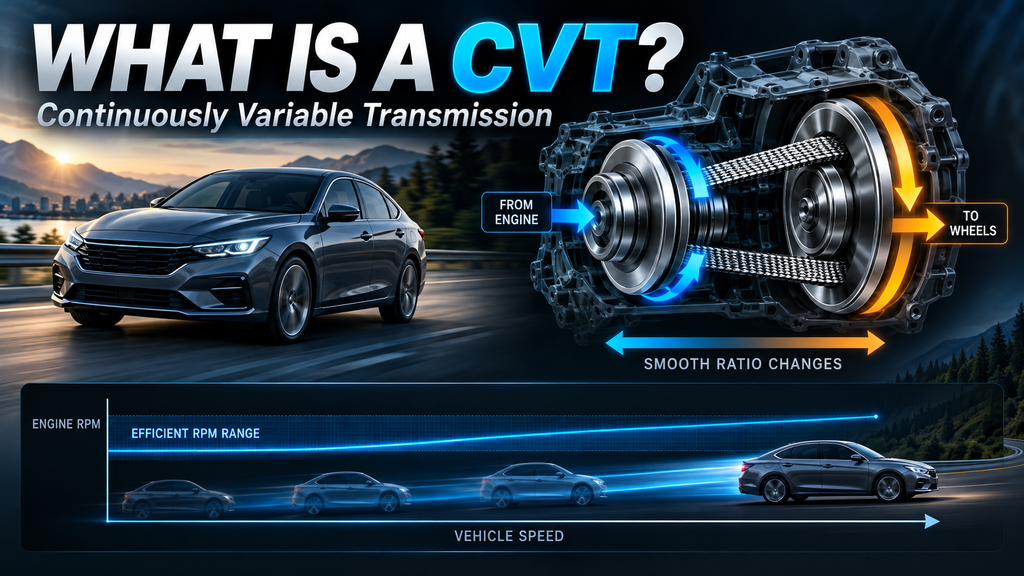
A continuously variable transmission, or CVT, is an automatic transmission that can move through a wide range of gear ratios without making the distinct upshifts you feel in a conventional automatic. Instead of selecting first, second, third, and so on, it continuously adjusts the relationship between engine speed and wheel speed to suit the moment.
Why manufacturers use them
By keeping the engine closer to an efficient RPM range, a CVT can help a small engine deliver smooth acceleration and competitive fuel economy.
How a CVT works without normal gears
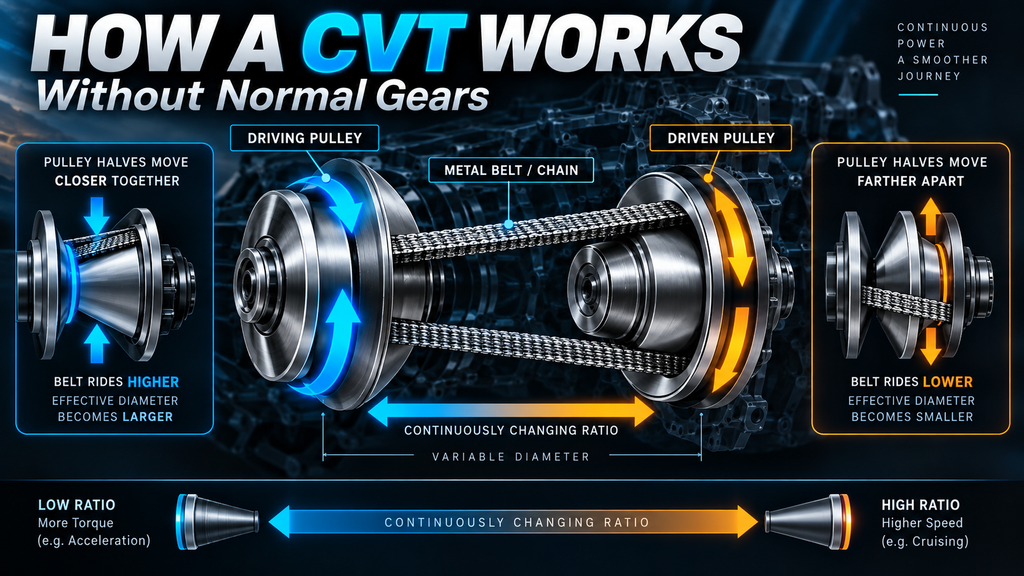
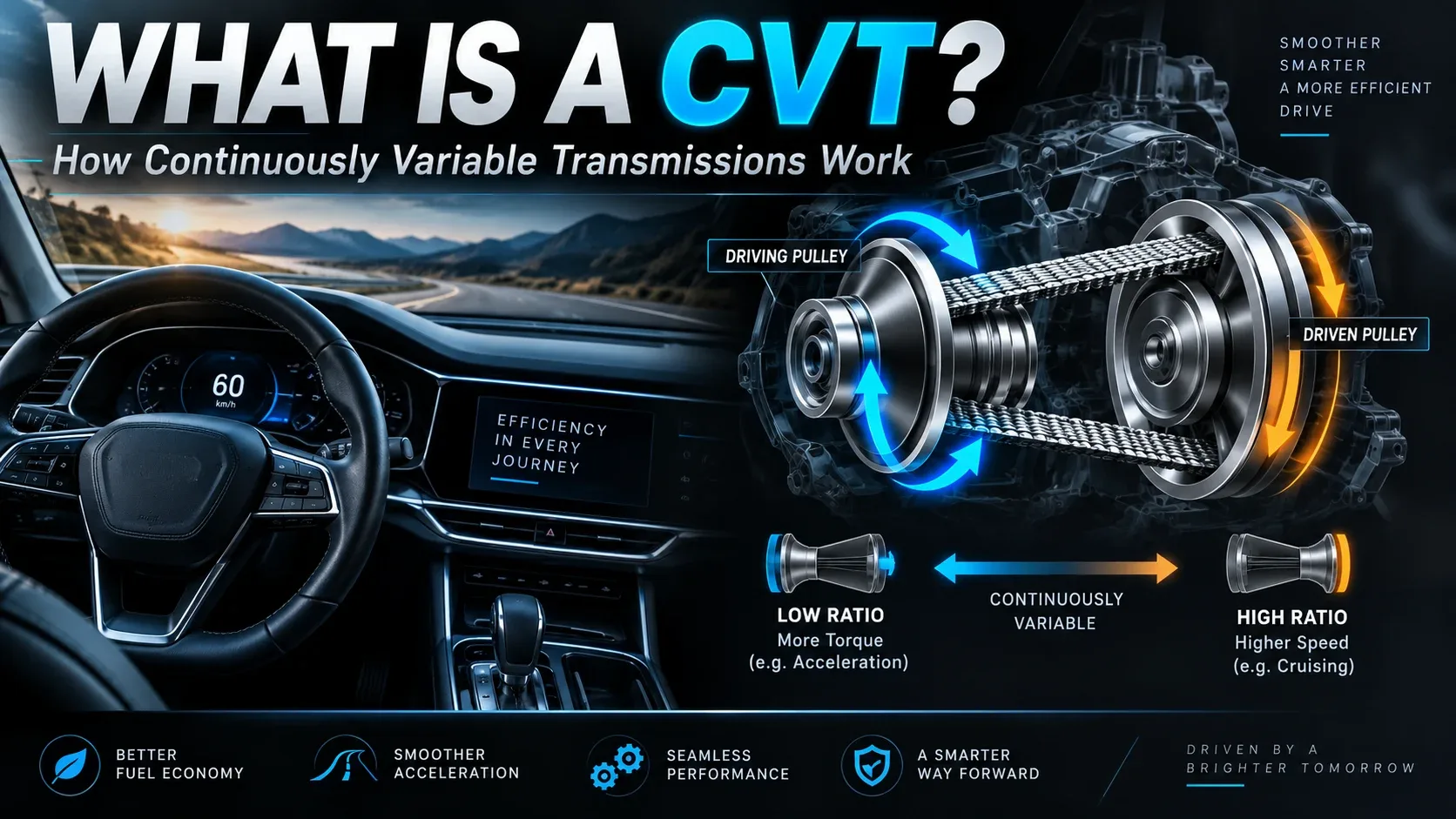
Many passenger-car CVTs use two variable-diameter pulleys linked by a strong metal belt or chain. Each pulley is made from two cone-shaped halves. Hydraulic pressure moves the halves closer together or farther apart, changing where the belt rides. One pulley gets effectively larger as the other gets smaller, creating a continuously changing ratio.
CVT vs. a Conventional Automatic
Both are automatic transmissions: neither requires you to operate a clutch pedal. The difference is in how they provide ratios and how that feels from the driver’s seat.
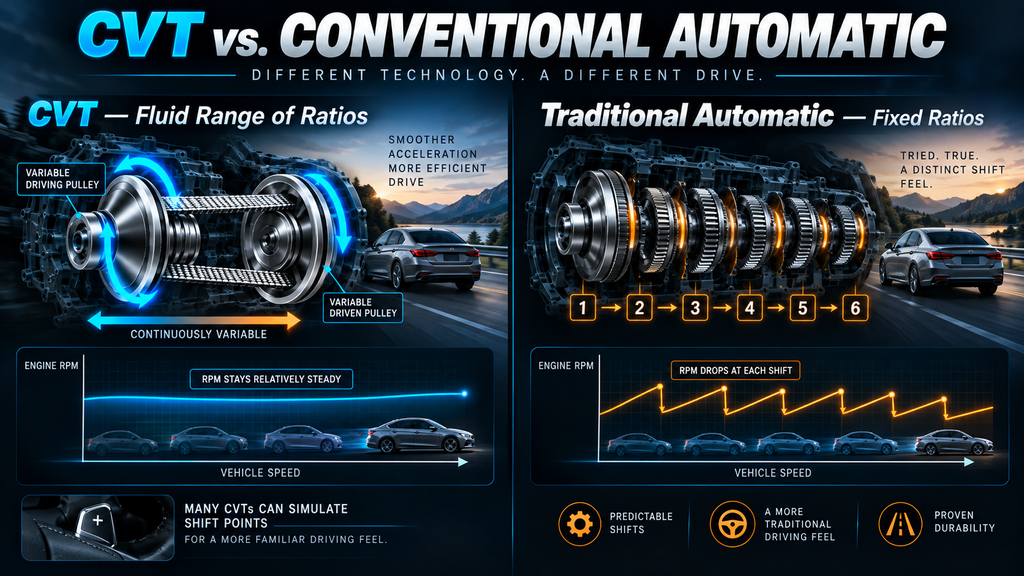
Continuously variable transmission
A fluid range of ratios
The ratio can change gradually and keep the engine at a chosen RPM. Some models program simulated “shifts” to feel more familiar.
Traditional automatic
A set of fixed ratios
It moves through defined gears. You usually feel or hear a shift as the engine RPM drops and the next ratio takes over.
Why a CVT can feel different to drive
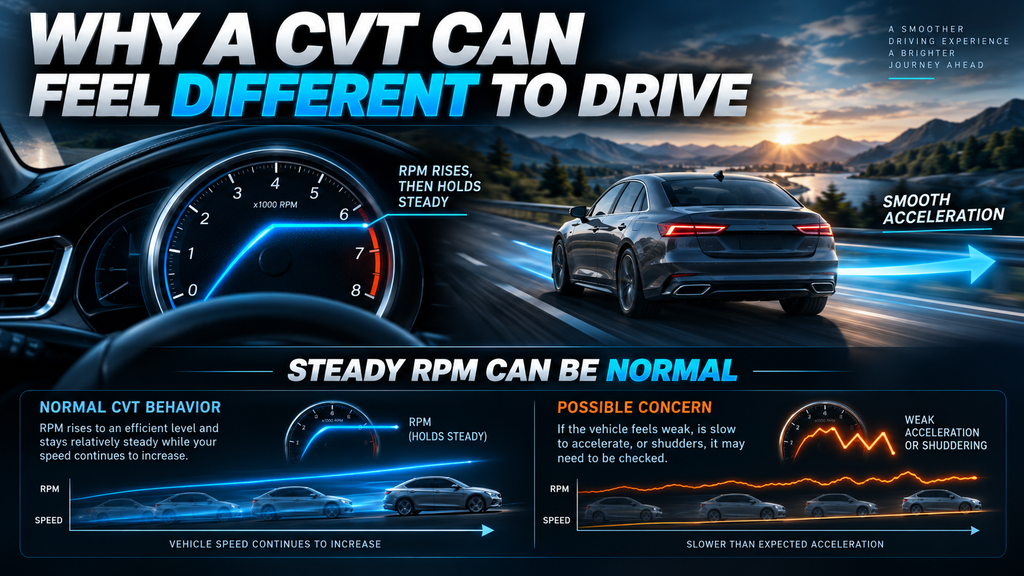
Press the accelerator firmly and a CVT may let the engine rise to a higher RPM and stay there while the vehicle gathers speed. Drivers sometimes call this the “rubber-band effect.” It can sound unusual if you expect a gear change, but the sound alone is not proof that anything is wrong.
What matters: the car should accelerate smoothly and predictably. High RPM with weak acceleration, shuddering, or an unusual noise deserves attention.
Are CVTs reliable?
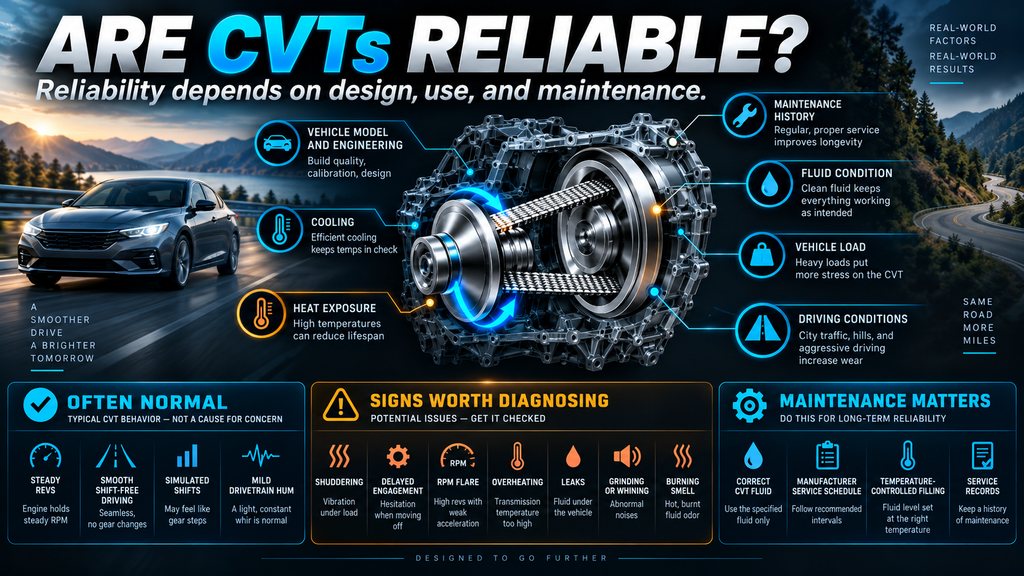
A CVT is not automatically unreliable. Reliability varies with the specific model, engineering, cooling capacity, vehicle load, heat exposure, maintenance history, and driving conditions. Older problem-prone applications shaped the reputation of the technology, but a well-designed, correctly serviced CVT can provide many years of useful service.
Often normal CVT behavior
Engine revs that hold steady during hard acceleration; a smooth, shift-free sensation; programmed faux shifts in some vehicles; mild drivetrain hum that does not worsen.
Signs worth diagnosing
Shuddering or vibration, RPM flares with little forward motion, delayed Drive or Reverse engagement, grinding or whining, overheating warnings, leaks, or a burning smell.
CVT maintenance: the details matter
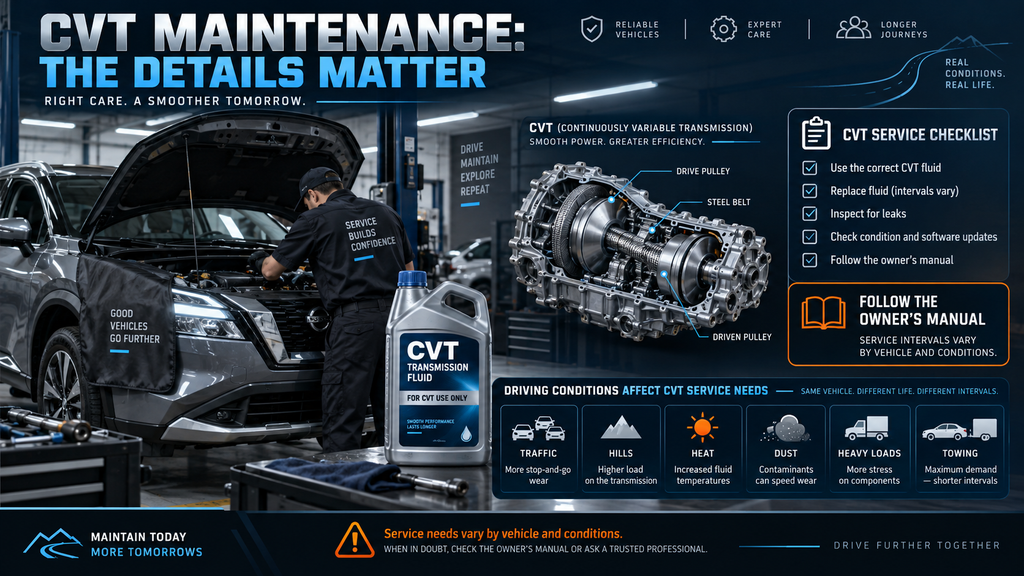
Do not use one mileage number for every CVT. The owner’s manual and the manufacturer’s severe-service schedule should guide service timing. Heat, traffic, hills, full loads, dusty conditions, and towing can all make service needs more demanding.
- Use only the exact CVT fluid specified for the vehicle. Ordinary automatic-transmission fluid may damage a CVT.
- Ask a qualified workshop about the proper temperature-controlled filling procedure, especially on sealed units.
- Keep detailed service invoices. They support resale value and can be useful for warranty or goodwill discussions.
Should you avoid a used car just because it has a CVT?

No. Judge the exact model, model year, powertrain, maintenance records, and condition—not the three letters alone. A thorough pre-purchase inspection is especially valuable when a transmission has an uncertain history.
- Test-drive it cold and fully warmed up.
- Check for smooth Drive and Reverse engagement.
- Review service records and the correct fluid used.
- Check recalls, service bulletins, and warning lights by VIN.
CVT questions, answered
Is a CVT the same as an automatic transmission?
A CVT is a type of automatic transmission. It automatically changes the ratio between engine and wheels, but it generally does so without the fixed gear steps used by a conventional automatic.
How long can a CVT last?
There is no dependable universal lifespan. Service history, the exact model, fluid condition, cooling, loads, and driving environment all matter. A vehicle-specific reliability record is more useful than a blanket CVT lifespan claim.
Can a CVT tow or handle highway driving?
Many CVT-equipped vehicles are comfortable on the highway. Towing capability is vehicle-specific: follow the manufacturer’s tow rating and severe-use guidance, and do not assume every CVT vehicle is designed for heavy loads or repeated steep grades.