
Accidents, flood damage and even altered mileage can all affect the condition of a vehicle, but how do you find out if you’re buying a used car?
Buying a used car can be tricky. How do you know whether it’s in good condition, whether the price is fair and if there’s anything wrong with it?
Not all used-car sellers are forthcoming with details, though. Your used car might have been in an accident and repaired, or maybe it’s had a ton of owners over the years. Perhaps it was used as a rental car or sustained some kind of damage, which is information the seller may or may not be aware of.
That’s where a Carfax report can come in handy. But it’s important to note that a Carfax vehicle history report won’t tell you everything about a car, either. So it’s important to know what you can and cannot expect from a Carfax report before you buy a used car.
Check How Many Owners the Car Has Had
Ownership History. This will show you how many owners the vehicle has had and when the transfers of ownership took place. This can give you an idea of how the vehicle has been used and multiple ownership changes in a short time frame should make you take a closer look at the vehicle before purchasing.
Of course. There can be many different reasons why someone may sell their car, such as needing money, moving, wanting a new car, etc. A vehicle having many owners doesn’t automatically mean there’s something wrong with the car. That said, you may wonder why each owner decided to sell. Dates of title transfers can also provide helpful insight into a vehicle’s history before you buy.
Find Out If the Car Has Been in an Accident
Many buyers are curious if a used vehicle they are interested in purchasing has been in an accident. Sellers of accident damaged vehicles sometimes will have the vehicle professionally repaired, have body work done and even have the vehicle professionally painted so that when they put the vehicle up for sale the potential buyer wouldn’t know it was accident damaged. This information is also included in a Carfax® Vehicle History Report. Accident and other damage records are included as well as the date and location if available.
Damage sustained in larger accidents can lead to bigger problems down the road, especially if the frame or any critical safety components were involved. Smaller accidents, such as bumper scrapers, may not necessarily have an impact on how the vehicle runs.
If your vehicle history report shows an accident claim, ask the seller what kind of damage the vehicle sustained and if the repairs were adequately performed. It can’t hurt to have a trusted mechanic take a look at the vehicle either. He might be able to spot repair work that could otherwise slip under your radar.
Check the Mileage History of the Vehicle
When shopping for a used car, buyers tend to gravitate towards vehicles with lower mileage since it can be an indicator of less wear and tear. But what if the mileage your seeing isn’t exactly, well…exactly?
Also referred to as mileage tampering or odometer fraud, odometer rollback occurs when a seller manipulates a vehicle’s mileage to make it appear as if it’s been driven less than it actually has. If you suspect you may have fallen victim to this type of fraud, check out the vehicle history report you received from Carfax for mileage entries recorded at past services, inspections and other reported events. Chances are, you’ll notice a discrepancy.
For example, if a used car has 60,000 miles on the odometer, but the Carfax report lists previous mileage of 90,000 miles, don’t ignore it. It could be a sign of tampered mileage or just an error in one of the records. Either way, it’s good to know before you buy. Always check the mileage against maintenance records and other paperwork you have access to.
See If the Car Has a Salvage or Rebuilt Title
The Carfax report may also identify if the vehicle received a branded title (examples of brands include salvage, rebuilt, flood, etc.) as a result of an event. A vehicle may be given a special title (brand) by the state if it sustained damage from an event such as a flood, fire, serious collision, etc. and was determined to be a “total loss” by an insurance company (or meets other criteria set by the state).
If the report lists salvage or rebuilt titles, ask the seller for more information. Also, have the vehicle inspected carefully. Why? Some vehicles with salvage titles are repaired and, once certain requirements are met, they’re eligible to be driven on public roads again. The vehicle may be issued a rebuilt title after repairs are made. But keep in mind that a rebuilt vehicle doesn’t necessarily mean the vehicle has been restored to its original condition. It may still have structural or mechanical issues.
Find Out If the Vehicle Has Flood Damage
Also, in cases of heavy rains, storms and floods, some cars get in contact with water. Though from the outside such cars may seem fine, inside, they may have suffered damages to their electrical connections, interiors and even mechanical parts. Such cars are repaired and resold and it is not easy to figure out if they were exposed to water or not. Again, here comes the help of the Carfax report. If the flood damage is reported to data sources of Carfax, then its report will have flood damage information and may even have flood related title.
Not all flooding events are reported. And some owners will fix issues without filing a claim. That’s why it’s important to look for water damage yourself. Check under the carpets and floor mats, around the seats, and in the trunk. If you see any signs of water damage, rust, or strange odors, it may be worth getting a closer look. Knowing a car’s flood history can help you avoid a car that might have (costly) problems down the road.
Check How the Car Was Previously Used
Find out whether the car in question was privately owned or used as a rental or company car. Vehicles that were used commercially or as rentals were often put through their paces by several different drivers in a short span of time and rack up significantly more miles than cars that were driven primarily for personal use. Past usage can be found on a Carfax Vehicle History Report.
Of course not! Many rental and company cars are well taken care of and regularly maintained. But it’s good to know the car’s history so you can make an educated decision about whether or not to buy the car. Ask the seller questions about the car’s maintenance and if there are any issues with the car.
Review the Service and Maintenance Records
Vehicle maintenance, such as oil changes, tire changes, brake repairs etc, can impact on the smooth running of your vehicle.
If a vehicle has been serviced at centres which report servicing information this can appear on a Carfax report, providing an indication of how often and when the vehicle was serviced.
If a car has regular service records it’s a good sign, as it indicates that at least some servicing has taken place and been noted down. But don’t assume a car hasn’t been regularly serviced just because Carfax doesn’t show it, as some garages and workshops don’t send servicing info to Carfax. Check with the seller to see if they have any receipts or other service records. This can give you a better idea of a car’s condition.
Check Whether the Car Has Been Reported Stolen
Check Before You Buy!
Buying a used vehicle can sometimes lead to headaches for new owners, so it’s important to do your homework before making any purchase. One of the most important checks to perform is making sure that the vehicle you’re interested in buying hasn’t been reported stolen! If you buy a car that has been reported stolen, you could run into problems establishing proof of ownership or registering the vehicle, even if you bought the car believing it to be legitimate.
If reporting sources provide Carfax with this information, Carfax Vehicle History Reports can tell you if a vehicle has a theft record.
Never assume that because a Carfax® report shows no indication that a vehicle was stolen, that it in fact wasn’t stolen at some point. VIN numbers should be run through any and all databases pertaining to vehicle theft available to you as well as checking with authorities as needed.
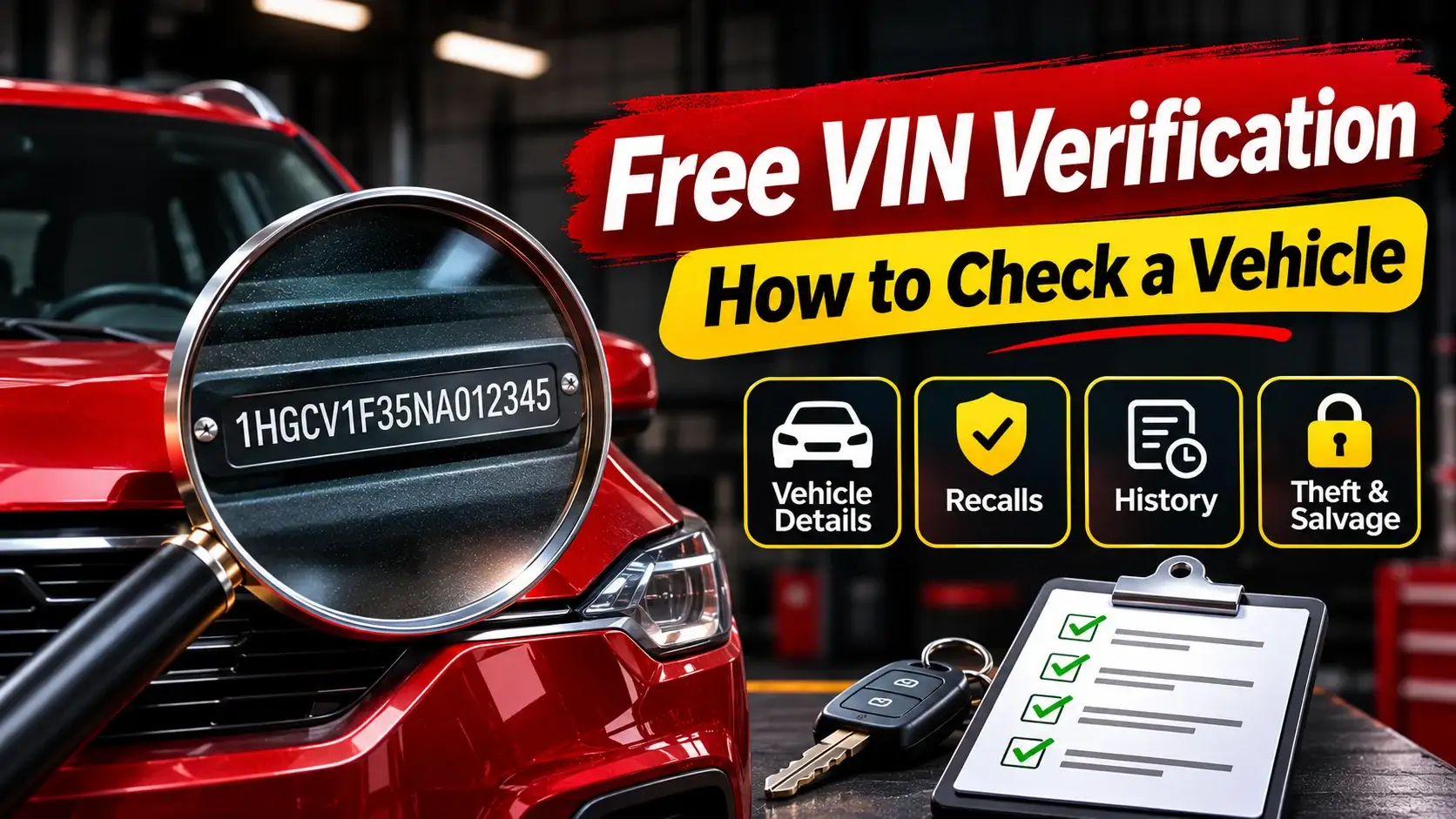
Before paying for a used car, verify that the VIN on the car matches the VIN listed on the paperwork pertaining to the used car. If there are any inconsistencies, demand answers from the seller before moving ahead.
See the Vehicle’s Previous Location History
Carfax reports will show whether or not the car was registered in another state or if the owner moved with the car. This will provide you with information about the kind of weather and driving conditions the car was subject to. If the car was driven in a state that receives significant amounts of snow and uses road salt to clear roads, then the car may experience rust problems in many parts of the car as a result of exposure to salt. On the other hand, if the car was driven in an area that experiences flooding regularly, you may want to have the car checked for possible water damage. There are other things that could happen to a used car that will not appear on a Carfax report.
A Carfax report is not going to tell you about everything that has happened to a used vehicle. Some accidents do not get reported, and some repairs are not put into a system. Carfax gathers its data from numerous sources, however there are many repair shops that do not report to Carfax. Therefore, remember that just because a Carfax report appears to show no issues, it does not mean there are no issues with the vehicle.
Remember That a Carfax Report Does Not Show Everything
Start your research with a Carfax report. Problems with the engine or transmission may not be reported on a Carfax report unless someone has reported a problem with those components.
Don’t assume a vehicle has problems because of its location history. Location history just shows where a vehicle has been. Combine the information you receive from a Carfax report with the condition of the vehicle and its service history to help you make your decision. Get the vehicle physically inspected by a qualified mechanic, inspect the vehicle yourself, and take it for a test drive before making a final decision.
Conclusion
Vehicle history reports, such as Carfax reports, can be an extremely helpful tool when looking to purchase a used vehicle. These reports may provide the consumer with useful information such as the vehicle’s ownership history, accident history, mileage information, title branding information, flood damage, service and maintenance records and more. However, consumers should be aware that information contained in a vehicle history report is limited to information that has been reported to companies such as Carfax. Therefore, a consumer should not purchase a vehicle solely on the basis that it has a “clean” vehicle history report.
Consumers are encouraged to perform (or have performed) an inspection of any vehicle prior to purchase and ensure that all paperwork is in order prior to making any purchase. Some problems may not be apparent upon visual inspection of a vehicle.
Above all, make sure you take the time to properly research a car’s history before parting with your hard earned cash. After all, you want to buy a good quality car that not only looks the part but whose history you’re also happy with.