
A practical guide to the rotating shaft that carries torque through many rear-wheel-drive, four-wheel-drive and all-wheel-drive systems — and the signs that deserve a proper inspection.
What is a propeller shaft?
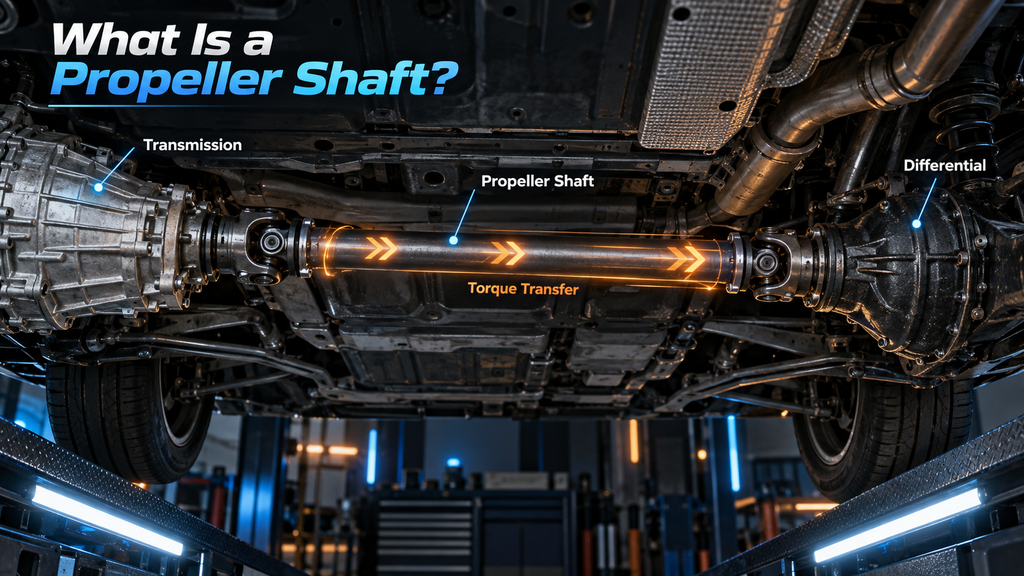
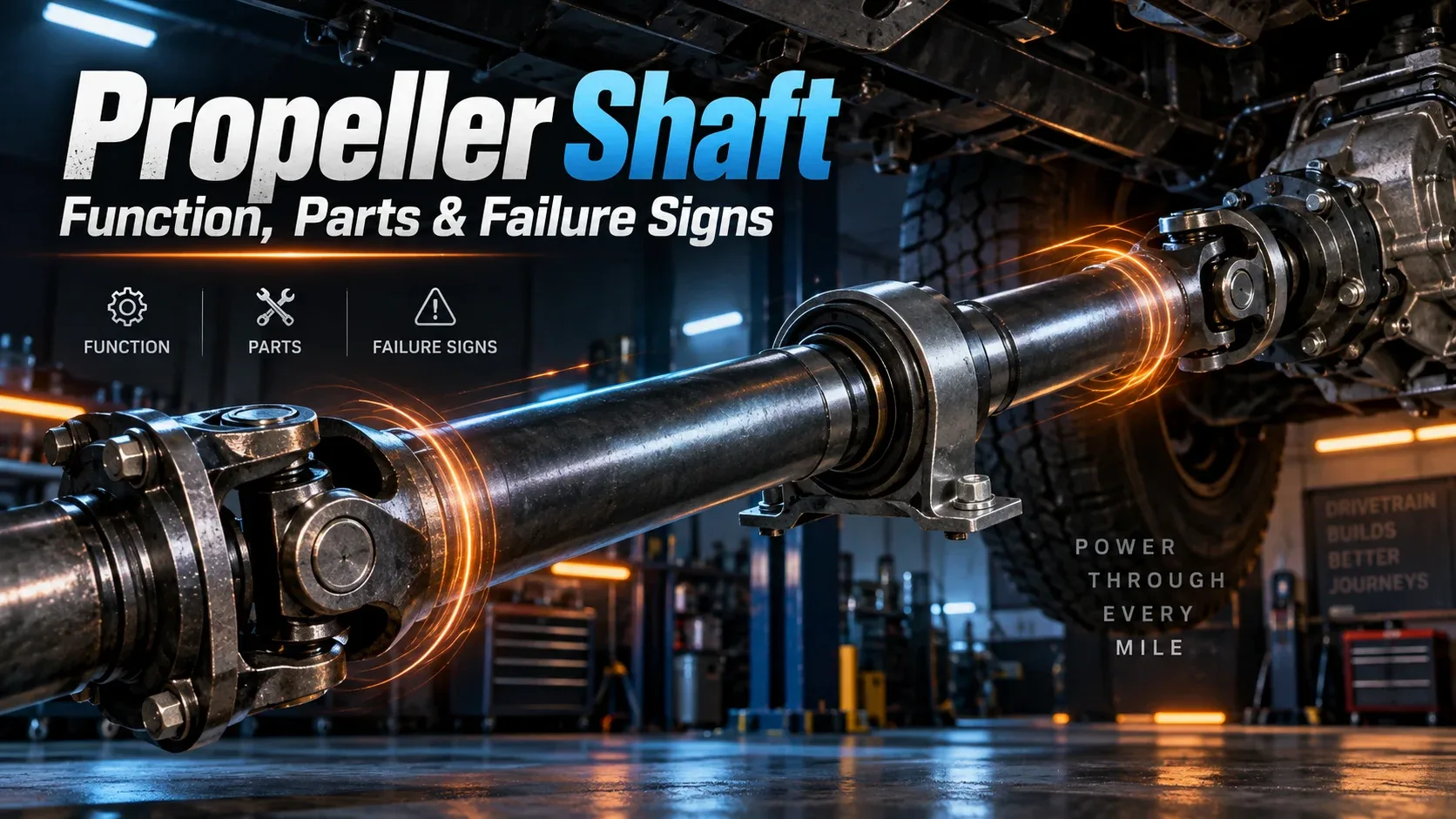
A propeller shaft, often called a propshaft or driveshaft, is a rotating drivetrain shaft that transfers torque from the transmission or transfer case to a differential. In many rear-wheel-drive and four-wheel-drive vehicles, it is the long shaft running beneath the vehicle between those major components.
It is not simply a rigid bar. A propshaft commonly uses joints, splines or flexible couplings so it can keep transmitting power while the engine, transmission and suspension move relative to one another. Exact design varies by vehicle, so terminology and component layout can differ.
Propeller shaft vs. axle shaft: why the names get confusing
In everyday use, “driveshaft” can mean different things. In this article, propeller shaft means the longer shaft connecting a transmission or transfer case to a differential. An axle shaft or half shaft normally sends torque from the differential to a wheel.
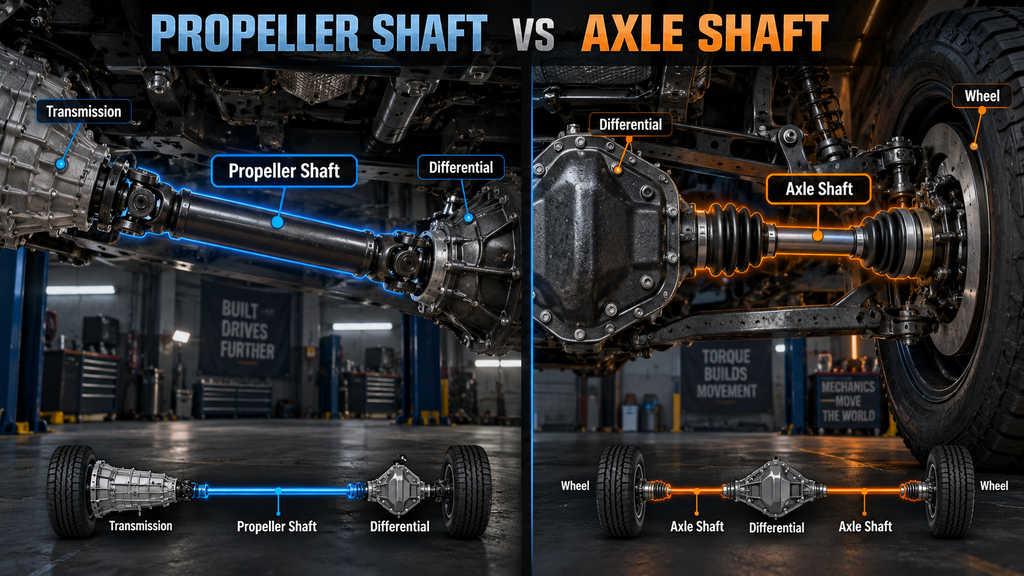
| Component | Main job | Typical location |
|---|---|---|
| Propeller shaft / propshaft | Transfers torque to a differential | Between transmission or transfer case and differential |
| Axle shaft / half shaft | Transfers torque from differential to wheel | At either side of a differential |
| CV axle | Transfers torque while allowing steering and suspension angle | Commonly at driven front wheels and independent rear suspensions |
Main propeller shaft parts
A shaft assembly may be one-piece or multi-piece. Its components are engineered as a system because length, joint angles, rotational speed and balance all influence smooth operation.
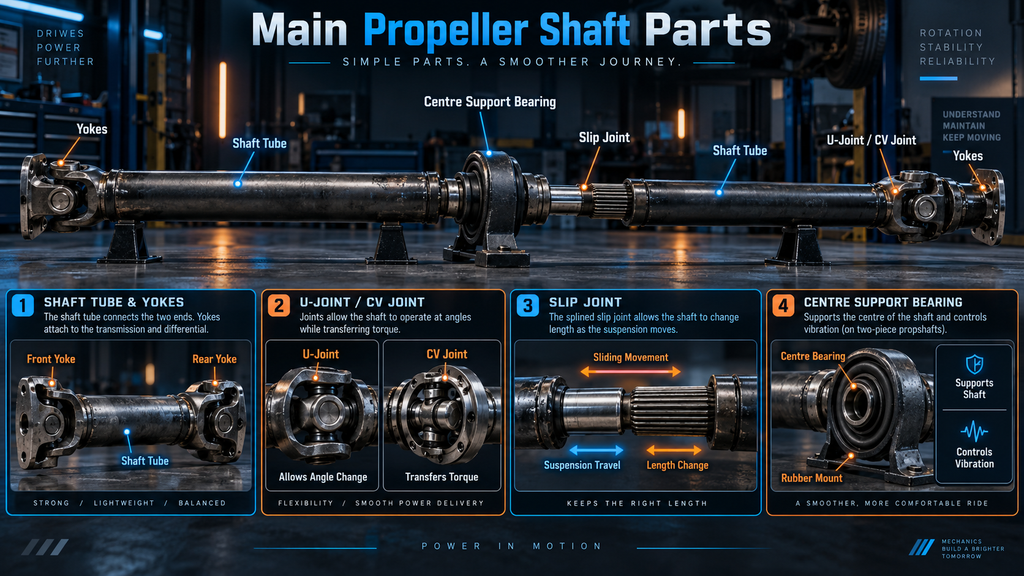
Shaft tube and yokes
The tube provides the main rotating structure. Yokes connect the tube to joints, flanges or companion flanges at each end.
U-joints or CV joints
These joints allow torque transfer where components are not perfectly in line. Some designs use universal joints; others use constant-velocity joints or flexible couplings.
Slip joint or slip splines
A sliding connection can accommodate changes in effective shaft length as the suspension moves through its travel.
Centre support bearing
Many two-piece shafts use a centre bearing and rubber mount to support the middle of the assembly and control vibration.
How the design changes by vehicle layout
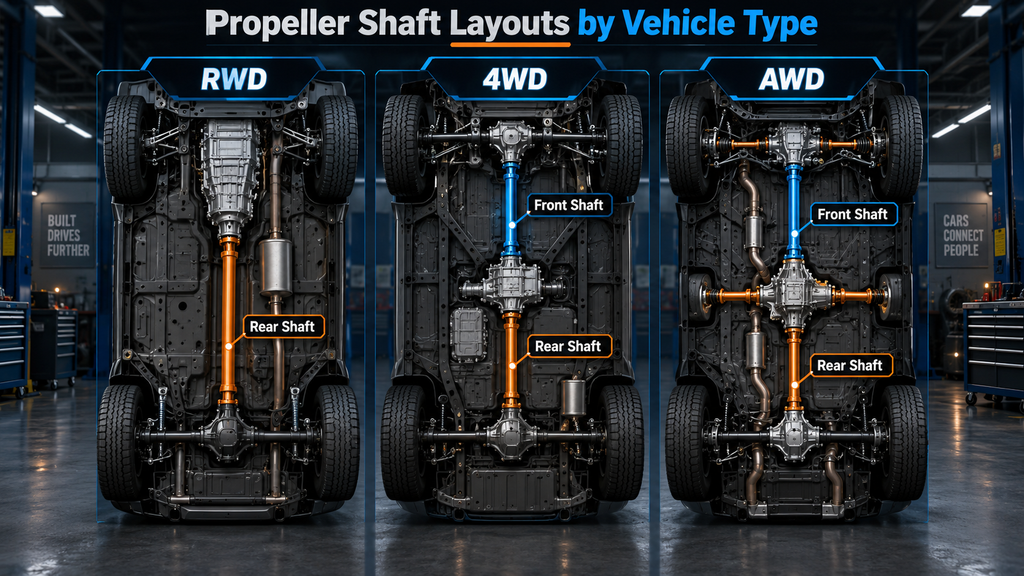
A traditional rear-wheel-drive vehicle usually has one rear propeller shaft. A 4WD vehicle may have both front and rear shafts from a transfer case. AWD arrangements vary widely: some use short shafts, some use multiple shafts, and some package the components differently around a transaxle.
Why balance and angles matter
A propshaft spins quickly, especially at road speed. A dented tube, missing balance weight, worn joint, incorrect installation phase or unsuitable operating angle can cause vibration. There is no universal acceptable specification — use the service information for the exact vehicle.
Common propeller shaft failure signs
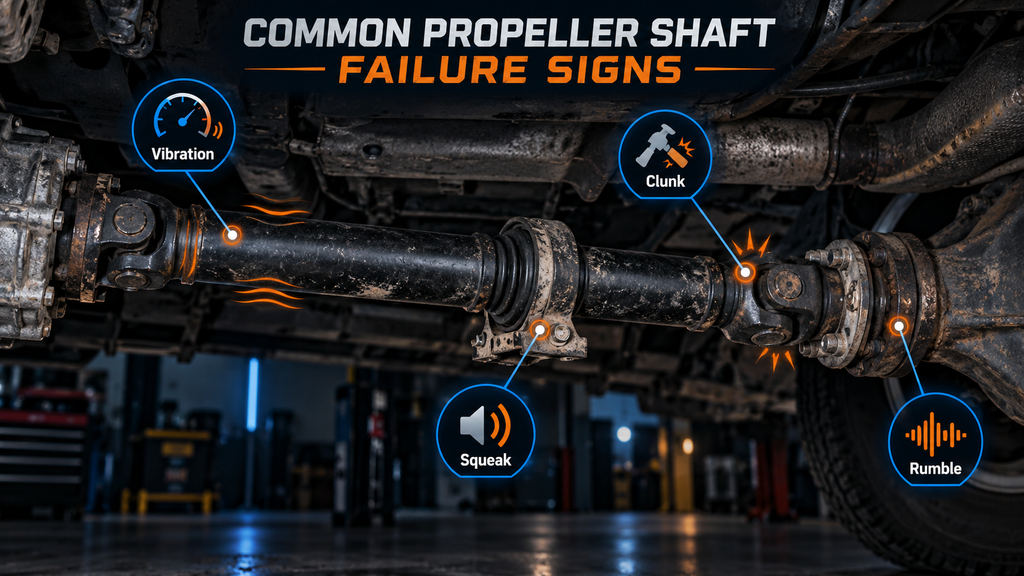
These symptoms can point toward the shaft or its supporting parts, but they are not proof on their own. Tires, wheels, mounts, differential backlash, suspension parts, wheel bearings and CV joints can create similar complaints.
1. Vibration that changes with vehicle speed
A vibration through the floor, seat or centre tunnel may become more noticeable in a particular speed range. Causes can include imbalance, a damaged tube, a worn support bearing or unsuitable joint angles.
2. Clunk when taking up drive or changing direction
Excessive play in a U-joint, slip joint or flange connection can produce a clunk when shifting between drive and reverse or when accelerating after coasting. Differential and mount wear can also cause this symptom.
3. Squeak, rumble or underbody shudder
A dry or worn joint can sometimes squeak at low speed, while a deteriorated centre bearing may rumble or allow the shaft to move more than intended. Any new driveline noise deserves inspection before it worsens.
How technicians separate propshaft faults from other problems
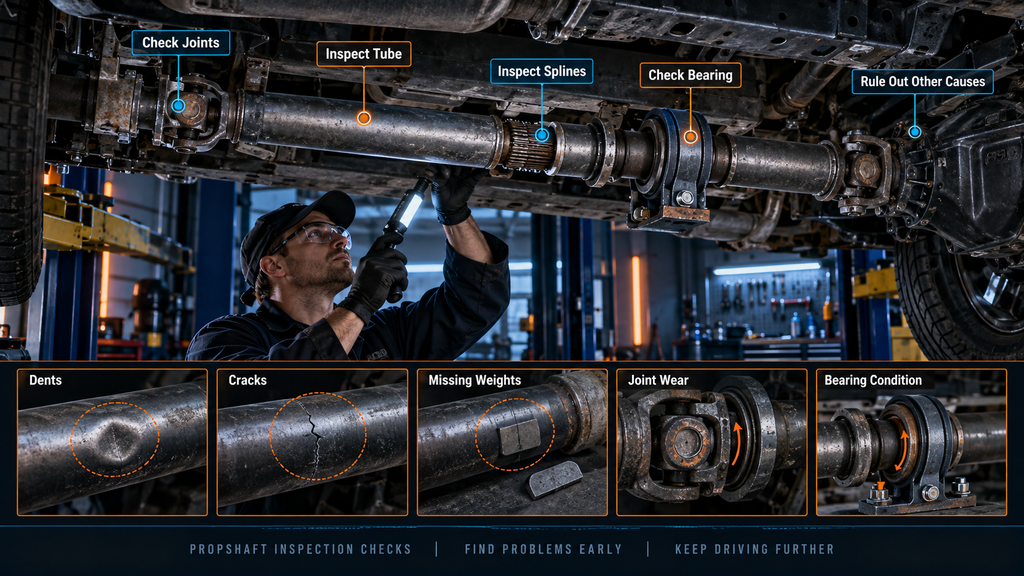
A good diagnosis starts with the symptom pattern, then checks the vehicle safely on a lift or with the wheels properly supported. A technician considers when the vibration occurs, whether it follows road speed or engine speed, and whether the noise changes during acceleration, coasting or turning.
Typical inspection checks
- Inspect the shaft tube for dents, cracks, missing weights and signs of contact.
- Check joints and splines for looseness, binding, rust staining or damaged seals.
- Inspect centre bearing condition, rubber support integrity and mounting hardware.
- Rule out wheel, tire, mount, axle, suspension and differential-related causes before replacing parts.
Propeller shaft FAQs
Here are straightforward answers to common questions about propshafts, warning signs and safe next steps.
Is a propeller shaft the same as a driveshaft?
Often, yes. In everyday automotive language, driveshaft can refer to the propeller shaft that carries torque between the transmission or transfer case and a differential. Terminology varies by region and vehicle design.
What are common signs of a propshaft problem?
Speed-related vibration, clunks when taking up drive, squeaks, rumbling or unusual underbody movement can be warning signs. These symptoms can also come from tires, wheels, mounts, axles or differentials, so inspection is needed.
Can I keep driving with a propeller shaft vibration?
Avoid continuing to drive if vibration is severe or worsening, if you hear loud banging, or if the shaft appears loose or contacts the body. Arrange a prompt inspection and follow the vehicle manufacturer’s safety guidance.
Does a noisy propshaft always need replacement?
No. The repair may involve a joint, centre support bearing, slip-yoke component, flange hardware, balancing or a complete shaft. The correct choice depends on the measured condition and vehicle-specific service information.