
Every hand tool, power tool, and diagnostic device you need in your automotive workshop — organized by category with pro tips from 20 years on the shop floor.
Whether you’re setting up your first garage or upgrading a professional shop, having the right mechanic tools makes the difference between a frustrating afternoon and a smooth repair. This guide breaks down every essential tool category — from basic hand tools for automotive work to advanced diagnostic scanners — so you can build a toolkit that actually works.
Essential Hand Tools for Automotive Work
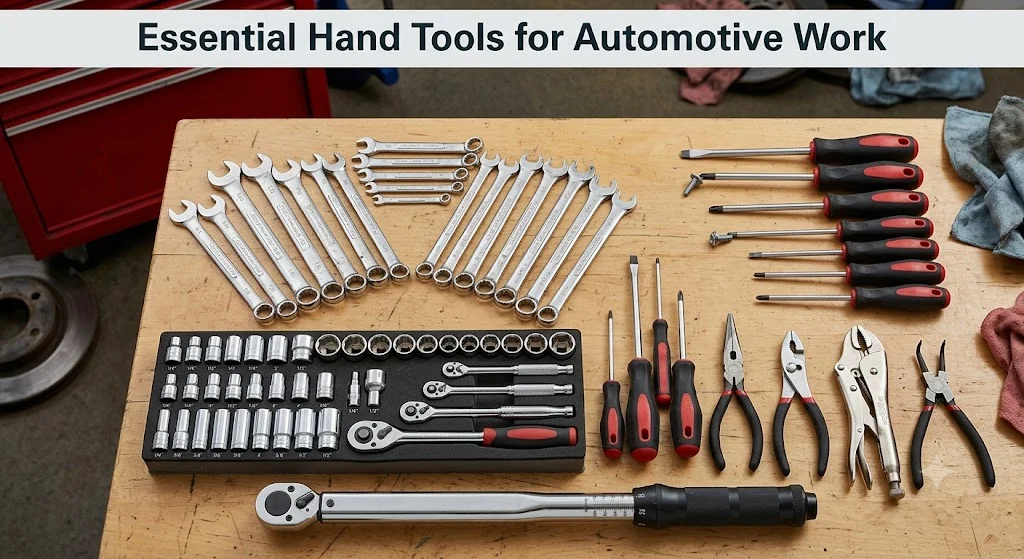
Hand tools are the backbone of any auto repair toolkit. These are the tools you’ll reach for on every single job — from oil changes to brake replacements. Invest in quality here and they’ll last decades.
- Combination wrench set (metric & SAE) — the most-used tools in any shop
- Socket set with 1/4″, 3/8″, and 1/2″ drives — cover every bolt size
- Screwdriver set (Phillips, flathead, Torx) — get magnetic tips
- Pliers collection: needle-nose, slip-joint, locking (Vise-Grip), and snap ring
- Torque wrench — essential for wheel lugs, head bolts, and any spec-critical fastener
Power Tools That Save Hours
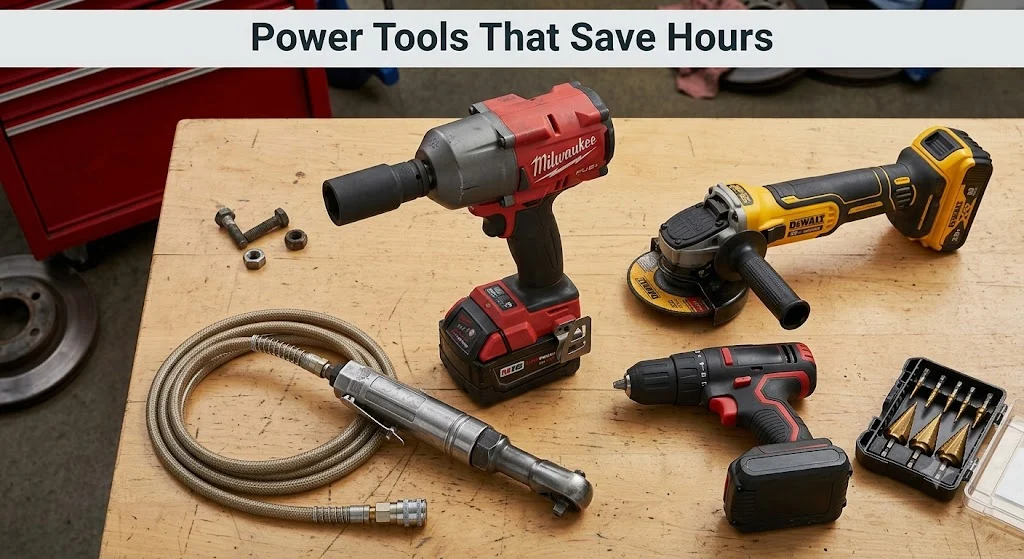
Power tools turn a 4-hour job into a 45-minute job. Cordless options have gotten incredibly good — I’ve been running Milwaukee and DeWalt impacts daily for years without a single failure.
- Impact wrench (1/2″ cordless) — wheel changes and suspension work in seconds
- Air ratchet — faster than a hand ratchet for repetitive bolt removal
- Angle grinder — cutting rusted bolts, smoothing welds, and surface prep
- Drill/driver with step-bit set — for custom brackets and panel work
Diagnostic & Specialty Tools
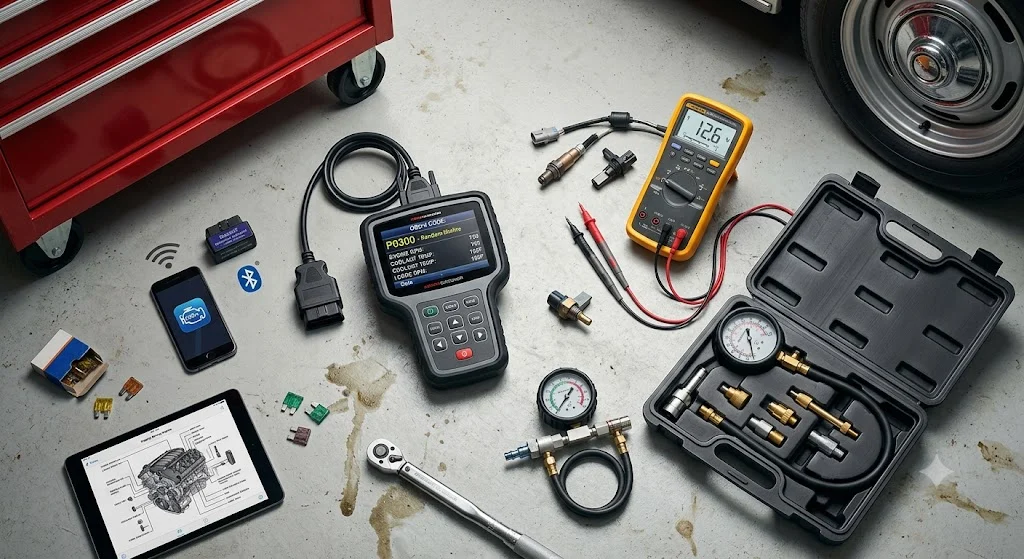
Modern cars are computers on wheels. Without diagnostic tools, you’re guessing — and guessing costs money. Even a basic OBD-II scanner pays for itself on the first check-engine-light job.
- OBD-II scanner (Bluetooth or wired) — read and clear codes, view live data
- Multimeter — test circuits, sensors, and battery health
- Compression tester & leak-down kit — diagnose internal engine problems before tearing anything apart
Build Your Toolkit Smart
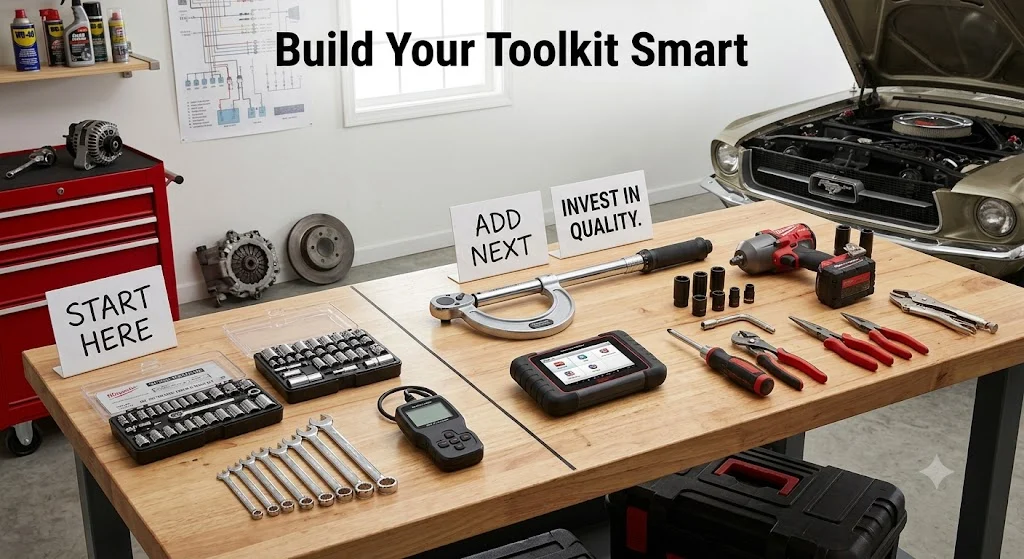
You don’t need to buy everything at once. Start with a solid socket set, a good set of combination wrenches, and a basic OBD-II scanner. Add power tools and specialty items as your projects demand them. Buy quality where it matters (torque wrenches, impacts) and save on things you use rarely. Your toolkit should grow with your skills — that’s how every great mechanic builds theirs.