

A complete beginner-friendly guide to measurement and measuring tools used in workshops, classrooms, laboratories and everyday life.
Whether you are a student completing a technical assignment, an apprentice starting vocational training, or a DIY enthusiast setting up a home workshop, understanding measurement and measuring tools is one of the most practical skills you can build. Every project — from cutting timber to checking tyre pressure — depends on taking an accurate measurement with the correct instrument.
This guide organises the most common measuring tools and instruments by what they measure, explains their units, and helps you choose the right tool for each task. No advanced engineering knowledge is required — just curiosity.
What Are Measuring Tools and Instruments?
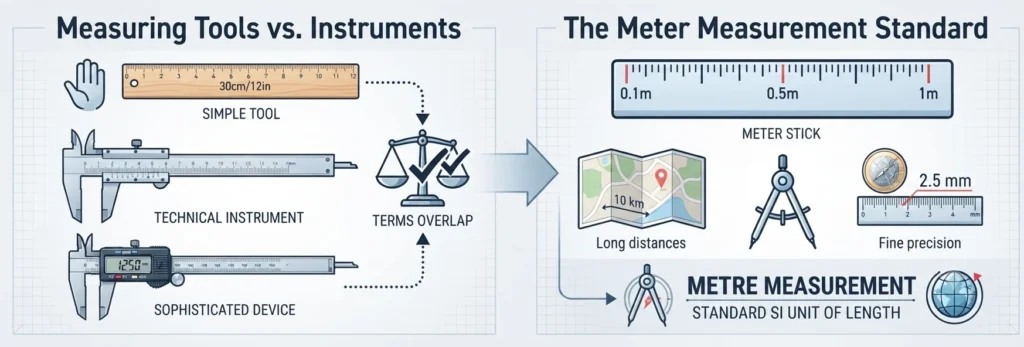
Measurement means comparing an unknown quantity against a recognised standard unit. A measuring tool is any device used to perform this comparison — from a simple ruler to a sophisticated digital caliper. The term measuring instrument usually refers to a more formal or technical device designed to produce a precise numerical reading.
In everyday language, both terms overlap. A tape measure is both a tool and an instrument. What matters is choosing a device that gives you the accuracy you need for the job at hand. The phrase meter measurement refers to any measurement expressed in metres or its subdivisions (millimetres, centimetres, kilometres) — the standard SI unit of length.
Types of Measurement Tools — Organised by Category
The table below groups common measuring instruments by the physical quantity they measure. Each row shows the tool name, what it measures, and the unit you will typically read on its scale.
| Measurement Type | Common Tools | Unit |
| Length & Distance | Ruler, tape measure, laser distance meter | mm, cm, m, inches |
| Thickness & Diameter | Vernier caliper, micrometer | mm, inches |
| Weight & Mass | Weighing scale, balance | g, kg, lb |
| Temperature | Thermometer, infrared thermometer | °C, °F |
| Time | Clock, stopwatch, timer | seconds, minutes, hours |
| Pressure | Pressure gauge, barometer | Pa, psi, bar |
| Angles | Protractor, angle finder, bevel gauge | degrees (°) |
| Volume | Measuring cup, graduated cylinder | mL, L |
| Electricity | Multimeter, voltmeter, ammeter | V, A, Ω |
| Speed | Speedometer, tachometer | km/h, RPM |
Length and Distance Measuring Tools
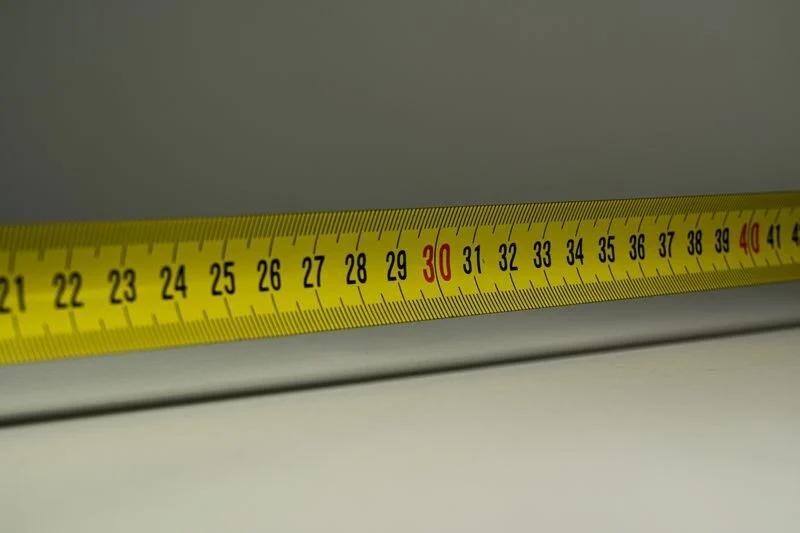
The ruler and tape measure are the most familiar measurement tools in any workshop or classroom. A standard ruler measures short lengths up to 30 cm with an accuracy of about ±0.5 mm. A retractable tape measure extends to 3–8 metres and is essential for measuring rooms, furniture, and building materials.
For longer distances or situations where a physical tape would sag, a laser distance meter projects a beam and calculates distance electronically — accurate to ±1.5 mm at ranges up to 50 metres. Practical example: when measuring a room for new flooring, a laser meter gives you a reliable reading without needing a helper to hold the other end of the tape.
Precision Measuring Instruments: Calipers and Micrometers
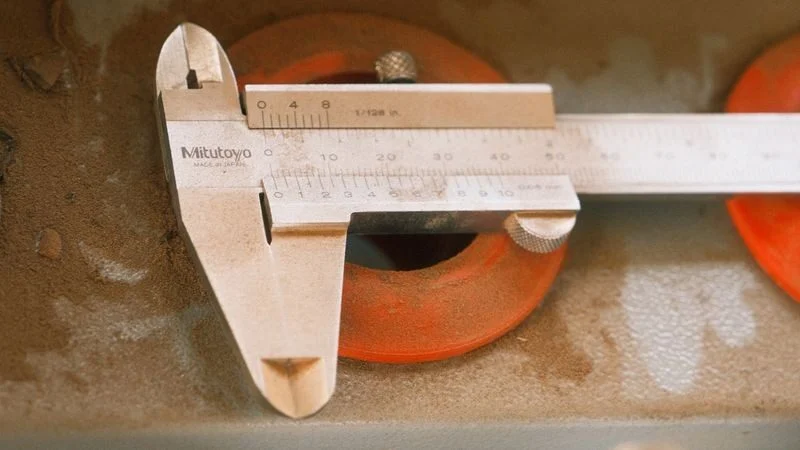
A vernier caliper measures outer diameter, inner diameter, and depth with an accuracy of ±0.02 mm. It uses a sliding jaw and a vernier scale (or digital display) to read fractions of a millimetre that a ruler cannot resolve. Practical example: checking whether a metal pipe fits inside a coupling requires measuring its outer diameter to within a few hundredths of a millimetre.
A micrometer is even more precise — typically ±0.001 mm. It measures thickness by turning a calibrated thimble that advances a spindle toward an anvil. Machinists use micrometers to verify that a turned shaft matches the engineering drawing. These instruments must be calibrated regularly against gauge blocks to maintain their accuracy.
Electrical Measuring Instruments
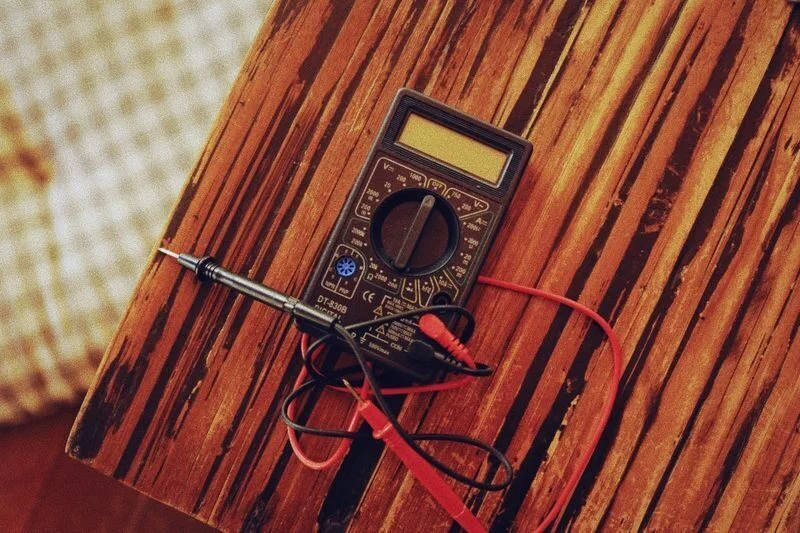
A digital multimeter (DMM) is the most versatile electrical measuring instrument. It measures voltage (volts), current (amperes), and resistance (ohms) in a single handheld device. Practical example: before replacing a car fuse, a technician checks the circuit voltage with a multimeter to confirm power is present.
Dedicated instruments like a clamp meter measure current without breaking the circuit, while an oscilloscope displays how voltage changes over time. For beginners, a basic multimeter covers most home and workshop needs. Always select a measurement range higher than the expected value to protect the instrument and yourself.
Simple Tools vs. Precision Instruments — What Is the Difference?
The key difference is resolution — the smallest change a tool can detect. A ruler’s smallest division is usually 1 mm, so it cannot reliably measure anything smaller. A vernier caliper resolves 0.02 mm, and a micrometer resolves 0.001 mm. Greater precision costs more and requires more careful handling, but it is essential when tolerances are tight.
| Simple Tool | Precision Instrument | Why the Difference? |
| Ruler (±0.5 mm) | Vernier caliper (±0.02 mm) | Caliper has a sliding scale for finer readings |
| Tape measure (±1 mm) | Laser distance meter (±1.5 mm at 50 m) | Laser measures longer distances without sag |
| Kitchen scale (±1 g) | Laboratory balance (±0.001 g) | Lab balance isolates vibrations and air currents |
| Glass thermometer (±1 °C) | Thermocouple (±0.5 °C) | Electronic sensor gives faster, more precise readings |
| Electrical tester (on/off) | Digital multimeter (±0.5%) | Multimeter shows exact voltage, current, resistance |
Key Measurement Terms Explained Simply
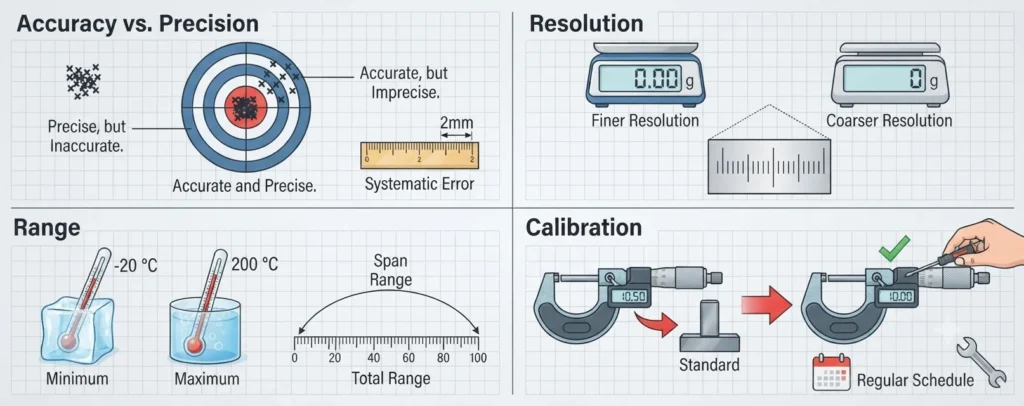
Accuracy is how close a reading is to the true value. Precision is how consistently a tool gives the same reading when you measure the same thing repeatedly. A tool can be precise but inaccurate if it consistently reads 2 mm too high — this is why calibration matters.
Resolution is the smallest increment a tool can display. A digital scale showing 0.1 g has finer resolution than one showing 1 g. Range is the span from the smallest to the largest value a tool can measure — for example, a kitchen thermometer might range from -20 °C to 200 °C.
Calibration is the process of comparing a tool’s readings against a known standard and adjusting it if necessary. Professional workshops calibrate instruments on a regular schedule. Without calibration, even an expensive instrument can drift and give unreliable readings over time.
How to Choose the Correct Measuring Tool
Start by asking: what am I measuring (length, weight, temperature, voltage)? Then consider the accuracy you need. Cutting a shelf to fit a bookcase requires ±1 mm — a tape measure is fine. Machining a piston ring requires ±0.01 mm — you need a micrometer. Also consider the measurement range: a 30 cm ruler cannot measure a 2-metre door frame.
Other factors include the working environment (a paper ruler won’t survive a wet construction site), the unit system required (metric vs. imperial), and safety — electrical measurements above 50 V should only be taken with a CAT-rated multimeter designed for that voltage category.
💡 Tip: Always check that your measuring instrument is zeroed before use. For a vernier caliper, close the jaws fully and confirm the reading is 0.00 mm. For a digital multimeter, select the correct function (V, A, or Ω) before connecting the probes. These simple habits prevent the most common measurement errors.
Frequently Asked Questions
What are measuring tools used for?
Measuring tools are used to determine the size, quantity, or magnitude of a physical property — such as length, weight, temperature, pressure, or electrical voltage. They allow you to compare an unknown value against a standard unit so you can make informed decisions in construction, manufacturing, science, cooking, and everyday tasks.
What is the difference between a measuring tool and a measuring instrument?
In practice, the terms overlap. A measuring tool is any device that helps you measure — including simple ones like a ruler. A measuring instrument usually refers to a more precise or technical device that produces a numerical reading, such as a micrometer or multimeter. Both serve the same purpose: quantifying a physical property.
What is the most accurate measuring tool for length?
For workshop use, a micrometer (±0.001 mm) is the most accurate handheld tool for measuring length or thickness. For laboratory-level precision, coordinate measuring machines (CMMs) and laser interferometers achieve even finer accuracy, but they are expensive and require controlled environments.
What does meter measurement mean?
Meter measurement refers to expressing a length or distance using the metre (m) and its subdivisions — millimetres (mm), centimetres (cm), and kilometres (km). The metre is the standard SI unit of length, defined by the distance light travels in a vacuum in 1/299,792,458 of a second.
Why is calibration important for measuring instruments?
Calibration ensures your instrument reads correctly by comparing it against a traceable standard. Over time, mechanical wear, temperature changes, and handling can cause instruments to drift. Regular calibration catches these errors before they affect your work — especially important in manufacturing, healthcare, and safety-critical applications.
Summary: Choosing and Using Measurement and Measuring Tools
Measurement and measuring tools range from a simple ruler to a digital multimeter — each designed for a specific quantity, accuracy level, and working environment. By grouping tools by what they measure (length, weight, temperature, pressure, electricity) and understanding key terms like accuracy, precision, and calibration, you can confidently select the right instrument for any task.
Start with the basics: learn to read a tape measure and vernier caliper accurately, always zero your instruments before use, and respect the rated range of electrical measuring tools. As your skills grow, precision instruments like micrometers and oscilloscopes will become natural extensions of your toolkit.