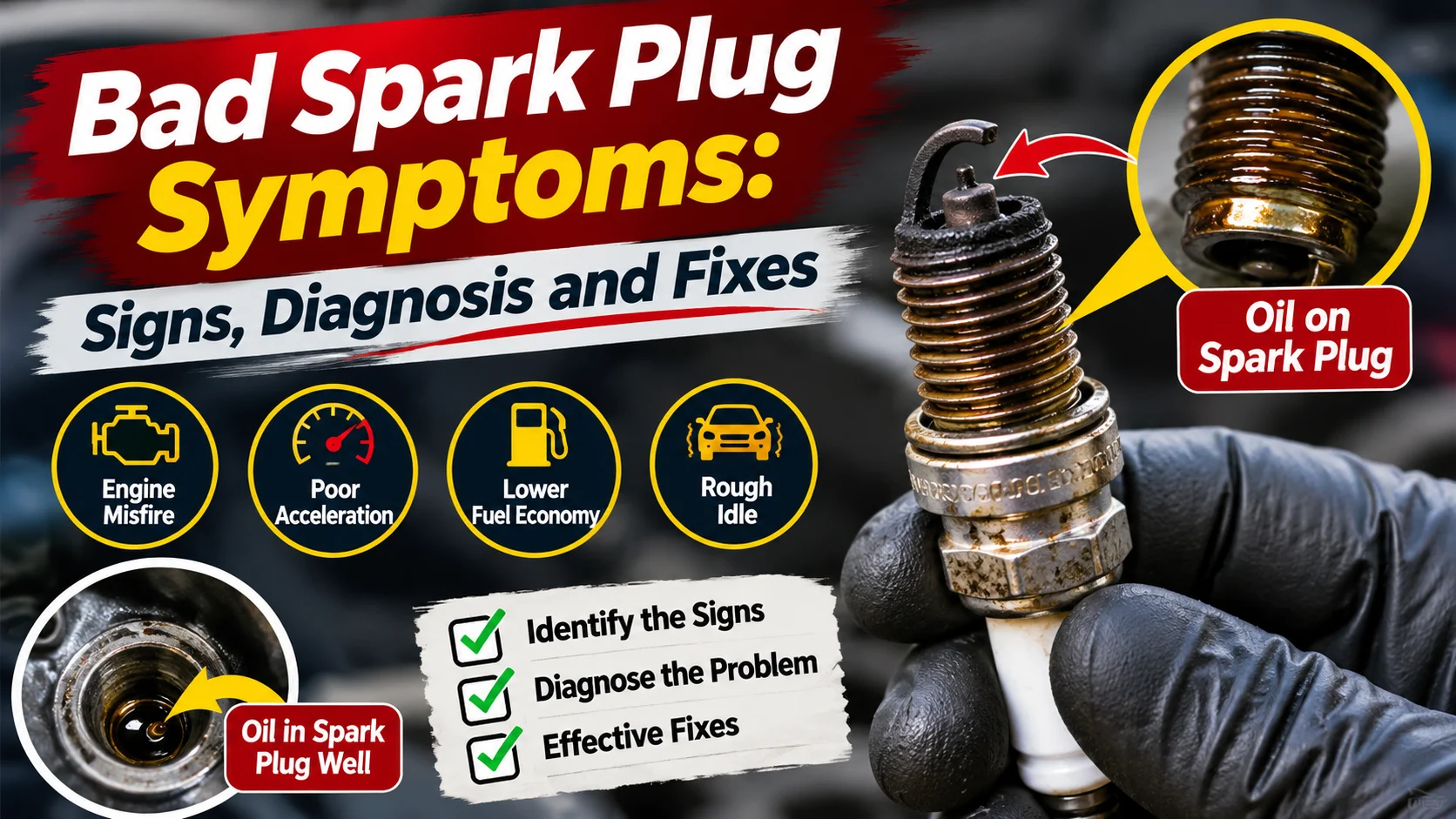
Bad spark plug symptoms include rough idling, engine misfires, hesitation, hard starting, and reduced fuel economy. These warning signs can also come from ignition coils, fuel delivery faults, or mechanical problems, so inspect and diagnose before buying parts.
Quick Answer: Signs of Bad Spark Plugs
- Rough engine idle or shaking
- Engine misfires, jerking, or stumbling
- Hesitation when accelerating
- Difficulty starting
- Lower fuel economy
- Check-engine light or P0300–P030x codes
- Reduced power under load
- Visible wear, fouling, or damage on removed plugs
Symptoms suggest possibilities, not a confirmed diagnosis.
What Does a Spark Plug Do?
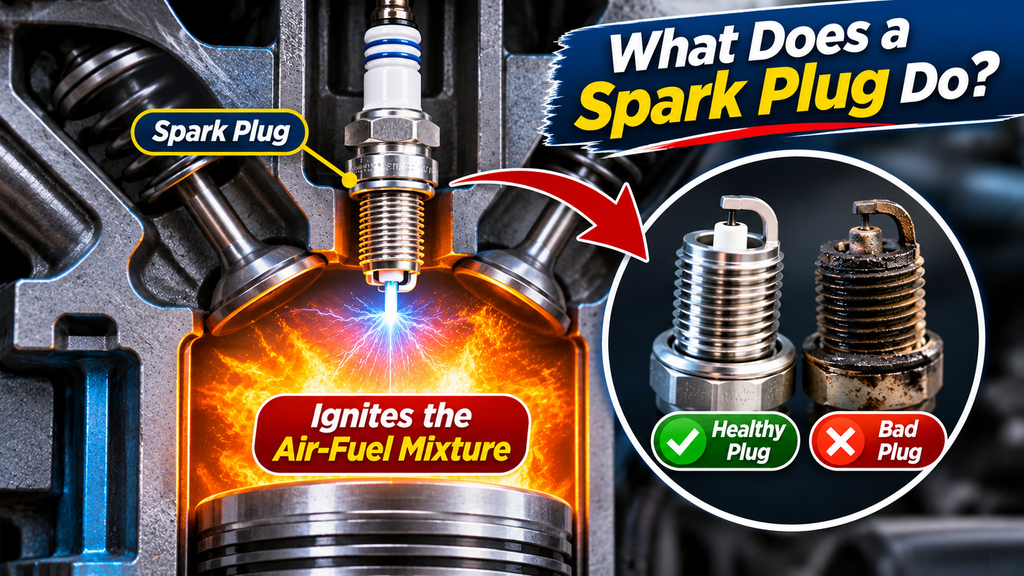
In a gasoline engine, spark plugs ignite the compressed air-fuel mixture. As electrodes wear or deposits build up, ignition may become unreliable, especially under load. Spark plug appearance gives clues, but it cannot diagnose every engine problem by itself.
10 Common Signs of Bad Spark Plugs
1. Rough Engine Idle
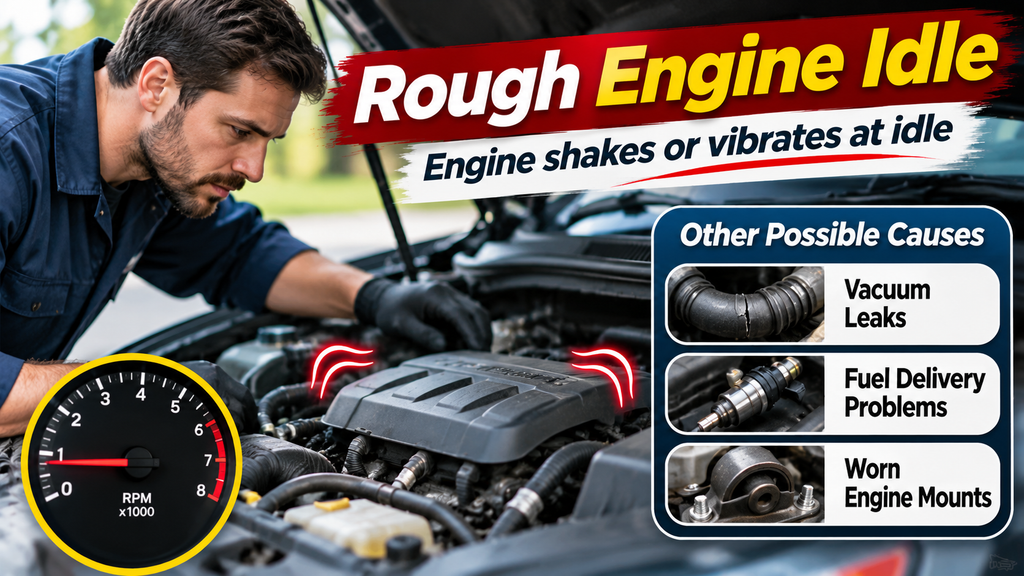
A misfiring cylinder can make the steering wheel or cabin vibrate at idle. Vacuum leaks, fuel delivery problems, and worn engine mounts can also cause shaking.
2. Engine Misfires
Misfires may feel like stumbling, jerking, or uneven operation. Worn plugs are one possible cause, alongside ignition coils, injectors, and mechanical faults.
Safety warning: A flashing check-engine light may signal a severe misfire that could damage the catalytic converter. Pull over when safe, switch off the engine, and arrange professional assistance.
3. Hesitation During Acceleration
Ignition problems may be more noticeable when you accelerate or climb a hill. An engine that stumbles under load needs further testing.
4. Hard Starting
Contaminated plugs can make a cranking engine difficult to start. If cranking is unusually slow, check the battery, starter, and connections instead of assuming the plugs are bad.
5. Reduced Fuel Economy
Misfires and incomplete combustion can reduce efficiency. Driving habits, tire pressure, and many other faults can also change mileage.
6. Check-Engine Light
Misfire codes such as P0300 (random/multiple cylinder misfire) and P0301–P0304 (individual cylinder misfires) identify where or how a misfire was detected, not which part must be replaced.

7. Loss of Power
A misfiring cylinder may produce less power, especially on hills or during merging. Severe loss of power warrants prompt professional evaluation.
8. Shaking Under Load
Vibration during acceleration may accompany an ignition problem, but drivetrain and transmission issues can feel similar. Note whether it tracks engine speed or road speed.
9. Unusual Exhaust Behavior
A misfire can cause an uneven exhaust rhythm or fuel smell. Blue smoke more strongly suggests burning oil and needs a separate diagnosis.
10. Visible Wear or Deposits
Removed plugs may reveal eroded electrodes, cracked insulation, heavy soot, or wet deposits. Compare findings with the manufacturer’s specifications.
What Causes Spark Plugs to Go Bad?
- Normal electrode wear
- Carbon deposits
- Oil or fuel fouling
- Incorrect plug specification or gap
- Overheating or abnormal combustion
- Physical damage or improper installation
Oil on Spark Plug: What Does It Mean?
The location of the oil is important. Oil on the firing tip can indicate oil entering the combustion chamber, potentially from piston rings, valve stem seals, or other oil-control faults. A wet plug is not automatically oil-fouled; it may have fuel or another contaminant.
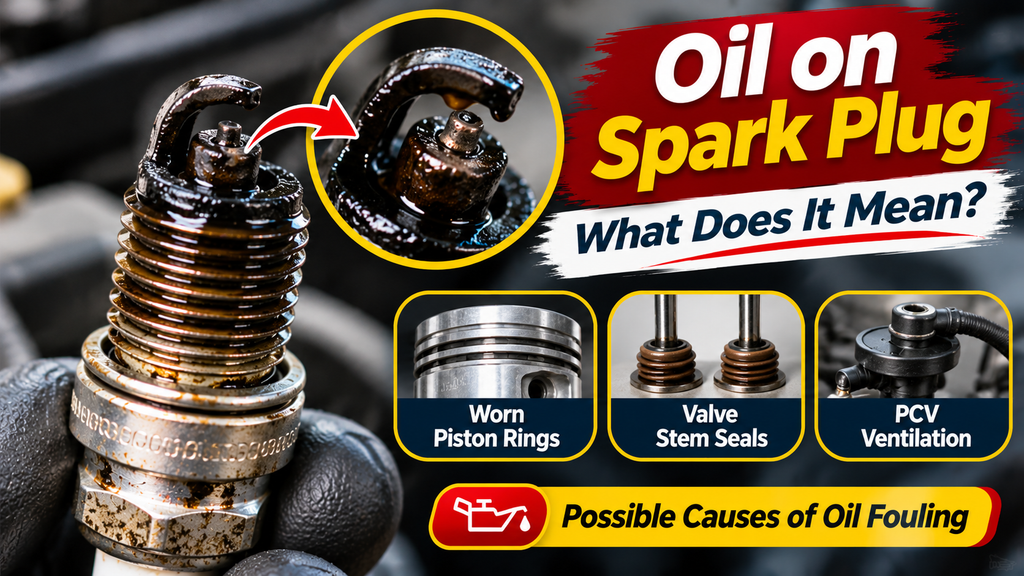
Replacing a contaminated plug may temporarily improve operation without fixing the source of oil. Recurring oil fouling may require oil-consumption, compression, leak-down, or ventilation-system checks.
Oil in Spark Plug Well: Causes and Fixes
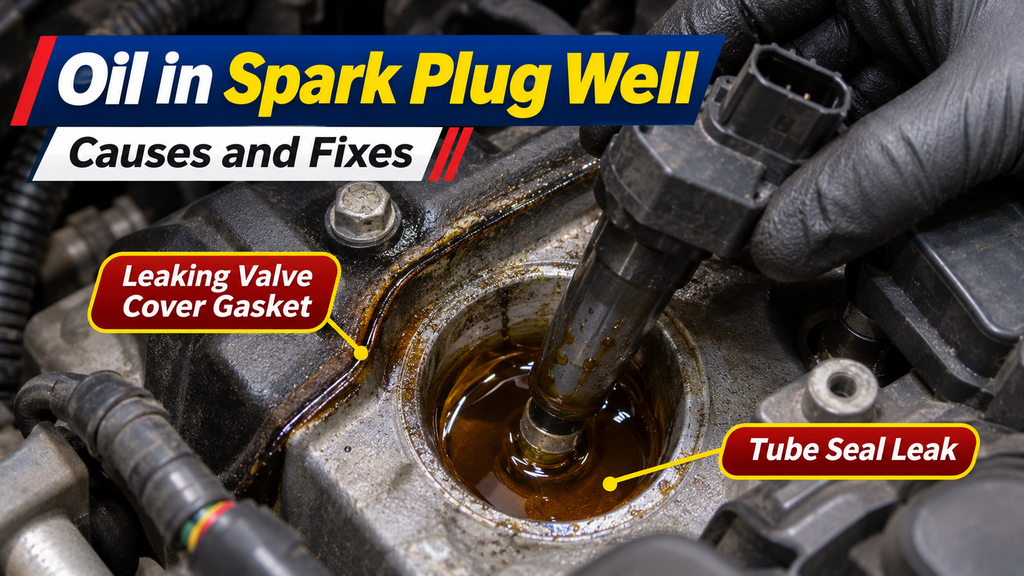
Oil in a spark plug well collects outside the combustion chamber, around the plug body or coil boot. On many engines, a leaking valve cover gasket or spark plug tube seal is responsible.
How to Address Oil in a Plug Well
- Confirm where oil is leaking from.
- Follow service instructions to prevent dirt and oil entering the cylinder during plug removal.
- Replace leaking gaskets, tube seals, or integrated assemblies as applicable.
- Inspect affected coil boots and other ignition components.
- Reassemble to the specified torque and verify that the leak and misfire are resolved
| Finding | Possible source | Next step |
|---|---|---|
| Oil on firing tip | Oil entering combustion chamber | Investigate oil consumption and engine condition |
| Oil in plug well | Valve cover or tube seal leak | Inspect and repair leaking seal |
| Dry black deposits | Carbon fouling or combustion fault | Check ignition and mixture |
How to Diagnose Bad Spark Plugs
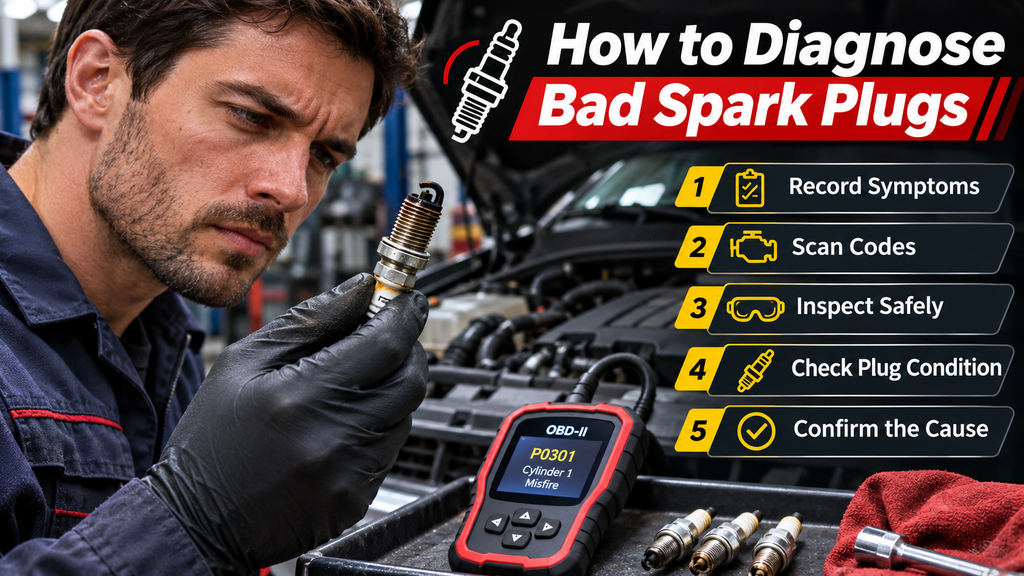
- Record symptoms: When do they happen—cold start, idle, or acceleration?
- Scan codes: Save stored and pending trouble codes and available freeze-frame data before clearing them.
- Inspect safely: With the engine off, follow the service manual to check ignition wiring, boots, and connectors.
- Check plug condition: With the engine sufficiently cooled, inspect removed plugs if you have suitable tools and experience.
- Confirm the cause: Further coil, fuel, or engine mechanical testing may be needed.
High-voltage warning: Do not disconnect ignition parts while the engine is running or perform improvised spark tests.
What Spark Plug Colors and Deposits Reveal
- Light tan or gray: Often consistent with normal use, depending on the engine and fuel.
- Dry black soot: May indicate carbon fouling.
- Wet oily deposits: May indicate oil fouling.
- Rounded electrodes: Suggest electrode wear.
- Blistered or melted electrodes: May indicate excessive heat or abnormal combustion.
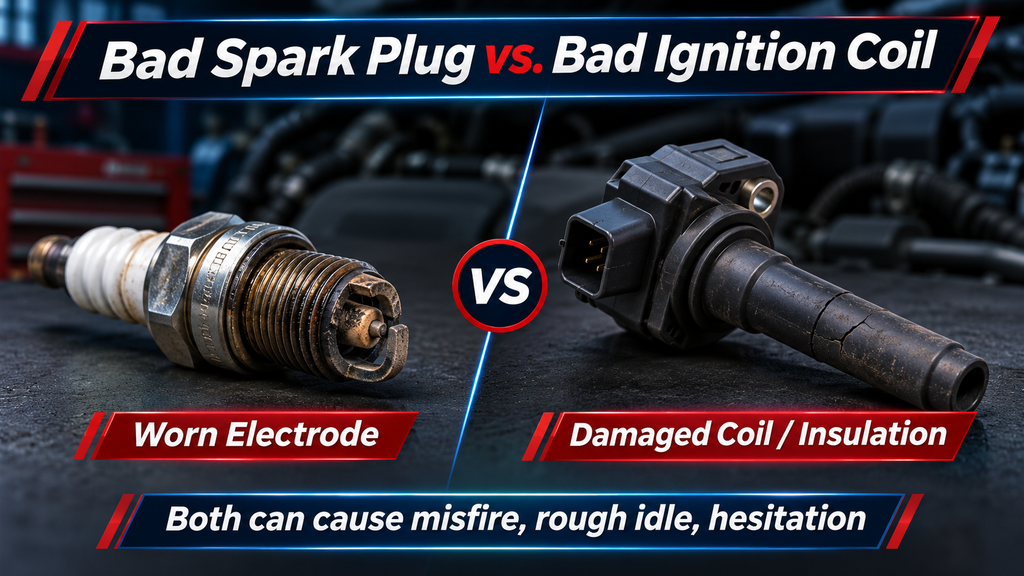
Bad Spark Plug vs. Bad Ignition Coil
Both can cause misfires, rough idle, and hesitation. Worn electrodes support plug wear; damaged coil insulation or a fault that follows a coil during an approved swap test may support a coil fault. Symptoms alone seldom identify the failed part conclusively.
How to Fix Worn or Failed Spark Plugs
If diagnosis confirms defective plugs, replace them with the correct parts following the vehicle’s service instructions:
- Confirm the correct plug part number and replacement procedure.
- Turn off the engine and allow it to cool as required.
- Access coils or plug wires and keep debris out of plug holes.
- Remove and inspect old plugs using the proper socket.
- Verify new plug type and gap requirements.
- Start threading carefully and tighten to the manufacturer’s specified torque.
- Reconnect components, then verify operation and remaining codes.
Important: Some replacement plugs come pre-gapped and should not be adjusted. Do not guess the torque or apply thread compounds unless specified by the manufacturer.
How Much Does Spark Plug Replacement Cost?
Cost varies by plug type, cylinder count, engine access, shop labor rate, and the need for additional repairs. Request a vehicle-specific itemized quote rather than assuming a misfire requires an entire set of plugs and coils.
How Often Should Spark Plugs Be Replaced?
Service life depends on the engine and plug design. Follow the interval in your owner’s manual. Diagnose abnormal operation promptly even when the scheduled replacement date has not arrived.
Can You Drive With Bad Spark Plugs?
An active misfire may allow unburned fuel into the exhaust and overheat the catalytic converter. A flashing check-engine light, severe shaking, pronounced loss of power, or strong fuel smell calls for pulling over safely and obtaining help. A steady check-engine light also requires prompt diagnosis according to your owner’s manual.
How to Prevent Spark Plug Problems

- Use manufacturer-approved plugs and service intervals.
- Investigate oil consumption and valve cover leaks.
- Repair recurring misfires instead of only clearing trouble codes.
- Inspect damaged coils, boots, and connectors.
- Follow proper installation and tightening procedures.
Frequently Asked Questions
What are the earliest signs of bad plugs?
Possible early signs include intermittent rough idle, hesitation, and occasional misfires, but other problems can cause the same symptoms.
Can bad spark plugs cause a car to shake?
Yes. An ignition misfire may cause shaking, although other engine and drivetrain faults also can.
What does oil on a spark plug mean?
Oil on the firing tip may indicate oil entering the combustion chamber. Oil around the upper body may come from a leak into the well.
Is oil in the spark plug well serious?
It can damage coil boots or contribute to misfires. The leak source should be located and repaired.
Will replacing spark plugs fix a misfire?
Only when defective spark plugs are the cause. Coil, fuel, and mechanical faults require their own repairs.
Can bad spark plugs damage a catalytic converter?
Yes. A severe misfire can send unburned fuel into the exhaust and overheat the catalytic converter.
Should I replace one spark plug or the whole set?
It depends on the condition of the others, manufacturer recommendations, and whether a full replacement is due.
How do I distinguish a bad coil from a bad plug?
Inspect plug condition and use appropriate diagnostic testing; symptoms and codes alone usually are not enough.
Final Thoughts
Spark plug faults can cause misfires, rough idle, hard starting, and hesitation, but accurate diagnosis matters. In particular, distinguish oil on a plug’s firing tip from oil in the surrounding well: they often point to different repairs. Record symptoms, check codes, inspect safely, and resolve the underlying cause.