A smooth, naturally aspirated V6 and old-school rear-drive character give the IS 350 a personality that newer turbo rivals rarely match. Here is where it excels—and where it feels its age.
311 hp
V6 output
3.5L
Naturally aspirated
5.9 sec
0–60 mph, RWD
RWD / AWD
Two drivetrains
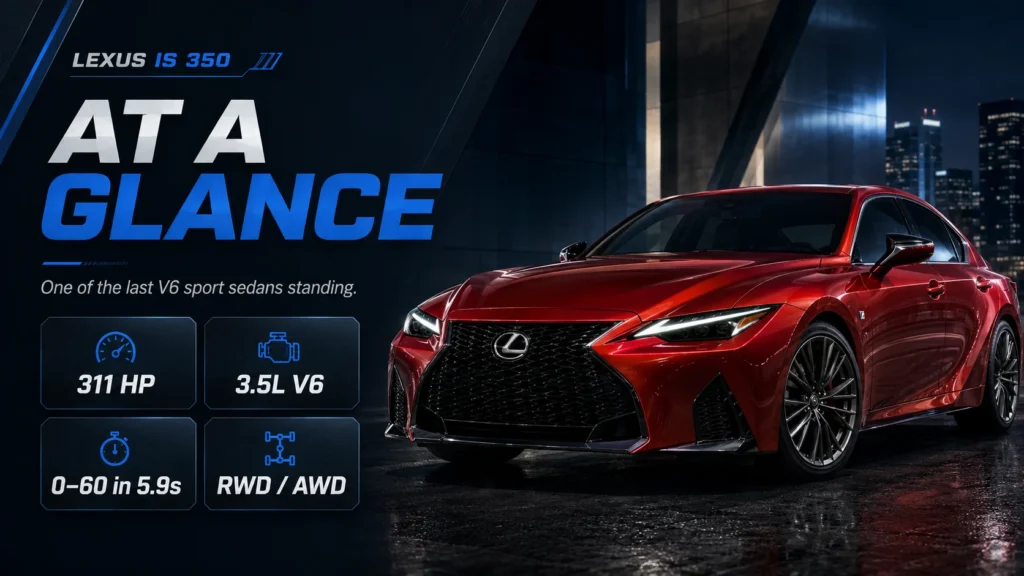
At a glance
One of the last V6 sport sedans standing.
For 2026, the IS lineup is centered on the IS 350. Its formula is deliberately traditional: a free-revving V6, rear-drive balance, and a compact footprint rather than a downsized turbo engine and a screen-first cabin.
The key appeal
Predictable throttle response and a rich V6 soundtrack—without waiting for turbo boost.
Engine
3.5L naturally aspirated V6
Torque
280 lb-ft / 380 Nm
RWD transmission
8-speed Sport Direct-Shift automatic
AWD transmission
6-speed paddle-shift automatic
Fuel economy
22 mpg combined, estimated
Chassis
Double-wishbone front / multilink rear
Trims & pricing
Four ways to spec the same essential IS 350.
U.S. MSRPs shown before tax, registration, options, and dealer charges.
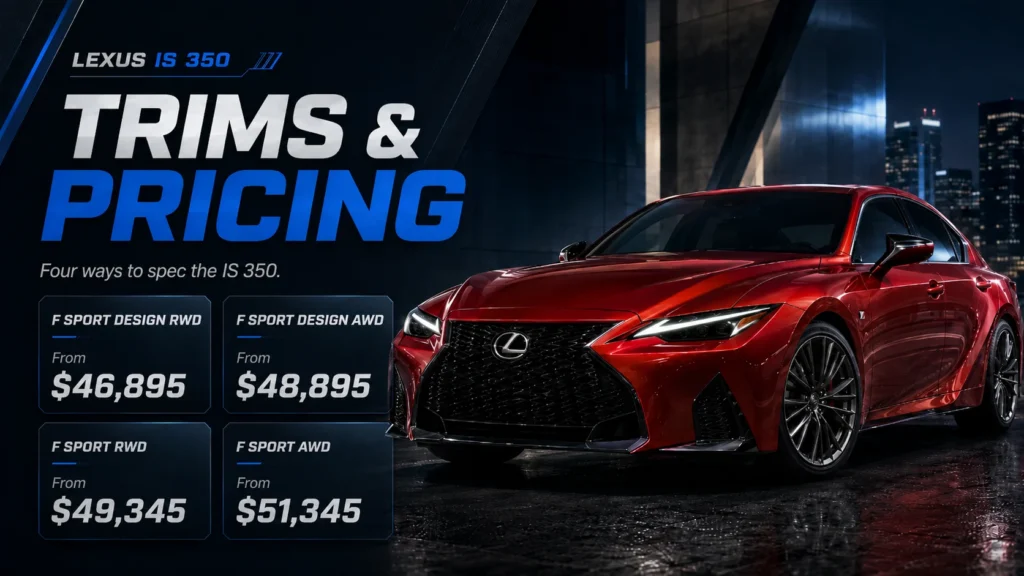
F SPORT Design
Rear-wheel drive
From $46,895
F SPORT Design
All-wheel drive
From $48,895
F SPORT
All-wheel drive
From $51,345
F SPORT
Rear-wheel drive
From $49,345
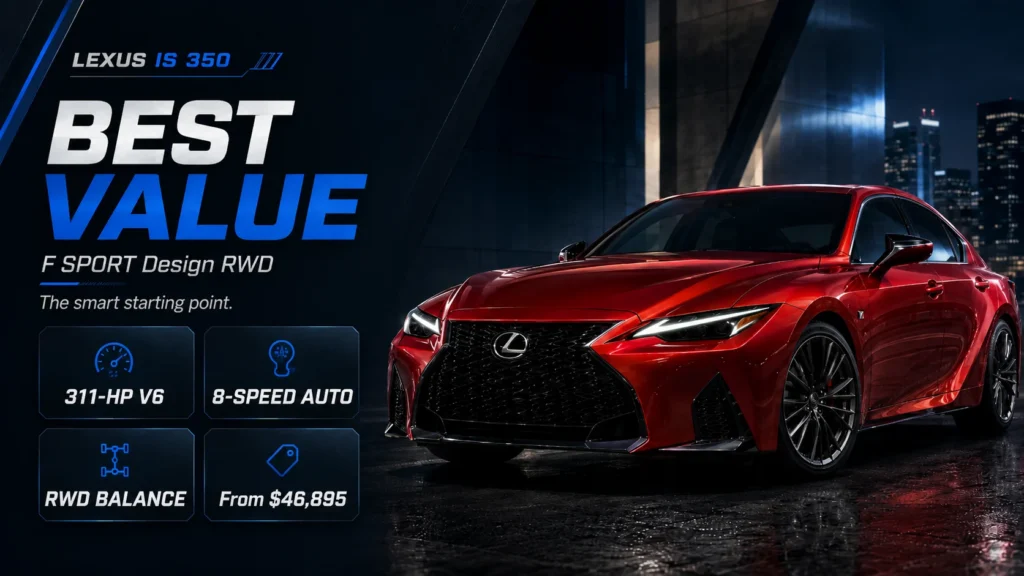
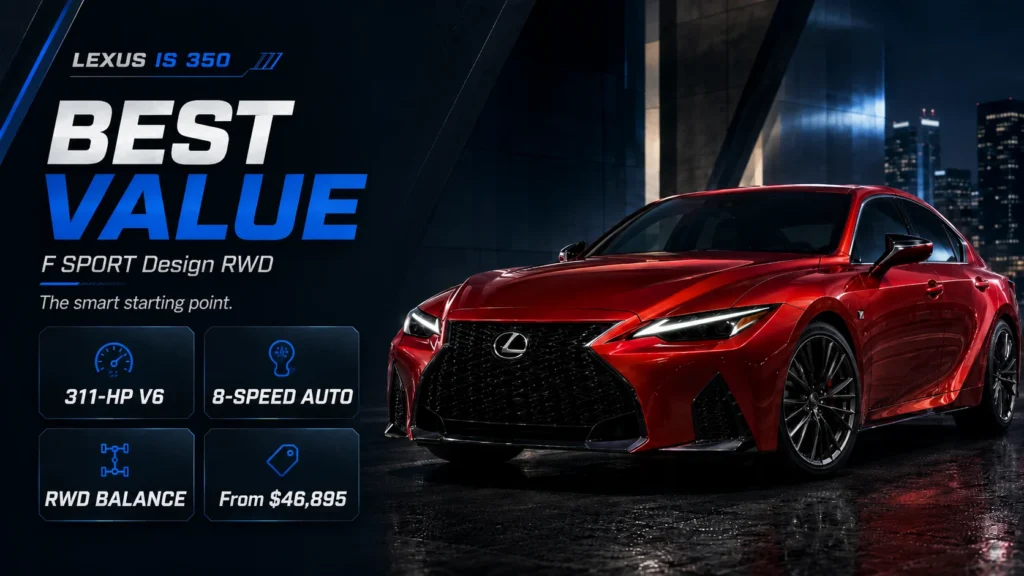
Best value
F SPORT Design RWD
The smart starting point. It keeps the 311-hp V6 and the more modern 8-speed automatic while asking the least money. Choose it if you want the IS character without prioritizing every performance-oriented extra.
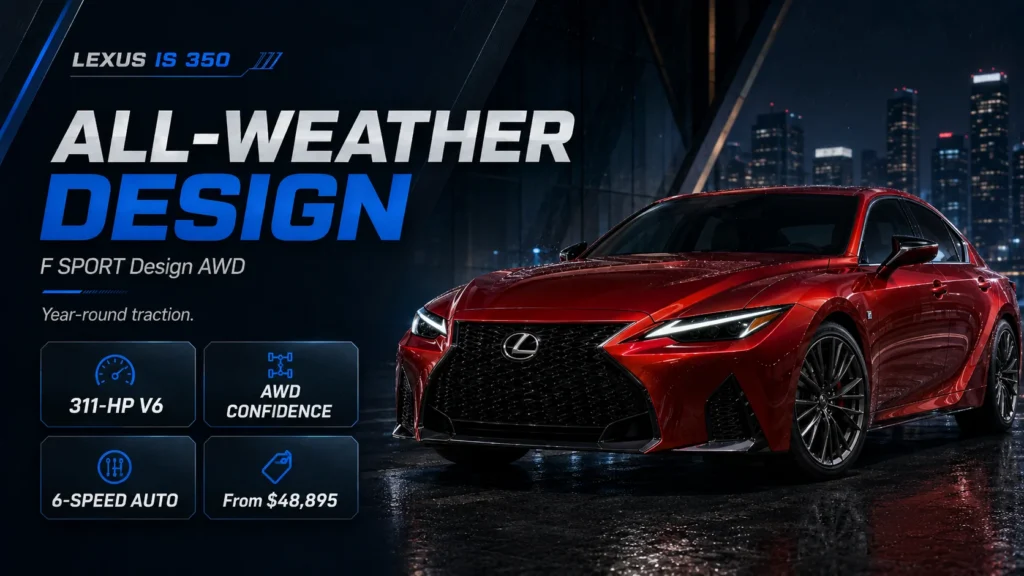
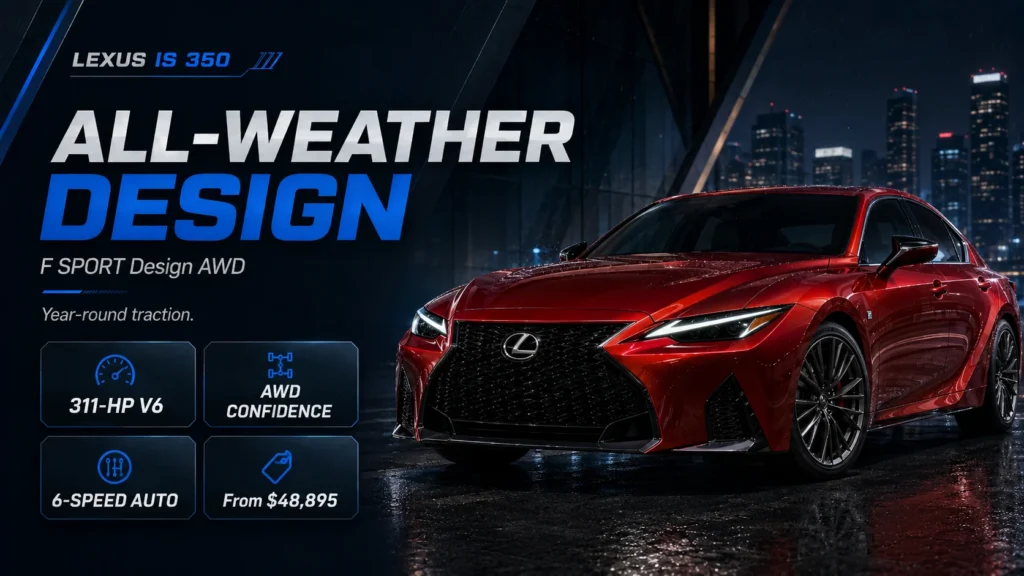
All-weather design
F SPORT Design AWD
This is the entry route to year-round traction. The trade-off is the older 6-speed automatic, plus no meaningful fuel-economy advantage over the RWD model.
Driver’s choice
F SPORT RWD
The sweet spot for enthusiasts. Rear-drive balance, the 8-speed automatic, and the most performance-oriented equipment make this the specification that best honors the IS 350’s traditional sport-sedan brief.
Grip first
F SPORT AWD
For buyers who need confident traction in wet or cold regions but still want the F SPORT look and equipment. It is the highest-priced regular IS 350—and still uses the 6-speed automatic.
Living with it
Reliability is the argument. Practicality is the compromise.
The 2026 model is too new for a firm long-term reliability verdict. Still, its 3.5L V6 and much of the mechanical package are long-running Lexus/Toyota designs with a strong durability reputation. The RWD version is the simpler ownership proposition; AWD adds components and retains an older gearbox. Budget for premium fuel use, tyres, and luxury-brand servicing—but expect a less intimidating mechanical outlook than many high-strung turbo rivals.
safety notes
Well-equipped assistance, but check the full crash-test picture.
Lexus Safety System+ 3.0 is standard, bringing a useful suite of driver-assistance technology. The latest IIHS results are more nuanced than the equipment list alone suggests.
Standard safety suite
Automated emergency braking with pedestrian and cyclist detection, adaptive cruise control, lane support, road-sign assist, proactive driving assist, and automatic high beams.
IIHS strengths
The 2026 IS earned Good ratings for vehicle-to-vehicle and pedestrian front crash prevention, seat-belt reminders, LATCH ease of use, and standard headlamps.
The important caveat
Its updated moderate-overlap front test result is Marginal overall, mainly due to rear-passenger chest and restraint performance. Consider this alongside your own safety priorities.
The verdict
A heart-over-spreadsheet sport sedan.
The IS 350 is not the most modern, spacious, quick, or fuel-efficient compact luxury sedan. It is, however, one of the most characterful: a polished, naturally aspirated V6 sports sedan with Lexus’s durable-design appeal. For most buyers, the F SPORT Design RWD is the value move; for keen drivers, step up to the F SPORT RWD.
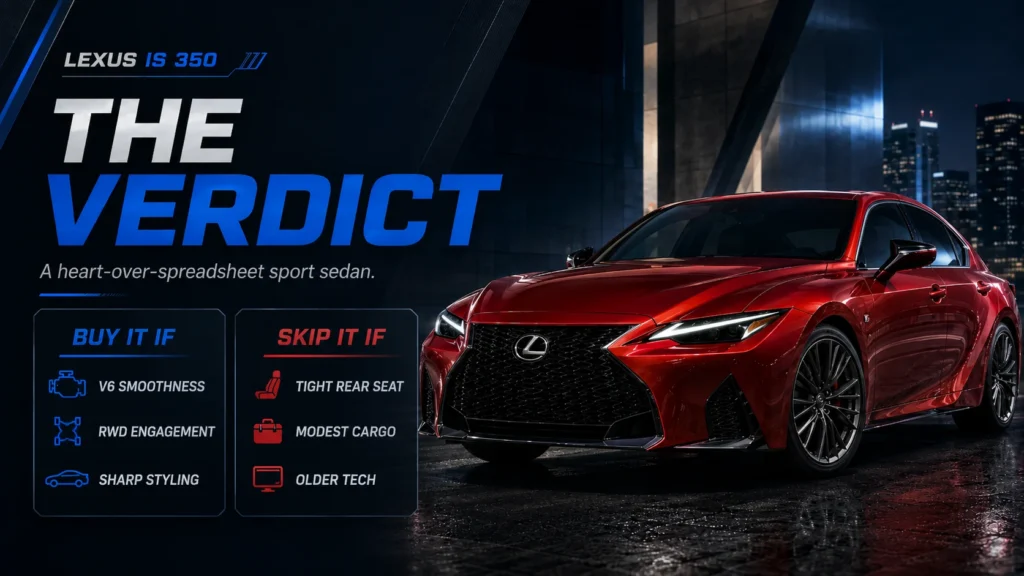
Buy it if
You want V6 smoothness, rear-drive engagement, sharp styling, and a long-running Lexus mechanical formula.
Skip it if
You need a roomy rear seat, generous cargo capacity, leading fuel economy, or the latest platform and cabin technology.