A clean car needs more than an occasional wash. Dusty dashboards, dirty wheels, water spots, and stubborn grime can make even a recently washed vehicle look neglected.
A kit detailing setup brings together the tools and cleaning products needed to care for your vehicle. This guide explains what a car detailing kit should include, how to choose one, and how to use it safely for interior and exterior cleaning.
A car detailing kit is a collection of cleaning, drying, and surface-care products designed for vehicle maintenance.
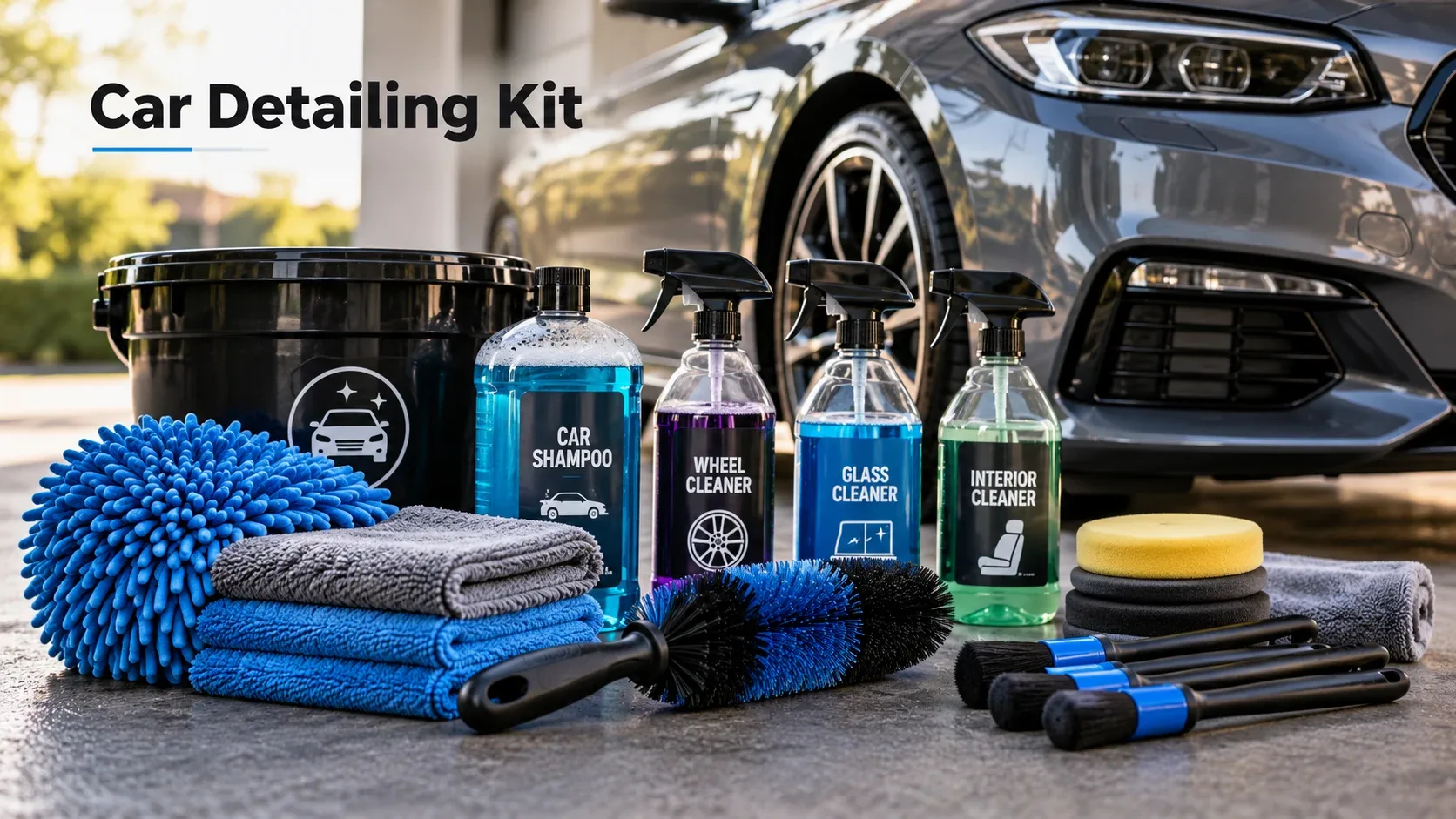
A useful beginner kit typically includes automotive shampoo, a soft wash mitt, microfiber towels, wheel-cleaning supplies, interior cleaner, glass cleaner, and suitable brushes. Paint protection products and specialized tools may be added depending on the vehicle’s condition and the work required.
What Is a Car Detailing Kit?
A car detailing kit is a collection of tools and products used to clean, maintain, and sometimes protect a vehicle’s interior and exterior surfaces.
Unlike a basic car-washing setup, which usually focuses on removing surface dirt from the vehicle’s exterior, a detailing kit can support a wider range of cleaning tasks.
These may include cleaning wheels, removing interior dust, treating compatible upholstery, cleaning automotive glass, and applying protective products to paint or trim.
What Makes a Detailing Kit Different?
The difference is mainly the range of products and the level of care involved. A basic wash kit may contain shampoo, a bucket, and a wash mitt.
A more complete kit might include dedicated brushes, multiple microfiber towels, cleaners for different materials, and optional paint protection products.
Important: Detailing does not always involve machine polishing, paint correction, or ceramic coating. Routine cleaning and maintenance are also important parts of automotive detailing.
Who Should Use a Car Detailing Kit?
A detailing kit can be useful for car owners who want to maintain their vehicle’s appearance and learn proper cleaning techniques.
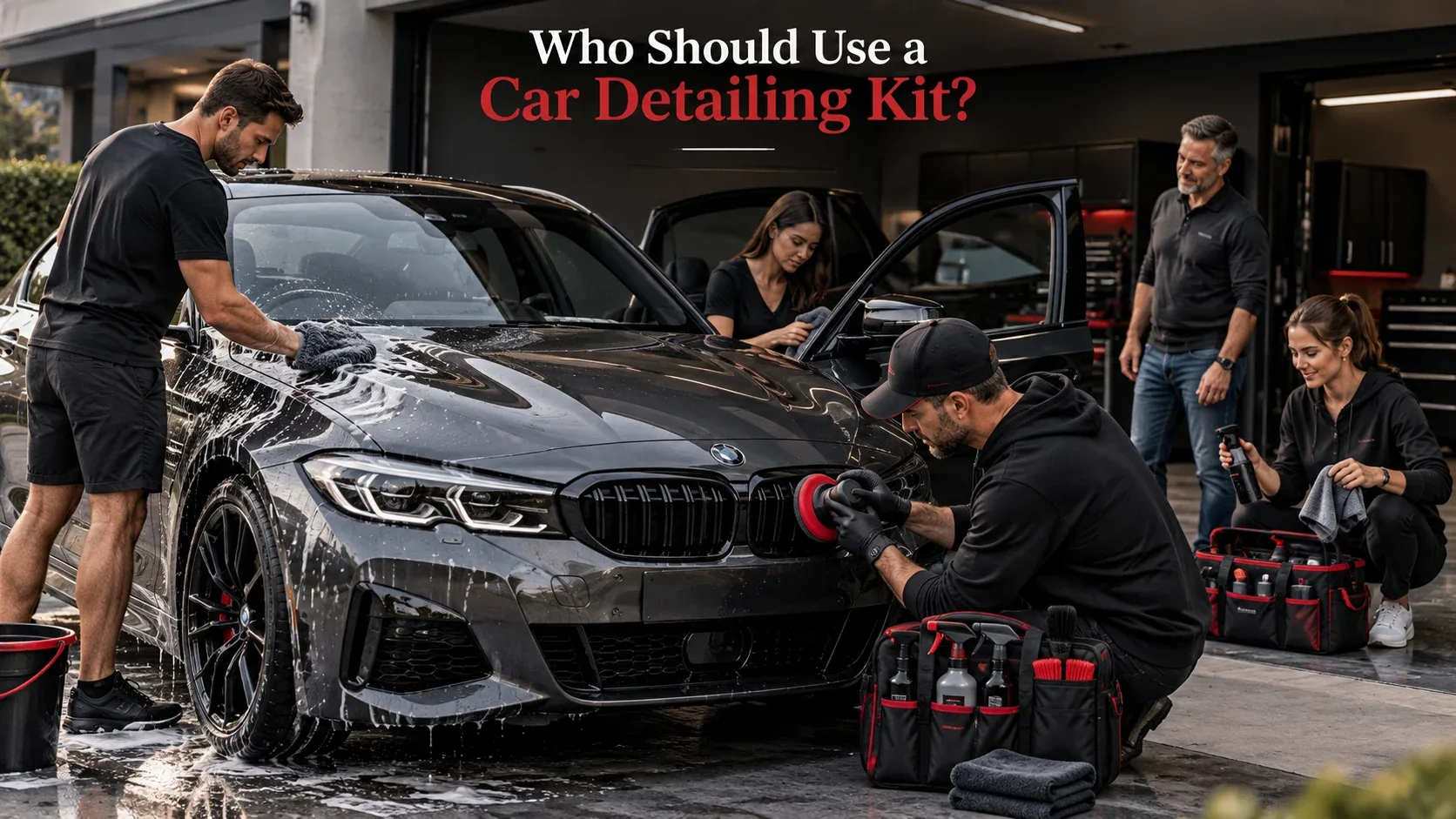
- Car owners who prefer cleaning their vehicles at home
- Drivers looking to maintain a well-kept interior
- Automotive enthusiasts who want better washing techniques
- People preparing a vehicle for sale
- Beginners interested in learning vehicle care
What’s Included in a Complete Car Detailing Kit?
The contents of a detailing kit vary, but the most practical setups include products for exterior washing, interior cleaning, wheels, glass, and drying.
Understanding the purpose of each item helps you avoid unnecessary purchases and prevents using the wrong cleaner on a sensitive surface.
Car Wash Shampoo
Automotive shampoo is formulated to remove road dirt and everyday grime from compatible exterior surfaces. Choose a product intended for your vehicle’s finish and any existing paint protection.
Microfiber Wash Mitt
A soft, clean wash mitt provides a suitable contact-washing surface when used with proper lubrication and washing technique.
Keep wash media used on paint separate from equipment used to clean wheels and heavily contaminated areas.
Microfiber Towels
Microfiber towels are useful for drying, interior cleaning, glass cleaning, and applying or removing certain detailing products.
Use separate towels for different tasks to reduce cross-contamination.
Wheel Cleaner and Brushes
Wheels often collect brake dust, road film, and other stubborn dirt. Dedicated wheel-cleaning products and suitable brushes help remove these contaminants.
Confirm that the cleaner is safe for your specific wheel finish.
Interior Cleaner
A compatible interior cleaner can help remove dust, fingerprints, and everyday residue from suitable plastic, vinyl, or other interior surfaces.
Leather, fabric, suede-like materials, and screens may require different products or specialized care.
Glass Cleaner
An automotive-safe glass cleaner helps remove fingerprints, film, and ordinary dirt from vehicle windows.
Check compatibility with aftermarket window tint and interior display surfaces.
Wax, Sealant, or Spray Protectant
Paint protection products may add water repellency, improve appearance, and make routine maintenance easier.
These products are optional for a basic wash and should be applied according to their instructions.
Optional Specialty Products
Advanced kits may contain clay products, iron removers, polishing compounds, or machine-polishing tools.
These are not essential for every wash and may require additional preparation or experience.
Essential vs. Optional Detailing Products
| Item | Main Purpose | Priority |
|---|---|---|
| Car shampoo | Exterior washing | Essential for conventional washing |
| Wash mitt | Contact washing | Essential for conventional washing |
| Microfiber towels | Cleaning and drying | Essential |
| Wheel cleaner | Wheel maintenance | Useful |
| Detailing brushes | Cleaning small areas | Useful |
| Interior cleaner | Interior surface cleaning | Useful |
| Glass cleaner | Window cleaning | Useful |
| Paint protectant | Optional surface protection | Optional |
| Clay bar | Bonded contamination removal | Specialty item |
| Polishing machine | Paint correction tasks | Advanced equipment |
Different Types of Car Detailing Kits
Car detailing kits are available in different configurations. The best type depends on which areas of your vehicle you plan to clean and maintain.
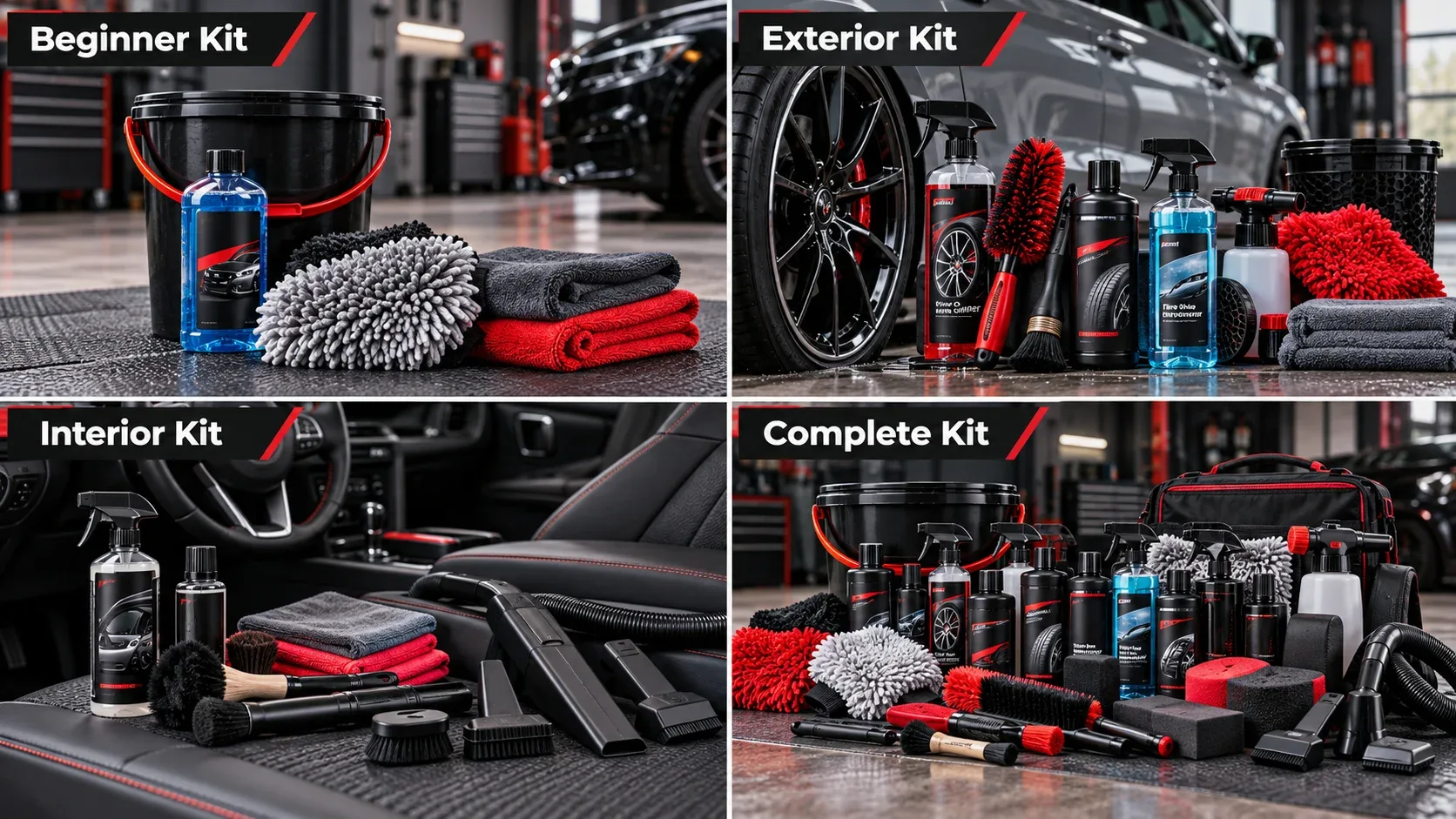
Beginner Detailing Kit
Contains basic washing, drying, and cleaning tools for car owners starting a home detailing routine.
Exterior Detailing Kit
Focuses on body panels, wheels, exterior glass, tires, and compatible exterior trim.
Interior Detailing Kit
Includes products for interior dust, glass, plastics, carpets, and appropriate upholstery materials.
Complete Detailing Kit
Combines exterior and interior products and may include specialized accessories.
Which Kit Type Should You Choose?
| Kit Type | Best For | Main Limitation |
|---|---|---|
| Beginner | Routine DIY maintenance | Limited specialty products |
| Exterior | Paint and wheel care | May exclude interior cleaners |
| Interior | Cabin maintenance | Does not replace exterior supplies |
| Complete | Cleaning the entire vehicle | May include items you do not need |
| Specialty | Specific detailing tasks | May require additional experience |
A complete kit is not automatically the best option. A smaller set of appropriate, good-quality products can be more useful than a large kit filled with accessories you rarely use.
Interior vs. Exterior Car Detailing Kits
Interior and exterior detailing require different cleaning methods because vehicle materials have different characteristics.
Interior Detailing Essentials
Interior detailing focuses on keeping the cabin clean, comfortable, and well maintained.
Common areas include dashboards, center consoles, door panels, seat surfaces, carpets, and interior glass.
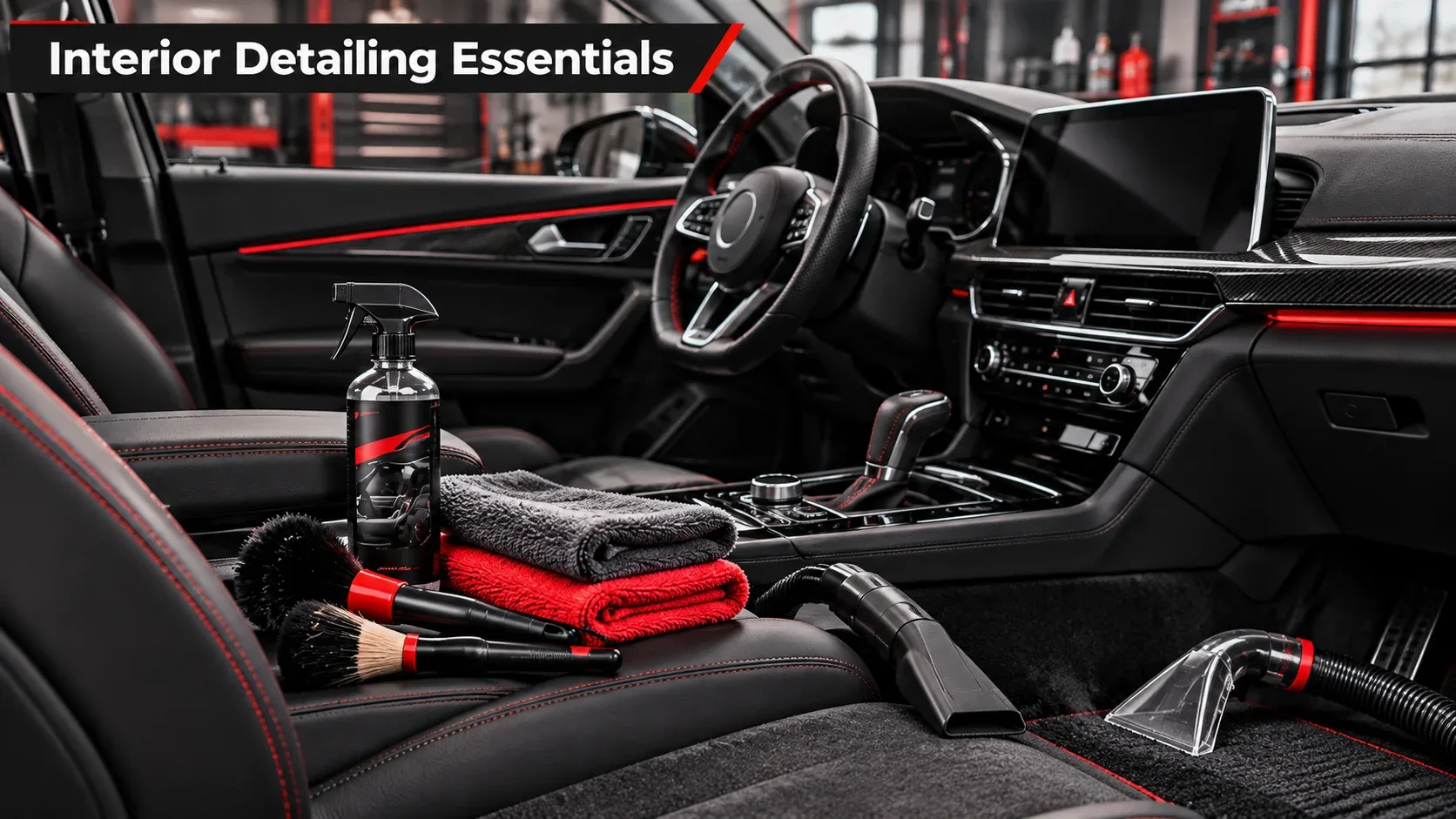
- Soft interior detailing brushes
- Clean microfiber cloths
- Compatible interior surface cleaner
- Vacuum cleaner when available
- Appropriate upholstery cleaner
- Automotive glass cleaner
Some interior materials require special treatment. A cleaner suitable for hard plastic may not be suitable for leather, Alcantara-type fabric, touchscreens, or delicate trim.
Exterior Detailing Essentials
Exterior detailing involves cleaning painted surfaces, wheels, tires, glass, and trim.
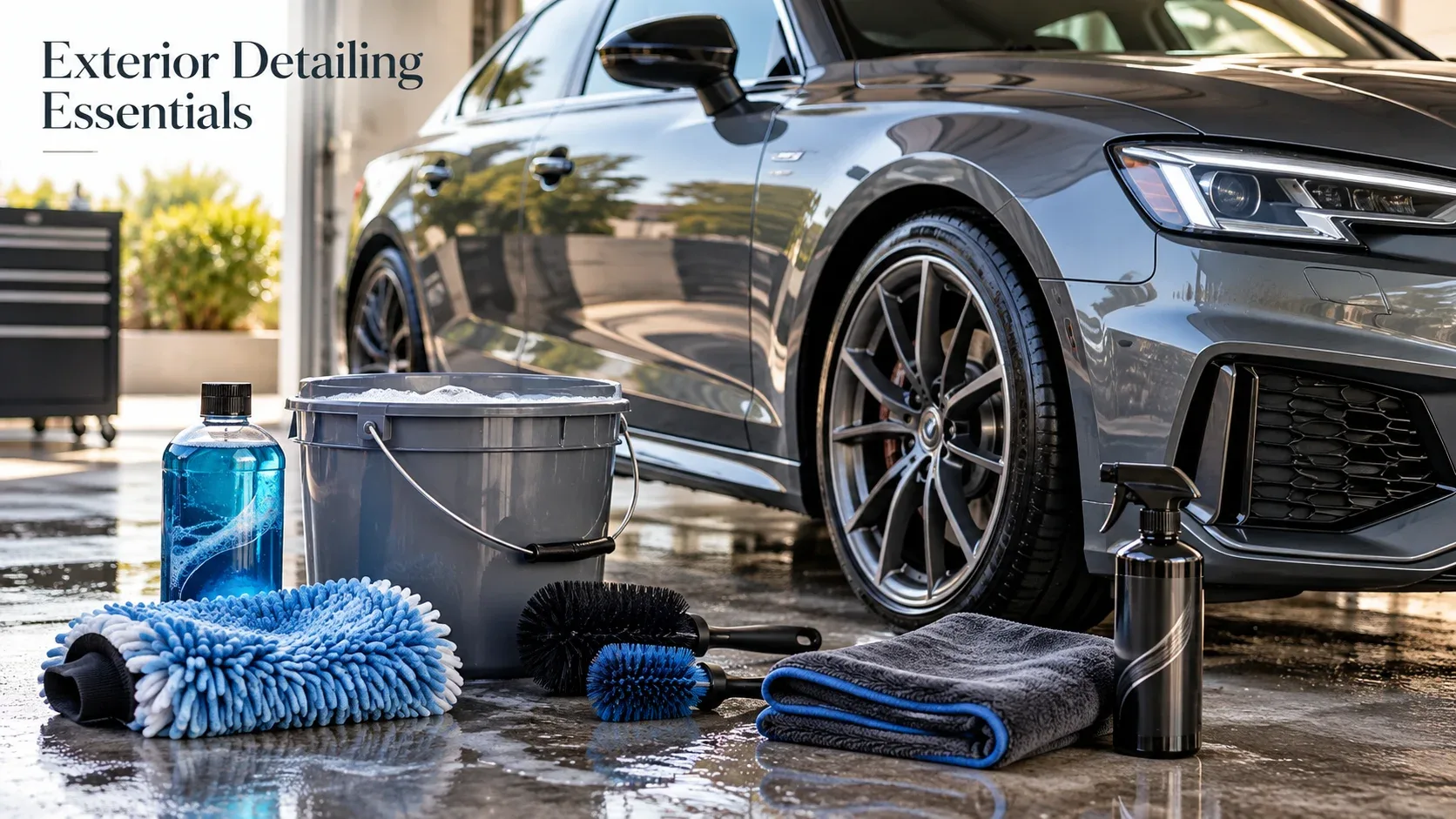
- Automotive shampoo
- Soft wash mitt
- Clean wash bucket and rinse water
- Dedicated wheel brushes
- Microfiber drying towel
- Optional paint or trim protectant
Practical tip: Keep separate towels and brushes for interior surfaces, painted body panels, and heavily dirty wheels. This helps reduce the transfer of abrasive contamination.
How to Choose the Right Car Detailing Kit
Choosing a detailing kit should start with your vehicle’s needs rather than the number of products advertised in the box.
Consider Your Vehicle’s Condition
A relatively clean daily driver may only need basic washing and interior maintenance supplies.
A heavily contaminated vehicle could require additional cleaning products or professional attention.
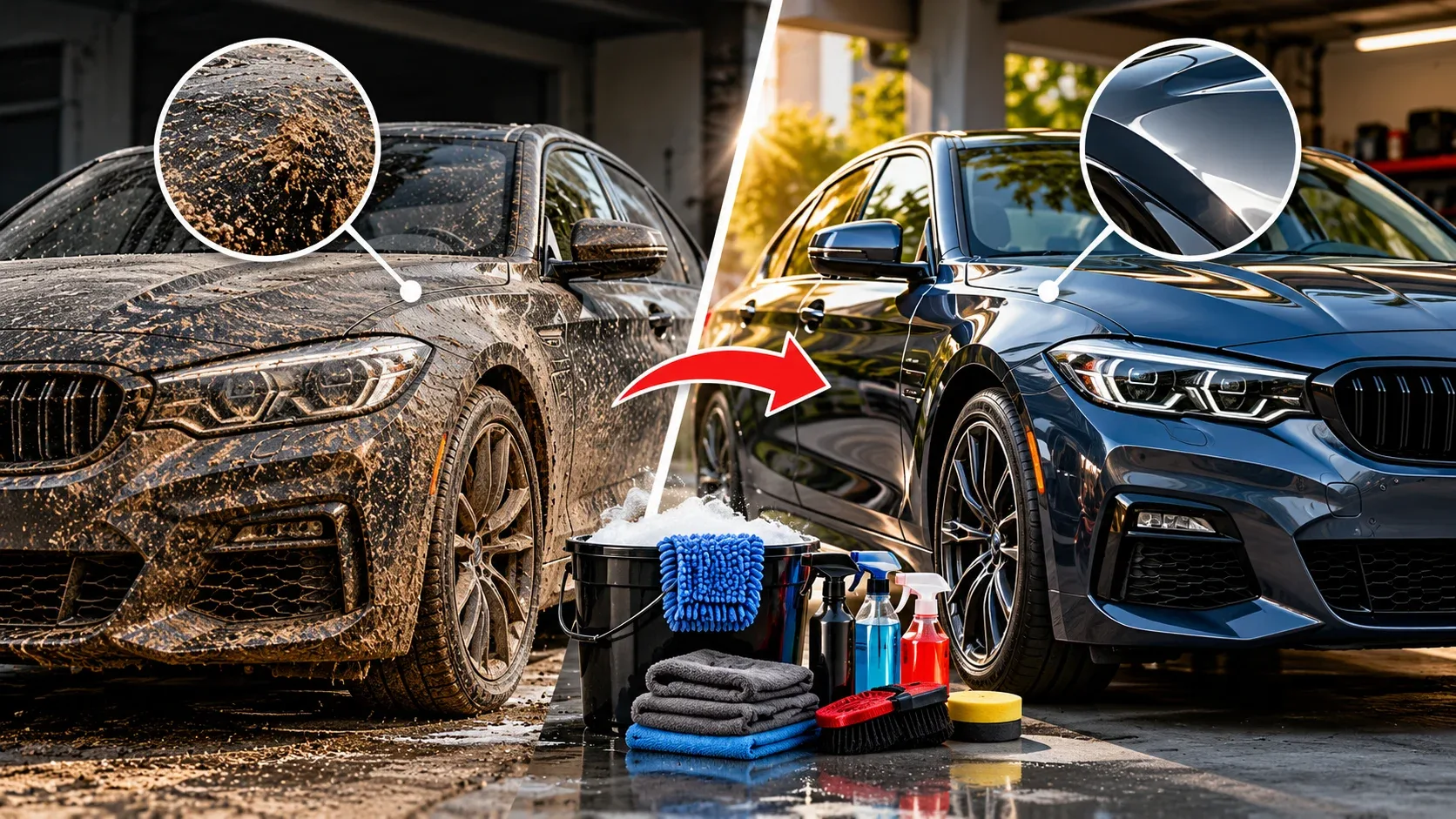
Check Surface Compatibility
Before buying chemicals, identify the materials and finishes that need cleaning.
This is particularly important for matte paint, aftermarket coatings, special wheel finishes, leather, and delicate cabin materials.
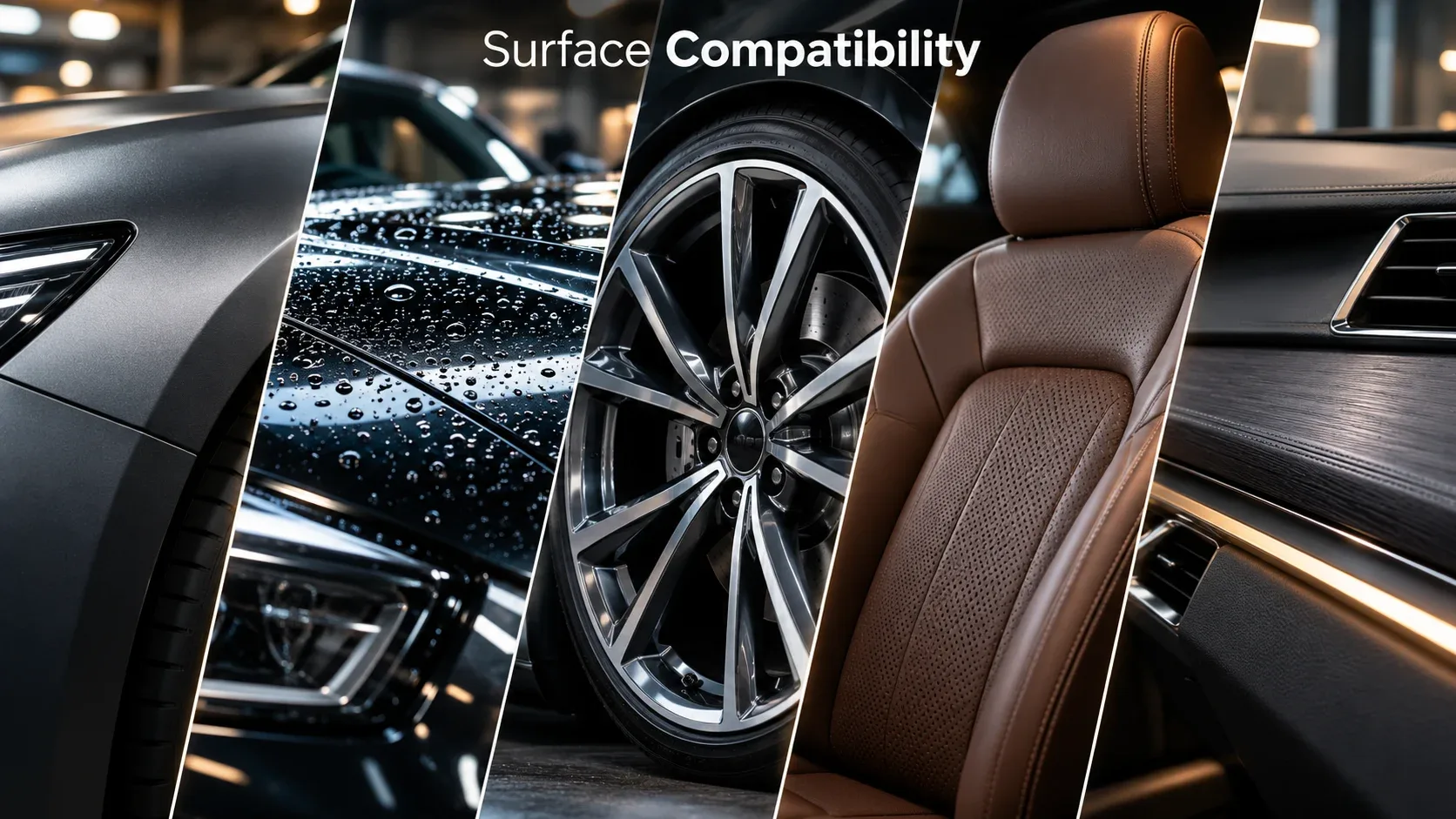
Evaluate the Included Accessories
Look for useful items such as appropriate microfiber towels, a washable mitt, and brushes designed for the intended surfaces.
A kit with many low-quality accessories may offer less value than a smaller, more practical one.
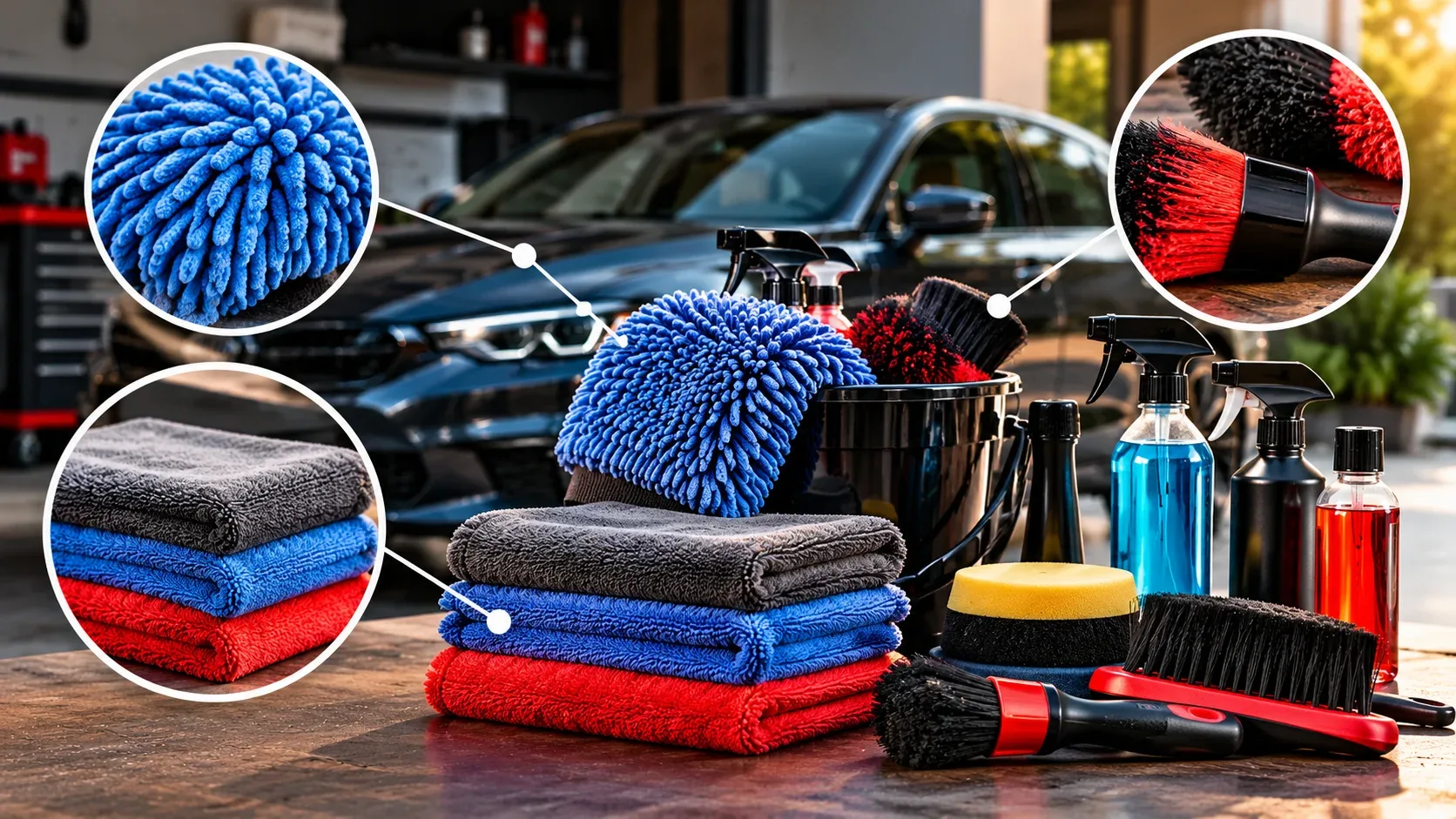
Match the Kit to Your Experience
Beginners should prioritize easy-to-use cleaning products and straightforward instructions.
Specialized chemical decontamination, machine polishing, and advanced coating products are better considered separately when needed.
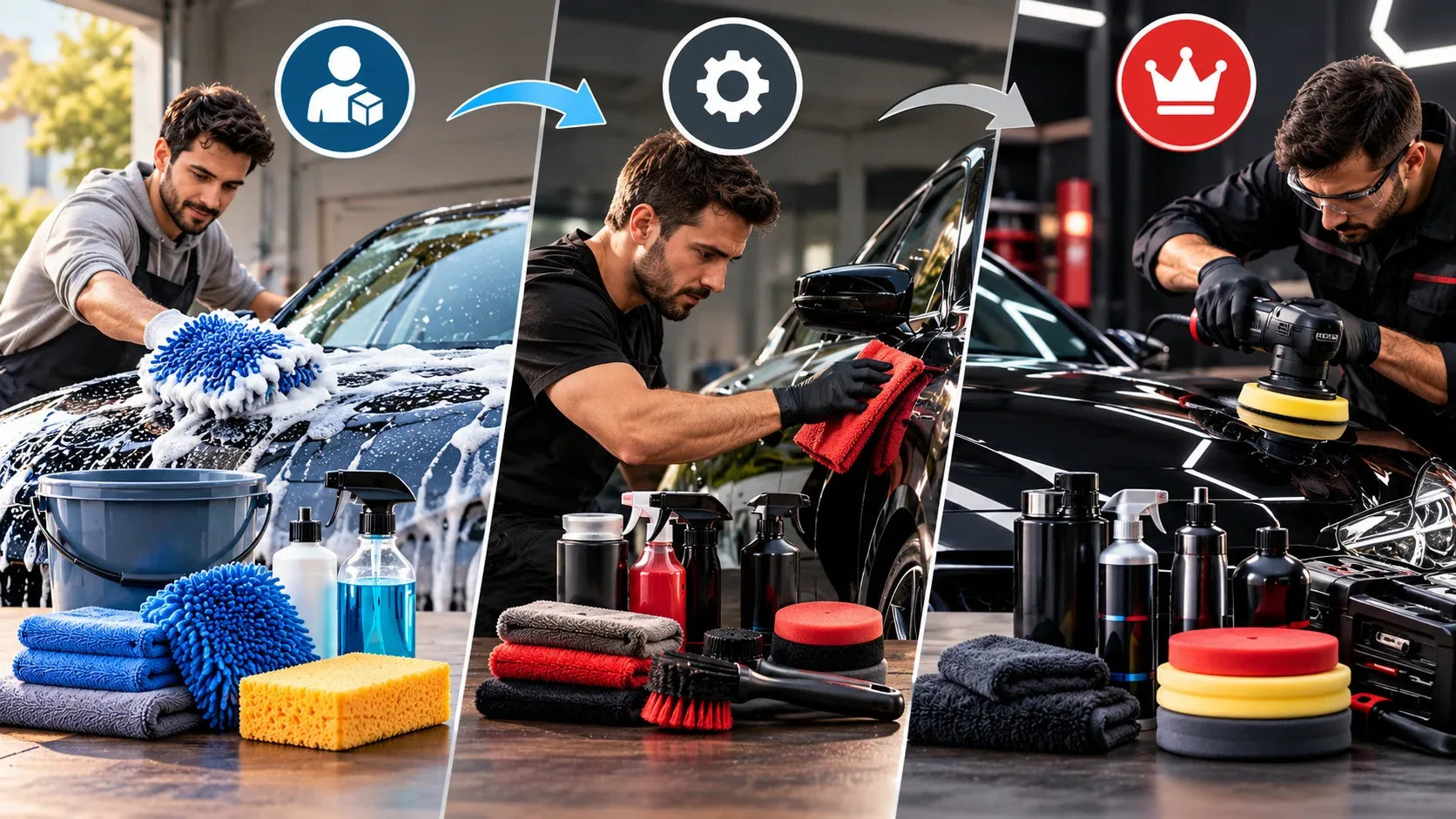
Consider Storage and Maintenance
Cleaning products should be stored as directed on their labels. Reusable tools should be easy to wash, dry, and organize.
Best starting approach: Choose a small selection of products you understand and will use regularly. Add specialty supplies only when a specific detailing task requires them.
How to Use a Car Detailing Kit: Step by Step
Using the right products in the right order helps improve cleaning results while reducing unnecessary contact with dirty surfaces.
The following method is a general home-detailing workflow for a conventionally washed vehicle. Always follow the product directions and any vehicle-specific care guidance.
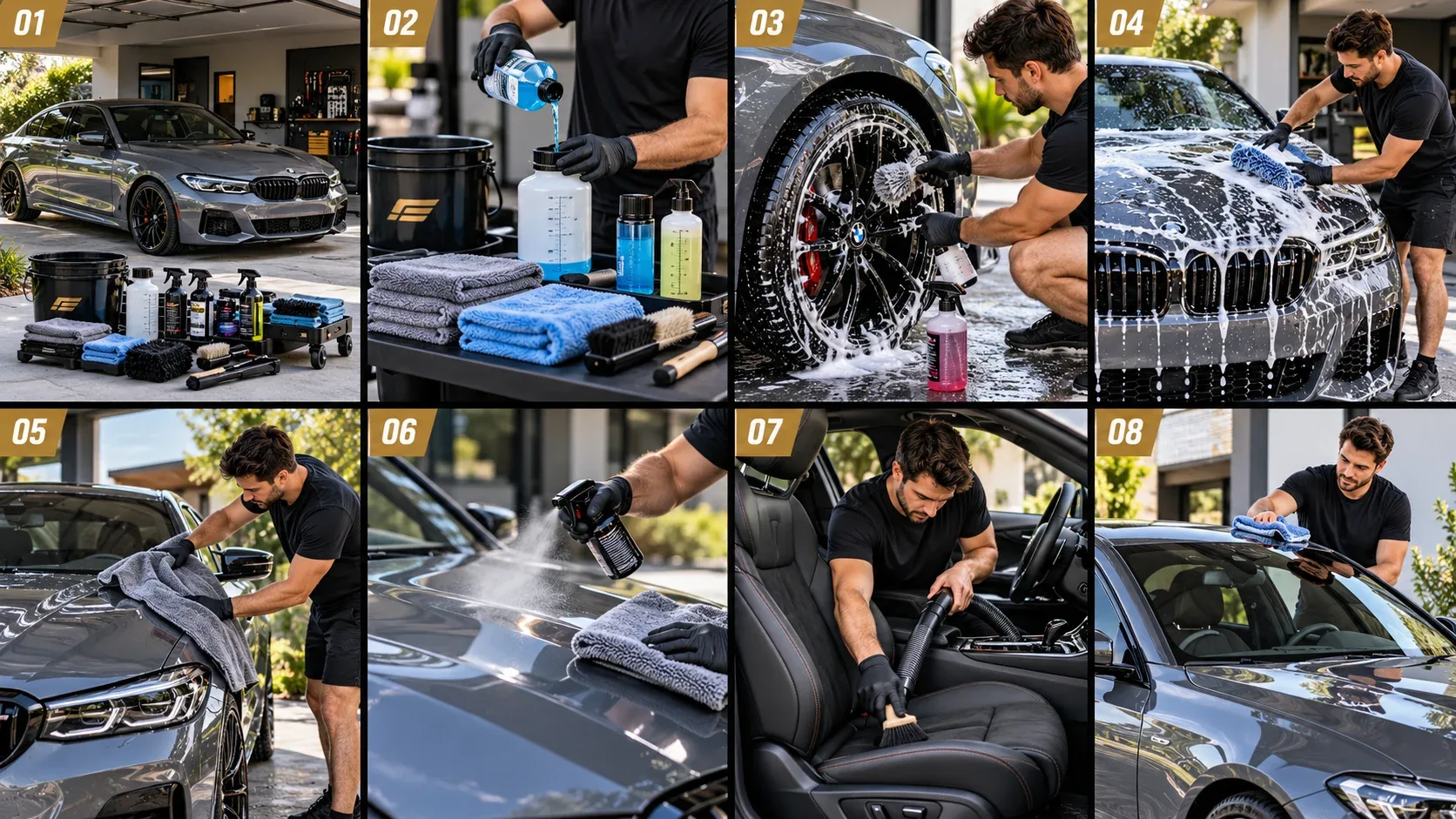
Park and Prepare the Vehicle
Choose a suitable location, preferably out of strong direct sunlight. Allow hot panels and wheels to cool.
Gather your products and separate clean towels and brushes according to their intended tasks.
Prepare Your Cleaning Products
Read the instructions on each product. Dilute concentrates only as directed and use clean containers or sprayers.
Keep wheel-cleaning tools separate from paint-washing tools.
Clean Wheels and Tires
Remove loose dirt and apply a cleaner suitable for the wheel finish. Use appropriate brushes to clean accessible surfaces.
Do not allow products to dry on the wheel unless their instructions specifically permit it. Rinse as directed.
Pre-Rinse and Wash the Exterior
Rinse away loose dirt before contact washing where water use and conditions allow.
Wash with a clean, lubricated mitt and a suitable automotive shampoo. Work methodically and rinse the wash media regularly.
Avoid dragging contaminated media across painted surfaces.
Rinse and Dry the Car
Remove the remaining shampoo according to its instructions.
Dry with an appropriate clean microfiber drying towel using gentle contact. Avoid aggressive rubbing, especially on contaminated surfaces.
Apply Optional Paint Protection
If your vehicle needs compatible protection, apply the selected wax, sealant, or spray product to the prepared surface.
Follow the manufacturer’s directions for application, removal, and curing.
Clean the Interior
Remove loose items and vacuum accessible carpets and upholstery.
Clean compatible surfaces with appropriate products and soft towels or brushes. Avoid excessive moisture near electronics and sensitive controls.
Clean Glass and Inspect Results
Use an appropriate cleaner and clean microfiber glass towel. Check for streaks and residue.
Inspect the finished vehicle and clean your detailing tools before storage.
Important: This sequence is for routine cleaning and maintenance. Paint decontamination, machine polishing, and coating application require their own procedures and may involve additional risks.
Best Car Detailing Tools for Beginners
Beginners do not need a garage full of expensive equipment to establish a useful vehicle-cleaning routine.
A few appropriate, reusable tools can cover many common maintenance tasks.
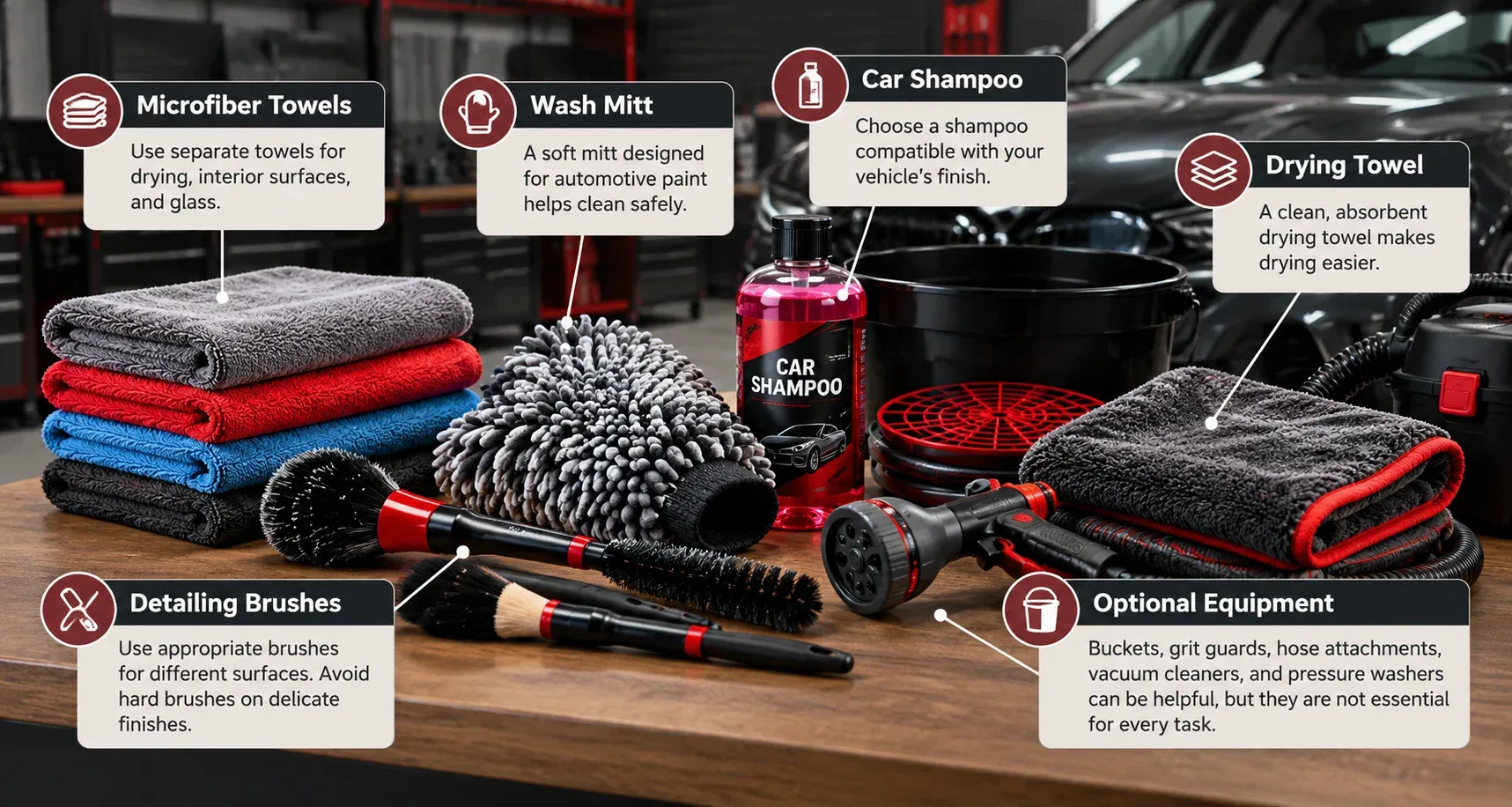
Soft Microfiber Towels
Keep a selection of clean towels for drying, interior surfaces, and glass. Separate them by use.
Quality Wash Mitt
A soft wash mitt suitable for automotive paint is a practical alternative to rough household sponges or abrasive scrubbers.
Suitable Detailing Brushes
Use brushes selected for the surface being cleaned. Hard brushes designed for heavily dirty areas should not be used on delicate finishes.
Car Shampoo
Choose a shampoo compatible with the vehicle’s finish and existing protective products.
Drying Towel
A clean, absorbent drying towel can make the drying stage easier and reduce unnecessary wiping passes.
Optional Helpful Equipment
Buckets, grit guards, hose attachments, vacuum cleaners, and pressure washers may improve convenience, but not all are required for every detailing task.
DIY Detailing Kit vs. Preassembled Kit
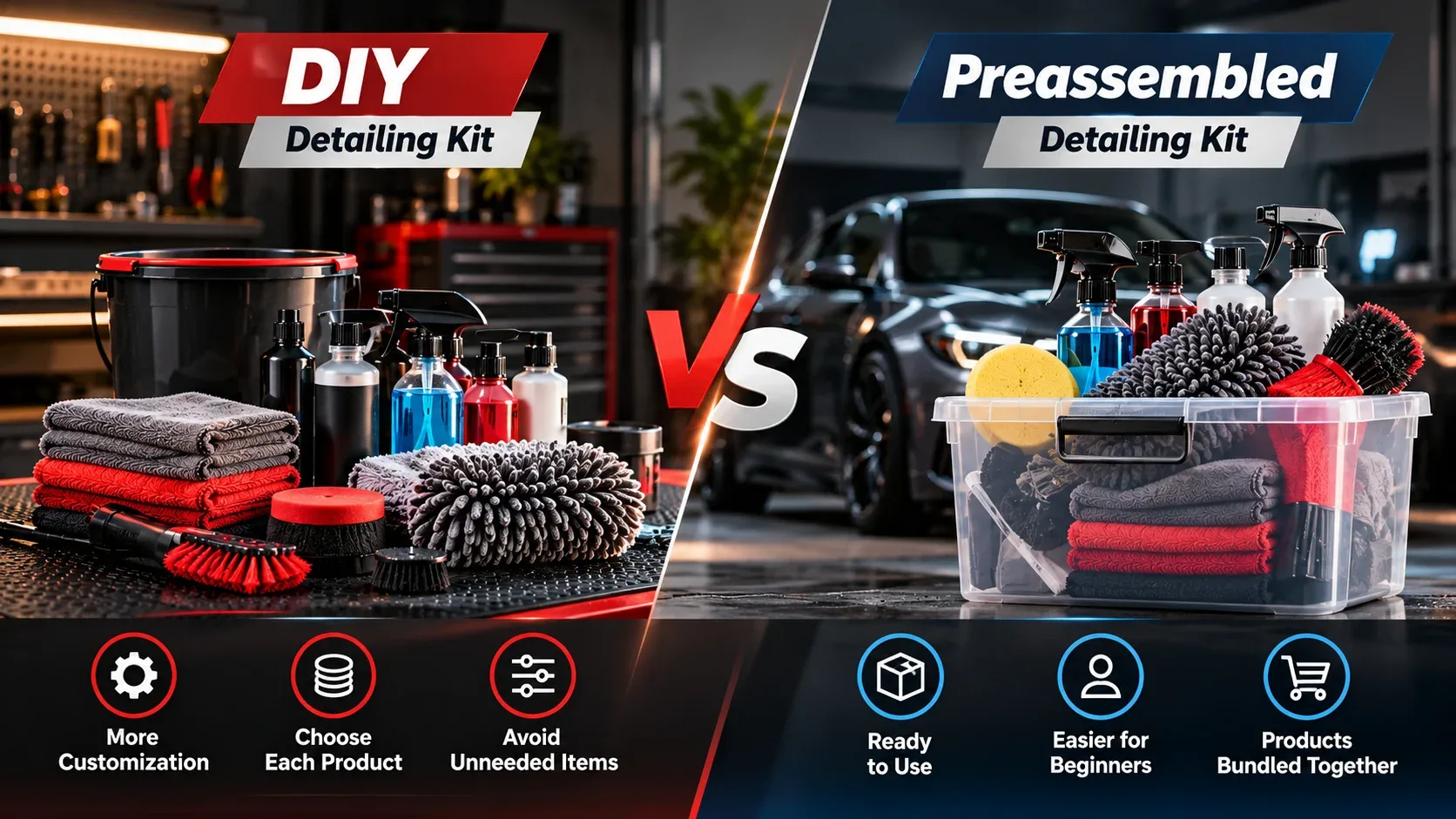
You can either purchase a preassembled detailing kit or build your own setup by selecting individual products.
Both approaches have advantages depending on your experience, existing supplies, and budget.
| Factor | DIY Kit | Preassembled Kit |
|---|---|---|
| Convenience | Requires individual selection | Products bundled together |
| Customization | High | Depends on available kit |
| Product selection | Choose each item | Predetermined contents |
| Learning curve | More research required | May be simpler for beginners |
| Unneeded products | Easier to avoid | Some bundles include extras |
| Overall value | Depends on chosen products | Depends on bundle contents and pricing |
When Does a DIY Kit Make Sense?
Building your own kit is useful when you already own some supplies or need products for particular surfaces and cleaning tasks.
When Is a Preassembled Kit Better?
A preassembled kit can be convenient for beginners who want a simple starting point without researching every accessory individually.
Buying advice: Compare the actual included products, sizes, suitability, and quality rather than assuming a larger kit offers better value.
Common Car Detailing Mistakes to Avoid
Many detailing mistakes happen when products are used on unsuitable surfaces or when cleaning tools carry abrasive dirt.
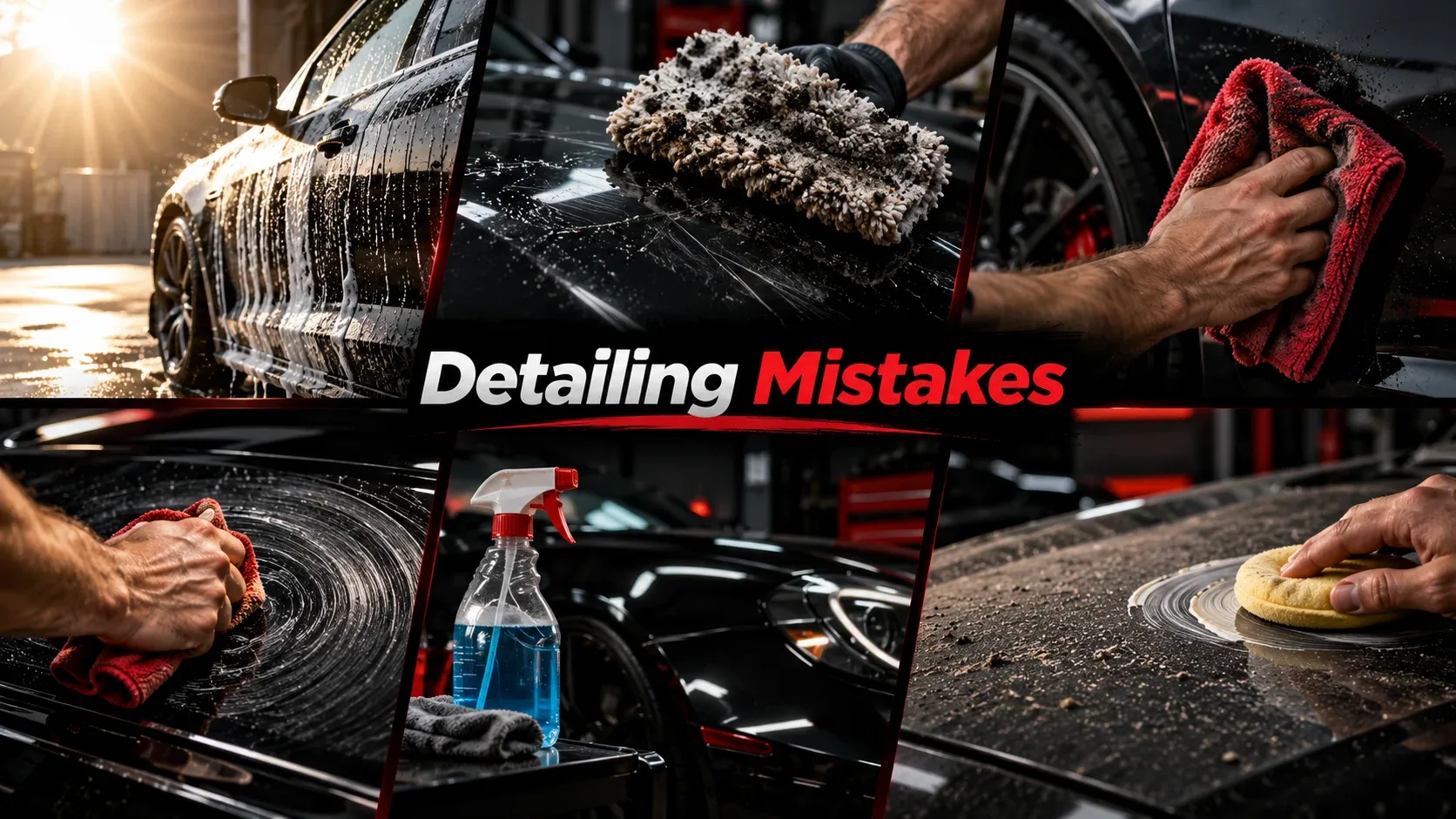
1. Washing Hot Paint in Direct Sunlight
Hot panels can cause some cleaners or rinse water to dry too quickly, leaving streaks or residue. Work under suitable conditions.
2. Using Dirty Wash Mitts
A contaminated mitt can drag grit across painted surfaces and increase the risk of marks.
3. Using Wheel Towels on Paint
Wheel cleaning tools may carry brake dust and abrasive particles. Keep them separate from paint towels.
4. Applying Too Much Pressure
Aggressive rubbing may damage sensitive finishes or increase surface scratching. Use appropriate tools and technique.
5. Using Household Chemicals Without Checking
Some household cleaners may be unsuitable for automotive finishes, interior materials, or existing coatings.
6. Applying Protection to Dirty Surfaces
Wax and sealant products generally require suitable surface preparation. Contamination can affect application and appearance.
7. Ignoring Product Instructions
Incorrect dilution, contact times, or application methods may reduce performance or cause damage.
8. Using Every Product in the Kit
Not every detailing task requires every included chemical. Use only the products appropriate for the surface and condition.
Are Car Detailing Chemicals Safe?
Automotive detailing products can be useful when selected and used according to their instructions. However, no cleaner should be assumed safe for every surface.
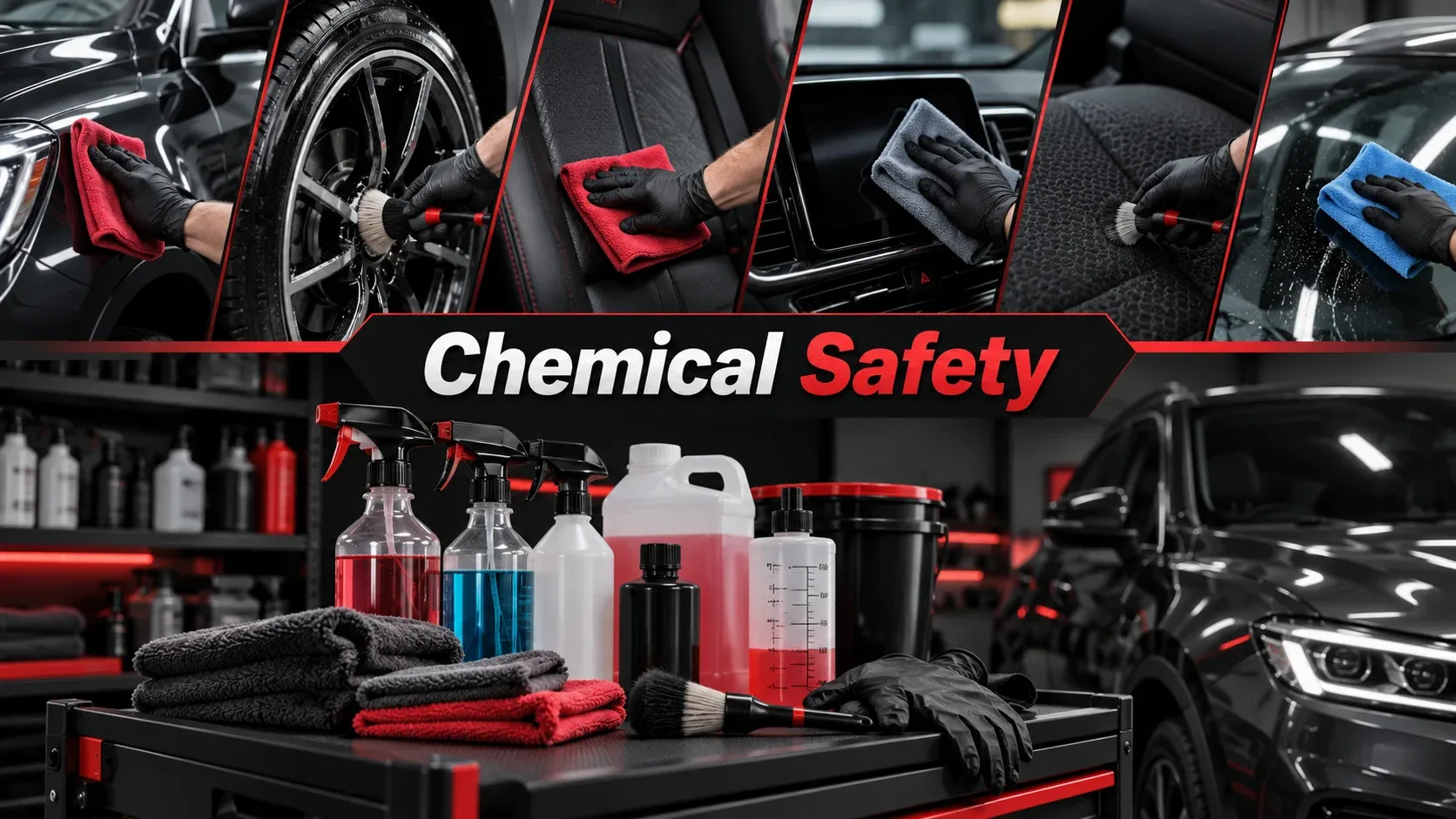
Check Surface Compatibility
Identify whether the product is suitable for painted panels, coated wheels, plastics, leather, fabric, glass, or other materials.
Follow Dilution Instructions
Concentrated cleaning products should be diluted only as directed. Using a stronger solution does not automatically provide better cleaning.
Protect Sensitive Interior Areas
Avoid spraying liquids directly onto electronics, switches, instrument displays, and other sensitive components unless the manufacturer’s instructions specifically allow it.
Use Appropriate Protective Equipment
Follow the product label and safety information for guidance on gloves, ventilation, and other precautions.
Store Products Correctly
Keep cleaning products in properly labeled containers and store them according to manufacturer directions, away from children and pets.
Chemical safety warning: Do not mix detailing chemicals unless their manufacturer explicitly instructs you to do so. Some combinations can create dangerous reactions or fumes.
Car Detailing Kit vs. Professional Detailing
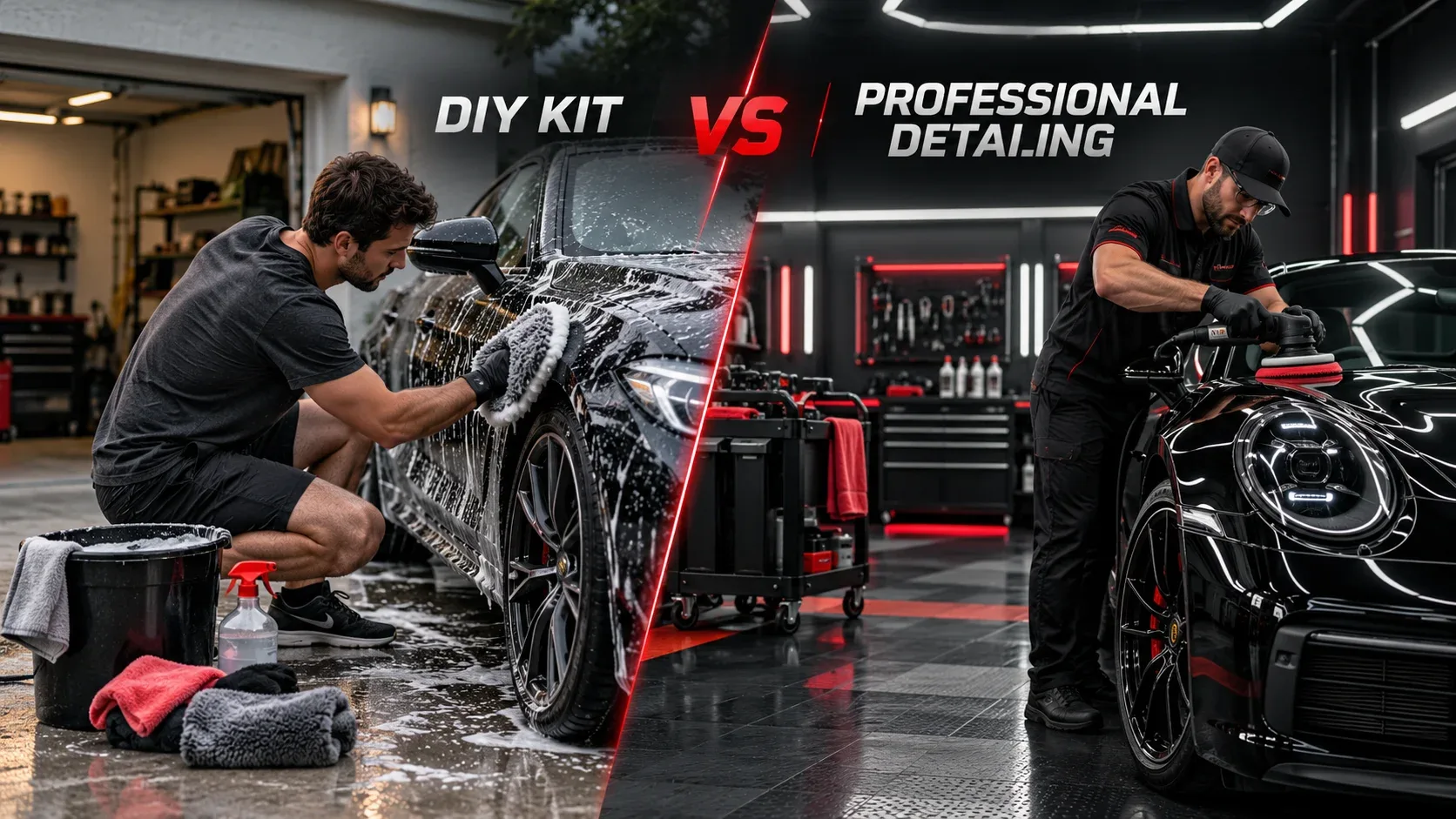
A home detailing kit is useful for routine cleaning and basic vehicle maintenance.
Professional detailing services may offer equipment, experience, and processes that are difficult to reproduce with a simple starter kit.
| Factor | DIY Kit | Professional Detailing |
|---|---|---|
| Routine cleaning | Suitable with correct technique | Also available |
| Upfront equipment | Purchased by owner | Usually supplied by provider |
| Time commitment | Owner performs the work | Work performed by service provider |
| Technical skill | Varies by task | Depends on provider experience |
| Paint correction | Requires specialty skills and equipment | May be offered as a specialized service |
| Specialized stain removal | May be limited | May have appropriate equipment |
When Is DIY Detailing Enough?
DIY detailing is often practical for regular washing, interior dust removal, ordinary glass cleaning, and compatible maintenance products.
When Should You Consider a Professional?
Professional help may be useful for serious paint defects, specialized upholstery cleaning, complex coating work, or surfaces requiring additional expertise.
How Often Should You Detail Your Car?
The right detailing schedule depends on how the vehicle is used, where it is parked, and the conditions it encounters.
A garage-kept vehicle driven occasionally may need different maintenance from a daily driver exposed to rain, road salt, dust, or heavy traffic.
General Maintenance Guidelines
| Task | General Frequency | Key Consideration |
|---|---|---|
| Exterior washing | Often every 1–2 weeks or as needed | Dirt, road salt, climate |
| Interior dusting | Weekly or as needed | Cabin use and dust |
| Interior vacuuming | Every few weeks or as needed | Pets, children, debris |
| Glass cleaning | When film or dirt affects visibility | Maintain safe visibility |
| Paint protection | According to product guidance | Product durability and condition |
| More thorough detailing | Periodically as needed | Vehicle condition and goals |
These are general planning guidelines rather than fixed requirements for every vehicle.
Seasonal consideration: Vehicles exposed to road salt, coastal conditions, heavy dust, or frequent mud may need more frequent cleaning.
How to Clean and Store Your Car Detailing Kit
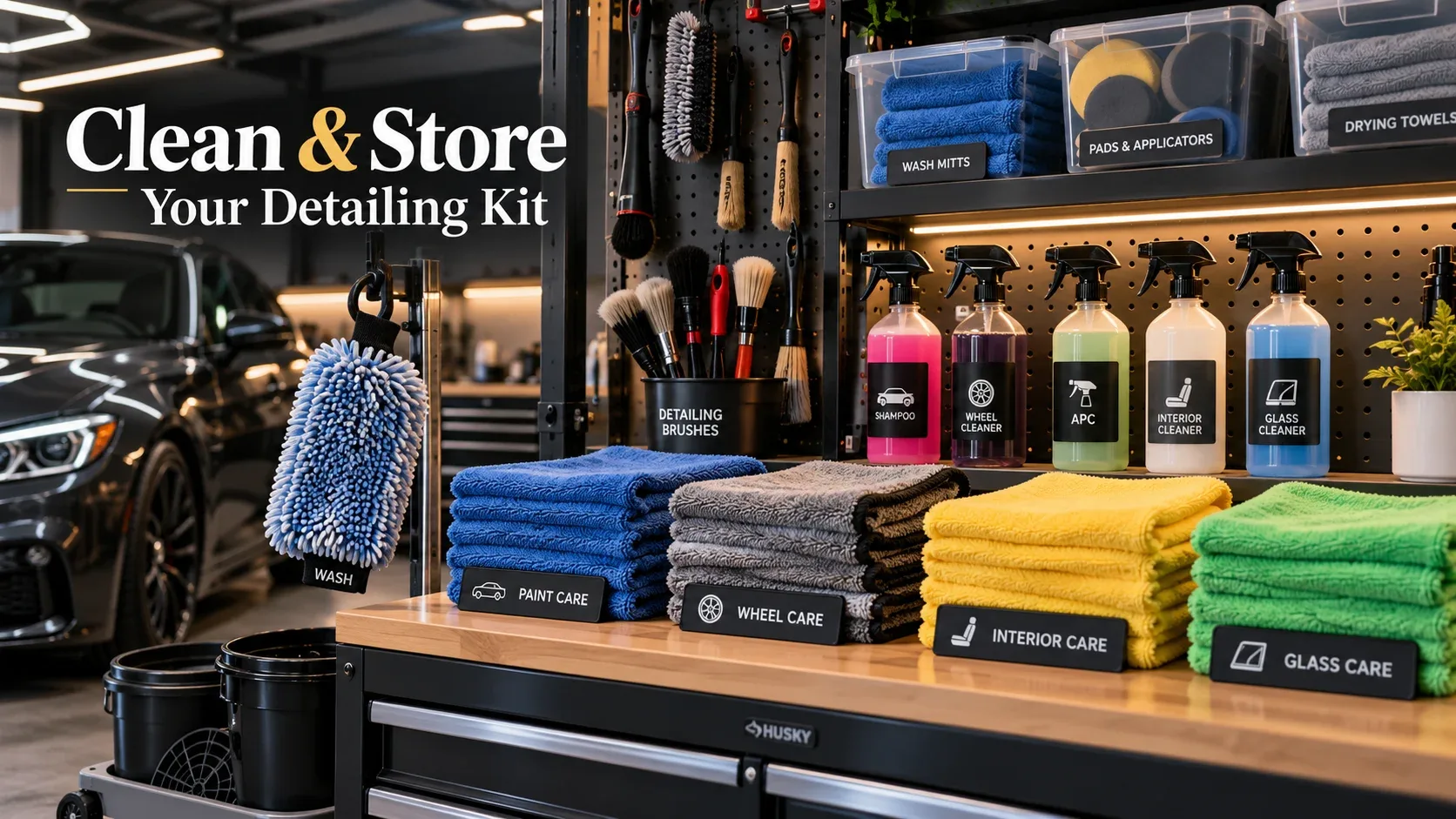
Keeping detailing tools clean helps extend their useful life and reduces the risk of transferring contamination to vehicle surfaces.
Wash Microfiber Towels Properly
Follow the towel manufacturer’s washing instructions. Keep heavily contaminated wheel towels separate from towels used on paint or glass.
Rinse and Dry Wash Mitts
Remove loose dirt and shampoo residue before allowing wash mitts to dry completely.
Clean Detailing Brushes
Remove accumulated dirt and chemical residue using a method suitable for the brush material.
Store Chemicals Securely
Keep products in properly labeled containers under the recommended storage conditions.
Separate Tools by Purpose
Organize supplies according to their use, such as paint washing, wheel cleaning, interior cleaning, and glass care.
Replace Damaged Accessories
Inspect towels, brushes, and wash mitts periodically. Do not continue using damaged or contaminated tools on sensitive vehicle surfaces.
Beginner Car Detailing Kit Checklist
Use the following checklist to prepare a simple kit for regular vehicle cleaning.
Select the items you already own or plan to add to your kit.
Choose supplies appropriate to the tasks you actually perform.
Optional products are not necessary for every wash. Learn the correct procedure before using specialized chemicals or abrasive tools.
Frequently Asked Questions About Kit Detailing
What does a car detailing kit include?
A detailing kit can include automotive shampoo, microfiber towels, wash mitts, brushes, interior cleaner, wheel cleaner, glass cleaner, and optional protection products. Contents vary between kits.
Is a beginner detailing kit enough to clean a car?
A basic kit can handle many routine cleaning tasks. More difficult contamination, paint defects, or specialized materials may require additional products or professional attention.
Can a detailing kit remove scratches?
Ordinary cleaning products do not remove deep paint scratches. Certain polishing products can reduce some superficial defects, but results depend on paint condition, defect depth, equipment, and technique.
Do I need a pressure washer for car detailing?
No. Many routine cleaning tasks can be completed without a pressure washer. Suitable water access, clean washing tools, and safe technique are more important than owning a particular machine.
Can I use dish soap to wash my car?
A suitable automotive shampoo is generally the better option for routine washing. Dishwashing products are not necessarily formulated for vehicle finishes or existing paint-protection products.
Is a clay bar necessary for every detail?
No. Clay products are intended for specific bonded contamination and may cause surface marring if used incorrectly. Routine maintenance washing does not always require claying.
How long does it take to detail a car?
The time varies with vehicle size, condition, available equipment, and the tasks being performed. A routine wash may be relatively quick, while a more comprehensive detail can take several hours or longer.
Can I use a detailing kit on a ceramic-coated car?
Yes, provided the cleaning products and procedures are compatible with the coating. Follow the coating manufacturer’s maintenance instructions, particularly before applying additional chemical treatments.
Which microfiber towels are best for detailing?
Choose clean, suitable towels for each task. Drying towels, glass towels, and general cleaning towels have different intended uses. Material quality, condition, and proper care are important considerations.
What products should I avoid on car interiors?
Avoid harsh or incompatible cleaners, abrasive brushes, excessive liquid near electronic components, and products not approved for sensitive interior materials. Check the vehicle and cleaner manufacturer’s guidance.