Selecting the appropriate replacement part is sometimes difficult. Parts that appear to be the same may not connect in the same way or meet similar requirements. The purchase of the wrong auto parts and accessories may lead to a loss of your time and money.
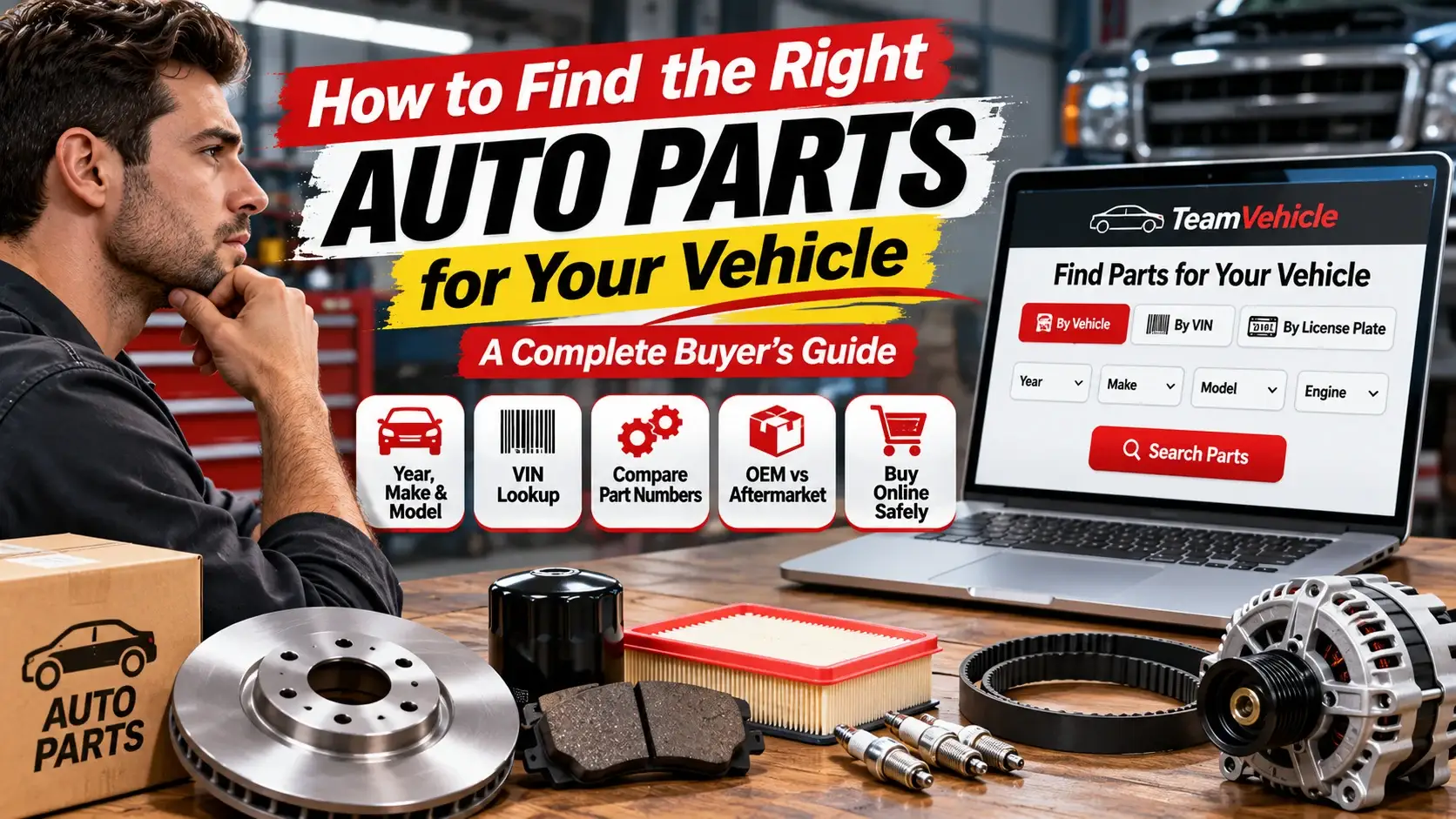
TeamVehicle has made things easier for you. Select your car by year, make, and model, or by using the VIN and license plate lookup features. You can also choose from Quick Search and Pro Search.
Start With Your Vehicle’s Year, Make, Model, and Engine
Prior to using the automotive parts catalog to search for replacement parts, it is best to compile all the pertinent information about your vehicle, such as its year of manufacture, make, model, and engine specifications.
One model may have different engines and equipment specifications. You cannot presume that all of them use identical parts. It is also best to refer to your owner’s manual or vehicle identification label if there are any doubts regarding the specifications of your car or truck.
Use Your VIN to Narrow the Search
The Vehicle Identification Number (VIN) is a 17-character unique number that can be used to distinguish your vehicle. The number can be found on the driver’s side dashboard, on the driver’s door jamb, or on a sticker on the windshield.
A VIN decoder may be used to verify some of the details related to your car. Nevertheless, there is no guarantee that all parts indicated in the results of the VIN lookup will match your vehicle. Compatibility may depend on the production year, engine types, and equipment.
Compare Part Numbers and Product Specifications
The first thing you need to do is check out the original part’s label, housing, or package to see what number you should compare to the replacement listing. If your manufacture gives you cross-reference numbers, make sure that they are correct for your particular car.
After that, look through the part’s specifications. It includes such things as the part’s size, mount points, connector, and vehicle application. Besides, be aware of the possible differences between the parts in terms of production date, mounting side, and engine type. You will find two similar-looking parts, but different in specifications.
Understand OEM and Aftermarket Replacement Parts
There are two general kinds of replacement parts: OEM and aftermarket. OEM parts are manufactured by the automobile maker or according to its original specifications. Aftermarket parts, on the other hand, are made by independent manufacturers. They have a greater variety in terms of brand, design, and price. None of these is always the better choice.
In some cases, OEM parts are a good choice for those who would like parts that meet the original specifications of their car. The aftermarket auto parts online catalog provides more choices. You should weigh the manufacturer’s reputation, specifications, fitment information, and warranty before making a choice. Check as well your vehicle’s existing warranty policy since there are certain factors that could affect your choice.
What to Check When Buying Auto Parts Online
Product details help to make sure that a part is compatible with your vehicle. You should make sure the compatibility details of the item match with the year, make, model, and engine of your vehicle. Check the part number against the original part or the replacement part for comparison.
You should also check the product specification, such as the dimension and connector, among other details. You should also ensure that the name of the manufacturer of the part is correct. It is not advisable to buy a part from the product pictures or price alone. You should also find out about the return policy and warranty of the product.
Avoid Common Parts-Buying Mistakes
A large number of ordering errors occur due to hastiness on the buyer’s side. Ordering parts just by the name and model of the item may neglect some vital information about the engine type or car trim. Just because two cars look the same doesn’t mean that one item will fit into another.
Always double-check the part number, measurements, connections, and the actual specs of the product. Our TeamVehicle offers information to make comparisons between different items easier. The price is important, but it shouldn’t be the only thing you look at.
Make Your Next Parts Search More Confident
Identifying the correct auto parts begins with understanding your vehicle and analyzing the component specifications. You may use your VIN number as the basis of comparison and then select those components that fit into your vehicle.
Are you ready to take your search one step further? Head to TeamVehicle to view its extensive selection of automotive parts. Utilize the vehicle selection tool where applicable and then read the fitment details of each component you wish to purchase.