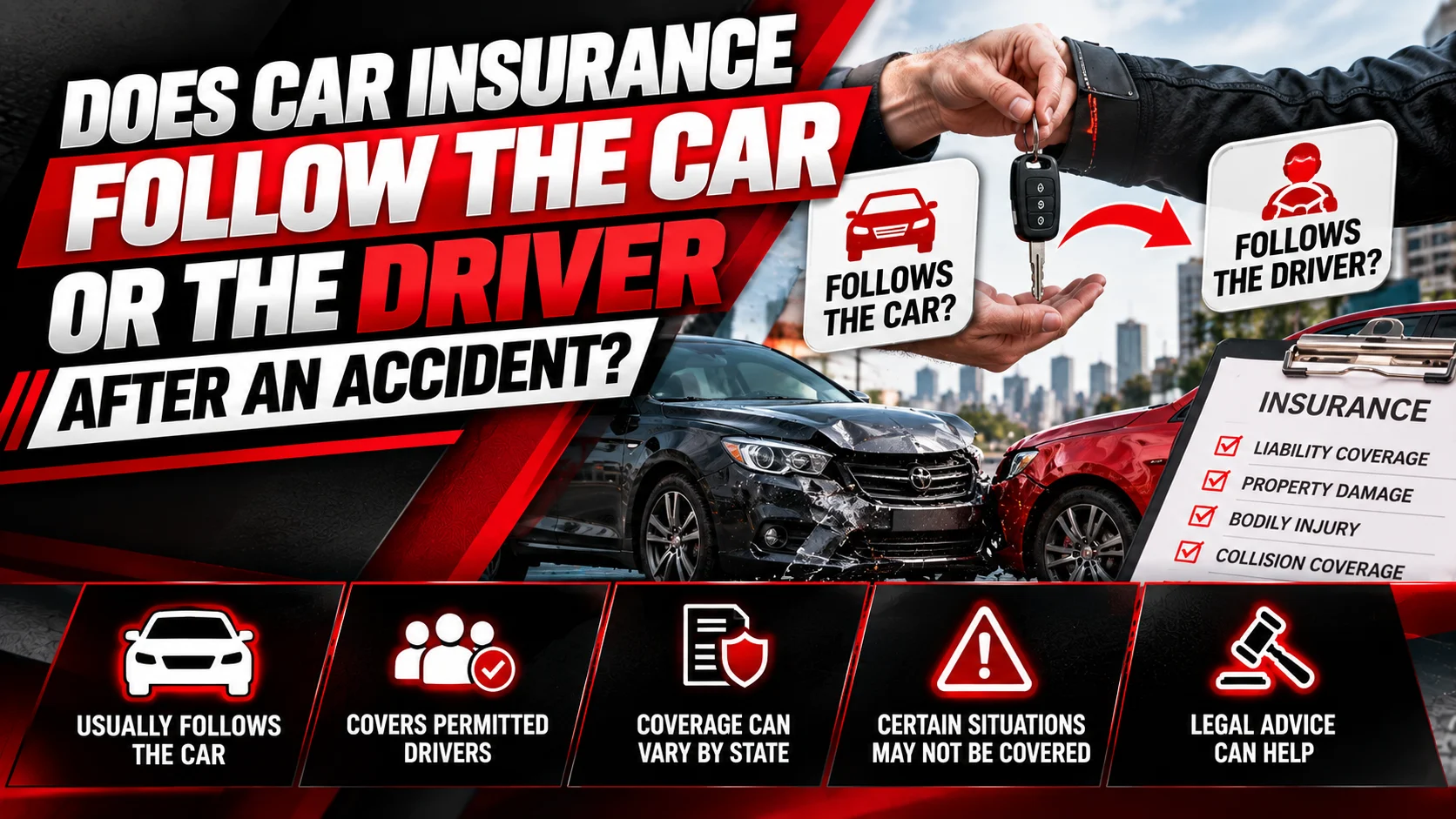
One of the first concerns an individual faces after a car accident is the insurance coverage. In many situations, the car’s insurance policy provides coverage when someone else is driving with permission. The exact rules can depend on the policy for each case. For example, what’s the driver’s relationship to the vehicle owner, and which state did the accident occur?
The cost of handling an accident can also be crucial. In 2024, the average auto liability claim for bodily injury was $28,278, while the average property-damage liability claim was $6,770. Collision claims averaged $5,489. Insurance costs have also continued to rise.
Insurance coverage can become even more complicated when another driver has little or no insurance. A 2025 Insurance Research Council study found that 15.4% of U.S. motorists were uninsured in 2023, while another 18.0% were underinsured.
Knowing whether insurance follows the car or the driver can make a huge difference when filing a claim after an accident.
So, does car insurance follow the car or the driver? Let’s find out!
The General Rule and Why It Confuses People
In most states, auto insurance is based on the vehicle, not the individual driver. As a result, when an accident occurs due to the negligent driving of a person who has been granted permission to use the owner’s car, it is the owner’s insurance company that will respond first.
This surprises people because auto insurance feels personal. The policy has your name on it, you pay the premium, and it’s tied to your driving record. But the coverage itself is written against the vehicle, and permission to drive that vehicle extends the policy’s protection to whoever is behind the wheel, family member, friend, or anyone else the owner has allowed to use the car.
Why the Rule Exists This Way
Once you look at the consequences of not having this logic, things become clearer. Without it, in case of insurance being tied to the driver, a car owner can give his keys to an uninsured individual and get away with all the blame after an accident occurs.
Tying the policy to the car closes that gap. It means a vehicle on the road is covered based on how its owner insured it, largely independent of which permitted driver happens to be behind the wheel on a given day.
That said, “follows the car” is a helpful shorthand rather than a complete legal rule. Certain coverages behave differently. Personal injury protection, for instance, often travels with the driver regardless of whose car they’re in, covering that person’s own medical bills even in a borrowed vehicle.
And a driver’s own liability coverage can sometimes act as a secondary, backup layer if the car owner’s policy limits get exhausted by a serious accident.
Where This Gets Complicated in Practice
The general rule holds up fine for the simple case of a friend borrowing a car with clear permission and getting into a minor accident. Real situations aren’t always that clean.
On the other hand, renting vehicles to conduct business activities like dropping off meals or driving passengers in ride-sharing apps is one common reason why coverage can be denied.
Driving without permission removes coverage too and can create separate legal exposure beyond the accident itself. In case the policy held by the vehicle owner has expired, the scenario is once again different, and the policy of the driver himself may be the only option available for insurance, though it may not cover any damage to the vehicle that was being driven.
Insurers expect household members and regular drivers to be listed on a policy. In this case, a driver who regularly uses another person’s vehicle without being listed can face a coverage dispute. Individuals who regularly drive a car should be listed rather than just approved.
Minimum Coverage Varies by State, and That Matters More Than People Expect
Every state sets its own minimum liability requirements, and those minimums vary enough that assuming one state’s numbers apply somewhere else is a real mistake.
The insurance policy with minimum coverage can be sufficient for one state. This becomes different if the accident happened in another state. Insurance may not cover all the costs. This is because minimum coverage tends to be lower than the actual cost of a major accident.
This is exactly the kind of detail that becomes urgent the moment an accident happens rather than before.
When an accident involves a rental car, determining liability and available compensation can become more complicated. There will be conflicts with the permission to use the vehicle. Insurance coverage also becomes an issue. Seeking legal counsel can help clarify which parties and insurance policies may be responsible.
Sometimes, general rules may not translate cleanly across state lines. In Connecticut, you can seek help from car accident attorneys in New Haven to get an answer grounded in the state’s specific insurance framework.
What This Means in Practice
If you regularly drive someone else’s car or regularly lend yours out, it’s worth an actual conversation with an insurance agent rather than an assumption based on what you’ve heard.
Getting added as a listed driver on a household member’s policy, understanding whether your own liability coverage would step in as backup, and knowing what your policy excludes are all things worth confirming before an accident happens, not after.
The general rule, that insurance follows the car, is a reasonable starting point for understanding coverage, but it’s rarely the last word once the specific facts of an accident come into play.