

A practical guide to choosing a DeWalt table saw for framing, trim, sheet goods, punch-list work, and serious portable woodworking.
Whether you search for a DeWalt table saw, DeWalt tablesaw, table saw DeWalt, or DeWalt portable table saw, the buying question is the same: can the saw make safe, accurate cuts at the pace your work demands? A portable saw is a system, not just a motor and blade. Fence repeatability, rip capacity, stand stability, outfeed support, dust collection, blade choice, and site power all affect the result. This guide focuses on the practical decisions that matter after the spec sheet is closed.
Choose the DeWalt table saw format before comparing features
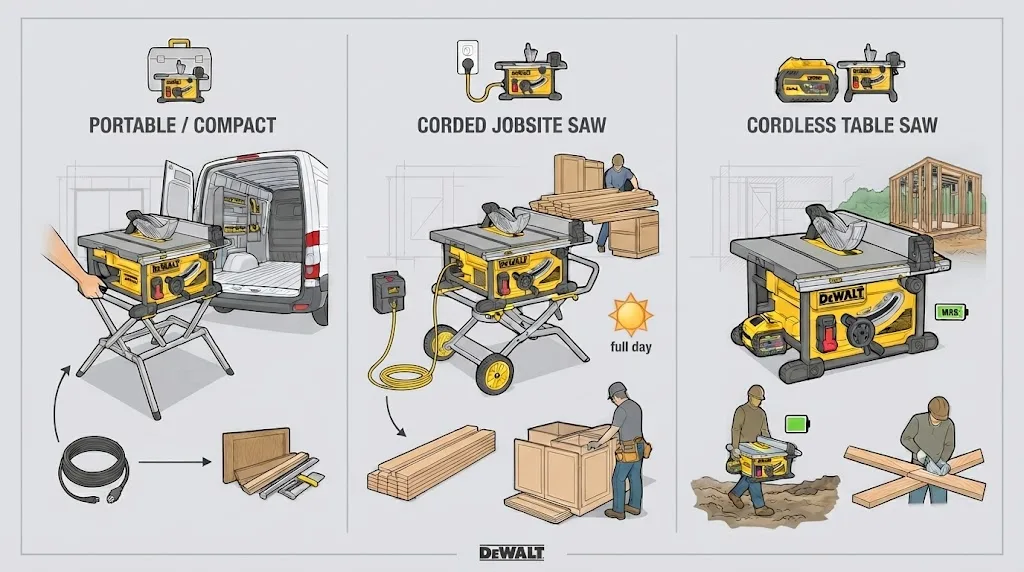
The best DeWalt table saw depends on how often it travels and what you feed through it. Compact portable saws are easier to lift into a van and set up in tight rooms. A DeWalt jobsite table saw with a rolling stand adds stability and makes repeated cuts more efficient. A DeWalt 10 table saw provides familiar blade capacity for common framing and sheet-material tasks, while cordless versions trade unlimited run time for independence from outlets and extension leads.
Portable / compact
Best for fit-out, trim work, short rips, and crews that carry the saw through finished spaces. Prioritize fence action and easy setup.
Corded jobsite saw
The dependable general-purpose option for framing lumber, repeated rips, cabinet installation, and a full day of cuts with access to power.
Cordless table saw
Useful for remote sites, quick corrective cuts, and short production runs. Plan battery capacity around material thickness and cut count.
A table saw can kick back material with enough force to cause serious injury. Keep the blade guard, riving knife, and anti-kickback components installed whenever the cut allows it. Use a push stick or push block for narrow rips, keep the work supported, and never stand directly in line with the blade.
Rip capacity and a stable setup matter as much as motor power
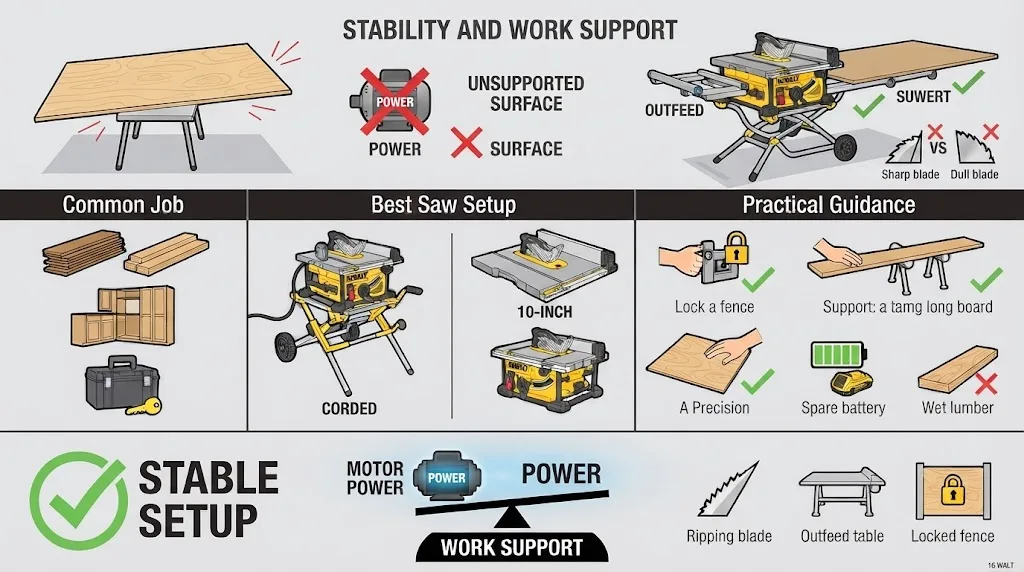
A powerful motor cannot compensate for a narrow, unsupported work surface. For sheet goods, the useful measurement is not only maximum rip capacity but how safely you can guide the panel before and after it reaches the blade. A DeWalt table saw and stand combination can reduce fatigue by putting the table at a consistent height and limiting movement on uneven ground. Add outfeed support before long rips, and use a sharp blade that matches the material rather than forcing stock through a dull general-purpose blade.
| Common job | Best saw setup | Practical guidance |
|---|---|---|
| Framing & deck boards | Corded jobsite saw on rolling stand | Use a ripping blade for repeat lengthwise cuts. Keep the fence locked, support long boards, and avoid twisted stock. |
| Cabinet panels & MDF | 10-inch saw with wide rip capacity | Check fence parallelism and use an outfeed table. A fine finish blade and controlled feed reduce chipping. |
| Remote punch-list work | Cordless portable table saw | Bring charged high-capacity packs and reserve the saw for planned cuts. Dense or wet lumber drains batteries quickly. |
Published capacities and cutting depths vary by model, region, blade, and accessory configuration. Confirm current specifications in the product manual before buying for a specific material or job.
A DeWalt rack-and-pinion fence is only accurate when you set it up carefully
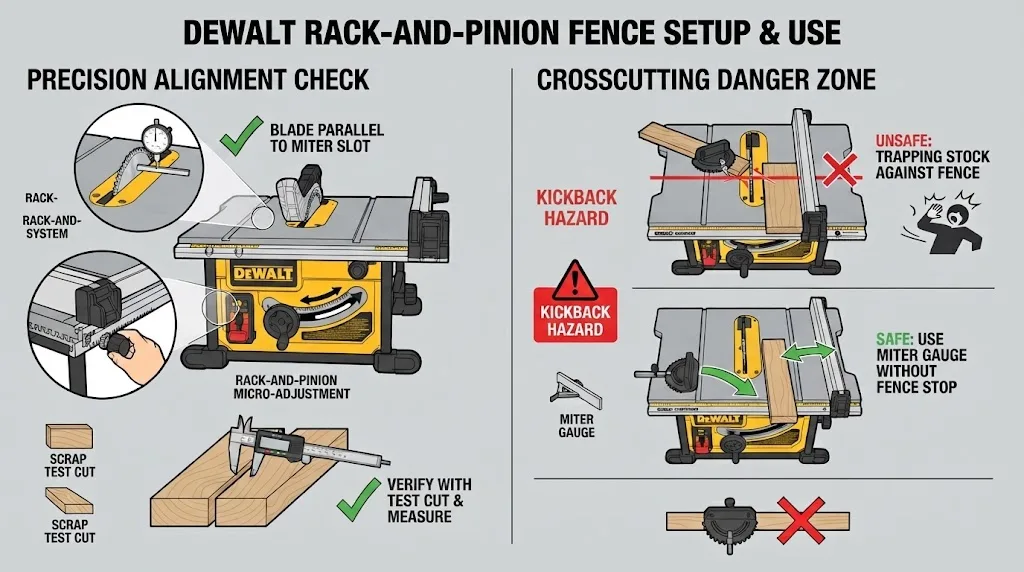
Fence repeatability is one reason professionals look closely at DeWalt jobsite table saws. A rack-and-pinion arrangement can make fine adjustments quick and help the fence stay parallel as it moves, but it still deserves inspection. Before production work, verify that the blade is aligned to the miter slot, then check the fence at the front and rear of the blade. Make a test cut in scrap, measure both ends, and correct any obvious drift before expensive stock reaches the table.
Do not use the fence as a length stop when crosscutting unless the offcut can move clear before it contacts the blade. Trapping stock between a miter gauge and fence is a common kickback setup.
A DeWalt cordless table saw is about mobility, not endless ripping
Cordless table saws solve a real problem on sites without convenient power, on upper floors, or during small corrective tasks where running an extension lead wastes more time than the cutting itself. Their limits are equally real. Runtime falls when ripping thick stock, wet framing lumber, hardwood, or sheet material for long stretches. Battery temperature, blade sharpness, feed pressure, and pack size all influence performance. Treat a cordless saw as a highly mobile cutting station and carry enough compatible batteries for the day’s planned work.
Plan batteries like consumables on a heavy day
If a battery or saw body becomes unusually hot, pause the work and inspect the blade, stock, and setup. Let packs cool before charging. Thermal protection is a safeguard, not a reason to keep forcing a cut.
Your stand, support, and dust plan shape jobsite productivity
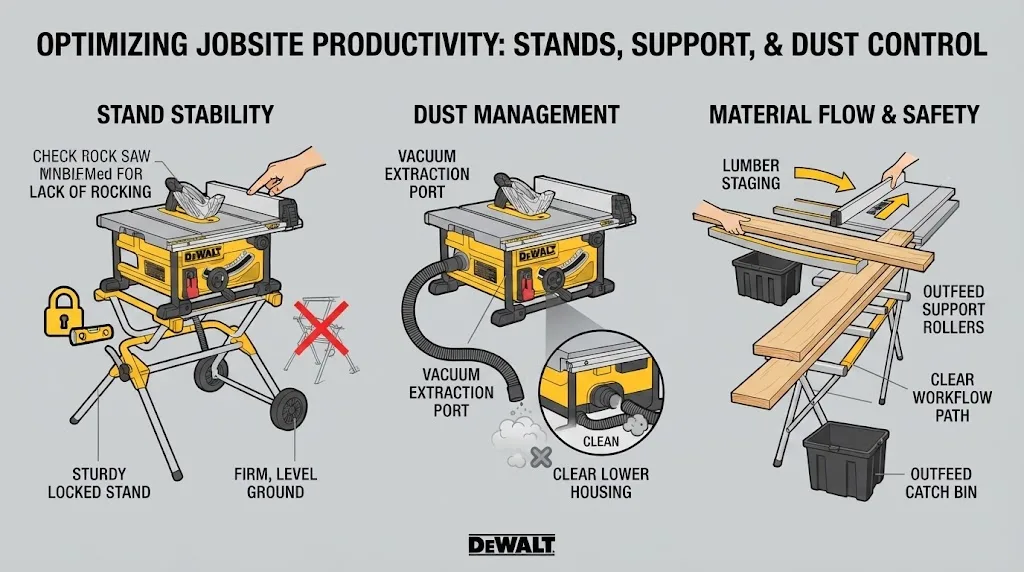
A DeWalt table saw and stand package is worth considering when the saw moves often but needs to behave like a fixed workstation once opened. Lock the stand on firm ground, check that it does not rock, and position the work so you have a clear path through the cut. On dusty interior work, connect compatible extraction where practical and clear the saw’s lower housing regularly. Good workflow also means staging lumber, supporting long pieces, and keeping offcuts from collecting near the blade or underfoot.
DeWalt table saw questions, answered
Is a DeWalt 10-inch table saw better than a compact model?
Not automatically. A 10-inch format can offer useful cutting depth and familiar blade availability, but the right choice depends on rip capacity, transport weight, stand design, and the material you cut most often. For frequent sheet goods and framing stock, the larger format is often more flexible. For finish work or tight access, a smaller portable setup can be easier to live with.
Can a DeWalt portable table saw handle plywood?
Yes, if the saw has enough rip capacity for the cut and the panel is properly supported. The difficult part is material handling, not simply getting the blade through the plywood. Use infeed and outfeed support, keep the panel flat to the fence, and ask for help when a full sheet cannot be controlled safely by one person.
Is a DeWalt cordless table saw powerful enough for framing?
It can be useful for selective framing cuts, fitting blocking, and remote work, particularly with fresh high-capacity packs and a sharp ripping blade. For repeated full-day ripping, a corded DeWalt jobsite table saw remains the more predictable option because it avoids battery swaps, heat buildup, and runtime planning.