
A clear, practical method for identifying chainsaw bar length, chain pitch, gauge, and drive links before you order a replacement.
If you have ever brought home a replacement chain that was almost right but would not fit, you have met the most common chainsaw-parts problem: bar length is only one part of the specification. Whether you are asking how to measure a chainsaw bar, how to measure chainsaw chain length, or what chainsaw pitch means, the reliable approach is the same. Switch the saw off, let it cool, inspect its markings, and verify each measurement before you shop.
Start with a clean, powered-down chainsaw
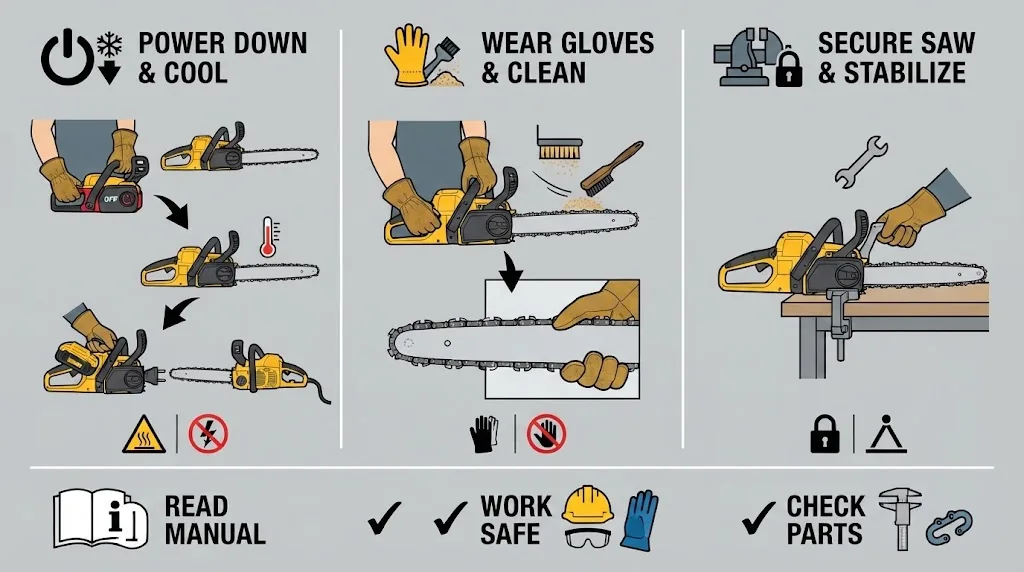
Before you use a chainsaw chain measure tool or a tape measure, make the saw safe. Turn off a petrol saw and allow it to cool. Remove the battery from a cordless saw, or unplug a corded model. Wear work gloves because even a dull chain can cut skin. Brush away sawdust and oil so the bar stamp, chain markings, and drive links are easier to inspect. The owner’s manual and the label near the clutch cover may already list the exact pitch, gauge, and drive-link count.
Tape measure
Use it to measure the exposed cutting length of the guide bar from the saw body to the tip.
Vernier caliper
Helpful for measuring gauge if the bar marking is worn. It measures the thickness of a drive link.
Marker or paint pen
Mark one drive link before counting so you do not lose your place or count the same link twice.
Do not measure or handle the chain with the engine running, the battery installed, or the spark plug lead connected. Set the chain brake, work on a stable bench, and follow the safety steps in your saw’s manual before removing covers or loosening the chain.
How to measure a chainsaw bar the right way
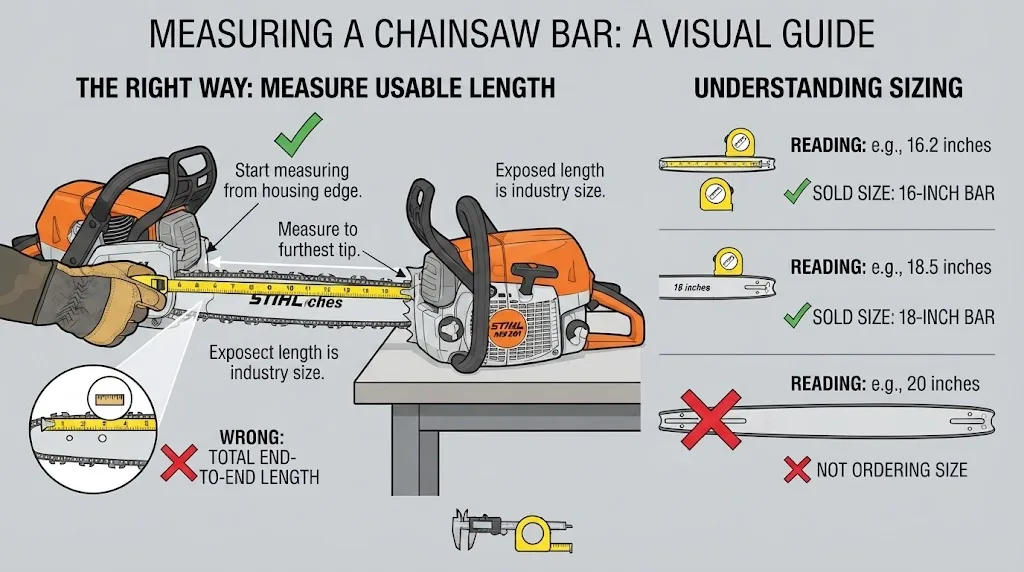
When people talk about chainsaw bar size, they usually mean the usable cutting length, not the entire metal bar. Place the tape measure at the front edge of the chainsaw housing where the bar emerges. Measure straight to the furthest tip of the bar, then round to the nearest whole inch. A reading close to 16 inches is sold as a 16-inch bar; a reading close to 18 inches is sold as an 18-inch bar. If the bar is removed, its total length will be longer because the mounting end sits inside the saw.
Do not use the overall end-to-end bar length as your ordering size unless the manufacturer specifically asks for it. The exposed, usable length is the industry-friendly size most shoppers mean when they ask how to size a chainsaw bar.
Chainsaw chain pitch and gauge must both match
Chainsaw pitch describes the spacing between chain rivets. The standard method is to measure the distance across three consecutive rivets and divide that number by two. Common pitches include 1/4 inch, 3/8 inch low profile, 3/8 inch, .325 inch, and .404 inch. Gauge is different: it is the thickness of the drive link that sits in the bar groove. Common gauges include .043, .050, .058, and .063 inch. A chain with the wrong pitch will not engage correctly with the sprocket, while a chain with the wrong gauge will either bind or fit too loosely in the bar groove.
Look for stamped specifications first
Many guide bars are stamped near the mounting end with their recommended pitch, gauge, and drive-link count. This marking is more dependable than comparing a chain visually. If the stamp is unreadable, check the saw manual or measure carefully with appropriate tools before placing an order.
How to measure chainsaw chain length: count drive links
Chain length is not measured like a rope with a tape measure. The accurate specification is the number of drive links: the small tabs on the underside of the chain that run in the bar groove. Remove the chain if needed, lay it flat, and mark one drive link. Count every drive link once until you return to the marked link. Write the number down alongside your pitch and gauge. Two chains can fit similar-looking bars but have different drive-link counts because bar mounts, bar profiles, and tensioner positions vary by manufacturer.
Use this compatibility check before buying a chain
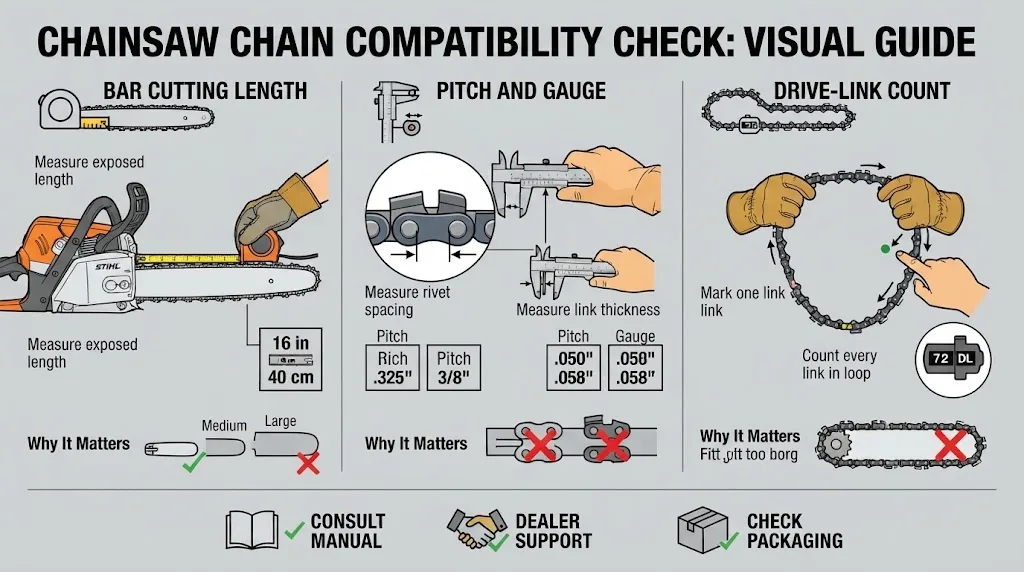
A correct chain is defined by a combination of specifications, not a single measurement. Use the details on the bar, the chain packaging, and the saw manual to cross-check your choice. If any measurement is unclear, take the old chain and bar to a qualified dealer rather than ordering based on a product photo.
| What to verify | How to find it | Why it matters |
|---|---|---|
| Bar cutting length | Measure the exposed bar from saw housing to tip and round to the nearest inch. | Confirms the advertised guide-bar size and helps narrow compatible options. |
| Pitch and gauge | Read the bar stamp first; otherwise measure rivet spacing and drive-link thickness. | Matches the chain to the sprocket and ensures the drive links fit the bar groove safely. |
| Drive-link count | Mark one lower drive link, then count every drive link around the full loop. | Determines the actual loop length for your bar, mount, and tensioning system. |
Specifications vary by chainsaw model, bar manufacturer, and replacement-bar design. Confirm the numbers in your saw’s manual whenever possible.
Chainsaw bar and chain questions, answered
Can I use a longer bar on my chainsaw?
Only if the manufacturer approves that bar length and mount for your exact model. A longer bar can affect oiling, balance, engine load, chain speed, and kickback behaviour. Do not assume that a longer bar with the same pitch and gauge is automatically safe or compatible.
Is 3/8 low-profile chain the same as standard 3/8 chain?
They share a 3/8-inch pitch description, but low-profile chain has a different cutter and safety-link profile. Follow your chainsaw and bar manufacturer’s specified chain type. Matching the pitch alone does not guarantee that a chain is appropriate for the saw.
How tight should a replacement chain be?
With the saw powered down and the chain brake released for adjustment, the chain should sit snugly against the underside of the bar while still pulling around by hand with gloves. The drive links should remain engaged in the bar groove. Recheck tension after the first few cuts because a new chain can settle and stretch slightly.