
How to choose, use, and check chainsaw bar and chain oil so your saw cuts cleaner, runs cooler, and avoids preventable bar, chain, and oil-pump damage.
If you cut storm-fallen limbs, process firewood, or maintain a few acres, the oil tank deserves the same attention as the fuel tank. A dry chain can overheat surprisingly quickly. It can discolor a guide bar, dull cutters, stretch the chain, damage the nose sprocket, and make a saw harder to control. Before each cutting session, check the bar-oil reservoir and use the oil grade your chainsaw manufacturer recommends for the conditions.
What does chainsaw bar and chain oil actually do?
A chainsaw chain travels around the guide bar at high speed while carrying wood dust, heat, and cutting load. Bar and chain oil forms a protective film between the drive links and bar groove, reduces friction at the bar rails and nose sprocket, and helps move fine debris out of the groove. When lubrication is inadequate, friction rises fast. A smoking bar, blue or discolored rails, a stiff chain, or a chain that needs frequent tensioning are all warning signs to stop and inspect the oiling system.
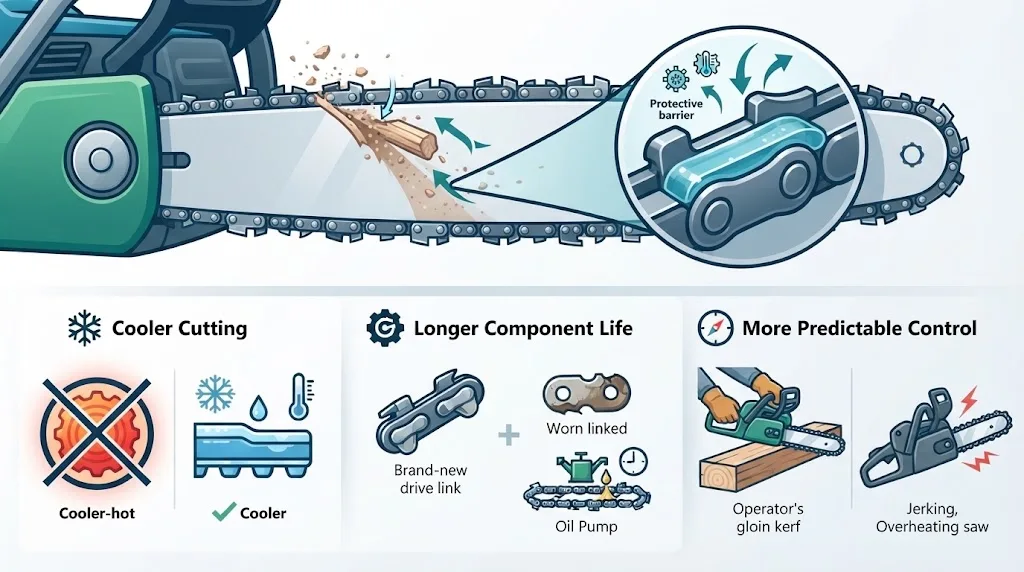
Cooler cutting
Oil reduces metal-on-metal friction that can overheat the bar rails, drive links, and sprocket nose.
Longer component life
Correct lubrication helps the chain move smoothly and slows costly wear on the bar, chain, sprocket, and oil pump.
More predictable control
A properly lubricated and correctly tensioned chain cuts more consistently than one that is overheating or binding.
Never inspect, tension, or clean a chain with the engine running or a battery installed. Engage the chain brake, allow hot parts to cool, and follow the lockout steps in your saw manual before servicing the bar, chain, or oiling system.
Why tackifiers make bar oil different from ordinary oil
Purpose-made bar oil contains tackifier additives. These additives give the oil a sticky, stringy quality so it clings to the chain as the chain accelerates around the bar. Without that cling, a thin oil can fling off before it reaches the bar nose and the lower cutting run. This is why standard motor oil is a poor routine substitute: even if it looks slippery, it is not formulated to stay on an exposed high-speed chainsaw chain or carry wood dust away in the same way.
A simple pre-cut habit
Many experienced operators refill bar oil whenever they refill fuel. This is a useful routine, but tank capacities and oil-pump settings vary. Check your manual and inspect the reservoir level rather than assuming the two tanks always empty at the same rate.
Choose bar oil for your weather and cutting load
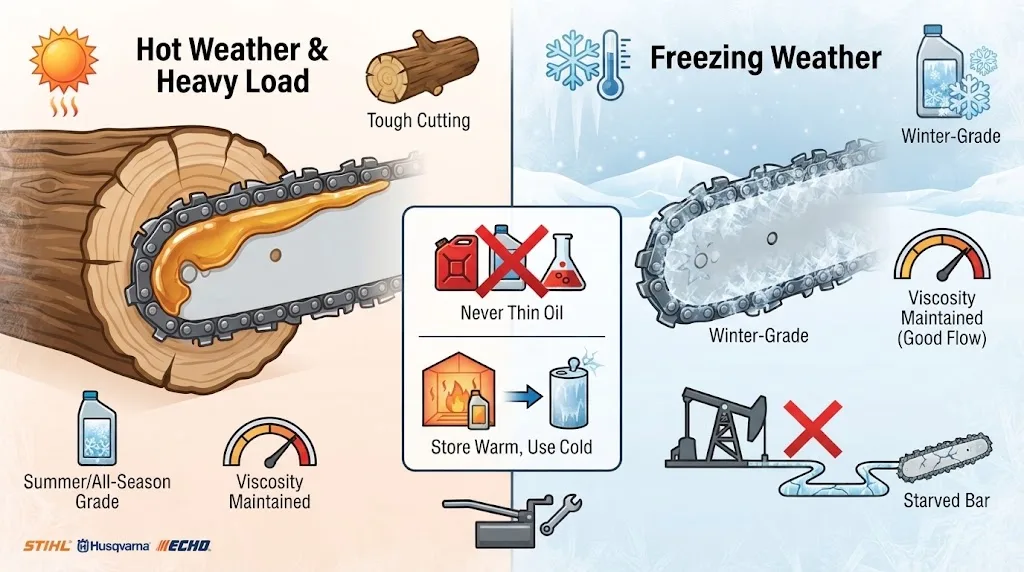
Oil thickness matters. In hot weather and during long cuts through dry hardwood, a heavier summer or all-season bar oil can maintain a durable film. In freezing weather, thick oil may flow slowly from the reservoir and starve the bar, so a winter-grade or low-temperature bar oil is usually the safer choice. Follow the viscosity guidance from brands such as Stihl, Husqvarna, Echo, or the manufacturer of your specific saw. If your saw has an adjustable oil pump, use only the adjustment range and procedure in its manual.
If the temperature drops below freezing, keep bar oil in a moderate indoor space before use where practical. Cold, thick oil may not flow well enough to protect the bar. Never thin oil with fuel, solvents, or other chemicals.
How to fill and verify your chainsaw oil system
With the saw switched off and cool, clean sawdust from around the oil cap before opening it. Fill with clean chainsaw bar oil, tighten the cap securely, and wipe spills from the housing. Before making a serious cut, confirm the saw is delivering oil using the manufacturer-approved method. A common approach is to run the saw briefly with the bar tip held above a clean, light-colored surface; a fine line or mist of oil should appear. Keep the chain clear of people, pets, and objects, and do not use this test where the chain could strike anything.
Can you use motor oil, cooking oil, or used oil in a chainsaw?
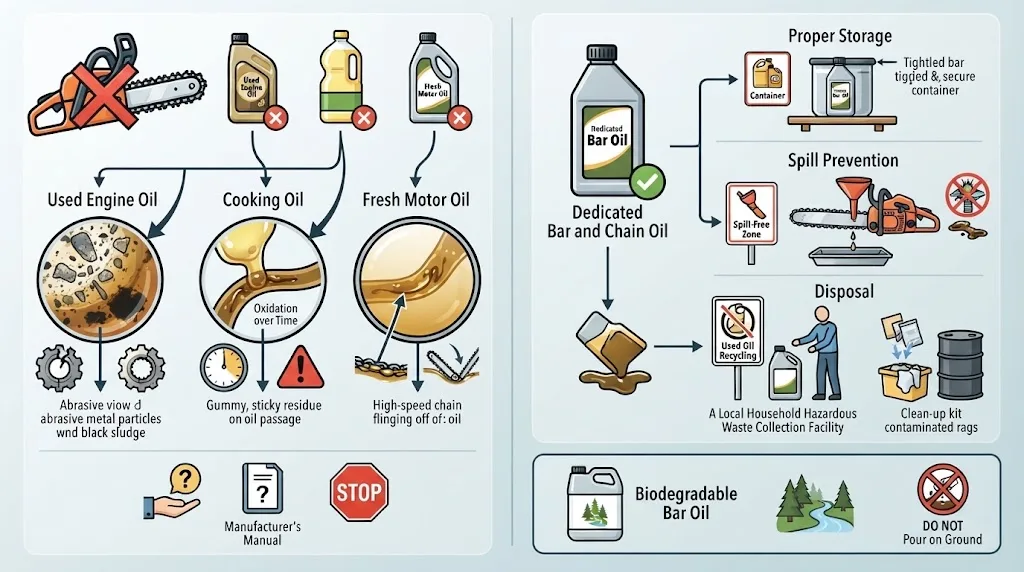
For normal operation, use dedicated bar and chain oil. Used engine oil can contain abrasive metal particles, combustion residues, and contaminants that accelerate wear and create an avoidable environmental hazard. Cooking oils and improvised vegetable oils can oxidize, become gummy in storage, and clog oil passages. Fresh motor oil lacks the tackifier package designed for exposed chainsaw use. If an emergency forces a compromise, consult your saw manufacturer first and treat it as a short-term exception, not a maintenance plan.
Dispose of oil responsibly
Store bar oil in its labeled container with the cap closed. Keep spills away from soil, drains, streams, and wells. Take unwanted petroleum products and contaminated rags to an approved local collection facility. Choose a reputable biodegradable bar oil when it suits your equipment and local conditions, but remember that “biodegradable” does not mean safe to pour onto the ground.
Which bar oil is right for the job?
Start with your owner’s manual. Then use this comparison to match the oil type to the season, workload, and environmental needs of your property.
| Oil type | Best use | Key consideration |
|---|---|---|
| All-season bar oil | Routine property maintenance in moderate temperatures. | A practical default if it meets your saw manufacturer’s specification. |
| Winter-grade bar oil | Cold-weather cutting where standard oil flows slowly. | Designed for lower temperatures; check the stated temperature range. |
| Biodegradable bar oil | Sensitive sites where reduced environmental impact is a priority. | Choose a quality product and follow storage guidance, especially in long storage periods. |
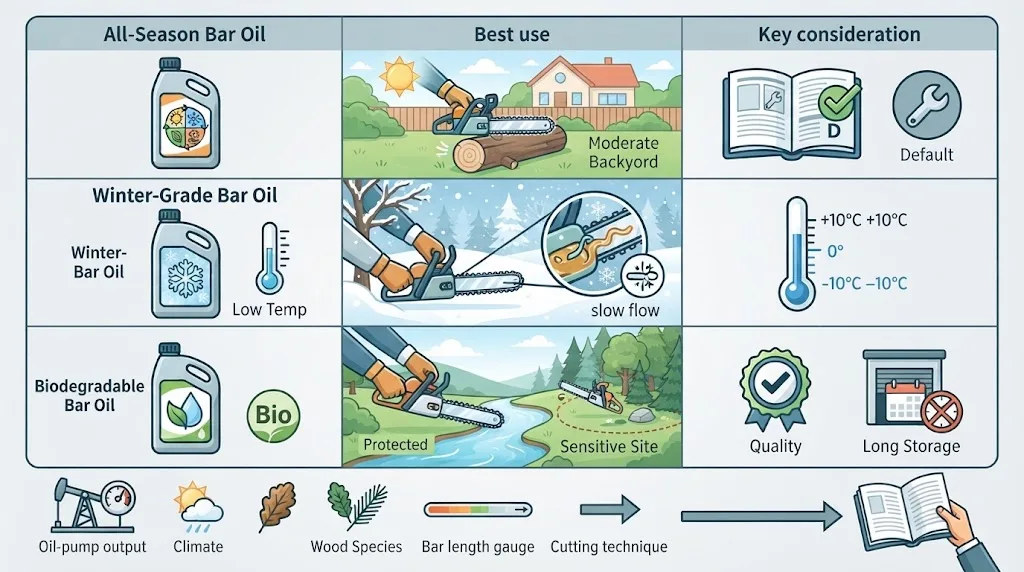
Oil-pump output, climate, wood species, bar length, and cutting technique all affect consumption. A manual always takes priority over generic guidance.
Chainsaw bar oil questions, answered
How often should I add bar oil to my chainsaw?
Check the bar-oil level before every use and during extended cutting sessions. Many operators refill it when they refuel, but the correct frequency depends on the saw, bar length, oil-pump setting, wood, and temperature. Never let the reservoir run dry.
Why is my chainsaw bar smoking even though there is oil in the tank?
The oil may not be reaching the chain. Stop work and inspect the bar oil hole, guide-bar groove, chain tension, oil outlet, and reservoir pickup system. A dull chain, pinched cut, or damaged bar can also create excessive heat. Do not keep cutting until the cause is found.
Is biodegradable chainsaw bar oil worth using?
It can be a sensible option for work near gardens, waterways, orchards, or sensitive ground, provided it is suitable for your chainsaw and climate. Use a reputable product, follow the label, and do not assume it removes the need for responsible spill prevention and disposal.