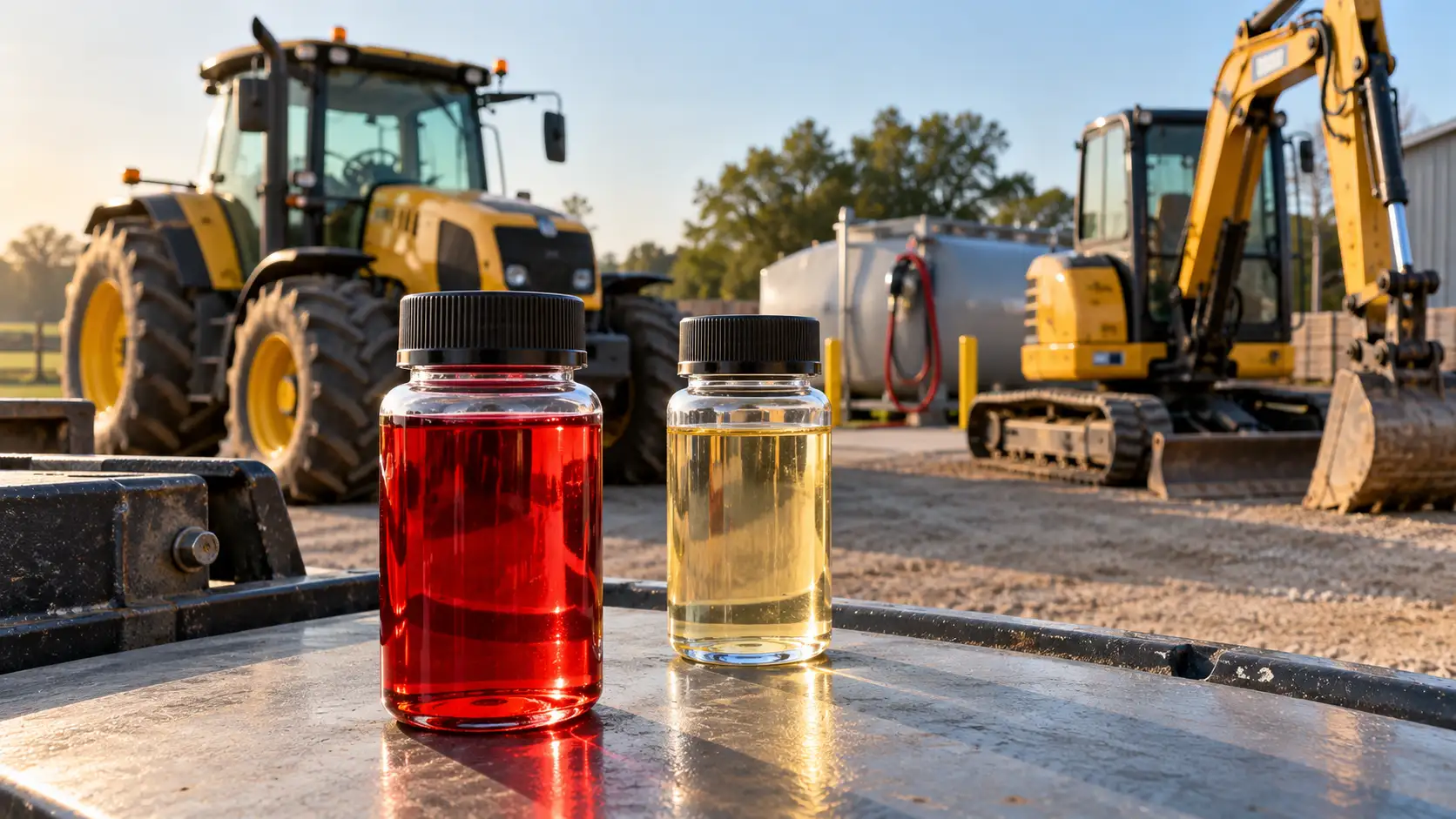
If you’ve ever filled up from a farm tank or a construction site fuel trailer, you may have noticed some diesel is bright red. That’s dyed diesel. It looks like a different fuel, but it isn’t. The difference comes down to taxes, and putting the wrong one in your truck can cost far more than you’d save.
What Is Dyed Diesel?
Dyed diesel is ordinary diesel with a red dye (Solvent Red 164) added. It performs essentially the same as the clear diesel sold at gas stations. Most off-road diesel in the U.S. today is also ultra-low sulfur diesel (ULSD), meeting the same 15 ppm sulfur limit as on-road fuel.
The dye has one job: to show that road taxes haven’t been paid on that fuel. The federal excise tax on on-road diesel is 24.4 cents per gallon, and most states add their own tax on top.
Who Can Legally Use It?
Dyed diesel is for machines that don’t travel on public roads, such as:
- Farm tractors and combines
- Excavators, loaders, dozers, and other construction equipment
- Backup and job site generators
- Forklifts and yard equipment that stay off public roads
These machines don’t wear down highways, so they’re exempt from road taxes.
What Happens If You Run It in Your Truck?
This is where diesel owners get into trouble. Running dyed diesel in a registered on-road vehicle is illegal, even in small amounts. Inspectors check by pulling a sample from the fuel tank, and traces of red can linger in the tank and lines long after a fill-up.
The federal penalty is $10 per gallon or $1,000, whichever is greater, and states can add their own fines. One tank of “cheap” fuel can turn into a four-figure ticket.
How to Avoid Mixing Them Up
If you own both a diesel pickup and off-road equipment, keep the fuels separate:
- Label storage tanks clearly as “Dyed / Off-Road” or “Clear / On-Road.”
- Use dedicated, color-coded nozzles and transfer pumps.
- Never top off your truck from a farm or job site tank unless you know it’s clear.
- Keep receipts showing which fuel went where.
For Equipment Owners: Let the Fuel Come to You
Contractors, farms, and facilities that burn a lot of dyed diesel often stop hauling it in cans and trailers altogether. With off-road diesel delivery, a fuel truck fills equipment and storage tanks right on site. That cuts downtime and removes the transfer step where most fuel mix-ups happen.
The Bottom Line
Dyed and clear diesel are essentially the same fuel. The only difference is tax status, and it’s enforced seriously. Use red diesel only in off-road machines, keep your truck on clear fuel, and you’ll never have to explain a red sample to an inspector