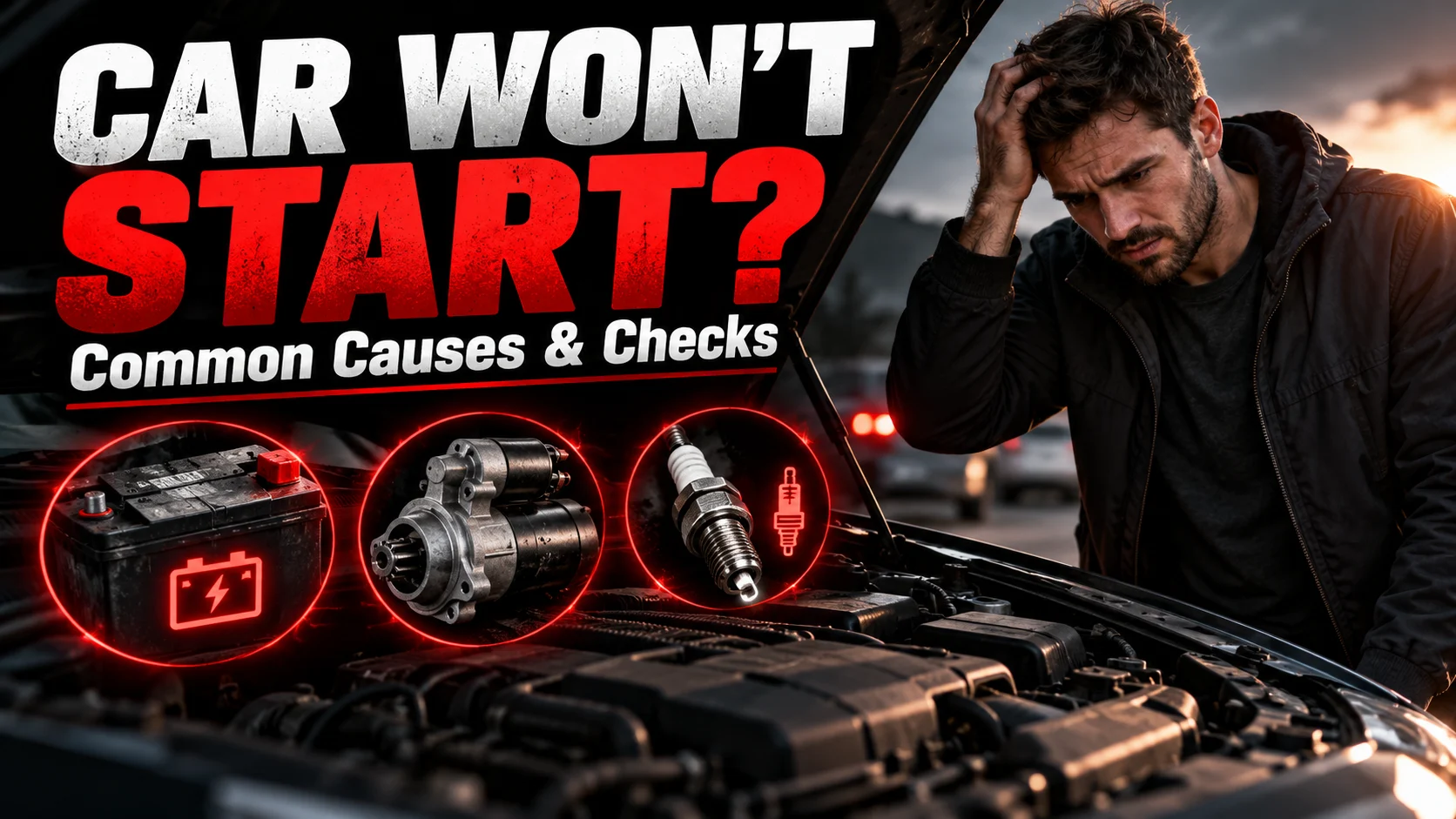
You turn the key or press the Start button, but your car refuses to start. Maybe you hear a click. Maybe the engine turns over without firing. Or perhaps the dashboard stays completely dark. When you find yourself thinking, “My car won’t start,” the sound and behavior you notice are usually the best place to begin.
A no-start problem can involve the battery, starter motor, ignition components, fuel system, security system, or mechanical condition of the engine. This guide explains how to separate those possibilities, perform basic checks safely, and decide when a mechanic is needed.
First, determine whether the engine cranks. If it does not turn over, start by considering battery power, cable connections, gear-selector interlocks, and the starter circuit. If it cranks normally but never starts, fuel delivery, ignition, engine-management signals, or mechanical issues may be involved.
Before checking anything, park safely, apply the parking brake, and switch off unnecessary electrical accessories. If you smell fuel or notice smoke, do not attempt another start.
Why Won’t My Car Start? Identify the Symptom First
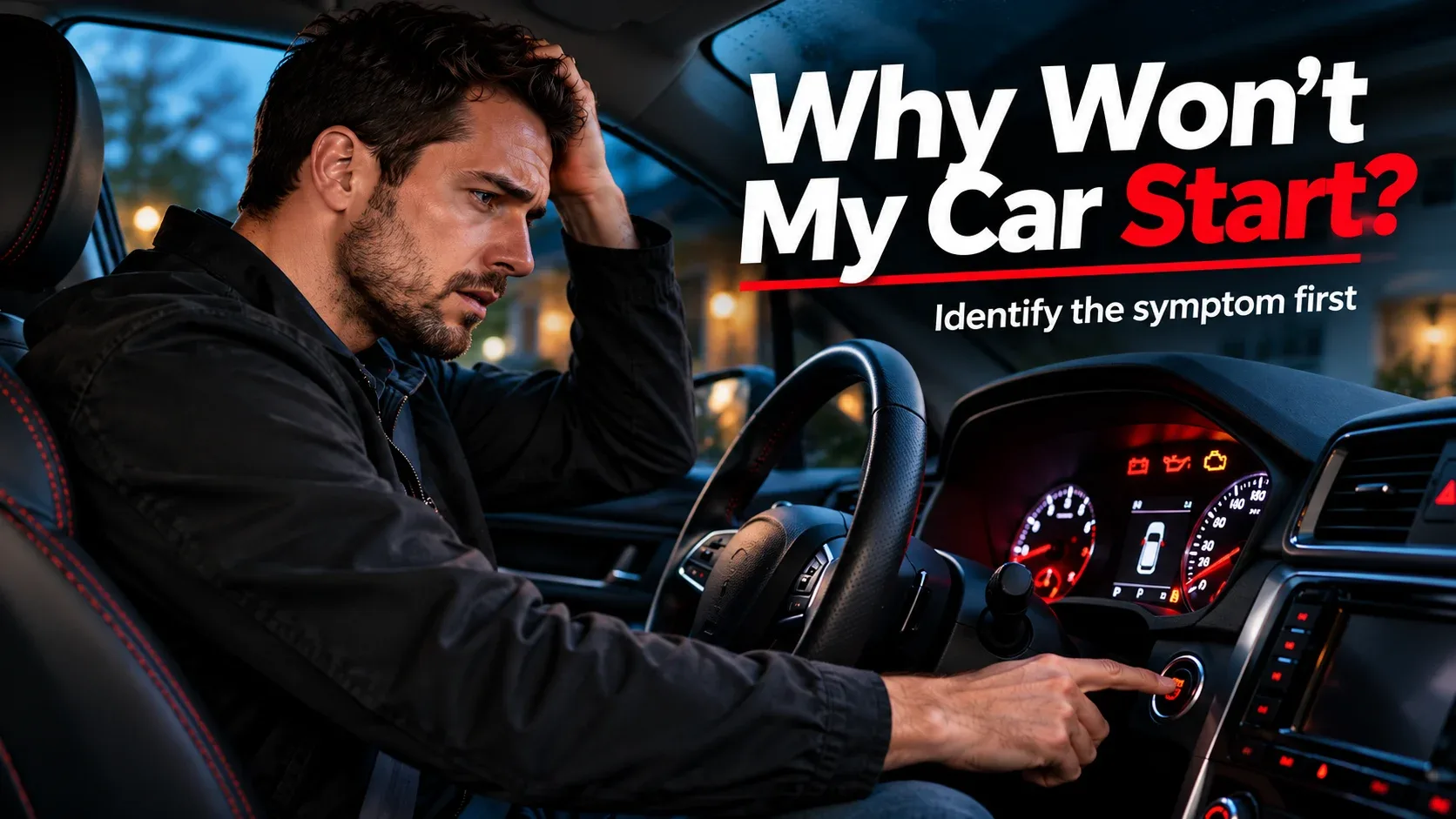
“Won’t start” can describe several different faults. Listening closely can narrow the diagnosis before you purchase parts.
| What happens | Possible causes | Useful next step |
|---|---|---|
| Nothing happens; dashboard stays dark | Discharged battery, disconnected battery cable, main power fault | Check whether interior lights work and inspect only accessible battery connections |
| Rapid clicking | Weak battery or high resistance at a connection | Request a battery and connection test |
| One click, but no cranking | Starter motor, solenoid, wiring, relay, or insufficient battery current | Have the starting circuit tested before replacing the starter |
| Engine cranks unusually slowly | Low battery charge, cable resistance, starter wear, or engine resistance | Check battery condition and cranking voltage professionally |
| Engine cranks normally but will not fire | Fuel delivery, ignition, sensors, immobilizer, or mechanical fault | Check warning indicators and diagnostic trouble codes |
| Starts briefly, then stalls | Fuel, air, security, or engine-management problem | Record the behavior and arrange diagnosis |
Important: These are clues, not definitive diagnoses. Different failures may produce nearly identical symptoms.
1. Dead or Weak Car Battery
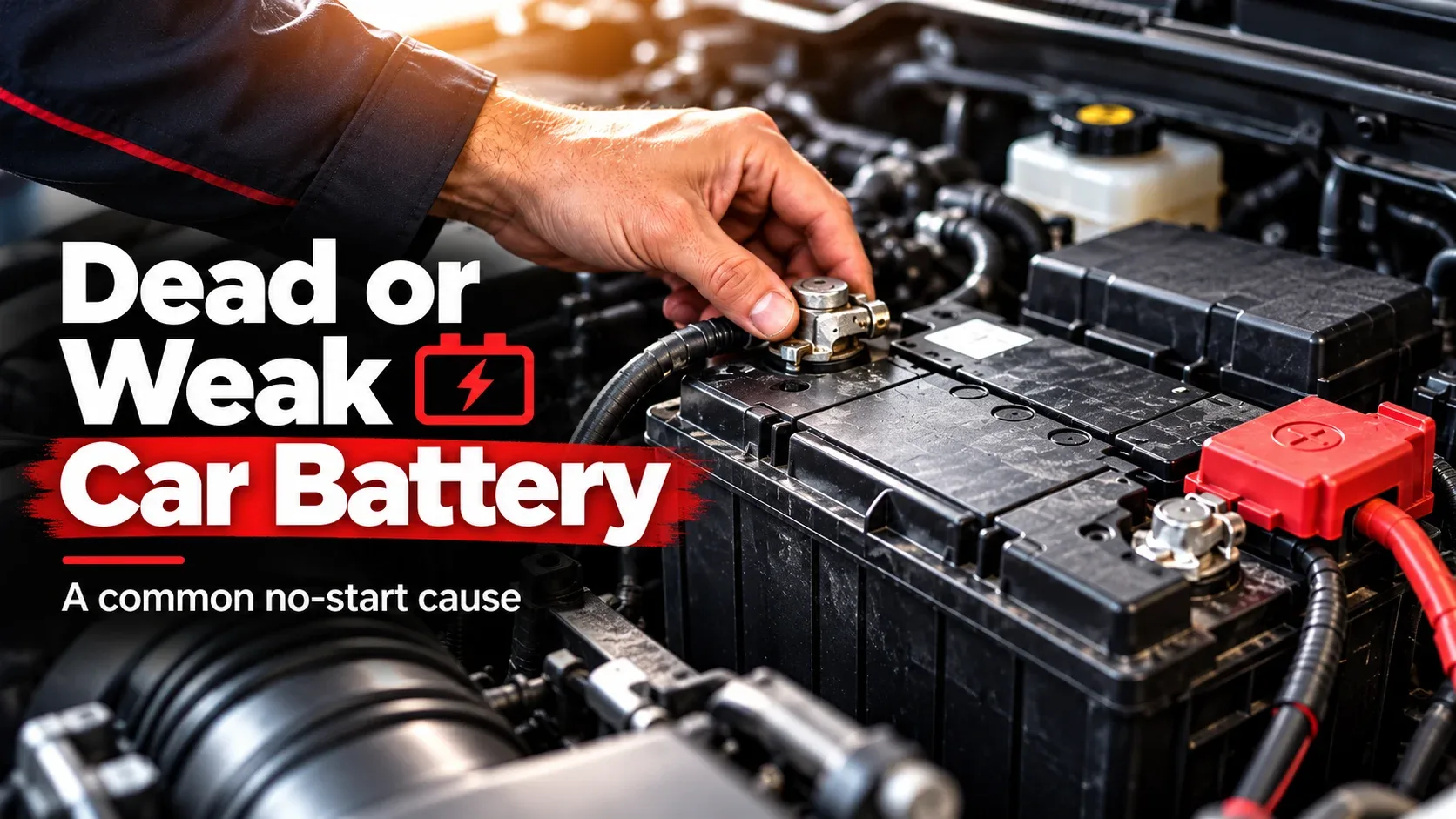
A weak or discharged battery is an important first possibility when the engine turns slowly, produces rapid clicks, or does not crank at all. Headlights and dashboard lamps may still illuminate because they require much less power than the starter motor.
Common battery-related clues
- Rapid clicking when the key is turned or Start is pressed.
- Interior lights dim significantly during a starting attempt.
- Starting gets slower over several days.
- The problem appears after the vehicle sits unused or an accessory is left on.
Corroded or loose terminals can also prevent sufficient current from reaching the starter. If connections appear damaged or are difficult to access, let a technician inspect them. A discharged battery might be the symptom of an alternator or parasitic-drain problem rather than the original cause.
2. Bad Starter Motor or Starter Solenoid
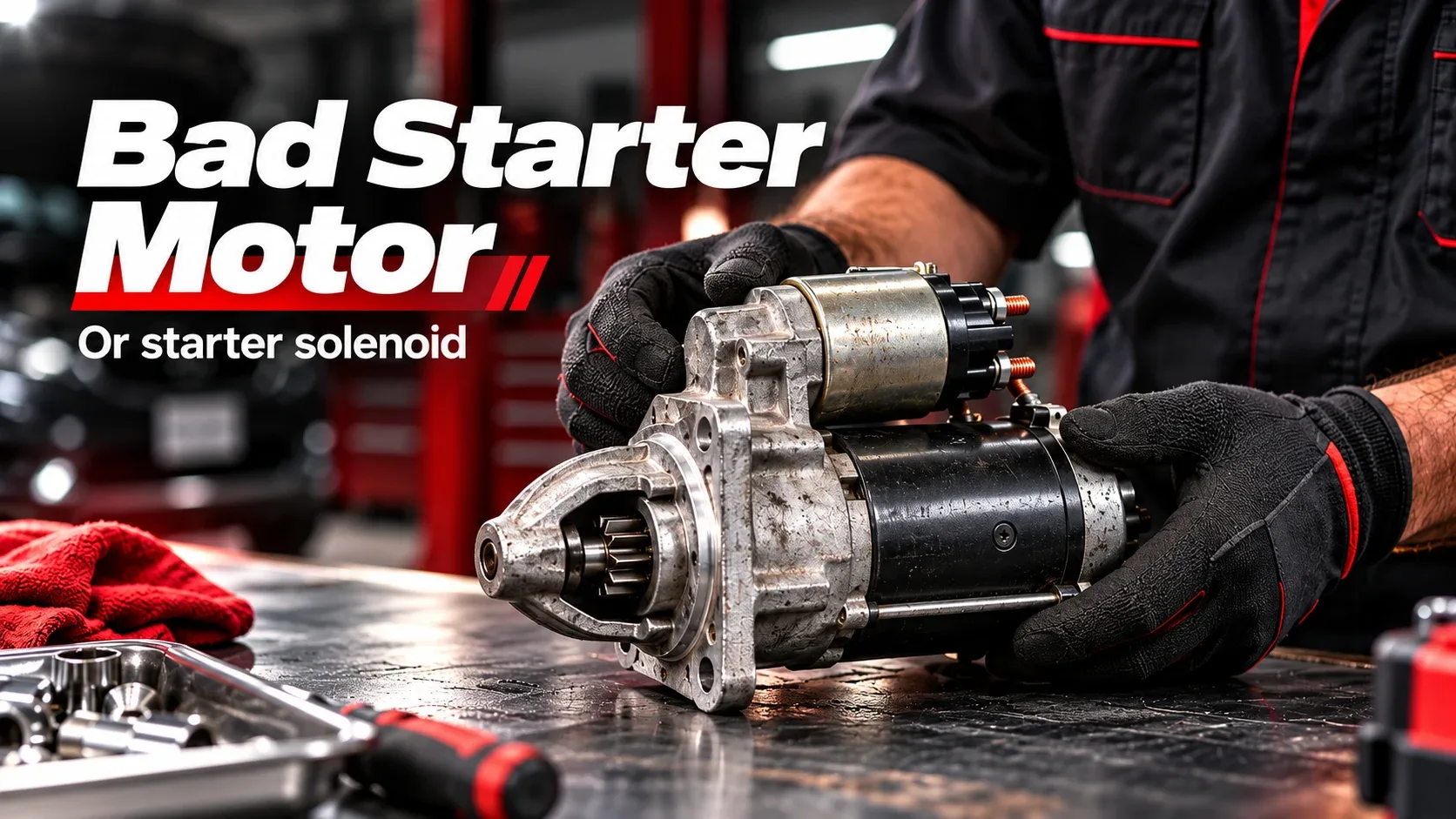
The starter motor rotates the engine during startup. Its solenoid helps engage the starter drive and switch high electrical current to the motor. If either component or its circuit fails, the engine may not crank.
Signs that point toward the starter system
- A single click with little or no engine rotation.
- Intermittent no-crank events that become more frequent.
- Battery power appears normal but the starter does not operate.
- A starting-system test identifies an electrical or mechanical fault.
A click alone does not prove the starter motor is bad. A weak battery, damaged cable, poor ground, faulty relay, or gear-position switch can create similar symptoms.
Can you repair a starter motor solenoid?
People searching for a starter motor solenoid fix or how to repair a starter motor solenoid are often trying to avoid replacing the full assembly. Depending on the vehicle and starter design, an electrical connection, relay, or separately serviceable solenoid might be repaired or replaced. On many vehicles, replacing the starter assembly is the more practical option.
3. Can Bad Spark Plugs Keep a Car From Starting?
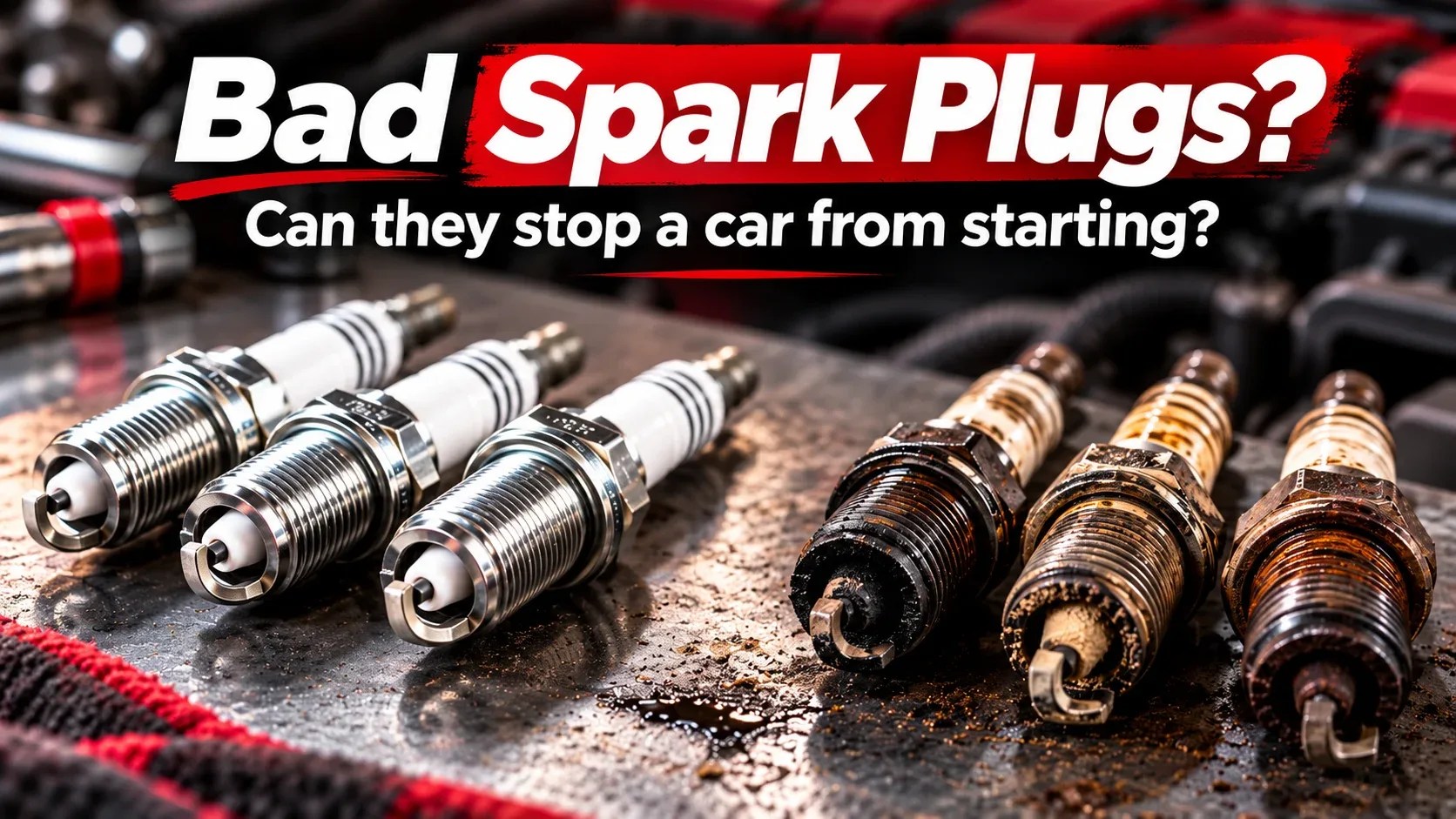
Yes, ignition problems can contribute to a crank-but-no-start condition in gasoline engines. Spark plugs ignite the air-fuel mixture, while ignition coils and related electronics provide the necessary spark. Severely fouled plugs, failed coils, or a missing ignition signal can prevent combustion.
However, a worn spark plug usually causes symptoms such as misfiring, rough idling, hesitation, or poor fuel economy before it prevents an engine from starting altogether. If the engine does not crank at all, replacing spark plugs is unlikely to solve that particular symptom.
What a technician may inspect
- Spark plug condition, wear, oil fouling, or incorrect gap.
- Ignition coils and electrical connectors.
- Fault codes or missing crankshaft position data.
- Vehicle-specific ignition timing and engine-control signals.
Do not attempt open-air spark tests around fuel vapors or with exposed ignition wiring.
4. Other Reasons Your Car Cranks but Won’t Start
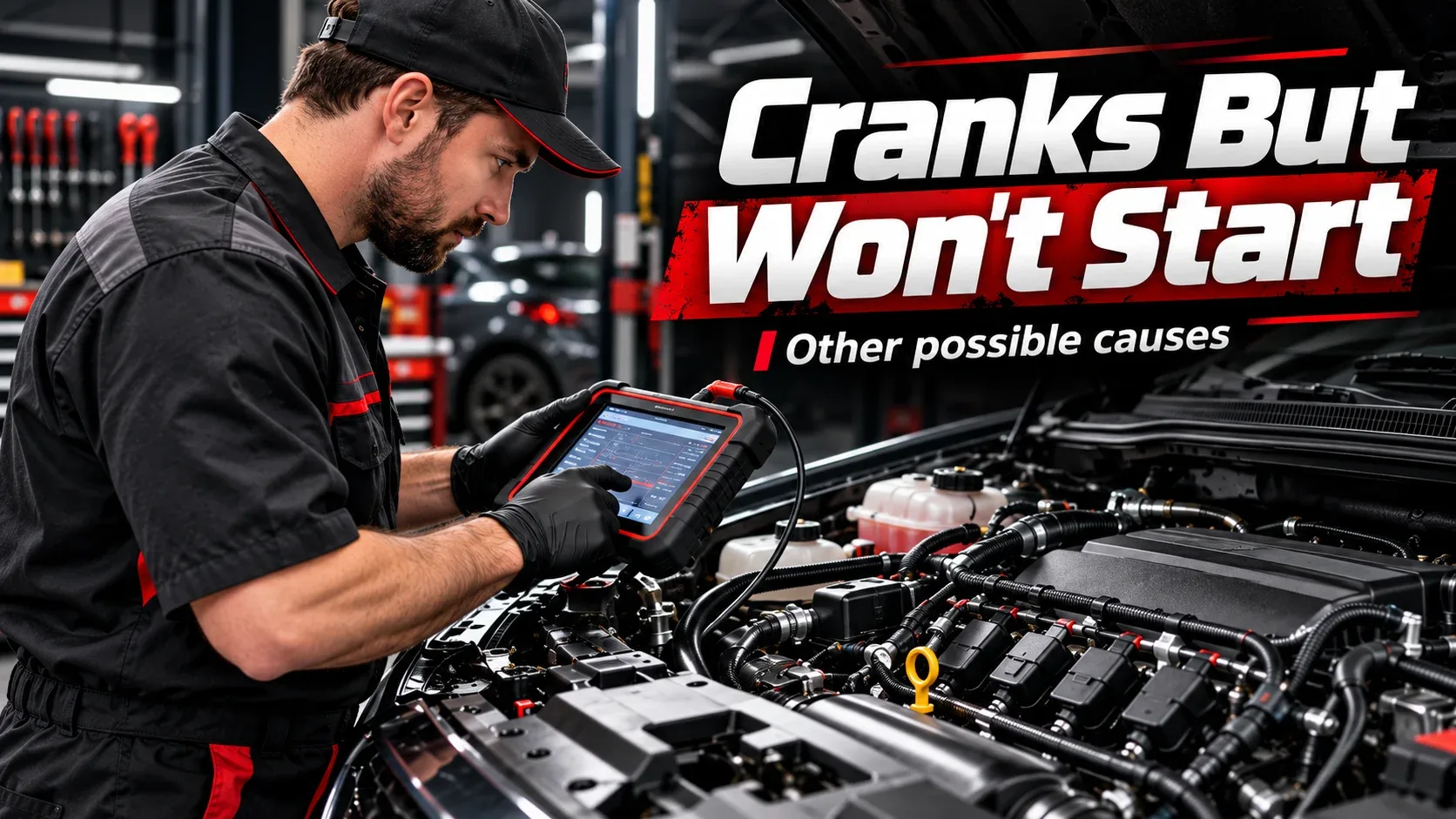
When the starter turns the engine at a normal speed but combustion does not begin, ignition is only one piece of the puzzle.
Fuel delivery problems
An empty fuel tank, faulty fuel pump, restricted fuel delivery, or electrical supply issue can prevent enough fuel from reaching the engine. A gauge reading may be misleading if the sender is faulty.
Crankshaft or camshaft sensor faults
Engine computers use sensor signals to coordinate spark and fuel injection. A missing or unreliable signal can cause hard starting, stalling, or a no-start condition. Diagnostic trouble codes help, but testing is necessary to confirm the fault.
Immobilizer and key recognition issues
Some vehicles block engine starting or shut down fuel injection if the security system does not recognize the key. Watch for a security warning lamp or message and follow the owner’s manual for a spare-key check.
Mechanical engine problems
Timing issues, inadequate compression, and other internal faults can also keep an engine from starting. These generally require specialized testing rather than trial-and-error part replacement.
5. Cold Car Won’t Start: What Changes in Winter?
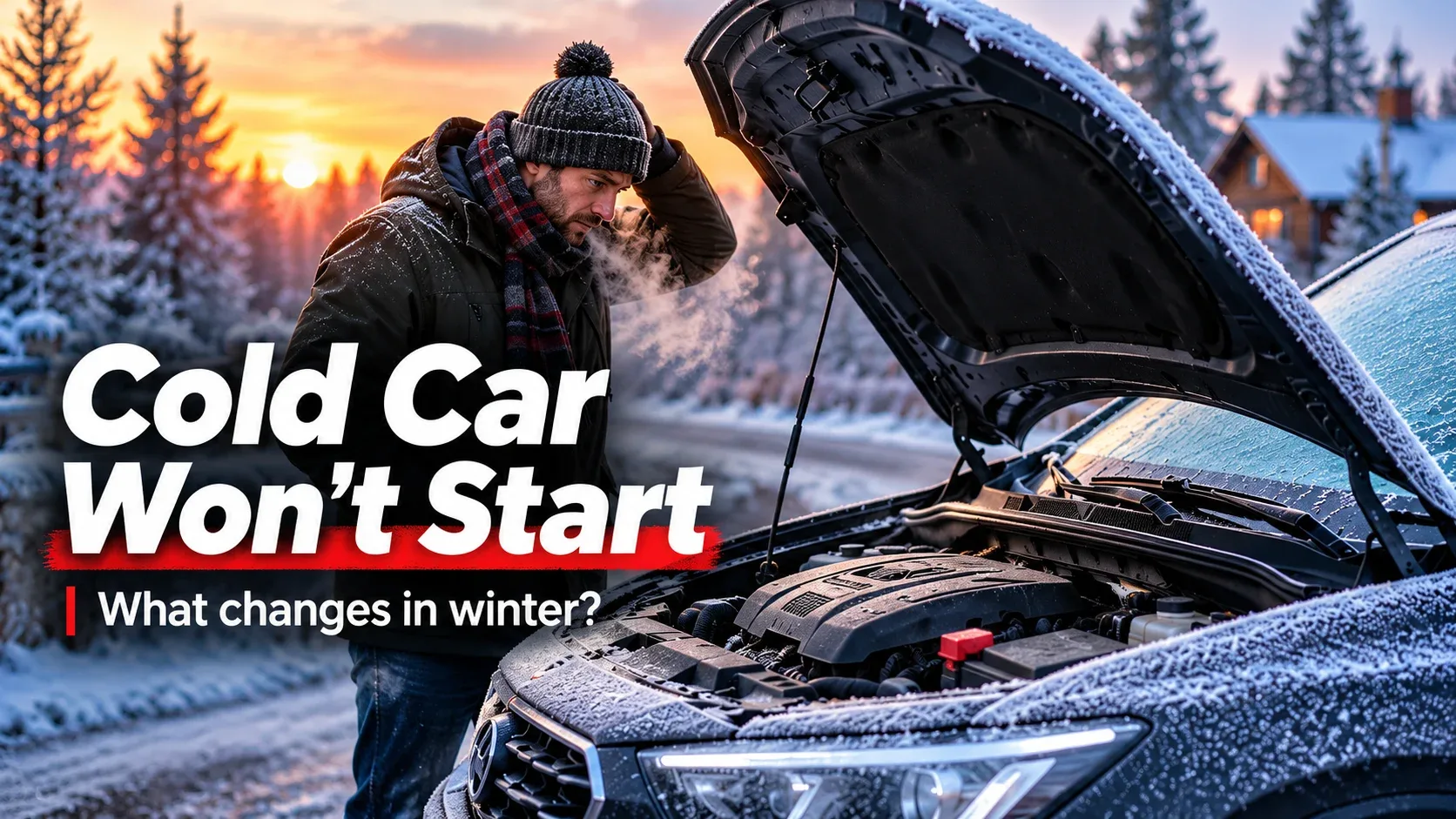
If a cold car won’t start, low temperatures can make an already weak battery less capable of delivering starting current. Cold engine oil can also increase the effort required to turn the engine, while aging connections or starter components may become more noticeable.
- Listen for sluggish cranking, which often suggests a battery or starting-system issue.
- Turn off the heater blower and other unnecessary accessories before another brief start attempt.
- Use the manufacturer-recommended oil grade for expected temperatures.
- For diesel vehicles, follow the correct glow-plug or preheat procedure.
- Have the battery tested if cold mornings repeatedly cause trouble.
Avoid lengthy, repeated cranking attempts that can overheat the starter or further discharge the battery.
6. What to Check When Your Car Won’t Start
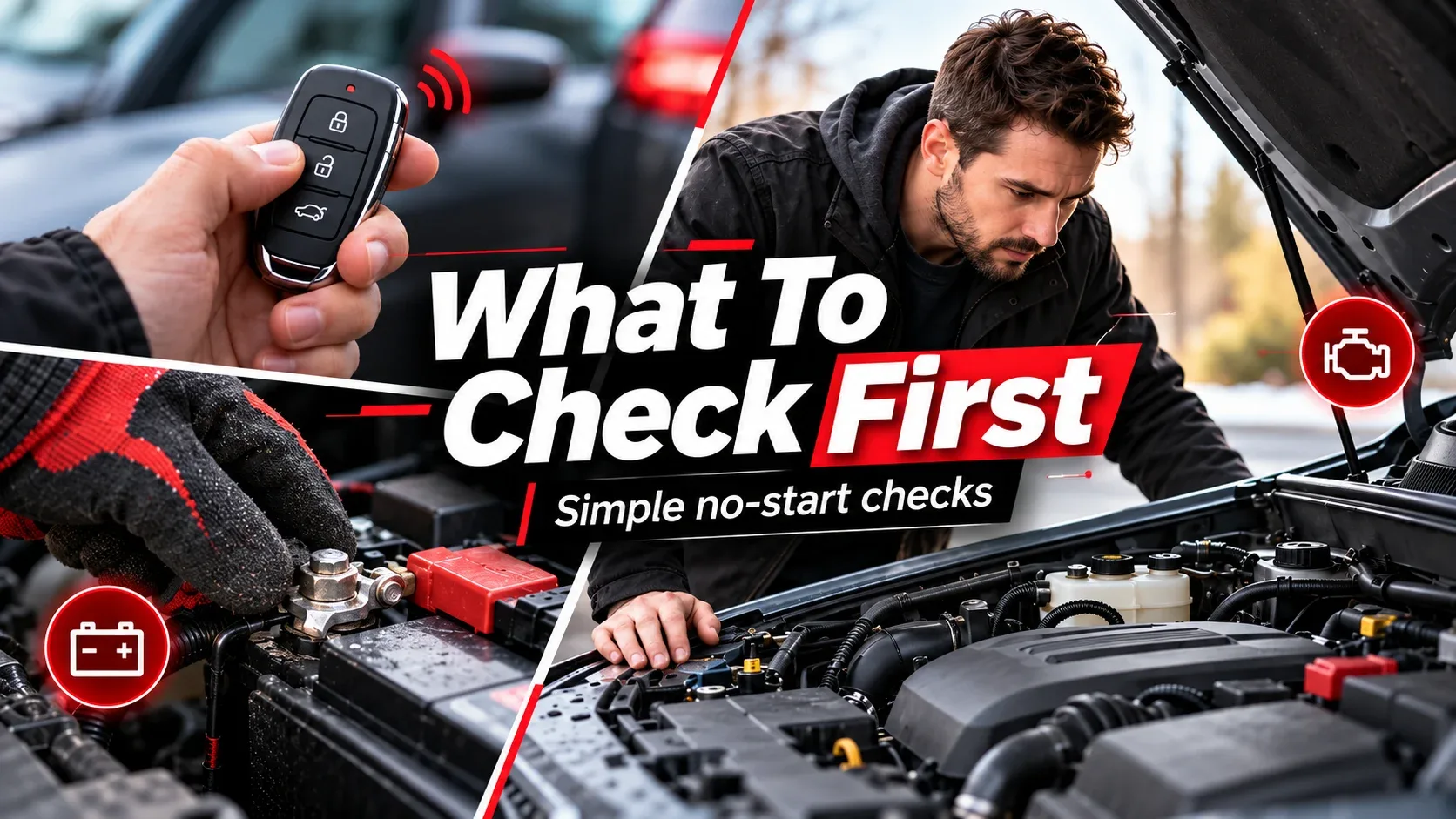
These checks are intended for ordinary drivers. They do not require dismantling the engine or working on live high-current components.
- Make the location safe.
Apply the parking brake, turn on hazard lights if needed, and remain clear of traffic. Stop immediately if you notice smoke, leaking fuel, or a burning smell.
- Verify the gear position.
For an automatic, select Park and follow the manufacturer’s starting instructions. For a manual, fully depress the clutch as directed by the vehicle’s manual.
- Check dashboard lights and messages.
Observe whether electrical accessories work, whether the lights dim during a start attempt, and whether security-related warnings appear.
- Listen to the engine.
Note whether there is silence, clicking, slow cranking, or normal cranking without ignition. This is one of the most useful diagnostic details to share.
- Check the basics.
Confirm adequate fuel and look for visibly loose or corroded battery connections only if safely accessible. Do not touch damaged wiring.
- Get the right test.
A technician can test battery capacity, voltage drop, starter operation, stored fault codes, fuel pressure, and ignition or timing signals as appropriate.
No crank? Focus initially on power supply, starter circuit, and interlocks. Cranks but won’t start? Focus on fuel, ignition, engine controls, security, and mechanical operation. That distinction prevents many unnecessary repairs.
7. Starter Motor Replacement Cost and Repair Options
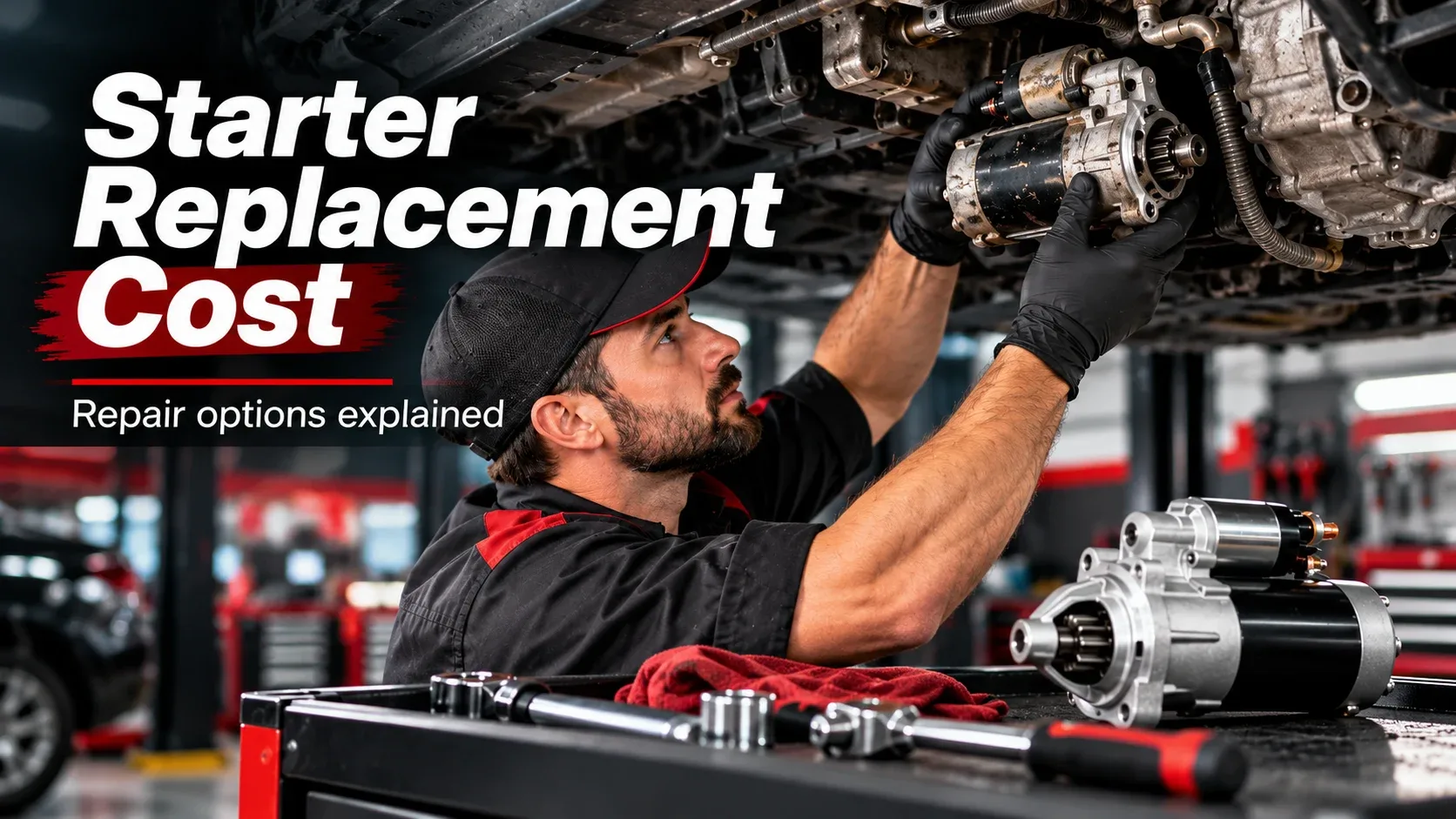
Starter motor replacement cost varies widely across the United States depending on the vehicle, starter location, labor rates, and whether a new, remanufactured, or original-equipment part is used. There is no single price that applies to every car.
| Repair option | When it might apply | What affects cost |
|---|---|---|
| Battery or connection service | Battery fails testing or cable resistance is excessive | Battery type, terminal condition, diagnostic labor |
| Starter relay or wiring repair | Testing isolates an external circuit fault | Accessibility, wiring damage, labor time |
| Solenoid service | Solenoid is separately serviceable and proven faulty | Parts availability and starter design |
| Complete starter replacement | Starter assembly fails proper tests | Vehicle packaging, starter type, parts and labor |
For a current vehicle-specific US estimate, use a recognized repair-cost estimator such as RepairPal’s starter replacement cost estimator, then compare written quotes from qualified local shops. Confirm whether diagnosis, taxes, and additional repairs are included.
Replacing a working starter won’t solve a failing battery or damaged cable. Ask what testing supports the recommended repair.
8. Scion xB Engine Won’t Start: What Should You Check?
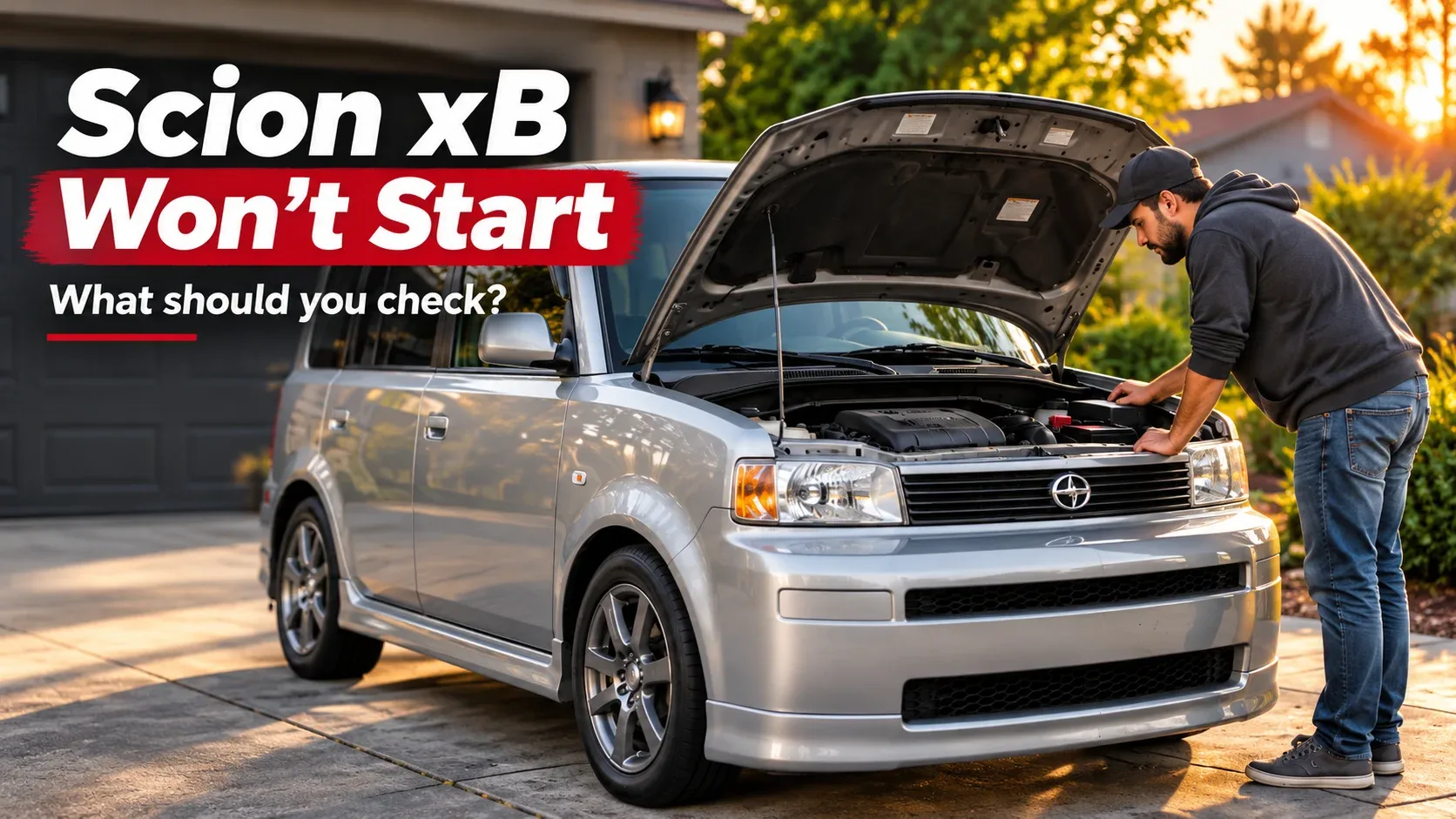
For drivers searching “Scion xB engine won’t start,” the same first question applies: does the engine crank? A Scion xB with no cranking may have a power supply, connection, starter circuit, or starting-interlock problem. If it cranks but never fires, ignition, fuel delivery, security, or engine-control issues become more relevant.
Because Scion xB model years and configurations differ, use the owner’s manual and model-specific service procedures rather than assuming that a single part is the common cause across every xB. Record the year, exact symptoms, dashboard warnings, and any diagnostic codes before speaking with a repair shop.
9. When Should You Call a Mechanic?
Basic observations can be helpful, but there is a clear point where more starting attempts or DIY work stop being useful.
- You smell gasoline, see smoke, or notice hot or damaged wiring.
- The vehicle is stopped in an unsafe location.
- The engine makes unusually loud grinding or metallic noises.
- The battery repeatedly loses charge or the starter fails intermittently.
- Simple checks do not explain a crank-but-no-start condition.
- Electrical, fuel-pressure, ignition, or mechanical testing is required.
Roadside assistance may be the safest first call if the vehicle cannot be moved or started without specialized help.
Frequently Asked Questions
Why won’t my car start even though the lights work?
Lights use less electrical power than the starter motor, so a weak battery may illuminate the dashboard while failing to crank the engine. Starter circuit faults, cable resistance, and interlock problems are other possibilities. Battery and starting-system tests help distinguish them.
Why does my car click but not start?
Rapid clicks can suggest low battery power or poor connections. One click without cranking can also point toward the starter solenoid, starter motor, or related circuit. Neither sound identifies a defective part with certainty.
Can worn spark plugs prevent a car from starting?
Severely worn or fouled spark plugs may contribute to a gasoline engine that cranks but does not fire, especially alongside other ignition problems. They normally do not prevent the starter from turning the engine.
Can I fix the starter motor solenoid instead of replacing the starter?
Sometimes. Certain designs allow separate solenoid replacement or repair of an external connection. In other vehicles, replacing the starter assembly is more practical. High-current starting circuits should be diagnosed and serviced by a qualified technician.
Why won’t my car start on a cold morning?
Cold weather reduces available battery performance and can increase cranking resistance. A battery that worked in mild weather may struggle as temperatures fall. Proper battery testing, connections, and manufacturer-recommended fluids are good starting points.
How can I tell whether the battery or starter is bad?
The symptoms overlap. Dim lights and rapid clicking may indicate a battery-related fault, while a single click with normal electrical power may raise suspicion about the starting circuit. A battery load or conductance test and voltage-drop or starter tests provide better evidence.
How much does starter motor replacement cost?
Costs depend on vehicle model, parts choice, labor rates, and starter accessibility. Check a current estimator for your specific vehicle and obtain a written local quote that identifies parts, labor, and any diagnostic charges.
Final Thoughts: Find the Cause Before Replacing Parts
If you’re asking, “Why my car won’t start?” begin with what the vehicle actually does. No cranking often points toward power or starter-circuit problems, while an engine that cranks normally but won’t fire requires a different diagnostic path.
Check the safe basics, avoid repeated or risky starting attempts, and have the fault verified before paying for a starter motor, battery, solenoid, or set of spark plugs. A careful diagnosis is usually the quickest route to a reliable repair.
Editorial note: This article provides general educational information, not a diagnosis of a particular vehicle. Always follow the manufacturer’s service and safety instructions.