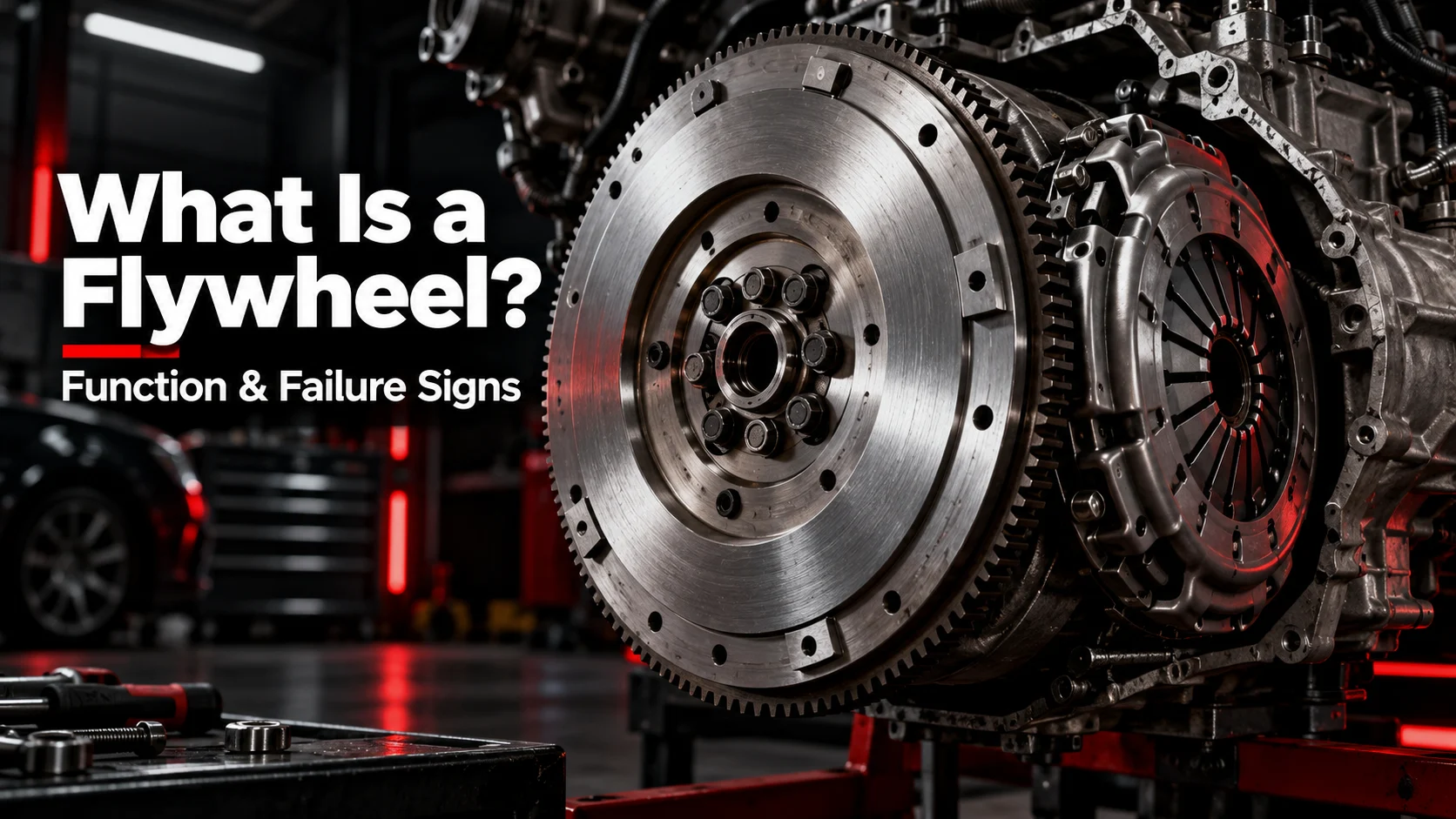
A flywheel is a heavy rotating component attached to an engine’s crankshaft. It stores rotational energy, helps keep engine speed more consistent between power strokes, and in many manual-transmission vehicles provides the friction surface used by the clutch.
If you are searching for the flywheel definition, flywheel meaning, or simply asking what is a flywheel, this guide explains its location, function, working principle, types, and common failure signs in straightforward automotive terms.
A flywheel is a rotating energy-storage component connected to the crankshaft. Its inertia helps smooth crankshaft rotation, while in many manual-transmission vehicles it also works directly with the clutch to transfer engine torque.
What Is a Flywheel?
A flywheel is a circular mechanical component designed to store kinetic energy while rotating. In an automobile, it is normally mounted to the engine crankshaft, so it turns whenever the crankshaft turns.
The flywheel’s mass gives it rotational inertia. This inertia resists sudden changes in rotational speed and helps the crankshaft continue moving smoothly between individual combustion events.
In a manual-transmission vehicle, the flywheel also provides a surface for the clutch disc. This allows engine torque to move from the crankshaft through the clutch and toward the transmission.
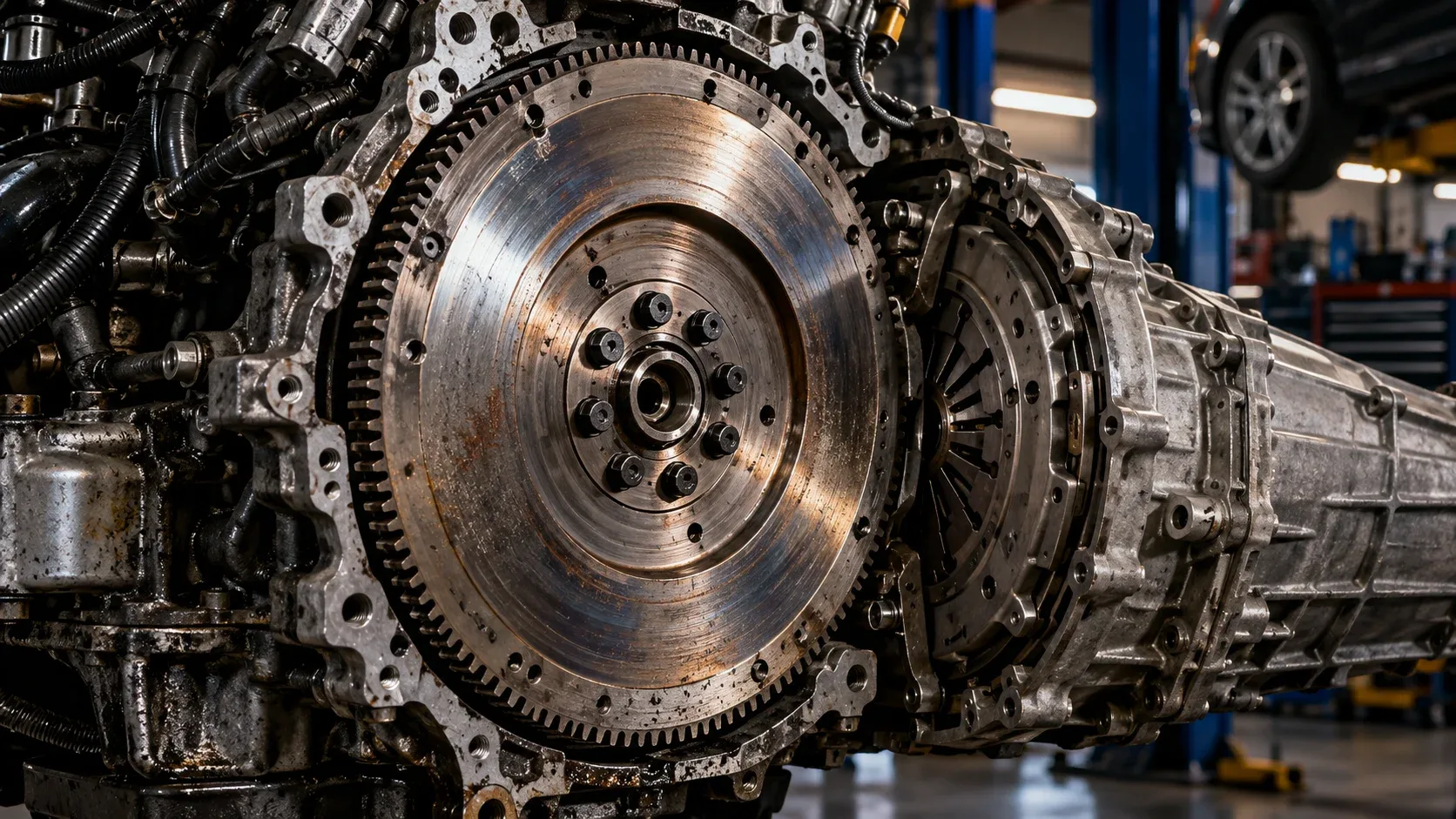
Flywheel Definition: What Does Flywheel Mean?
The simplest flywheel definition is a rotating wheel or disc that stores energy in its motion and helps stabilize the speed of a rotating mechanical system.
A flywheel is a heavy spinning component that stores rotational energy and helps an engine keep turning more smoothly.
The flywheel meaning becomes easier to understand if you imagine a heavy wheel already spinning. Once moving, its momentum makes it resistant to sudden changes in speed.
The same principle is used in other mechanical systems, including industrial machinery, generators, manufacturing equipment, and specialized energy-storage systems.
Where Is the Flywheel Located?
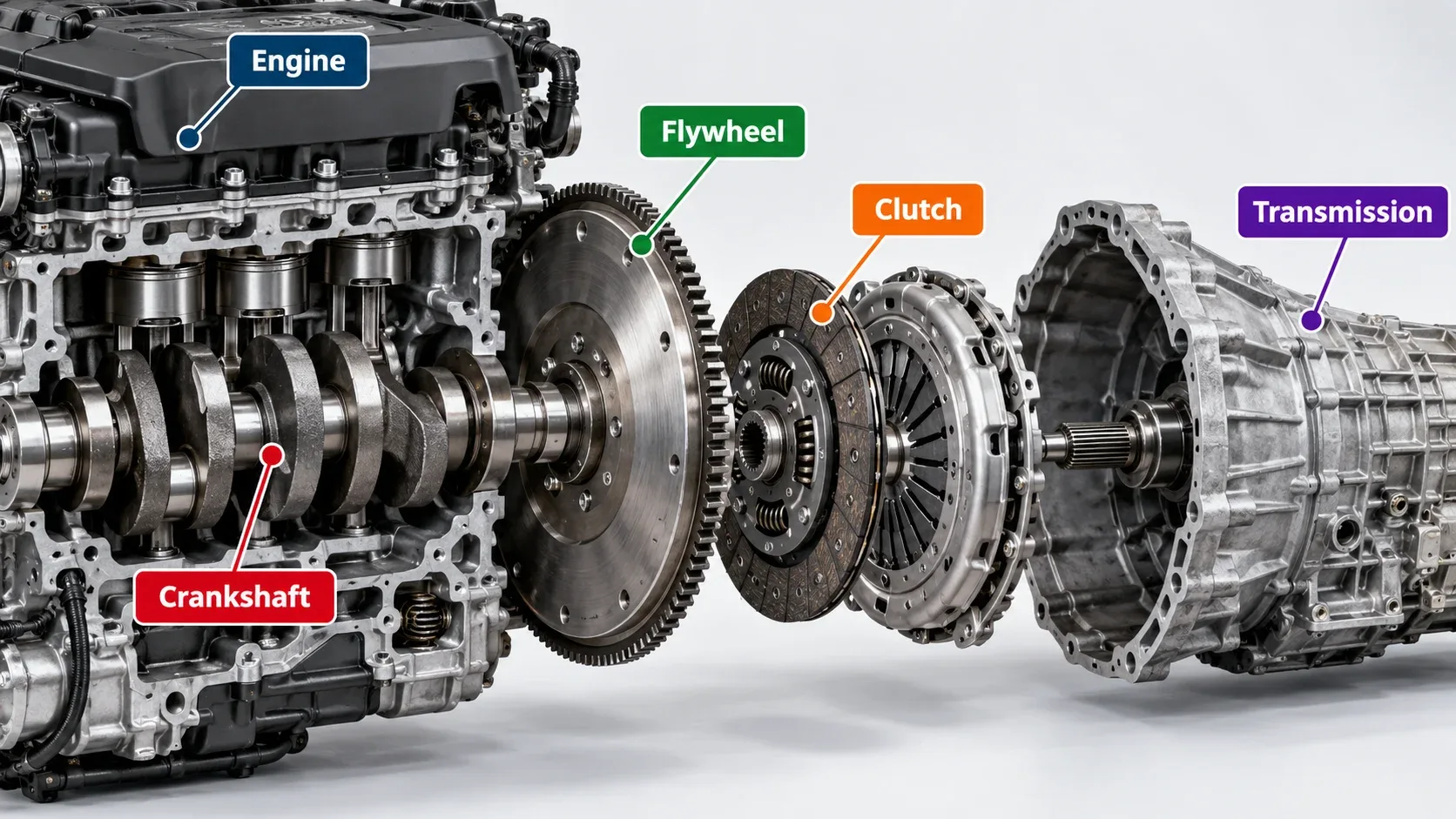
In a typical manual-transmission automobile, the flywheel is mounted to the rear of the engine crankshaft. The clutch assembly sits directly beside it, followed by the transmission.
This position allows the flywheel to perform two roles at once: helping stabilize crankshaft rotation and providing the connection point between the engine and clutch.
What Does a Flywheel Do?
A flywheel performs several important mechanical functions. Its main job is to store rotational energy, but in an automobile it also supports engine starting and clutch operation.
Stores Rotational Energy
The rotating mass stores kinetic energy while the crankshaft is turning.
Smooths Engine Rotation
Its inertia reduces crankshaft speed fluctuations between combustion strokes.
Supports Engine Starting
The starter motor commonly engages the ring gear around the flywheel.
Works With the Clutch
The clutch disc presses against the flywheel to transfer engine torque.
How Does a Flywheel Work?
A flywheel does not create engine power. Instead, it stores and manages some of the rotational energy already produced by the engine.
When combustion pushes the pistons, the crankshaft turns. Because the flywheel is bolted to the crankshaft, it rotates at the same time. Its mass stores momentum and helps carry the crankshaft through the intervals between power strokes.
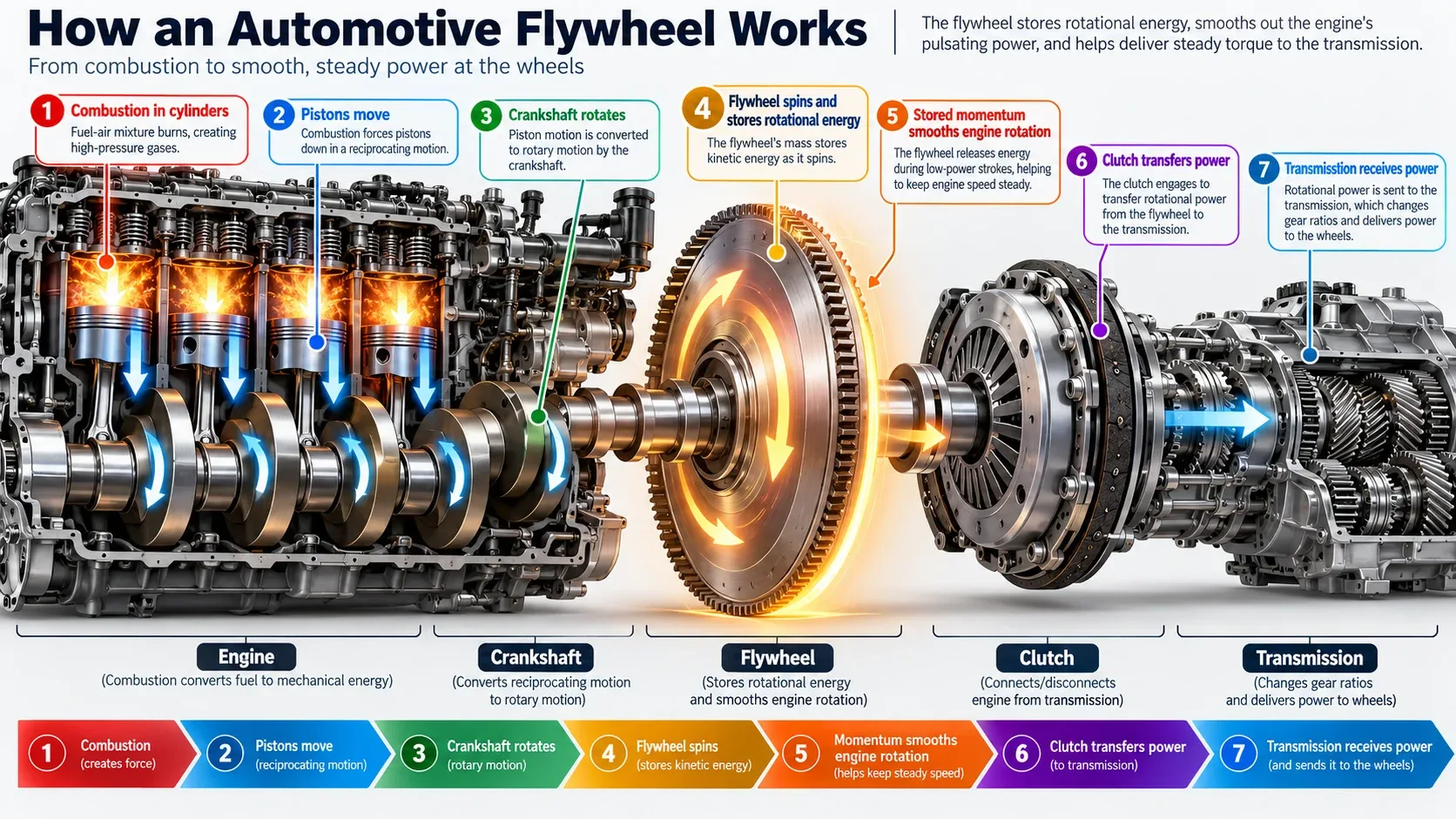
- Combustion produces force inside the engine cylinders.
- The pistons transfer this force to the crankshaft.
- The crankshaft converts piston movement into rotation.
- The flywheel rotates with the crankshaft.
- Its inertia stores energy and smooths crankshaft speed.
- When the clutch engages, engine torque passes toward the transmission.
Flywheel in an Automobile
The role of a flywheel in automobile applications is especially important in vehicles with manual transmissions.
When the clutch is engaged, the clutch disc is pressed against the flywheel. This connection allows engine torque to move from the crankshaft through the clutch and into the transmission.
When the driver presses the clutch pedal, the clutch disengages from the flywheel so that engine and transmission speeds can be separated during gear changes.
Many automatic-transmission vehicles use a flexplate rather than a conventional manual-transmission flywheel.
Main Parts of a Flywheel
Although a flywheel can look like a simple metal disc, several features allow it to connect to the crankshaft, interact with the clutch, and support engine starting.
The exact design varies between vehicles, but most automotive flywheels include a main body, friction surface, ring gear, and crankshaft mounting points. Dual-mass flywheels add internal damping components.
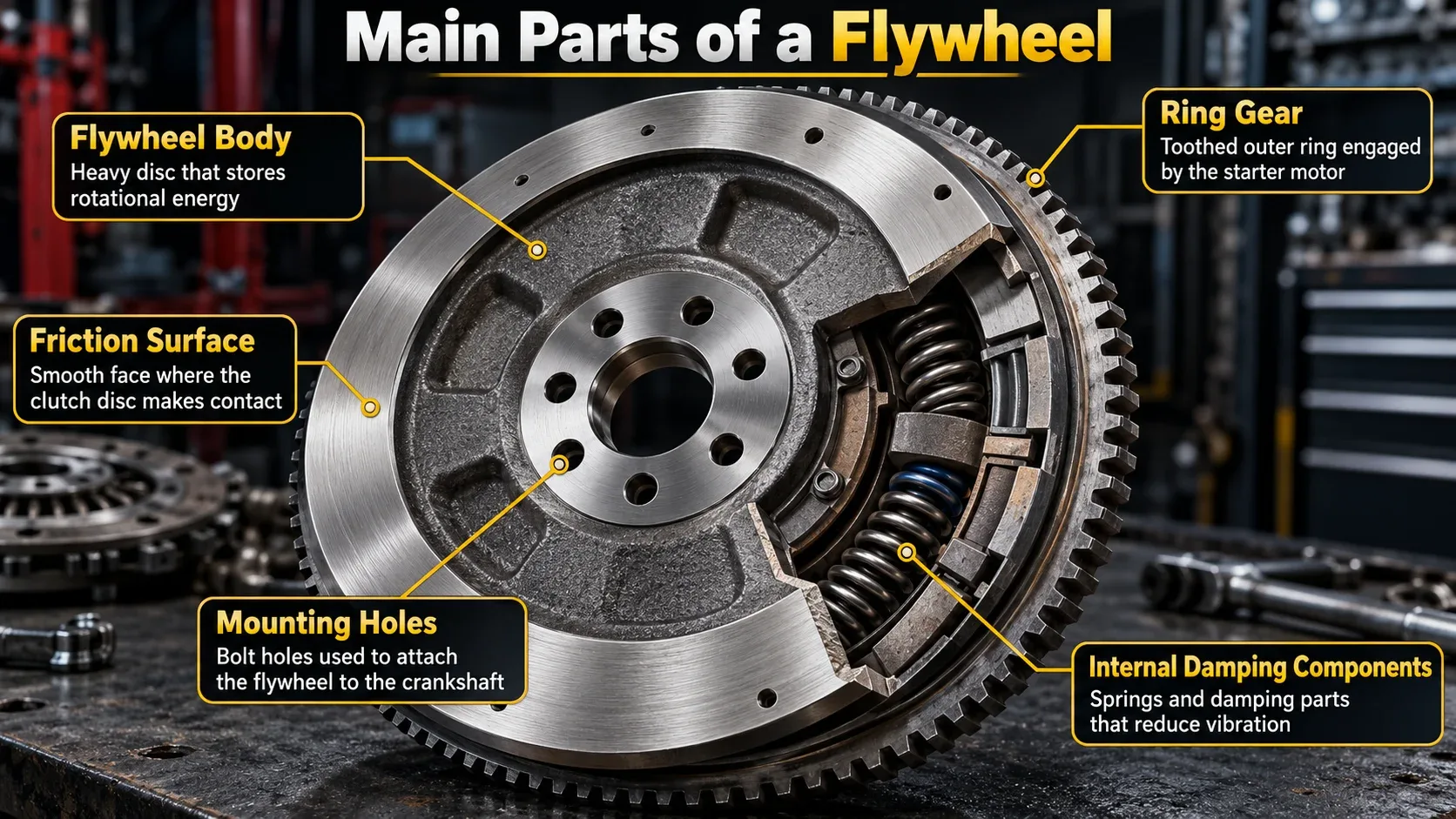
Flywheel Body
The main metal mass that stores rotational energy.
Friction Surface
The machined surface contacted by the clutch disc.
Ring Gear
The toothed outer section engaged by the starter motor.
Mounting Points
Bolt holes used to secure the flywheel to the crankshaft.
Damping Components
Internal springs or mechanisms used in dual-mass flywheels.
Types of Flywheels
Automotive flywheels are available in several designs. The most common are single-mass, dual-mass, and lightweight flywheels.
Each design balances rotational mass, vibration control, durability, and engine response differently.
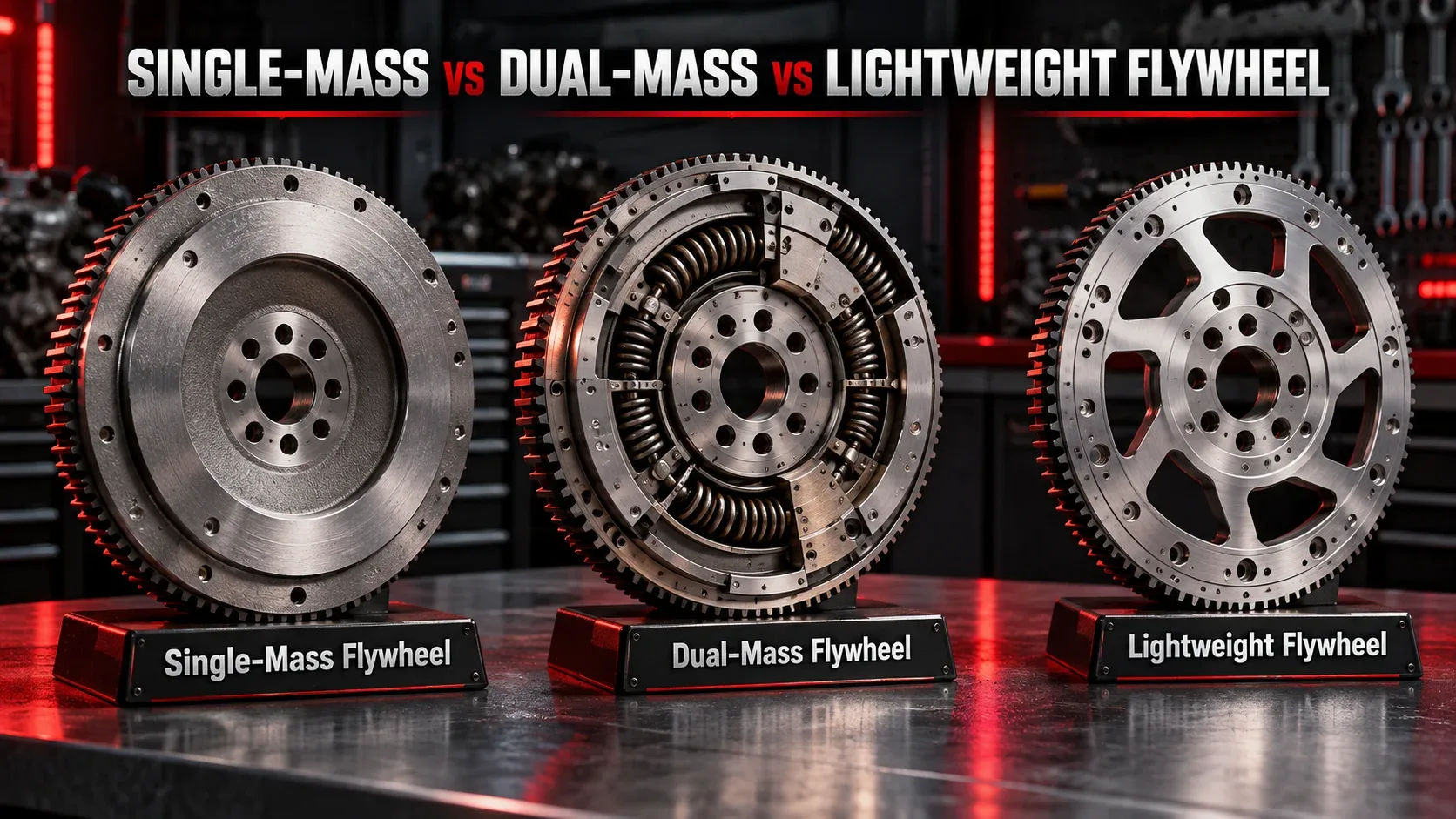
Single-Mass Flywheel
A single-mass flywheel has a relatively simple solid construction. It is generally durable and does not use the internal damping mechanism found in a dual-mass design.
Dual-Mass Flywheel
A dual-mass flywheel contains two rotating sections connected through a damping system. This design helps isolate torsional vibration before it reaches the transmission.
Lightweight Flywheel
A lightweight flywheel reduces rotating mass, allowing engine RPM to rise and fall more quickly. These designs are commonly associated with performance applications.
| Type | Main Characteristic | Typical Purpose |
|---|---|---|
| Single-Mass | Simple solid construction | Conventional manual drivetrains |
| Dual-Mass | Internal damping | Reduced drivetrain vibration |
| Lightweight | Reduced rotating mass | Quicker engine response |
Flywheel vs Flexplate
Flywheels and flexplates are both attached to the crankshaft, but they are used with different transmission designs.
A conventional flywheel is heavier and usually works with a manual clutch. A flexplate is thinner and commonly connects an engine to the torque converter of an automatic transmission.
| Feature | Flywheel | Flexplate |
|---|---|---|
| Transmission | Manual | Automatic |
| Construction | Heavy and rigid | Thin and flexible |
| Works With | Clutch assembly | Torque converter |
| Friction Surface | Used by clutch disc | Not used like a manual clutch surface |
Common Signs of a Bad Flywheel
Flywheel damage can affect clutch operation, starting, drivetrain smoothness, and noise levels. The symptoms depend on the type and severity of the damage.
It is important not to diagnose a flywheel from one symptom alone because clutch components, engine mounts, starter parts, bearings, and transmission faults can produce similar problems.
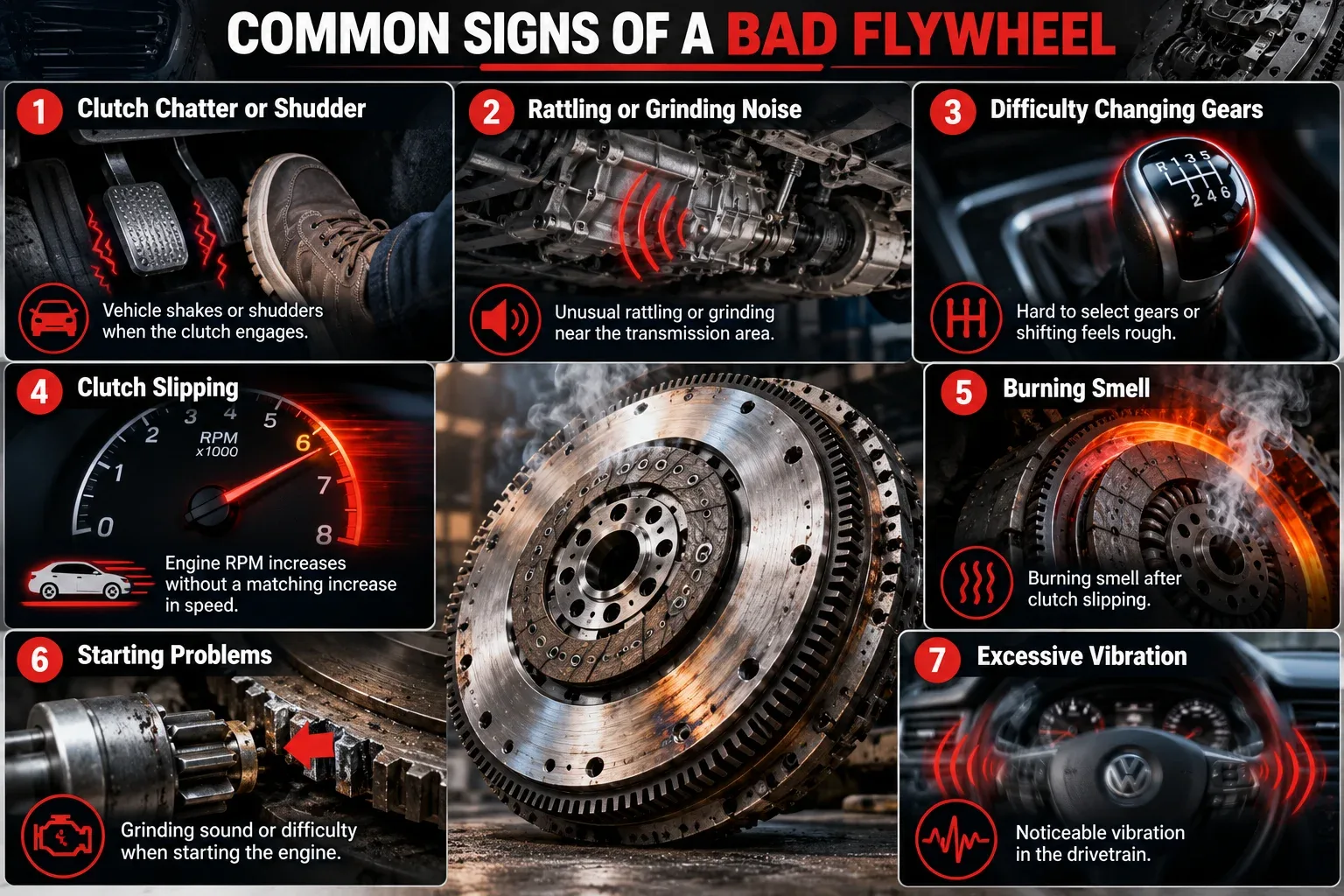
Clutch Chatter or Shudder
An uneven, contaminated, or heat-damaged friction surface can contribute to shaking as the clutch engages.
Rattling or Grinding Noise
Abnormal noise from the bellhousing area may involve the flywheel, clutch, starter, bearings, or transmission.
Difficulty Changing Gears
Poor clutch disengagement can make shifting difficult, although several clutch and transmission faults can cause the same symptom.
Clutch Slipping
Excessive surface wear or heat damage may reduce effective clutch contact.
Burning Smell
Repeated clutch slipping creates significant heat that can damage both clutch and flywheel surfaces.
Starting Problems
Damaged ring-gear teeth may interfere with starter engagement.
Excessive Vibration
A damaged or improperly installed flywheel may contribute to drivetrain vibration, but other mechanical faults should also be checked.
What Causes Flywheel Damage?
Flywheel wear normally develops from heat, mechanical stress, clutch problems, or high-mileage use rather than from one isolated cause.
- Repeated clutch slipping and overheating
- Aggressive clutch engagement
- Driving with badly worn clutch components
- Excessive drivetrain vibration
- Starter and ring-gear engagement problems
- Severe heat spots or surface cracking
- Internal wear in a dual-mass flywheel
Can You Drive With a Bad Flywheel?
A vehicle may still move while a flywheel problem is developing, but continuing to drive can increase wear on the clutch and other drivetrain components.
Inspection becomes more important when symptoms include severe vibration, grinding, repeated starting problems, difficulty shifting, or a strong burning smell.
There is no universal safe distance for driving with a suspected flywheel problem. The appropriate action depends on the actual fault and its severity.
Flywheel Resurfacing vs Replacement
Some conventional flywheels can be resurfaced when their friction surface is worn but the component remains structurally sound and within manufacturer service limits.
- Surface wear is moderate
- No major cracks are present
- Machining is permitted
- Thickness remains within specification
- Severe cracking or heat damage
- Surface beyond service limits
- Major ring-gear damage
- Dual-mass damping mechanism failure
Vehicle-specific service information should always be followed because not every flywheel is designed to be resurfaced.
How to Help a Flywheel Last Longer
Flywheel life depends heavily on clutch condition, vehicle design, driving habits, and correct installation.
- Avoid excessive clutch slipping.
- Do not ride the clutch unnecessarily.
- Use smooth clutch engagement.
- Repair clutch problems early.
- Investigate unusual vibration or noise.
- Follow manufacturer procedures during installation.
Flywheel at a Glance
| Question | Quick Answer |
|---|---|
| What is a flywheel? | A rotating component that stores kinetic energy. |
| Where is it located? | At the rear of the crankshaft near the clutch and transmission. |
| What does it do? | Stores rotational energy and helps smooth crankshaft rotation. |
| Does it work with the clutch? | Yes, in many manual-transmission vehicles. |
| Flywheel or flexplate? | Manual vehicles commonly use a flywheel; automatics commonly use a flexplate. |
| Can it wear out? | Yes, through heat, wear, damage, or internal dual-mass failure. |
Frequently Asked Questions
Click a question to reveal the answer.
Final Thoughts
A flywheel is an important rotating component that stores energy and helps an engine maintain smoother crankshaft rotation. In many manual-transmission automobiles, it also plays a direct role in clutch operation and torque transfer.
Understanding its location, construction, function, and common failure signs can make clutch and drivetrain problems easier to understand. When symptoms develop, diagnosing the complete related system is more reliable than assuming the flywheel alone is at fault.