
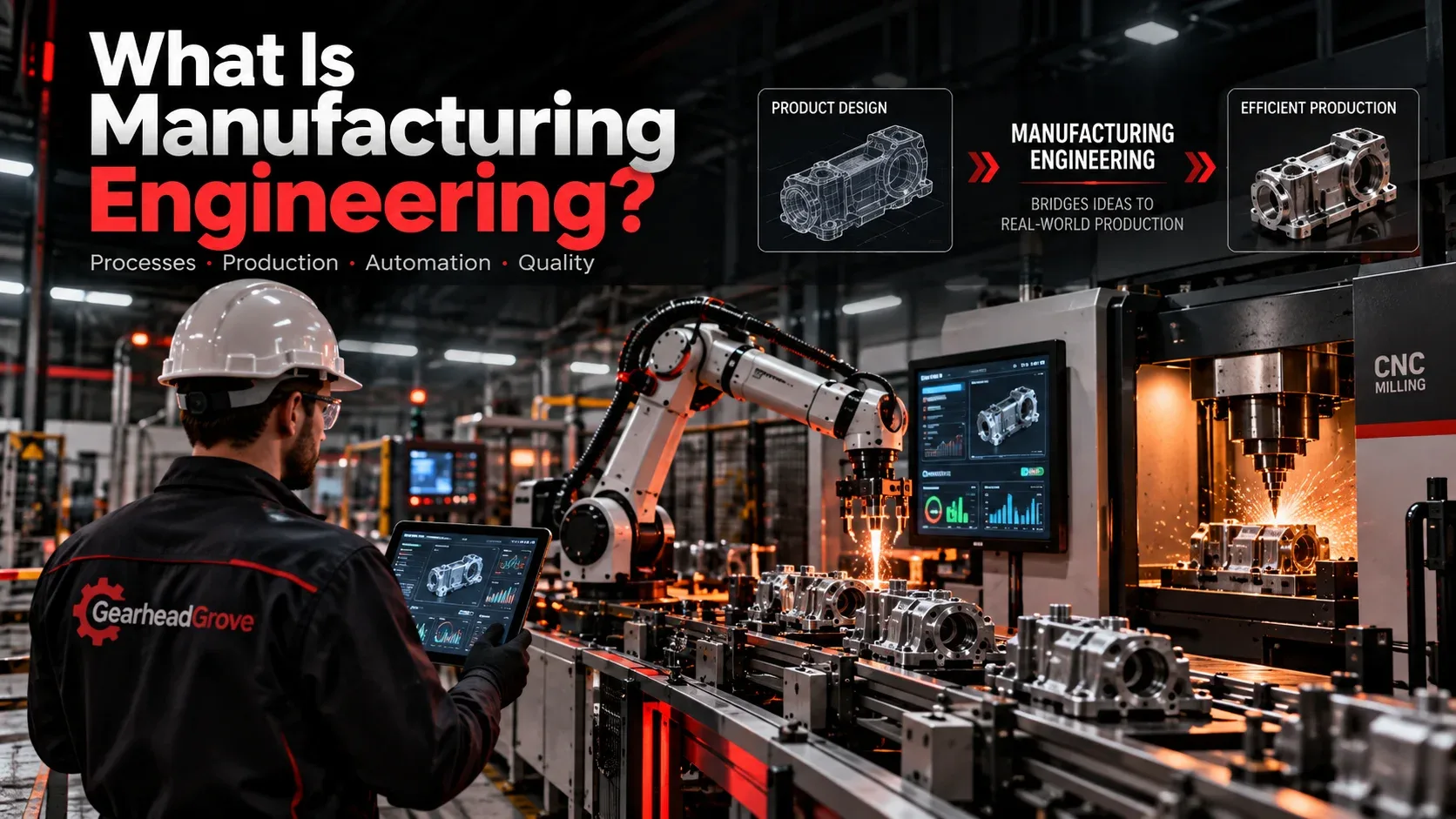
Manufacturing engineering is the branch of engineering focused on how products are made. It connects product design with real-world production by improving processes, equipment, tooling, automation, quality, safety and efficiency.
Manufacturing engineers work across industries such as automotive, aerospace, electronics, medical devices, machinery and energy. Their job is not simply to keep production running, but to make manufacturing safer, faster, more consistent and more cost-effective.
Quick Answer
Manufacturing engineering focuses on designing, improving and managing the processes used to turn raw materials and components into finished products. Manufacturing engineers work with machinery, tooling, automation, production systems, quality control and continuous improvement to help factories operate efficiently and reliably.
What Is Manufacturing Engineering?
Manufacturing engineering is an engineering discipline concerned with the methods, systems and technologies used to produce physical products.
A product may begin as a design created by mechanical, electrical or product engineers, but that design still needs to be manufactured repeatedly at the required cost, quality and production volume. This is where manufacturing engineers play a major role.
Product Design
Defines what the product should do, how it should perform and what specifications it must meet.
Manufacturing Engineering
Determines how that product can be built safely, consistently, efficiently and at the required level of quality.
What Does a Manufacturing Engineer Do?
A manufacturing engineer works on the systems, equipment and processes used on the production floor. Their responsibilities vary depending on the industry, company and type of product being manufactured.
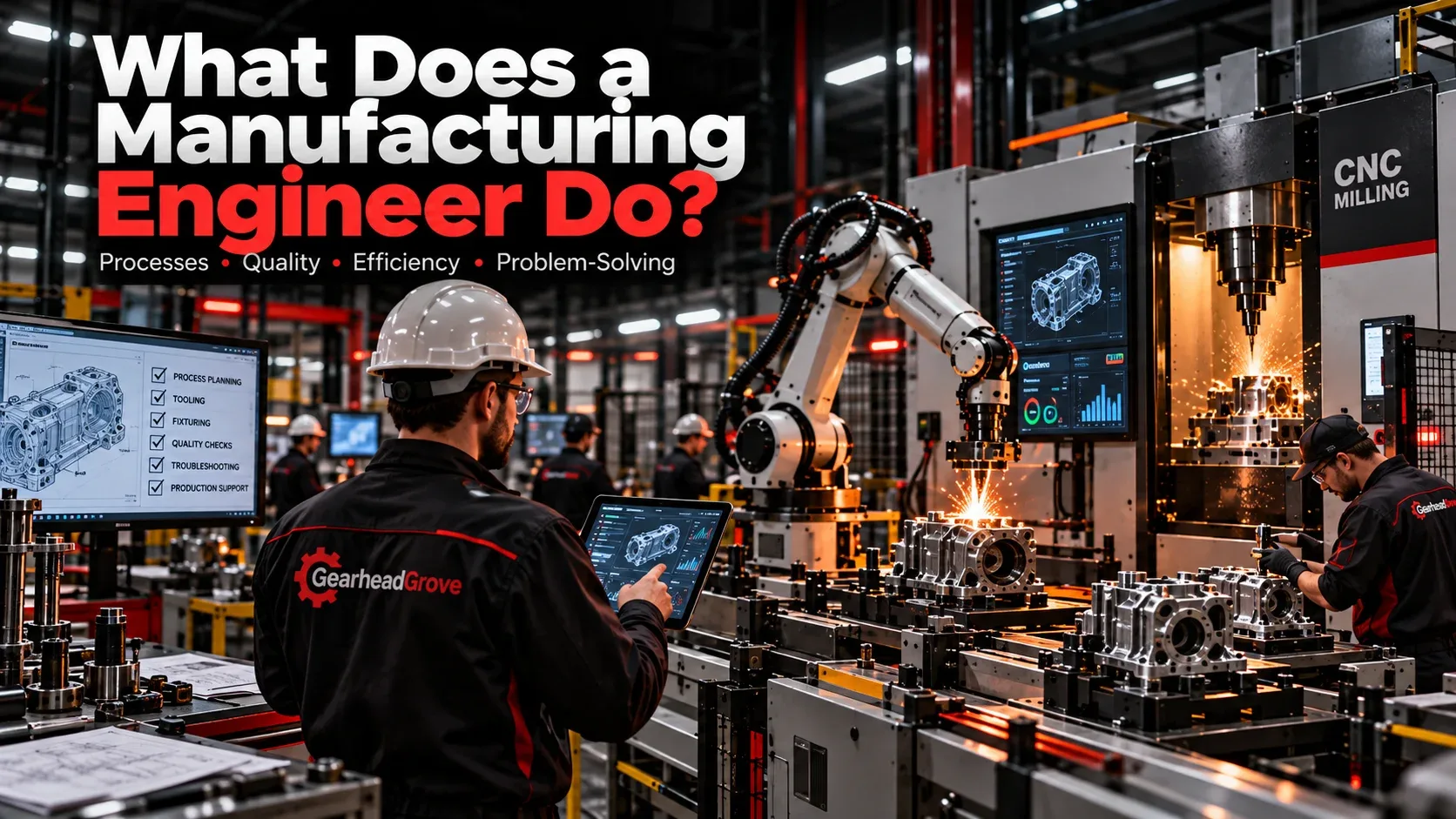
- Design and improve manufacturing processes.
- Select production equipment and machinery.
- Design tooling, jigs and fixtures.
- Reduce cycle time and production waste.
- Investigate defects and quality problems.
- Improve manufacturing safety.
- Support automation and robotics.
- Analyze production data.
- Reduce downtime and bottlenecks.
- Create work instructions and process documentation.
- Support new product introductions.
- Work with design, quality, maintenance and production teams.
What Does a Manufacturing Engineer Do Day to Day?
Manufacturing engineering is often a mix of office work, data analysis, meetings and hands-on problem-solving on the factory floor.
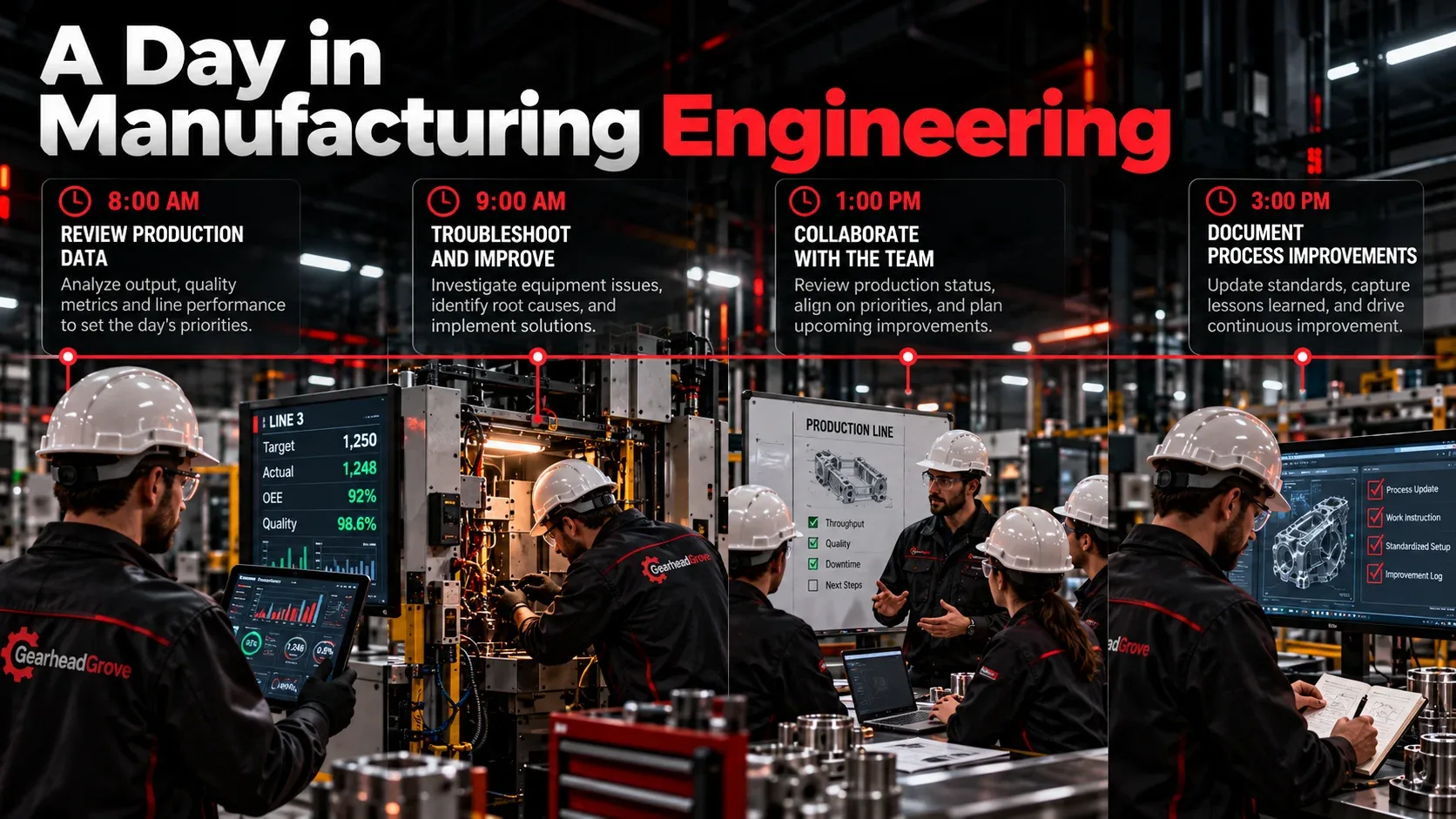
Review Production Performance
Check output, scrap, downtime, quality issues and any problems reported during the previous shift.
Troubleshoot Production Issues
Investigate machine problems, recurring defects or process variation affecting production.
Improve a Process
Analyze cycle times, bottlenecks, material flow or workstation layouts to find opportunities for improvement.
Engineering Meeting
Coordinate with production, quality, maintenance, automation or design teams.
Test and Document Changes
Validate process changes, record results and update work instructions or process documentation.
Key Responsibilities in Manufacturing Engineering
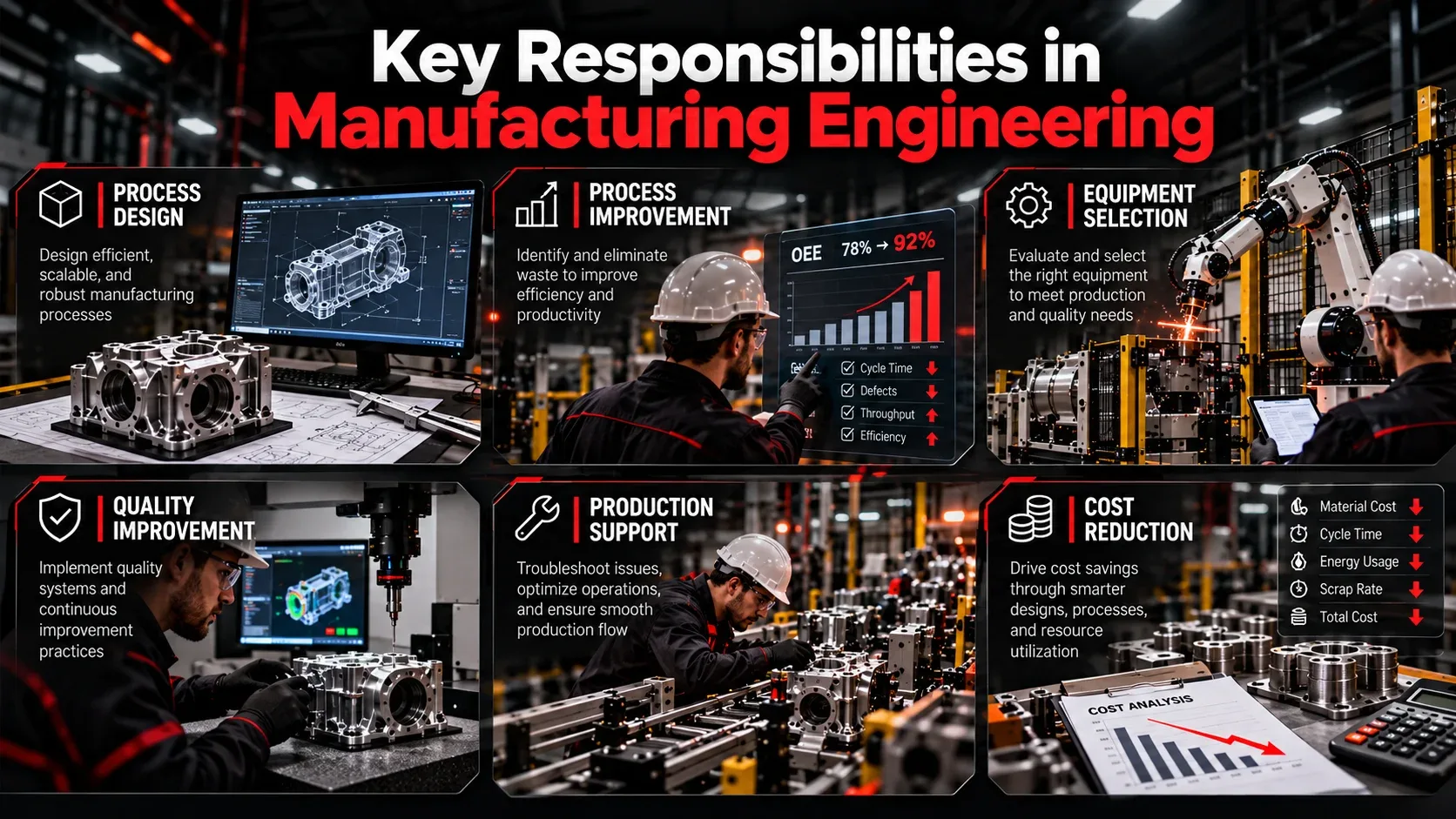
Process Design
Develop the sequence of operations required to manufacture a component or complete product.
Process Improvement
Reduce waste, scrap, cycle time, unnecessary movement, downtime and other sources of inefficiency.
Equipment Selection
Evaluate machines, tooling, robots, inspection equipment and supporting systems.
Quality Improvement
Identify causes of defects and improve the stability and capability of production processes.
Production Support
Help operators and maintenance teams solve manufacturing issues that affect production.
Cost Reduction
Improve efficiency and reduce manufacturing costs while maintaining safety and product quality.
What Skills Do Manufacturing Engineers Need?
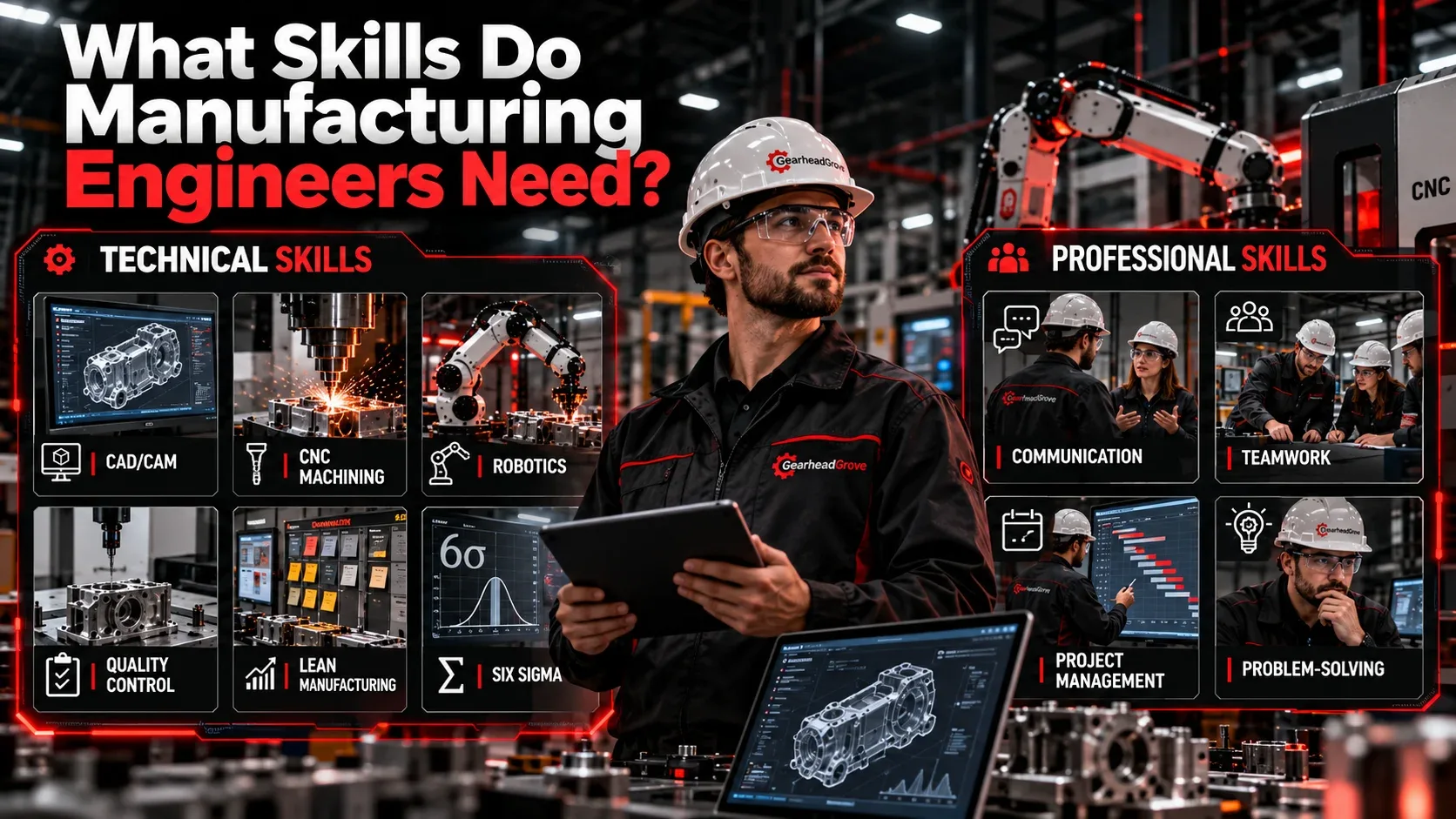
Technical Skills
- Manufacturing processes
- CAD and CAM
- CNC machining
- GD&T
- Materials engineering
- Tooling and fixture design
- Lean manufacturing
- Six Sigma
- Statistical process control
- Automation and robotics
- Root-cause analysis
- Quality systems
Professional Skills
- Problem-solving
- Communication
- Teamwork
- Project management
- Decision-making
- Leadership
- Time management
- Data analysis
- Attention to detail
- Continuous improvement mindset
Manufacturing Processes Engineers Commonly Work With
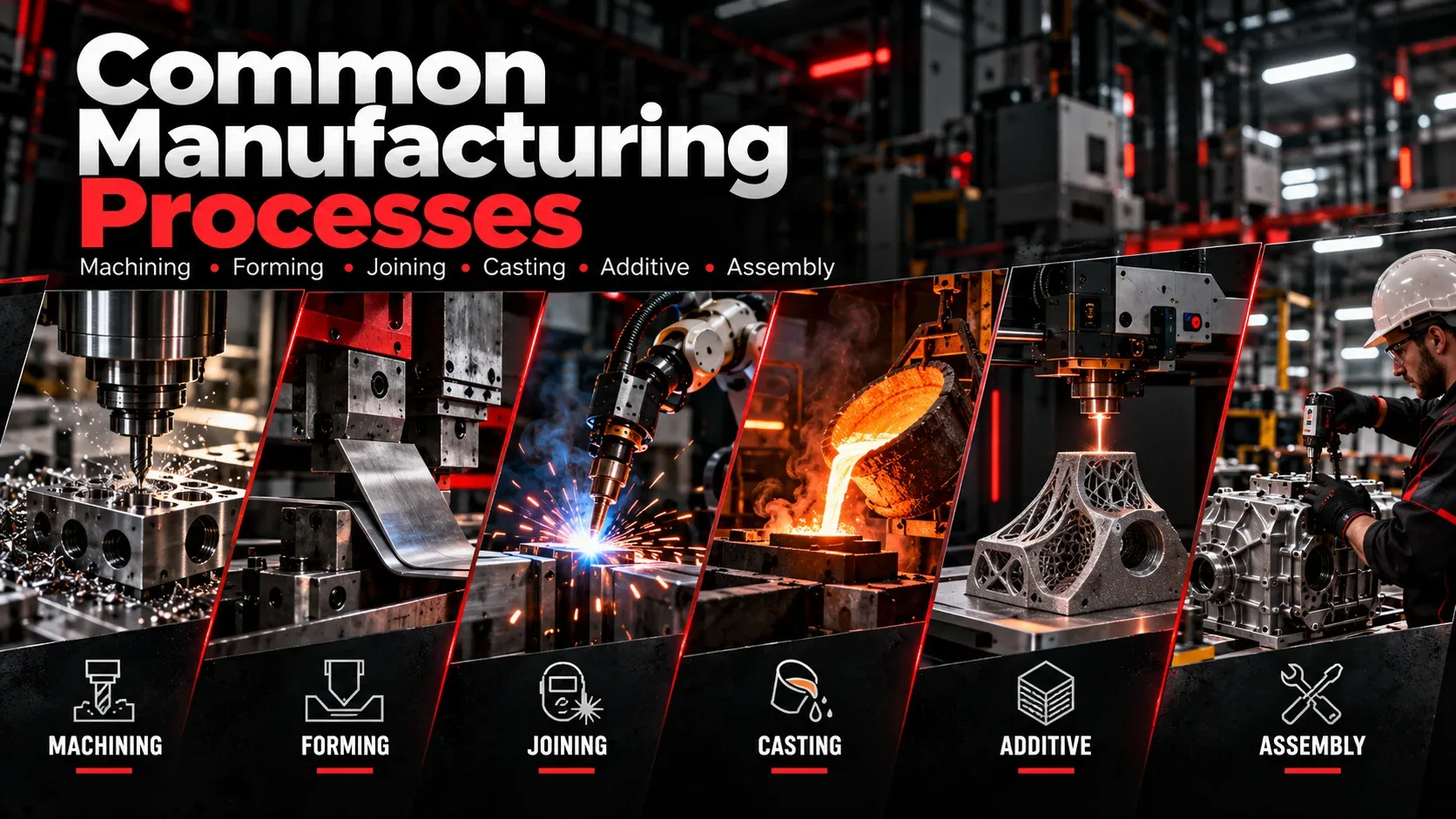
Machining
Milling, turning, drilling, grinding and other material-removal processes.
Forming
Forging, rolling, stamping, bending and other methods used to reshape material.
Joining
Welding, brazing, soldering, riveting, fastening and adhesive joining.
Casting
Sand casting, die casting, investment casting and related processes.
Additive Manufacturing
3D printing used for prototypes, tooling and specialized production parts.
Assembly
Manual assembly, automated assembly, robotic systems and mixed production lines.
What Software Do Manufacturing Engineers Use?
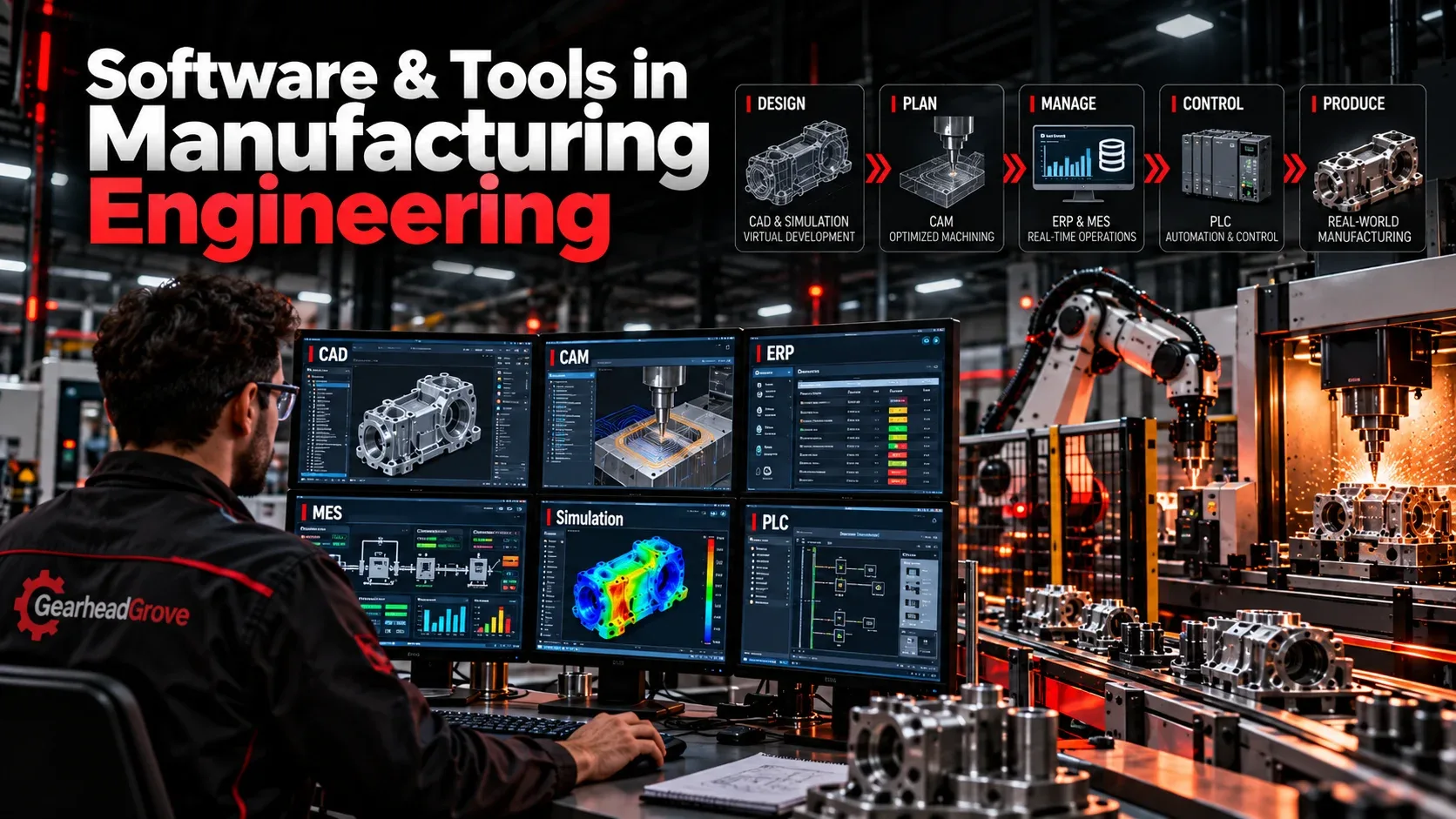
Manufacturing engineers often use software to design fixtures, program machines, monitor production, analyze data and manage manufacturing systems.
| Software Category | Main Use |
|---|---|
| CAD | Tooling, fixture, workstation and production-related design |
| CAM | Creating CNC machining toolpaths and manufacturing programs |
| ERP | Production planning, inventory and resource management |
| MES | Monitoring and managing shop-floor production |
| Statistical Software | Quality analysis, capability studies and process improvement |
| Simulation Tools | Modeling production systems, robotics or manufacturing processes |
| PLC Software | Programming and troubleshooting automated equipment |
| Spreadsheet & Data Tools | Reporting, analysis, calculations and performance tracking |
Why Lean Manufacturing Matters
Lean manufacturing focuses on creating more value while reducing unnecessary waste. Manufacturing engineers frequently participate in or lead Lean improvement projects.
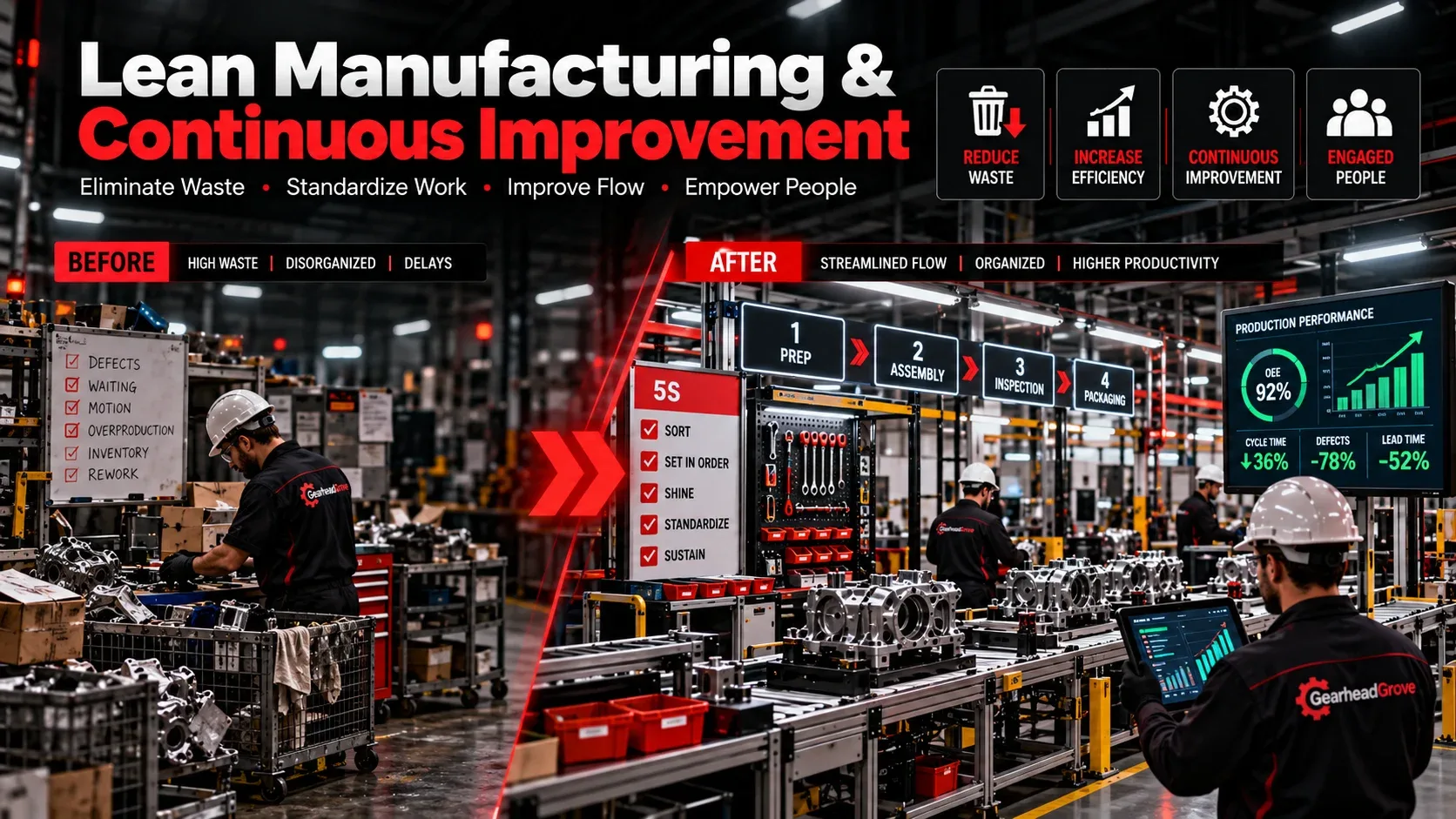
- Reduce unnecessary movement.
- Minimize waiting time.
- Improve material flow.
- Reduce inventory where appropriate.
- Standardize work.
- Improve workplace organization with 5S.
- Identify bottlenecks.
- Reduce defects and rework.
- Improve overall process efficiency.
How Manufacturing Engineers Improve Quality
Manufacturing engineers use measurement, statistical analysis and structured problem-solving to reduce defects and make production processes more consistent.
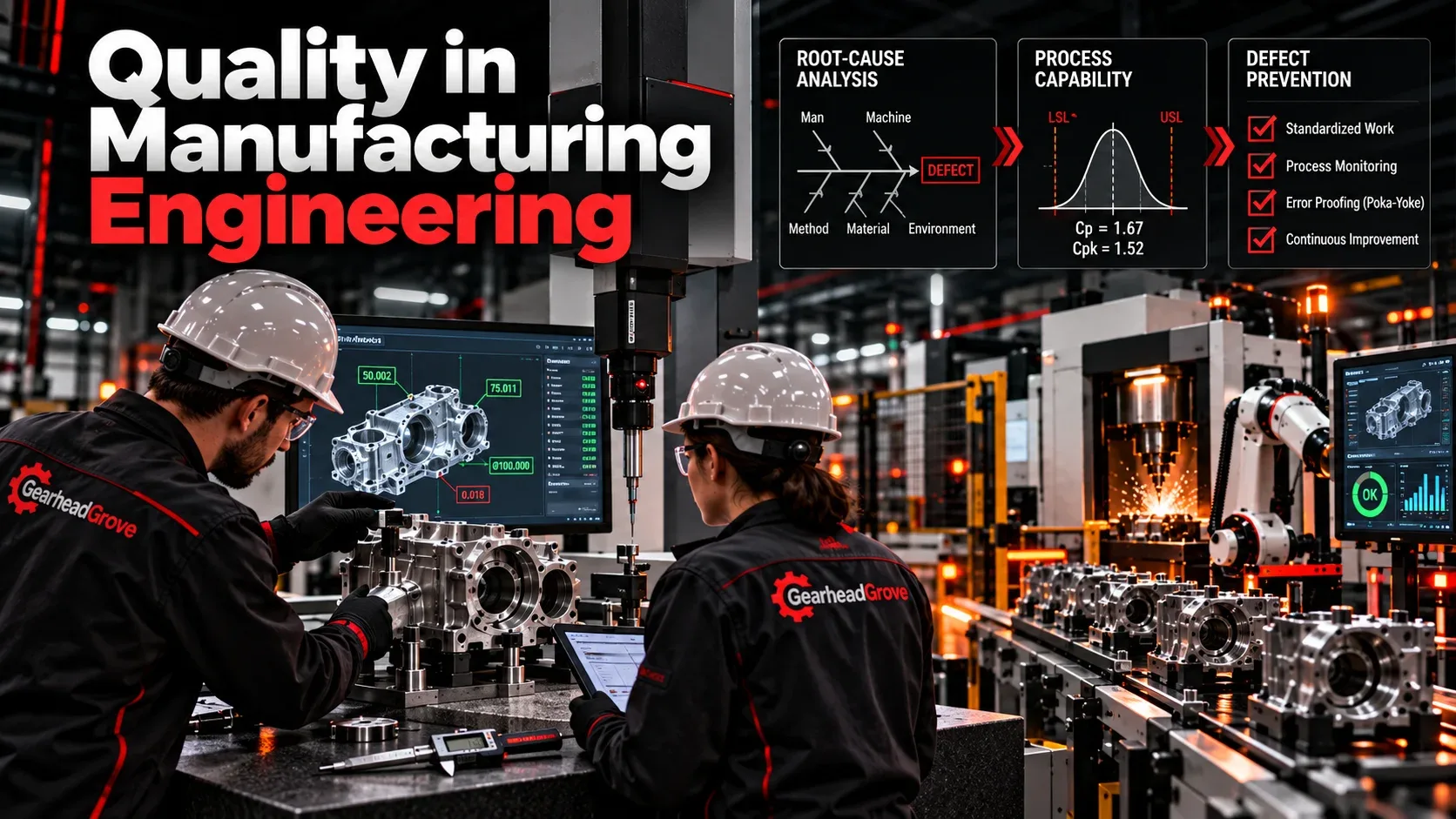
Root-Cause Analysis
Identify the underlying reason for recurring production problems rather than only treating the visible symptom.
Statistical Process Control
Monitor production data to identify unusual variation before it creates larger quality problems.
Process Capability
Evaluate whether a process can consistently meet product specifications.
Error Prevention
Design processes and fixtures that make mistakes less likely or easier to detect.
The Role of Automation in Manufacturing Engineering
Modern manufacturing increasingly combines robotics, sensors, machine vision, programmable controllers and automated production systems.
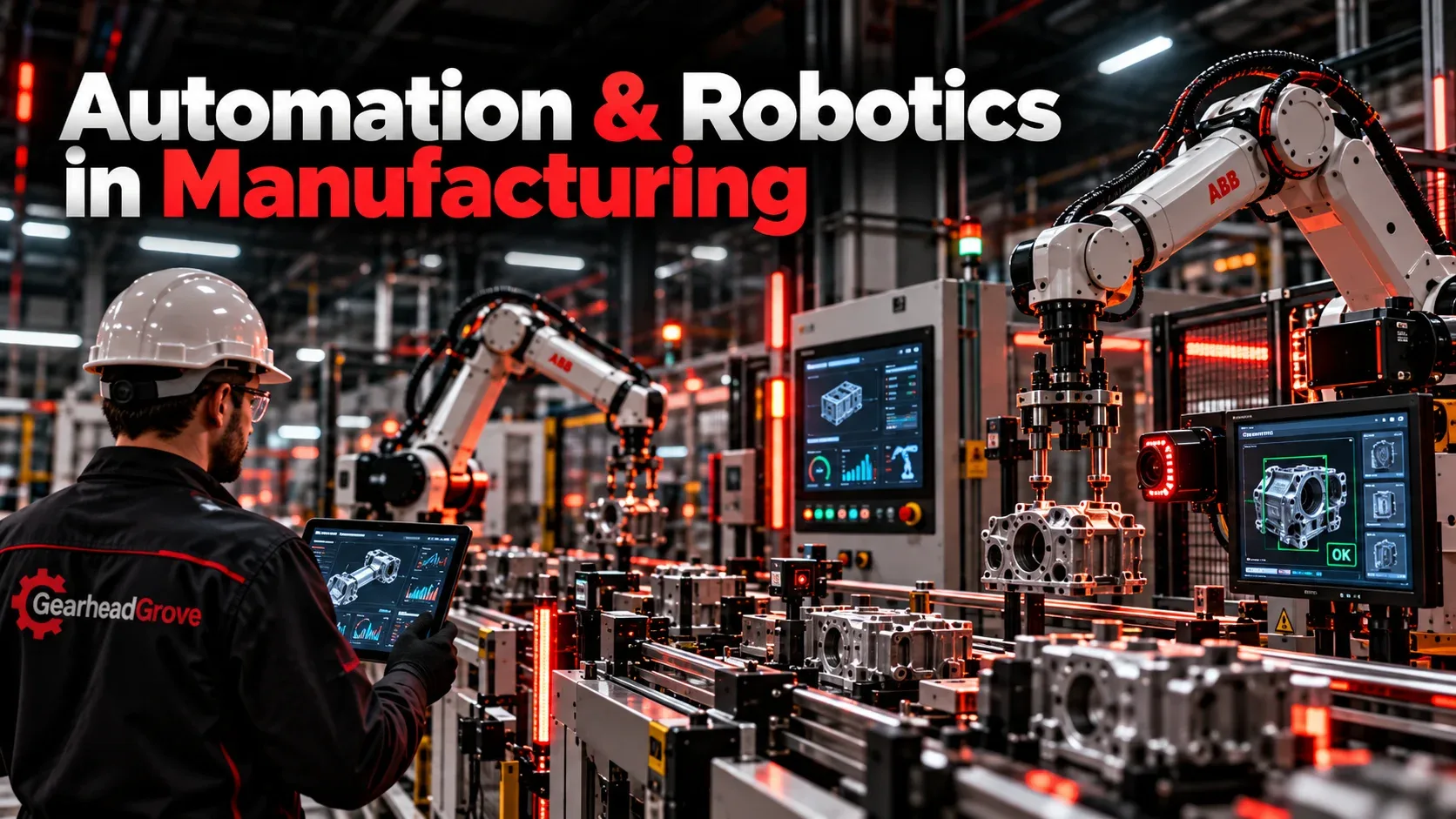
- Industrial robots
- Collaborative robots
- Automated assembly systems
- PLCs
- Sensors
- Machine vision
- Automated inspection
- Conveyors and material-handling systems
- Automated data collection
Manufacturing Engineering vs Mechanical Engineering
| Area | Manufacturing Engineering | Mechanical Engineering |
|---|---|---|
| Main Focus | How products are manufactured | How mechanical products and systems are designed |
| Production Floor | Often heavily involved | Depends on the role |
| Process Improvement | Core responsibility | May be involved |
| CAD | Often used for tooling and production | Frequently used for product design |
| Automation | Common responsibility | Depends on specialization |
Manufacturing Engineering vs Industrial Engineering
Manufacturing Engineering
- Machines
- Tooling
- Manufacturing processes
- Automation
- Production equipment
- Process capability
Industrial Engineering
- Workflow
- Operations
- Productivity
- Logistics
- Human factors
- Resource optimization
Manufacturing Engineer vs Process Engineer
A manufacturing engineer may have responsibility for a broader area of production, while a process engineer may focus on one particular process, machine group or production technology.
What Degree Do You Need for Manufacturing Engineering?
- Manufacturing Engineering
- Mechanical Engineering
- Industrial Engineering
- Production Engineering
- Mechatronics Engineering
- Materials Engineering
- Automation or related engineering programs
Internships, apprenticeships and hands-on manufacturing experience can also strengthen a candidate’s practical engineering knowledge.
Useful Certifications for Manufacturing Engineers
- Lean Six Sigma training
- SME manufacturing certifications
- GD&T training
- CAD or CAM certifications
- Quality management training
- Project management certifications
- Automation or PLC training
Where Do Manufacturing Engineers Work?
Automotive
Vehicle assembly, stamping, welding, machining, powertrain production and automation.
Aerospace
Precision machining, composite manufacturing, assembly and controlled production.
Medical Devices
Controlled manufacturing, process validation, inspection and regulated production.
Electronics
Automated assembly, testing, soldering, inspection and production-line optimization.
Machinery
Fabrication, machining, welding, assembly and industrial equipment production.
Energy
Heavy equipment, turbines, pipelines and engineered components.
Consumer Products
High-volume assembly, plastics, metalworking and automated production.
Defense
Complex manufacturing, machining, assembly, testing and strict quality control.
Manufacturing Engineering Career Path
Other career directions include:
- Process engineering
- Automation engineering
- Quality engineering
- Continuous improvement
- Production management
- Operations management
- Plant management
- Manufacturing consulting
Common Entry-Level Manufacturing Engineering Jobs
- Junior Manufacturing Engineer
- Manufacturing Engineer I
- Process Engineer
- Production Engineer
- Quality Engineer
- Continuous Improvement Engineer
- Industrial Engineer
- Manufacturing Technician
What Makes a Good Manufacturing Engineer?
Practical Thinking
Understand both theory and what works on the factory floor.
Problem-Solving
Use structured, evidence-based thinking to solve production problems.
Attention to Detail
Small process changes can strongly affect quality, cost and safety.
Communication
Work effectively with operators, technicians, managers and engineers.
Data Awareness
Use production data to identify trends and improvement opportunities.
Continuous Improvement
Always look for safer and more efficient ways to manufacture products.
Why Choose a Career in Manufacturing Engineering?
- Work on real products and production systems.
- Combine engineering with practical problem-solving.
- Gain exposure to robotics and automation.
- Work across many different industries.
- Develop technical and leadership skills.
- See measurable results from process improvements.
- Progress into engineering or operations management.
Challenges of Manufacturing Engineering
- Production targets can create time pressure.
- Equipment failures may require urgent attention.
- Quality problems can affect entire production runs.
- Engineers often coordinate several departments.
- Some roles involve shift or factory-floor work.
- Technology changes require continuous learning.
Is Manufacturing Engineering a Good Career?
Manufacturing engineering can be a strong career choice for people who enjoy solving practical problems, working with machines, improving processes and seeing how real products are made.
It is especially suitable for people interested in automation, robotics, quality, data analysis, manufacturing technology and team-based engineering.
What Is the Future of Manufacturing Engineering?
Smart Factories
Connected machines provide more real-time production data.
Robotics
Industrial and collaborative robots continue to expand across production environments.
AI-Assisted Manufacturing
AI can support inspection, maintenance, planning and process analysis.
Digital Twins
Digital models help simulate machines and production systems before physical changes are made.
Predictive Maintenance
Sensors and analytics can help identify problems before equipment fails.
Additive Manufacturing
3D printing continues to grow in tooling, prototypes and specialized production.
Frequently Asked Questions About Manufacturing Engineering
What is manufacturing engineering in simple terms?
Manufacturing engineering is the field focused on improving how products are made, including processes, machines, tooling, automation and quality.
What does a manufacturing engineer do?
Manufacturing engineers improve production processes, select equipment, solve manufacturing problems, improve quality and reduce waste.
Is manufacturing engineering hard?
It can be challenging because it combines engineering theory, practical manufacturing, problem-solving, data analysis and communication.
Do manufacturing engineers use CAD?
Yes. Many use CAD for tooling, fixtures, layouts and production-related designs.
Do manufacturing engineers need programming skills?
Not every role requires programming, but coding can help in automation, CNC, robotics, PLCs and data analysis.
Can a mechanical engineer become a manufacturing engineer?
Yes. Mechanical engineering is one of the most common backgrounds for manufacturing engineering roles.
Is manufacturing engineering the same as industrial engineering?
No. They overlap, but manufacturing engineering typically focuses more on production technology and processes, while industrial engineering often focuses more on workflow and system optimization.
Do manufacturing engineers work in factories?
Many do. Some roles combine production-floor work with office, laboratory and engineering tasks.
Final Thoughts on Manufacturing Engineering
Manufacturing engineering sits between product design and real-world production. Manufacturing engineers help ensure that products can be made safely, repeatedly, efficiently and at the required quality.
Their work combines machines, materials, tooling, automation, data, quality systems, people and practical problem-solving.
If you enjoy understanding how products are made and improving the systems that produce them, manufacturing engineering can be a practical and versatile engineering career.