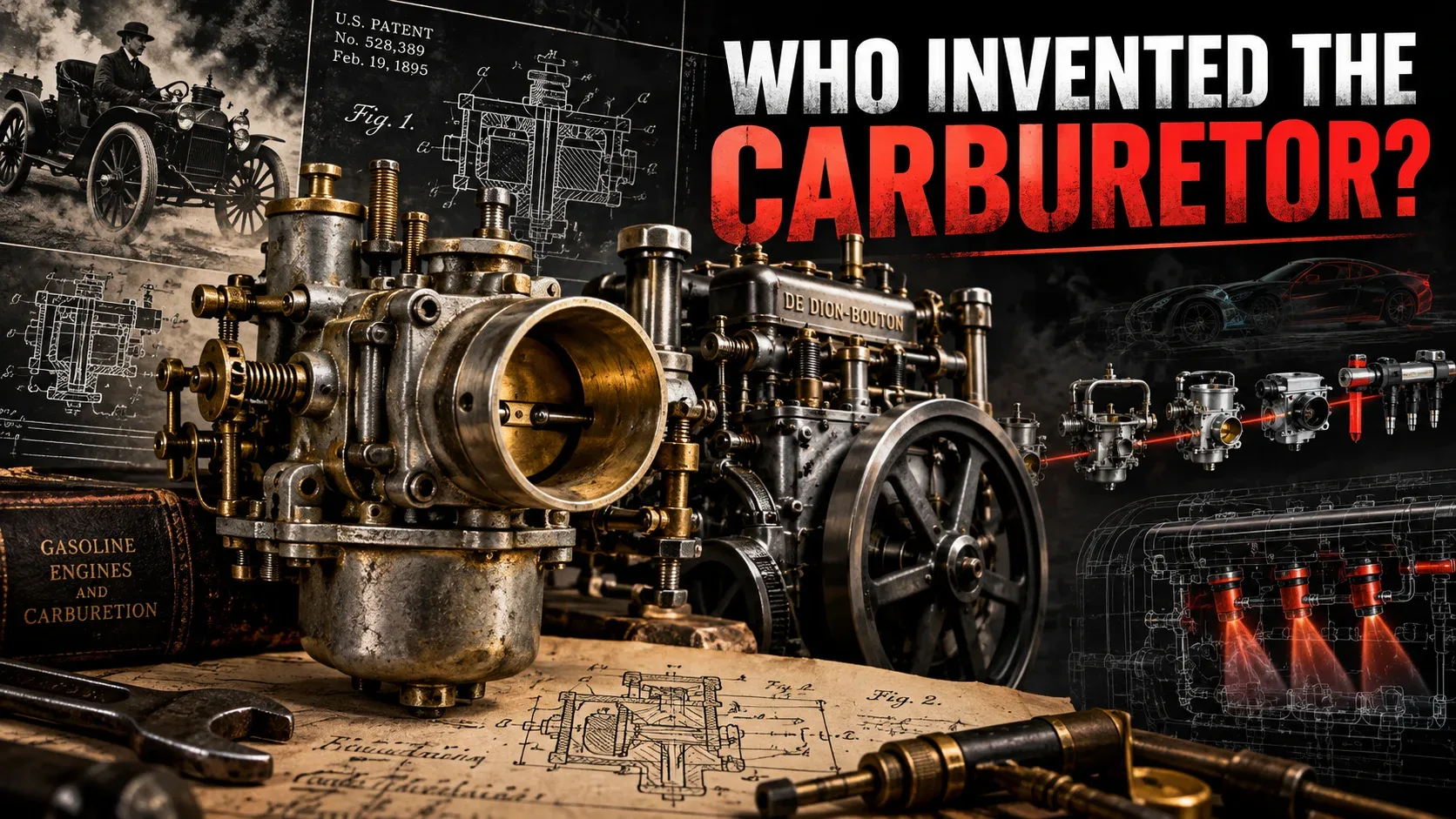
Search for the carburetor inventor and you will quickly discover that the answer is more complicated than a single name. Carburetion developed through decades of experimentation as engineers searched for reliable ways to mix fuel with air for internal-combustion engines.
Tom Ogle, also known as Thomas Ogle, entered the story much later with an experimental fuel-vapor system. He did not invent the original carburetor, but his work became part of a much later chapter in automotive fuel-system history.
What Is a Carburetor and What Does It Do?
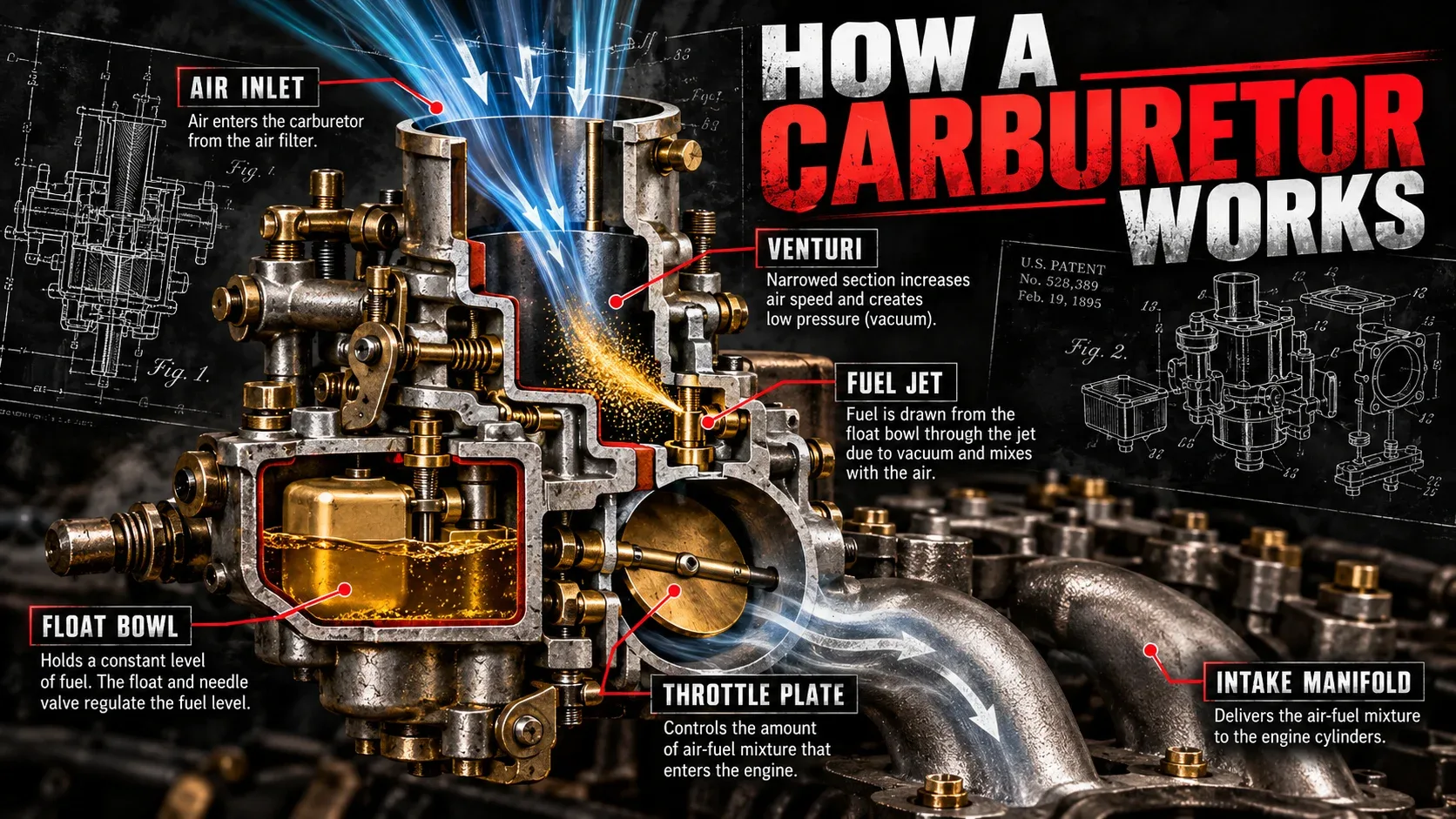
A carburetor is a mechanical device used to mix gasoline with air before that mixture enters an internal-combustion engine. For much of automotive history, carburetors performed this job without electronic fuel injectors or modern engine computers.
In a conventional carburetor, incoming air passes through a narrowed passage called a venturi. As the air speeds up, pressure changes help draw gasoline through calibrated jets. The fuel mixes with the airflow before traveling through the intake manifold and into the cylinders.
Mature carburetor designs also include systems for cold starting, idling, acceleration and high-load operation.
The Early History of Carburetion
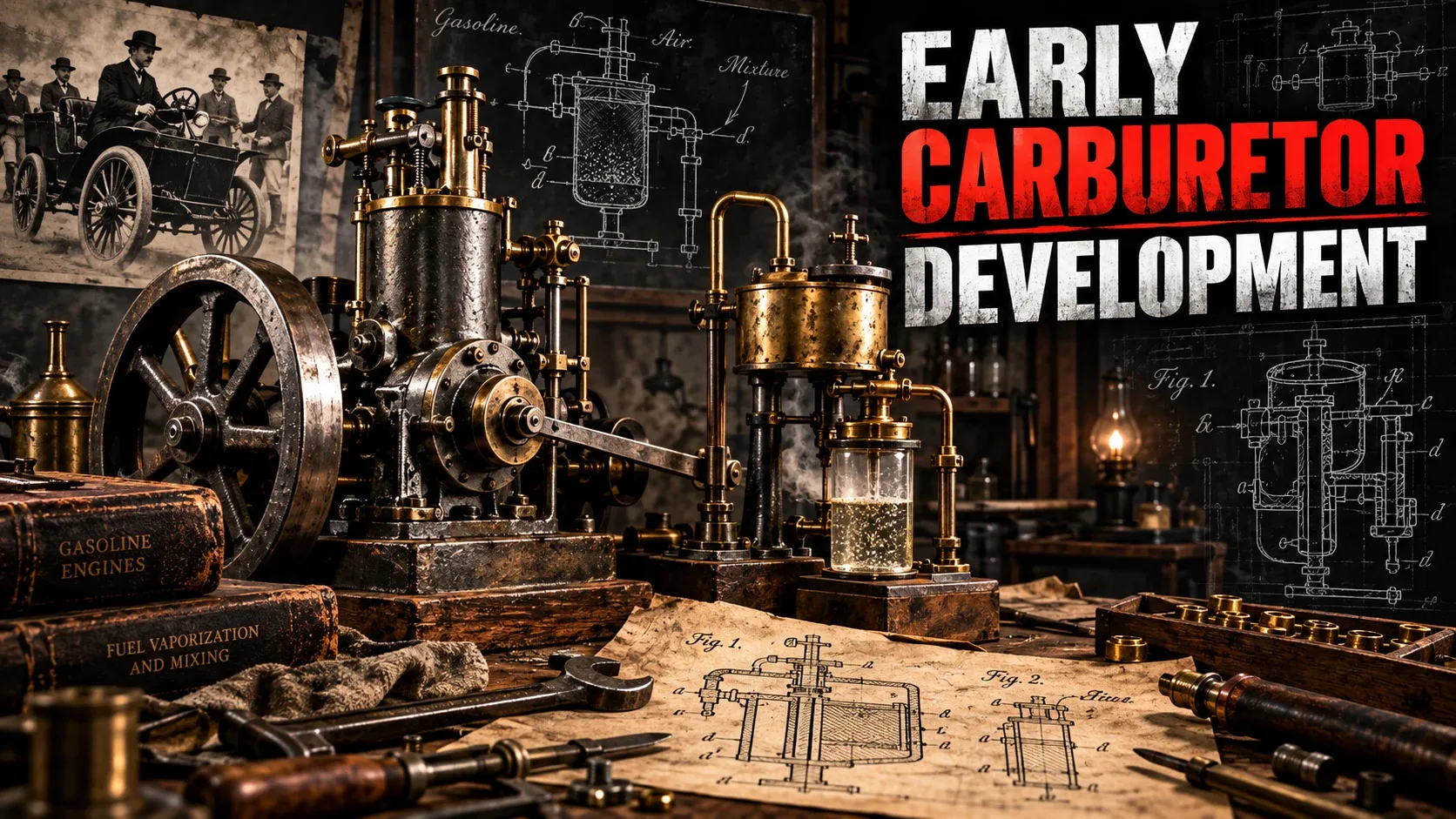
Early internal-combustion-engine designers faced a basic engineering problem: liquid gasoline had to be prepared and mixed with air before it could burn effectively inside an engine.
Some early systems relied on evaporation. Air passed across or through fuel and carried combustible vapor toward the engine. These surface and vapor-style systems proved that gasoline could be prepared for combustion, but they did not provide the precise fuel control required by increasingly powerful engines.
As engine technology improved, designers began developing better ways to spray, meter and atomize fuel.
Who Was the Carburetor Inventor?
The keyword carburetor inventor sounds as though there should be one simple answer. Historically, however, carburetion developed through several stages.
Early Surface and Vapor Carburetors
The earliest fuel-mixing systems relied largely on gasoline evaporation. Incoming air collected fuel vapor before entering the engine. These systems were simple, but controlling the mixture accurately across different operating conditions was difficult.
Wilhelm Maybach and Spray Carburetion
Wilhelm Maybach is one of the most important names in the development of practical carburetion. His work helped establish a fine fuel-jet approach in which gasoline was introduced directly into moving intake air.
This spray-type principle became a major foundation for later automotive carburetors.
Karl Benz, Daimler and Early Automobiles
As early automobiles became more practical, engineers associated with Karl Benz, Gottlieb Daimler, Wilhelm Maybach and other pioneers continued refining fuel-delivery systems so engines could operate over a wider range of speeds and loads.
Carburetor History Timeline
Key Carburetor Designs That Changed Automotive History
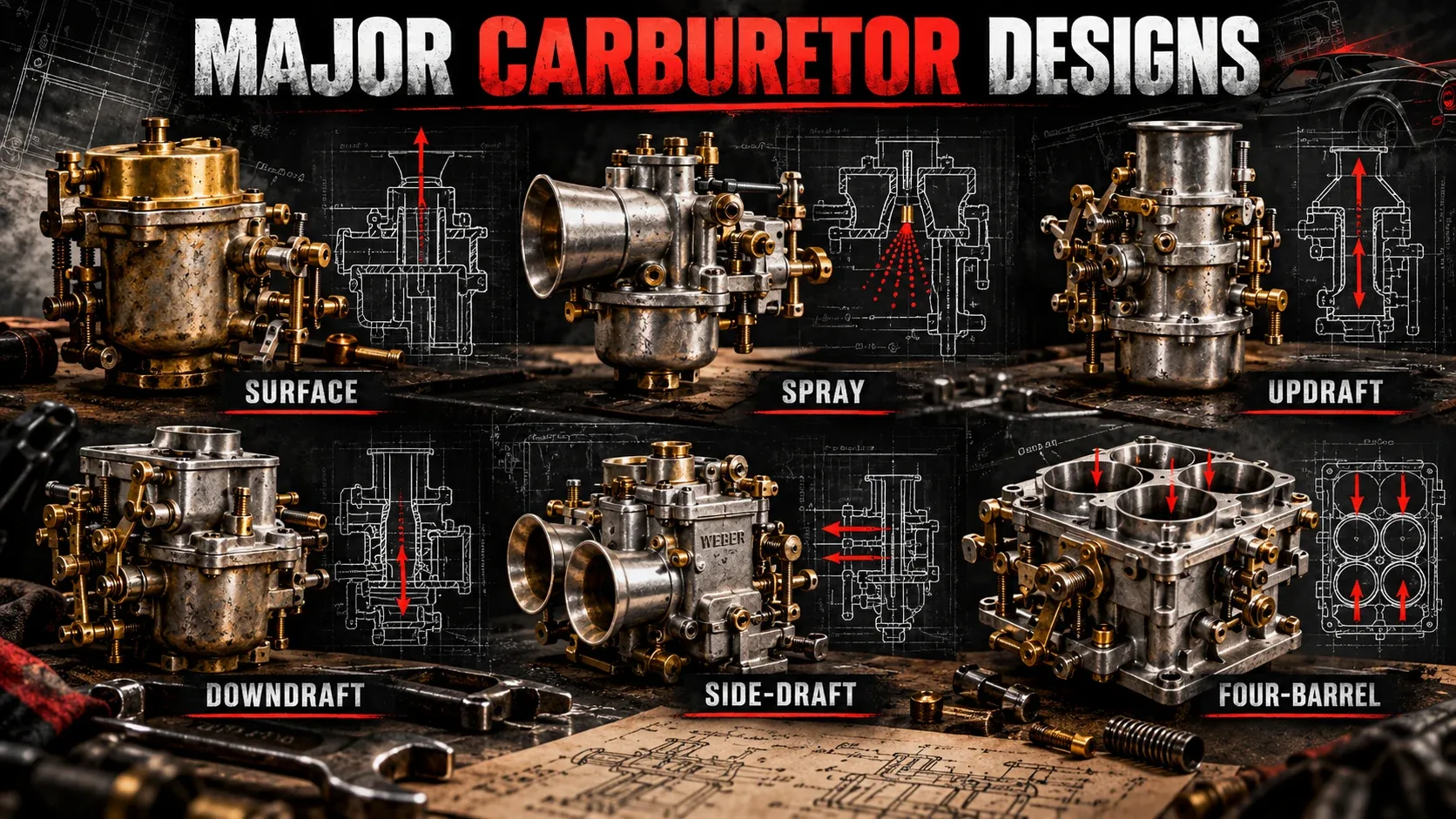
Surface Carburetor
An early approach that allowed incoming air to collect gasoline vapor from a fuel surface.
Spray Carburetor
Uses a fuel jet to introduce gasoline into moving air, allowing better control than basic evaporation systems.
Updraft Carburetor
Air and fuel travel upward into the intake. These designs were common on many early automobiles and tractors.
Downdraft Carburetor
Air moves downward through the carburetor. This arrangement became extremely common in passenger cars.
Side-Draft Carburetor
Air moves horizontally through the carburetor. Side-draft systems became popular on many European performance vehicles.
Multi-Barrel Carburetor
Two-barrel and four-barrel designs allow more airflow when an engine requires greater power.
Constant-Velocity Carburetor
Uses pressure differences to control a slide or piston and maintain more stable airflow.
Electronic Feedback Carburetor
Later designs combined traditional mechanical systems with limited electronic controls.
How Does a Carburetor Mix Fuel and Air?
- Air enters the carburetor.
Intake vacuum draws air through the carburetor. - Air moves through the venturi.
The narrowed passage increases airflow speed and alters pressure. - Fuel moves through calibrated jets.
Jets regulate how much gasoline enters the air stream. - Fuel mixes with air.
The gasoline becomes dispersed into the moving air before entering the intake manifold. - The throttle controls airflow.
Opening the throttle allows the engine to draw in more air and fuel. - Additional circuits handle changing conditions.
Chokes, idle circuits and accelerator pumps help during cold starts, idling and acceleration.
Who Was Tom Ogle?
Tom Ogle, also known as Thomas Ogle, was an American inventor associated with an unconventional fuel-economy system developed during the 1970s.
His name is often connected with carburetor discussions because he experimented with an alternative way of supplying gasoline to an internal-combustion engine.
However, conventional carburetors had already been widely used for many decades before Ogle began his work.

What Did Tom Ogle Invent?
Thomas Ogle became known for a fuel-economy system for an internal-combustion engine that focused on gasoline vapor.
Rather than simply operating like a conventional carburetor, the concept attempted to prepare fuel as vapor before supplying it to the engine.
This distinction is important because a conventional carburetor normally meters liquid gasoline through jets and mixes it with moving air.
Was Tom Ogle’s System Really a Carburetor?
The phrase “Tom Ogle carburetor” is commonly used online, but it can be technically misleading. His system was centered on vaporized fuel rather than the normal float-bowl, jet and venturi arrangement found in traditional automotive carburetors.
| Feature | Traditional Carburetor | Tom Ogle System |
|---|---|---|
| Fuel preparation | Atomizes liquid gasoline into moving air | Emphasizes gasoline vapor |
| Venturi | Central to most conventional designs | Not the defining feature |
| Float bowl | Common | Different fuel-handling arrangement |
| Historical period | Widely used long before the 1970s | Developed during the 1970s |
| Primary goal | Reliable fuel-air metering | Improved fuel economy through vapor delivery |
Did Tom Ogle Really Achieve Extraordinary Fuel Economy?
Stories about Tom Ogle frequently mention unusually high fuel-economy figures. This part of the story should be approached carefully because reported demonstrations, patents and independently verified laboratory results are not the same thing.
Reported
Historical reports and later retellings attribute unusually high mileage demonstrations to Tom Ogle.
Documented
Thomas Ogle developed and patented a fuel-economy system involving gasoline vapor.
Not Fully Established
Popular mileage figures should not be treated as equivalent to standardized, independently repeated laboratory testing.
A credible historical review should therefore separate what was claimed, what was patented and what was independently verified.
Common Myths About Tom Ogle and the Carburetor
How Carburetor Technology Improved Over Time
Float and Needle-Valve Systems
Float bowls maintain a more stable fuel level so jets can meter gasoline consistently.
Chokes
Chokes temporarily enrich the fuel mixture to help cold engines start and warm up.
Accelerator Pumps
Accelerator pumps supply extra fuel when the throttle opens rapidly.
Multiple Barrels
Two-barrel and four-barrel carburetors increase airflow when an engine needs more power.
Metering Rods and Power Valves
These systems alter fuel flow as engine load and throttle position change.
Electronic Feedback
Some later carburetors incorporated electronic controls as manufacturers worked to improve emissions and fuel economy.
Why Did Fuel Injection Replace Carburetors?
Electronic fuel injection provides much more precise fuel control than a purely mechanical carburetor.
Modern systems use sensors and an engine-control unit to adjust fuel delivery based on engine temperature, throttle position, airflow, oxygen levels, engine speed and other operating conditions.
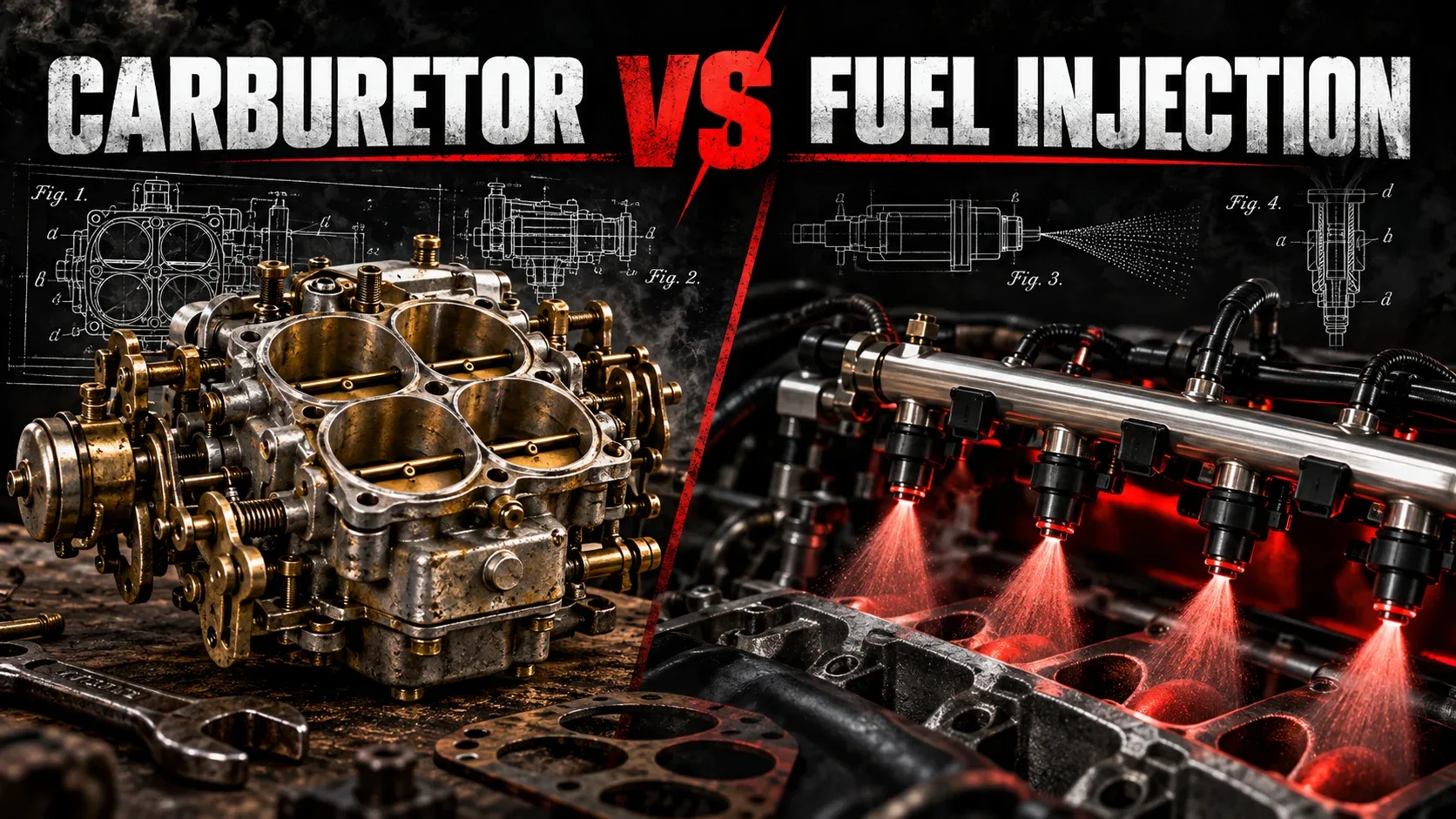
| Feature | Carburetor | Fuel Injection |
|---|---|---|
| Fuel control | Primarily mechanical | Electronically controlled |
| Precision | Good when correctly tuned | Highly precise |
| Cold starts | Uses a choke or enrichment circuit | Automatically controlled |
| Altitude adjustment | Limited or requires adjustment | Can compensate automatically |
| Emissions control | Less precise | Much more precise |
Famous Carburetor Brands and Designs
Different carburetor manufacturers became well known for particular vehicle types, regions and performance applications.
Holley became especially popular in American performance applications, while Weber gained a strong reputation in European vehicles and motorsport. Rochester and Carter supplied many American production cars, while SU and Solex carburetors appeared on numerous European models.
Are Carburetors Still Used Today?
Carburetors are uncommon in modern passenger cars, but they are still widely encountered in older and specialized equipment.
- Classic cars
- Historic race cars
- Some motorcycles
- Lawn equipment
- Portable generators
- Small utility engines
- Restoration projects
- Specialized racing applications
Carburetor History at a Glance
So, Who Really Invented the Carburetor?
The most accurate answer is that the carburetor was developed through a series of inventions and engineering improvements.
Early systems demonstrated that fuel vapor could be combined with air, while later engineers improved the process through jets, spray systems, float chambers and increasingly sophisticated metering circuits.
Wilhelm Maybach’s development of fine-jet spray carburetion became an important milestone in the evolution toward practical automotive carburetors.
Tom Ogle belongs to a much later period. Thomas Ogle did not invent the carburetor. Instead, he developed an experimental gasoline-vapor fuel-economy system during the 1970s.
Frequently Asked Questions
Who invented the carburetor?
The carburetor developed through the work of multiple inventors. Wilhelm Maybach’s fine-jet spray carburetion was an important milestone in the development of practical modern carburetors.
Was Tom Ogle the carburetor inventor?
No. Tom Ogle developed an experimental fuel-vapor system in the 1970s, many decades after carburetors were already widely used.
Who was Thomas Ogle?
Thomas Ogle, commonly known as Tom Ogle, was an American inventor associated with a fuel-economy system designed around gasoline vapor.
What did Tom Ogle invent?
He developed a vapor-oriented fuel-delivery system intended to improve the fuel economy of an internal-combustion engine.
Did Tom Ogle invent a 100 MPG carburetor?
Popular stories often associate Ogle with very high mileage figures, but these claims should be distinguished from standardized, independently repeated testing. His documented work involved a fuel-vapor economy system.
Why did fuel injection replace carburetors?
Fuel injection provides more precise fuel metering, better cold starting, improved emissions control and automatic adjustment to changing engine conditions.
Are carburetors still used?
Yes. They remain common in classic vehicles, some racing applications, motorcycles, generators and many small engines.