
A triangle with an exclamation point is often a general warning, not a diagnosis. Learn how to judge its urgency, find the related message, and decide what to do next.
What does the triangle with an exclamation point mean?
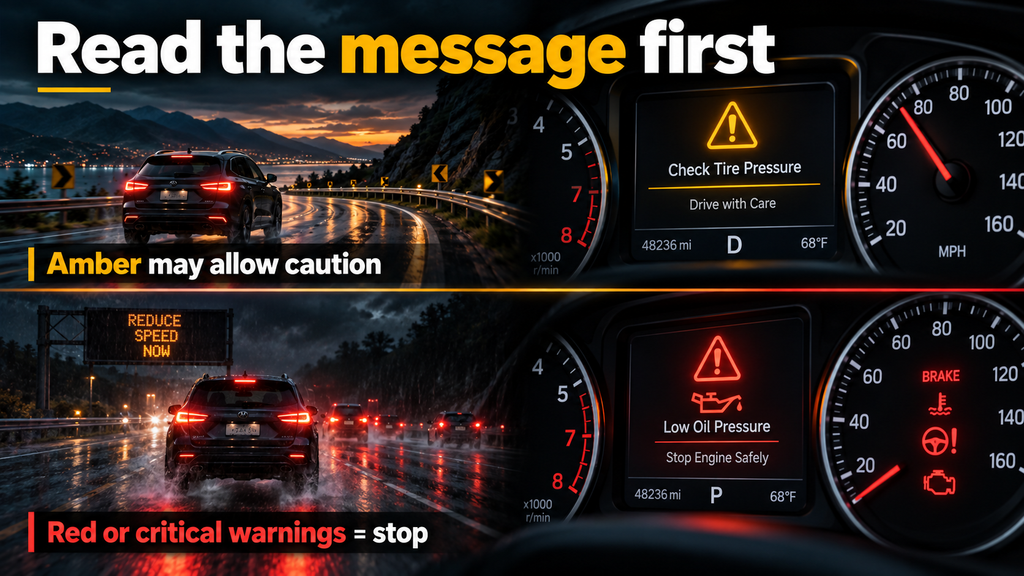
On many vehicles, a triangle car symbol with an exclamation point is a master warning indicator. It tells you the car wants your attention, but it does not always identify one system by itself.
The exact meaning depends on the warning color, the instrument-cluster message, other lights, and your vehicle’s owner’s manual. Read the display before assuming a specific repair.
Amber asks for attention. Red can ask you to stop.
Dashboard colors are not identical across every manufacturer, so use your owner’s manual as the final authority. In general, color helps you decide whether to plan a check or stop driving.
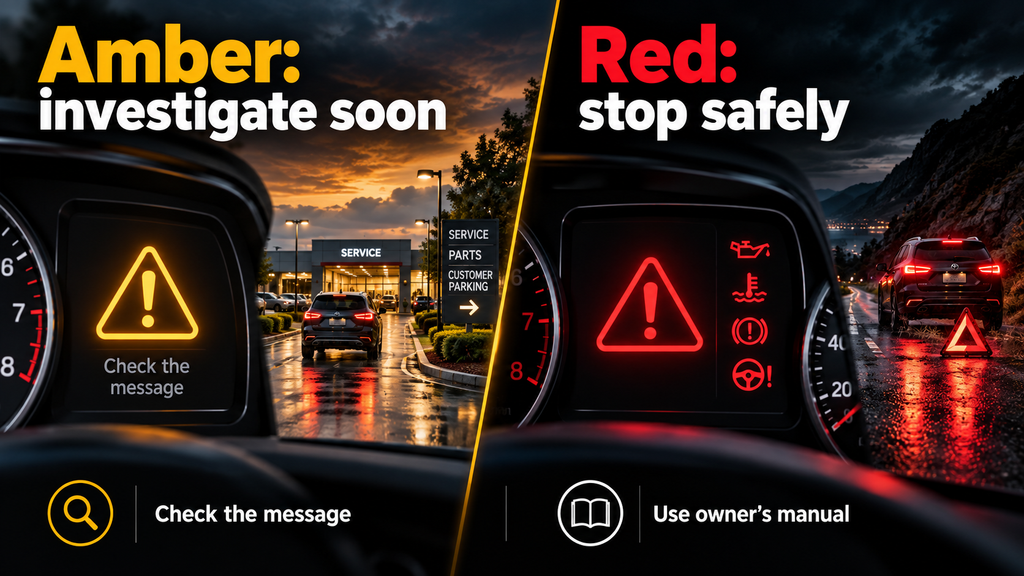
Amber / yellow: investigate soon
An amber triangle often means the vehicle has detected a condition needing attention soon. If there are no dangerous symptoms or critical companion warnings, drive carefully to a safe place, check the message, and arrange service if the warning remains.
Red: treat it as a potential stop-driving warning
A red triangle or red master warning can signal a more serious condition. Pull over safely and consult the message or manual. Do not continue driving when it appears with oil pressure, overheating, brake, steering, or severe engine symptoms.
Common contexts for a triangle warning

These examples are not a diagnosis. The accompanying dashboard message and your vehicle’s manual are the best starting points for finding the correct next step.
Tire-pressure alert
Low pressure, a puncture, a temperature-related pressure drop, or a tire-monitoring-system issue may trigger a related warning.
Low voltage or charging issue
A weak battery, charging-system problem, or electrical fault can produce multiple warnings. A battery icon or charging message increases the need for prompt diagnosis.
Traction or stability-control notice
A temporary traction-control event may flash while the system works. A steady service warning can indicate that stability or traction functions are limited.
Vehicle-system service reminder
A manufacturer may use the master warning light for a system-specific issue that needs service, including safety, emissions, lighting, or driver-assistance features.
What to do when the triangle warning appears

Avoid trying to repair a warning based on the icon alone. These practical checks help you gather useful information while staying within safe owner-level limits.
- Park safely, then take a photo of the triangle, every accompanying light, and the exact dashboard message before cycling the ignition.
- Check only obvious basics that your owner’s manual permits, such as tire condition and pressure, closed doors or hood, or a clearly displayed maintenance message.
- Notice how the vehicle feels. New pulling, weak braking, hard steering, smoke, overheating, rough running, or reduced power makes the warning more urgent.
- Use the owner’s manual for your exact make and model. If the message is unclear or a critical light is present, arrange professional inspection or roadside help.
Start with the message, not the triangle.
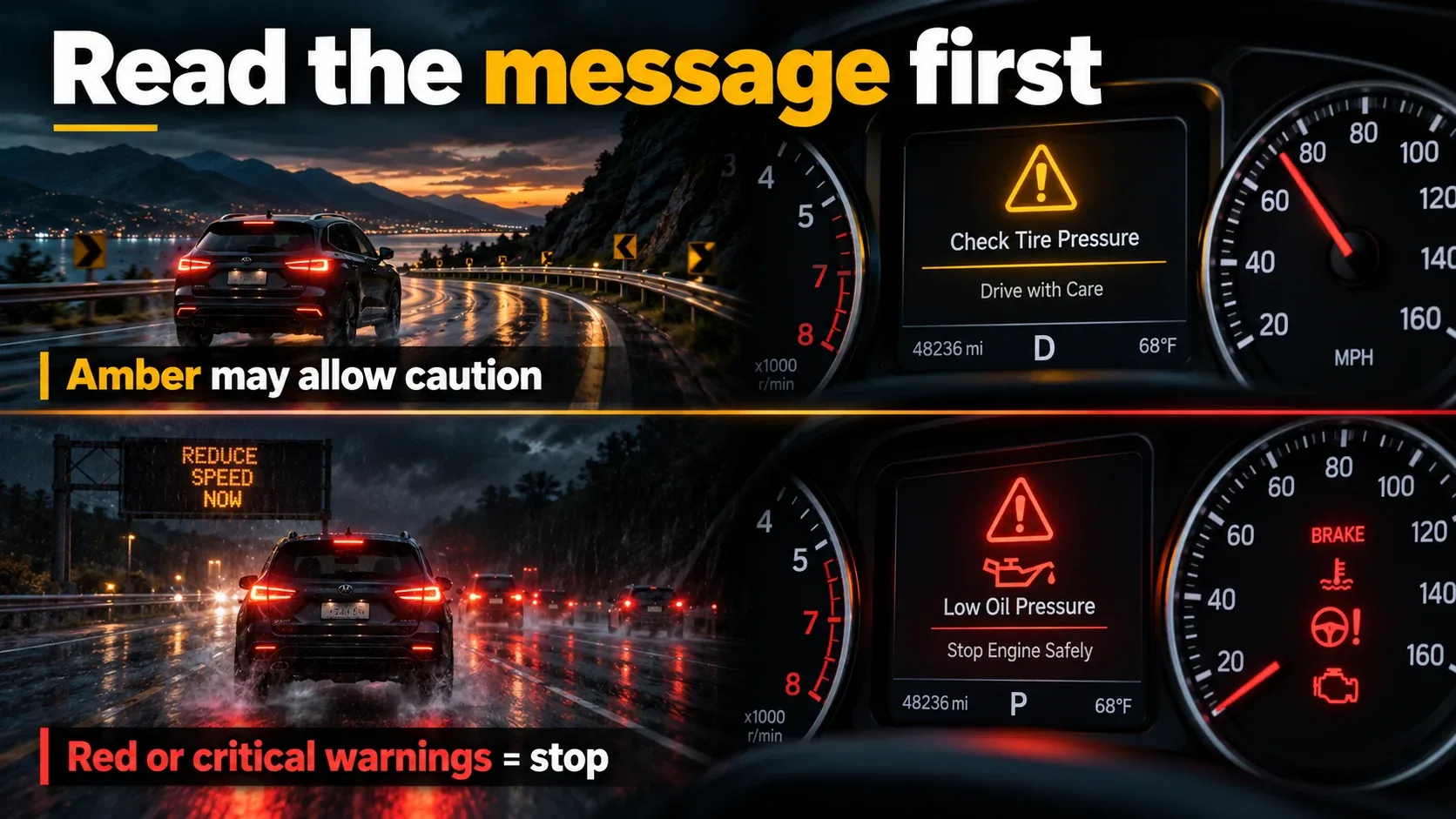
If the vehicle feels normal and the warning is amber, pull over when safe and read the display. Stop driving if the triangle is red or appears with brake, oil-pressure, overheating, steering, or severe engine warnings
Diagnostic codes narrow the problem — they do not automatically name the repair.
A suitable scan tool can read stored trouble codes and manufacturer-specific information. A technician uses those clues with testing and service procedures to identify the actual fault.
Pull over and get help if the warning appears with unsafe symptoms.
Do not keep driving if you see a red brake or oil-pressure warning, overheating message, flashing check-engine light, major power loss, smoke, strong burning smell, abnormal braking, or hard steering. Stop in a safe location and seek qualified assistance.
Triangle with exclamation point FAQ
Can I drive with a triangle and exclamation point on?
It depends on the warning color, dashboard message, companion lights, and how the vehicle feels. Limited cautious driving may be possible with an amber warning and no serious symptoms, but a red warning or a brake, steering, oil, overheating, or severe engine problem should be treated as a reason to stop safely.
What does the exclamation point mean in a car?
An exclamation point is commonly used to signal attention or caution. When it is inside a triangle, it often functions as a general or master warning. When it appears inside another shape, such as a tire or brake symbol, that surrounding symbol is usually more specific.
How do I find the exact meaning for my car?
Search your owner’s manual for the exact symbol or dashboard message using your vehicle’s make, model, and model year. If the manual does not clarify the issue, record the warning details and have the relevant vehicle systems checked by a qualified technician.