The engine block is more than an outer shell. Learn how this structural core holds the cylinders, supports the crankshaft, and channels oil and coolant through an engine.
An engine block is the main structural body of an internal-combustion engine. It contains the cylinders, supports the crankshaft, and includes internal passages for engine oil and coolant.
What is an engine block — and where is it?
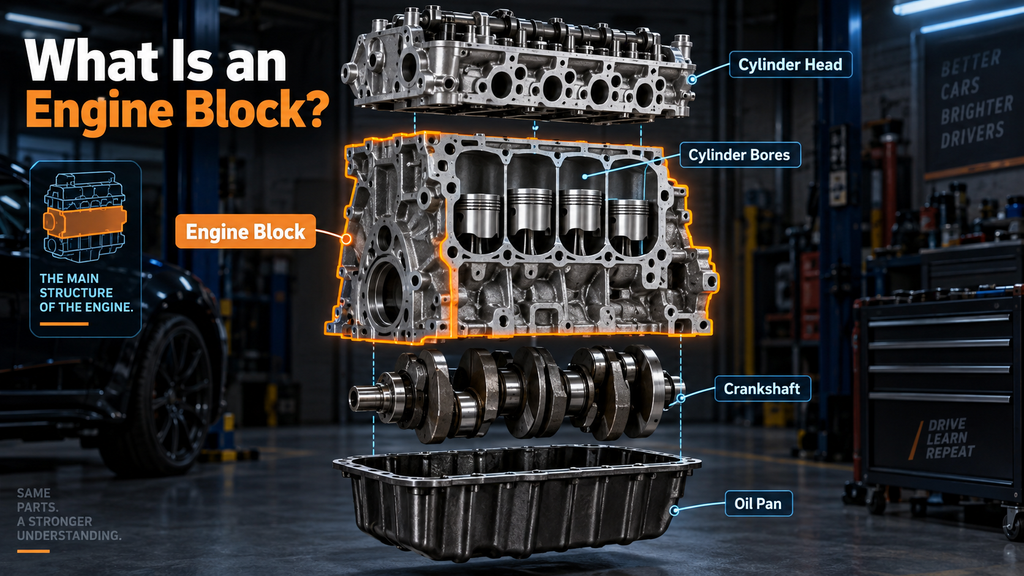
In most piston engines, the engine block is the substantial metal casting in the middle of the assembly. The cylinder head bolts to its top surface, while the oil pan attaches at the bottom. Inside the block, pistons travel in cylinder bores and the crankshaft rotates in precisely machined bearing locations.
Its exact shape changes with the engine layout: inline, V, flat, and other designs all package their cylinders differently. But the block’s job remains the same: provide a strong, accurately machined foundation for combustion and the rotating assembly.
The key parts built into an engine block
Although designs vary, these are the features technicians commonly inspect when evaluating the condition of an engine block.
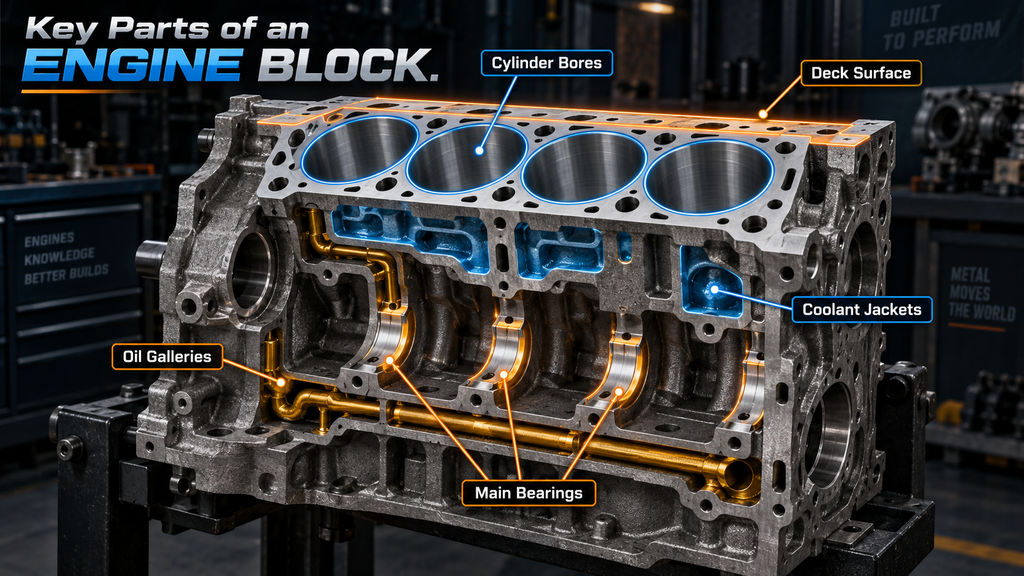
Cylinder bores
These precision-machined cylinders guide the pistons as they move up and down. Bore finish, roundness, taper, and clearance all affect ring sealing, oil control, compression, and service life.
Main bearing saddles and crankcase
Lower in the block, main bearing saddles locate and support the crankshaft. Their alignment is critical: the crankshaft must rotate smoothly while handling the forces created by combustion.
Oil galleries and coolant jackets
Cast and drilled passages move pressurized oil toward bearings and other components. Coolant jackets surround heat-producing areas to carry heat away. These internal routes are a major reason the block is far more than a simple casing.
Deck surface and mounting points
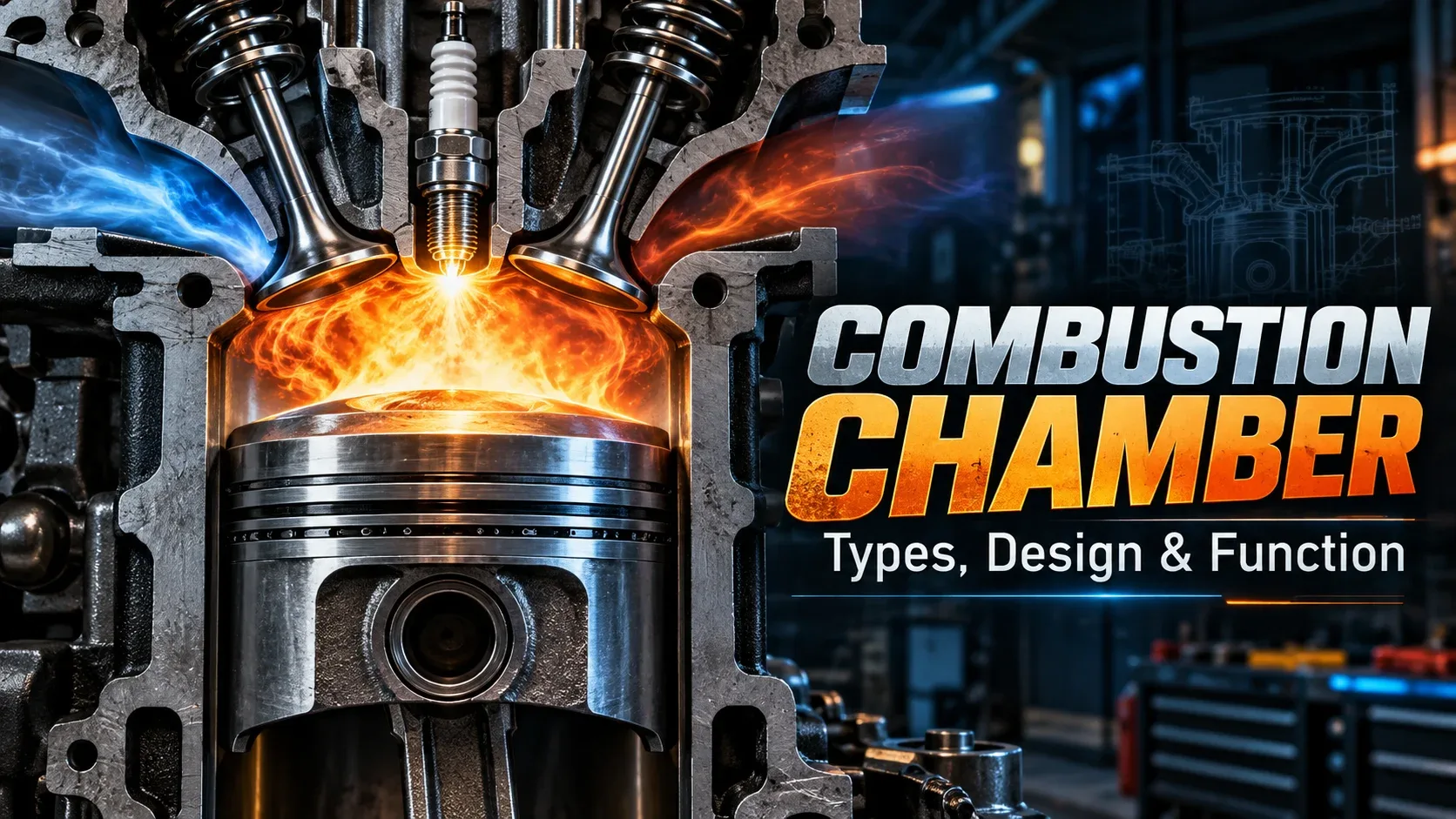
The block deck is the upper sealing surface for the head gasket and cylinder head. It also includes threaded holes, dowels, and mounting faces for accessories, transmission hardware, and engine mounts.
How the engine block works
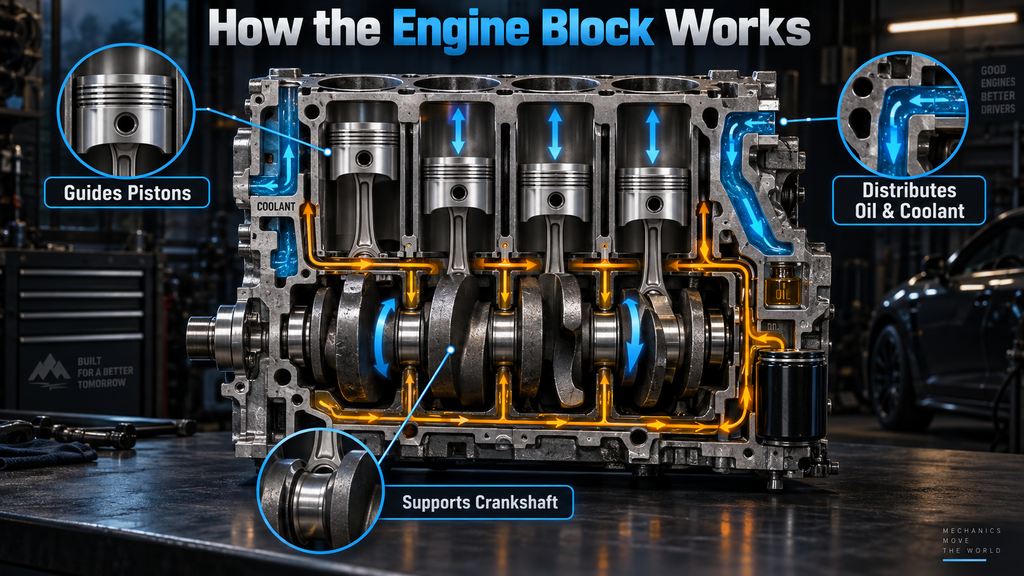
The block does not create power by itself; it enables the controlled environment and mechanical support that make power possible.
- It keeps each piston travelling in a controlled path inside its cylinder.
- It anchors the crankshaft so piston motion can be converted into rotating motion.
- It distributes oil and coolant to help control friction, wear, and temperature.
Engine block materials: cast iron vs. aluminum
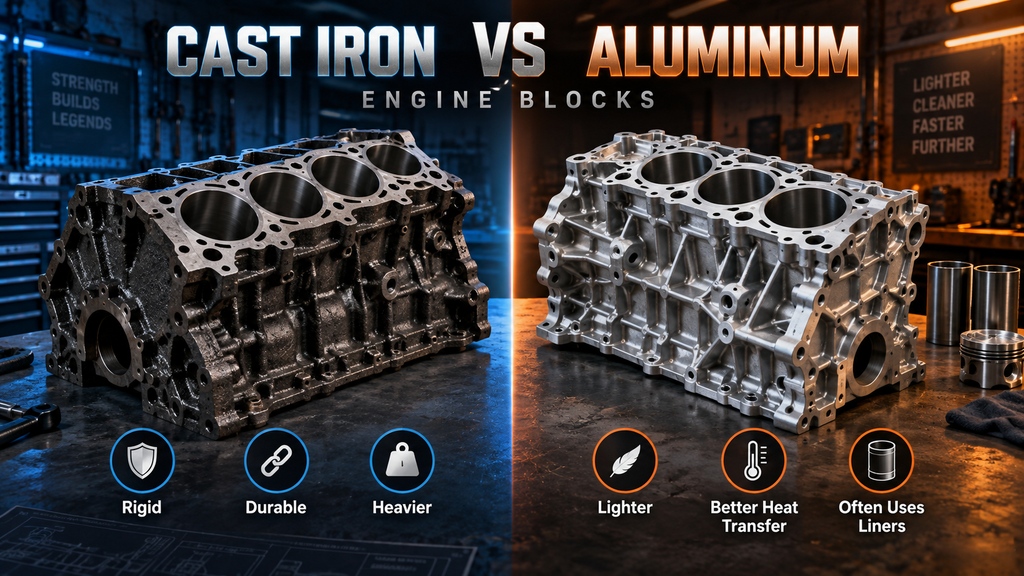
Most modern passenger vehicles use either cast iron or aluminum alloy blocks. Neither material is automatically “better”; the choice depends on engine design, intended use, cooling strategy, weight targets, liner design, and manufacturing requirements.
Cast iron blocks
Often valued for rigidity, wear resistance, and a long history of proven machining and rebuilding methods. The trade-off is generally more mass.
Aluminum blocks
Common where lower vehicle weight and heat transfer are priorities. Many designs use iron liners or specialized bore coatings to provide a durable cylinder surface.
Cylinder liners, also called sleeves, are replaceable or integral cylinder surfaces used in some blocks. Wet liners contact coolant directly; dry liners fit tightly into the block. Whether a block can be sleeved depends on its construction and the approved repair method.
What can go wrong with an engine block?
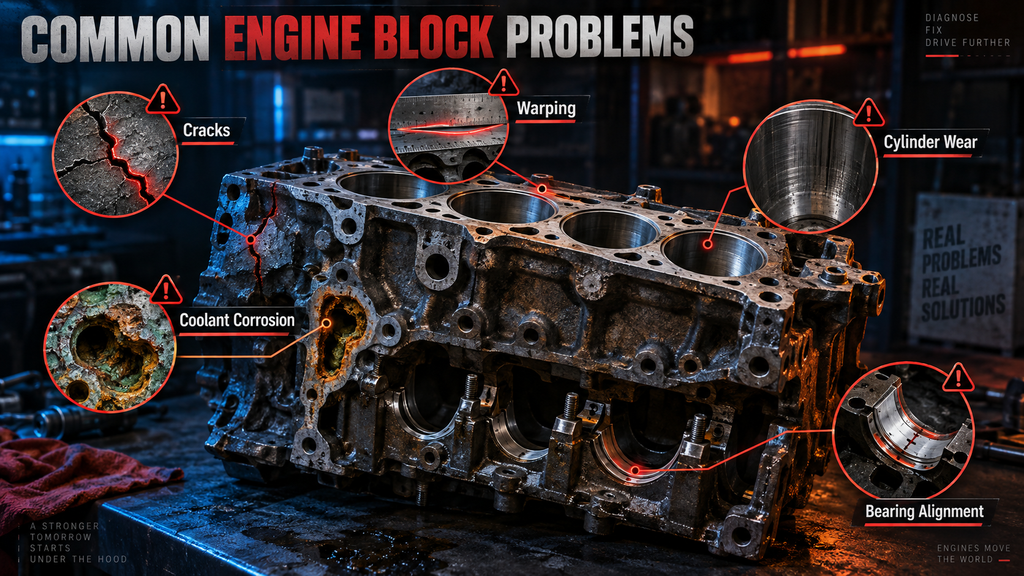
Cracks, warped surfaces, corroded coolant passages, scored cylinder walls, and main-bearing alignment problems can affect a block. Overheating, freezing coolant, poor lubrication, detonation, and severe mechanical failure are among the possible causes. However, symptoms alone do not confirm a block fault.
- Coolant loss or overheating may also point to hoses, a water pump, radiator, cylinder head, or head-gasket issue.
- Oil and coolant contamination can have multiple causes and needs proper testing before a repair decision.
- Low compression can result from valves, rings, pistons, head-gasket sealing, or cylinder wear—not only the block.
Can a damaged engine block be repaired?
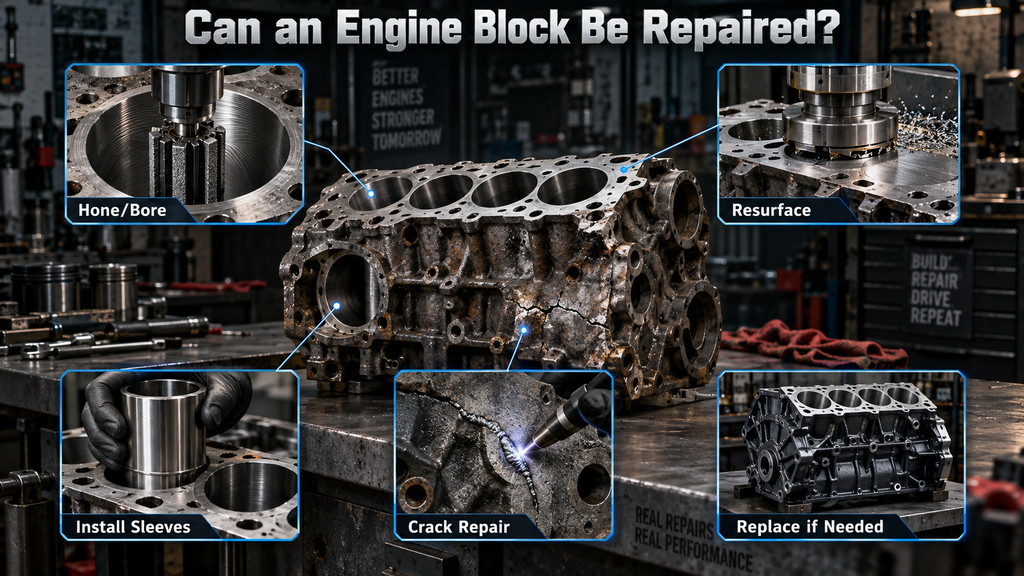
Sometimes. Depending on the material, damage location, and manufacturer limits, a machine shop may be able to hone or bore cylinders, resurface a deck, install sleeves, repair certain cracks, or align-hone bearing bores. In other cases, a replacement short block or complete engine is the more reliable path. A cracked block does not automatically mean replacement, but it does require an informed inspection before spending money on repairs.
Engine block FAQ
Is the engine block the same as the cylinder head?
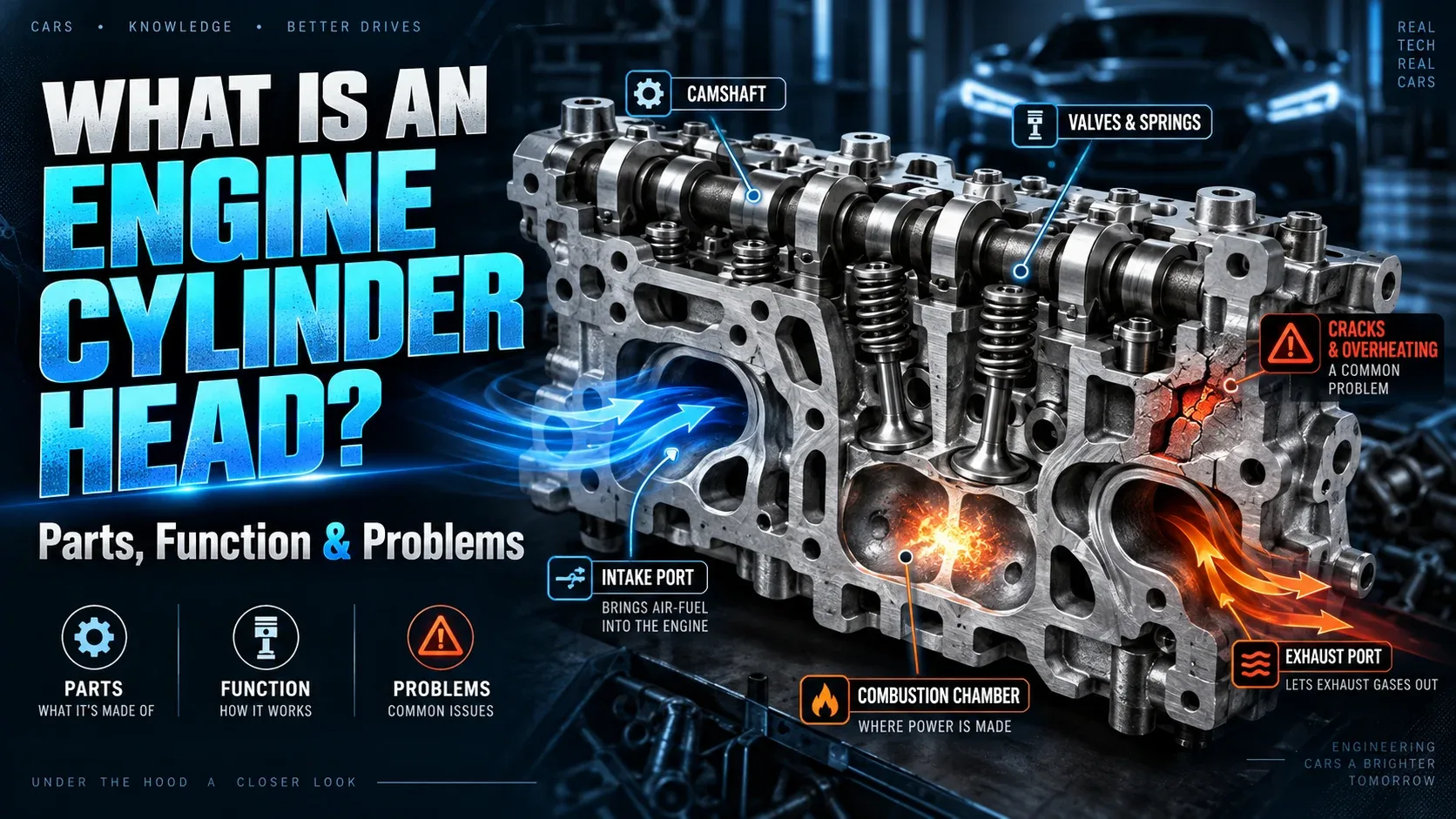
No. The block forms the lower structural body and contains the cylinders and crankshaft support. The cylinder head sits above it and commonly houses valves, combustion-chamber features, and camshaft-related components, depending on the engine design.
Can you drive with a cracked engine block?
It is not a good assumption to make. A confirmed crack can lead to coolant loss, overheating, oil contamination, or structural failure. Stop driving if the engine is overheating, losing coolant rapidly, or showing serious warning signs, and arrange a professional assessment.
What is a short block?
A short block generally refers to an engine block supplied with key internal rotating parts, commonly the crankshaft, rods, and pistons. Contents vary by supplier, so always check what is included before comparing prices or planning a rebuild.