
A flare nut wrench, also called a line wrench or brake line wrench, has a mostly enclosed head with a small opening for the tube. It grips more of a soft fitting than an open-end wrench, helping reduce the risk of rounding it.
What is a flare nut wrench?
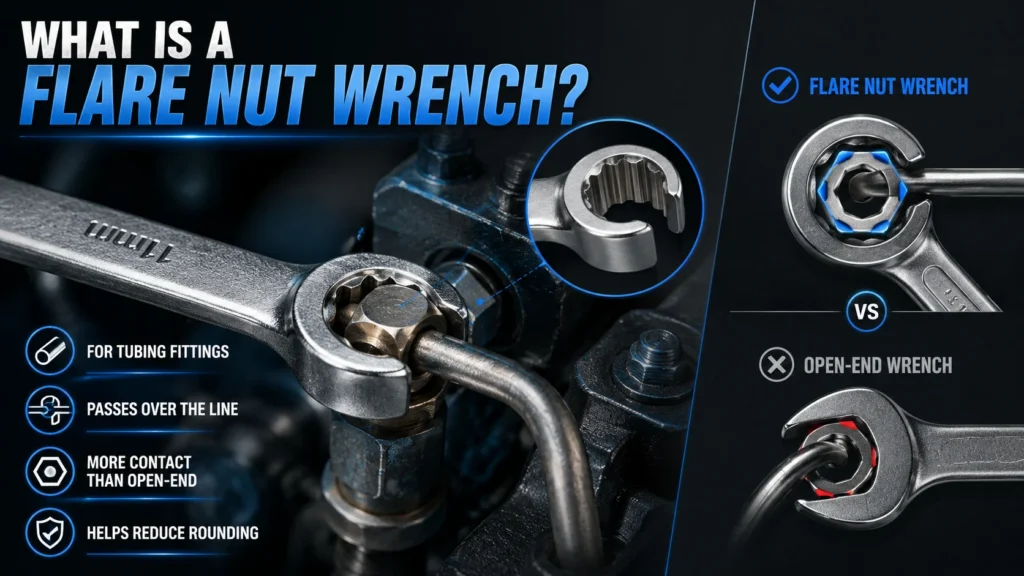
A flare nut wrench is a specialty wrench for fittings attached to tubing. Its head looks like a box end with a narrow slot cut into it, allowing the wrench to pass over a brake line, fuel line or hydraulic tube before seating on the nut.
The names flare nut wrench, flare wrench, line wrench and brake line wrench are often used for the same basic tool. The important feature is the partially enclosed head: it contacts more flats of the fitting than a normal open-end wrench while still providing side entry around the line. Many quality models use a six-point opening to load the flats broadly and reduce rounding; check the product specification because not every line wrench has the same jaw geometry.
Where line wrenches work best
Use a flare nut wrench whenever a tubing connection needs to be loosened without stressing or damaging the fitting. Common jobs include brake hoses at calipers and wheel cylinders, master-cylinder ports, fuel-system fittings, transmission cooler lines, power-steering connections and hydraulic equipment.
Good candidate
A brake line fitting at a caliper or wheel cylinder. The tube prevents a box wrench from slipping over the nut, while the flare nut wrench gives much more support than an open jaw.
Choose another tool first
A fitting that is already rounded, severely corroded or bonded in place. Repeated force can twist the tubing or destroy the nut; use penetrating oil, heat only where safe, or a fitting-specific removal method.
Flare nut wrench vs. open-end wrench
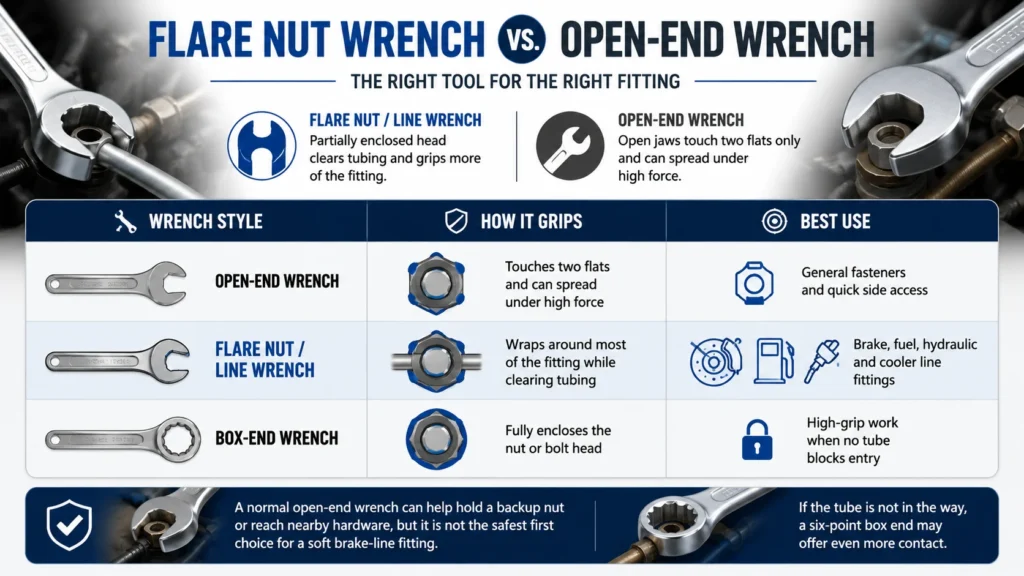
The best tool depends on the fitting and access. For most line fittings, the extra wraparound contact of a flare nut wrench is the main reason to reach for it first. Look for a six-point opening when protecting soft or corroded flats matters; 12-point profiles can make repositioning easier, but they present smaller contact areas and demand a precise fit. Angled heads, commonly around 15 degrees, can improve knuckle clearance and access.
| Wrench style | How it grips | Best use |
|---|---|---|
| Open-end wrench | Touches two flats and can spread under high force | General fasteners and quick side access |
| Flare nut / line wrench | Wraps around most of the fitting while clearing tubing | Brake, fuel, hydraulic and cooler line fittings |
| Box-end wrench | Fully encloses the nut or bolt head | High-grip work when no tube blocks entry |
A normal open-end wrench can be useful for holding a backup nut or reaching nearby hardware, but it is not the safest first choice for a soft brake-line fitting. If the tube is not in the way, a six-point box end may offer even more contact.
Common flare nut wrench sizes
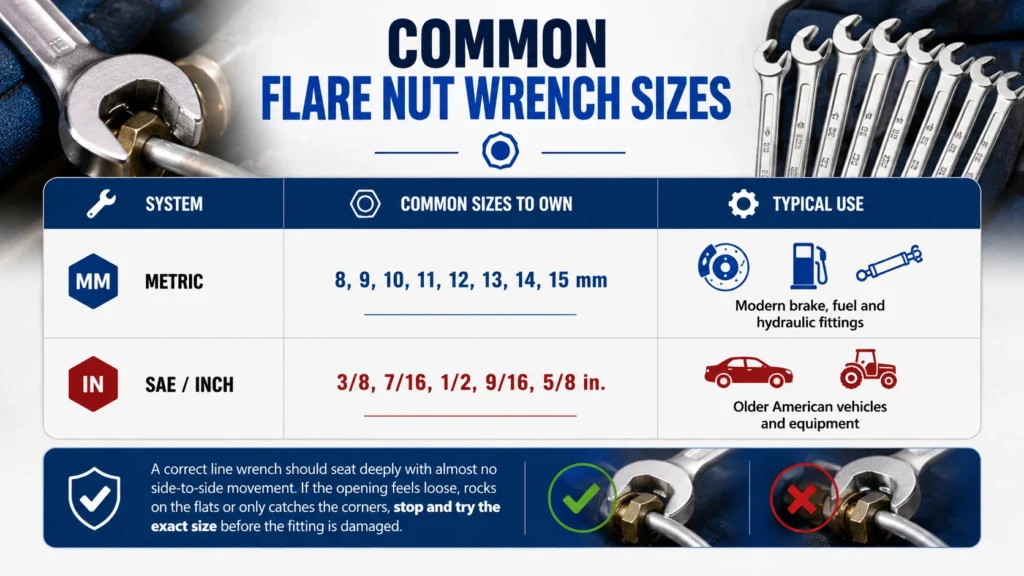
Always match the wrench to the fitting flats, not the tube diameter or thread size. Vehicle manufacturers vary, so check a service manual or test a clean-fitting wrench before applying force.
Useful starter ranges
| System | Common sizes to own | Typical use |
|---|---|---|
| Metric | 8, 9, 10, 11, 12, 13, 14, 15 mm | Modern brake, fuel and hydraulic fittings |
| SAE / inch | 3/8, 7/16, 1/2, 9/16, 5/8 in. | Older American vehicles and equipment |
A correct line wrench should seat deeply with almost no side-to-side movement. If the opening feels loose, rocks on the flats or only catches the corners, stop and try the exact size before the fitting is damaged.
How to loosen a line fitting without damage
Brush loose corrosion from the fitting, fit the exact wrench size and slide it fully over the line before seating the head on the nut. Support nearby tubing with your free hand where possible, then apply smooth, controlled pressure rather than a sudden jerk. In a tight space, use the smallest swing arc available: pull, stop, lift the wrench off, reposition it one increment and pull again. Do not drag the wrench around the fitting while loaded.
Do not force a seized brake or fuel line fitting
Penetrating oil and patience may help on corrosion, but excessive leverage can twist a steel line, crack a flare or round the nut. Keep brake fluid and fuel away from painted surfaces and ignition sources. Replace damaged fittings or tubing instead of forcing them to seal again.
If the fitting does not move, reassess before increasing force. Make sure the wrench is fully seated, use a backup wrench on the mating component when required, and follow the repair procedure for your specific vehicle or machine.
What to look for when buying flare nut wrenches

A good set of flare nut wrenches does not need to be oversized or complicated. For occasional brake and fuel work, accurate jaw openings and useful sizes matter more than a large number of specialty pieces. Useful designs include double-ended wrenches with two nearby sizes, offset or angled heads for clearance, and slim profiles for confined spaces.
- Choose metric, SAE or a combined set based on the vehicles and equipment you actually service.
- Look for a close-tolerance head with broad six-point-style contact around the fitting, rather than a thin, loose opening.
- Consider head thickness and handle length. Slim heads help with tight access, while a sensible handle gives control without encouraging excessive leverage.
- For frequent line work, buy a full set. For one repair, confirm the fitting size first and purchase a quality individual wrench if that is more practical.
Chrome-vanadium steel is a common durable material for these wrenches. A polished chrome finish is easy to wipe clean, while a satin or matte finish can reduce glare and make markings easier to read in a workshop. These are useful quality indicators, but fit is still the deciding factor: even a premium wrench can round a fitting if it is the wrong size or is not seated completely.
Frequently asked questions
Is a flare wrench the same as a line wrench?
Usually, yes. Flare wrench, flare nut wrench, line wrench and brake line wrench commonly describe the same partially enclosed wrench design made for tubing fittings.
Can I use an open-end wrench on a brake line fitting?
An open-end wrench may fit, but it supports fewer flats and is more likely to spread or round a soft fitting when force is needed. A properly sized brake line wrench is the safer first choice.
What should I do if the fitting starts to round?
Stop before the damage becomes severe. Clean the fitting, use penetrating oil if appropriate, reassess the size and consider replacing the line or fitting if it cannot be safely removed without further damage.