
A luggage-friendly, step-by-step guide to deciding whether Tokyo’s Airport Limousine Bus is the right arrival transfer for you.
Choose the limousine bus when your hotel or district is on its route and you want the simplest luggage transfer.
Airport Limousine Bus services link Haneda and Narita with major Tokyo stations, business districts, and selected hotels. They are especially useful after a long flight, with children, or when you would rather not change trains with suitcases.
What is the Airport Limousine Bus?
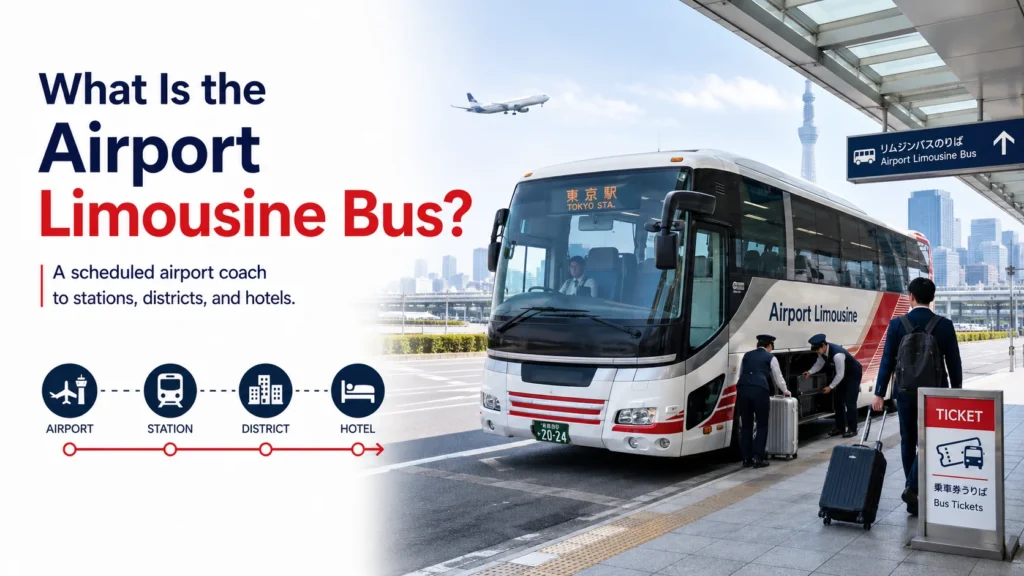
Despite the name, this is a scheduled airport coach service, not a private limousine. You buy a ticket for a specific destination, check your bags into the under-floor hold, and ride directly to a station, district stop, or participating hotel.
The easiest route is often not the fastest on paper. A direct coach can save effort when the alternative involves multiple train platforms, lifts, and a walk from the station to your accommodation.
Haneda Airport limousine bus: common Tokyo routes
Haneda is relatively close to central Tokyo, so limousine bus travel can be straightforward for hotel areas such as Shinjuku, Shibuya, Tokyo Station, Ginza, Shinagawa, and Tokyo Disney Resort. Exact destinations vary by terminal, day, and operating period.
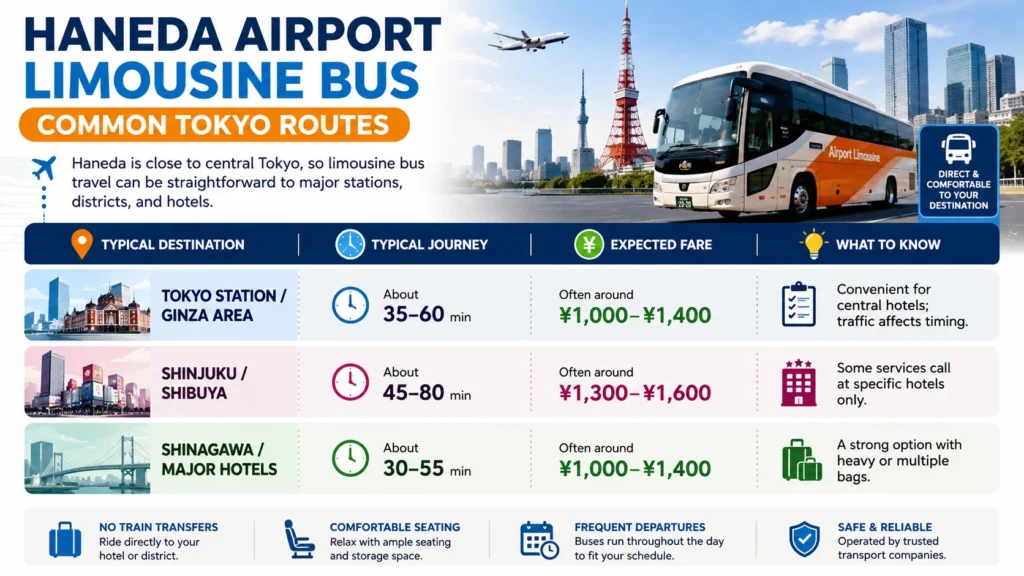
| Typical destination | Typical journey | Expected fare | What to know |
|---|---|---|---|
| Tokyo Station / Ginza area | About 35–60 min | Often around ¥1,000–¥1,400 | Convenient for central hotels; traffic affects timing. |
| Shinjuku / Shibuya | About 45–80 min | Often around ¥1,300–¥1,600 | Some services call at specific hotels only. |
| Shinagawa / major hotels | About 30–55 min | Often around ¥1,000–¥1,400 | A strong option with heavy or multiple bags. |
Planning note: fares and journey times are guide ranges, not promises. Confirm your arrival terminal and your hotel stop before travel; late-night and early-morning coverage can be limited.
Narita Airport limousine bus: routes worth checking
Narita is farther from Tokyo, which makes the coach attractive when it delivers you near your final hotel. It serves many central districts and selected hotels, but a rail option can be quicker if you are comfortable navigating stations.
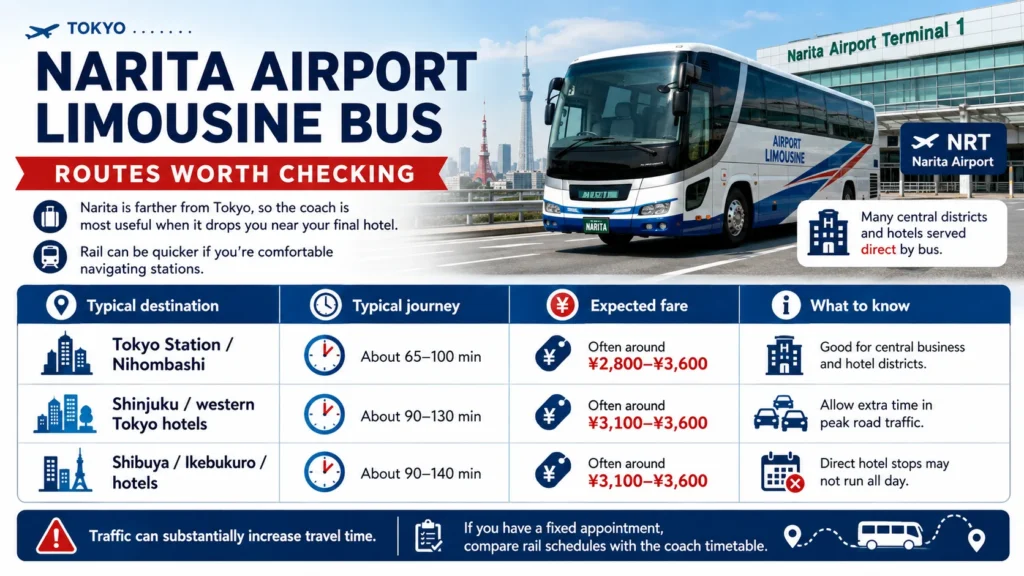
| Typical destination | Typical journey | Expected fare | What to know |
|---|---|---|---|
| Tokyo Station / Nihombashi | About 65–100 min | Often around ¥2,800–¥3,600 | Good for central business and hotel districts. |
| Shinjuku / western Tokyo hotels | About 90–130 min | Often around ¥3,100–¥3,600 | Allow extra time in peak road traffic. |
| Shibuya / Ikebukuro / hotels | About 90–140 min | Often around ¥3,100–¥3,600 | Direct hotel stops may not run all day. |
Narita routes can take substantially longer during road congestion. If you have a fixed appointment, compare the scheduled rail options as well as the coach timetable.
How to buy tickets and board without stress
01 / AFTER ARRIVAL
Collect bags first
Clear immigration and collect checked luggage before heading to the bus ticket counter or machine.
02 / MATCH YOUR STOP
Show your hotel name
Ask staff to confirm the exact stop. Similar hotel names and nearby stations can be confusing.
03 / BOARD THE COACH
Keep your ticket handy
Proceed to the numbered stop shown on your ticket and keep the baggage claim tag until arrival.
Reservation requirements differ by route. Some services accept walk-up passengers when seats remain, while others require or strongly recommend advance booking. For a late arrival, check the final departure after allowing realistic time for immigration and baggage collection.
Limousine bus vs train vs taxi
Airport Limousine Bus

Best for direct hotel-area service, larger luggage, families, and travelers who value an easy arrival over the fastest possible journey.
Train
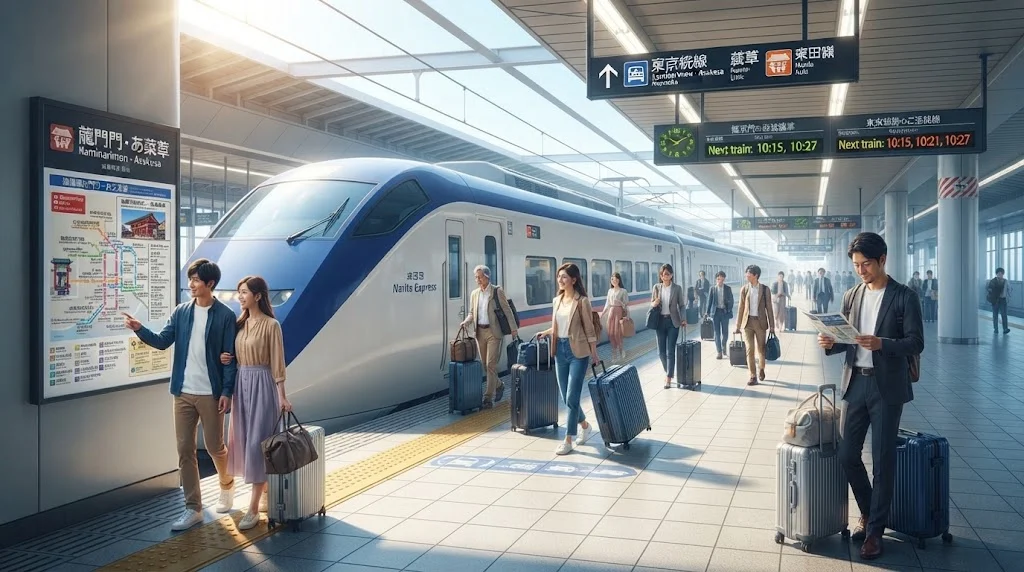
Often faster and more frequent, particularly from Narita. Best when your accommodation is close to a rail station and you are comfortable with transfers.
Taxi or private transfer
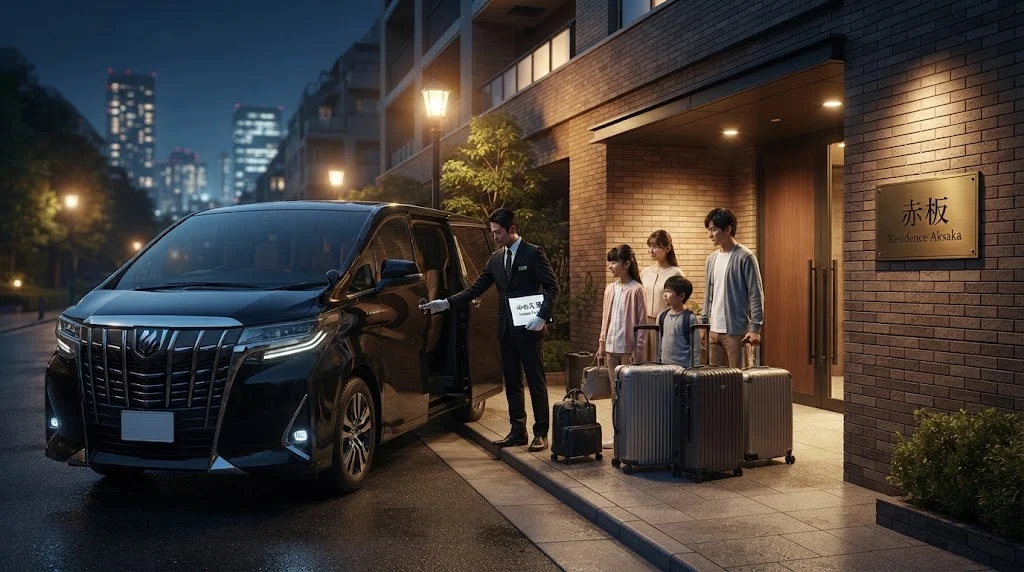
Most door-to-door, but usually far more expensive for central Tokyo—especially from Narita. Useful for groups, inaccessible luggage situations, or very late arrivals.
Terminal stops, payment, luggage, and late arrivals
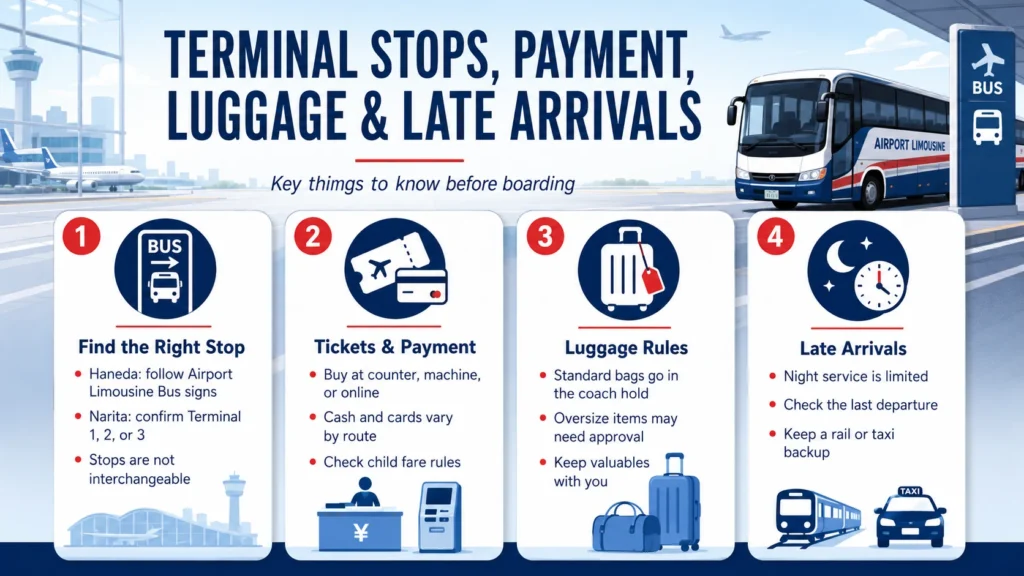
Find the right terminal stop
At Haneda, follow signs for Airport Limousine Bus and check the terminal-specific stop shown on the airport transport map. At Narita, confirm Terminal 1, 2, or 3 before buying; stops and counters are not interchangeable. Allow time to walk from arrivals, especially after baggage claim.
Tickets and payment
Buy at an airport counter, ticket machine, or approved online channel. Payment methods vary by counter and route: cash, cards, and some transport IC cards may be accepted, but do not rely on one method. Child fares, age bands, and whether a child needs a separate seat vary by service—check the current rule when booking. Online vouchers may still need exchange before boarding.
Luggage rules
Standard suitcases are usually placed in the coach hold and tagged by staff. Capacity is limited, so oversized baggage, bicycles, strollers, sports gear, and unusually large quantities may need advance approval or may be refused. Keep valuables and essentials with you.
Night service is limited
There is no guarantee of an overnight coach. Check the last departure for your arrival date after allowing for immigration and bags. If you land late, keep a rail, taxi, or hotel-transfer backup rather than assuming the next bus will run.
Airport limousine bus FAQ
Does the limousine bus stop directly at my hotel?
Only selected hotels are served directly, and service may vary by route and time of day. Search your exact hotel on the official route finder rather than assuming that a nearby hotel is included.
How much luggage can I bring?
Checked baggage allowances and size limits differ by operator and route. Most travelers can check standard suitcases, but oversized items, sports equipment, and unusually high bag counts may be restricted. Verify the current luggage policy before departure.
What if my flight is delayed?
A delayed arrival can mean missing your planned coach. Do not assume a later ticket or final service will be available; check the day’s remaining departures and keep a rail or taxi backup plan for late-night arrivals.