
Key Takeaways
- Nashua Tires helps drivers choose tires based on vehicle specifications, driving conditions, budget, and performance priorities.
- Local tire service includes inspections, repairs when appropriate, installation, balancing, rotation, and wheel alignment.
- Proper pressure, tread checks, and regular maintenance can support safer handling and more even tire wear.
- Drivers can request a more accurate quote by providing vehicle details, tire size, driving needs, and any symptoms they have noticed.
Finding the right tires is about more than locating the lowest price. Drivers searching for tires Nashua NH often need clear answers about tire size, tread condition, seasonal traction, installation, and the services that may help protect their investment after purchase.
Nashua Tires, part of Gurney’s Automotive Repair, has served Nashua drivers since February 11, 1985. The team helps customers sort through practical questions, including whether a vehicle needs replacement tires now, a repair, a rotation, balancing, or an alignment.
How Does Nashua Tires Help Drivers Find the Right Tires?
Tires influence braking, cornering, traction, ride comfort, and stability because they are the only components connecting a vehicle to the road. Instead of treating every tire purchase the same, Nashua Tires considers how the vehicle is used. A daily highway commuter, a family SUV used for weekend travel, and a light truck carrying equipment may require very different priorities.
The selection process can account for the vehicle manufacturer’s recommendations, annual mileage, road conditions, winter driving, load requirements, ride comfort, noise level, expected tread life, and budget. The most expensive tire is not automatically the best fit. A worthwhile choice matches the driver’s real needs without sacrificing proper fitment or safety.
When Might a Driver Need New Tires?
Warning Signs Worth Checking
A tire inspection may be appropriate when a driver notices reduced grip, a persistent vibration, steering pull, road noise, or repeated air loss. Visible problems also matter. Cracks, cuts, bulges, punctures, and unusual wear patterns can indicate that a tire needs professional attention.
- Tread that is worn close to the replacement point.
- More wear on one edge, in the center, or in patches across the tread.
- Sidewall damage, cracks, or a raised bulge.
- A tire that continually loses air pressure.
- Vibration, pulling, or a change in handling.
- Older tires on vehicles that are driven infrequently.
Appearance alone does not always reveal internal concerns or age-related deterioration. The federal tire safety guidance explains that tires should be replaced when the tread reaches 2/32 of an inch, while irregular wear and physical damage deserve prompt attention. A professional inspection can turn those findings into a clear recommendation rather than a guess.
Which Tire Types Can Nashua Tires Help Compare?
The right tire type should reflect New Hampshire weather, vehicle requirements, and daily driving habits. Nashua Tires can help drivers compare options such as:
- All-season tires: A practical option for drivers who want dependable everyday performance in varied conditions, including rain and light snow.
- Winter tires: A focused choice for drivers who regularly face snow, ice, freezing temperatures, and difficult winter roads.
- Passenger-car tires: Designed for sedans, coupes, minivans, and family vehicles, often with an emphasis on comfort, mileage, and responsive handling.
- SUV and light-truck tires: Built to address the needs of heavier vehicles, utility use, load capacity, traction, and varied road surfaces.
Nashua Tires carries multiple recognized tire brands, including Michelin, BFGoodrich, and Uniroyal. Comparing several suitable options lets a driver weigh wet traction, winter capability, road noise, comfort, tread-life expectations, available promotions, and price without assuming one brand is best for every vehicle.
How Is the Correct Tire Size Confirmed?
Correct tire fitment starts with the vehicle, not a visual guess. Drivers can usually find original tire size and inflation information on the driver-side door-jamb label, in the owner’s manual, or on the existing tire sidewall. A size such as 205/55R16 89H communicates width, aspect ratio, radial construction, wheel diameter, load index, and speed rating.
Nashua Tires can verify the recommended size, load rating, and appropriate tire options before installation. This matters because a tire that looks similar may not be suitable for the vehicle’s intended handling, load capacity, or wheel fitment.
What Tire Services Are Available After Purchase?
A dependable tire shop should support drivers beyond the day new tires are installed. Nashua Tires offers tire inspections, flat repairs when appropriate, mounting and balancing, rotations, wheel alignments, and new tire installation.
Balancing helps wheels rotate smoothly and may address vibration. Alignment helps reduce pulling and can limit uneven wear caused by wheels that are not pointing in the proper direction. Rotation patterns and intervals depend on the vehicle, tire setup, and manufacturer recommendations, although many vehicles benefit from rotation around every 5,000 to 8,000 miles.
How Can Tire Maintenance Help Control Costs?
Consistent care can help tires wear more evenly and perform as intended. Drivers should check tire pressure monthly when tires are cold, inspect tread and sidewalls, and respond quickly to dashboard tire-pressure warnings. Proper inflation, rotation, balance, and alignment may help avoid premature wear and unexpected tire trouble.
Routine tire care can also support fuel efficiency. Properly inflated tires may improve fuel economy and extend service life, though exact savings vary by vehicle, driving habits, road conditions, and maintenance history. Nashua Tires also promotes ongoing vehicle care with a free fifth oil service for qualifying customers.
What Should Be Included in a Tire Quote Request?
A detailed request gives the shop the information needed to provide useful options. When contacting Nashua Tires, include:
- Vehicle year, make, model, and trim.
- Current tire size, if known.
- Typical mileage and driving conditions.
- Whether the vehicle is used for commuting, family travel, towing, or light utility work.
- Any vibration, pulling, leaks, noise, or uneven tread wear.
- Your preferred tire type, budget range, or brand preference.
- Whether you need installation, repair, balancing, alignment, or rotation.
Where Can Drivers Find Nashua Tires?
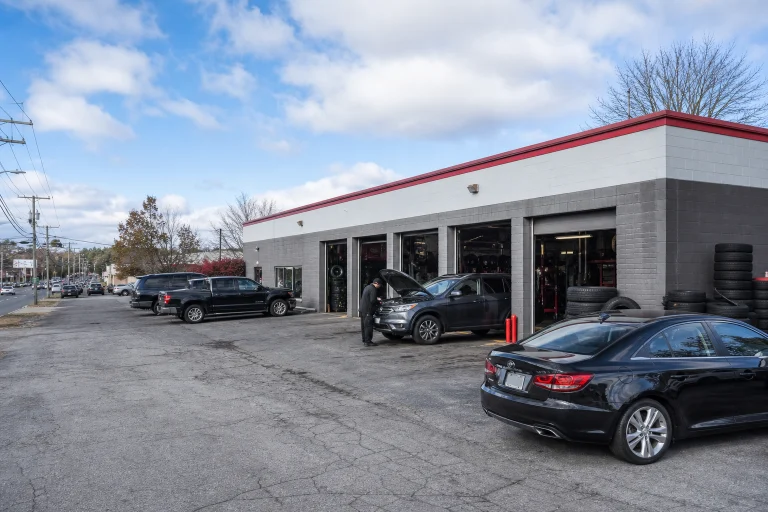
Nashua Tires is located at 83 Broad Street in Nashua, New Hampshire, and can be reached at 603-886-5800. A related Milford location is at 419 Elm Street. Calling ahead is a practical way to confirm appointment availability, tire inventory, and the services your vehicle needs.
Frequently Asked Questions
Can Nashua Tires help if I am not sure which tires I need?
Yes. The team can review vehicle details, driving conditions, tire size, budget, and performance priorities to help narrow the options.
Can worn tires sometimes be repaired instead of replaced?
Some punctures may be repairable, depending on their location and the tire’s overall condition. Damage, severe wear, sidewall issues, or age-related concerns may require replacement instead.
Why should I schedule an alignment?
An alignment can be useful when the vehicle pulls, the steering wheel is off-center, or the tires show uneven wear. Correcting alignment concerns may help extend tire life.
In Summary
Drivers in Nashua do not have to make tire decisions based on price alone. Nashua Tires offers local guidance from inspection and selection through installation and long-term maintenance. By sharing accurate vehicle information and addressing tire concerns early, drivers can make more confident choices for everyday commuting, family travel, winter driving, and light-truck use.