
A practical guide to the parts of a car door what each component is called, where it sits, what it does, and which problems it can cause.
Car door parts diagram, decoded
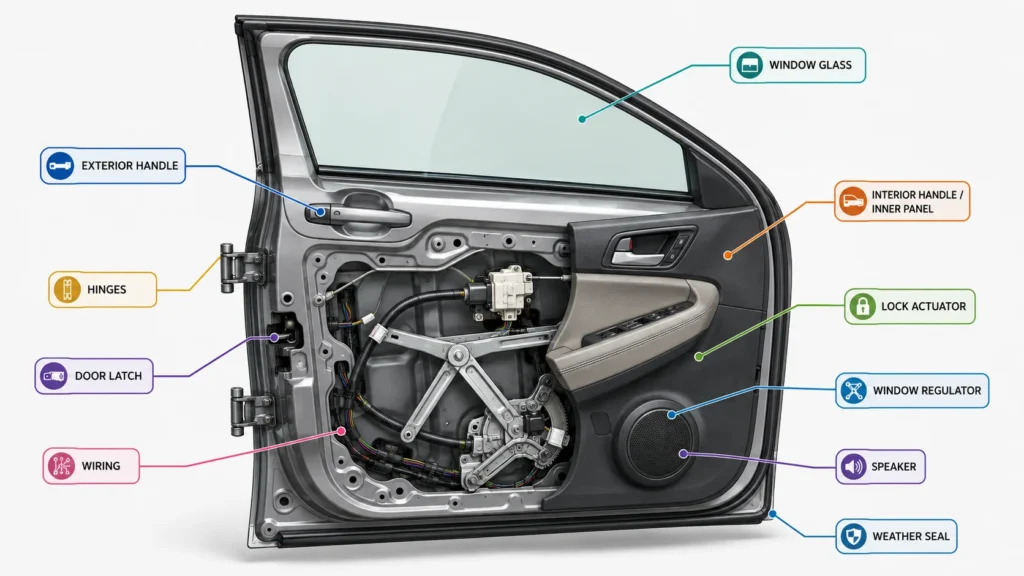
This simplified cutaway shows the components most people mean when they search for car door parts. Exact shapes vary by make, model, and door design.
The main car door parts and what they do
A car door is more than an outer skin and handle. It is a hinged body structure containing the glass, lock mechanism, electrical connections, sound system, and water barriers.
Outer door panel
The painted outer shell you see from outside. It provides the door’s visible shape and is often repaired after dents, corrosion, or collision damage.
Exterior & interior handles
The exterior handle starts an opening request from outside; the interior handle releases the latch from inside. Both may connect by rod, cable, or electronic switch.
Door latch
The mechanical unit on the door edge that physically holds the door closed by gripping the striker mounted on the vehicle body.
Door lock actuator
An electric motor or solenoid that locks and unlocks the latch mechanism. It does not hold the door shut—that is the latch’s job.
Window regulator & motor
The regulator is the mechanism that moves the glass. On powered windows, the motor supplies the force that drives it.
Weatherstripping & seals
Rubber seals around the frame and glass that limit wind noise and water entry while helping guide the window as it moves.
How the door opens, stays open, and closes
These four parts work together every time you use the door. Keeping their roles separate makes troubleshooting much easier.
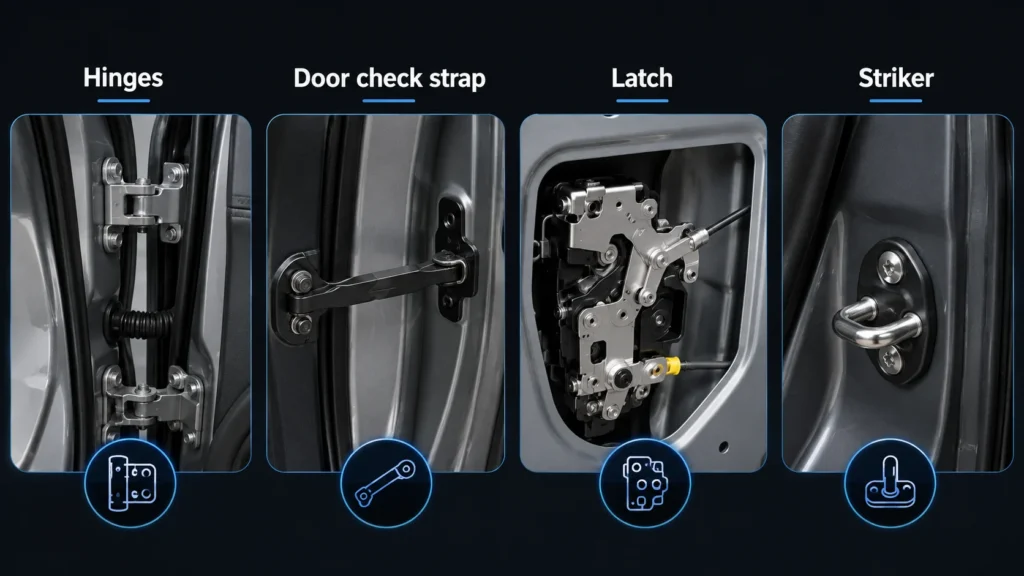
Hinges
Body-mounted pivots that carry the door’s weight and let it swing. Sagging doors can point to worn hinge pins or alignment issues.
Door check strap
A limiting arm that stops the door from opening too far and often holds it at set positions. A pop or clunk may signal wear here.
Latch
A rotating claw-like mechanism on the door edge. When it catches the striker, it physically secures the door to the vehicle.
Striker
The reinforced loop or pin fixed to the body opening. The latch grabs this part, not the other way around.
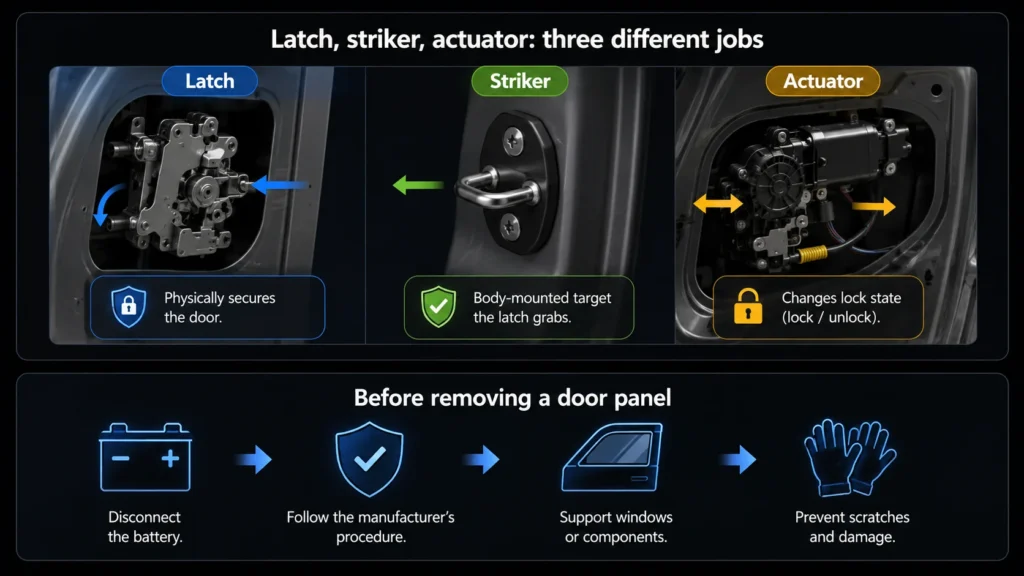
Latch, striker, actuator: three different jobs
The latch physically retains the door. The striker is the body-mounted target it catches. The lock actuator changes whether the latch can be released by a handle or remote command. If a door will not lock, the actuator may be involved; if it will not stay closed, inspect the latch and striker first.
Before removing a door panel
Disconnect the battery when working near electrical connectors, and follow the manufacturer’s procedure around side-impact airbags. Support window glass before loosening a regulator. A service manual for your exact vehicle is the safest reference for torque values, clips, and wiring steps.
Part name, job, and a useful fault clue
Door latch
Holds door to strikerDoor bounces open or will not release
Lock actuator
Locks or unlocks latchClicking, weak lock, or one door ignores remote
Window regulator
Raises and lowers glassGlass tilts, jams, or drops inside door
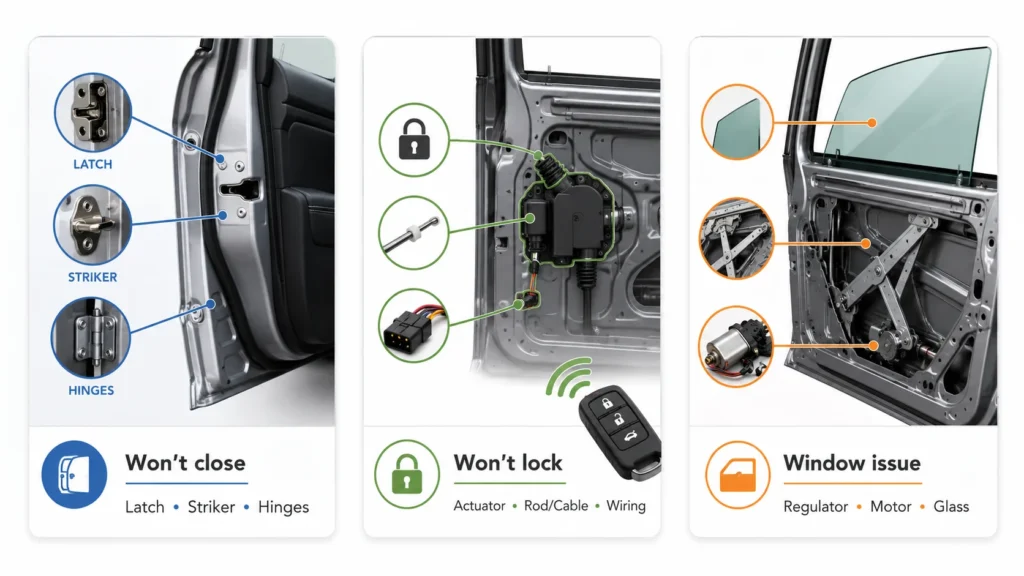
Match the symptom to the likely component
Door will not close or pops open
Look first at the latch, striker alignment, and door hinges. A latch stuck in the closed position can also prevent a door from catching the striker correctly.
Door will not lock or unlock
A failed actuator, broken cable or rod, damaged switch, wiring fault, or frozen latch can all create this symptom. Listen for actuator movement when using the remote.
Window moves slowly, tilts, or falls
Common causes include a worn regulator, weak motor, broken regulator cable, dry window run channels, or glass that has slipped from its mounting clips.
Car door parts FAQs
What is the most important part of a car door?
The latch is central to safe closure because it grips the striker and keeps the door attached to the vehicle body. Handles, locks, and actuators control how that latch is released.
What is the difference between a door latch and a lock actuator?
The latch physically holds the door closed. The lock actuator is the powered device that changes whether the latch can be released by the handle or remote.
Why is my car window stuck inside the door?
A worn regulator, failed motor, broken cable, damaged glass clips, or dry window channels can stop the glass from moving correctly. Avoid forcing the switch until the mechanism is inspected.
Should I remove my car door panel myself?
Basic trim work may be manageable, but disconnect the battery and follow the exact service procedure when side-impact airbags, wiring, or supported window glass are involved.