
The best drill bit for concrete is the one that matches your drill, anchor size, material and workload—not automatically the most expensive bit on the shelf.
For small anchor holes, start with a carbide masonry bit; for frequent or demanding concrete work, move to the correct SDS rotary-hammer system.
A masonry bit can fit a regular chuck, but performance depends on the drill and material. Standard bits suit occasional holes; SDS-Plus bits suit compatible rotary hammers and repeated drilling. SDS-Max is for larger, heavier-duty work. Always verify the bit’s material rating and the fastener maker’s required hole diameter and depth.
How this guide evaluates concrete drill bits
This is a research-led buying guide, not a claim that every bit listed was physically field-tested by this publication. The recommendations are organized around official intended-use information, shank compatibility, carbide head design, flute design, hole size and normal job demands.
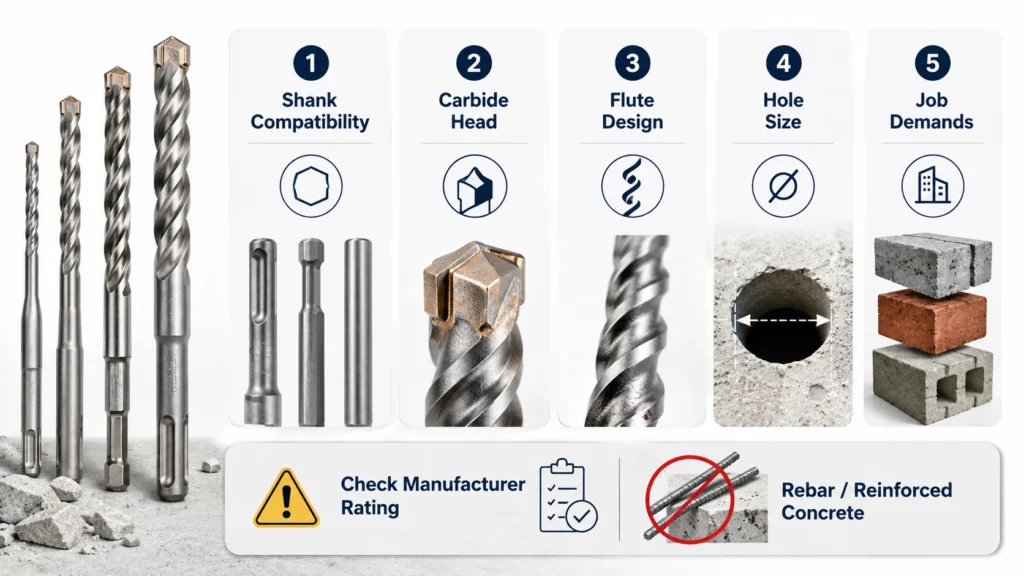
Before buying, confirm the exact current product rating on the manufacturer’s page or packaging. In particular, do not assume that every carbide bit is rated for reinforced concrete or rebar contact.
Choose the bit type before choosing the brand
This table is a practical starting point, not a substitute for the exact instructions supplied with your drill bit, rotary hammer and anchor. The shank system must match your tool.
| Bit type | Best for | Tool required | Typical user |
|---|---|---|---|
| Carbide masonry bit | Small concrete and masonry holes | Drill or hammer drill with standard chuck | DIY |
| SDS-Plus bit | Repeated anchoring and general concrete drilling | SDS-Plus rotary hammer | DIY / professional |
| Multi-cutter SDS bit | Hard concrete and accurate anchor holes | Compatible rotary hammer | Professional |
| SDS-Max bit | Large-diameter or deep holes | SDS-Max rotary hammer | Heavy-duty trade |
| Rebar-capable bit | Specified reinforced-concrete applications | Compatible rotary hammer | Professional |
Best drill bits for concrete, by job
Use these categories to narrow the field. A specific product is only a good buy when its shank fits your drill, its diameter fits the fastener instructions and its stated material rating fits the substrate.
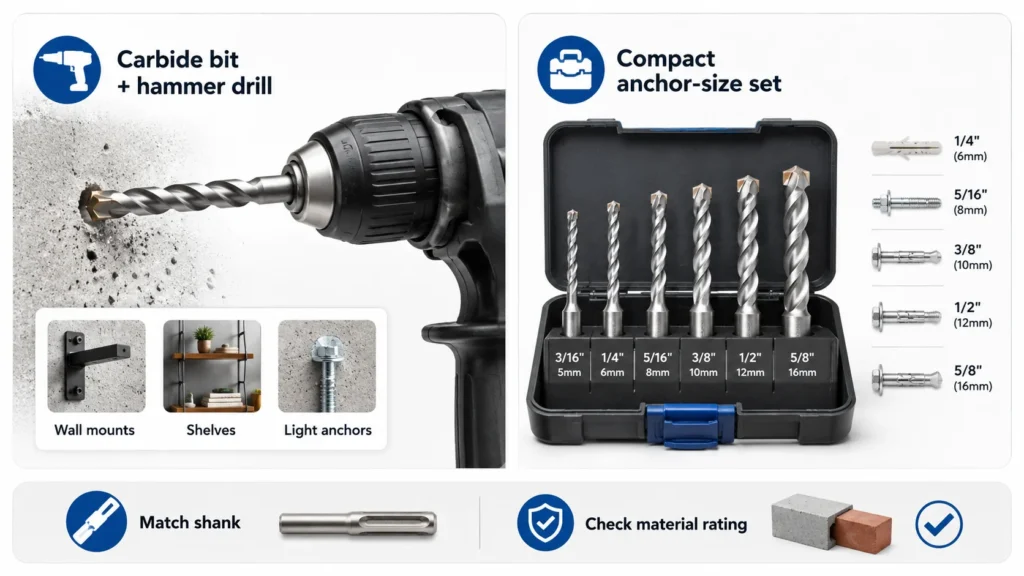
Carbide masonry bit with a hammer drill
For common wall mounts, shelves and light anchor work, a quality carbide-tipped masonry bit is often the sensible starting point. It fits conventional drill chucks and gives DIY users flexibility across concrete, brick and block—provided the manufacturer rates it for the material.
Best feature: A correctly sized carbide tip resists abrasive masonry better than a standard twist bit.
Watch-out: A standard drill may struggle in hard concrete without hammer action.
Short masonry-bit set in common anchor sizes
A compact concrete drill bit set can be better value than buying a large mixed assortment. Choose a set with useful anchor diameters for your actual projects, clear size markings and a stated concrete or masonry rating.
Best feature: Covers several mounting jobs without forcing you to buy oversized, rarely used bits.
Watch-out: Piece count does not prove quality; inspect shank type and material rating.
SDS-Plus multi-cutter bit for regular drilling
For repeated concrete drilling, an SDS-Plus rotary hammer and matching bit usually provide a more efficient setup than forcing a conventional drill. Multi-cutter head geometry can help keep holes more consistent, which matters for many anchor installations.
Best feature: The SDS-Plus shank transfers hammer action through a compatible rotary hammer.
Watch-out: SDS-Plus bits do not fit a normal three-jaw drill chuck.
Manufacturer-rated reinforced-concrete SDS bit
Use this category only when the manufacturer explicitly rates the exact bit for reinforced concrete. A suitable head design may better tolerate demanding aggregate and occasional reinforcement contact, but it does not remove the need to assess whether drilling at that location is appropriate.
Best feature: A stated reinforced-concrete rating gives a clearer suitability check than generic masonry labeling.
Watch-out: Do not force an unrated masonry bit through suspected rebar.
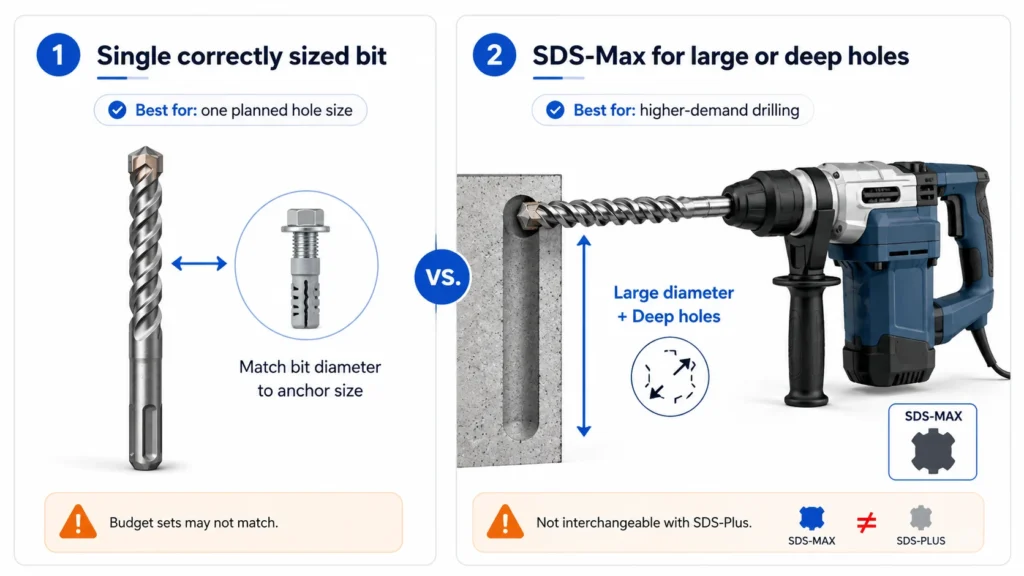
Single carbide masonry bit for one planned hole size
If you only need one or two holes, buy one correctly sized masonry bit rather than a cheap set that does not match your anchors. Select the diameter and drilling depth from the fastener manufacturer’s instructions.
Best feature: Spending is focused on the size that will actually be used.
Watch-out: Budget bits can be reasonable for occasional work, not necessarily for day-long drilling.
SDS-Max system for large or deep drilling
Large diameter and deep holes usually call for a heavier rotary hammer and the correct SDS-Max accessory system, not an extra-long standard masonry bit. This is the right category when job requirements genuinely exceed an SDS-Plus setup.
Best feature: Built for higher-demand drilling where tool power and dust removal become more important.
Watch-out: SDS-Max and SDS-Plus are different systems and are not interchangeable.
SDS-Plus vs SDS-Max: do not buy by name alone
SDS is a shank system designed for dedicated rotary hammers. SDS-Plus is the common choice for typical anchoring, electrical and plumbing holes. SDS-Max is a physically larger system used with heavier rotary hammers for more demanding drilling and demolition-related work.
Neither system should be treated as universal. An SDS bit will not simply fit a standard drill chuck, and an SDS-Max bit is not an SDS-Plus bit with a different name. Match the exact shank printed on the bit with the exact tool interface.
How to choose a drill bit for concrete
Focus on the decision points that determine whether the bit drills efficiently and whether the finished hole suits the fastener.
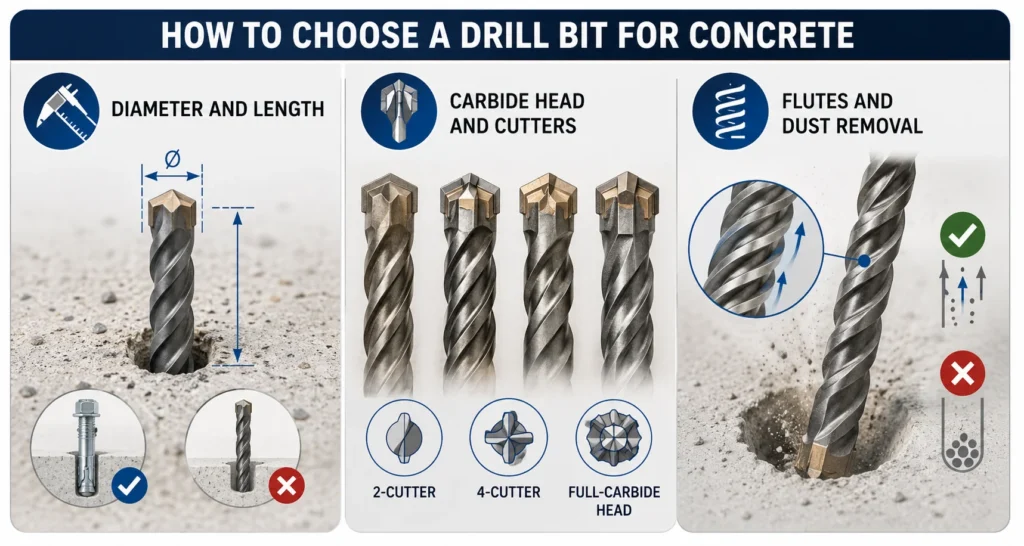
Diameter and length
Use the anchor or concrete-screw maker’s installation instructions for hole diameter and depth. Longer bits are helpful for deep holes, but a shorter bit usually gives better control for shallow work.
Carbide head and cutters
Carbide is the hardened cutting material at the tip. Two-cutter, four-cutter and full-carbide head designs serve different jobs; more cutters are not automatically better in every concrete type.
Flutes and dust removal
Flutes are the spiral channels that move dust out of the hole. Poor dust clearing raises friction and heat, slows drilling and can make the hole less consistent.
How to drill concrete properly
Concrete drilling creates dust, heat and potential hidden-service hazards. Work methodically, use the tool according to its manual and stop if the job no longer feels controlled.
- Mark the hole, check for hidden wiring or plumbing where relevant, and wear eye, hearing and appropriate dust protection.
- Fit a correctly sized, undamaged bit. Begin steadily to prevent wandering, using hammer mode only when your tool and bit instructions permit it.
- Let the bit cut rather than leaning heavily on the drill. Clear dust periodically and follow the tool manufacturer’s guidance on speed and operating pressure.
- Drill to the required depth, clean the hole as required by the anchor instructions, then install the fastener using its stated procedure.
What happens if you hit rebar?
Rebar is steel reinforcement embedded in concrete. It may stop or damage a normal masonry bit, and drilling through it can be inappropriate depending on the structure and location. Do not treat a sudden hard obstruction as a reason to push harder.
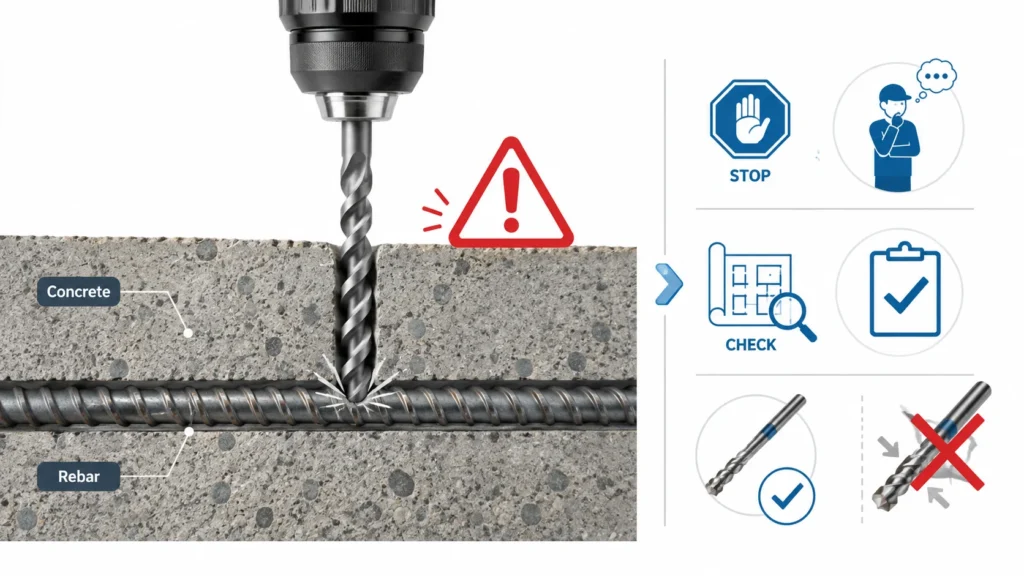
For structural, commercial or uncertain work, check plans, local requirements and the responsible professional before changing location or proceeding. Use a bit rated for reinforced concrete only when that application is expressly appropriate and manufacturer-supported.
Drill bit for concrete FAQ
Can I use a masonry bit in a regular drill?
Yes, many masonry bits have round or hex shanks that fit a regular drill chuck. But hard concrete can be slow without hammer action, and a cordless drill may not have enough power for repeated or larger holes. Check the bit and drill manuals before using hammer mode.
Do I need a hammer drill for concrete?
Not for every small hole, but a hammer drill generally makes concrete drilling more practical because it adds rapid impact action while rotating. For repeated work or harder concrete, an SDS rotary hammer is often the more suitable tool.
What size drill bit do I need for a concrete anchor?
Use the exact hole diameter and depth stated by the anchor or concrete-screw manufacturer. Do not rely on a generic rule that every anchor uses the same-size bit; installation requirements vary by fastener type and brand.
Should concrete drill bits be cooled with water?
Follow the tool and bit manufacturer’s instructions. Water can create electrical, slurry and dust-management issues, so it should not be treated as a universal solution. Clearing dust, using the right bit and avoiding excessive pressure are safer first checks when a bit is running hot.