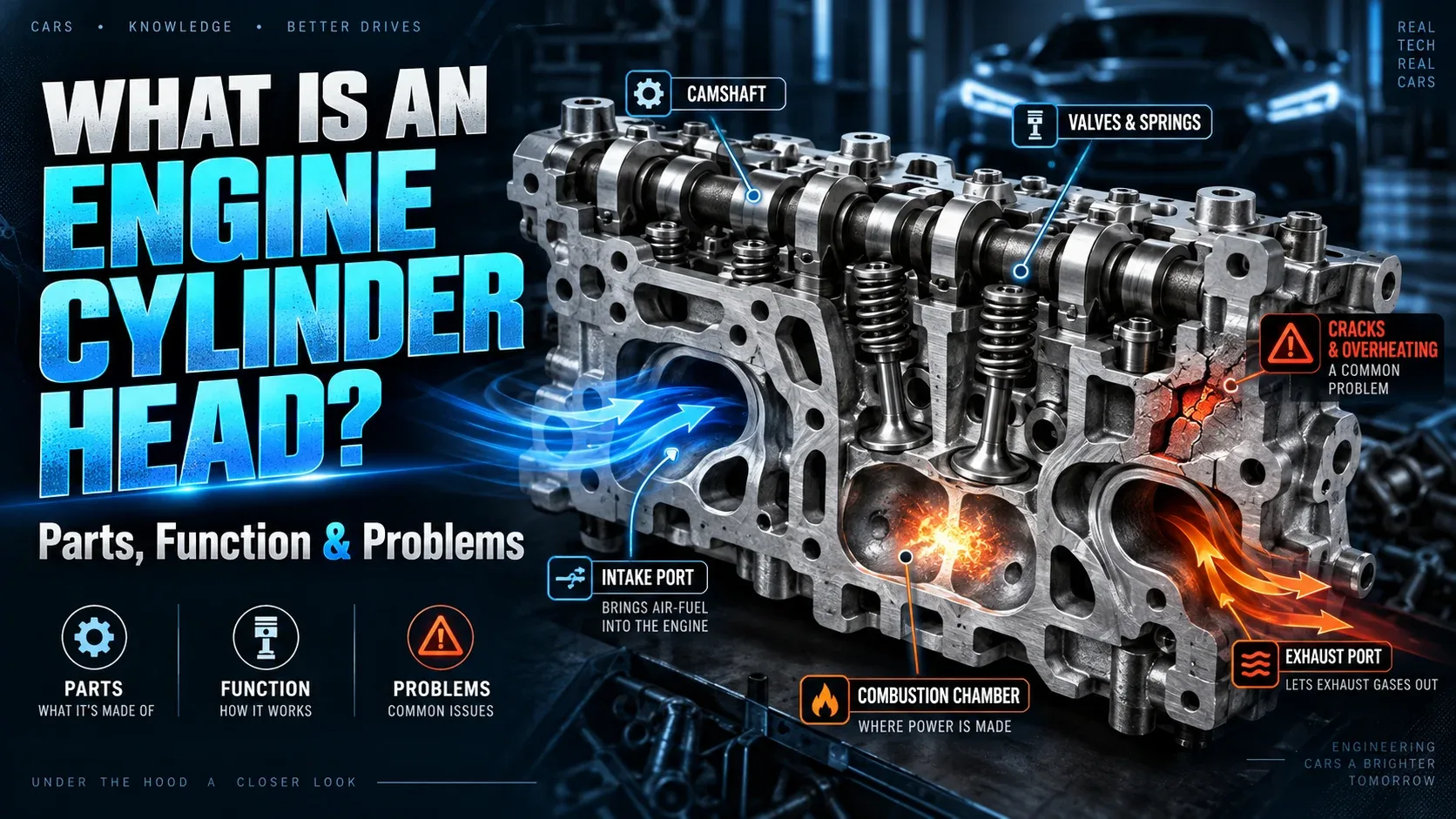
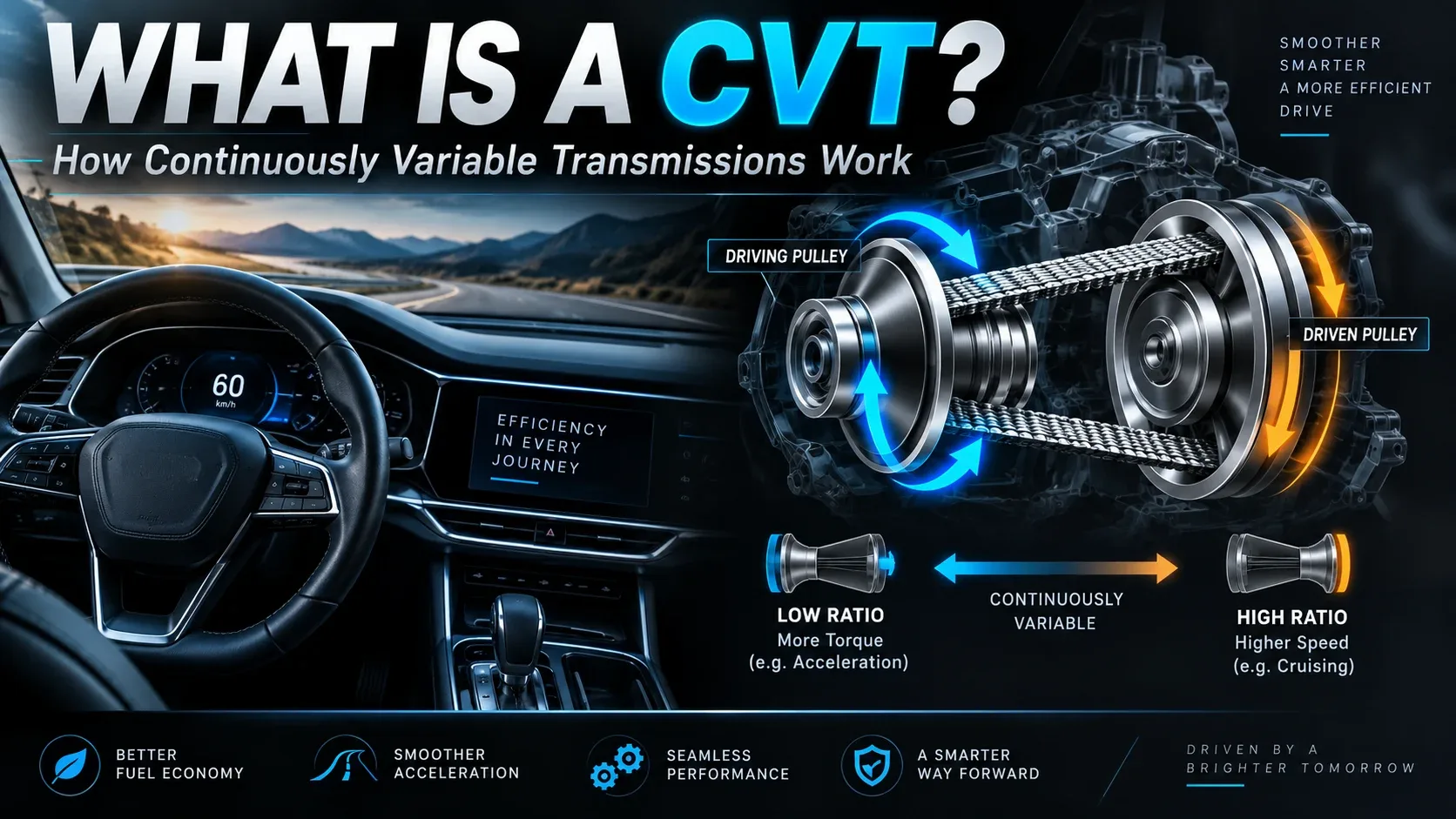
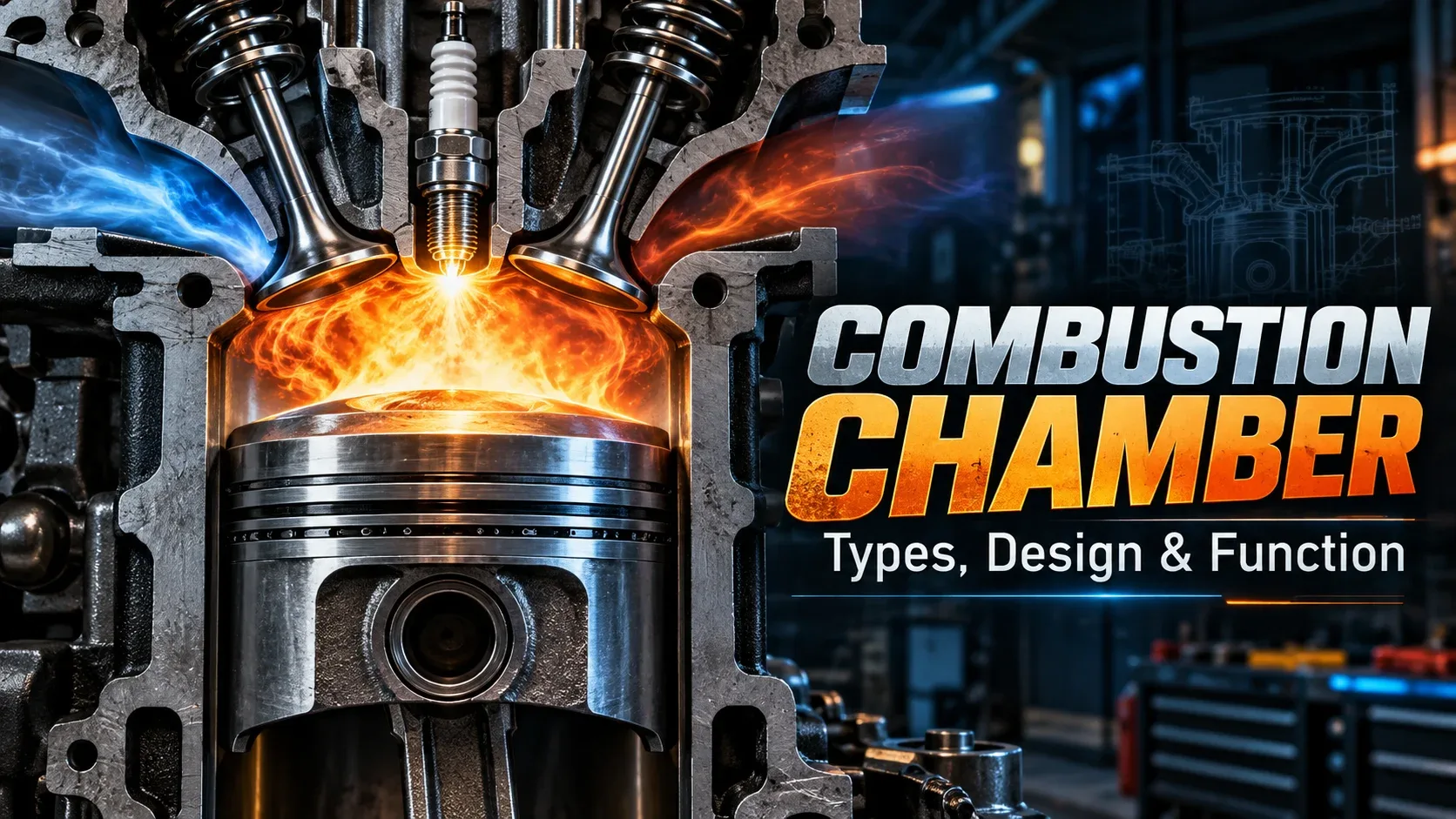
From combination and adjustable wrenches to sockets, torque tools, plumbing wrenches, and specialist options, learn what each wrench does and when to use it without damaging the fastener.
A wrench is a hand tool that grips and turns a nut, bolt, fitting, or shaped component. The best wrench type depends on the fastener shape, the available access, the force required, and whether the job needs precise torque.
What is a wrench? Wrench meaning explained
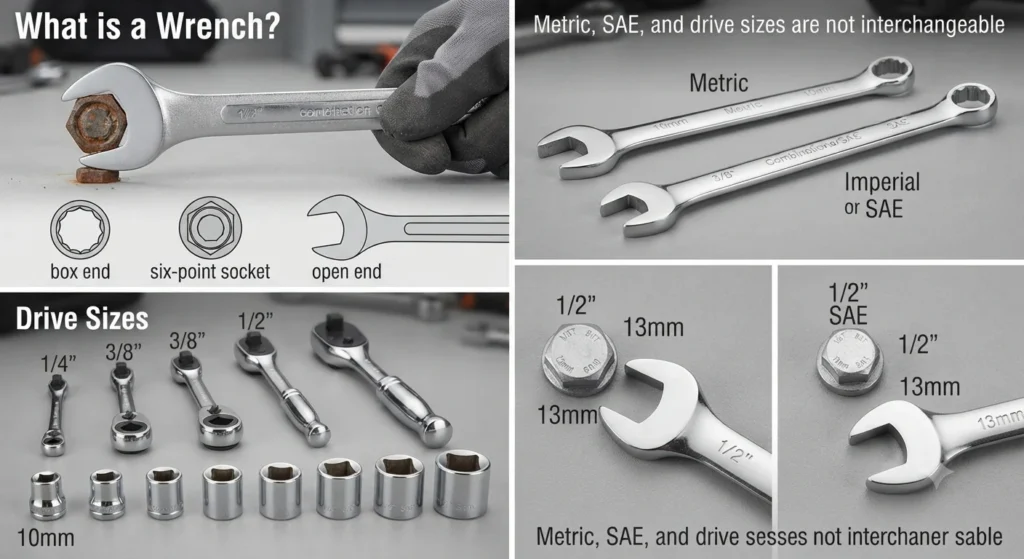
A wrench is designed to transfer turning force to a fastener or fitting. In the United Kingdom and much of the Commonwealth, many of these tools are called spanners. In North America, “wrench” is the more common umbrella term, while “spanner” may refer to particular specialist designs.
Use the tool that fully fits the fastener whenever possible. A correctly sized box end or six-point socket generally provides more contact than an open end, helping reduce the chance of rounding a stubborn nut or bolt.
Metric, SAE, and drive sizes are not interchangeable
Metric wrench sizes are measured in millimeters; SAE sizes use fractions of an inch. Socket drive size—such as 1/4-inch, 3/8-inch, or 1/2-inch—describes the square connection to the handle, not the fastener size. Check the equipment manual for exact specifications.
General-purpose wrench types
These are the core wrench types for household repairs, bicycles, appliances, furniture, and general maintenance. A quality combination set covers many everyday jobs before specialist tools are needed.
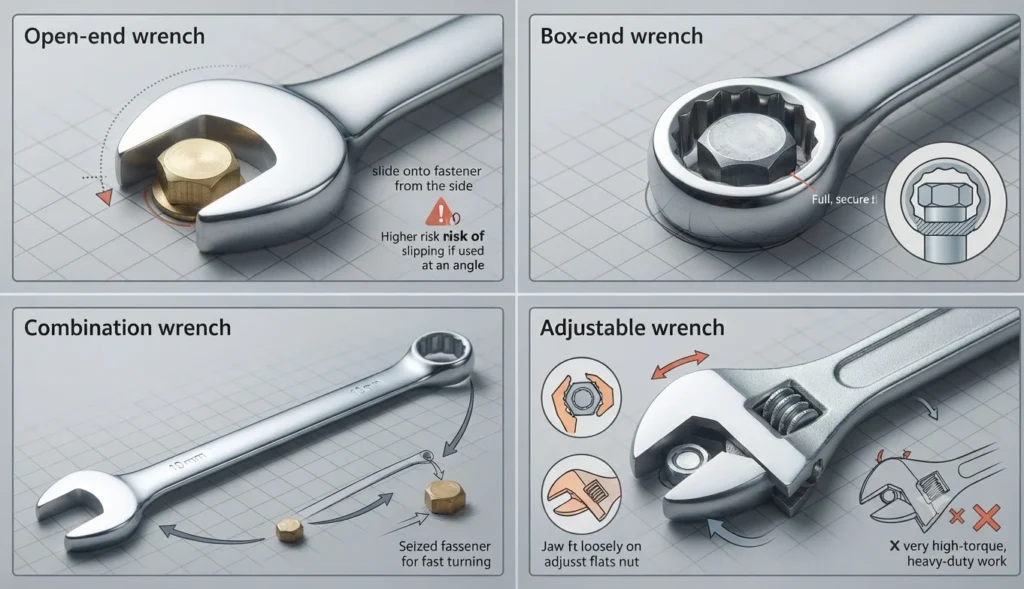
Open-end wrench
Its U-shaped jaw slides onto a fastener from the side, making it useful where a socket cannot fit. It is fast to position, but grips fewer sides than a box end and is easier to slip if used at an angle.
Box-end wrench
A box end surrounds the fastener head. Six-point designs are especially useful for seized fasteners because they contact the flats more securely; twelve-point ends offer more positioning angles in tight spaces.
Combination wrench
Usually combines an open end and box end of the same size. Use the box end first to break a fastener loose, then use the open end where side access makes turning faster.
Adjustable wrench
One movable jaw fits several sizes, making it useful for occasional plumbing and household repairs. Adjust it tightly and pull so force loads the fixed jaw; it is not a replacement for a correctly sized wrench on high-torque work.
Combination wrenches are a practical starting point because each tool provides both fast side access and a more secure box-end grip.
Socket, ratcheting, and precision wrench tools
A socket wrench system uses interchangeable sockets with a ratchet, breaker bar, extension, or torque wrench. This makes it one of the most versatile systems for automotive, machinery, and appliance work.
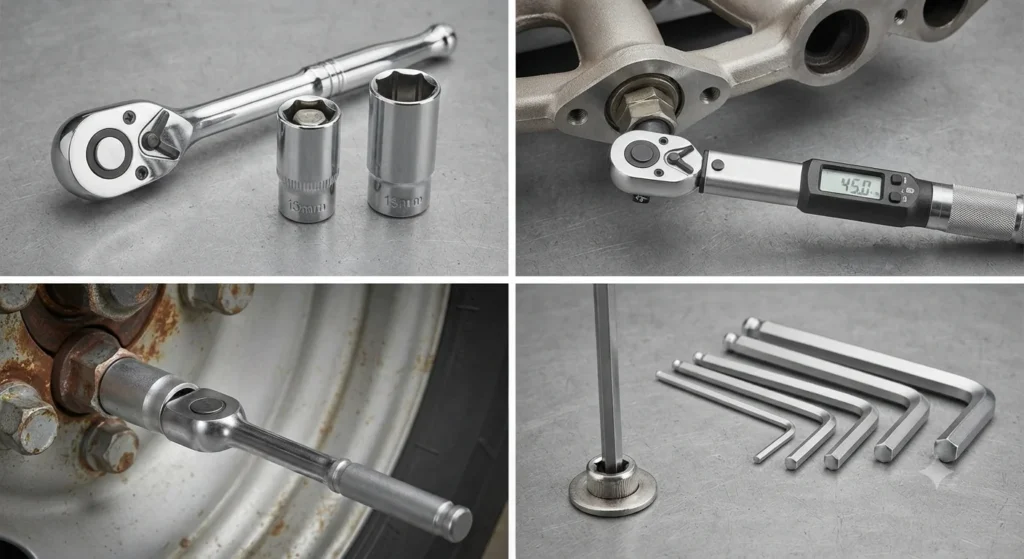
Ratchet and socket wrench
A ratchet lets the handle reset without removing the socket. Use sockets that fully seat over the fastener; shallow sockets suit exposed nuts while deep sockets reach nuts on long studs.
Torque wrench
A torque wrench tightens a fastener to a specified value. It is a measuring tool, not a breaker bar. Always use the equipment manufacturer’s torque specification and follow the tool’s calibration instructions.
Breaker bar
A long, non-ratcheting handle used to loosen tight fasteners, such as wheel lug nuts. Use it with the correct impact-rated or hand socket and avoid adding cheater pipes unless the tool maker permits it.
Allen or hex wrench
An L-shaped key for internal hex fasteners found on furniture, bicycles, machinery, and fixtures. Seat it fully before turning to avoid rounding the socket in the fastener.
A socket set becomes more useful with a ratchet, extensions, universal joint, and a clear mix of metric and SAE sockets matched to your equipment.
Plumbing, automotive, and specialist wrench types
Specialist wrench types solve access and gripping problems that a combination wrench cannot. Buy them when a specific repair calls for one instead of forcing a general-purpose tool into the job.
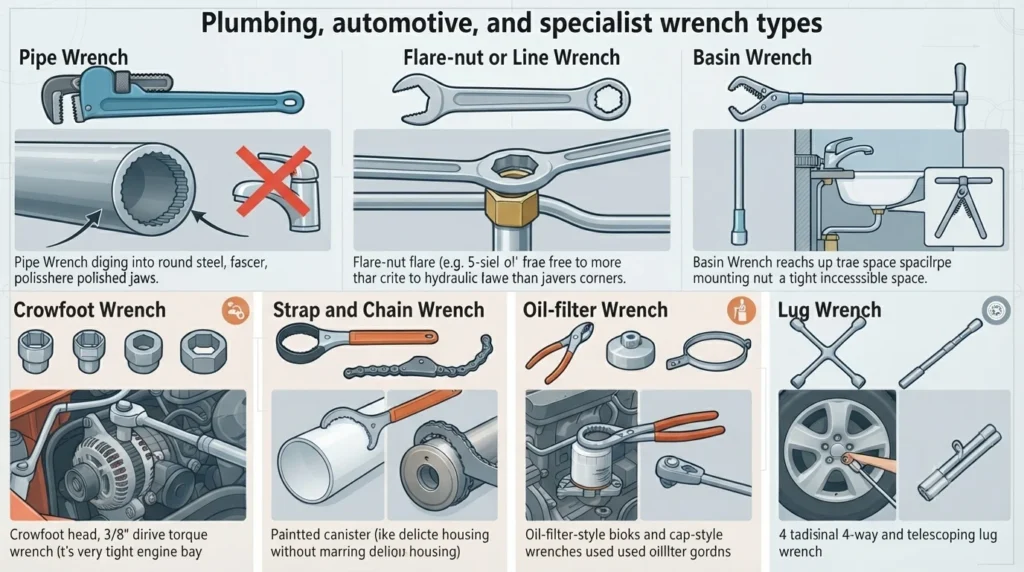
Pipe wrench
A heavy wrench with serrated jaws that bite into round steel pipe. It is intended for pipe and fittings, not polished faucets, compression nuts, or hex fasteners that the teeth could damage.
Flare-nut or line wrench
This near-closed wrench slips over tubing while gripping more sides of a fitting than an open end. It is the correct choice for many brake, fuel, hydraulic, and refrigeration line fittings.
Basin wrench
A long-handled tool with a pivoting jaw for loosening faucet mounting nuts under sinks. It is a plumbing-access tool, not a general wrench for ordinary bolts.
Crowfoot, strap, oil-filter, and lug wrenches
Crowfoot heads fit a ratchet or torque wrench in restricted spaces. Strap and chain wrenches grip round parts with less surface damage. Oil-filter and lug wrenches are purpose-built for common automotive service tasks.
Choose plumbing tools according to the fitting: a pipe wrench bites pipe, while a flare-nut wrench protects line fittings and a basin wrench reaches hidden faucet hardware.
Wrench types comparison table
The right tool is the one that fits the fastener, delivers the needed grip, and reaches the work safely. “Priority” reflects a typical beginner household and DIY tool kit.
| Wrench type | Best application | Main advantage | Beginner priority |
|---|---|---|---|
| Combination wrench | General nuts and bolts | Open and box end in one tool | Essential |
| Adjustable wrench | Occasional varied-size fittings | One tool covers several sizes | Essential |
| Socket and ratchet | Automotive and machinery | Fast, secure, versatile reach | Essential |
| Torque wrench | Specified fastener torque | Controlled tightening | Buy for vehicle/mechanical work |
| Pipe or flare-nut wrench | Pipe or line fittings | Purpose-built grip and access | Buy when the repair requires it |
Best wrench types for a beginner tool kit
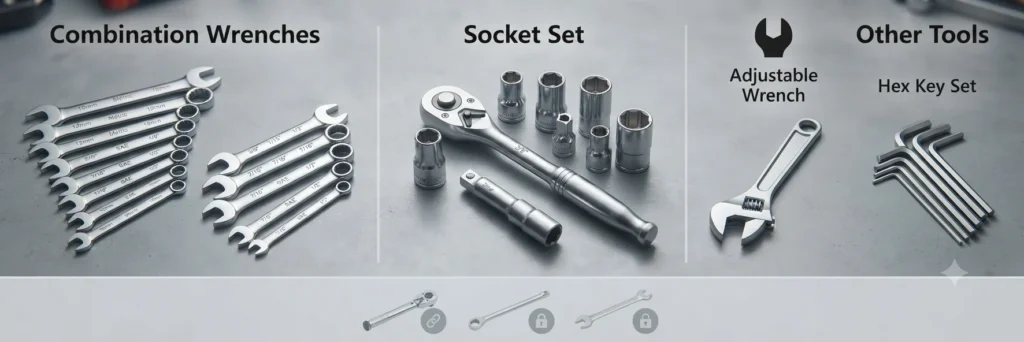
Start with a small, complete group of useful tools rather than a large set filled with rarely used sizes. Add specialist wrenches as your projects demand them.
- Metric and SAE combination wrench sets covering the sizes used on your equipment.
- A 3/8-inch-drive socket and ratchet set with six-point sockets, plus a short extension.
- One medium adjustable wrench for occasional fittings and household tasks.
- Hex key set; add a torque wrench, breaker bar, or flare-nut wrench only when your work specifically needs them.
Avoid rounding fasteners and hurting your hands
Wear eye protection, keep your hands out of the tool’s travel path, and pull rather than push when practical. Fully seat the wrench, keep it square to the fastener, and avoid using the wrong size. Do not use a torque wrench to break fasteners loose, and do not extend handles with cheater pipes unless the tool manufacturer explicitly approves it.
Frequently asked questions
What is the difference between an open-end and box-end wrench?
An open-end wrench approaches a fastener from the side and is quicker to position in tight spaces. A box-end wrench surrounds more of the fastener, generally providing a stronger grip and a lower risk of rounding when the correct size is used.
Can one adjustable wrench replace a full wrench set?
No. An adjustable wrench is convenient, but a correctly sized combination wrench or socket has better contact and is less likely to slip. Use an adjustable wrench for occasional moderate-force jobs, not as the universal answer for stubborn or precision fasteners.
When do I need a torque wrench?
Use a torque wrench when the manufacturer specifies a torque value, especially for wheel lug nuts, engine components, bicycle parts, and critical mechanical assemblies. The correct value and tightening sequence must come from the vehicle, equipment, or component service information.