PPE meaning: PPE stands for personal protective equipment. It is equipment worn to reduce exposure to workplace hazards, from flying debris and noise to chemicals, falls, and airborne contaminants.
What does PPE stand for?
PPE stands for personal protective equipment. In workplace safety, it means clothing and equipment worn to help reduce a worker’s exposure to hazards that could cause injury, illness, or contamination.
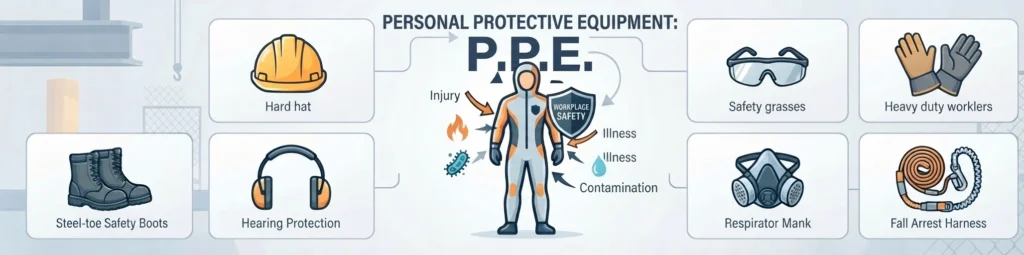
When people ask “what’s PPE?” or “what does PPE mean at work?”, they are usually referring to items such as hard hats, safety glasses, gloves, safety footwear, hearing protection, respirators, high-visibility clothing, and fall-arrest equipment.
Why is personal protective equipment important?
PPE can help lower the chance or severity of an injury when a worker may be exposed to hazards such as impacts, sharp edges, chemical splashes, harmful noise, biological contamination, heat, dust, fumes, or a fall from height.
However, PPE cannot guarantee complete protection. Fogged eyewear can reduce visibility, loose gloves can affect grip, and an incorrectly fitted respirator may not seal effectively. Workers need training, time to use equipment correctly, and a way to report damaged or unsuitable equipment.
Main types of PPE and the hazards they address
One piece of safety gear does not protect against every risk. For example, cut-resistant gloves may not be suitable for a particular chemical, and ordinary face coverings are not interchangeable with a required, approved respirator.
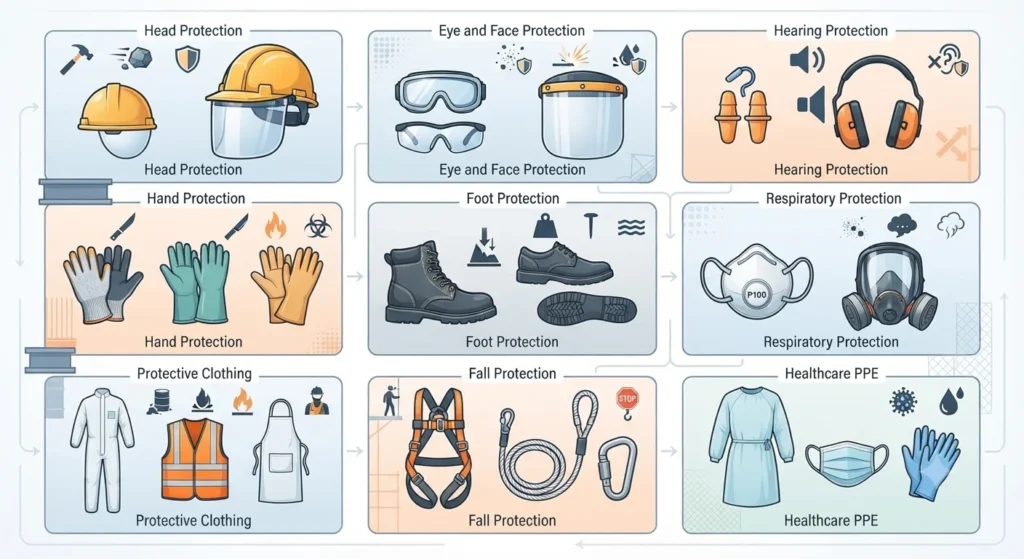
Head protection
Hard hats and safety helmets help protect against falling or flying objects and certain impact hazards.
Eye and face protection
Safety glasses, goggles, and face shields can help guard against dust, debris, sparks, and chemical splashes.
Hearing protection
Earplugs and earmuffs are used where harmful workplace noise cannot be adequately controlled.
Hand protection
Task-specific gloves can help protect against cuts, heat, chemicals, contamination, or abrasion.
Foot protection
Safety-toe boots, puncture-resistant footwear, and slip-resistant shoes may protect against crushing, sharp objects, and slippery floors.
Respiratory protection
Approved respirators may be required for dust, fumes, vapors, or airborne contaminants. Their selection and use require specialized workplace procedures.
Protective clothing
Coveralls, gowns, aprons, chemical-resistant clothing, and high-visibility garments can address contamination, chemicals, heat, and visibility risks.
Fall protection
Harnesses, lanyards, lifelines, and connecting equipment may be used to help prevent or arrest falls when working at height.
Healthcare PPE
Gloves, gowns, masks, respirators, and eye protection may be selected to reduce exposure to infectious materials and splashes.
How is the right PPE selected?
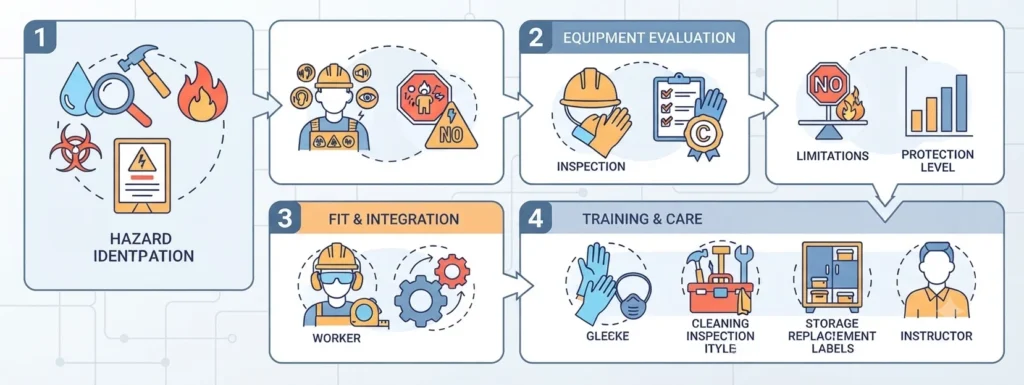
Appropriate PPE is chosen after considering the task and a workplace hazard assessment. Supervisors and workers should not rely on product claims alone when there is a serious safety risk.
- Identify the hazard, such as impact, chemical splash, airborne dust, heat, noise, biological material, or fall risk.
- Check the equipment’s intended protection level, limitations, certification requirements, and manufacturer instructions.
- Make sure the PPE fits the individual user and works with other equipment, such as eyewear, helmets, hearing protection, or respirators.
- Provide training on putting it on, taking it off, adjustment, inspection, cleaning, storage, and replacement.
PPE and the hierarchy of controls
Safety professionals generally treat PPE as a later layer of protection. Before relying on equipment worn by a worker, workplaces should consider whether the hazard can be eliminated, substituted, isolated, engineered out, or reduced through safer work processes and administrative controls.
For example, ventilation may reduce airborne contaminants, machine guards may prevent contact with moving parts, and quieter equipment may reduce noise exposure. PPE may still be needed, but it should support—not replace—these broader controls.
How to inspect, wear, and maintain PPE
PPE only works when it remains in serviceable condition and is used as intended. Inspect it before use and remove it from service if it is damaged, contaminated, expired, or no longer performs as required.
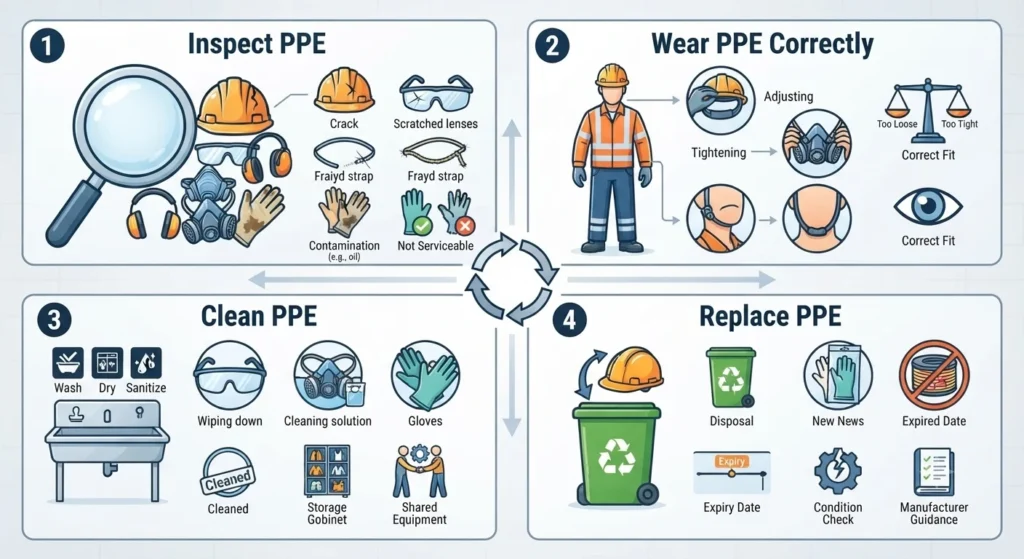
- Look for cracks, tears, worn straps, loose fasteners, scratched lenses, damaged seals, and contamination.
- Adjust PPE for a secure, comfortable fit. Equipment that slips, pinches, or obstructs vision is less likely to be used consistently.
- Clean and store reusable items according to workplace procedures and manufacturer instructions, especially shared equipment.
- Replace equipment when its condition, contamination status, expiry date, or manufacturer guidance indicates it is no longer effective.
Who is responsible for providing PPE?
Responsibilities vary by country, industry, employment arrangement, and applicable safety rules. In many workplaces, employers are responsible for assessing hazards, selecting suitable required PPE, providing training, and maintaining workplace safety systems.
Workers also have an important role: use required equipment correctly, attend training, inspect PPE before use, and report damage, poor fit, missing items, or unsafe conditions promptly. Follow your workplace procedures and local legal requirements.
PPE meaning: frequently asked questions
Is a safety vest considered PPE?
High-visibility clothing can be PPE when it is required to reduce a visibility risk, such as working near traffic, vehicles, or moving equipment. Whether it is required depends on the job and workplace risk assessment.
Are work boots PPE?
Some work boots are PPE because they are designed to protect against specific hazards, such as falling objects, punctures, electrical risks, or slips. Ordinary footwear may not provide the same protection.
Do face masks count as PPE?
Some masks and respirators are PPE, but they are not all interchangeable. Respiratory protection must be selected for the specific airborne hazard and used according to workplace procedures, fit requirements, and manufacturer instructions.
How often should PPE be replaced?
There is no universal replacement date for every item. Replace PPE when it is damaged, contaminated, expired, no longer fits, or when manufacturer instructions and workplace rules require replacement.