
An expert, model-aware guide to Michelin tires—covering real-world strengths, buying trade-offs, and the checks that matter before you choose.
Michelin is a compelling premium choice—if the model and price fit your driving needs.
Generally, yes. Michelin has a strong reputation across touring, all-season, performance, SUV, and light-truck categories, with many shoppers valuing refined road manners, broad fitment availability, and long-term ownership focus. The important caveat is price: Michelin is often positioned at the premium end, and the best value depends on the exact tire, vehicle, climate, and installed cost.
Where Michelin tends to stand out
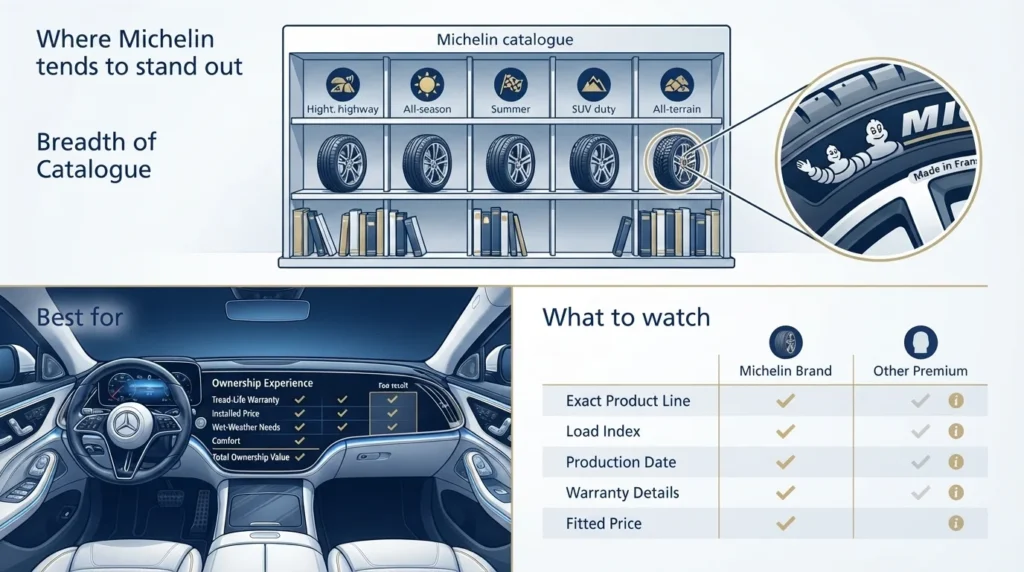
Michelin’s practical strength is its deep catalogue. Drivers can find options designed for quiet highway travel, everyday all-season use, responsive summer handling, SUV duty, and selected all-terrain needs. For common passenger-car and crossover sizes, the brand is also widely recognized by retailers and installers.
That breadth can be useful when your priority is not just immediate grip or the lowest purchase price, but the total ownership experience: comfort, noise, wet-weather confidence, expected wear, and the ability to replace or rotate within an established product range. A broad lineup is not a substitute for comparison, but it gives buyers more ways to match a tire to their actual roads.
Best for
Drivers who place a high value on a refined daily-drive experience and are comfortable comparing premium options by exact fitment, tread-life warranty, wet-weather needs, and installed price—not just the initial tire cost.
What to watch
Premium positioning does not mean every Michelin tire is automatically the best purchase for every driver. Compare the exact product line, size, load index, production date, warranty coverage, and total fitted price against well-matched alternatives before deciding.
The brand badge is only the start of the comparison
The most useful question is not simply “Are Michelin tires good?” but “Is this specific Michelin tire right for my roads, climate, vehicle, and annual mileage?” A quiet touring tire may be an excellent companion for long motorway journeys, while a high-performance summer tire or an all-weather product solves a different set of priorities.
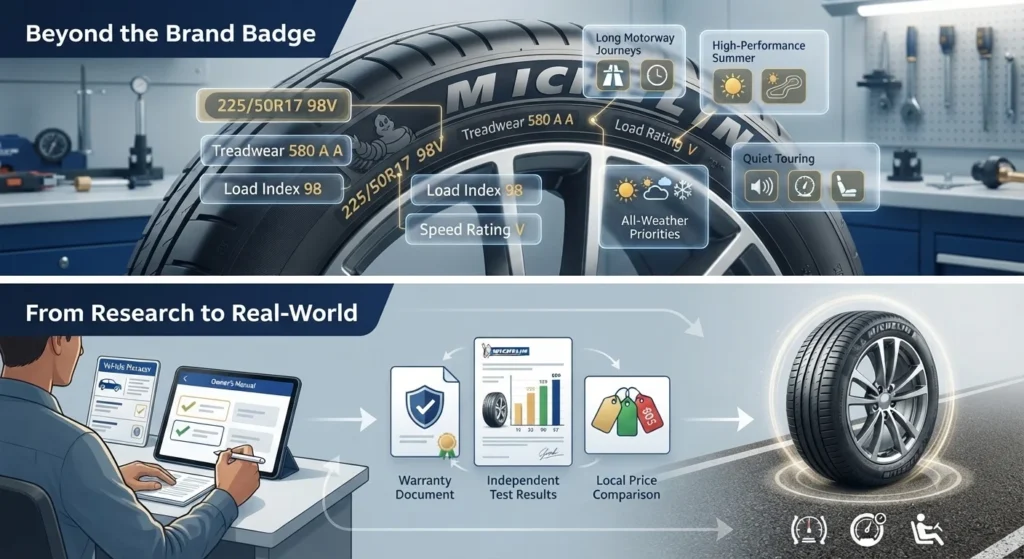
Start with your vehicle placard and owner manual, then narrow the choice by seasonal conditions and driving mix. Compare the exact tire’s published specifications, warranty documents, independent tests where available, and current local installed pricing. Alignment, inflation pressure, driving style, road surface, and tire age can all influence real-world results.
Key buying considerations
These are editorial guideposts, not laboratory scores. Results and suitability can differ materially by product line, size, vehicle, road surface, and use.
| Consideration | Editorial take |
|---|---|
| Range of use | Strong: Michelin offers options across touring, passenger, SUV, performance, winter, and selected light-truck applications. Confirm availability in your exact size. |
| Value proposition | Often premium-priced. The better comparison is total ownership value: installed cost, warranty, anticipated lifespan, road-hazard coverage, and whether the tire’s strengths match your driving. |
| Everyday usability | A practical option for many commuters and family vehicles when the selected line prioritizes calm road manners, predictable seasonal performance, and common replacement fitments. |
| Shopping priority | Choose the tire category and exact model for your conditions. Do not assume one Michelin line will share another’s handling, noise, winter capability, or wear characteristics. |
Four checks worth making before choosing Michelin tires
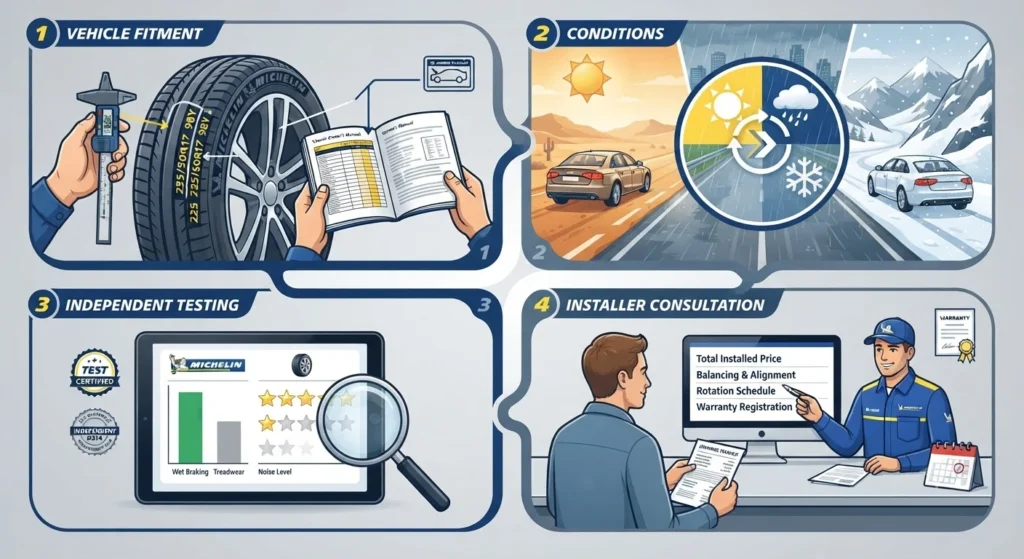
A careful comparison can matter more than the logo on the sidewall. Use this short checklist to keep the decision grounded in fitment, conditions, and the full cost of ownership.
- Confirm tire size, load index, and speed rating against the vehicle placard and owner manual.
- Match the tire category to your dominant conditions: hot dry roads, rain, winter weather, long highway miles, city use, or mixed surfaces.
- Compare the exact model’s wet braking, noise, warranty terms, treadwear expectations, and independent test information where available.
- Ask the installer about production date, total fitted price, balancing, alignment checks, rotation support, and local warranty handling.