Diesel truck performance upgrades can range from simple improvements to major changes that require careful planning. For owners ready to invest in their rigs, the challenge is knowing which modifications actually deliver useful results and which ones create unnecessary costs or complications.
So, which upgrades are genuinely worth considering, and where should you draw the line? From tuning and turbo work to suspension, wheels, tires, and lighting, understanding what each modification offers can help you build a truck that performs better without overlooking reliability or emissions requirements.
Why Choosing Upgrades Carefully Genuinely Matters
According to the EPA, the federal agency responsible for enforcing the Clean Air Act, the agency finalized 172 civil enforcement cases against companies selling illegal emissions “defeat devices” between FY 2020 and FY 2023, resulting in $55.5 million in civil penalties, along with 17 criminal cases and 54 months of combined incarceration.
That figure matters because it confirms this isn’t a minor regulatory footnote, tampering with emissions controls carries genuinely serious legal consequences, for shops and individual owners alike. Choosing upgrades that boost performance without crossing that line isn’t just about staying legal, it’s also about protecting a truck’s resale value and long-term reliability.
6 Upgrades Worth Genuinely Considering
With that context in mind, here are six specific upgrades that consistently deliver real, worthwhile performance gains for a diesel truck.
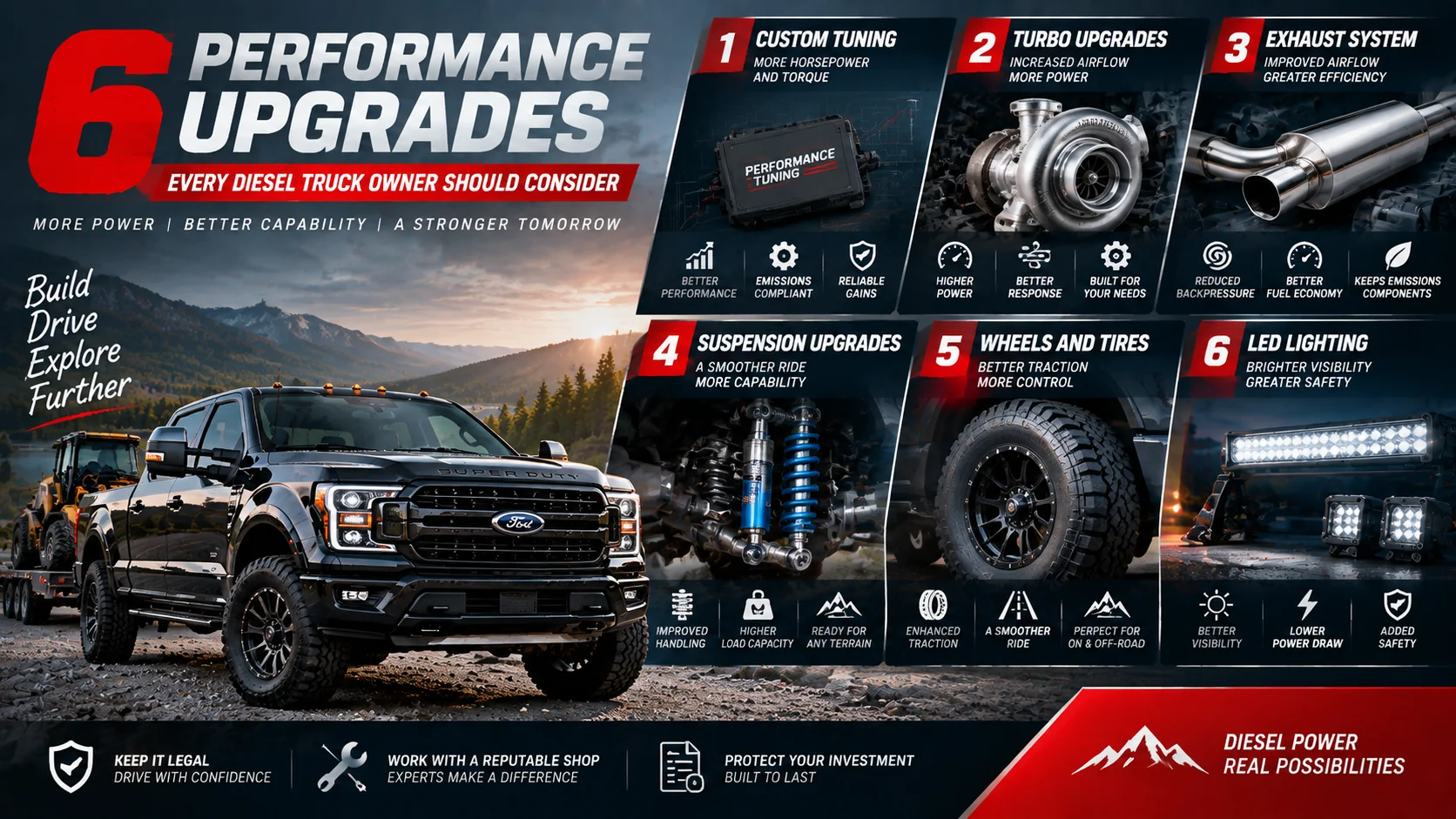
1. Custom Tuning
A properly done tune adjusts fueling and timing to genuinely improve horsepower and torque, and the right shop can do this while keeping factory emissions equipment intact. This is really where the EPA enforcement data above becomes directly relevant.
Working with a shop like Vision Diesel Performance reflects this balance between performance and responsible modification. The company operates an in-house dyno and uses dedicated tuning software to help owners achieve measurable horsepower gains while keeping factory-installed emissions equipment in place. This approach allows customers to pursue performance improvements without relying on modifications that remove emissions controls and can create unnecessary compliance and enforcement risks.
2. Turbo Upgrades
A larger or more efficient turbocharger genuinely increases airflow into the engine, supporting real power gains, particularly when paired with a matching tune. This is one of the more involved upgrades on the list, and getting the sizing right for a specific truck’s actual use case matters considerably more than simply buying the biggest turbo available, since an oversized turbo can actually hurt low-end response and towing performance even while boosting peak numbers on paper.
3. Exhaust System Upgrades
A properly designed exhaust system reduces backpressure and improves airflow, which genuinely supports both power and fuel efficiency. It’s worth confirming any exhaust upgrade keeps required emissions components in place, since this is exactly the category where illegal modifications most commonly show up, and a legitimate performance exhaust achieves real gains through better flow design rather than by removing the components the EPA specifically requires.
4. Suspension Upgrades
For owners genuinely using their truck for towing, hauling, or off-road work, a suspension upgrade improves ride quality, load capacity, and handling in ways that matter for daily use, not just aesthetics. This category ranges from simple leveling kits to full lift kits, and the right choice depends heavily on how the truck actually gets used, a truck primarily used for heavy towing benefits from a genuinely different suspension setup than one built mainly for off-road trail use.
5. Wheels and Tires
Upgraded wheels and tires genuinely affect a truck’s traction, ride comfort, and even fuel economy, depending on the specific tire chosen. This is also one of the more visually noticeable upgrades, but the practical performance benefit, particularly for off-road or towing use, genuinely matters as much as the appearance, since the wrong tire choice can quietly undermine handling and fuel economy even on a truck with excellent tuning and turbo work underneath it.
6. LED Lighting
Upgraded LED lighting improves genuine visibility, particularly for off-road driving or early morning towing runs, while also drawing considerably less power than older lighting technology. It’s a comparatively affordable upgrade that delivers a real, practical safety benefit alongside the aesthetic one, and unlike several other upgrades on this list, it carries essentially no emissions compliance considerations at all.
Why Emissions Compliance Should Guide Every Choice
Every one of the upgrades above can genuinely be done in a way that keeps a truck emissions-compliant, and choosing a shop that treats this as a priority rather than an afterthought protects an owner from the kind of enforcement risk the EPA has been actively pursuing. A truck that’s been illegally modified can also face real resale complications, since a growing number of buyers and dealers specifically check for tampered emissions systems before completing a purchase.
Questions Worth Asking Before Committing to Any Shop
A handful of direct questions help separate a genuinely trustworthy performance shop from one cutting corners:
- Does the shop have an in-house dyno to actually measure and verify performance gains, rather than relying on manufacturer claims alone?
- Will the proposed tune or modification keep factory emissions equipment intact and functional?
- Can the shop explain specifically how a given upgrade affects daily driving and towing, not just peak horsepower numbers?
- Does the shop stock or special-order parts from established, reputable manufacturers rather than unbranded aftermarket components?
Getting clear, specific answers to these questions before committing real money is exactly the kind of due diligence that separates a genuinely worthwhile investment from an expensive mistake.
Sequencing Upgrades in a Way That Actually Makes Sense
Rather than tackling all six upgrades at once, most owners get better results sequencing them deliberately. Tuning and turbo work pair naturally together, since a tune alone can’t fully take advantage of increased airflow without matching turbo capacity. Suspension and tire upgrades make sense to bundle together, since wheel and tire size decisions directly affect suspension geometry. Exhaust and lighting upgrades are more standalone and can be added whenever budget allows without needing to coordinate with other changes.
Conclusion
Performance upgrades can improve a diesel truck’s power, handling, appearance, and overall driving experience without relying on emissions tampering. Tuning, turbo upgrades, exhaust improvements, suspension work, wheels and tires, and lighting can all be considered as part of a thoughtful build when they are selected and installed appropriately. Working with a reputable shop that understands emissions requirements can also help owners avoid modifications that may create unnecessary legal, financial, or reliability problems down the road.