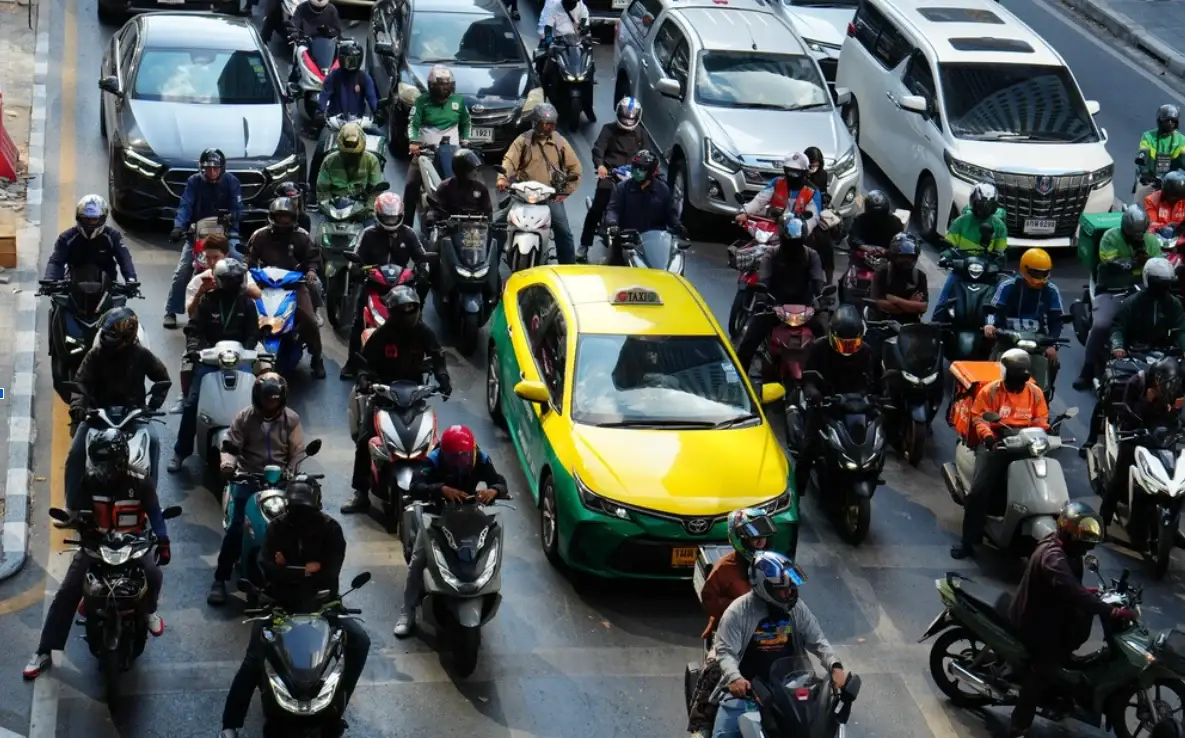
Evening rush hour can be especially demanding for motorcyclists. Cars squeeze into narrow gaps, drivers make sudden lane changes, and traffic slows without much warning. Unlike people inside passenger vehicles, motorcyclists have little protection if another vehicle strikes them.
The risks can become more noticeable during busy commuting hours, particularly on crowded urban roads and highways. A closer look at the states with the highest rush hour risk can help readers understand the broader traffic challenges associated with evening travel. However, national motorcycle fatality figures also reveal when these crashes are most common.
Here is a closer look at the reported figures and the road conditions that can make evening motorcycle travel more challenging.
U.S. Motorcyclist Fatalities by Hour of Day (2019–2023)
Motorcycle fatalities do not occur evenly throughout the day. The reported figures show an increase during the late afternoon, followed by a peak between 6 PM and 6:59 PM. Fatalities then gradually decline during the later evening hours.
| Time of Day | Motorcyclist Fatalities |
| 3:00 PM–3:59 PM | 1,852 |
| 4:00 PM–4:59 PM | 1,968 |
| 5:00 PM–5:59 PM | 2,079 |
| 6:00 PM–6:59 PM | 2,190 |
| 7:00 PM–7:59 PM | 2,005 |
| 8:00 PM–8:59 PM | 1,947 |
| 9:00 PM–9:59 PM | 1,753 |
The figures show that 6 PM was the deadliest hour for motorcyclists during the reported period. The number of fatalities also remained high between 5 PM and 8 PM, which overlaps with common evening commuting hours.
These figures represent national fatality counts. They do not establish that every state or city experiences the same level of motorcycle crash risk.
Why Evening Rush Hour Creates Greater Challenges for Motorcyclists
The evening commute brings together people leaving offices, school traffic, delivery vehicles, and commercial transport. As more vehicles use the roads, motorcyclists have to respond to changing traffic conditions while remaining visible to other drivers.
Several factors can make these hours particularly challenging:
- Crowded lanes: Motorcycles have less space to move safely when cars, buses, and trucks travel close together.
- Frequent lane changes: Drivers may switch lanes to reach an exit or avoid slow traffic without noticing a motorcycle nearby.
- Sudden braking: Stop-and-go traffic can force riders to slow down quickly, increasing the chance of losing control or being struck from behind.
- Highway merging: Vehicles entering busy highways may move into a motorcycle’s path without leaving enough room.
- Driver impatience: Some motorists make rushed decisions during their evening commute, creating additional hazards for nearby riders.
These conditions can occur in major cities across the country. The level of risk depends on local traffic patterns, road design, and driver behavior.
How Urban Traffic Congestion Affects Motorcycle Safety
Heavy traffic creates problems for all road users, but motorcyclists face some additional concerns. A motorcycle is smaller than most vehicles, so drivers may fail to notice it in their mirrors or blind spots. Crowded lanes can also make sudden braking and unsafe turns more dangerous.
A 2025 traffic report found that Chicago drivers lost 112 hours to congestion, followed by New York City at 102 hours and Philadelphia at 101 hours. Los Angeles and Boston also ranked among the country’s most congested cities. These figures measure time lost in traffic rather than motorcycle crashes, but they help illustrate how demanding daily commutes can become in major urban areas.
For motorcycle commuters, heavy congestion means staying alert to vehicles approaching from behind, cars moving between lanes, and traffic slowing unexpectedly.
Road Conditions That Can Increase Motorcycle Crash Risk
Traffic congestion is only one part of the problem. Road conditions and visibility can also affect how safely motorcyclists travel during evening hours.
- Wet pavement: Rain can reduce tire grip and make sudden braking more difficult.
- Poor visibility: Darkness, headlights, and glare can make motorcycles harder for other drivers to see.
- Uneven road surfaces: Potholes, loose gravel, and damaged pavement can affect a motorcycle’s balance.
- Unsafe turns: Cars turning across a motorcycle’s path can cause serious collisions, particularly at busy intersections.
- Distracted driving: Drivers looking at phones or navigation screens may overlook nearby motorcycles.
- Reduced daylight: During shorter days, evening commuters may encounter darker roads even before reaching home.
These hazards are not limited to places with heavy traffic. They can affect motorcycle riders on local streets, highways, and rural roads.
Understanding Evening Motorcycle Crash Patterns
The reported figures show that motorcyclist fatalities were highest between 5 PM and 7 PM, with the peak occurring between 6 PM and 6:59 PM. This period overlaps with the evening commute, when traffic volume and frequent vehicle movements can create difficult road conditions.
Understanding the states with the highest rush hour risk can offer broader context about traffic safety, but national hourly fatality figures should not be mistaken for state-specific motorcycle rankings.
Motorcyclists can reduce some road risks by maintaining a safe following distance, staying visible, watching for sudden lane changes, and adjusting their speed to traffic and weather conditions. Staying alert during busy evening hours remains important wherever they ride.